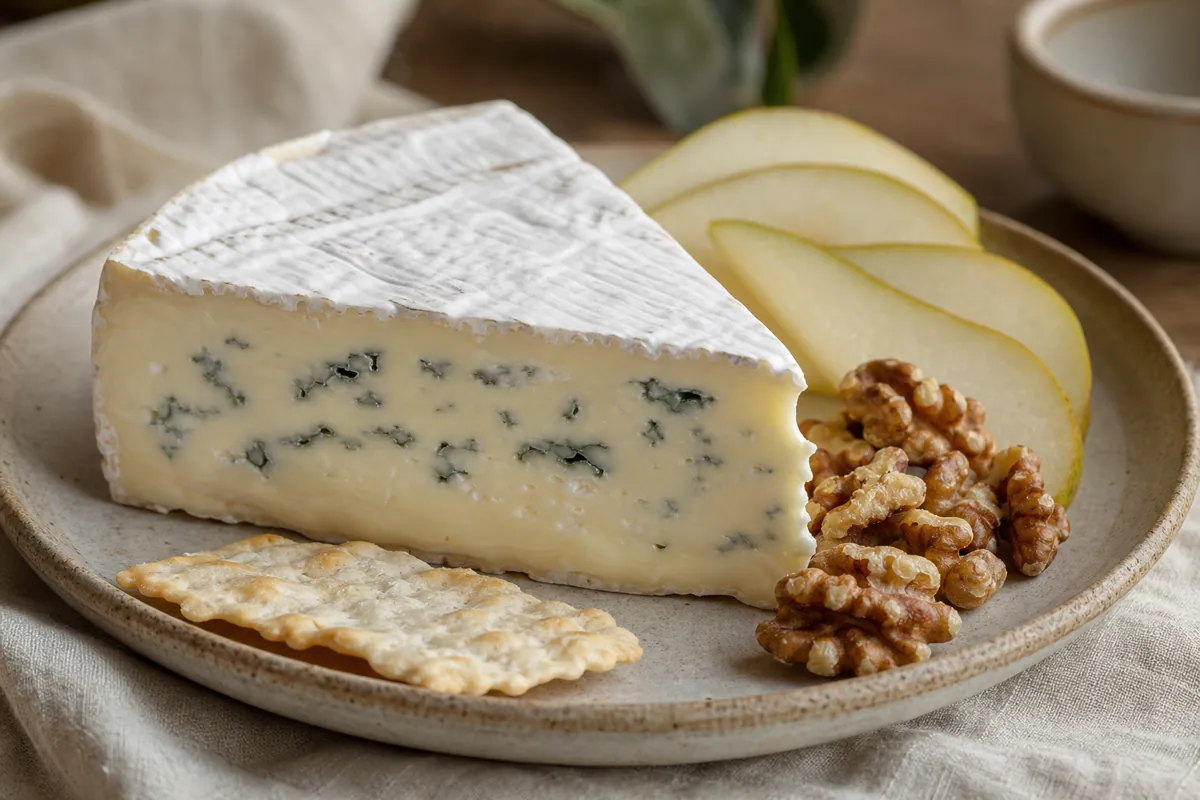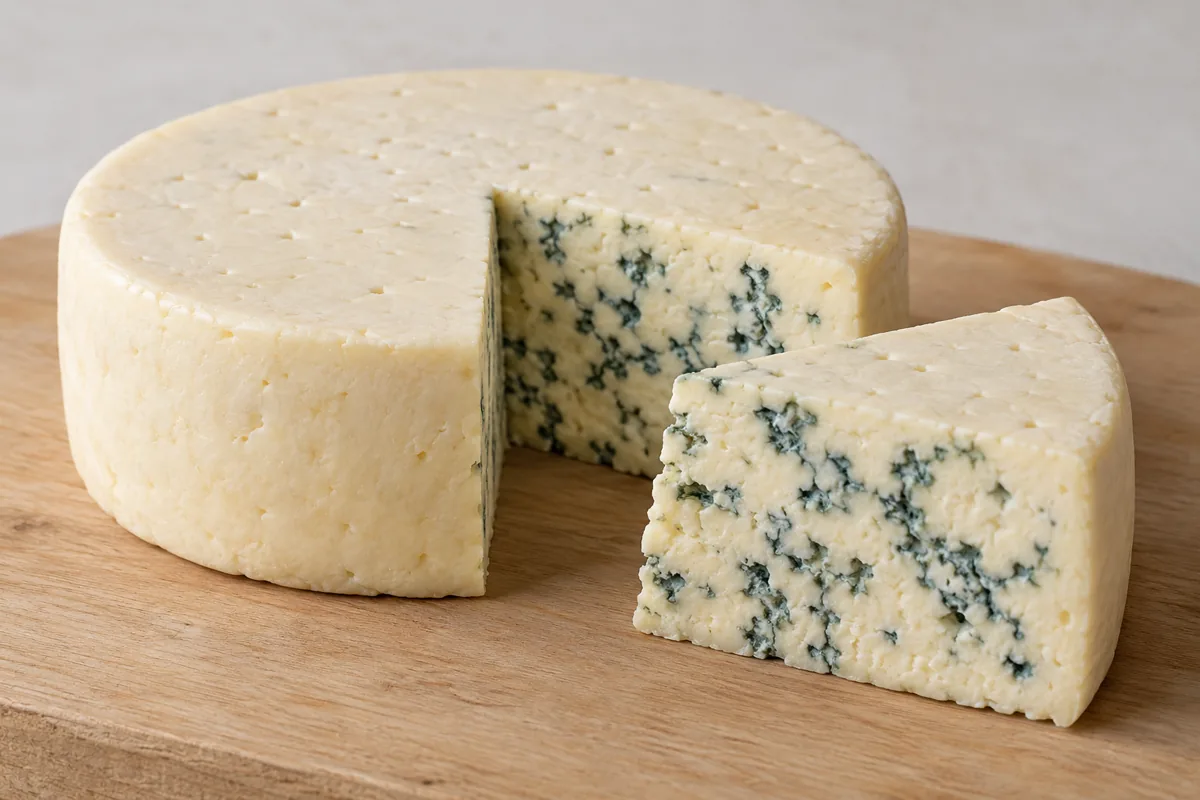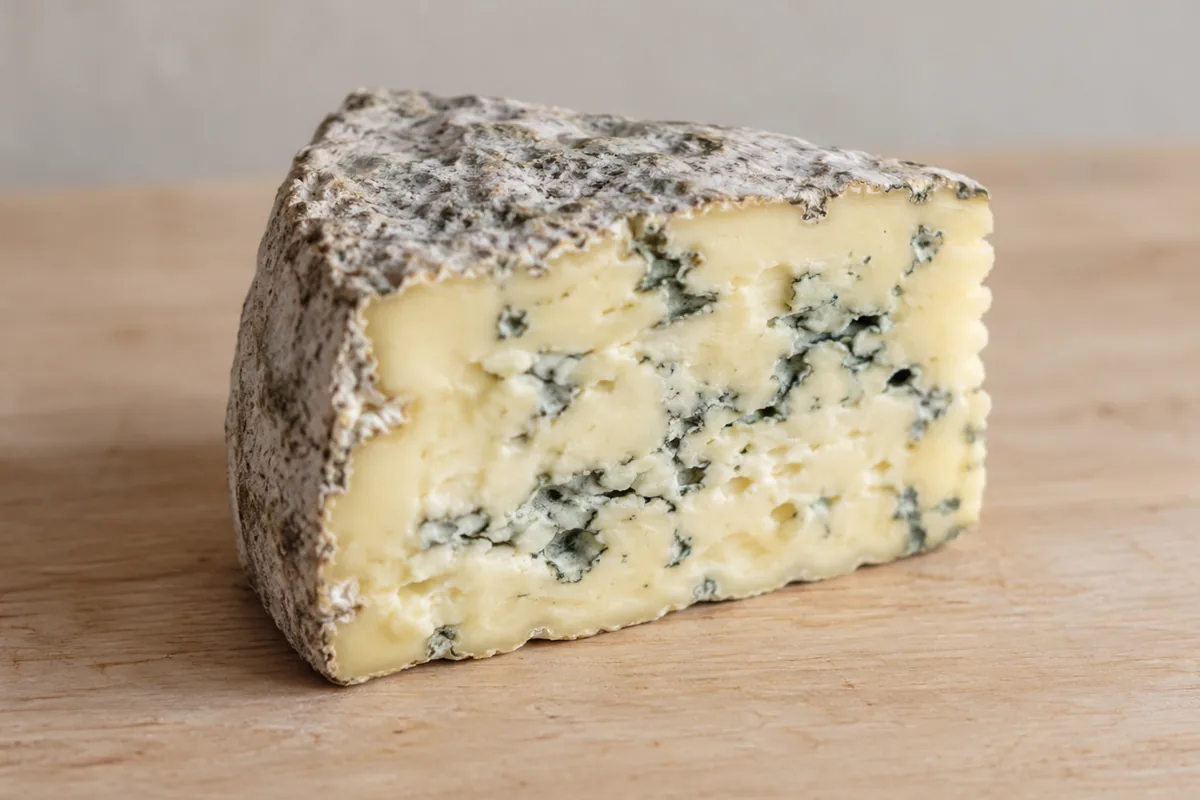
Montagnolo Affiné is a soft blue cheese from the Allgäu in Bavaria, made from pasteurised cow's milk by the family-owned dairy Käserei Champignon. Retailers sell it as a triple cream, and its natural rind is edible.
It won the World Cheese Awards in 2013, the first German cheese to do so, and its fat is quoted two ways that look very different: 70 percent on German listings and about 42 g per 100 g on UK packs.
In This Article
Where Does Montagnolo Cheese Come From?
Montagnolo comes from the Allgäu region of Bavaria in southern Germany. The UK importer Elite Imports says dairy farming there goes back more than 300 years and that the cheese is made all year round.
Käserei Champignon makes it, and Elite Imports describes the dairy as part of the Käserei Champignon group and still privately owned by the Hofmeister family.
The dairy's chief executive, Robert Hofmeister, said after the 2013 World Cheese Awards win that its cheesemakers bring more than 100 years of experience and tradition.
English Wikipedia credits the blue cheese Cambozola to Hofmeister-Champignon, which matches the family and dairy the importer names for Montagnolo.
The cheese is much younger than the dairy. Elite Imports dates Montagnolo to the early 1990s and says it went on sale in Germany first, then in other European countries, before reaching the UK in 2006.
Shops use two names for it. M&S and Dukes Hill sell Montagnolo Affine, and REWE's German supermarket flyers list Montagnolo with no second word.
What Is Montagnolo Made From?
Elite Imports describes it as made with pasteurised cow's milk, suitable for vegetarians and gluten-free, and M&S labels it vegetarian. Dukes Hill's ingredient list is cow's milk, cream, salt and vegetarian rennet, while M&S gives only "Contains Milk".
According to Elite Imports, it ripens slowly at low temperature, a cold maturation that builds its aromatic, spicy flavour and creamy consistency. The same source says the interior is laced with fine blue culture, which gives a slightly sweet aroma and a delicate texture.
The importer adds that the cheese is tended by hand during maturation, which it presents as the basis for the makers' 1st Quality seal.
What Does Montagnolo Taste Like?
Sellers describe a buttery, mellow cheese with a piquant edge from the blue. Dukes Hill calls the flavour buttery, mellow and gently tangy with a light piquant edge, and M&S calls the cheese luxuriously soft and buttery.
Texture gets as much attention as flavour: Dukes Hill promises a smooth, melt-in-the-mouth experience, and a 2013 World Cheese Awards judge, quoted by the Guild of Fine Food, described a velvety flavour that melts in the mouth.
Catherine Duffy, marketing manager at Elite Imports, put the 2013 win down to creaminess, with a small kick that creeps up on the eater.
The wording for the blue runs from a gentle blue at Dukes Hill to an aromatic, spicy flavour in the importer's notes, and no description here sets it against a named blue such as Stilton. Its mildness therefore rests on the sellers' judgement, not on a comparison.
Can You Eat the Rind on Montagnolo?
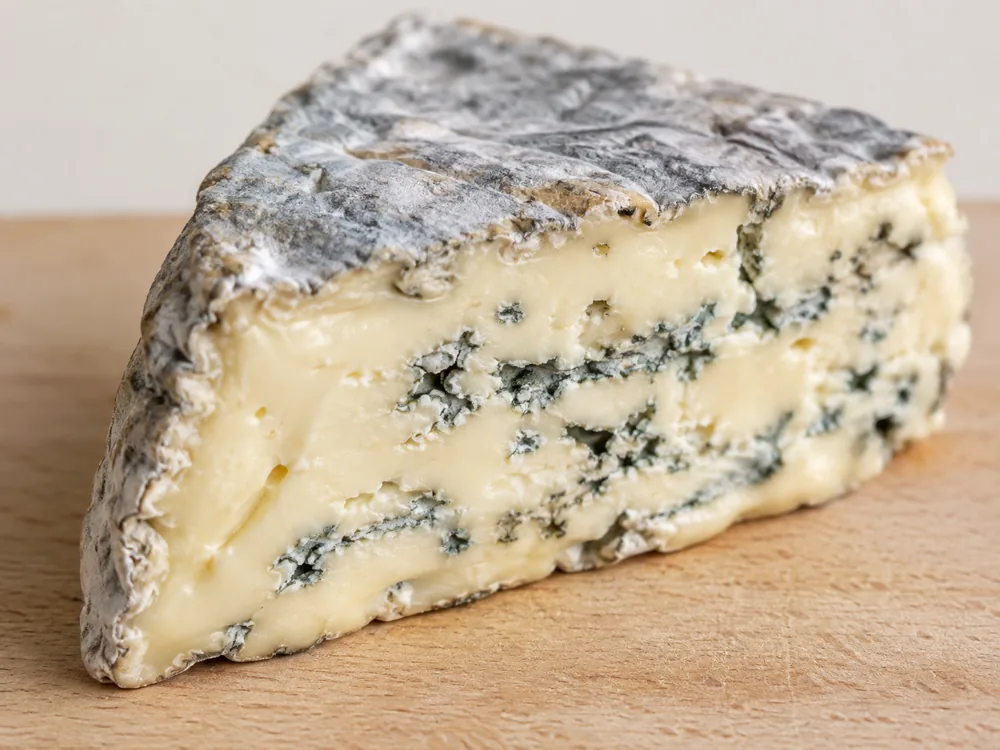
Yes, according to the importer. Elite Imports describes the rind as edible, while Dukes Hill calls it a natural crust and a soft rind without saying whether to eat it.
The descriptions point to a soft coat rather than a hard shell. One judge at the 2013 World Cheese Awards praised a soft blue-grey bloom, and Dukes Hill pairs the soft rind with a smooth centre for a creamy finish.
What Did Montagnolo Win at the 2012 and 2013 Cheese Awards?
In 2012 it was named Supreme Champion at the International Cheese Awards in Nantwich, ahead of more than 3,900 other competitors, according to the importer's announcement.
A year later it won the World Cheese Awards at the BBC Good Food Show at the NEC, the first German cheese to take the title after 25 years of the awards. A panel of 16 experts from 13 nations judged more than 2,700 cheeses, and Le Gruyère AOP Premier Cru finished third, one point behind.
Speciality Food's report adds that Le Gruyère AOP is the only cheese to have topped the World Cheese Awards on three occasions, so the one-point margin was over the awards' most successful cheese.
Dukes Hill dates the Supreme Champion title to 2013. The importer's 2012 announcement places it at Nantwich in 2012, and the 2013 win was the separate World Cheese Awards.
How Did Montagnolo Take First and Second Place in 2013?
Montagnolo Affiné held first and second place at the 2013 World Cheese Awards because Elite Imports entered it in two categories, blue cheese and cheeses that had already won international awards.
Catherine Duffy of Elite Imports said the two entries came from entirely different batches and the judges could not tell them apart, which she credited to a consistent manufacturing process. John Farrand of the Guild of Fine Food, which ran the competition, said the judges had picked two cheeses made by the same cheesemaker.
The result is evidence about two batches tasted in one competition, plus the importer's account of its own process, and it does not test a pack bought today.
How Much Fat Is in Montagnolo?
German supermarket listings give the fat as 70 percent fat in dry matter, which counts the fat against the cheese once its water is taken out. UK packs declare fat per 100 g of the cheese as sold, and that figure is lower.
M&S declares 42.6 g of fat in 100 g of its 160 g pack, and Dukes Hill lists 41.5 g for its 450 g piece.
| Per 100 g | M&S, 160 g pack | Dukes Hill, 450 g piece |
|---|---|---|
| Energy | 442 kcal | 432 kcal |
| Fat | 42.6 g | 41.5 g |
| Saturated fat | 31.2 g | 27.6 g |
| Carbohydrate | 0.7 g | 0.5 g |
| Sugars | 0.2 g | 0.5 g |
| Protein | 14.0 g | 14 g |
| Salt | 1.63 g | 2 g |
The two panels differ by about 1 g of fat and 3.6 g of saturated fat, and neither retailer says why, so the label on the pack in hand is the figure that applies.
The saturated-fat gap is more than three times the total-fat gap, so the panels do not show the same fat in different amounts. By simple division, saturated fat is about 73 percent of the fat in the M&S figures and about 67 percent in the Dukes Hill figures.
Dukes Hill gives protein and salt as whole numbers, 14 g and 2 g, while M&S gives 14.0 g and 1.63 g, so the salt figures are not stated to the same precision.
Taken together, 42.6 g of fat at 70 percent in dry matter implies about 61 g of dry matter and 39 g of water in 100 g. That is arithmetic across two listings, not a figure either one states.
At 442 kcal per 100 g on the M&S panel, a 30 g slice, the serving size English Wikipedia uses for Cambozola, comes to about 133 kcal, and the Dukes Hill panel gives about 130 kcal for the same slice. Neither retailer states a serving size, so that is arithmetic on the per-100 g figures.
M&S and Dukes Hill call it a triple cream, but Wikipedia defines triple cream as cheese with more than 75 percent fat in dry matter, and the 70 percent on German listings falls short of that line.
German listings give fat as a share of dry matter and UK packs give grams per 100 g of the cheese as sold, so the two figures describe one cheese on different bases. By Wikipedia's definition, a triple cream would need more than 75 percent in dry matter.
Is Montagnolo Lactose Free?
The M&S and Dukes Hill listings and the importer's product notes say nothing about lactose, so there is no lactose-free claim to check.
The two panels differ: M&S declares 0.7 g of carbohydrate per 100 g with 0.2 g of sugars, and Dukes Hill declares 0.5 g of carbohydrate with 0.5 g of sugars. Lactose is the sugar in milk, so the lactose in 100 g cannot be more than the sugars figure on the pack, 0.2 g or 0.5 g.
Those are two packs' declared figures, and they do not say what a person with lactose intolerance can tolerate.
Can You Eat Montagnolo When Pregnant?
NHS guidance says pasteurised or unpasteurised soft blue-veined cheeses, such as Danish blue, gorgonzola and roquefort, must be thoroughly cooked during pregnancy. It does not name Montagnolo, but a soft cheese sold as a blue fits that description, and pasteurised milk does not change the answer.
CDC lists soft cheese made from unpasteurized milk, including blue-veined cheese, among the riskier choices, and says pregnant women are 10 times more likely to get a Listeria infection.
How Does Montagnolo Differ From Cambozola?
Both come from the same group, and both are sold as soft blue cheeses with a rich, creamy paste. English Wikipedia says Cambozola is often marketed as blue brie in English-speaking countries, and Dukes Hill describes Montagnolo as combining the richness of brie with the depth of a gentle blue.
Cambozola's name joins Camembert and Gorgonzola, and its make follows the name. English Wikipedia describes a cow's milk cheese with extra cream, which gives the rich consistency of a triple crème, ripened with Penicillium camemberti for the white outer rind and Penicillium roqueforti for the blue veining.
The same page calls Cambozola considerably milder than Gorgonzola piccante, with a subdued blue flavour, which echoes the gentle blue Dukes Hill gives Montagnolo.
| Point | Montagnolo | Cambozola |
|---|---|---|
| Rind | Natural and edible per the importer, a soft blue-grey bloom per a 2013 judge | White bloomy rind from Penicillium camemberti |
| Blue mould | Not named by the importer, M&S or Dukes Hill | Penicillium roqueforti |
| Maturing | Slow, cold maturation, no time given | Four to six weeks |
| Fat in dry matter | 70 percent on REWE flyers | 70 percent on REWE flyers and in English Wikipedia |
| Fat per 100 g | 41.5 g to 42.6 g on UK packs | About 40 g, worked out from Wikipedia's 12 g per 30 g serving |
| On sale since | Early 1990s | 1983 per English Wikipedia |
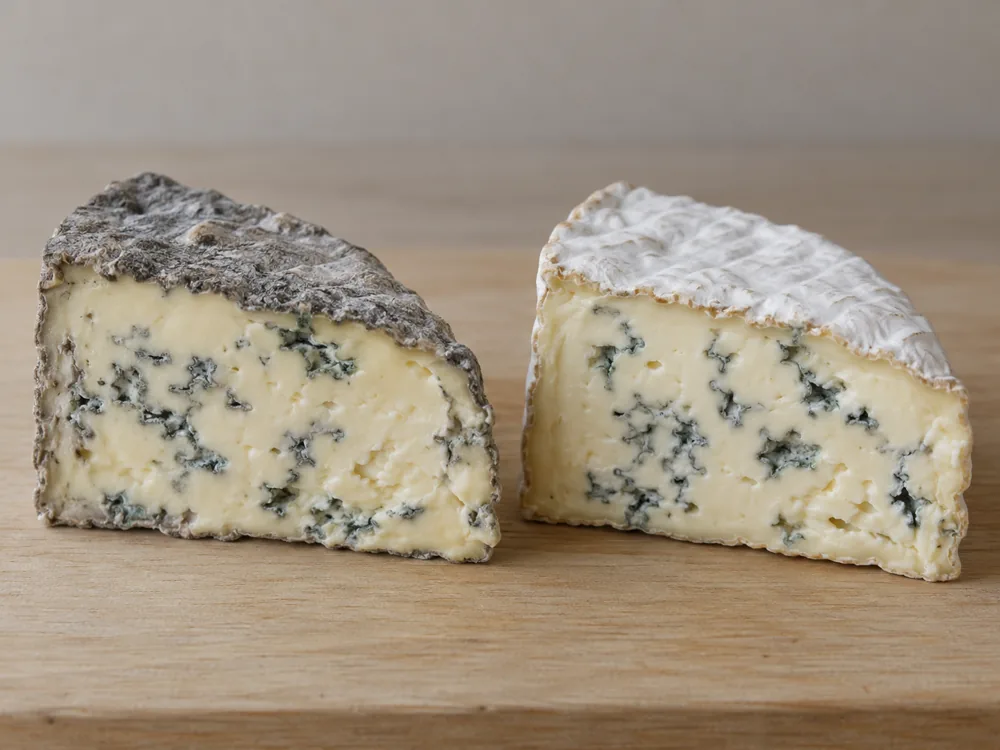
The rind is the visible difference, since English Wikipedia compares Cambozola's edible bloomy rind to Camembert's.
Where Can You Buy Montagnolo?
In the UK, M&S lists it as a 160 g pack and Dukes Hill sells a 450 g piece.
In Germany, REWE's flyers, collected on marktguru, list Montagnolo as a Weichkäse, a soft cheese, with 70 percent Fett i. Tr. and price it per 100 g.
How Long Does Montagnolo Keep Once Opened?
M&S tells buyers that once the pack is opened they should keep it properly sealed or move it to an airtight container. It says to eat it within 3 days and not to freeze it.
M&S gives a fridge range of 0°C to +5°C and Dukes Hill says below 5°C, while CDC says a refrigerator should be at 40°F (about 4°C) or below, so a fridge at that setting fits all three. Dukes Hill gives no keeping time, so the 3 days is M&S's instruction for its own 160 g pack.
That makes the 160 g pack the one size with a stated keeping time, and the 450 g piece the one a household would have to judge without a seller's limit.
What to Serve With Montagnolo
Elite Imports advises taking it out of the refrigerator 30 minutes before eating so the cheese can breathe and acclimatise, and Dukes Hill recommends serving it at room temperature for maximum creaminess.
Two sellers name partners, and both start from crackers or bread.
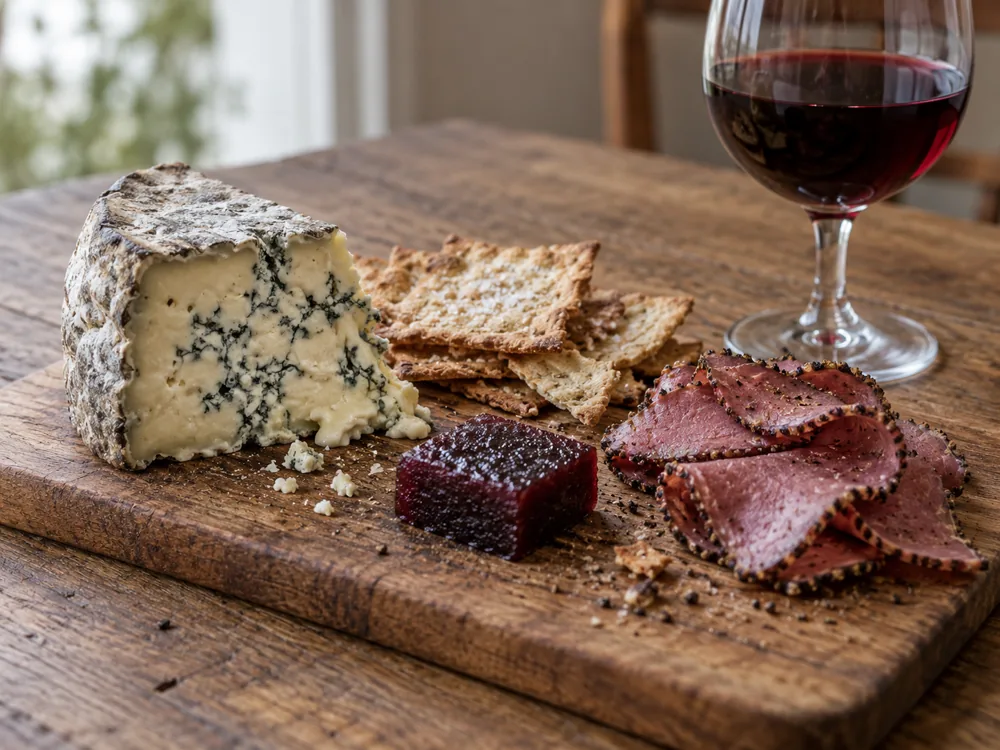
- Dukes Hill: Sea Salt Thins, damson fruit cheese and sliced pastrami, with a full-bodied red such as Pinot Noir.
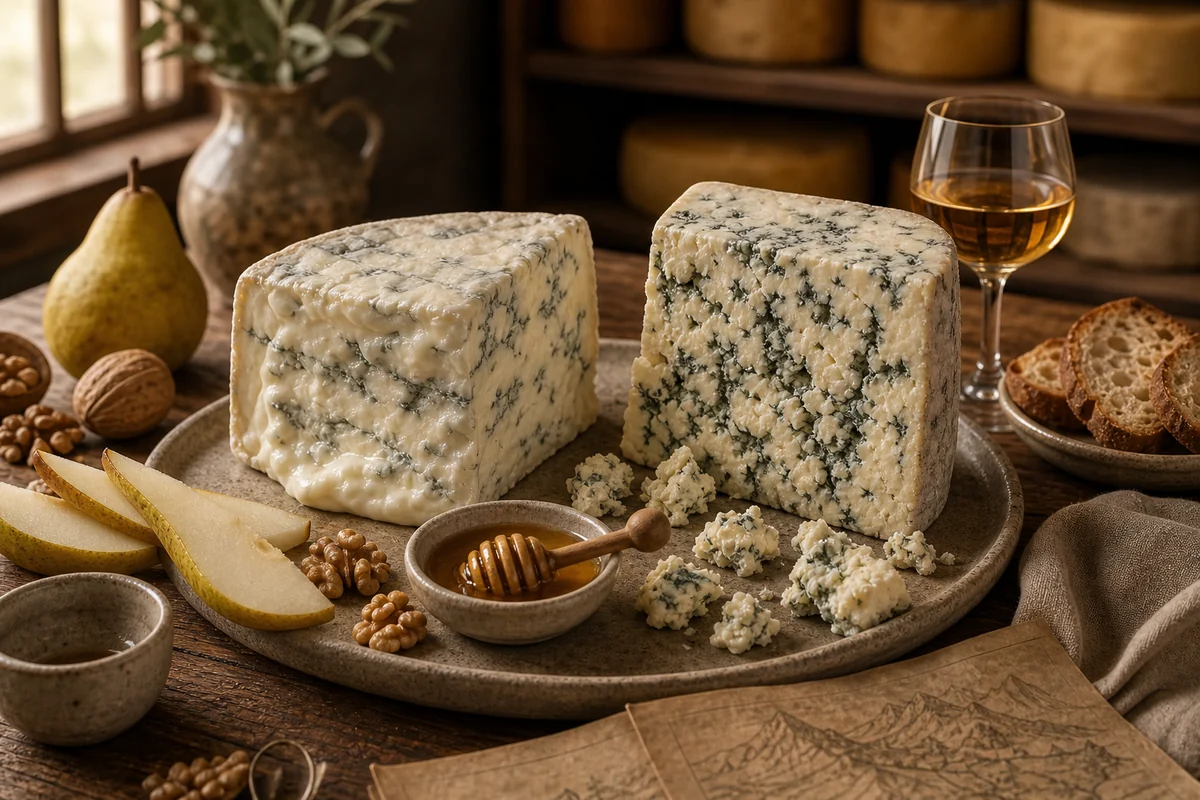
- Elite Imports: rustic bread or crackers, or the cheese as the centrepiece of a cheeseboard.