Cheap wine can pair well with cheese when the bottle has a clear job. Buy the bottle for what it does at the cheese board: bubbles cut cream, acidity lifts tangy cheese, light red fruit works with Gouda, and a little sweetness can rescue blue cheese.
The expensive-looking mistake is buying too many cheeses and the cheapest possible heavy red. A smaller board with one good anchor cheese and one clean bottle usually tastes better than a crowded board built around prestige.
This page is not trying to find the cheapest bottle on the shelf. It is trying to prevent wasted money.
A twelve-dollar wine with acidity, bubbles, or soft fruit can do more for cheese than a discounted bottle with oak, heat, and no freshness.
Best practice: spend first on wine structure and one anchor cheese. A simple Cava with Brie and cheddar beats a harsh cheap Cabernet beside five weak cheeses.
In This Article
Spend on Structure Before Brand Names
For budget pairing, the label matters less than what the wine does in the mouth. The useful traits are bubbles, acidity, fruit, low tannin, moderate alcohol, or controlled sweetness.
Those traits give cheese something to work with. Without them, a cheap bottle tastes flat beside mild cheese or harsh beside soft cheese.
Bubbles are the easiest budget feature to buy because Cava, Cremant, and many domestic sparklers bring texture even when the fruit is simple. They make Brie taste cleaner, sharpen cheddar, and help salty hard cheese feel less dry.
That is why sparkling wine is often safer than a cheap still white with no acidity.
For red wine, the budget filter is restraint. Choose lighter body, brighter fruit, and lower tannin before you choose a famous grape name.
A simple Pinot Noir, Beaujolais-style red, or Chianti can work because it leaves room for the cheese instead of covering it with heat.
| Pairing | Type | Why It Works |
|---|---|---|
| Cava + Brie | Wine | Best value opener. Bubbles refresh cream and make simple Brie feel more complete. |
| Sauvignon Blanc + goat cheese | Wine | Best bright match. Acid and herbal notes sharpen fresh goat cheese without needing an expensive bottle. |
| Dry rose + cheddar | Wine | Best picnic match. Fruit and acidity work with salty cheddar, crackers, and fruit. |
| Pinot Noir + Gouda | Wine | Best cheap red match. Red fruit and gentle tannin fit Gouda's butter and caramel. |
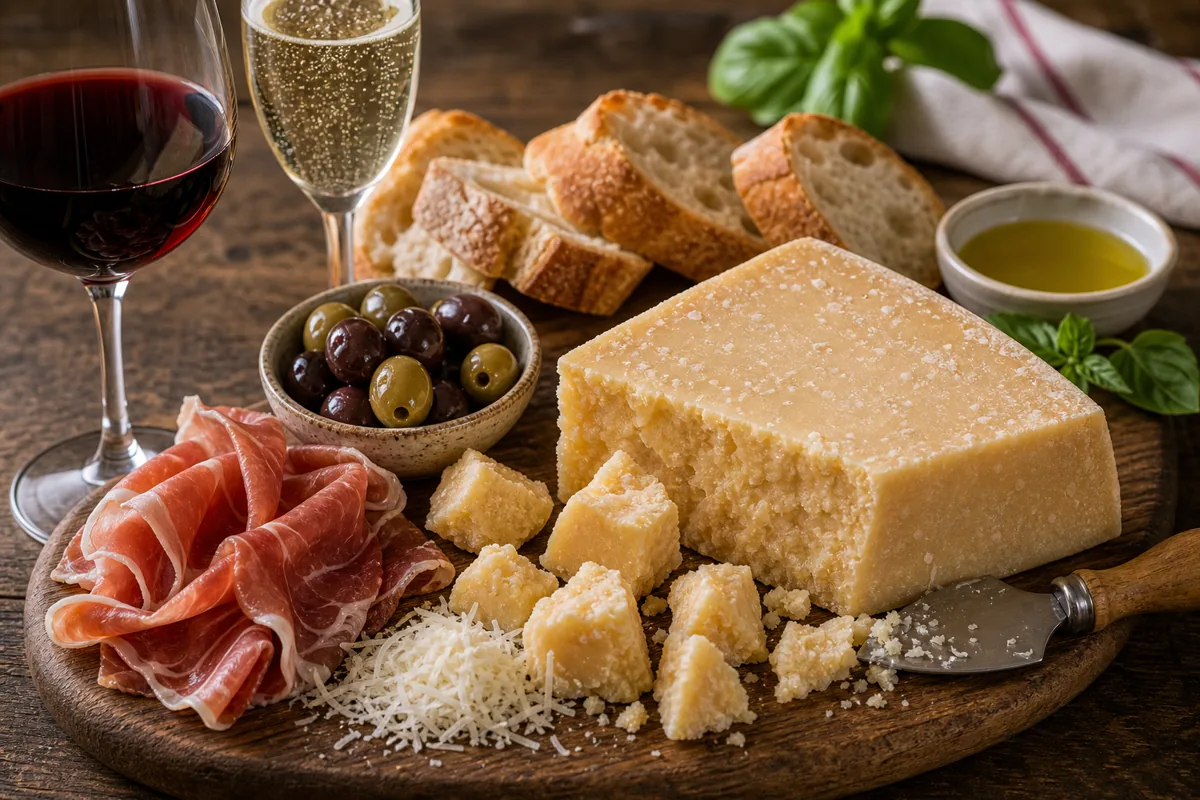
| Chianti + hard Italian cheese | Wine | Best Italian value match. Acidity and tannin meet salty hard cheese, olives, and salami. |
| Cremant + aged cheese | Wine | Best upgrade bottle. Toasty bubbles work with cheddar, aged Gouda, and Parmigiano-style cheese. |
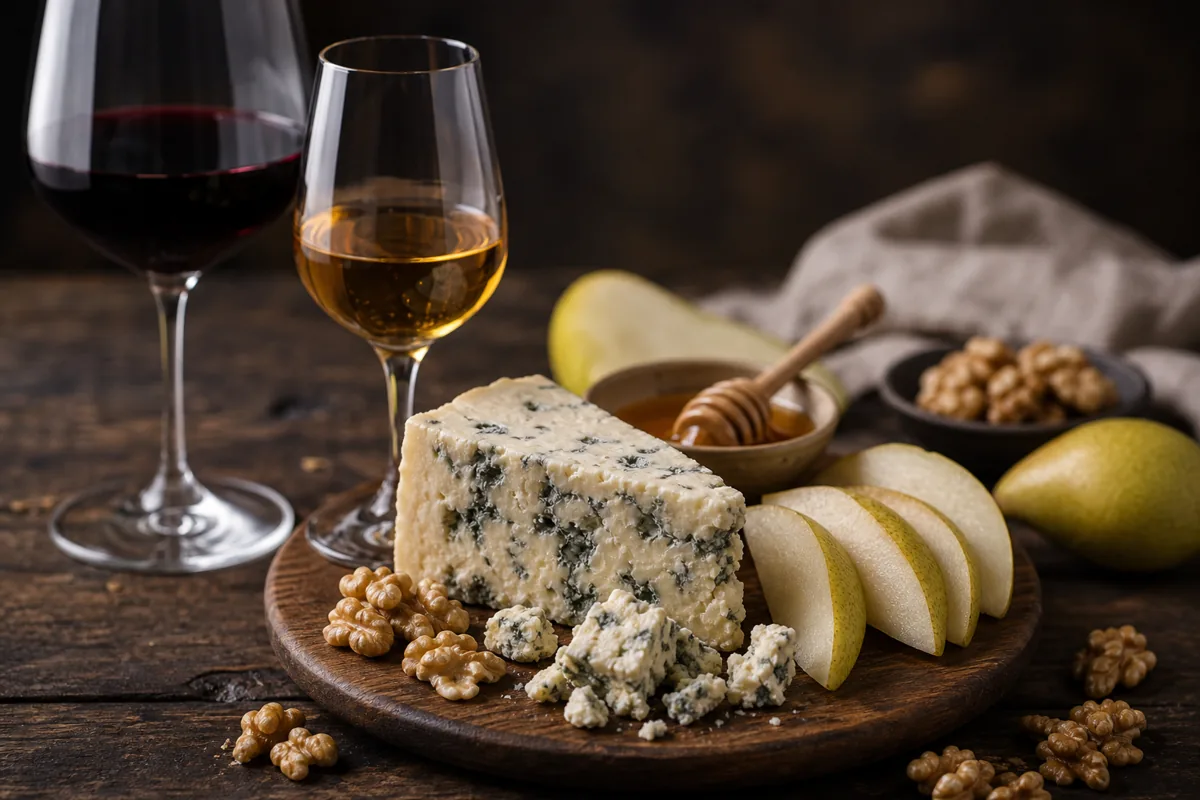
| Off-dry Riesling + blue cheese | Wine | Best small sweet-salt match. Sweetness balances blue cheese better than a cheap dry red. |
| Unoaked Chardonnay + creamy cheese | Wine | Best round white match. Use with Brie, Camembert, young Gouda, or buttery crackers. |
- Best cheap sparkling: Cava, Cremant, Prosecco, or dry domestic sparkling wine.
- Best cheap white: Sauvignon Blanc, Chenin Blanc, unoaked Chardonnay, or dry Riesling.
- Best cheap pink: dry rose with cheddar, Gouda, goat cheese, fruit, and picnic snacks.
- Best cheap red: Pinot Noir, Chianti, Beaujolais-style red, or simple Garnacha.
If you buy one cheese with more character, make it aged cheddar. It is flexible across sparkling wine, rose, crisp whites, cider-style drinks, and lighter reds.
Cheap Bottles Need Cheese With a Clear Job
A budget bottle should not have to carry the whole board. Give it cheese that supplies a specific missing piece: cream, tang, salt, nuttiness, or sweetness balance.
Start by naming the weakness in the bottle. If it tastes sharp and lean, add cream or butterfat.
If it tastes fruity but simple, add nuttiness or age.
If it tastes a little sweet, add salt. That decision does more than buying one more cheese.
| Cheap wine structure | Cheese role | Good picks | What it fixes |
|---|---|---|---|
| Bubbles | Cream or salt | Brie, cheddar, Parmigiano-style cheese | Refreshes fat and makes simple cheese taste cleaner. |
| High acidity | Tang or freshness | Goat cheese, ricotta, young sheep cheese | Makes fresh cheese taste intentional instead of plain. |
| Red fruit | Butter or nuttiness | Gouda, young cheddar, alpine-style cheese | Adds flavor without heavy tannin. |
| Italian acidity | Salt and umami | Parmigiano-style cheese, Pecorino-style cheese, salami | Gives cheap red wine a savory direction. |
| Off-dry sweetness | Salt or blue veining | Blue cheese, spicy cheese, salty aged cheese | Balances salt, heat, and sharpness. |
Fresh goat cheese is one of the best budget cheeses because acid-driven wines make it taste sharp and clean. Gouda sweetness helps when the bottle is fruity but simple.
Supermarket cheese can still work when the role is honest. A basic goat log can carry Sauvignon Blanc.
A modest cheddar can carry rose or sparkling wine. A small piece of real hard cheese can make Chianti taste more savory.
The board fails when every cheese is mild and no one cheese gives the bottle a job.
If the bottle is under budget pressure, avoid the hardest test: high-tannin red with mild soft cheese. Choose bubbles, acidity, or salt instead.
Put the Cheese Money Into One Anchor
A budget board works better when one cheese carries texture and flavor. The other cheeses can be familiar, mild, and cheaper as long as they support the wine.
The anchor should show something visible: crystals in aged Gouda, a sharper cheddar bite, blue veining, a bloomy rind, or a hard grating-cheese crumble. Visible character helps guests understand why that cheese costs more.
It also gives the wine a stronger target.
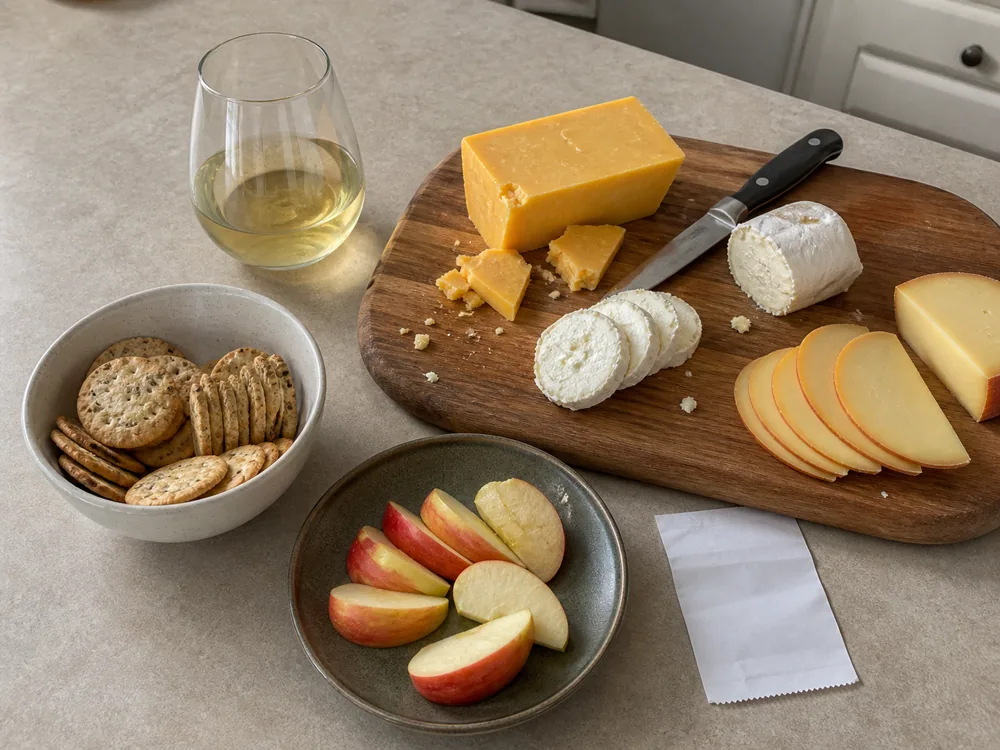
Spend more on age, crystals, rind, or blue veining. Save on crackers, fruit, nuts, and one mild support cheese.
Those savings are less noticeable than buying a bland anchor.
If the budget is tight, buy less anchor cheese rather than a weaker anchor. Four ounces of aged cheddar, blue cheese, or hard Italian cheese can shape a whole board when the cuts are small and the support foods are useful.
A full pound of mild cheese often tastes cheaper even when it costs more in total.
Ask the counter whether they have ends or offcuts of the same aged cheese. The bin price is lower than a fresh cut, and on a board that gets broken into shards the shape never shows.
Cut the anchor smaller than the support cheeses, not larger. A thin shard of the strong cheese lands harder than a thick slab, and four ounces then carries the board through more glasses.
Put it at the edge people reach first and leave a knife beside it. An aged cheese buried between two mild ones gets eaten last, by which point the bottle is empty and nobody has tasted the piece you spent the money on.
Take the anchor out of the fridge an hour before the others. Aged paste needs longer to come round than a fresh goat log does, and cold flattens the crystals and the long finish you paid for.
For an upgraded hard-cheese lane, use the hard-cheese wine logic. A small piece of hard Italian cheese can make simple sparkling wine or Chianti taste cleaner.
For blue cheese, sweet blue-cheese pairing matters more than price. Sweetness and salt balance each other better than cheap dry red and blue cheese.
Avoid the Cheap-Wine Traps
Cheap wine becomes obvious when it meets the wrong cheese. Heavy oak, bitter tannin, high alcohol, and obvious sugar can make mild cheese taste flat or sour.
The most common bad buy is a cheap heavy Cabernet for a soft-cheese board. Brie cannot fix harsh tannin, and the wine will make the cheese taste dull.
Oak is the quiet trap. A cheap oaked white can taste sweet, woody, and thick without giving enough acidity to clear cream.
If you already bought that bottle, pair it with sharper cheddar, salty hard cheese, or roasted nuts instead of fresh goat cheese.
- Too tannic: cheap Cabernet plus Brie tastes dry and bitter.
- Too oaky: heavily oaked Chardonnay can make goat cheese taste sour.
- Too sweet: sweet wine plus mild Gouda gives the board no edge.
- Too bland: mild cheese plus mild wine has no center.
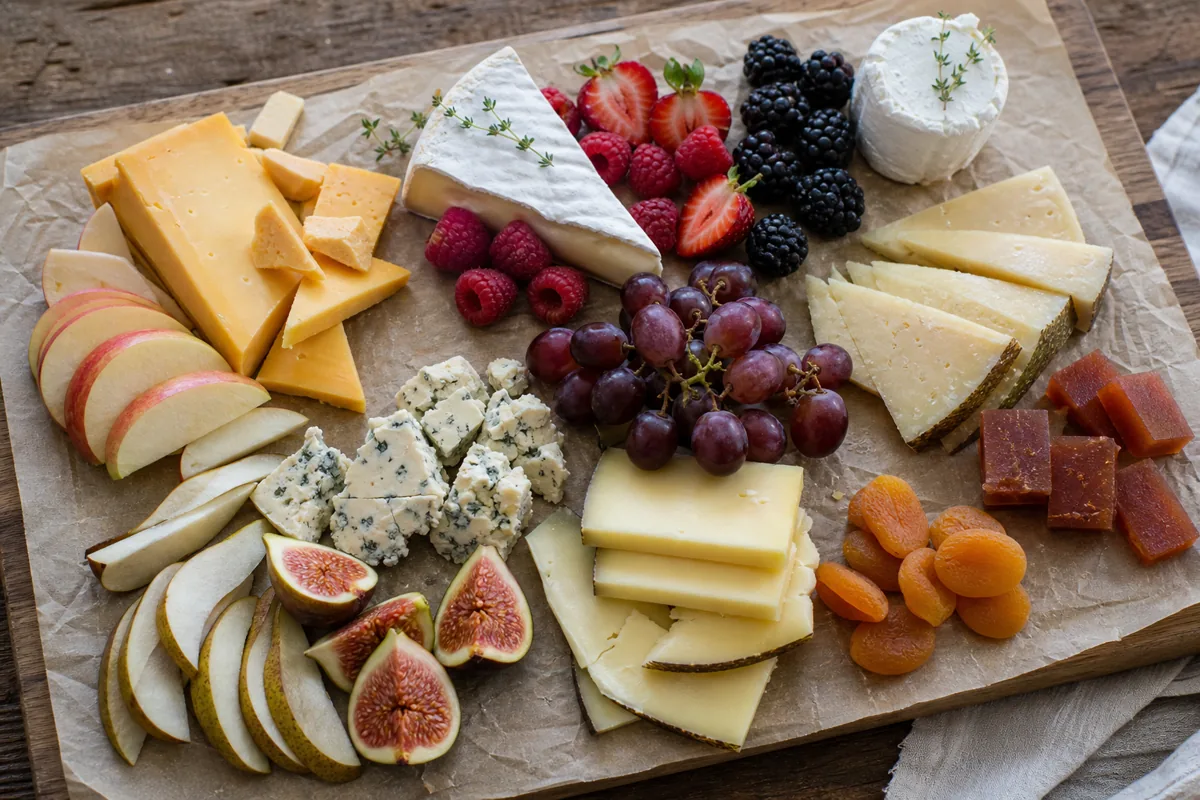
If the board uses fruit, keep it useful. Cheese and fruit pairing works best when apples, grapes, or dried apricots add acid or texture, not just decoration.
Do not let accessories steal the budget from the pairing. Fancy crackers, spreads, and decorations cannot repair a harsh bottle or a bland cheese.
Plain bread, apples, olives, almonds, and one smart condiment usually do more because they add acid, salt, crunch, or reset.
Build by Budget, Not by Fantasy Board
A budget board should have a ceiling before you shop. That ceiling tells you whether the money belongs in one stronger cheese, a better sparkling bottle, or more support food.
Use the ceiling to make one tradeoff before you enter the store. If the wine will be very inexpensive, keep the cheeses clearer and saltier.
If you can spend a little more on one bottle, make it sparkling or a fresh white because those styles lift more cheeses at once.
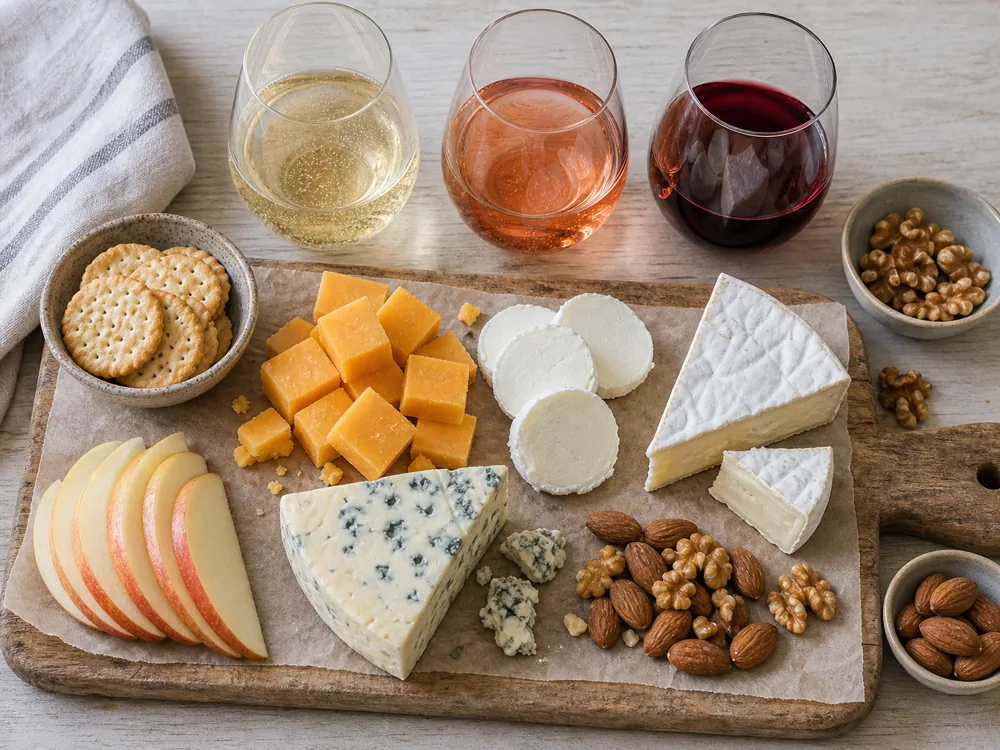
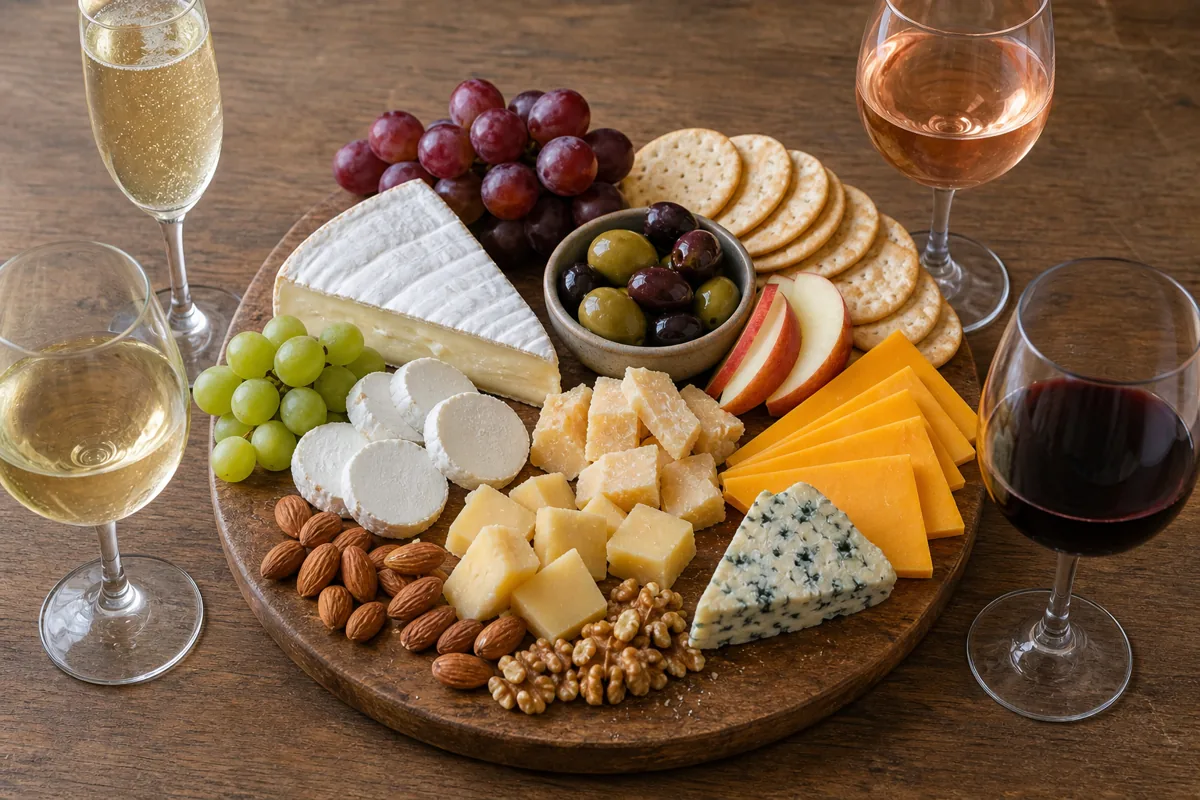
- $25 to $35 board: Cava, Sauvignon Blanc, Brie, goat cheese, cheddar, apples, crackers, and almonds.
- $35 to $45 board: Cava, dry rose, aged cheddar, Gouda, goat cheese, olives, grapes, and bread.
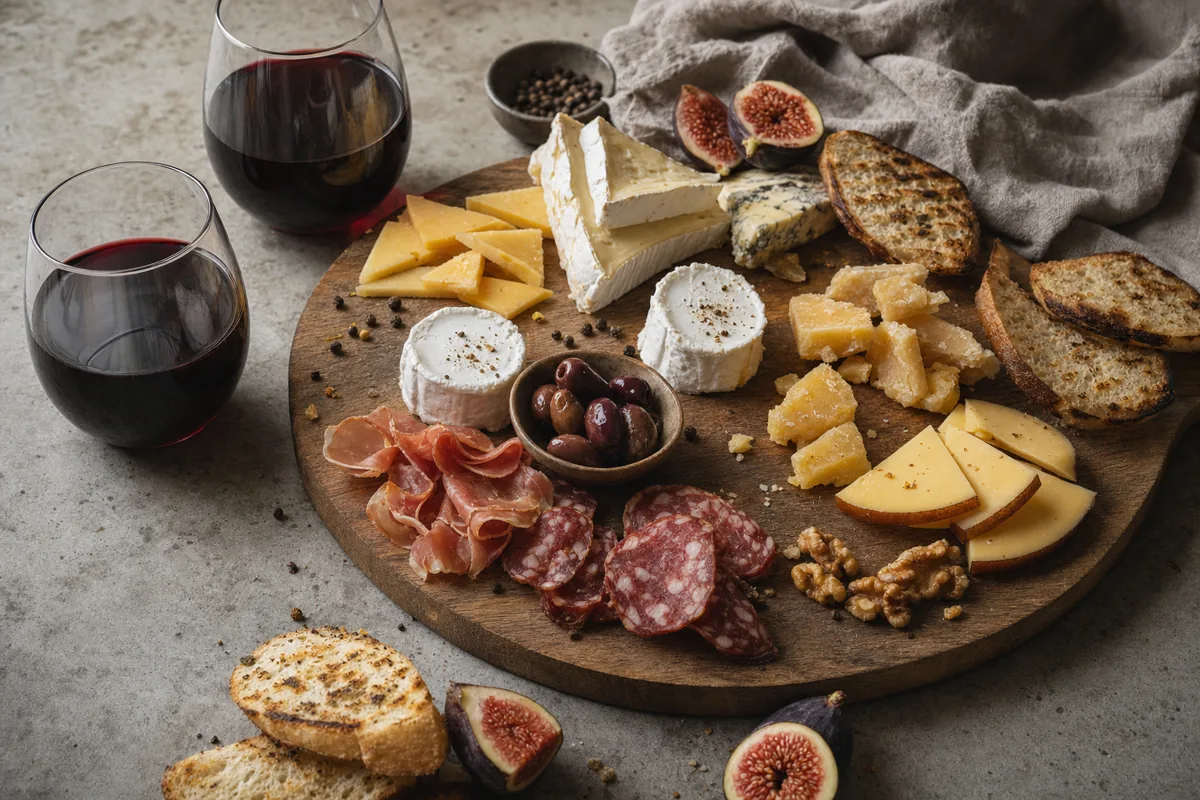
- $45 to $60 board: Cremant, Pinot Noir, Parmigiano-style cheese, Gouda, blue cheese, walnuts, and dried figs.
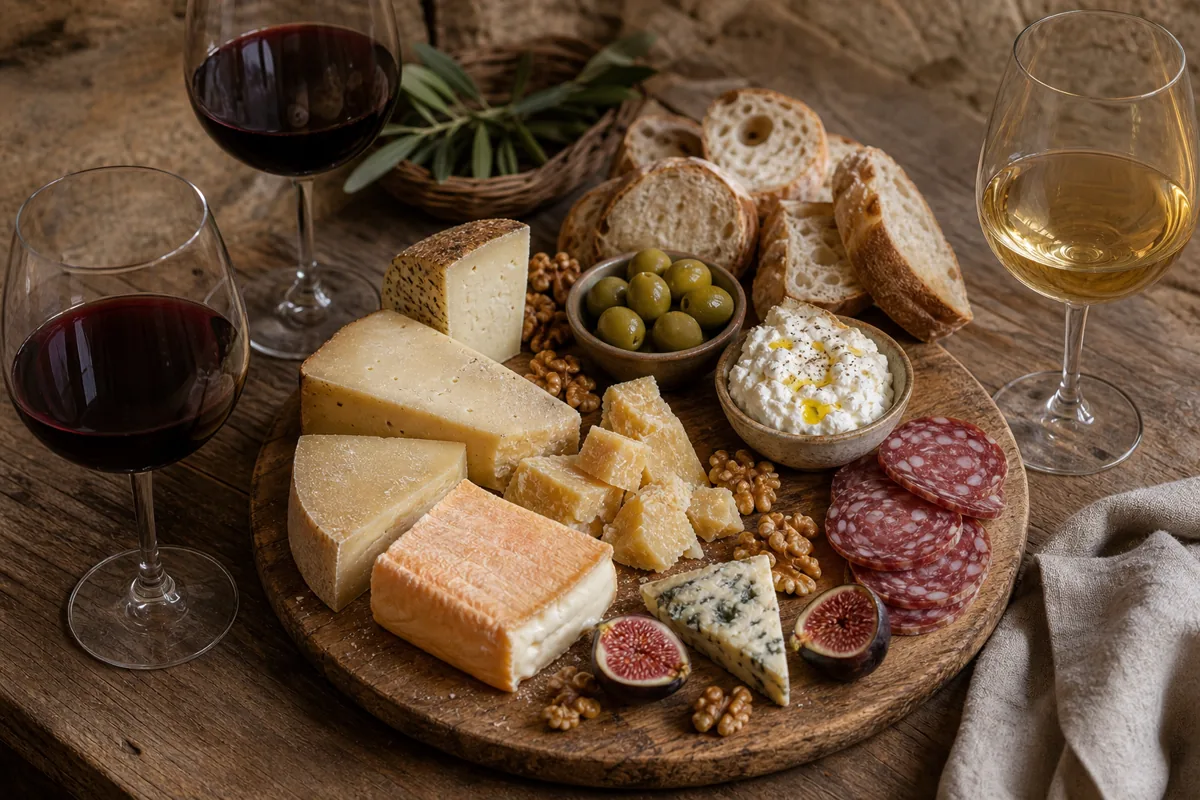
- Meatier board: Chianti, hard Italian cheese, cheddar, salami, olives, tomato snacks, and crusty bread.
Choose Use Cava with Brie, Sauvignon Blanc with goat cheese, and dry rose with aged cheddar. for: Best low-budget board
This board gets range from bubbles, acid, and fruit instead of expensive labels. It feels varied without rare cheese.
Choose Use Cremant with hard cheese, Pinot Noir with Gouda, and off-dry Riesling with blue cheese. for: Best upgraded budget board
This board spends more on one hard cheese and one blue accent. It gives better texture without becoming a luxury spread.
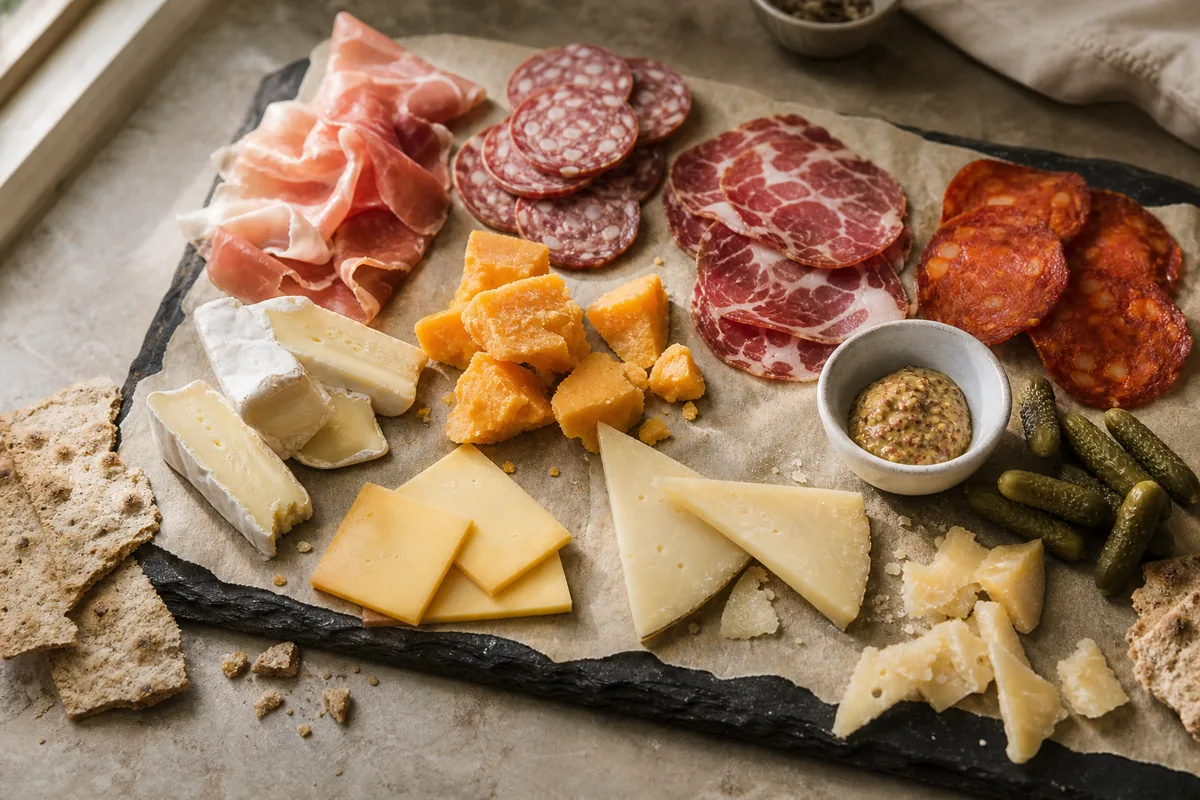
For a meat-heavy version, cheese and meat pairing helps because salami changes how red wine tastes. Salt can help cheap wine, but it needs acid nearby.
If the board becomes mostly cured meat, a charcuterie-board layout is more useful than adding another cheese.
For two people, shrink the same logic instead of building a miniature banquet. One bright bottle, one anchor cheese, one support cheese, apples or grapes, nuts, and bread is enough.
The goal is contrast, not abundance.
Shopping Rules That Keep the Board Cheap
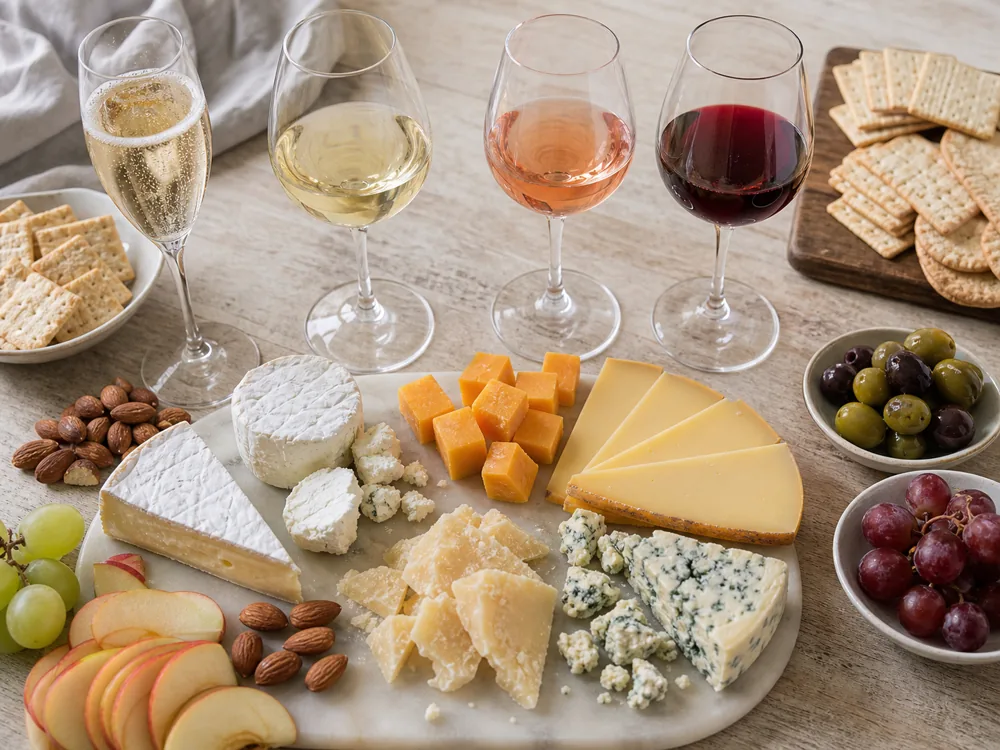
Buy by role: one bright bottle, one flexible bottle, one anchor cheese, two support cheeses, and a few foods that add crunch or acid. Skip anything that does not change the bite.
The simplest strong board is one fresh/tangy cheese, one creamy cheese, and one aged salty cheese. Then choose one bright bottle and one deeper bottle.
Shop in that order too. Choose the bottle style, choose the anchor cheese, then choose support food.
If you start with snacks, the cart fills up before the pairing has a spine.
- One bright bottle: Sauvignon Blanc, Chenin Blanc, Cava, or dry sparkling wine.
- One flexible bottle: rose, Pinot Noir, Chianti, or simple Italian red.
- One anchor cheese: aged cheddar, Gouda, hard Italian cheese, or blue cheese.
- Two support cheeses: Brie, goat cheese, ricotta, or young cheddar.
If the board shifts into a specific region, use that regional logic instead. For example, Tuscan wine and Italian cheese changes the choices once Chianti, Brunello, and Pecorino Toscano own the table.
The budget rule is plain: buy acidity, bubbles, and one good cheese before you buy more labels.
That rule also protects leftovers. A bright bottle and a useful anchor cheese can become a sandwich, salad, omelet, or snack the next day.
A board built from five weak cheeses and a rough red usually leaves the least useful leftovers.
If you are unsure at checkout, remove one decorative item and keep the better cheese. Guests remember the bite that made the wine taste cleaner, not the extra packet of crackers.
SOURCES & REFERENCES
Sparkling wine, Sauvignon Blanc, dry rose, Pinot Noir, Chianti, and off-dry Riesling are reliable cheap wines for cheese. They bring acidity, bubbles, fruit, or sweetness instead of relying on expensive labels.
Buy one anchor cheese such as aged cheddar, Gouda, hard Italian cheese, or blue cheese. Add two support cheeses such as Brie, goat cheese, ricotta, or young cheddar.
Cheap red wine can pair with cheese when it is light or medium-bodied. Pinot Noir, Chianti, Beaujolais-style red, and simple Garnacha work better than harsh tannic reds with mild cheese.
Brie, hard Italian cheese, aged Gouda, cheddar, and salty firm cheeses pair well with cheap sparkling wine. Bubbles cut fat and make salty cheese taste cleaner.
Choose one bright bottle, one flexible bottle, one anchor cheese, and two support cheeses. Add bread, crackers, apples, grapes, nuts, and olives before buying extra cheese or decorations.