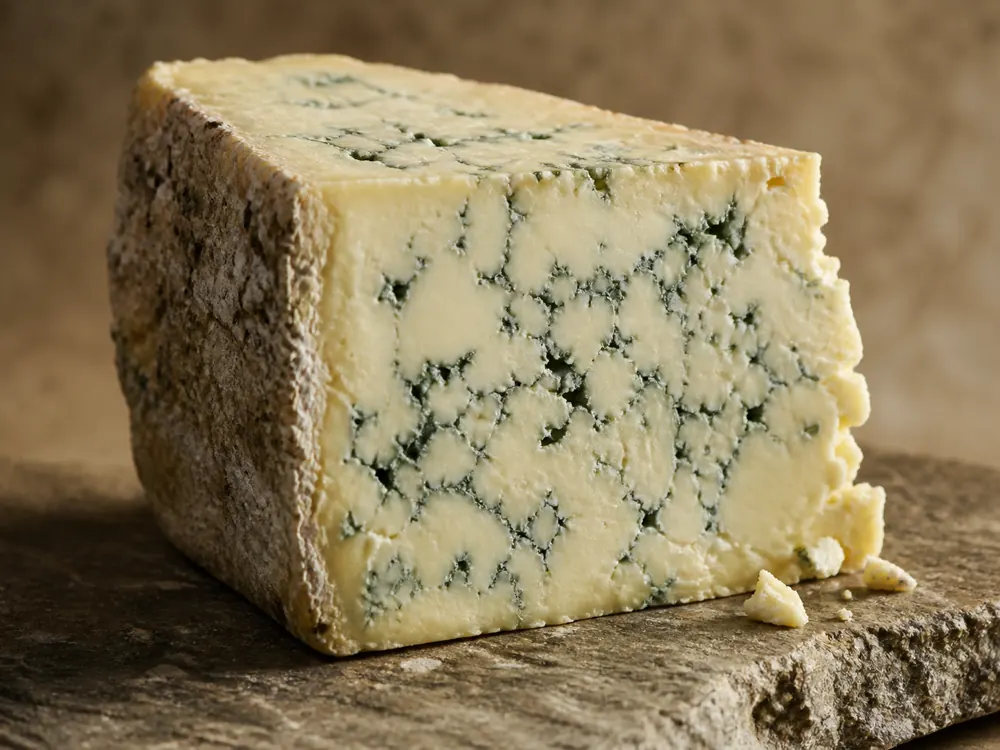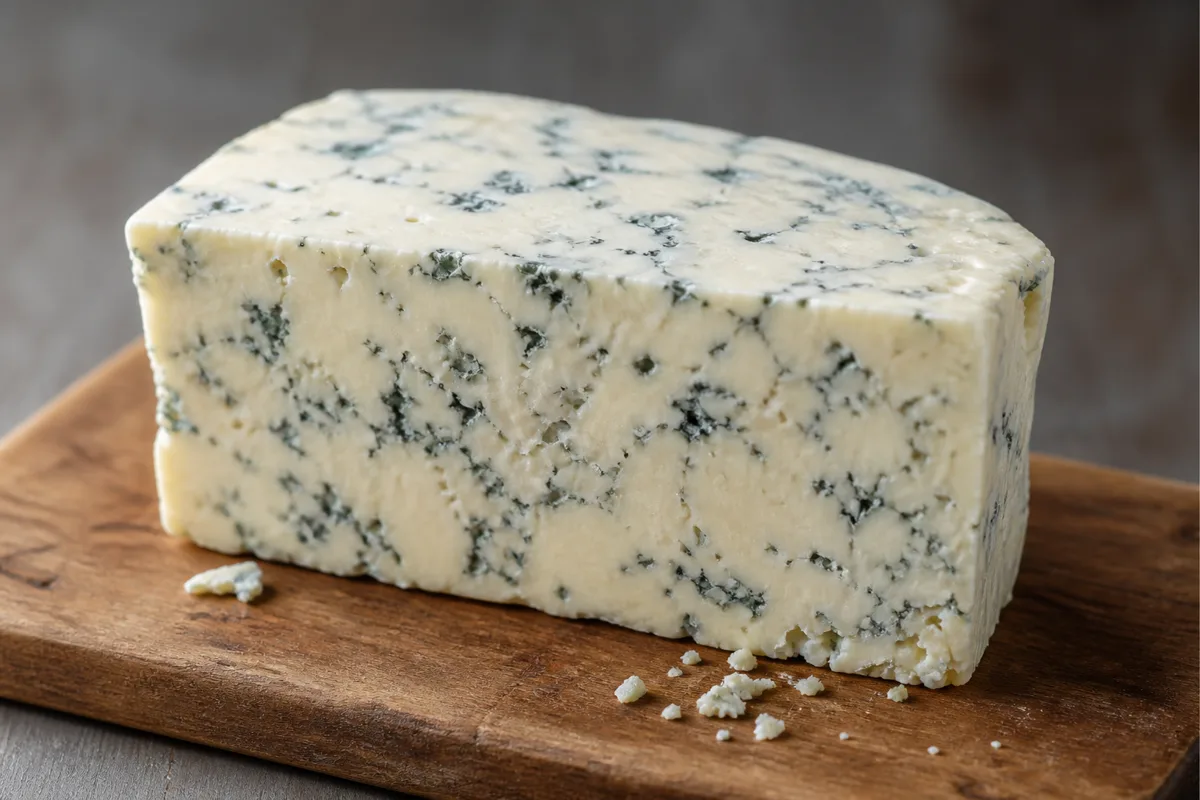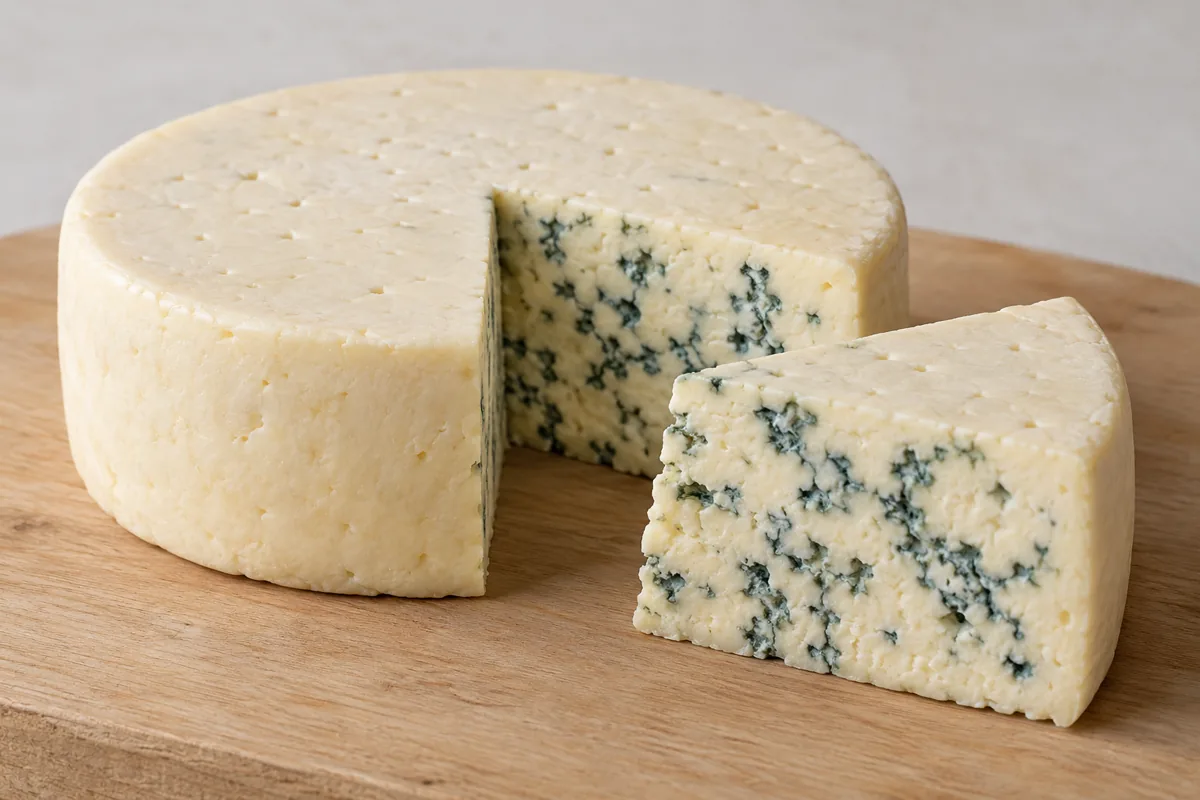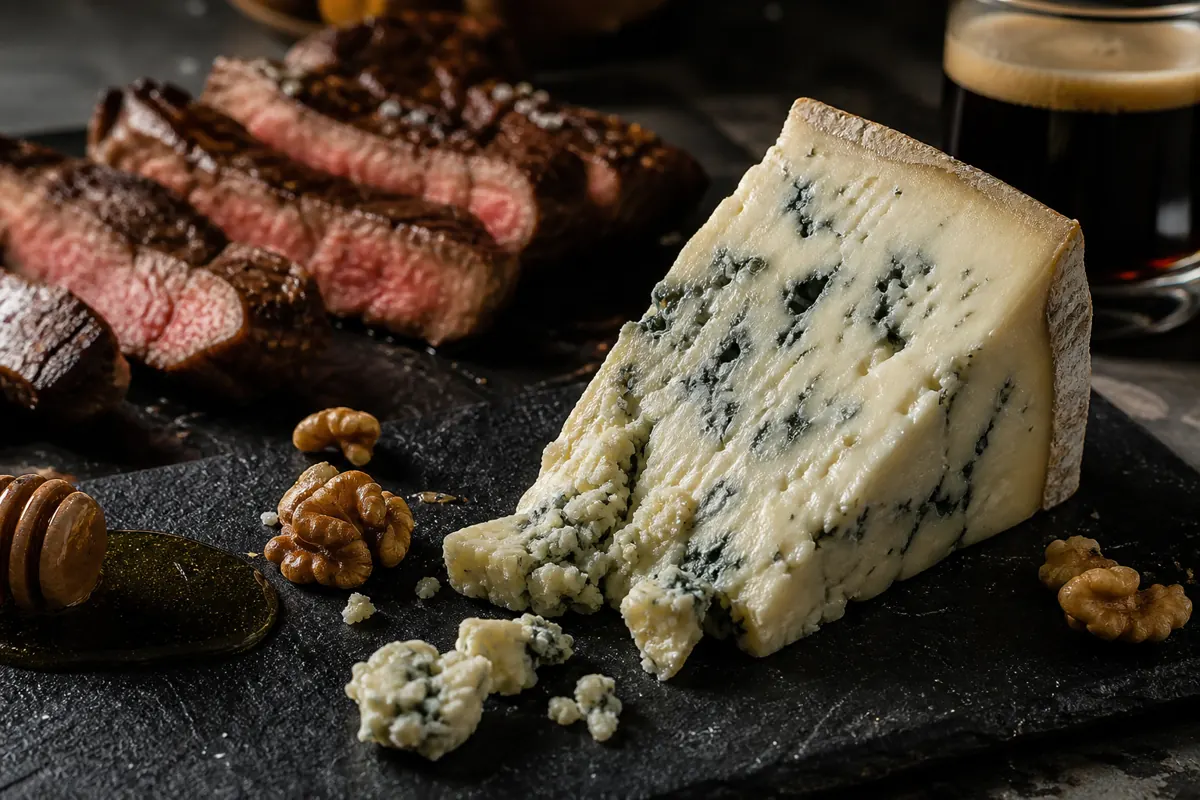
AmaBlu is Caves of Faribault's raw cow milk blue cheese from Minnesota. The quick answer is that it is a creamy, tangy, salty blue aged for at least 75 days in the Faribault sandstone cave setting, and it works best when blue cheese is meant to lead the bite.
People search the name for more than flavor. They want to know whether AmaBlu is a real producer-specific cheese, why the caves matter, whether it is raw milk, and how it differs from generic crumbles in a tub. Those details change both buying and serving.
This page keeps AmaBlu separate from the broad blue cheese category. We cover producer identity, cave aging, flavor, cooking uses, pairings, storage, substitutes, and safety without turning the article into a full history of American blue cheese.
In This Article
AmaBlu is a named Caves of Faribault blue, not generic crumbles
The first distinction is ownership. AmaBlu belongs to Caves of Faribault, a Minnesota producer associated with cave-aged blue and affinage cheeses. That matters because blue cheese can range from mild supermarket crumble to protected European styles and small American cave-aged wheels.
AmaBlu sits in the named American blue lane. Cheese references list it as semi-soft, artisan, blue-veined, and made from unpasteurized cow milk. The producer shop describes it as cave-aged for a minimum of 75 days and positioned for steaks and burgers.
That gives the buyer a clearer job than a broad blue label. If you want a creamy American blue that can crumble over warm food and still taste like a real cheese, AmaBlu belongs on the shortlist.
- Main identity: Minnesota raw cow milk blue from Caves of Faribault.
- Main texture: creamy enough for burgers and steak, crumbly enough for salads.
- Main flavor: tangy, salty, rich, and blue-veined without needing a sauce.
- Main limit: it is raw milk, so safety decisions need label and medical guidance.
It should not be confused with English PDO blue structure or raw sheep milk blue. AmaBlu's point is American cow milk plus Faribault cave identity.
The Faribault cave story is part of the cheese, not decoration
Caves of Faribault emphasizes sandstone caves with steady temperature and humidity where blue-green molds can develop. That setting is not just a romantic story. It helps explain why the cheese is marketed around cave aging, consistency, and a specific American blue tradition.
The practical result is a cheese that should taste developed before it tastes harsh. Cave aging gives blue mold time to spread, salt time to settle, and the paste time to move from fresh curd toward creamy tang.
For AmaBlu, the cave-aging claim is part of the buying cue. Look for Caves of Faribault identity, not just a generic blue cheese label.

The cave story also separates AmaBlu from a recipe-only ingredient. If the dish only needs anonymous blue salt, any crumble may work. If the cheese is visible on a board, steak, burger, or wedge salad, the named cave-aged identity matters more.
Raw cow milk and blue mold shape the safety and flavor answer
AmaBlu is listed as made from unpasteurized cow milk. That raw-milk detail is central, not a footnote. It can deepen flavor, but it also means pregnant readers and immune-risk diners should follow medical guidance and check the exact label, age, and storage condition.
Blue cheese production also uses Penicillium roquefortii in many descriptions of AmaBlu. The mold creates the blue veining and the tangy, savory bite. The goal is controlled blue flavor, not random spoilage.
If you need a pasteurized blue, choose a different product. If you want the raw-milk American blue identity, use AmaBlu where its flavor is noticed.
For general safety decisions, the milk-treatment safety rules explain why milk treatment, moisture, age, and storage all matter together.
How strong does AmaBlu taste?
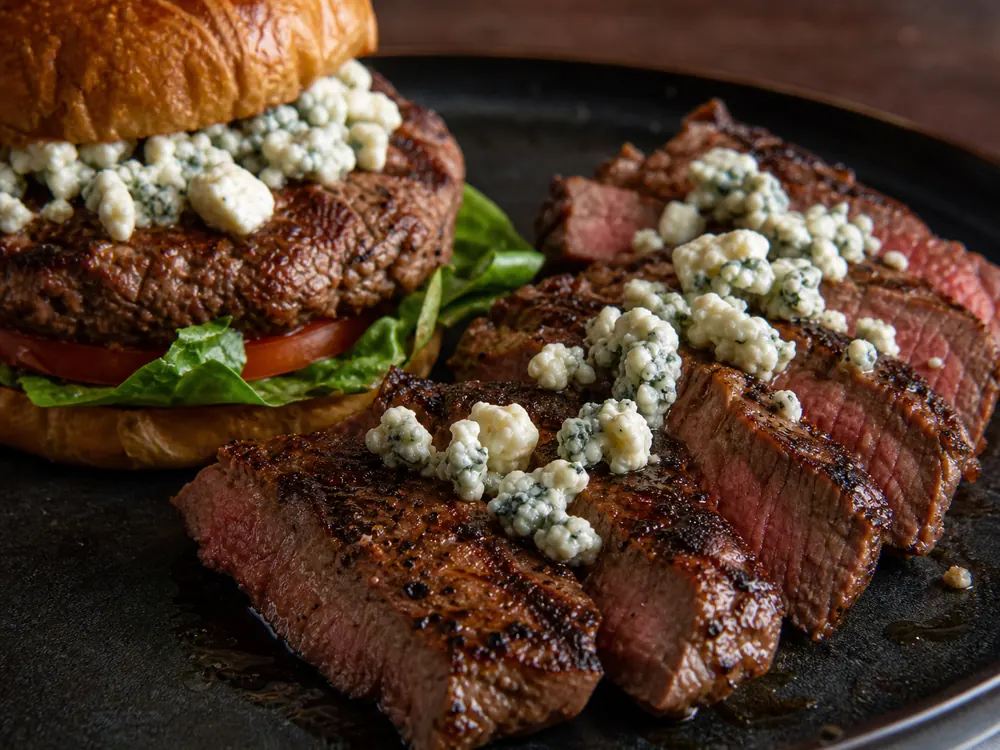
AmaBlu should taste rich, creamy, tangy, and salty. The producer's own serving language points toward steaks and hamburgers, which tells you something useful: this cheese is built to stand up to fat, browned meat, and warm food.
It should not be one-note salt. Good blue cheese gives a first creamy hit, then tang, then a savory finish from the veins. If it tastes bitter, metallic, or sharply ammoniated, the wedge may be tired or poorly stored.
Compared with Danish blue crumble, AmaBlu can feel more producer-specific and cave-aged. Compared with Gorgonzola Dolce, it is usually less sweet and more American steakhouse-friendly.
Use AmaBlu where blue flavor should lead
AmaBlu belongs in dishes where blue cheese is a feature, not a hidden seasoning. Steak, burgers, wedge salad, baked potatoes, blue-cheese dressing, and roasted vegetables all give the cheese a clear role.

Use less than you think at first. Blue cheese has a high flavor load, and AmaBlu's salt and tang can take over if you treat it like mild cheddar. Crumble it, taste, then add more.
For warm food, add AmaBlu near the end. Let residual heat soften it instead of cooking the blue flavor until it turns harsh.
This is not the cheese for long melt or stretch. If you need a smooth sauce, blend it with cream, butter, or a milder cheese. If you need stretch, move to a different cheese style such as low-moisture mozzarella.
- Best hot use: crumbled over steak, burgers, potatoes, or mushrooms.
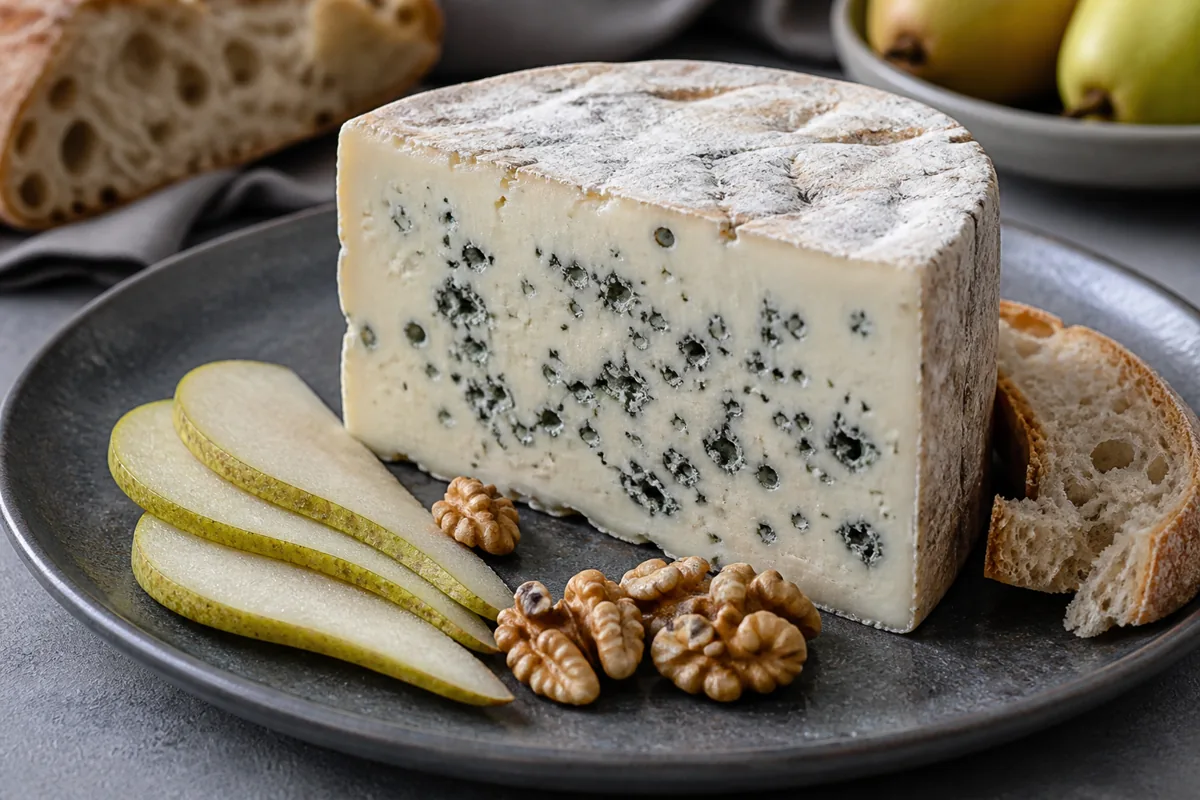
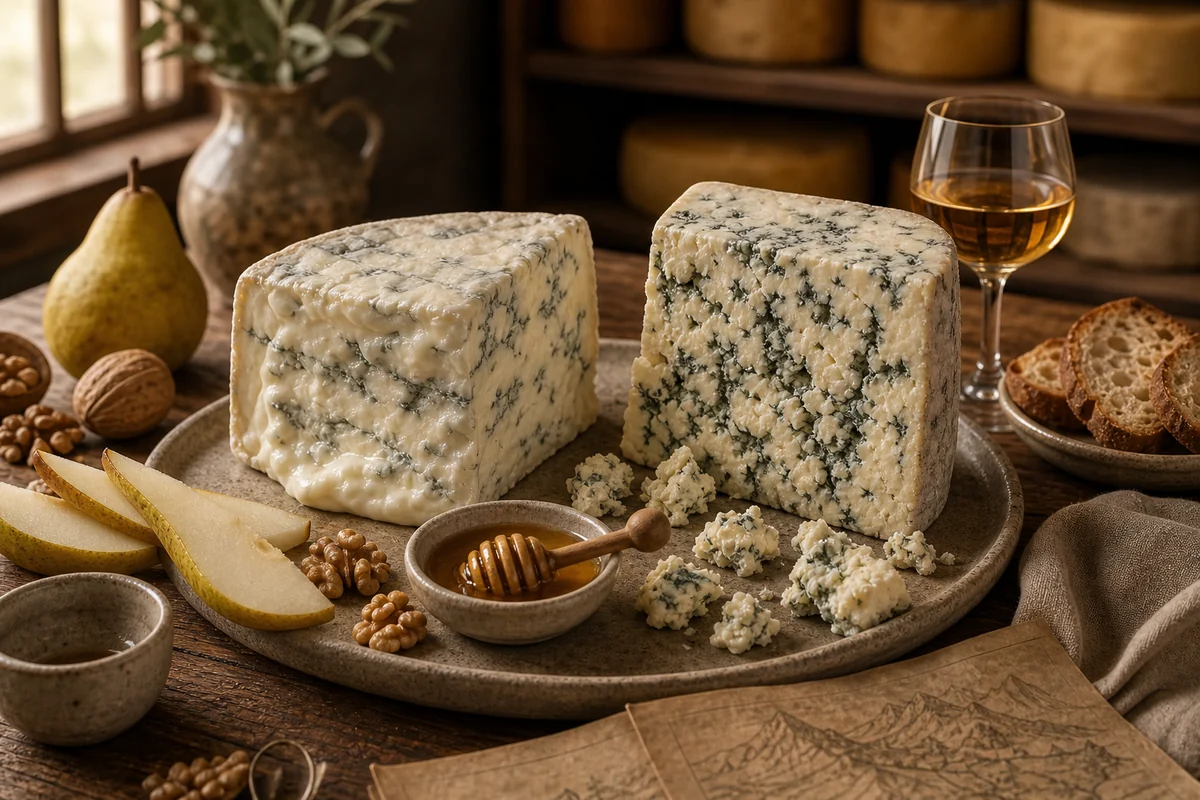
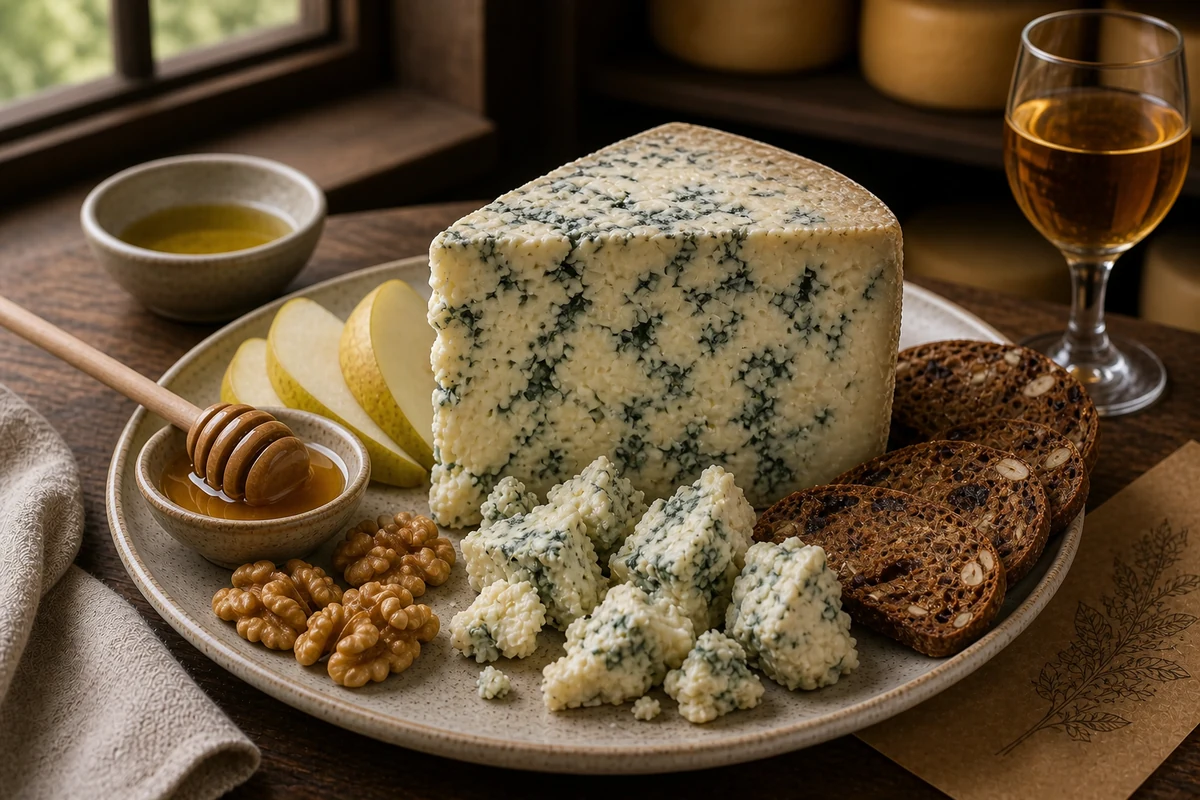
- Best cold use: wedge salad, pears, walnuts, honey, or a blue-cheese board.
- Best sauce use: dressing or dip where cream softens the salt.
- Bad use: high-heat melting where the fat separates and the blue turns bitter.
For category-level ideas, start from sweet and salty pairing rules. AmaBlu needs that fatty, bitter, and sweet balance, but with its own cave-aged identity.
Pair it with steakhouse flavors, sweet lift, and bitter greens
AmaBlu likes bold but simple partners. Steak, burgers, bacon, walnuts, pears, apples, honey, bitter greens, roasted mushrooms, and potatoes all work because they either carry the salt or soften the blue bite.
Drinks should match the intensity. Port-style sweetness, stout, porter, bold reds, and off-dry Riesling can all work. Dry sparkling wine is useful when you want bubbles and acid to clean up the fat.
If you want a wine-first answer, sweet and bold bottles often work better than thin dry whites.
Buying forms change how you use it
The producer shop sells AmaBlu in several forms, including whole, half, quarter, waxed wedges, and crumble cups. That choice changes the job. A wedge is better for boards and careful crumbling. Crumbles are easier for salads, burgers, and dressing.
For a board, buy a wedge if possible. It gives you a better read on paste, veining, moisture, and aroma. Pre-crumbled blue is convenient, but it dries faster and gives you less control over texture.
For a cheaper backup, choose by use. milder French blue works in sauces, while creamy blue-brie hybrid is easier for people who find AmaBlu too assertive.
Store it so the blue stays clean
Blue cheese needs air control. Wrap a wedge in cheese paper or parchment, then place it in a loose container. You want to slow drying without trapping the cheese in wet plastic.
Keep strong blue cheese away from delicate cheeses. The aroma can move around the fridge, and surface mold can make nervous eaters blame the wrong cheese. Use a separate container if you are storing several wedges.
The paper wrapping habits for cheese are especially useful for blue cheese because moisture and air both change the flavor quickly.
Best substitutes for AmaBlu
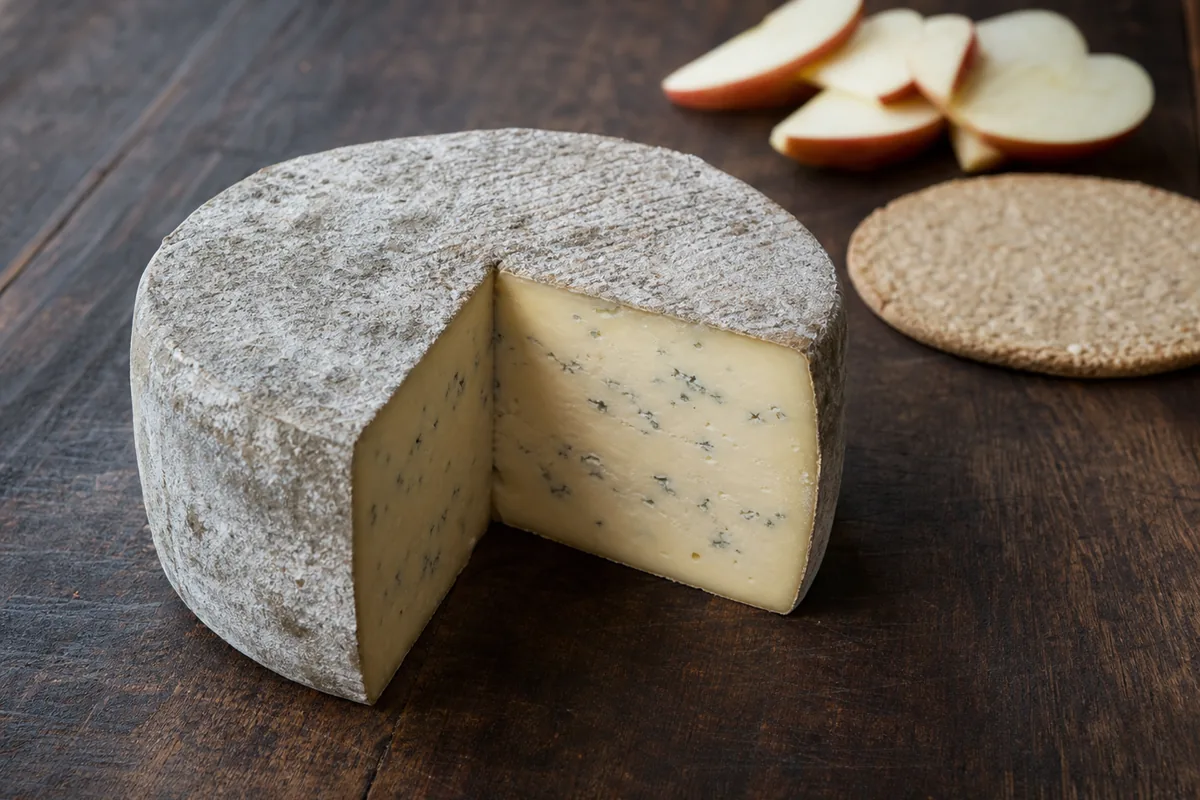
Substitute by intensity and texture. If you need creamy American blue with steak, use another assertive cow milk blue. If you need a milder salad crumble, choose Danish blue or a young blue. If you need a sweet creamy board cheese, use Gorgonzola Dolce.
Do not use feta as a direct substitute. It can cover salt and crumble, but it cannot give blue mold aroma or the same rich finish.
- Closest American lane: another cave-aged cow milk blue with creamy body.
- Milder crumble: Danish blue when the dish needs salt and blue notes without the same cave identity.
- Sweeter board backup: Gorgonzola Dolce when guests want softer blue flavor.
- Non-blue fallback: sharp cheddar only when the dish needs richness, not blue flavor.
The non-blue replacement options route is better if the reader needs swaps for allergies, dislike, or recipe flexibility.
This Minnesota blue comes from Caves of Faribault. It is cave-aged for at least 75 days and has a creamy, tangy, salty blue flavor.
Yes. Public cheese references list AmaBlu as made from unpasteurized cow milk, so pregnant readers and immune-risk diners should follow medical guidance.
AmaBlu is stronger than mild supermarket crumbles but should still taste creamy and balanced. Expect tang, salt, blue mold depth, and a rich finish.
Use AmaBlu for steak, burgers, wedge salad, potatoes, mushrooms, dressing, dips, and boards where blue cheese should be a clear flavor.
Use another creamy cow milk blue for the closest match, Danish blue for a milder crumble, or Gorgonzola Dolce when you want a softer, sweeter board cheese.