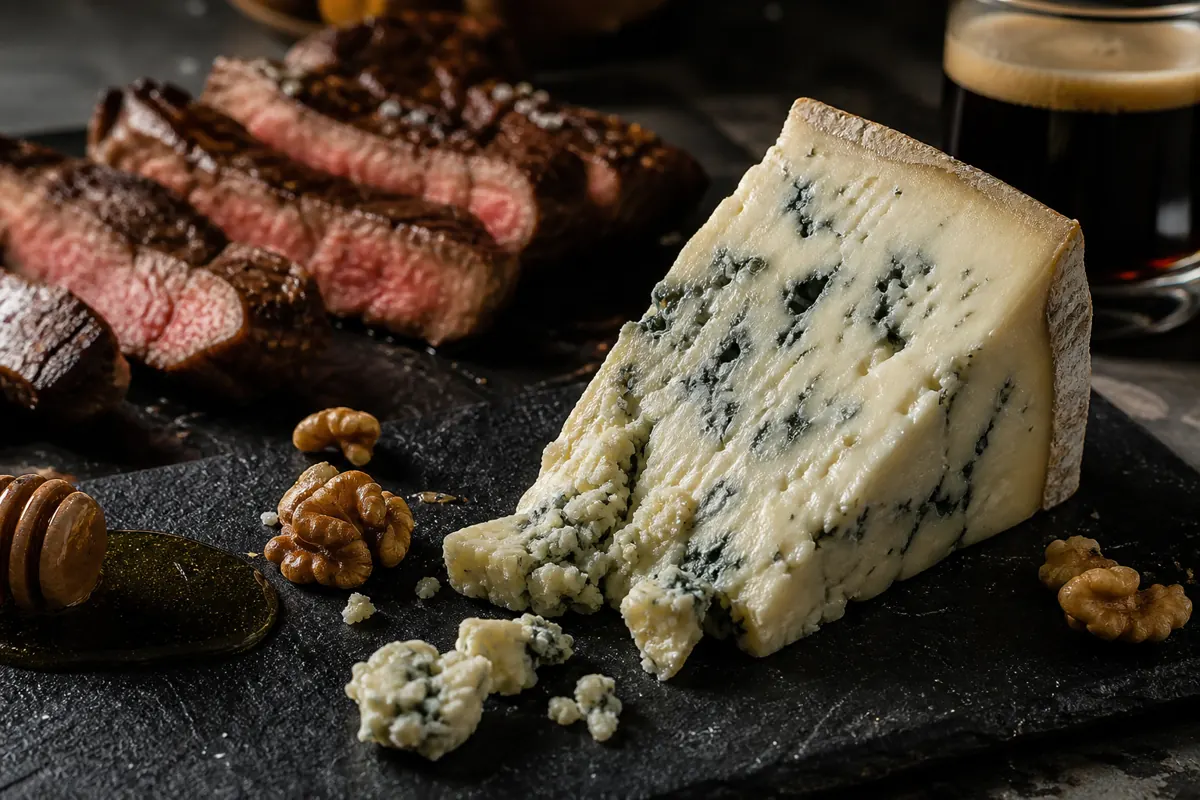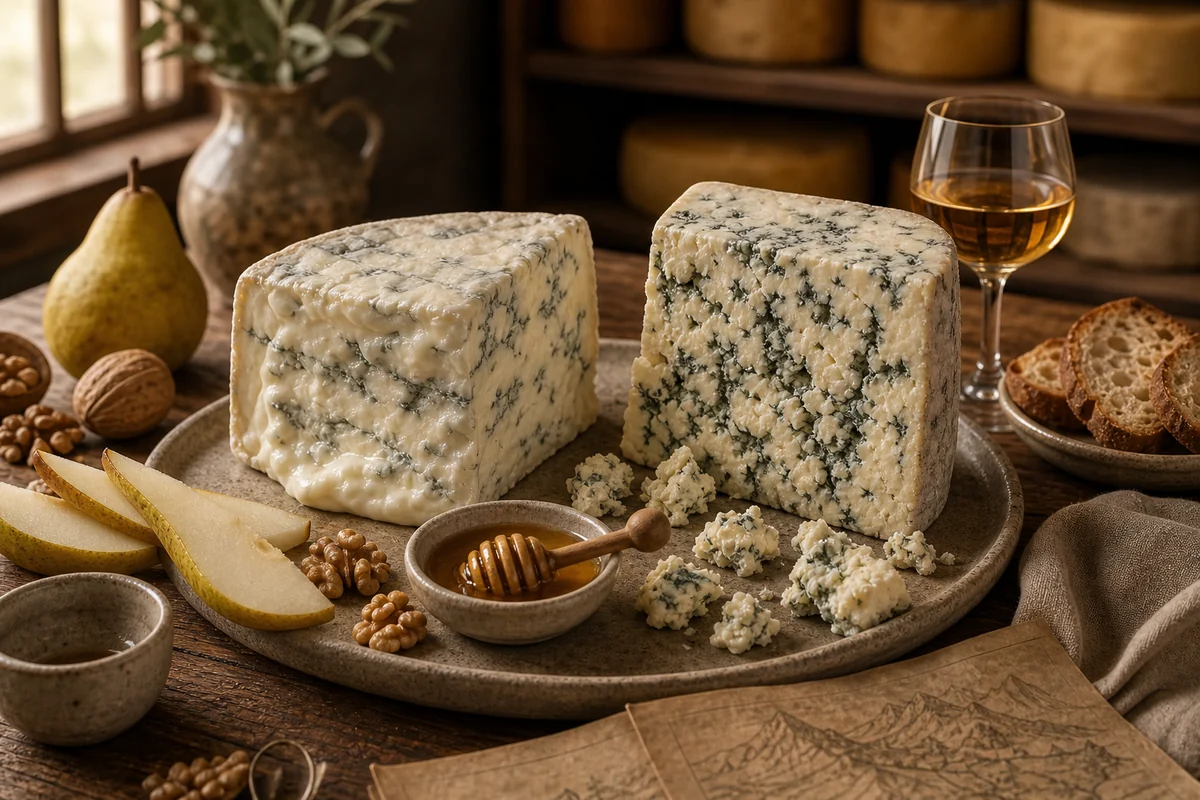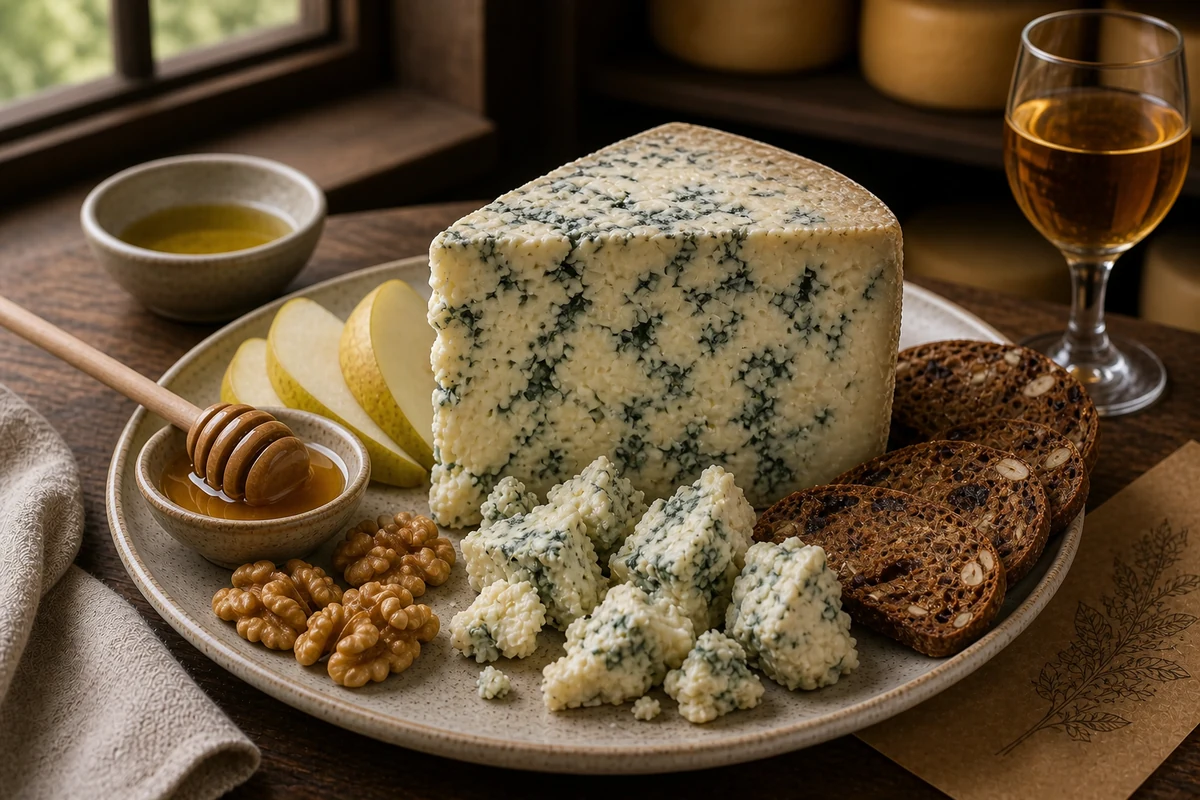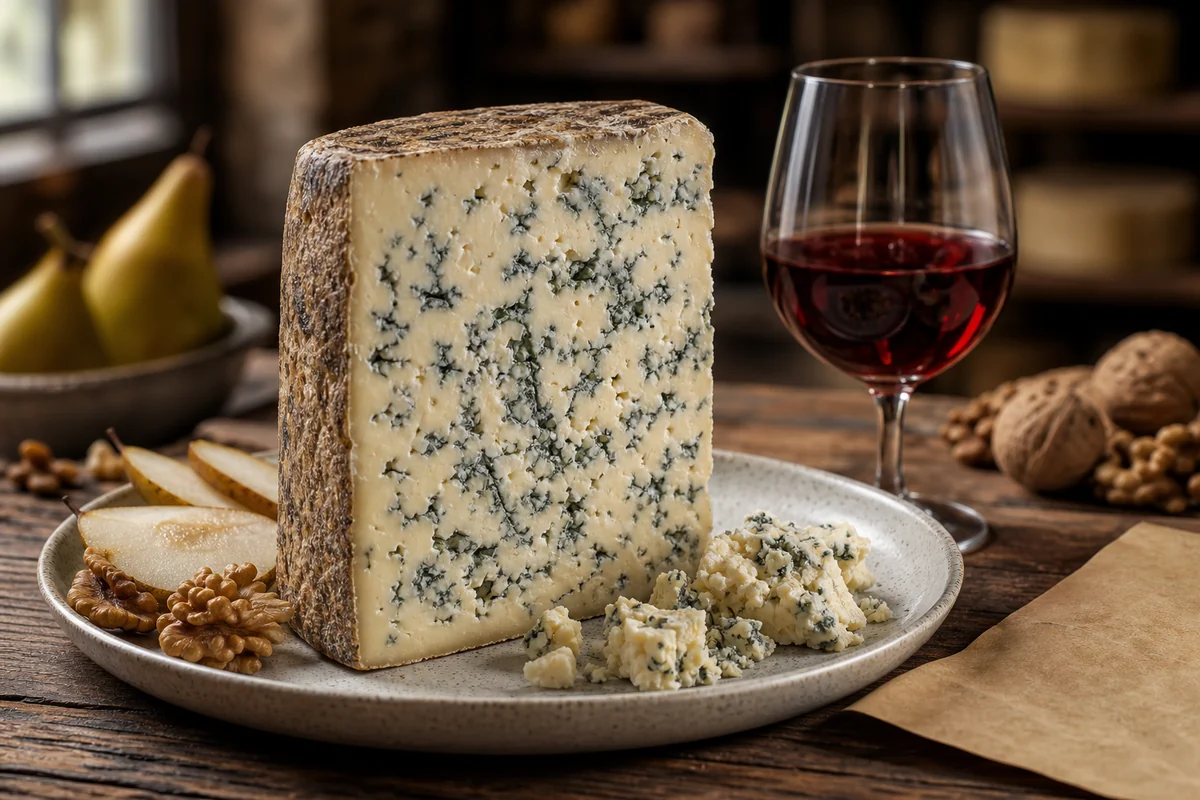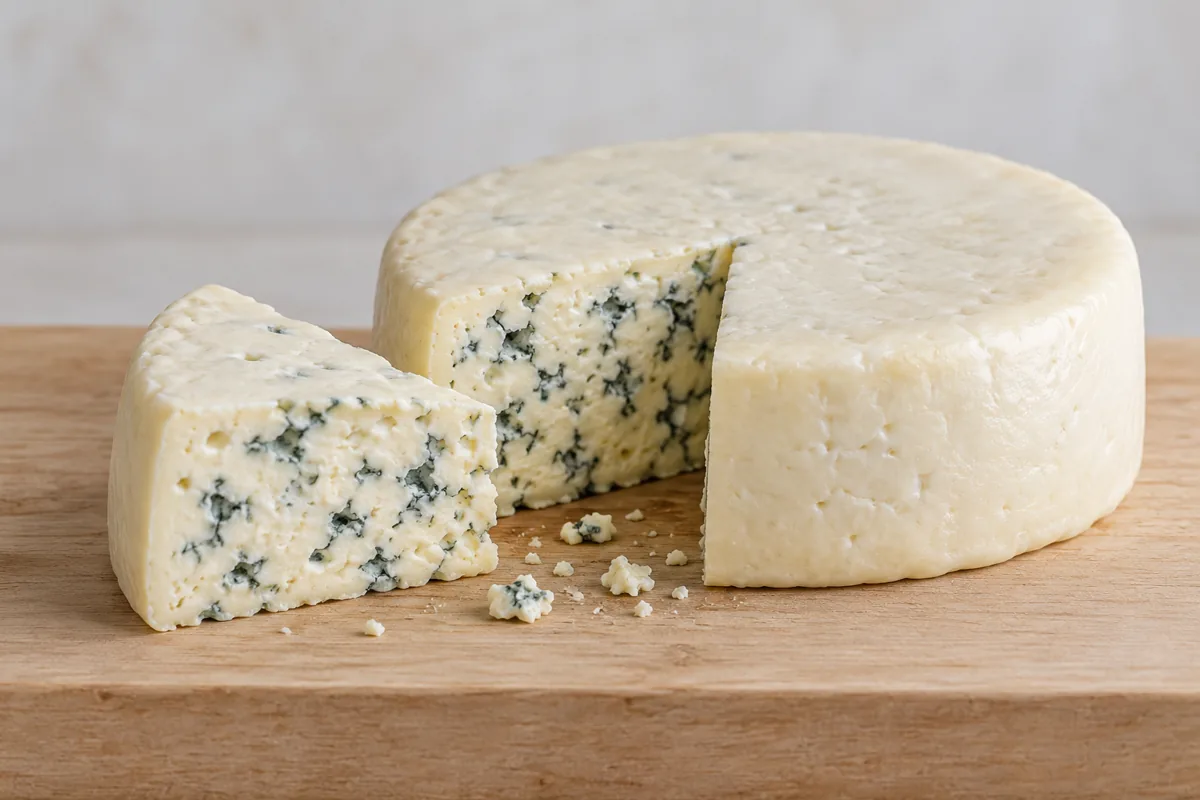
Maytag Blue is a pasteurized cow's-milk blue cheese that Maytag Dairy Farms has made in Newton, Iowa, since 1941.
The standard wheel has no rind and is cave-aged, and its paste is firm, moist and slightly crumbly in Culture's description, with a tangy flavour in Janet Fletcher's and the producer's words.
Its recipe came out of work with Iowa State University, and the milk has changed since then: it is now pasteurized and bought from neighbouring farms.
In This Article
Why Is It Called Maytag Blue, and Where Is It Made?
The name comes from the Maytag family, founders of a highly successful washing machine company. The cheese was started in 1941 by Frederick Louis Maytag II and Robert Maytag, grandsons of the appliance company's founder, on a farm just outside Newton, Iowa.
Janet Fletcher writes that Fred Maytag worked with Iowa State University's dairy-science department to develop the recipe about 80 years before her 2020 piece. His father had a herd of champion Holsteins, and Fred wanted to use their milk to make a blue that would rival the European ones.
The 1941 cheese began as an attempt to re-create Roquefort, a sheep's-milk cheese, and the Maytag version used cow's milk instead.
Maytag Blue is America's first blue cheese in the words of the care page's shop link, while Fletcher reports only that the creamery believes it may be the first cow's-milk blue wheel produced in America.
Both versions apply only to the United States. Wikipedia says earlier American attempts at a Roquefort-style cheese had not succeeded, and Gorgonzola is said to have gained its blue veins around the 11th century and Stilton became popular in the early 1700s.
How Is Maytag Blue Made?
Two Iowa State University microbiologists, Clarence Lane and Bernard Hammer, developed and patented the method, and Wikipedia lists the problems with Roquefort-style cheese in the United States as slow flavour development, uneven mould growth, uneven quality between lots and curd that came out too dark.
The method starts with the milk. In Wikipedia's account the cream is separated, homogenized at 80 to 100 degrees Fahrenheit and 2000 to 3500 pounds per square inch, then added back to the skim milk, which it says allows proper fat hydrolysis and so affects the flavour.
In blue cheese ripening generally, free fatty acids increase as Penicillium roqueforti breaks down fat, and Wikipedia says this contributes to the characteristic flavour of blue cheeses.
Lane and Hammer's records show the time spent setting, cutting and dipping nearly halved. Draining after the curd cooked in hot whey fell from 20 to 30 minutes to 3 to 5 minutes.
They also raised the rennet from 3 to 4 ounces per 100 pounds of milk and set the curd at 90 to 92 degrees Fahrenheit instead of 85 to 86, which Wikipedia says gave better results.
Homogenizing cheese milk was not new: the university patented it during the Second World War and tried to charge Danish cheesemakers for it, but the attempt failed because Marius Boe had introduced the method in Denmark 20 years earlier.
Culture says the curds are mixed with blue mould powder, scooped into hoops and pressed, then soaked in brine for several hours before they go to the caves.
In blue cheese generally, salt flavours the cheese and also acts as a preservative.
Culture describes caves dug into a hillside behind the cheesemaking room, and the producer's care page says the cheese is exposed there to cool temperatures and high humidity. Wikipedia gives about 8 to 10 degrees Celsius (46 to 50 degrees Fahrenheit) and 85 to 95 percent humidity as a general figure for blue cheese ripening, with variation by cheese.
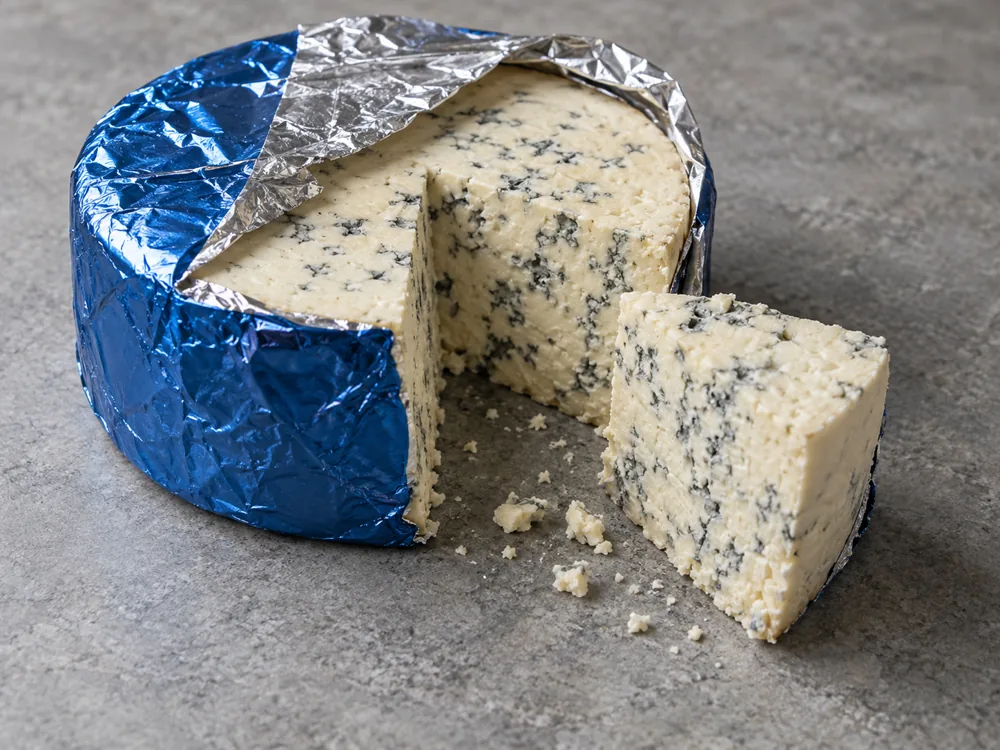
Culture adds that each wheel is hand-scraped to remove surface mould before it is wrapped in silver foil.
Maytag Blue ages four to six months in Culture's description and three to six months in Fletcher's, and the producer's 4 lb wheel page calls it cave-aged.
Wikipedia's general account of blue cheese says a fermentation period of 60 to 90 days is usually needed before the flavour is typical enough to sell, so even the shortest Maytag figure reaches the top of that range.
Why Does Maytag Blue Look Different from Wedge to Wedge?
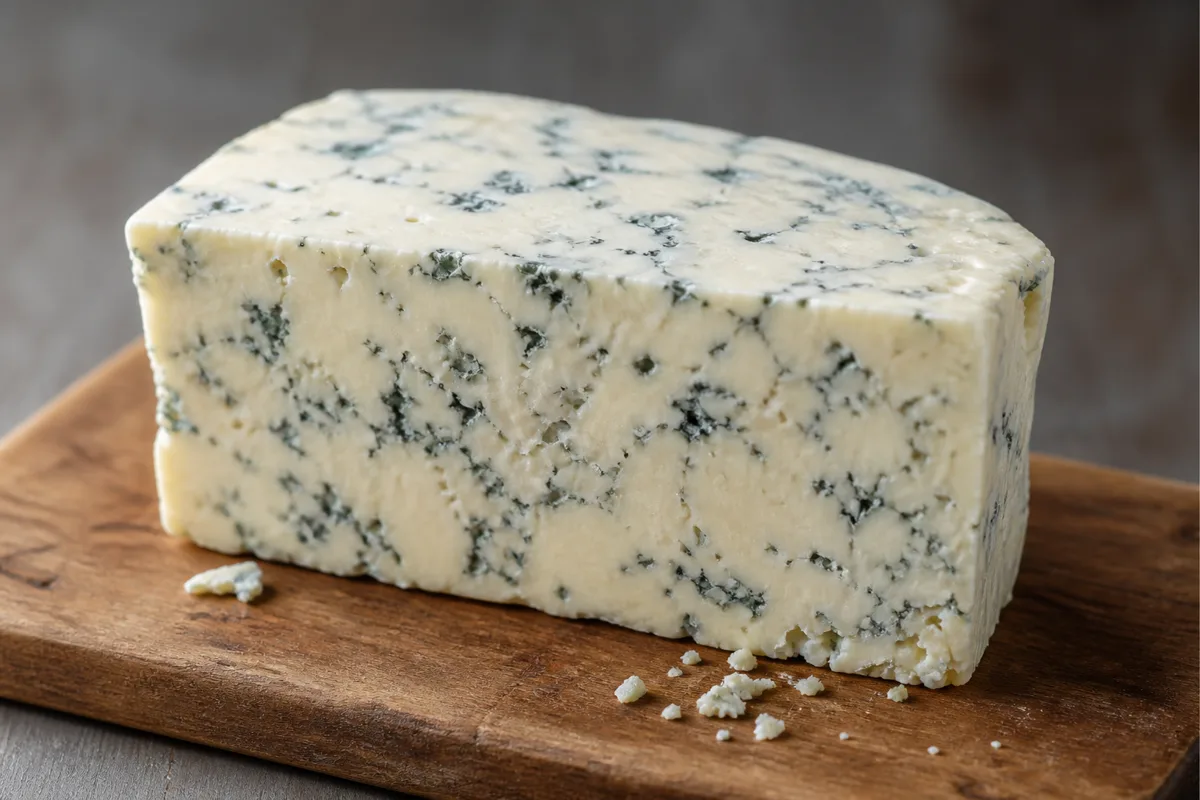
The producer puts it down to the season: its care page says well-aged blue cheese ranges from white to creamy yellow depending on the season in which the cheese was made, while Culture describes an ivory paste. A wedge made in a different season can therefore look paler or yellower than the last one.
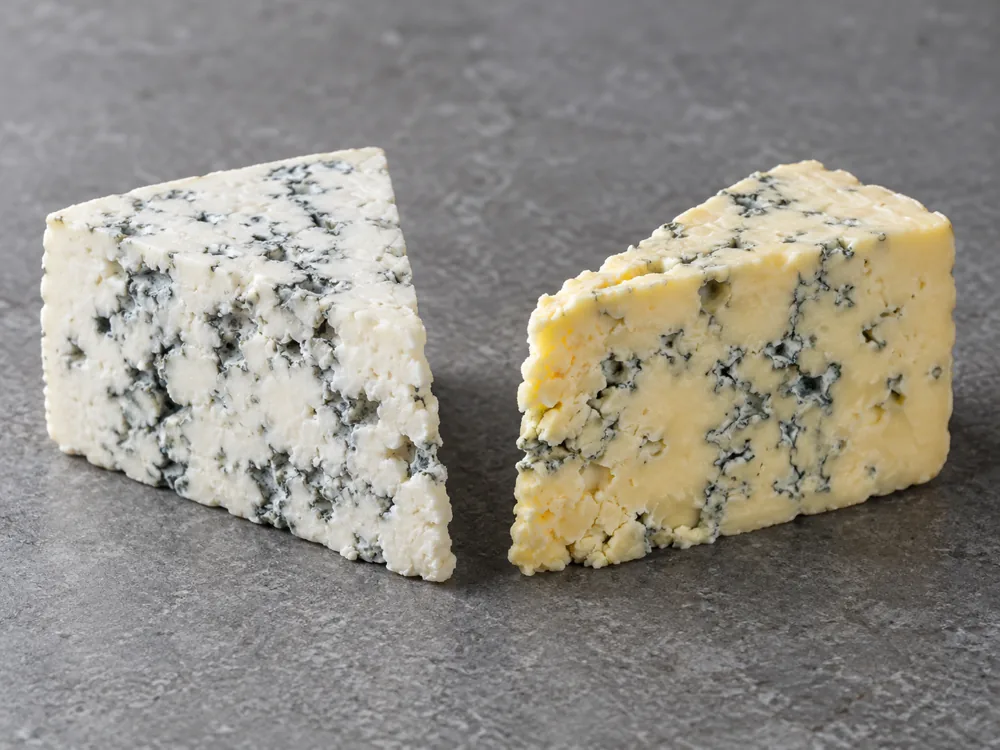
The veins come from a mould that needs air: the wheels are pierced in the caves to let air into the interior, where enzymes and bacteria react with it and the blue veins develop.
In blue cheese generally, the curds are pressed loosely so air gaps remain, and after piercing the mould can grow between the curds as well as along the air tunnels the piercing creates.
A freshly cut face may show little veining, and exposure to air makes the veining stronger.
The veins are sapphire-coloured blue in Culture's words and green on the producer's care page and in Wikipedia's Maytag article. The producer's 4 lb wheel page lists only one mould, P. roqueforti, so the colour words are best read as two descriptions of the same veining.
In Culture's account the blue mould powder goes into the curds before they are pressed, while the producer's care page and Wikipedia describe adding the spores to the completed product.
What Does Maytag Blue Taste Like?
Maytag Blue has a clean, lactic aroma and a tangy buttermilk or sour cream flavour in Janet Fletcher's description, one that reminded her of ranch dressing.
Culture magazine calls the flavour rich and cream-like, with an assertive salty note and a savoury finish.
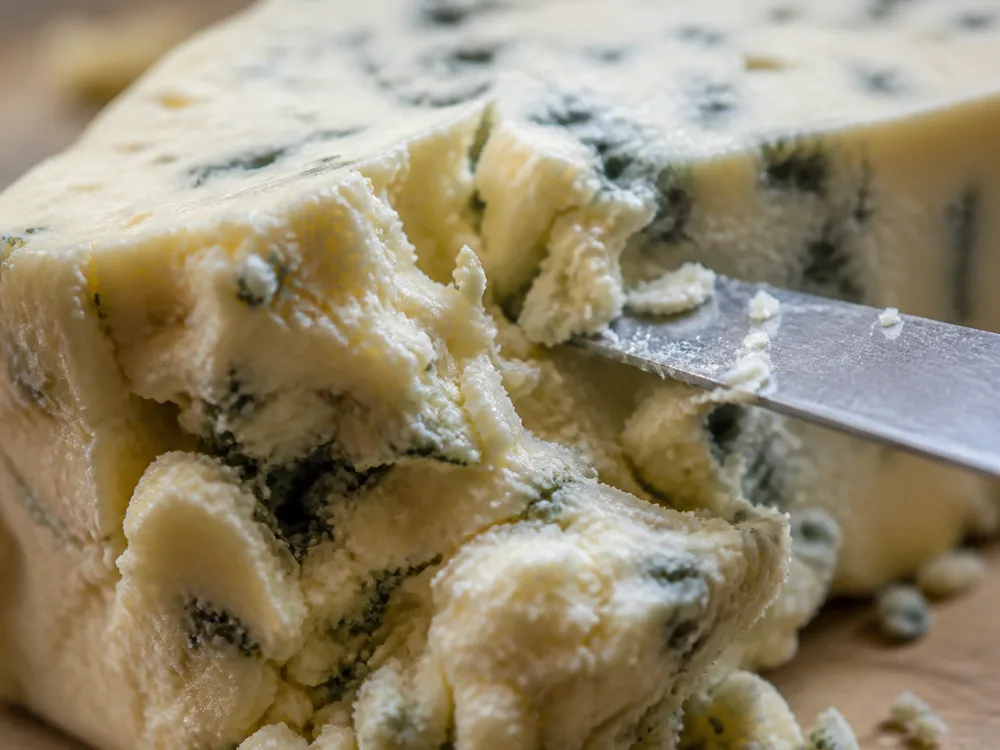
Its texture is firm, moist and slightly crumbly to Culture, moist and tender to Fletcher and semi-hard in Wikipedia's label. The producer's care page says moist and creamy yet crumbly, and its 4 lb wheel page calls the wheel smooth yet crumble-ready.
Fletcher also says the cheese gets creamier and tangier with age.
Whether you find it mild depends on the wheel. Fletcher, tasting after the move to pasteurized milk, found it more mellow and more approachable than before and said it once struck her as too salty and too lactic.
The producer describes the flavour as bold and tangy on its 4 lb wheel page and as slightly pungent with a lemony finish on its care page.
Culture's entry still describes milk from the farm's own herd, which Fletcher and the care page say is no longer the case, so its assertive salt note may describe the cheese as it was before those changes.
Is Maytag Blue Pasteurized, Vegetarian, and Gluten-Free?
Yes to all three on the producer's current page for the 4 lb wheel. It lists pasteurized milk, cultures, salt, microbial rennet and Penicillium roqueforti, and labels the cheese vegetarian, non-GMO and gluten-free.
The rennet explains the vegetarian label: Wikipedia's blue cheese article describes rennet as found in the stomach lining of a calf, whereas the wheel page lists microbial rennet and Culture lists vegetable rennet.
The milk was not always pasteurized. The dates below are from Fletcher's June 2020 piece, so the two later ones are approximate.
- 1941: the first wheels are made with raw milk, at first solely from the family's own Holstein herd
- About 2005: the dairy sells its cows, about 15 years before Fletcher wrote, and buys milk from neighbouring farms
- About 2017: the creamery switches to pasteurized milk, about three years before Fletcher wrote and after roughly 75 years of raw-milk cheesemaking
Wikipedia says the cheese was still made by hand with milk from local dairy farms as of 2017. The producer's care page describes small batches made from the milk of Holstein cattle on local Iowa dairy farms.
If a description of Maytag Blue mentions raw milk or the farm's own herd, compare its date with the changes listed above.
Does Maytag Still Make Blue Cheese After the 2016 Recall?
Yes. The producer sells Maytag Blue as wheels, wedges and crumbles today, and production came back after a recall in 2016.
Maytag issued three recalls with the FDA in February 2016 over possible contamination with Listeria monocytogenes and then stopped production and shipping for several months.
Operations resumed in November 2016 with a new fall catalogue, and by September 2017 sales had resumed.
Is Maytag Blue Safe During Pregnancy?
The NHS says pasteurised or unpasteurised soft blue-veined cheeses, such as Danish blue, gorgonzola and roquefort, must be thoroughly cooked in pregnancy.
Culture calls Maytag Blue's paste firm, moist and slightly crumbly, a texture word the NHS does not use, so for that reading the soft blue-veined line above applies. Wikipedia calls it semi-hard, and the NHS lists pasteurised semi-hard cheeses, such as edam, as safe to eat.
The two readings give different NHS answers for a cold piece, so ask a midwife or doctor before you eat Maytag Blue uncooked.
The CDC lists pasteurized soft cheeses heated to an internal temperature of 165°F or until steaming hot as safer, and adds that pregnant women are 10 times more likely to get a Listeria infection. Served cold, Maytag Blue is described as a pasteurized firm, slightly crumbly or semi-hard blue-veined cheese, a type the CDC list does not cover, so ask a midwife or doctor.
How Does Maytag Blue Compare with Roquefort, Stilton, and Gorgonzola?
The easiest difference to check is who sets the rules for the name. Roquefort, Stilton and Gorgonzola may each be sold under that name only when the cheese follows the regulations for its process and region, while Maytag Blue is one dairy's cheese.
| Cheese | Milk | Mould and where it ripens | What the name guarantees |
|---|---|---|---|
| Maytag Blue | Pasteurized cow's milk | Penicillium roqueforti, in caves dug into a hillside at the dairy | One dairy in Newton, Iowa, and its own recipe |
| Roquefort | Unpasteurized sheep's milk | Penicillium roqueforti, in the natural caves of Roquefort-sur-Soulzon, France | Process and region set by the protected name |
| Stilton | Pasteurized milk | Penicillium roqueforti; first sold in the village of Stilton, with little evidence it was ever made there | Process and region set by the protected name |
| Gorgonzola | Whole milk | Penicillium glaucum; sold as a natural or a creamy version | Process and region set by the protected name |
Milk is the clearest split, because Wikipedia names unpasteurized sheep's milk for Roquefort and Maytag uses cow's milk. Maytag used raw milk until a few years before 2020 according to Fletcher, so it now matches Stilton, which Wikipedia says is made from pasteurized milk.
Mould is another difference: Gorgonzola is inoculated with Penicillium glaucum, while Stilton and Roquefort use Penicillium roqueforti, the mould in Maytag's ingredient list.
Wikipedia describes a natural and a creamy Gorgonzola with different odours, so a comparison with Gorgonzola depends on which version is meant.
Wheel, Wedge, or Crumbles: What Costs Least per Pound?
Crumbles cost the least per pound in the producer's shop, which sells the standard cheese as 2 lb and 4 lb wheels, wedges, crumbles and a sampler at widely varying prices per pound.
| Format | Size | Price | Per pound |
|---|---|---|---|
| Crumbles, cup | 4 oz | 4.50 dollars | 18.00 dollars |
| Crumbles, box | 5 lb | 99 dollars | 19.80 dollars |
| Standard wheel | 4 lb | 99 dollars | 24.75 dollars |
| Farm Reserve wheel | 4 lb | 115 dollars | 28.75 dollars |
| Standard wheel | 2 lb | 59 dollars | 29.50 dollars |
| Standard wedges, four | 8 oz each, 2 lb in all | 70 dollars | 35.00 dollars |
| Standard wedge | 8 oz | 19 dollars | 38.00 dollars |
| Standard wedge | 4 oz | 10 dollars | 40.00 dollars |
| Farm Reserve wedges, three | 12 oz in all | 36 dollars | 48.00 dollars |
The 4 oz crumbles cup works out at 18 dollars a pound and the 5 lb box at 19.80 dollars, both below the 4 lb wheel, so the wheel is not the lowest price per pound on the producer's own list.
The 5 lb crumbles box and the 4 lb wheel both cost 99 dollars, so the box gives one more pound for the same money.
Wedge packs change the sums a little: four 8 oz wedges cost 35 dollars a pound against 38 dollars for a single 8 oz wedge, but that pack is 11 dollars more than the 59-dollar 2 lb wheel of the same weight.
The shop also lists a separate Farm Reserve line, as a 4 lb wheel and as 4 oz wedges, and both cost more per pound than the standard cheese in the same format.
If you are weighing up the 39-dollar sampler, ask the shop for its weight, since a price per pound needs one.
The per-pound figures use list prices only and leave out shipping. How long a 4 lb wheel stays usable depends on the storage limits further down.
For the lowest price per pound the producer's list favours crumbles, then the 4 lb wheel. Cutting the same weight into wedges costs more: four 8 oz wedges are 11 dollars above a 2 lb wheel.
What Do You Serve with Maytag Blue?
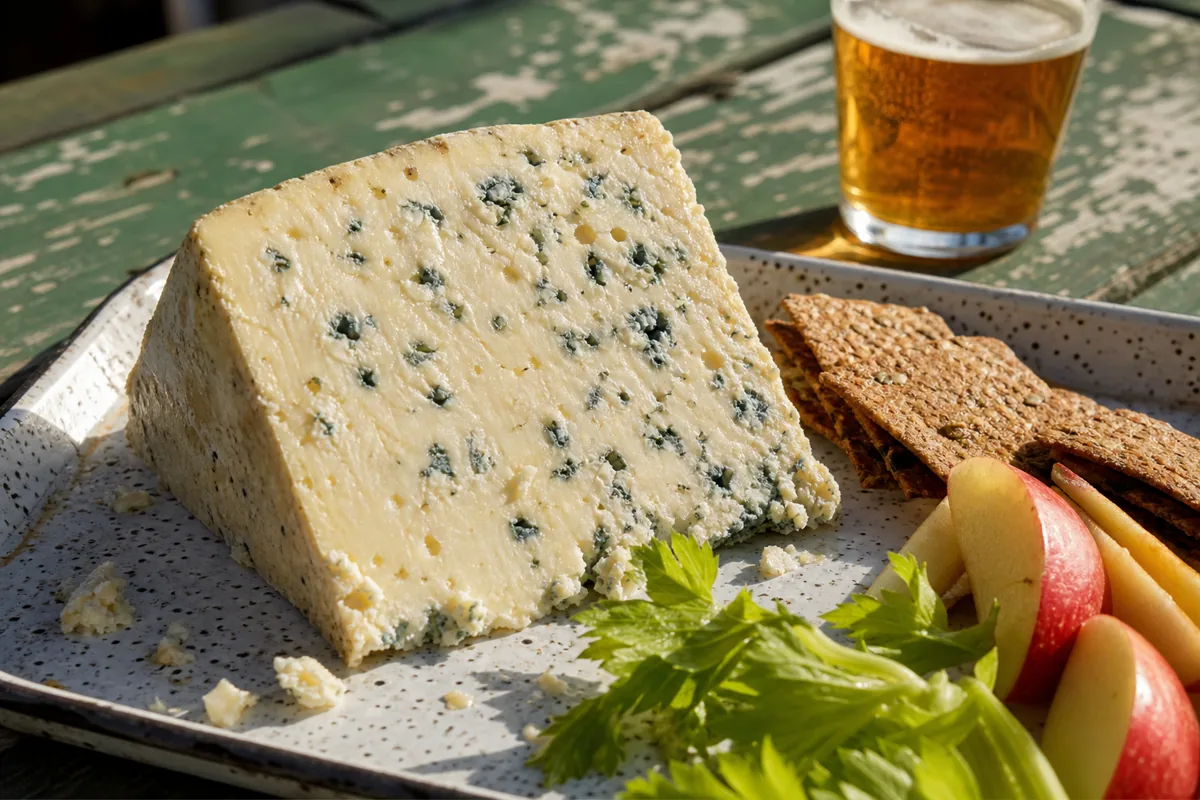
The producer's care page suggests crumbling the cheese into salads, melting it onto a burger and drinking an ale or lager with it. Fletcher also names burgers, along with a holiday cheese board.
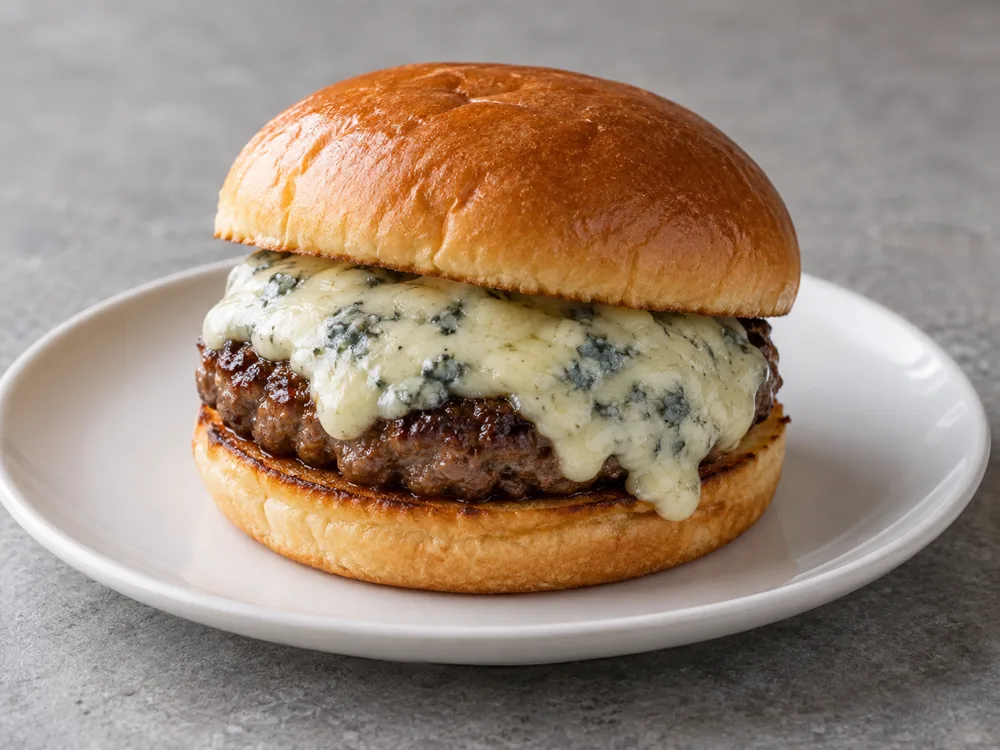
For drinks, Culture magazine pairs it with a honey drizzle or a barleywine-style ale, and the care page names ale or lager, so beer is the drink both of them suggest.
The producer's shop also sells a 2 lb wheel bundled with a bourbon pecan sauce for 69 dollars, which is 10 dollars above the 2 lb wheel alone.
How Long Does Maytag Blue Last, and Can You Freeze It?
When your cheese arrives, the producer's care page says to refrigerate it straight away and keep it in its original foil, inside a plastic bag, in the refrigerator for up to six weeks to retain the moisture and preserve the texture.
Keep your refrigerator at 40 degrees Fahrenheit or below and your freezer at 0 degrees Fahrenheit or below, as the CDC advises.
If you buy the crumbles, check the container for its own keeping advice.
If you set it out on a cheese board at a party, the CDC lists dairy among the perishable foods to refrigerate within 2 hours, or within 1 hour when the air is above 90 degrees Fahrenheit.
The producer says frozen Maytag Blue keeps for up to a year. Remove the plastic seal but leave the signature foil on, seal the cheese in a moisture-proof airtight freezer bag with the excess air pressed out, and take it out of the freezer 24 to 48 hours before serving. A whole wheel can be frozen, but the producer recommends cutting it into smaller pieces first.
The producer's advice for keeping flavour and texture is to keep the cheese perfectly sealed both while it freezes and while it thaws.
When you thaw a piece, the CDC lists the refrigerator, cold water and the microwave as safe ways to thaw food and says never to thaw it on the counter, because bacteria multiply quickly in the parts that reach room temperature.