Amul Cheese Spread is a soft processed cheese for spreading directly on bread, serving as a dip or mixing into food. The Plain tub is a different product from Amul's firm cheese block and its cream cheese, so those names are not interchangeable when shopping for a recipe.
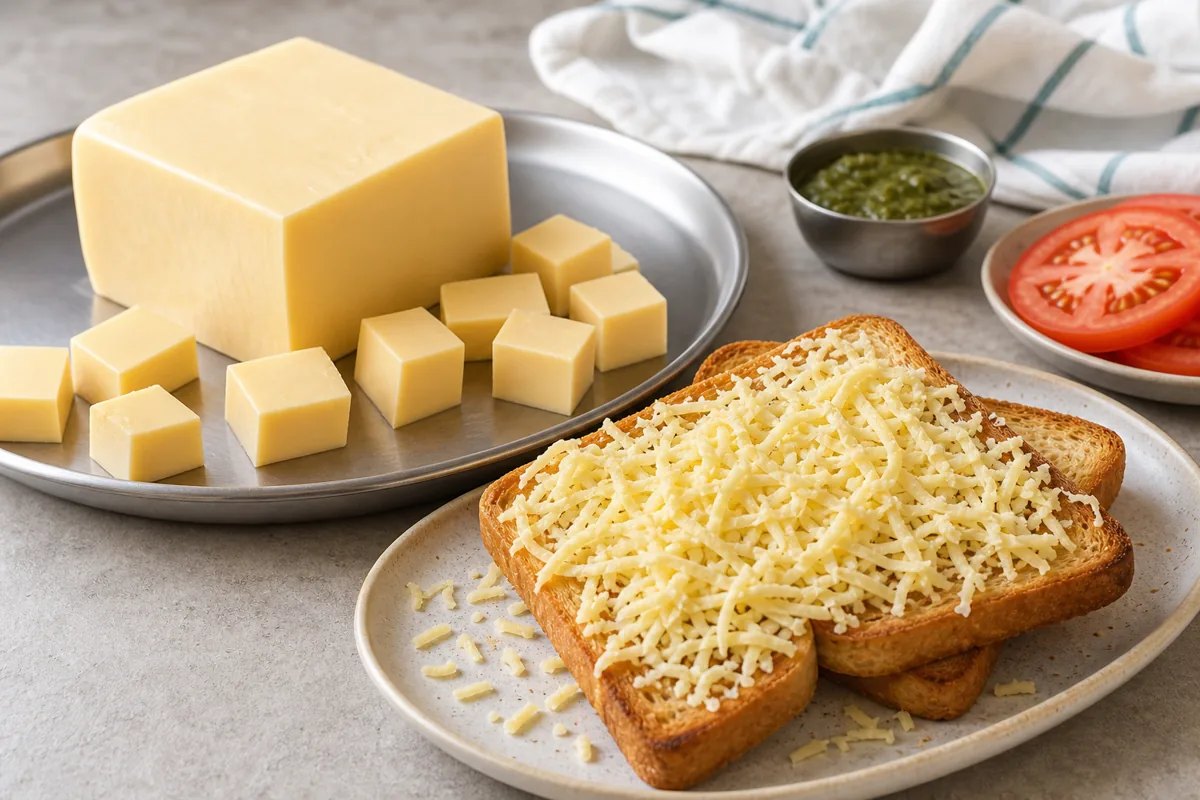
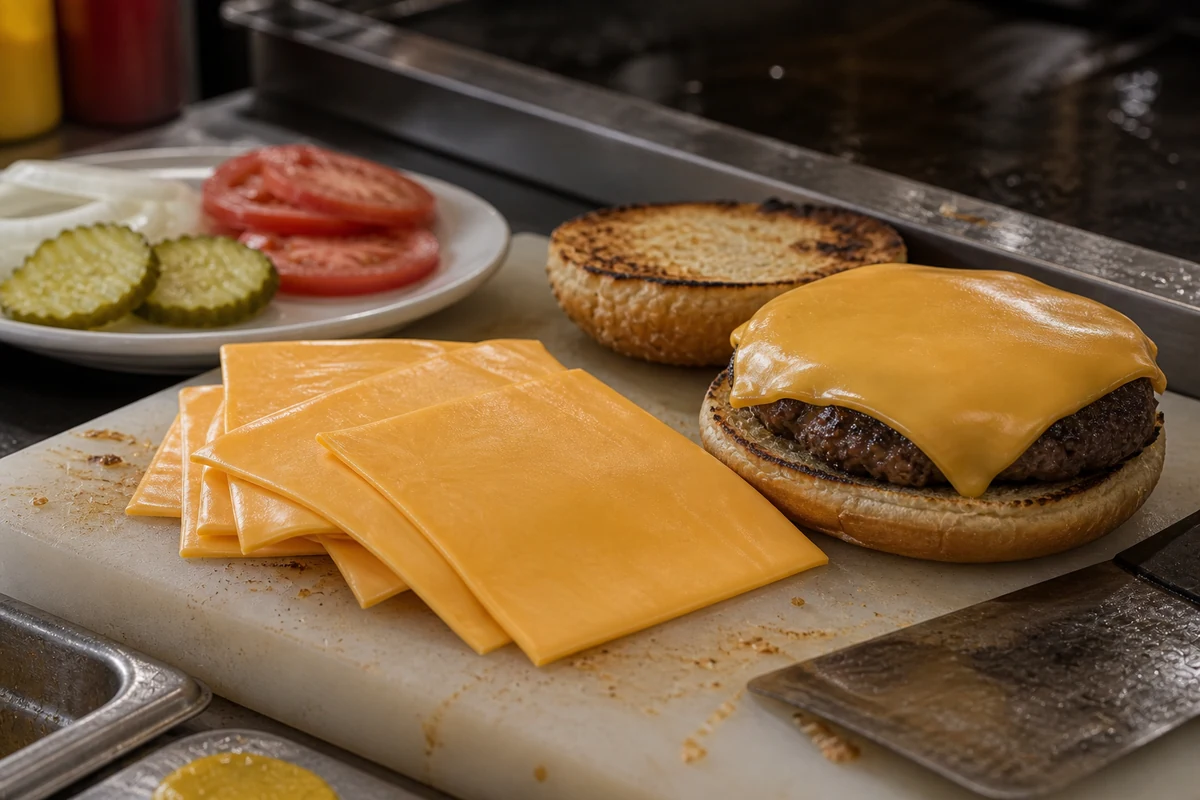
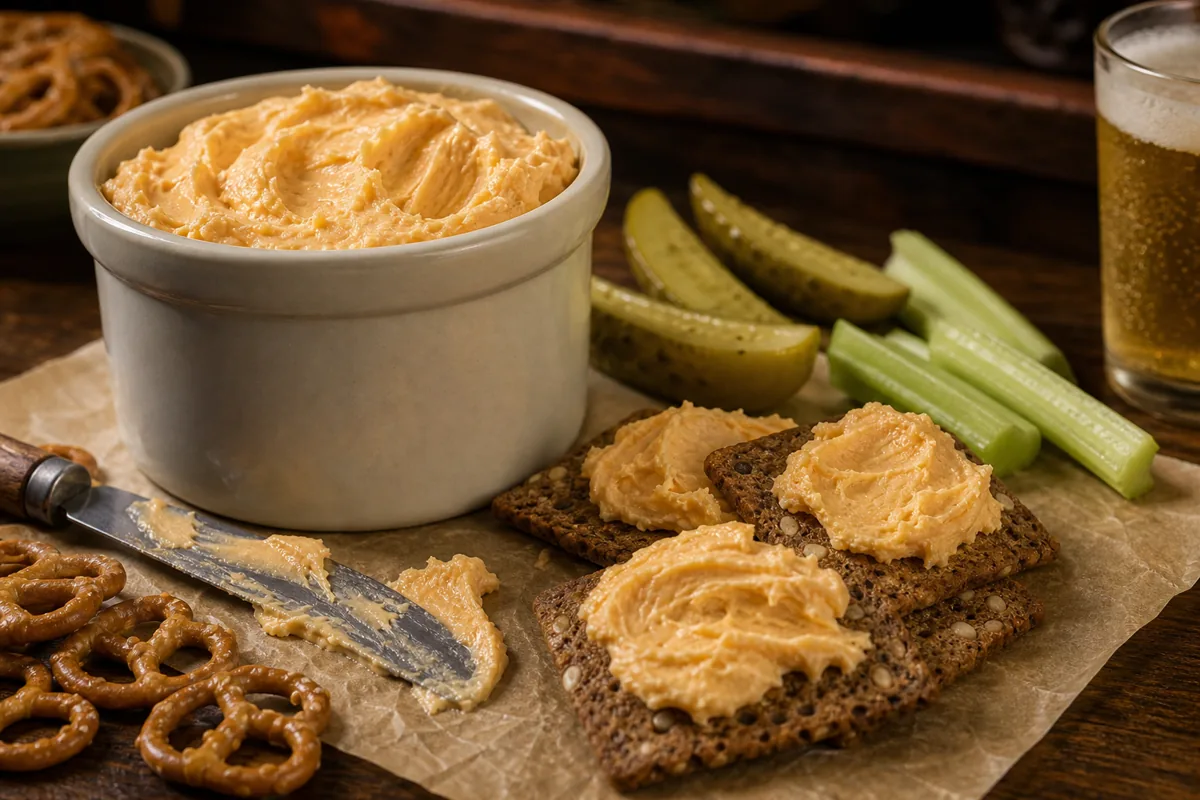
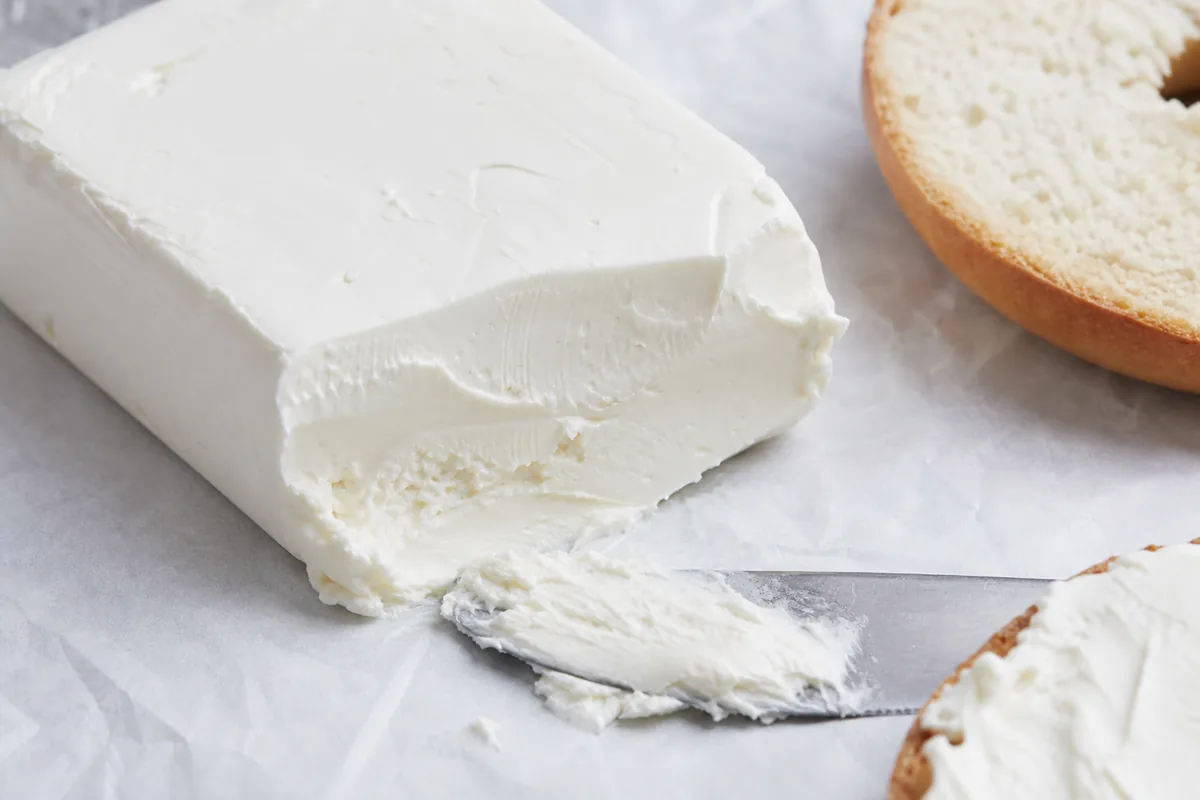
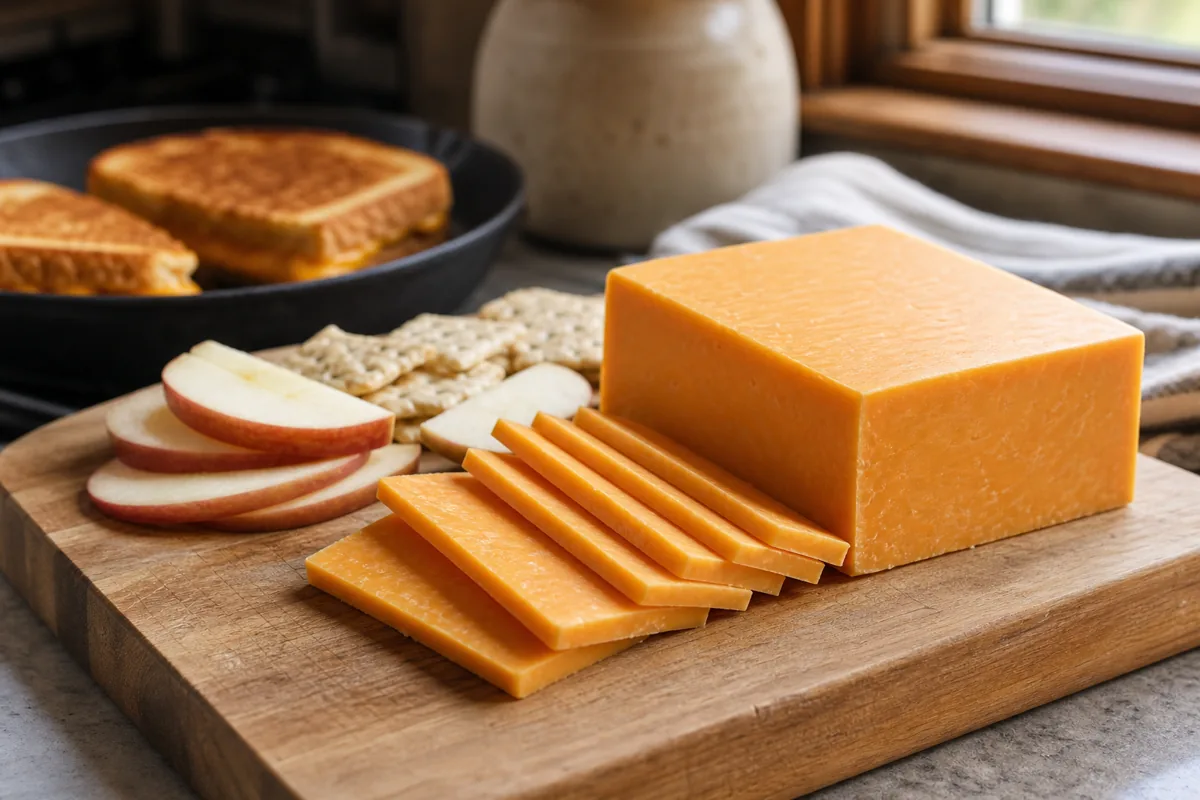
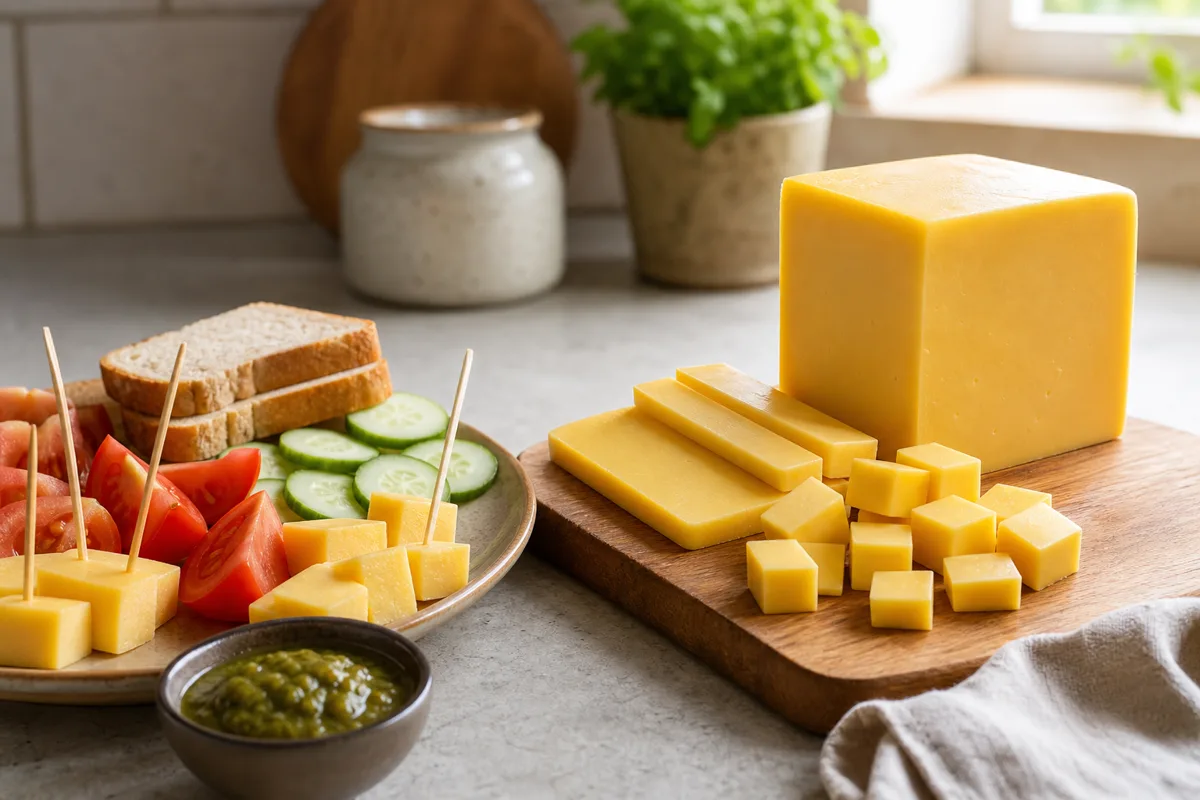
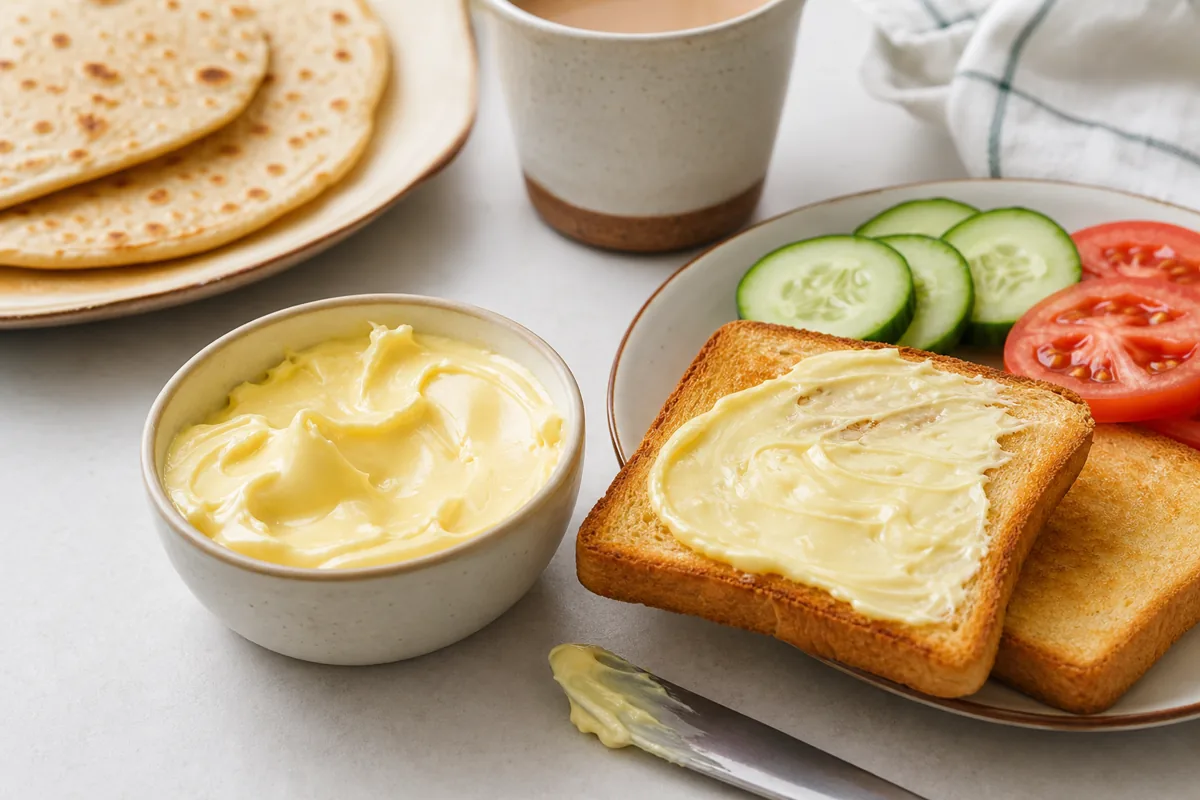
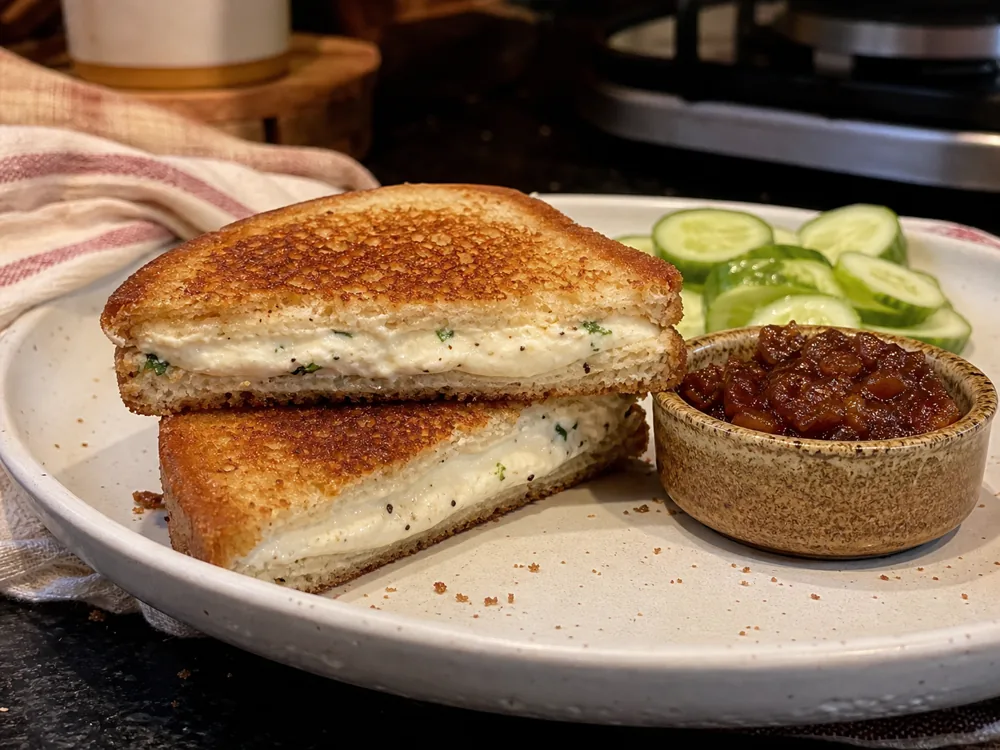
The images are serving and texture illustrations, not photographs of Amul packaging or dishes we tested.
In This Article
What Is in Amul Cheese Spread?
The current maker's label for Yummy Plain, 200 g lists cheese and milk solids, followed by emulsifying salts, iodized salt and preservatives. The emulsifying ingredients help describe a formulated cheese spread rather than a piece of cheese simply softened by leaving it warm.
That label identifies emulsifying salts by the numbers 452, 339, 331 and 471, and preservatives by 200 and 234. It also carries a vegetarian symbol and a milk-allergen declaration: vegetarian does not mean vegan or suitable for a milk allergy.
Amul's current range includes Plain in 200 g and 400 g tubs, alongside flavours such as garlic, pepper, jeera, red chilli, oregano and tikka dip. Creami is listed separately in a 180 g pack, so neither its name nor its pack size makes it identical to Plain.
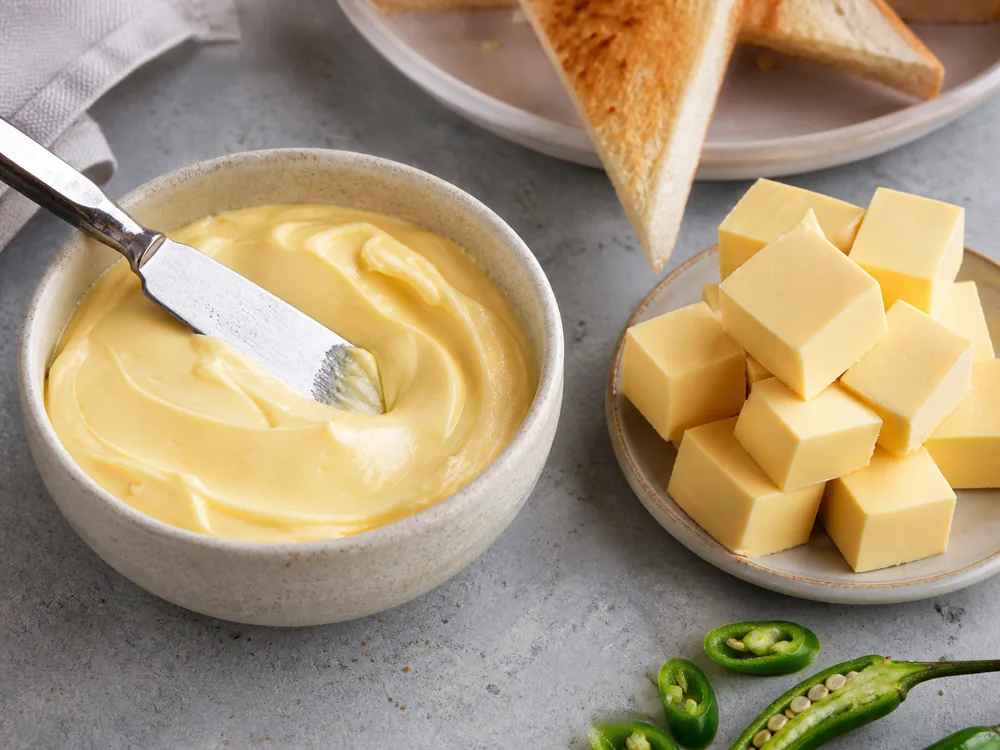
Plain gives you cheese flavour without committing the filling to garlic or spice. A flavoured tub can supply seasoning as well as a spread, but its ingredients and nutrition need its own label rather than the Plain figures below.
How Do You Use Amul Cheese Spread?
The spread can be eaten directly from a properly refrigerated pack; melting is not necessary to make it spreadable. Amul suggests sandwiches, toast and dips for crackers, khakhra or vegetable sticks.
On bread, it can provide the soft cheese layer before cucumber, tomato or another filling is added. For a shared dip, a separate serving bowl keeps used crackers and utensils out of the tub you intend to refrigerate again.
The maker also suggests mixing Plain into mashed potatoes or vegetables for creaminess, and layering it in grilled paninis. In mash, the spread becomes part of the mixture; on bread, it stays a distinct layer, so the same spoonful serves a different purpose.
Pizza raises a separate question: a creamy layer is different from long, stretchy strands. Amul sells mozzarella in a separate pizza-cheese range, so a recipe designed for mozzarella is a better starting point when stretch is the result you want.
There is no supported spoon-for-spoon conversion from this spread to a pizza topping or finished pasta sauce. Its salt and the other ingredients in the dish affect how much makes sense.
Can It Replace Cream Cheese in Cheesecake?
Use the cream cheese specified by the cheesecake recipe. Amul lists Cream Cheese separately in 180 g and 1 kg packs; Yummy Plain cheese spread is not that product.
A recipe depends on more than whether its cheese feels smooth. Differences in moisture, fat, salt and formulation can change the filling's taste and consistency, particularly when a chilled filling must set without baking.
A recipe developed specifically for cheese spread may work on its own terms, but that does not establish a general substitution ratio. Garlic, jeera or pepper flavours create a further mismatch for a conventional sweet cheesecake.
What Are the Calories and Protein in Amul Cheese Spread?
Amul's current 200 g Yummy Plain label declares ten servings of 20 g and gives its nutrient amounts per 100 g. The smaller-portion figures below are calculated from that panel, not from an assumed spoon size.
| Nutrient | Per 100 g | Per 20 g serving |
|---|---|---|
| Energy | 247 kcal | 49.4 kcal |
| Total fat | 21 g | 4.2 g |
| Saturated fat | 13 g | 2.6 g |
| Protein | 11.5 g | 2.3 g |
| Sodium | 900 mg | 180 mg |
A 40 g layer supplies twice the 20 g figures, including 360 mg sodium, before the bread or other fillings are counted. Weighing the amount once is more informative than calling every spoonful one serving.
The panel's percentage daily allowances are stated per serving, while the main nutrient column is per 100 g. Reading those two columns as though they use the same weight produces the wrong comparison.
These figures do not establish a general low-fat or weight-loss claim, and they are not a panel for every Amul spread flavour. The current tub label takes precedence if your product differs from the 200 g Plain pack shown by the maker.
Does It Need Refrigeration?
Yes, including before opening. The maker's storage instruction is 4 C or below; after opening, replace the lid tightly, refrigerate and use within one month or the expiry date, whichever comes first.
Opening a tub shortly before its expiry does not create an extra month of life. Likewise, the printed limit assumes the product has been handled as directed, rather than repeatedly left on a warm table.
For food that requires refrigeration, FDA guidance limits room-temperature exposure to two hours, or one hour above 32 C / 90 F. A closed tub is not a way to store this product without a fridge.
The maker's ingredient image does not explicitly state the milk's pasteurization treatment. For pregnancy, that missing fact should not be replaced with an assumption that every soft spread qualifies as cream cheese.
United States CDC advice lists cream cheese made with pasteurized milk and pasteurized soft cheeses heated to an internal temperature of 165 F / 74 C or until steaming hot among safer choices, and soft cheese made from unpasteurized (raw) milk as riskier. Served cold, Amul Cheese Spread is described as a soft, ready-to-spread processed cheese, a type the CDC list does not cover, so confirm the product and ask a midwife or doctor.
In the UK, the NHS lists pasteurised soft cheeses, including processed cheese spreads, as safe to eat and says foods made from unpasteurised milk must be thoroughly cooked.