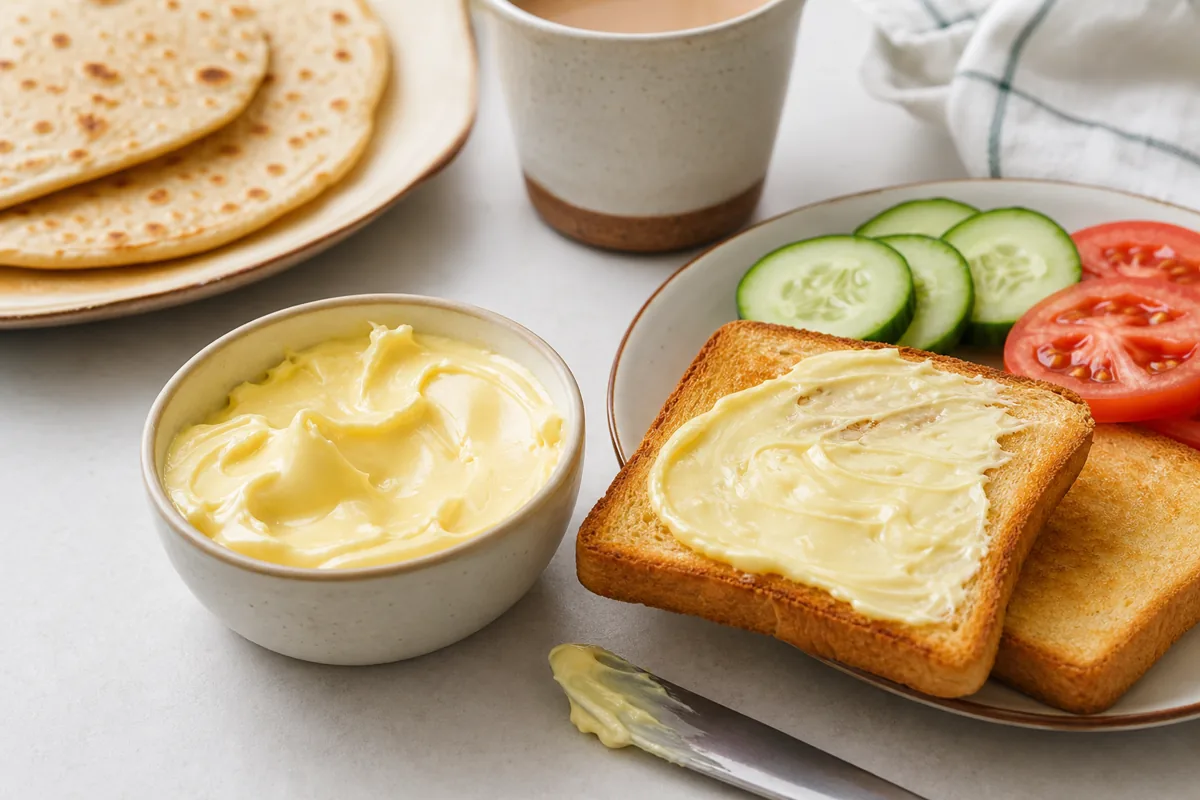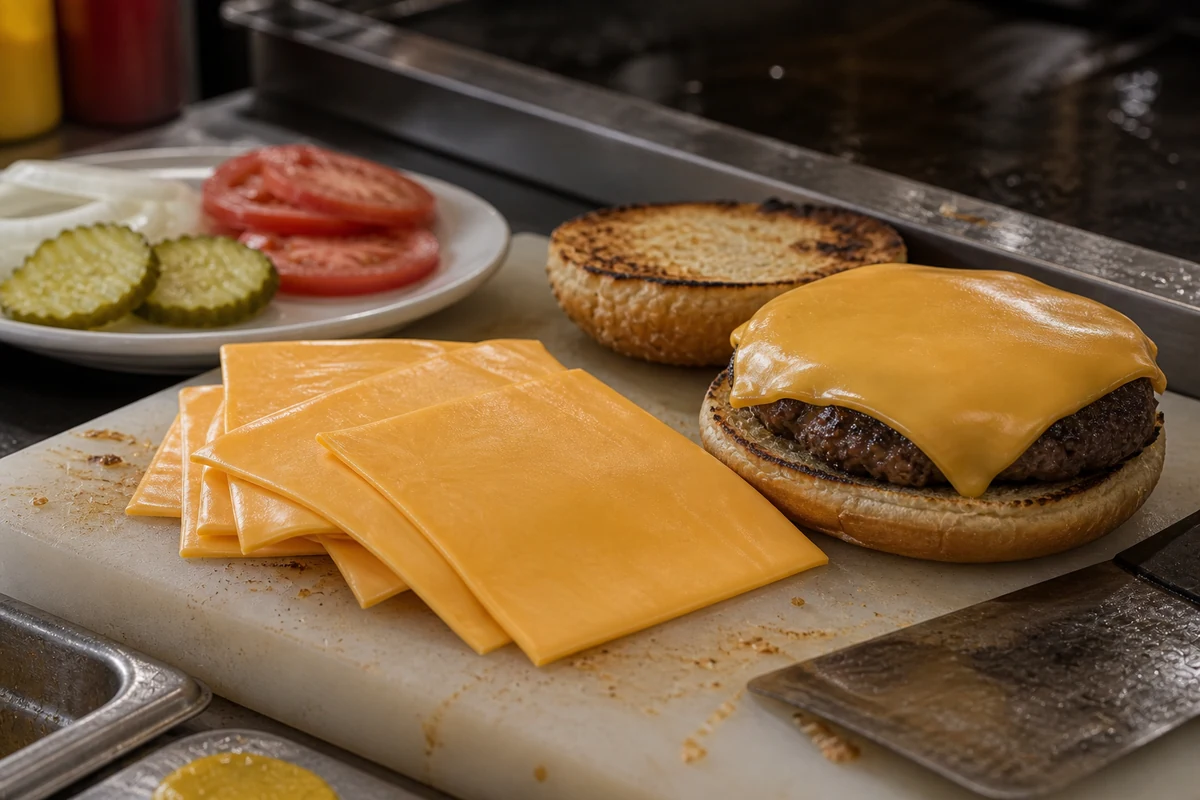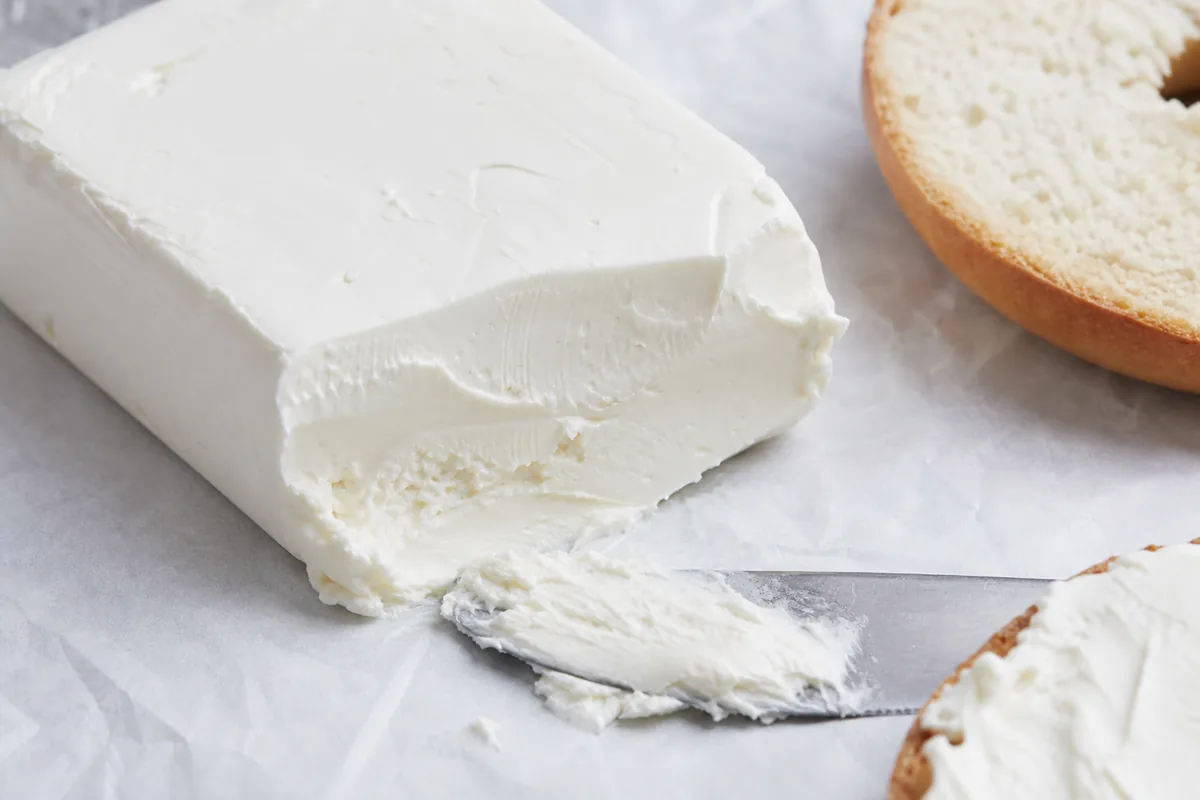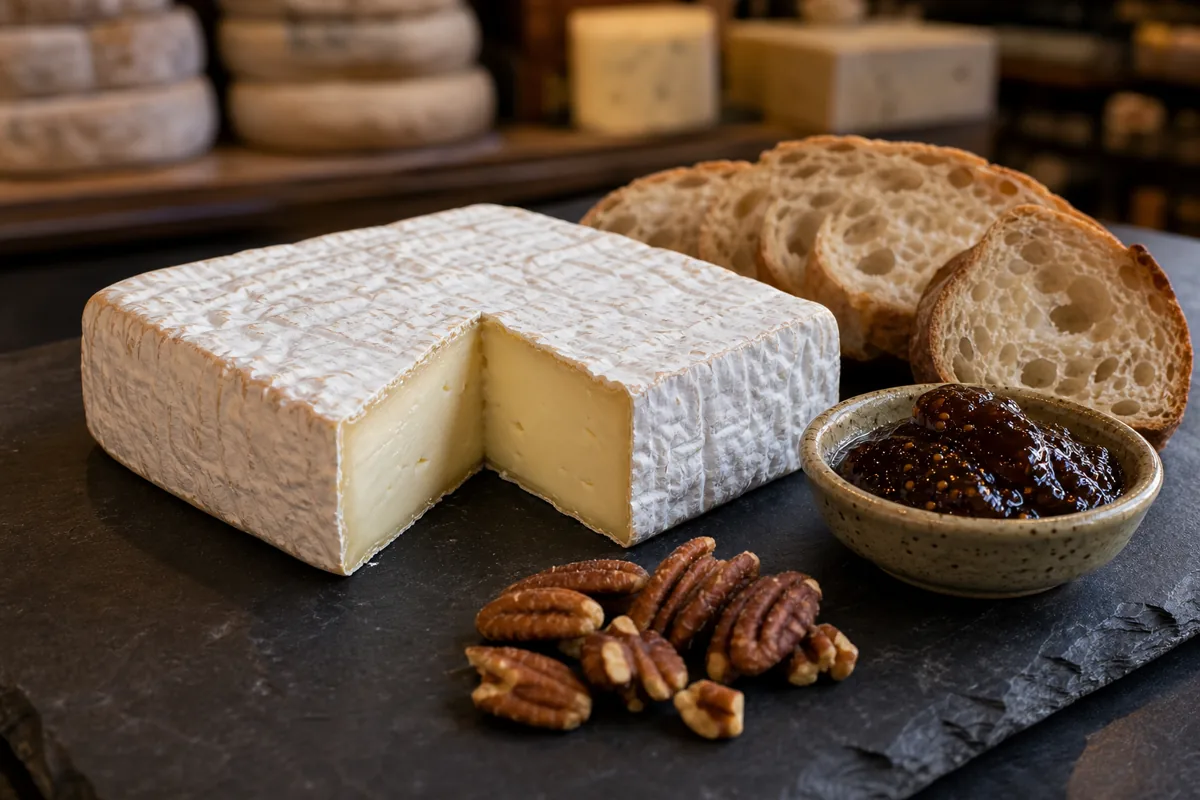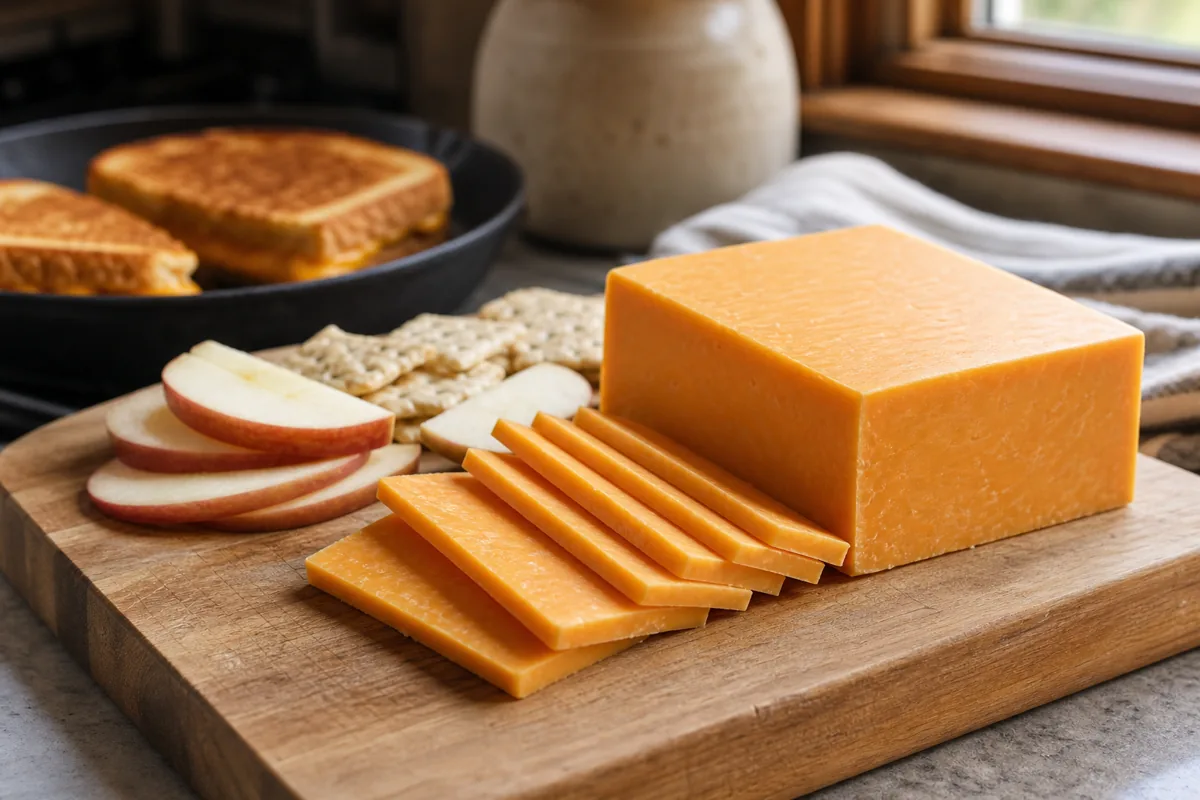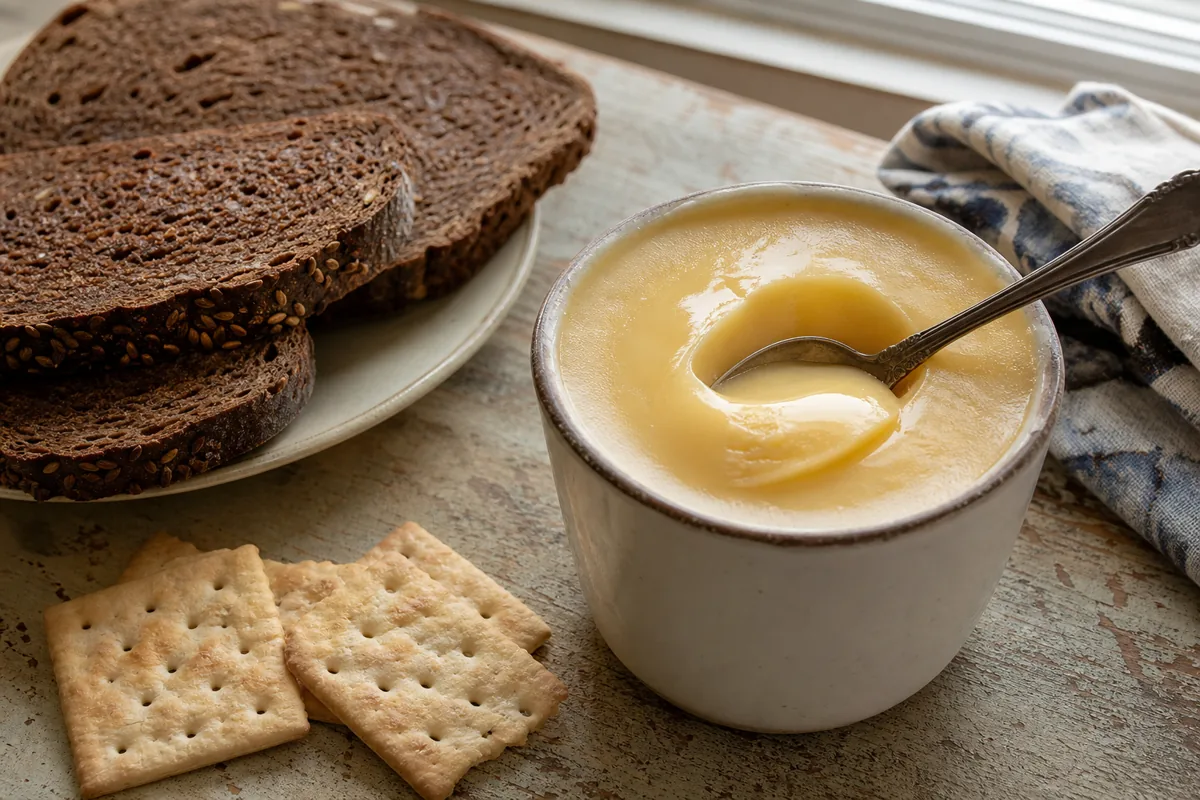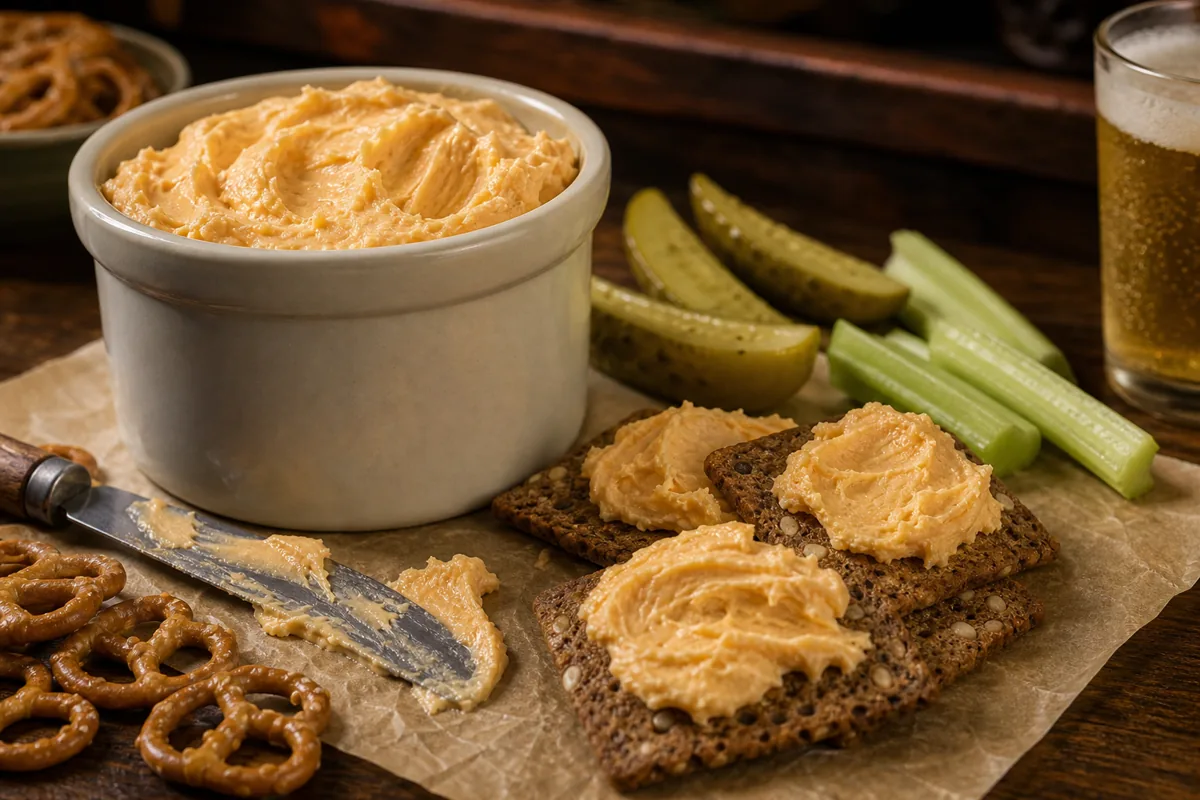
Cold pack cheese is a spreadable cheese made by grinding natural cheeses together without heat. The U.S. standard of identity, 21 CFR 133.123, defines it as cheese prepared by comminuting, without the aid of heat, one or more cheeses into a homogeneous plastic mass.
Wisconsin taverns started it, and Isthmus reported in 2018 that Wisconsin producers made 70 percent of these spreads.
In This Article
How Is Cold Pack Cheese Different From Processed Cheese?
Cold pack is made without melting, which sets it apart from processed cheese. The Takeout's Dennis Lee describes grinding and mixing with no melting step.
Isthmus says the cheese is never heated, which differentiates it from processed products and helps keep its flavor. The FDA names two cold-pack products, and the difference is whether dairy ingredients are added.
| Point | Cold-pack cheese | Cold-pack cheese food |
|---|---|---|
| Made by | Grinding one or more cheeses without heat | Grinding and mixing cheese with dairy ingredients without heat |
| Cheese share | The base is all cheese | At least 51 percent of the finished weight |
| Dairy additions | None among the optional ingredients | Cream, milk, skim milk, buttermilk, whey, or anhydrous milkfat |
| Label name | Cold-pack (variety) cheese, or (variety) club cheese | Cold-pack cheese food |
Isthmus gives "cold pack cheese food" as the official classification, which fits tubs that list cream, butter, or whey among their ingredients.
Mary Lindemann, marketing director at Pine River, says most cheese spreads are pasteurized, cooked, or injected with heat, and that this changes the taste and texture. She compares it to vegetables, which taste one way raw and another way cooked.
She also cites Utah State University research titled Grittiness in a Pasteurized Cheese Spread: A Microscopic Study, which she says found that pasteurizing a spread compacts the protein molecules and causes grittiness. In her account, the unheated cold-pack spread made from the same ingredients was smooth with no grittiness defect.
Where Did Cold Pack Cheese Come From?
Sources agree on the tavern setting but not on who started it or when. Isthmus calls the generally accepted tale a Wisconsin tavern keeper, whose name has been lost to history, who made the spread for customers as a snack at the turn of the 20th century.
Isthmus says the spread took off when Hubert Fassbender, a beer delivery man and fledgling cheesemaker, took it along on his routes. He set the beer business aside, and in 1933 founded what is now Kaukauna Cheese, where he fine-tuned production and the cheese was first packaged in crocks.
The Takeout places his start earlier, saying he invented it after founding the South Kaukauna Dairy Company in 1918. The two years may mark different events, a dairy company in one telling and the Kaukauna brand in the other, since the Cheese Professor also dates the Kaukauna Klub brand to 1933 and puts the invention in the Great Depression.
The Cheese Professor adds that Fassbender first gave some customers a blend of spreadable cheese and beer, probably made from leftover bits and pieces of cheese, until they began asking for the cheese without the beer. Sold in crocks, it became popular in supper clubs and taverns.
The Takeout explains the names: the spread was given away at pubs as a snack, hence club cheese, and Fassbender began packing it in ceramic crocks in the early 1930s, which earned the name crock cheese. Isthmus adds that cold pack names the method, since the cheese is never heated.
Cheese, Whey, Butter, and Flavorings Go Into the Tub
The base is natural cheese, often cheddar or Swiss according to The Takeout. Pine River says it uses natural cuts of Grade A cheddar aged nine to 24 months and blends different ages to set the flavor and consistency.
Lindemann says the cheese reaches Pine River in 40 pound blocks that are three weeks old, and the company ages it until it is ready. A computer program picks which ages of cheddar to blend, and she calls the blending a scientific process that is more involved than putting cheese in a blender.
The Cheese Professor says founder Phil Lindemann, who ran a cheese cutting and wrapping business, began by making spread from the trims of fine cheddar. Mary Lindemann says the spreads now use no ends and no barrel cheese.
The cheese is ground into a paste and mixed with other ingredients. The Takeout names whey solids and cream, which it says give a smooth texture and keep the spread spreadable even while cold, and Pine River names whey, Grade A butter, and spices.
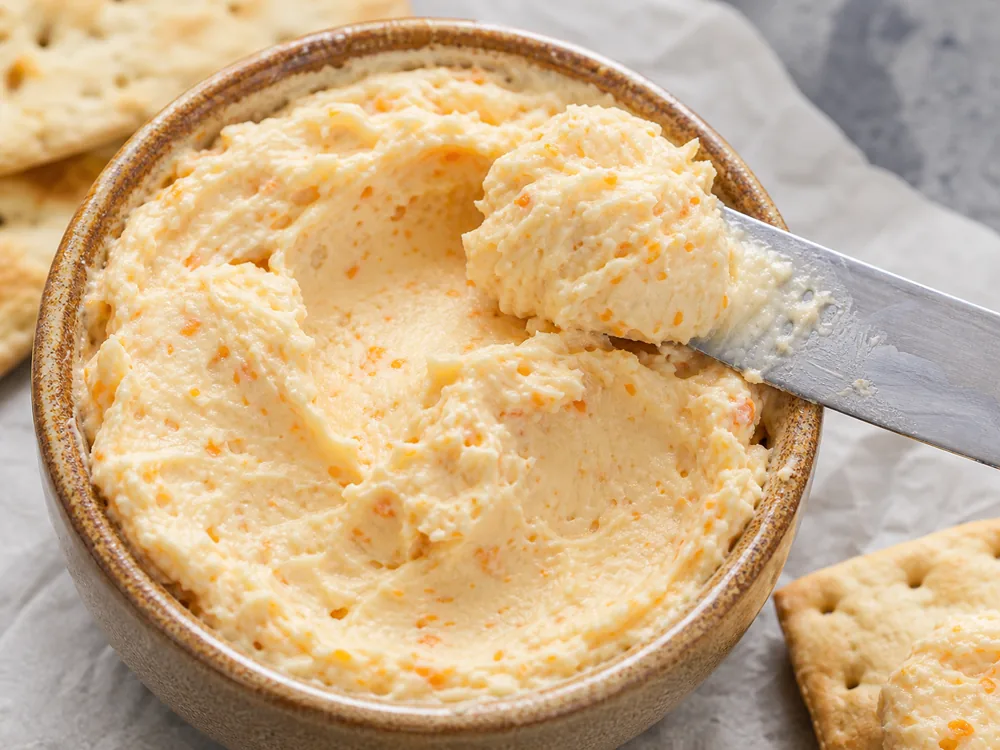
The Merkts Sharp Cheddar label on the producer's site shows what a tub holds beyond the cheese.
Sorbic acid is a mold inhibitor that 21 CFR 133.123 allows in consumer-sized packages at up to 0.3 percent by weight.
What Can You Check on a Cold Pack Label?
Under 21 CFR 133.123, a plain cold-pack cheese carries its full name on the front panel, with the cheeses listed in order of predominance by weight, as in cold-pack cheddar cheese or cheddar club cheese. A flavoring or spice that characterizes the product has to appear in the name as well.
A blend has to hold real amounts of each cheese it names: in a two-cheese cold-pack cheese every variety is at least 25 percent of the weight, and in a blend of three or more at least 15 percent. Blue-veined varieties get a lower floor of 10 percent in a two-cheese blend and 5 percent in a larger one.
Cheddar, washed curd, colby, and granular cheese, alone or mixed, can be named as American cheese, so a tub labeled cold-pack American cheese draws on that group.
The two federal names also differ in their moisture and fat limits and in the optional extras they list.
| Point | Cold-pack cheese | Cold-pack cheese food |
|---|---|---|
| Moisture | One cheese: no more than that variety's own maximum. A blend: the average of the varieties' maximums, never above 42 percent (39 percent for blends of cheddar, washed curd, colby, or granular) | No more than 44 percent |
| Fat | At least 47 percent of the solids, with lower floors of 43 percent for Swiss and 45 percent for Gruyère | At least 23 percent |
| Sweeteners | Not among the optional ingredients | Sugar, dextrose, corn syrup, and similar sweeteners, in the amount needed for seasoning |
| Gums | Not among the optional ingredients | Guar or xanthan gum, up to 0.3 percent of the finished weight |
The cheese food rule words its fat floor without the "of the solids" phrase that the cold-pack cheese rule uses, so the 23 and 47 percent figures are not directly comparable.
On the Merkts page, the Beer Cheese label lists xanthan gum and the Maple Bourbon label lists xanthan gum and several sugars, ingredients that appear among the optional ones in 21 CFR 133.124 but not in 133.123.
Isthmus says cheeses classified simply as snack spread have been heated and processed, so the cold-pack name is the claim that the cheese was never heated.
21 CFR 133.123 also says artificial coloring need not be declared on a cold-pack cheese label, so an ingredient list with no color line does not rule out an artificial one.
Is Cold Pack Cheese the Same as Pub Cheese?
Mostly, yes. Pine River's profile on Cheese Professor lists pub cheese, crock cheese, and club cheese as other names for cold pack.
Wikipedia draws a narrower line for pub cheese: a soft spread or dip made with cheese as the main ingredient, usually with beer or ale added.
It says mass-produced American versions are typically made without alcohol, and that some mix processed cheese with pure cheese.
| Source | Term it defines | What it says |
|---|---|---|
| Cheese Professor, Pine River profile | Cold pack | Also known as pub cheese, crock cheese, or club cheese |
| Cheese.com | Cold pack | Also called club cheese, comminuted cheese, or crock cheese |
| Wikipedia, pub cheese | Pub cheese | Soft spread or dip, usually with beer or ale, sometimes made with processed cheese |
A tub sold as pub cheese can therefore be a cold-pack product or, as Wikipedia notes, a blend that includes processed cheese. The federal cold-pack names carry ingredient rules, and 21 CFR 133.123 and 133.124 never use the term pub cheese.
Beer cheese is a narrower case, because Wikipedia says it requires alcohol, and the Merkts Beer Cheese label lists beer after the cheddar and water. Merkts and Pine River both sell a beer cheese flavor of cold pack.
What Does Cold Pack Cheese Taste Like?
Lizzie Duffey of the Wisconsin Milk Marketing Board told Isthmus that cold pack tastes the same as the cheese it is made from, with herbs, spices, nuts, or alcohol added.
Cheese.com calls it soft, creamy, and spreadable with a full-flavored, sharp, smoky, spicy character, and The Takeout's Dennis Lee describes the flavor as tangy.
That puts the sharpness in the base cheese. The Takeout says cold pack showcases the sharpness of the cheeses that form its base, and 21 CFR 133.123 allows added flavorings only if they do not simulate the flavor of a cheese of any age or variety.
Isthmus calls cheddar with port wine or horseradish and Swiss with almond the most popular combinations. Cedar Grove's Wills told Isthmus that olive-pimento is a classic flavor and mango-habanero a more modern one.
At Pine River, Lindemann says port wine is the most popular spread and plain cheddar is second, while beer cheese, Swiss almond, and mango habanero compete for third and fourth.
The Takeout describes port wine as ribbons of purple, while Isthmus calls it a hot pink swirl and says Pine River colors an all-natural version with beet juice instead of red dye. The Merkts Port Wine label lists carmine and annatto extract on its color line, so the ingredient list shows what colors the swirl.
Two makers show how wide the range runs.
| Maker | Flavors named |
|---|---|
| Merkts, producer site | Sharp Cheddar, Cheddar Jalapeño, Maple Bourbon, Port Wine, Almond Swiss, and Beer Cheese |
| Pine River, Cheese Professor profile | 21 types, including port wine, plain cheddar, beer cheese, Swiss almond, mango habañero, aged asiago, cranberry cheddar, garlic and herb, chunky bleu, and smoky bacon |
Which Brands Make Cold Pack Cheese?
Isthmus says the Wisconsin Milk Marketing Board listed nearly 40 producers of cold pack in 2018. The Takeout's Dennis Lee names Kaukauna and Merkts as the leading brands and adds that ALDI carries a respectable and very affordable club cheese.
Pine River says it makes the spreads for 36 private label brands, including Marieke Gouda, Widmer's, Cabot Creamery, and Henning's, and also for grocery store brands such as Sendik's.
Lindemann says most store brands ask Pine River to keep their names private, though the cups make its spreads recognizable. Two tubs under different names can therefore come from one maker.
The base is not always cheddar. Marieke Penterman of Marieke Gouda told the Cheese Professor that Pine River turns her Gouda into a spread, and that she also sells honey clover and hatch pepper versions.
Cedar Grove, a Wisconsin cheesemaker, built its spread on quark and cheddar and sells it in glass instead of plastic, Isthmus reports.
How Do You Serve Cold Pack Cheese?
The Takeout says cold pack can be eaten straight with crackers or pretzels, and Wikipedia's pub cheese entry says that spread is typically served with crackers or vegetables, either dipped or spread. The same entry lists it as a topping on sandwiches such as hamburgers.
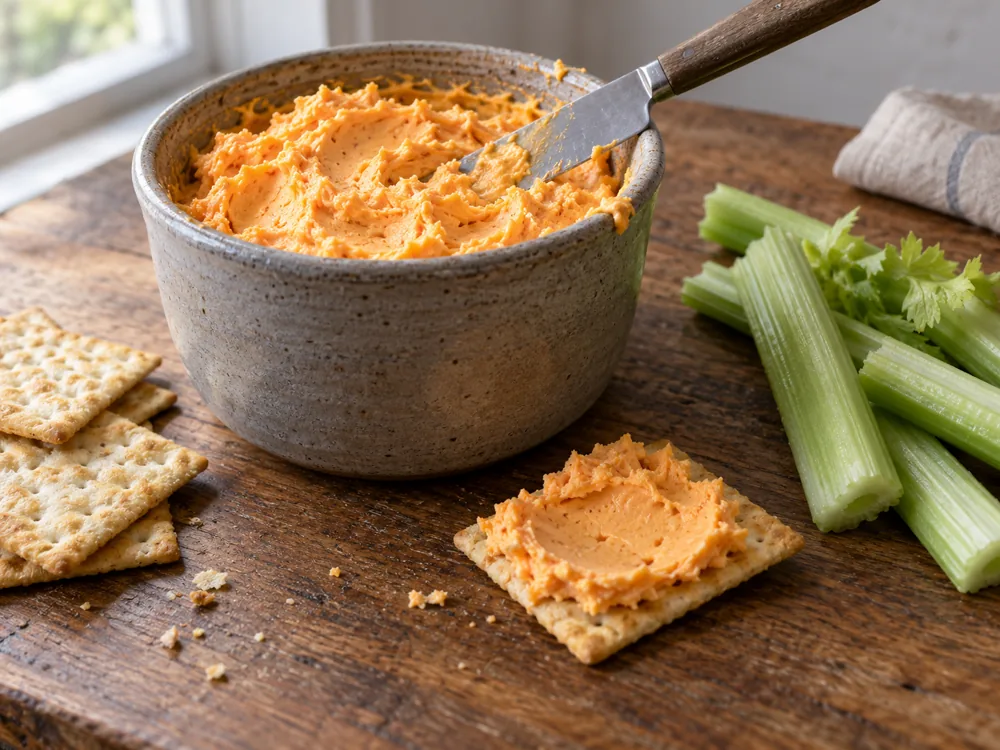
Cheese.com lists balls, logs, bulk tubs, and party cakes as the forms cold pack is sold in, and the Cheese Professor says Kaukauna sells it rolled in nuts and shaped into balls or logs.
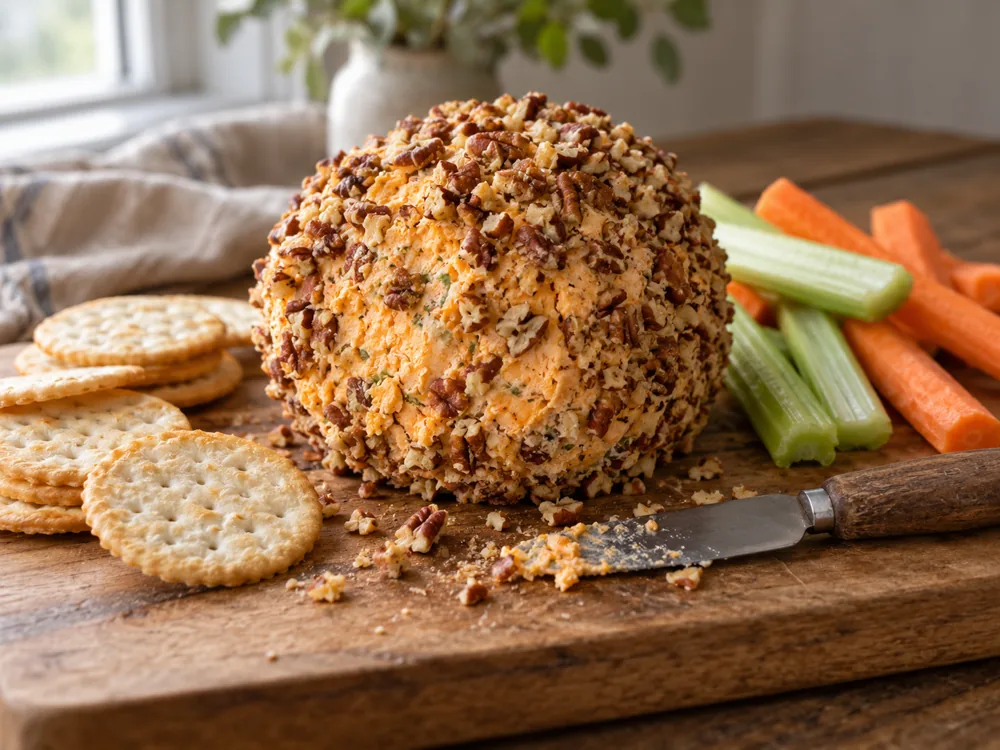
Makers and food writers also name cooked and recipe uses, listed here with the source for each.
| Use | How It Works |
|---|---|
| Cheese balls | The Takeout says the spread is shaped into a sphere or log, rolled in nuts, and served with crackers and crudités, with summer sausage as a companion. |
| Burgers and cheese sauce | The Takeout says many Chicago hot dog stands work Merkts into their cheese sauce and some offer it on a burger in place of American cheese. |
| Pasta, soups, and scrambled eggs | Pine River's Lindemann says any recipe that calls for cheese plus milk or cream can use a spread, and names pasta, soups, cooked vegetables, scrambled eggs, and manicotti filling. |
| Baked dip | A Pine River recipe on the Cheese Professor page mixes two 8-ounce tubs of jalapeño spread with green onions, salsa or tomato, and red pepper, tops it with shredded cheddar, and bakes it 15 minutes at 350 F until melted and heated through. |
| Chilled roll-ups | Another Pine River recipe spreads garlic and herb spread on tortillas with cranberries, green onions, and ham, rolls them, chills them for an hour, and slices them. |
The Takeout calls cold pack an unforgettable base for mac and cheese.
Lindemann says a few spreads can sit among the flavored butters on a butter board, and a cheese spread board can pipe cranberry cheddar and top it with cranberries or candied pecans, or add bacon to the bacon cheddar.
Keep Cold Pack Cheese Refrigerated
The Cheese Professor says cold pack is not heat processed, so it must be refrigerated and is not shelf stable, and the Merkts label says Keep Refrigerated.
Pine River's Lindemann says its heat-treated spreads have a 600-day shelf life. Pine River also sells a separate shelf-stable line for retailers without refrigeration, so the refrigerated tub and the shelf-stable one are different products.
None of the sources gives a number of days for an opened tub, and none gives a fridge temperature for cold pack, so follow the date and instructions printed on the tub.
How Does a Shelf-Stable Spread Differ From a Cold Pack Tub?
Pine River makes its shelf-stable spreads by taking its cold pack recipe and injecting heat, Lindemann says, and the texture changes. She describes it as a little bit slippery, with flavor that is still very good and a spread that melts really well.
Pine River says it added the line because of school fundraising, when organizers could not count on children to take spreads home instead of leaving them in lockers. The shelf-stable line now has nine flavors.
Lindemann says the shelf-stable tubs still go into fundraisers and gift boxes but sell even more at retailers with little or no refrigeration, such as gas stations, travel centers, and liquor stores. A tub on a room-temperature shelf is therefore likely the heated kind, since the unheated cold pack the sources describe must be refrigerated.
Lindemann adds that an opened shelf-stable container should also be refrigerated.
Is Cold Pack Cheese Safe During Pregnancy?
Neither the CDC nor the NHS names cold pack, so the answer depends on what goes into the tub. 21 CFR 133.123 requires every cheese in cold-pack cheese to be made from pasteurized milk or held at least 60 days at 35 F or above before grinding, and the Merkts label names pasteurized cultured milk.
The CDC lists hard cheese, cream cheese, and cottage cheese made with pasteurized milk among the safer choices, and says pregnant women are 10 times more likely to get a Listeria infection. The NHS says pasteurised soft cheeses, including processed cheese spreads, are safe, as are pasteurised or unpasteurised hard cheeses.
Cheese.com lists the milk as pasteurized or unpasteurized cow's milk, and the 60-day rule lets unpasteurized-milk cheese into a tub. The milk statement on the label is the fact to check when pregnancy cheese advice turns on pasteurization.
Pasteurization does not settle a tub with blue-veined cheese in it, such as a chunky bleu flavor. The NHS puts pasteurised or unpasteurised soft blue-veined cheeses, such as Danish blue, gorgonzola and roquefort, in the group that must be thoroughly cooked.
Sodium and Fat in a Two-Tablespoon Serving
The Merkts site gives one 2-tablespoon (30 g) serving of its Sharp Cheddar spread these values.
The flavor on the tub changes the numbers, as the Merkts site shows for each of its six spreads.
| Flavor | Calories | Sodium | Added on the label |
|---|---|---|---|
| Sharp Cheddar | 100 | 160 mg | Sorbic acid, annatto extract |
| Cheddar Jalapeño | 100 | 170 mg | Dehydrated jalapeño peppers, chili pepper extract, sorbic acid, annatto extract |
| Port Wine | 100 | 170 mg | Port wine, carmine, annatto extract, sorbic acid |
| Beer Cheese | 90 | 180 mg | Beer, sorbic acid, xanthan gum, annatto extract |
| Maple Bourbon | 100 | 190 mg | Maple sugar, brown sugar, molasses, xanthan gum, caramel color |
| Almond Swiss | 100 | 200 mg | Swiss cheese, almonds, sorbic acid |
What Can You Use Instead of Cold Pack Cheese?
Pub cheese is the closest swap, since Pine River uses the name pub cheese for cold pack.
Wikipedia names pimento cheese and port wine cheese as spreads similar to pub cheese. For the sharp cheddar flavor alone, a block of Cheddar carries the base flavor, though not in spreadable form.
The federal standard bars cream cheese, cottage cheese, and hard grating cheese from the grind, so a cream cheese spread is a different product.
Swiss is the other base The Takeout names. Swiss cheese with almonds is a combination Isthmus lists among the most popular.
SOURCES & REFERENCES
Cold pack cheese is a spread made by grinding natural cheeses together without heat. The FDA standard in 21 CFR 133.123 calls it cold-pack cheese or club cheese.
Several sources use the names for the same spread. Wikipedia describes pub cheese as usually containing beer or ale and says some versions include processed cheese.
It is made without heat, so it is not heat-processed cheese. The FDA names the version with added dairy ingredients cold-pack cheese food.
Yes. The Cheese Professor says it is not shelf stable, and the Merkts label says Keep Refrigerated.
Pine River sells a heat-treated spread with a 600-day shelf life. Its marketing director says the texture is a little bit slippery, so it is a different product from the refrigerated tub.
Sources say yes. The Takeout lists mac and cheese and cheese sauce, and Pine River lists pasta, soups, and scrambled eggs.
Neither the CDC nor the NHS names it. The FDA standard requires pasteurized milk or 60 days at 35 F or above, so check the milk statement on the tub. A tub with blue-veined cheese needs separate care, because the NHS says pasteurised or unpasteurised soft blue-veined cheeses must be thoroughly cooked.