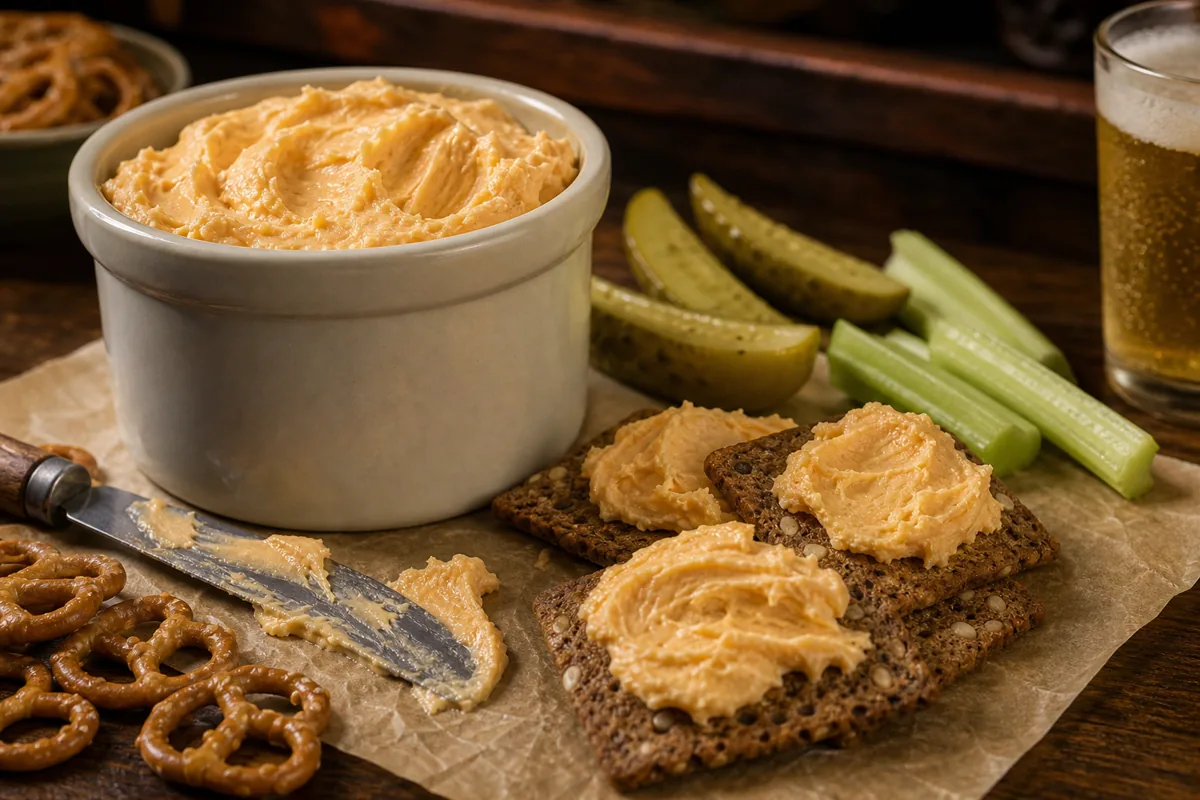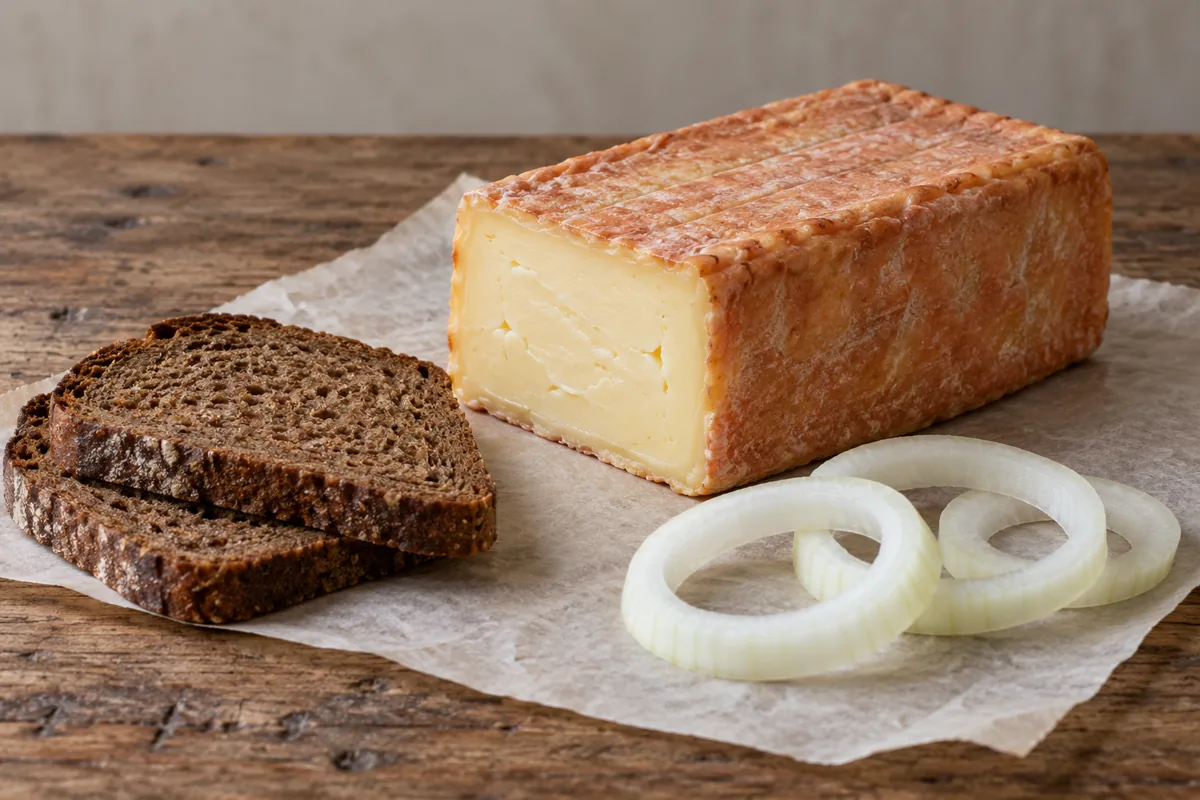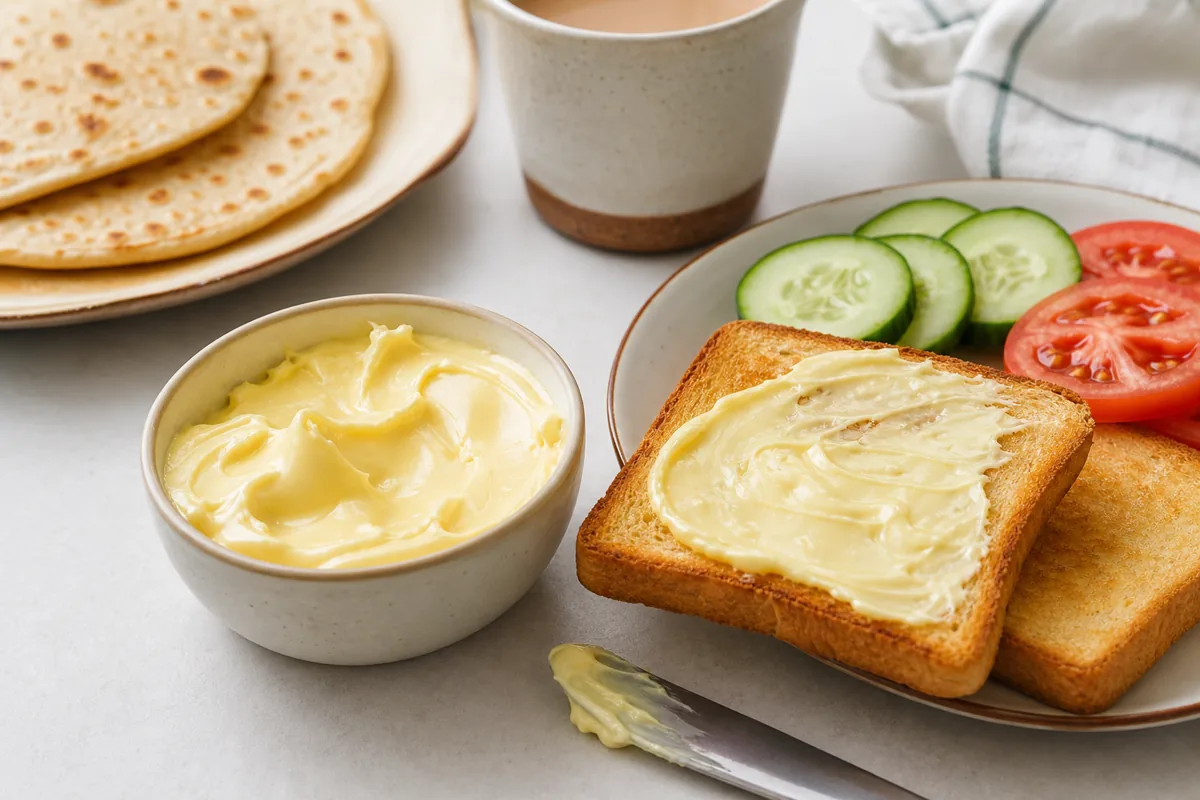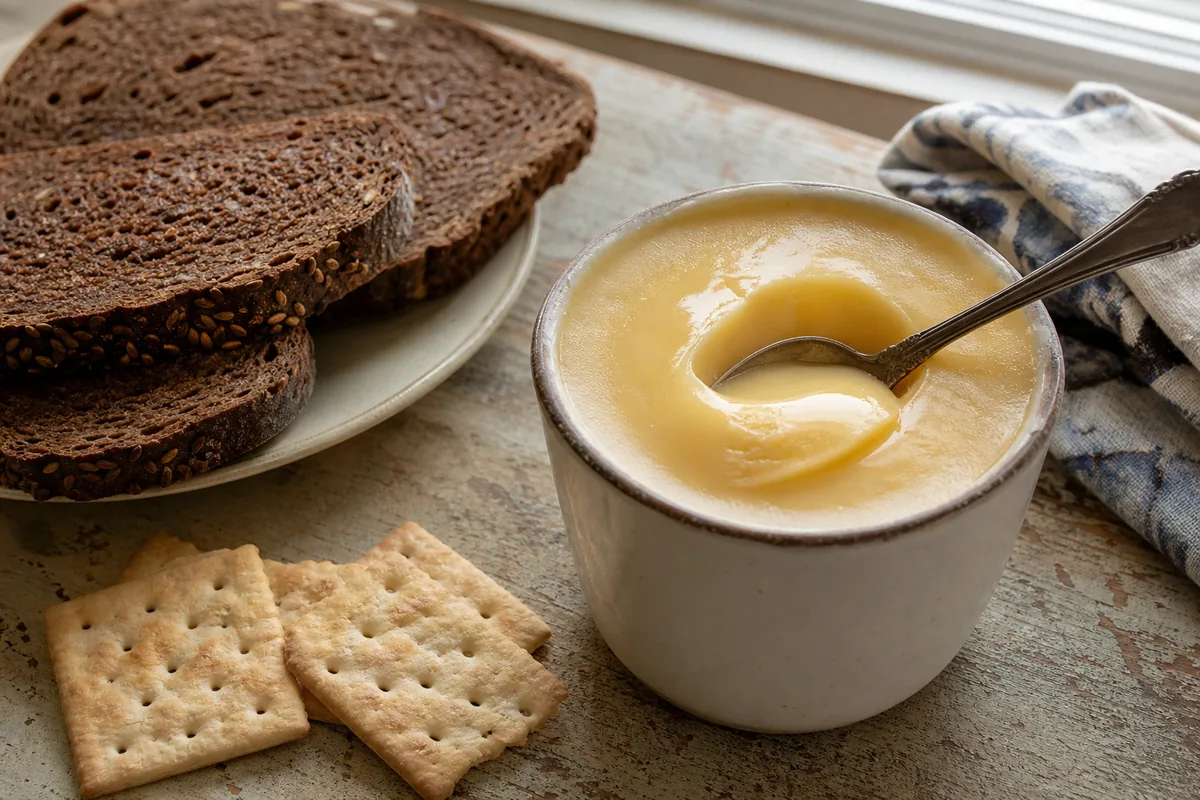
Cup cheese is a soft Pennsylvania Dutch spread sold in a cup, a variation of the German cheese Kochkäse.
The name covers two different foods. Shenk's Cup Cheese, made by Dilly Artisan Foods from Lancaster County skim milk, is an aged curd with 0 g of fat on its label, while other versions melt cheese into a spread with milk or whey, and in some recipes butter or cream.
Strength and milk also change from cup to cup: Shenk's comes in mild, medium, and sharp, and the records of the milk differ, so the label tells you more than the name does.
In This Article
What Is Cup Cheese?
Cup cheese is a thick spread with a consistency resembling molasses. James Michener's 1974 novel Centennial calls it "a very thick, very cold molasses" and says it "smelled stronger than limburger."
Smell and colour depend on the version. Cheese.com calls cup cheese sharp, sour, and strong-smelling, while Amish Heritage's author, who grew up Amish in Lancaster County, says a sour, stinky type, if it exists, is not the kind she grew up with, and makes a white spread from white American cheese, saying yellow American also works.
The milk differs by record: Cheese.com's entry gives unpasteurized cow's milk, while the Shenk's ingredient list reads cultured skim milk, water, bicarbonate of soda, salt, and enzymes.
Cup cheese is grouped with the processed cheeses, alongside American cheese and cold pack cheese, and the melted-slice home recipe starts from American cheese slices.
Why Is It Called Cup Cheese?
The name comes from the container: it is called cup cheese because it is sold in a cup. Dilly Artisan Foods says the cheese was "taken to markets in large bowls, warmed and hand dipped into customers' cups."
Its roots are in the German Koch Kase, or "cook cheese", and its Pennsylvania heritage dates to the late 17th century arrival of the Mennonites and Amish.
The Shenk's recipe dates from 1929, when dairy farmer Clayton Shenk first made the cheese in Southern Lancaster County, and with cream in high demand, the recipe used up the remaining skim milk. Shenk's joined Dilly Artisan Foods in 2020, and Dilly says it remains committed to the original recipe.
Its Pennsylvania Dutch name, "shmear käs," means spreading cheese, a name tied to its softness.
How Is Cup Cheese Made?
Shenk's is an aged curd of cultured skim milk, while other versions are melted from cheese. At Shenk's, the local Lancaster County skim milk arrives for processing less than 10 hours after milking and is cultured, heated, and agitated overnight.
Legacy cultures set the milk, further heat forms soft curds, and a cheesemaker hand cuts them with a paddle. Heating separates the curd from the whey, which the cheesemaker drains by hand before moving the curds to a press.
The pressed curds go into large pans in an aging room, and about a day later they are stirred, blended, and salted for more aging. Dilly says "the longer the cheese ages in the room, the sharper it will be," and once the cheese reaches the sharpness the maker wants, it is warmed and packed into cups.
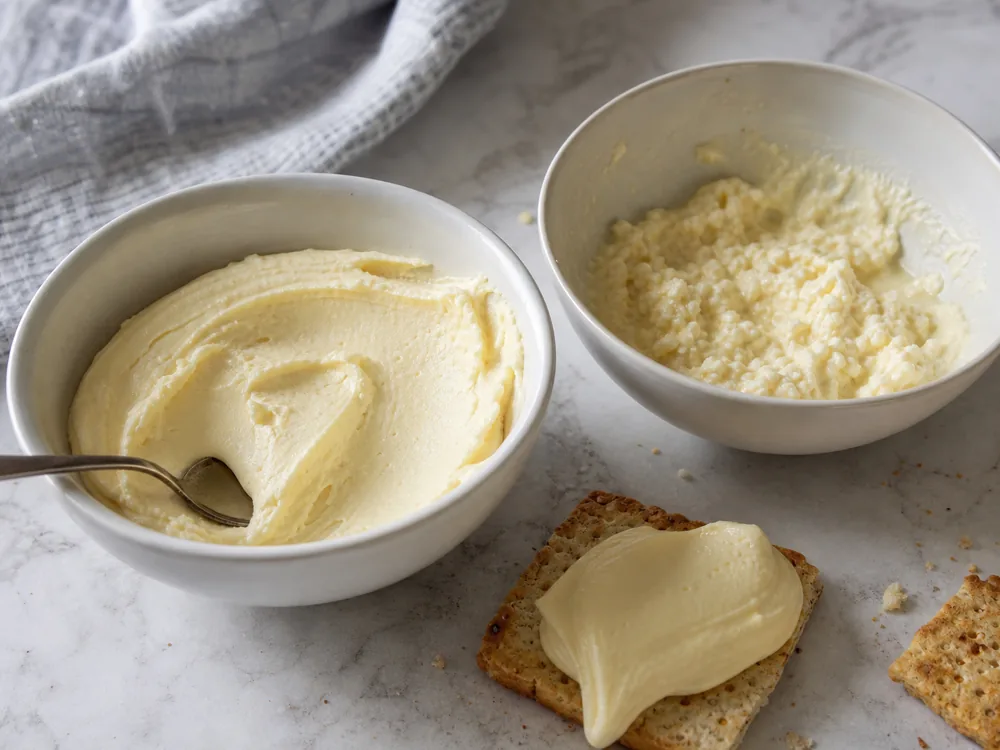
Other versions start from cheese: one is made by melting grated cheese with a liquid such as milk or whey and letting it set in a covered container for several days, and a homemade version is listed as processed American cheese or cottage cheese, butter, cream, salt, baking soda, water, and raw milk.
Why Does Cup Cheese Contain Baking Soda?
Baking soda softens the spread: it is alkaline and shifts the pH, which helps break down the proteins in the cheese and leaves a softer, more spreadable texture.
Bicarbonate of soda is on the Shenk's ingredient list, and baking soda is in the homemade ingredient list and in both home recipes, the cultured-milk one and the melted-slice one.
The two recipes add it at different points: the cultured-milk recipe stirs ½ tsp into the crumbled curds from a gallon of milk along with the butter and lets them sit 5 hours before melting, while the melted-slice recipe stirs a pinch into the finished melt after taking it off the heat.
Too much soda gives a soapy taste, and the melted-slice recipe adds a pinch to 20 slices of cheese.
How Do Mild, Medium, and Sharp Cup Cheese Differ?
At Shenk's, mild, medium, and sharp differ by age: the longer the curd ages, the sharper the cheese, and one ingredient list and nutrition panel covers the whole line.
"Mild" can also mean a sweeter recipe: Stoltzfus Meats says the sweet or mild kind uses sweeter liquids such as cream or condensed milk, and it describes sharp cup cheese as the one with "a more piquant flavor."
The home recipes are described as bland or as not sharp or overpowering.
How Much Fat Is in Cup Cheese?
The fat depends on which kind is in the cup. The Shenk's label shows 0 g of fat per 1 oz serving, while a homemade spread of butter, milk, and American cheese lists 19 g of fat, 11 g of it saturated, in a quarter-cup serving, on a recipe card that calls its figures approximate.
The Shenk's ingredient list names cultured skim milk and no butter or cream. Cheese.com gives a different picture, calling cup cheese very fatty, with almost 70 percent of its calories from fat, and adds that fat-free varieties exist in mild, medium, and sharp.
| Per serving | Shenk's (maker's label) | Homemade butter-and-cheese spread (recipe card) |
|---|---|---|
| Serving | 1 oz (28 g) | ¼ cup |
| Calories | 25 | 214 |
| Total fat | 0 g | 19 g |
| Saturated fat | 0 g | 11 g |
| Protein | 6 g | 9 g |
| Sodium | 140 mg | 802 mg |
The servings differ, 1 oz of Shenk's against a quarter cup of the homemade spread, so the columns do not compare equal weights. The label on the cup you buy shows whether you have a skim-milk curd or a butter-and-cheese spread.
How Do You Eat Cup Cheese?
Cup cheese is spread on bread or crackers or used as a dip, and Stoltzfus Meats, Dilly, and Amish Heritage each name pretzels.
| Use | How It Works |
|---|---|
| Dark Bread | Spread on black bread by a character in Michener's novel Centennial. |
| Pretzels | Pretzel dipping is on Stoltzfus Meats' list; Dilly names salty pretzels. |
| Baked Potatoes | A baked potato topping on Stoltzfus Meats' list. |
| Scrambled Eggs | A spoonful mixed into scrambled eggs, on Stoltzfus Meats' list. |
| Warm Vegetables or Pasta | Dilly suggests spooning it over them. |
| Buns with Peanut Butter | Served this way at Lancaster Amish church dinners, says Amish Heritage, which calls the pairing sweet and salty. |
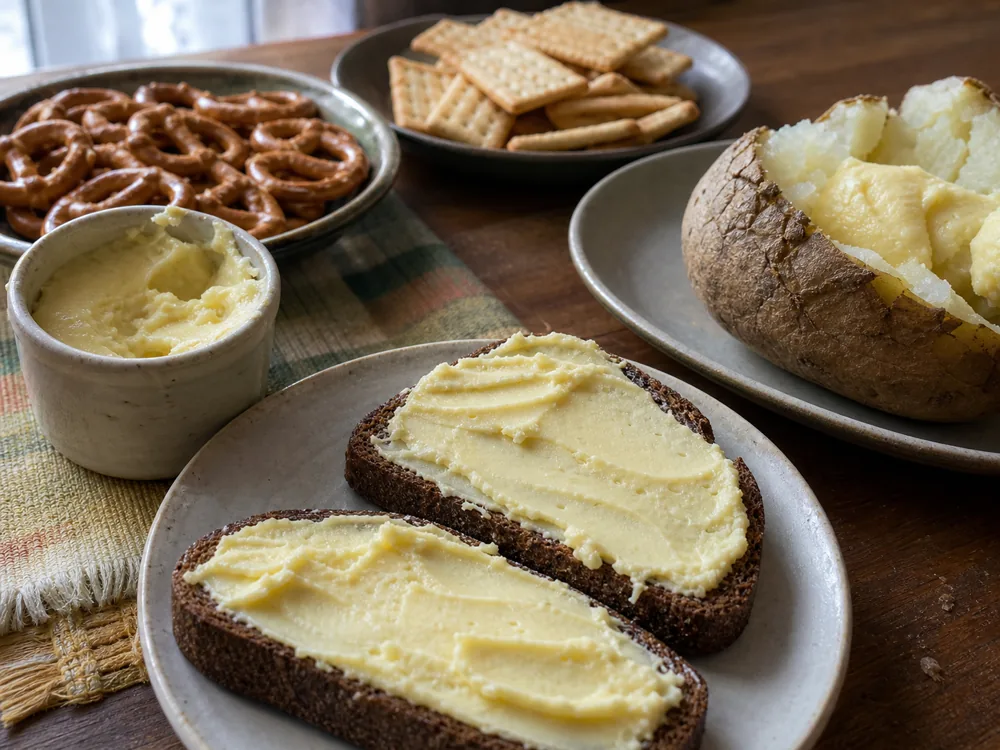
Dilly says to enjoy the cup cheese at room temperature, and a homemade batch sets fairly thick in the refrigerator and quickly thins when left out, which lets the spread double as a dip for pretzels, chips, and crackers.
The CDC counts dairy as perishable food and says to never leave perishable food out for more than 2 hours (or 1 hour if exposed to temperatures above 90°F), which is the limit for a cup set out to serve.
Amish Heritage's own melted-cheese spread works wherever cheese sauce does, on nachos, potatoes, pasta, quiche, and eggs, and the site puts its flavor not far from cheddar cheese spread or nacho cheese sauce.
What Should You Check When Buying Cup Cheese?
Outside Lancaster County, the store locator on Dilly's process page lists the regional grocers that carry Shenk's, and Stoltzfus Meats has sold the Shenk's brand online.
Cheese.com says cup cheese is hard to find in conventional stores and turns up at farmers' markets in Lancaster County, where Amish and Mennonite producers sell it directly.
On the Shenk's label the last ingredient is enzymes, without saying where they come from, so if you avoid animal rennet, ask Dilly what they are. A cup holds eight 1 oz servings, and Dilly says it has no additives or preservatives.
Pick a strength, mild, medium, or sharp, then read the ingredients and check whether the milk is pasteurized.
Can You Make Cup Cheese at Home?
Yes, by two different routes: the cultured-milk recipe starts from a gallon of milk with buttermilk culture, and the melted-slice recipe melts deli white American cheese slices into hot milk.
| Point | Cultured-milk recipe | Melted-slice recipe |
|---|---|---|
| Starting point | 1 gallon of milk with buttermilk culture and 1 drop of liquid rennet | 1⅓ cups of milk and 20 slices of deli white American cheese |
| Added | ½ teaspoon baking soda, 3 tablespoon butter, 1 cup heavy cream, 1 beaten egg | 4 tablespoon butter, a pinch of baking soda, optional ¼ teaspoon salt |
| Temperatures | Milk stands at about 72°F for 12 hours; curds heat to 115°F | Milk heated to almost boiling, but not boiled |
| Waiting time | 12 hours of draining, then another 5 hours of setting | Cools under plastic wrap or parchment |
| Result | Poured into cups, refrigerated, served cool | About 2½ cups; Amish Heritage says it keeps one to two weeks refrigerated |
The cultured-milk recipe is the closer one to Shenk's: it works from cut and drained curds, much as Dilly describes for Shenk's, but melts them with butter, cream, and an egg that the Shenk's ingredient list does not include.
The melted-slice recipe is the quicker one: it skips the curd and lists 20 minutes of prep and total time.
It specifies thicker deli or deluxe slices, about 24 to the pound, and advises against individually wrapped slices, which it calls thinner and not actually real cheese. The recipe lays plastic wrap or parchment directly on the cooling spread to keep a skin from forming, and beats the spread once cooled for a smoother texture.
How Should You Store Cup Cheese?
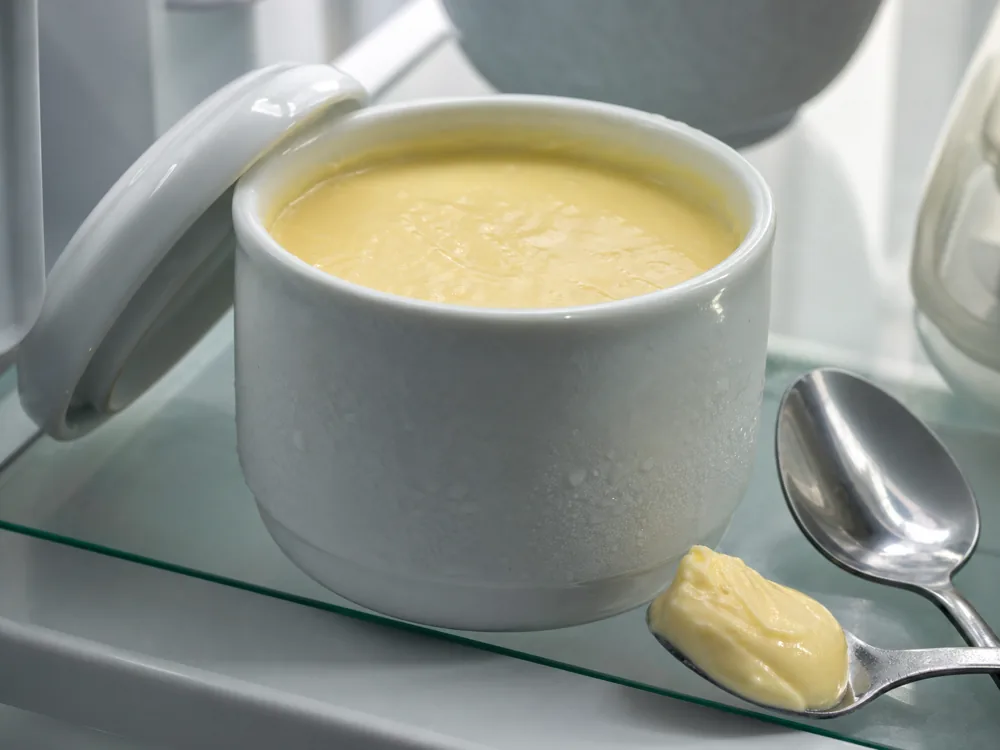
Keep the cup cheese in its cup in the refrigerator, as Cheese.com recommends. Follow the date on your purchased cup.
Raw, Pasteurised or Unstated: Cup Cheese in Pregnancy
The milk is an open question: Cheese.com gives unpasteurized cow's milk, and the Shenk's label reads cultured skim milk with no word on pasteurisation. Until the cup says pasteurised, cook it until steaming hot under NHS advice.
A cup labelled pasteurised is a soft spread, on the NHS safe list with cottage cheese, cream cheese and processed cheese spreads.
Raw-milk soft cheese sits on the CDC's riskier list, and a cold pasteurized spread like this is missing from its safer one. In the US, heat a pasteurized cup to 165°F or get your midwife's or doctor's OK first, and skip an unlabelled cup even cooked; cheese in pregnancy has both lists.
SOURCES & REFERENCES
Raw Milk, Fat and Shmear Käs: Cup Cheese Questions
Cheese.com lists unpasteurized cow's milk, and the Shenk's label lists cultured skim milk, so ask Dilly Artisan Foods whether that milk is pasteurized.
It ranges from sharp, sour, and strong in Cheese.com's entry to the bland or not sharp or overpowering home recipes, and Shenk's sells mild, medium, and sharp, the sharper cups aged longer.
The Shenk's label lists 0 g of fat per 1 oz serving. Cheese.com says almost 70 percent of the calories come from fat but adds that fat-free varieties are sold, so check the label of the cup you buy.
It means spreading cheese, a name tied to the cheese's softness.
It comes from Pennsylvania Dutch culture, and Shenk's was first made in Southern Lancaster County in 1929.
Only a cup labelled pasteurised, under NHS advice; cook any other until steaming hot. In the US, heat even a pasteurized cup to 165°F or get your midwife's or doctor's OK first.