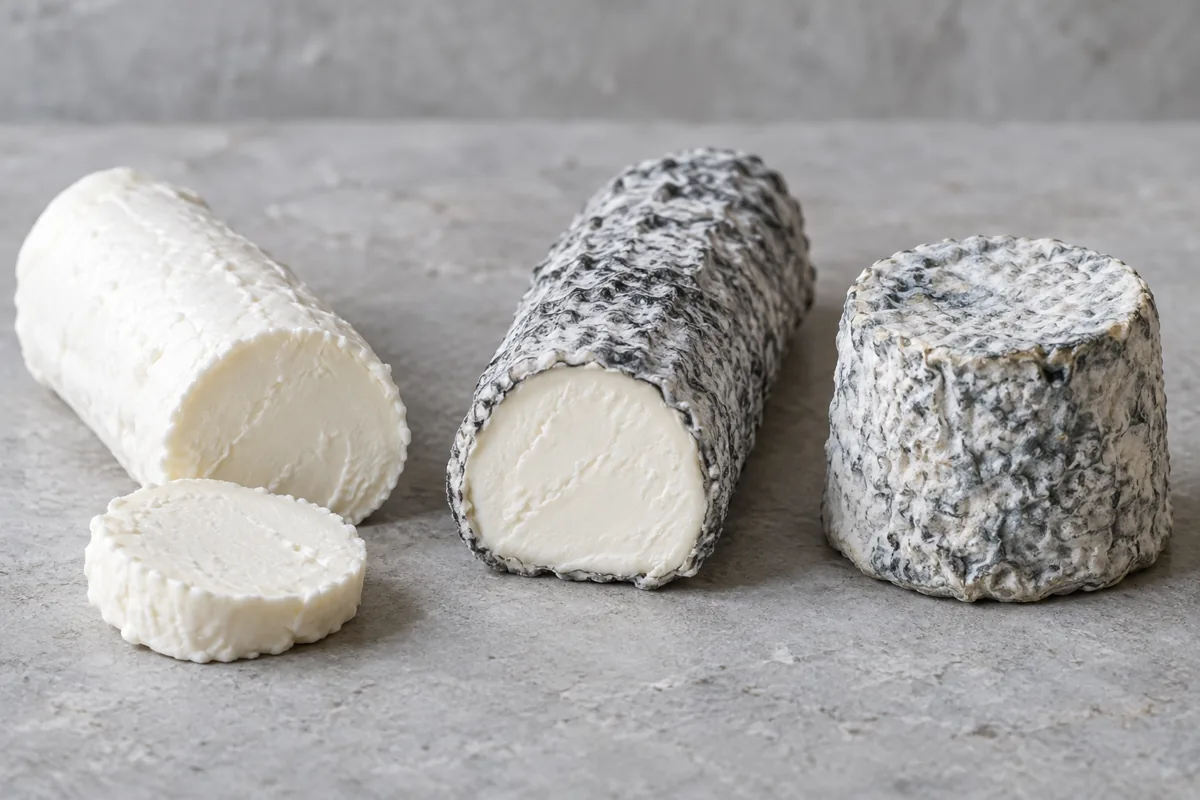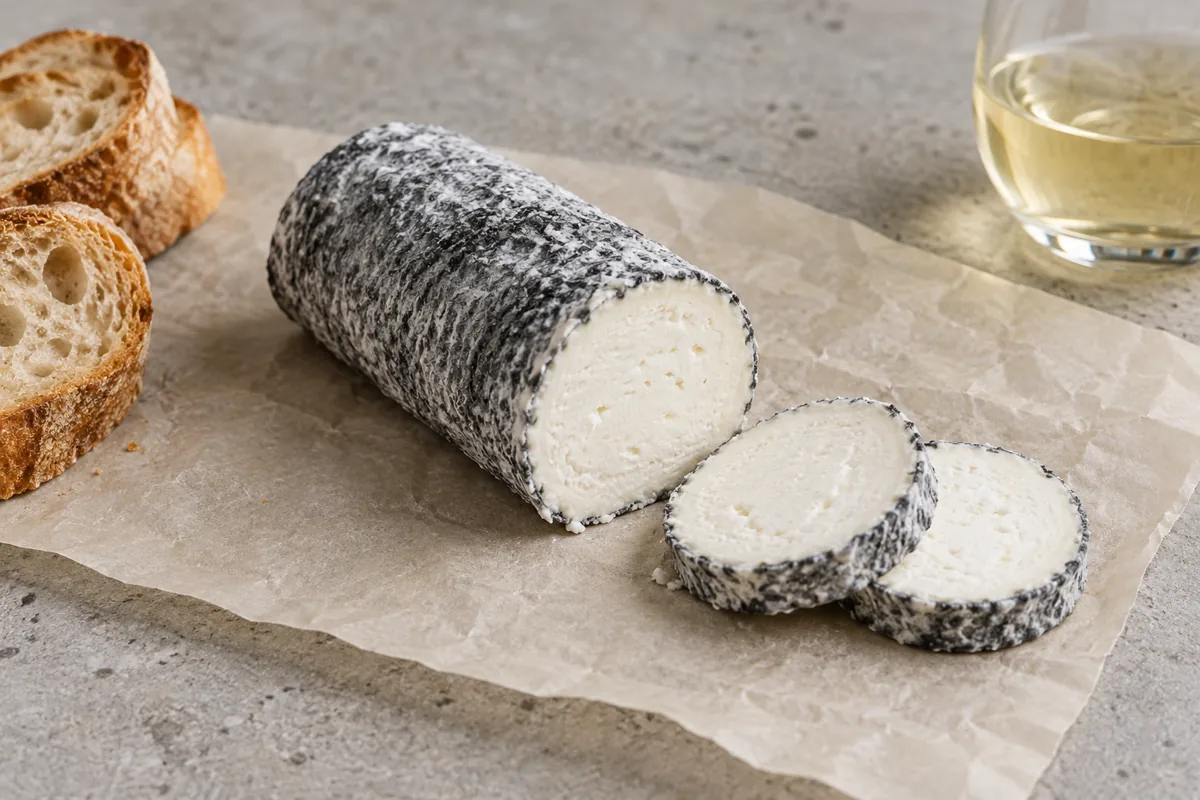
Yarra Valley Vintage Savourine is an ash-coated goat's milk log from Yarra Valley Dairy in Victoria, Australia, and Cheese.com describes it as fully matured for over six months. The same site lists the dairy's Black Savourine and White Savourine as semi-matured.
The cheese does not appear on the dairy's current matured-cheese page.
In This Article
Can You Still Buy Yarra Valley Vintage Savourine?
Cheese.com still carries a Vintage Savourine entry with Yarra Valley Dairy as producer, but the dairy's matured-cheese page lists Black Savourine, White Savourine, Camembert and Double Brie, and no Vintage.
How Is Vintage Savourine Different From Black and White Savourine?
Cheese.com lists the three side by side, and the clearest gap between them is maturity.
| Detail | Vintage Savourine | Black Savourine | White Savourine |
|---|---|---|---|
| Maturity | Fully matured, over six months | Semi-matured | Semi-matured |
| Class | Hard, artisan | Semi-hard, artisan | Semi-hard, artisan |
| Shape | Log | Pyramid with a flat top | Log |
| Rind | Ash coated | Ash coated | None listed |
| Texture | Crumbly, dense, firm | Firm, a little moist | Dense, firm, a little moist |
| Flavour | Sharp, tangy; roasted nutty | Acidic, sour; roasted nut, hints of blue, cooked cream | Acidic, citrusy; delicate roasted nuts |
Vintage is the only one of the three described as crumbly, and White Savourine is the only one with no ash coat.
One entry disagrees with the maker. Cheese.com calls Black Savourine a flat-topped pyramid, while the dairy's own flatbread recipe calls it a goat's cheese log.
The Vintage text has its own oddities: it calls the cheese a “fully matured fresh goat's milk cheese” that is “allowed to mature at very high temperature for over six months”, so it reads best as one catalogue description rather than a confirmed specification.
The hard and semi-hard labels are also catalogue classes, not confirmed moisture readings.
What Does Vintage Savourine Taste and Feel Like?
Cheese.com gives the flavour as sharp and tangy and the aroma as fresh and nutty, and its description adds a roasted nutty flavour with a sharp tangy finish.
The same description says the long maturing develops a complex flavour and a dense, crumbly paste.
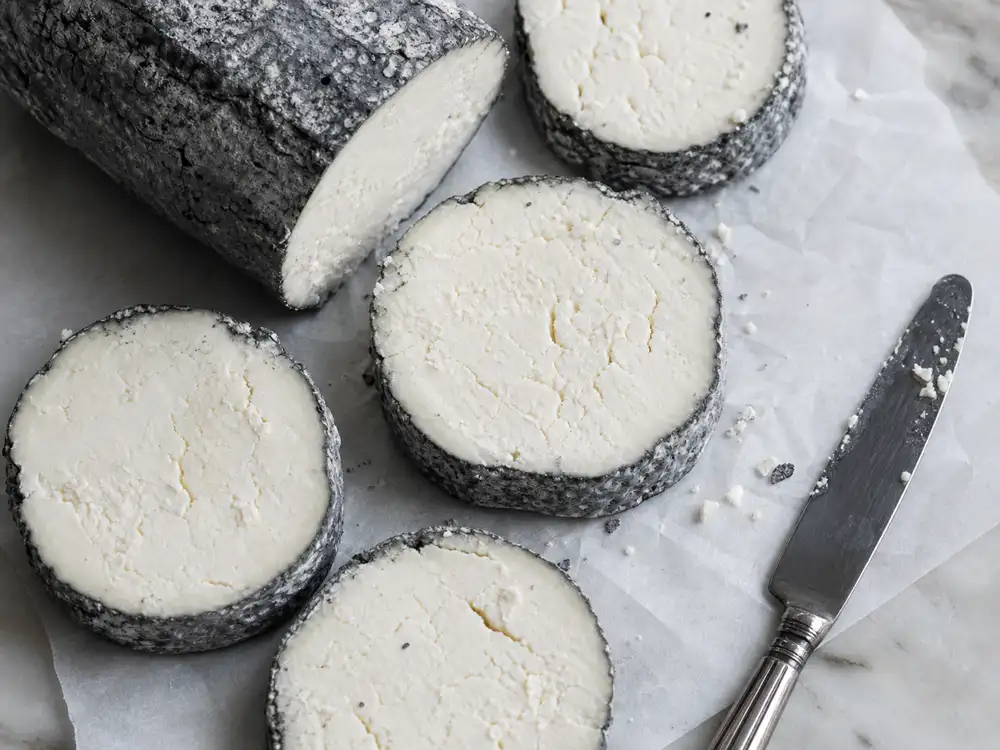
The paste is listed as dense, firm and crumbly and the colour as white, so look for a cut face that breaks at the edge.
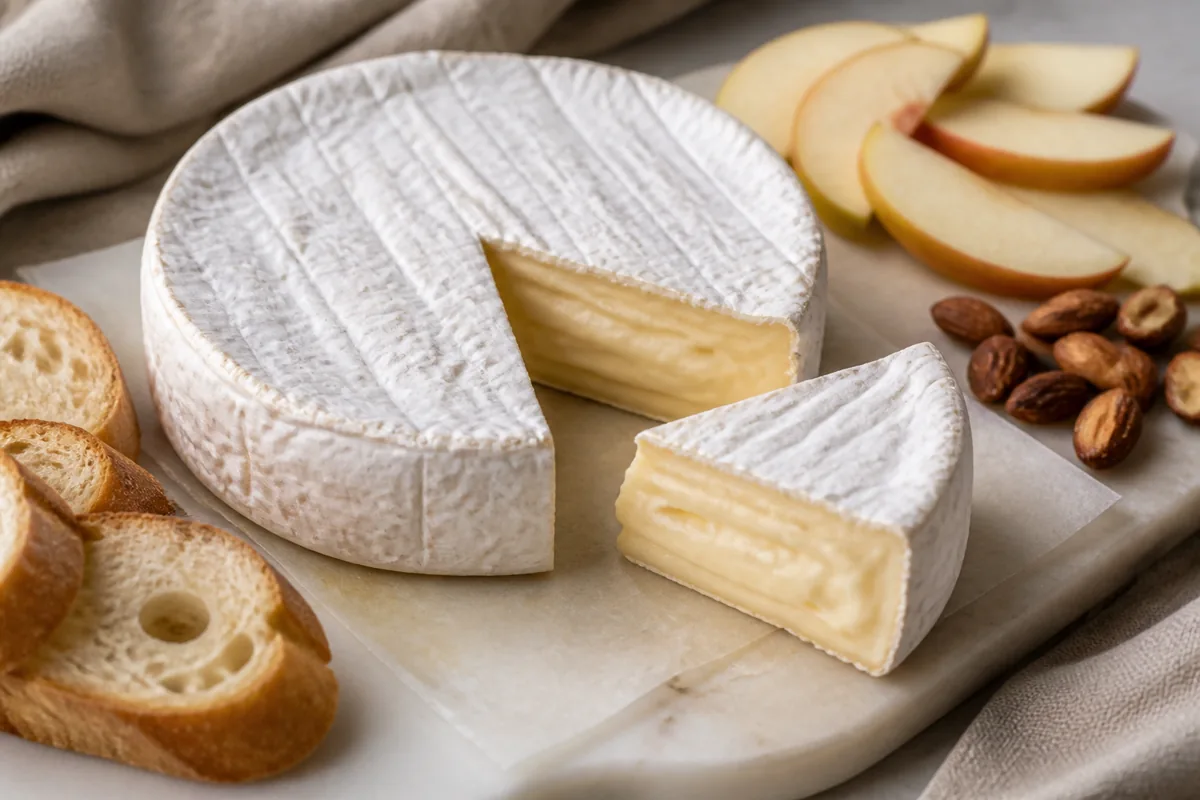
The maker describes its matured range differently. The dairy's matured-cheese page says white mould develops on the rind while the centre breaks down into a creamy, velvet-textured paste, which sits against Cheese.com's firm, crumbly Vintage.
Cheese.com is the only source that gives an aging time for this log.
Colour is a smaller conflict. Cheese.com lists the paste of all three Savourines as white, while the maker's product text for Black and White Savourine calls the paste straw-coloured.
What Does the Label Say About Milk, Rennet, Fat and Salt?
The dairy publishes no separate label for Vintage Savourine, but the Black Savourine label gives the ingredients as pasteurised goat's milk, salt, cultures, non-animal rennet and ash.
The White Savourine label lists the same ingredients without the ash. Cheese.com marks Vintage as vegetarian, which fits non-animal rennet without confirming it for this log.
The dairy's FAQ says all its cheeses carry Halal certification and none is certified organic.
The Black and White Savourine pages carry identical nutrition figures per 100 g:
- Energy: 1410 kJ
- Protein: 20.4 g
- Total fat: 27.4 g, of which saturated fat is 20.3 g
- Carbohydrate: 2.8 g
- Sodium: 500 mg
Cheese.com lists 22.5 g of fat per 100 g for Vintage and the same figure for Black and White, a single value across cheeses it describes as different ages. The dairy's label puts the two current logs at 27.4 g.
On a 25 g serve that is 6.9 g of fat and 125 mg of sodium, and if you eat a whole 200 g log the label figures put you at roughly 55 g of fat and 1,000 mg of sodium.
What Goes With Vintage Savourine?
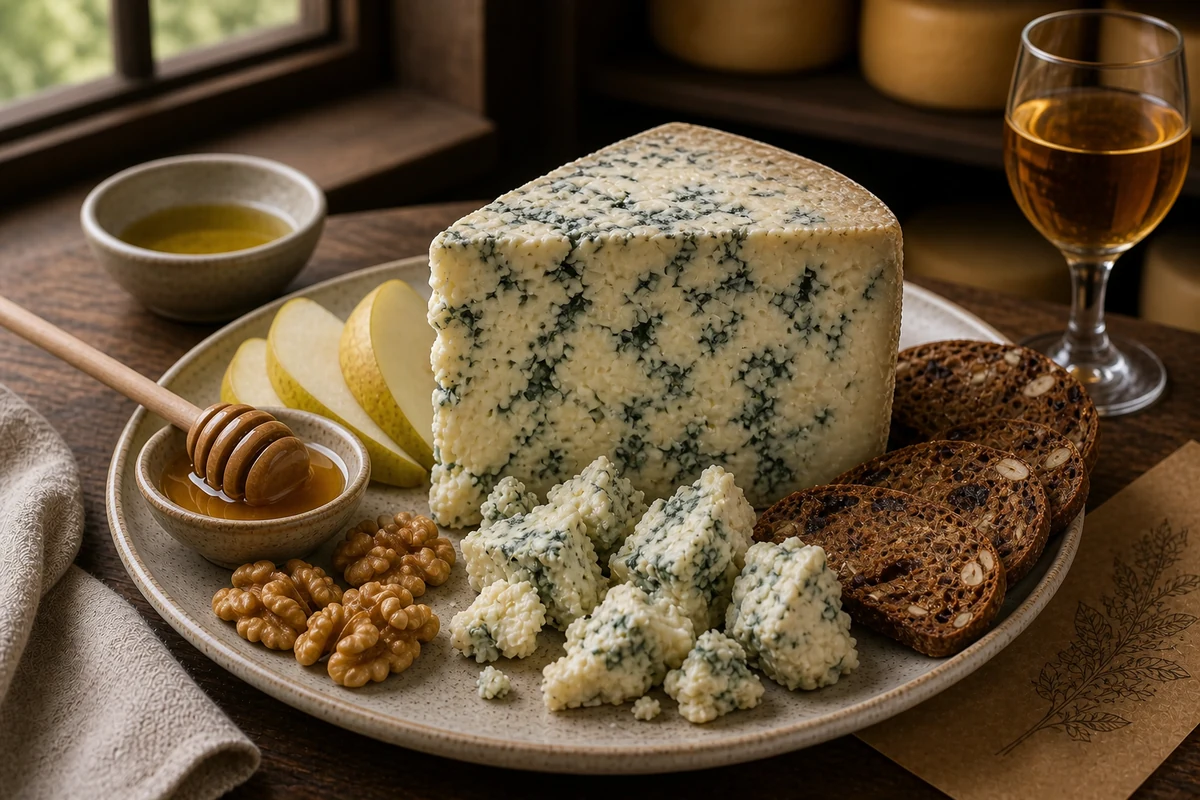
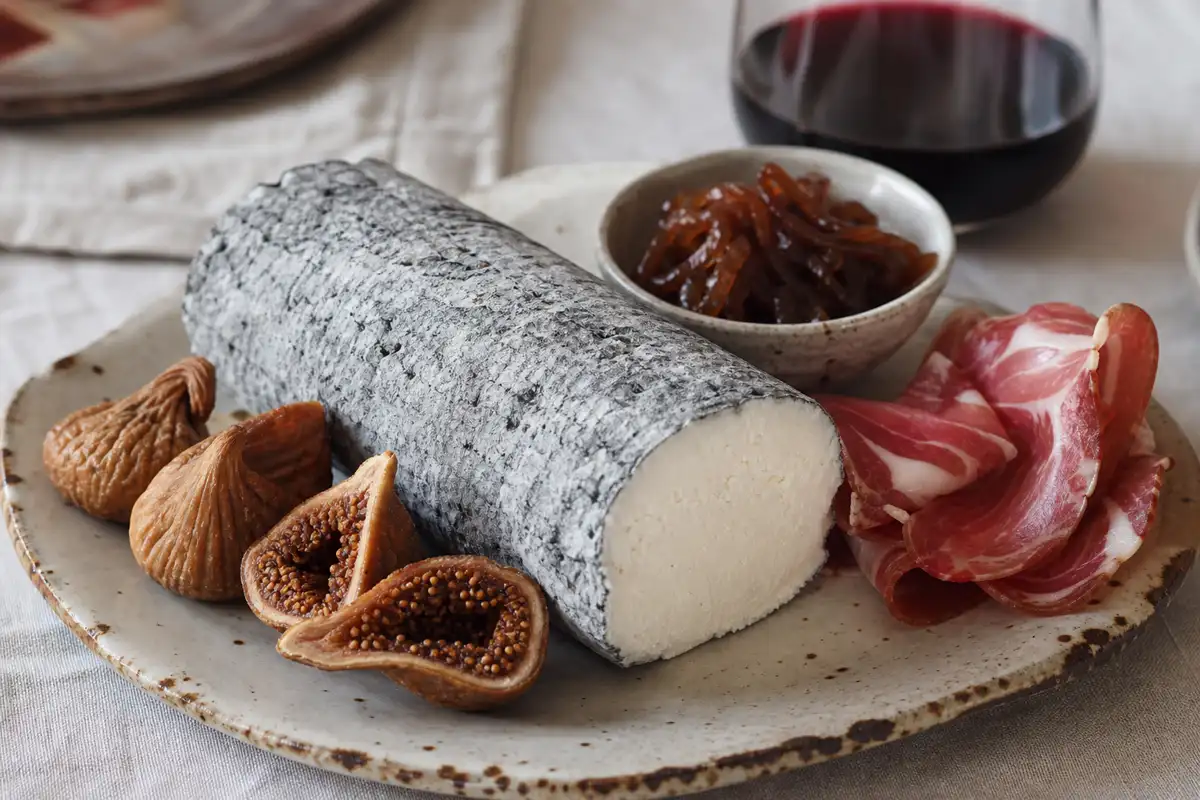
Cheese.com names dried figs, sweet balsamic onions and cured meats for Vintage Savourine, with Cabernet/Merlot or sparkling red wine as the drink.
| Pairing | Why It Works |
|---|---|
| Dried figs | First on the Cheese.com list for Vintage Savourine. |
| Sweet balsamic onions | Named by Cheese.com for Vintage Savourine. |
| Cured meats | Named by Cheese.com for Vintage Savourine. |
| Cabernet/Merlot or sparkling red | The wine accompaniments on the Cheese.com entry. |
The dairy's product text for its current logs points the same way: a cheeseboard with roasted nuts and fig paste, or long slices in a baguette with smoked leg ham and mustard.
Cheese.com gives each sibling its own list. Black Savourine goes with quince paste, fruit bread and dried fruit, and with Sangiovese, Pinot Noir or Tempranillo; White Savourine goes with sourdough, brioche and walnut, and with Semillon/Sauvignon Blanc, Arneis or rosé.
Fig and cured or smoked meat are the only partners that appear in both the Vintage entry and the maker's text.
What Is Known About Heating Savourine?
Cheese.com describes Vintage Savourine as firm, dense and crumbly.
The dairy's flatbread recipe does heat Black Savourine: 100 g of the sliced log goes over lamb mince on four flatbreads, which bake at 220°C fan-forced.
The recipe gives 6 to 8 minutes and says the cheese has melted once the dough is golden and the topping cooked.
That shows the maker bakes its younger ash-coated log. Whether the older, crumblier Vintage softens the same way is a question for the seller.
Can You Eat Yarra Valley Vintage Savourine While Pregnant?
Yarra Valley Dairy's FAQ says all of its cheeses are made with pasteurised milk, and adds that it still does not recommend them during pregnancy.
The dairy's pasteurization statement covers its cheeses as a group rather than naming this log, so confirm the milk treatment on your piece.
The NHS lists pasteurised or unpasteurised hard cheeses as safe, and pasteurised goats' cheese without a white coating on the outside as safe.
For mould-ripened soft cheeses with a white coating, such as chèvre, the NHS says pasteurised or unpasteurised versions must be thoroughly cooked. It also lists any cheese cooked until steaming hot as safe.
CDC lists pasteurized soft cheeses heated to an internal temperature of 165°F or until steaming hot among its safer choices, and says pregnant women are 10 times more likely to get a Listeria infection.
Cheese.com files Vintage Savourine as hard, but whether a white mould coating lies under the ash decides which NHS category applies. Check the rind or ask the seller.
What Is the Closest Substitute for Vintage Savourine?
The closest listed match is Black Savourine from the same dairy: it is also ash-coated, Cheese.com gives it a firm paste and a roasted nut flavour, and the dairy currently sells it in 200 g.
White Savourine suits a buyer who does not want the ash, since its label lists none and Cheese.com gives it a dense, firm paste with a citrusy flavour.
Both options come from the maker's own range.
Black Savourine is the closest listed match for the ash coat and roasted nut flavour. White Savourine is the pick when no ash is wanted.