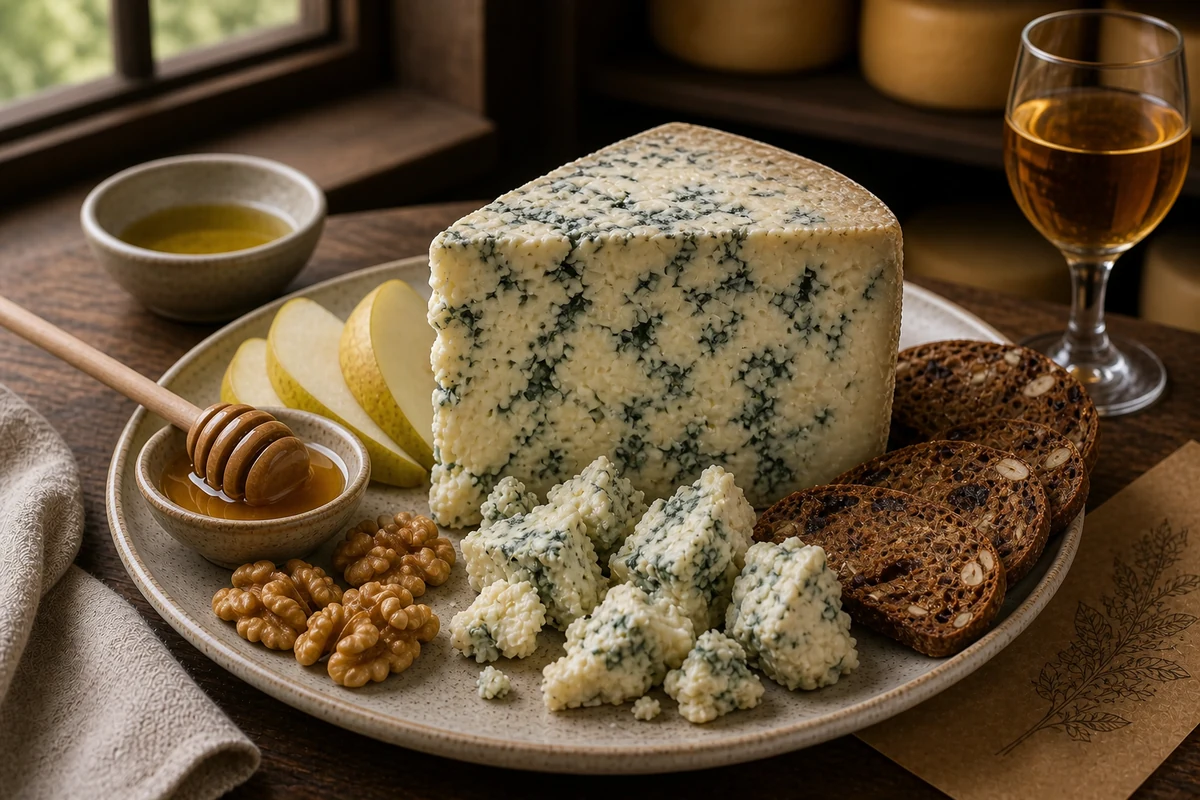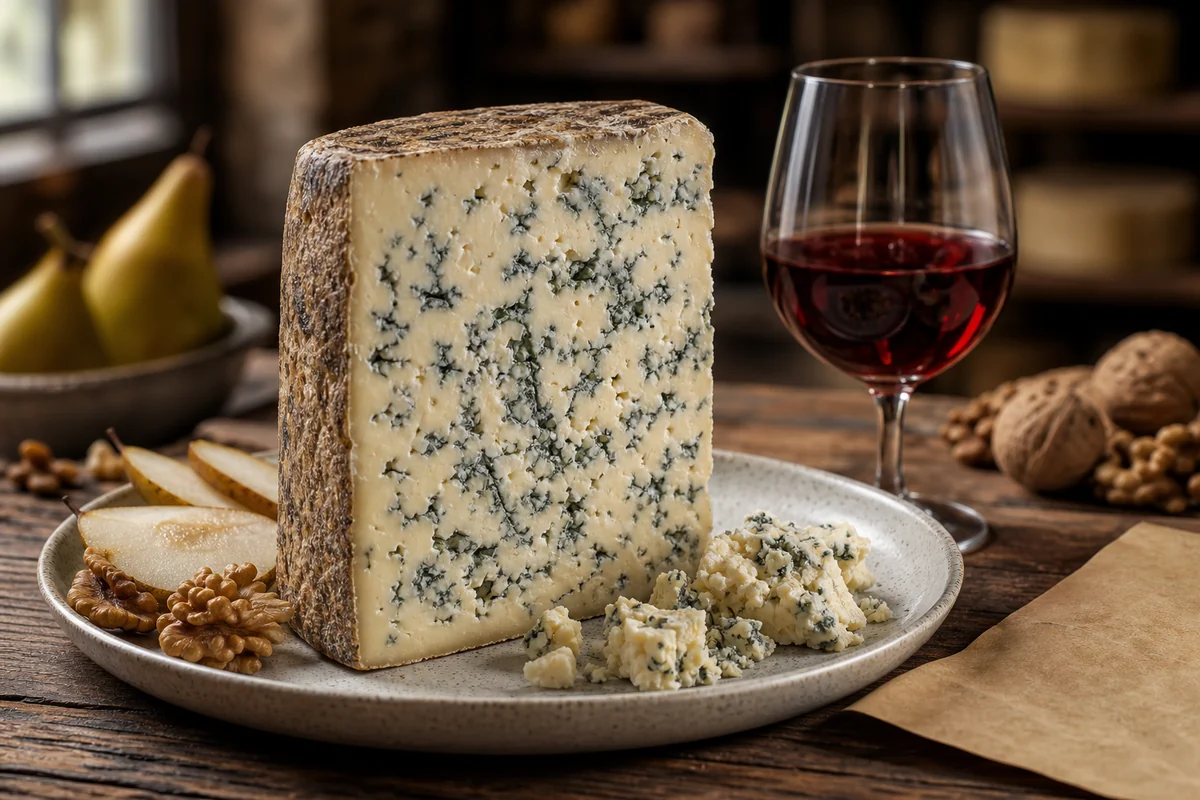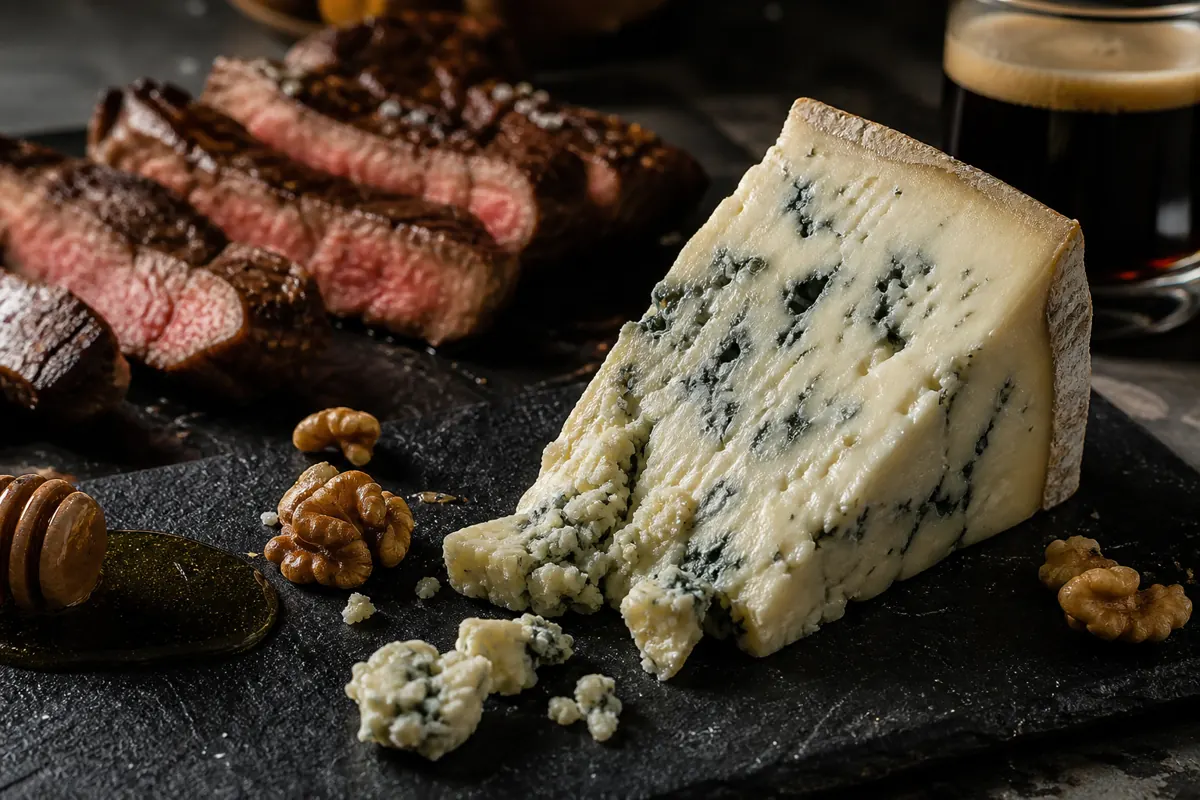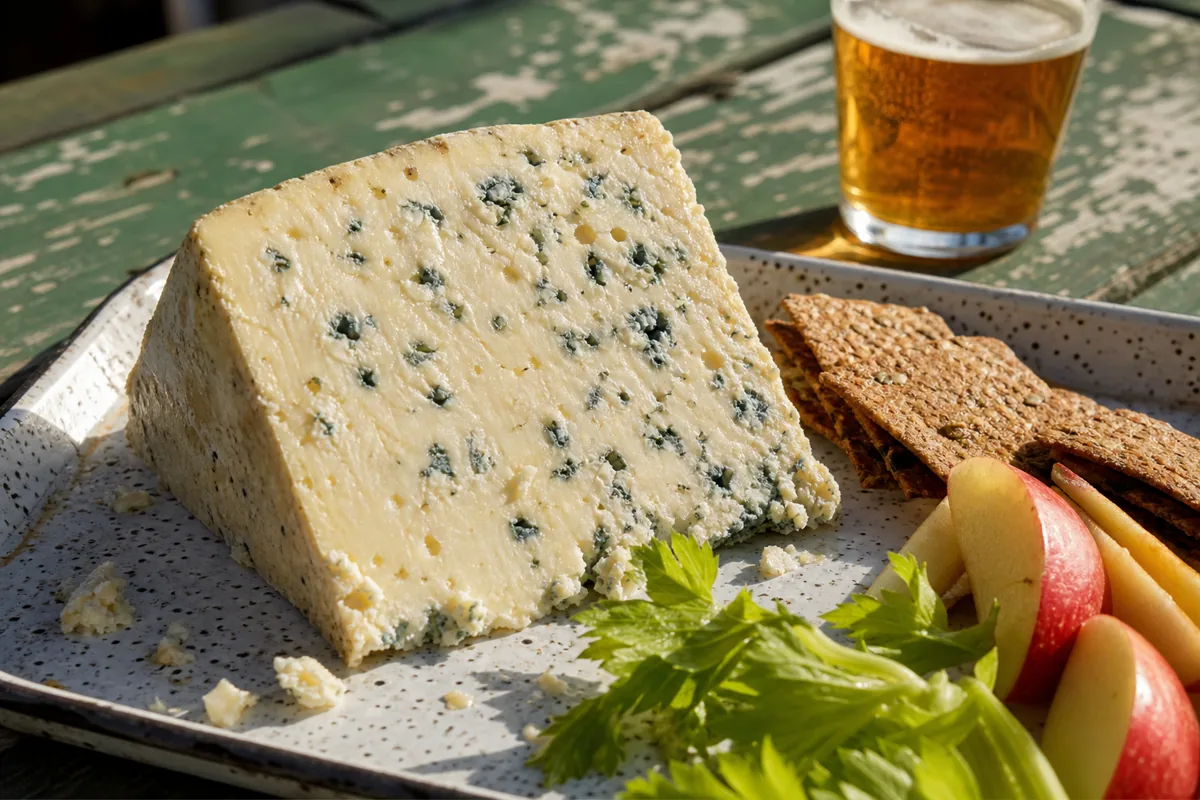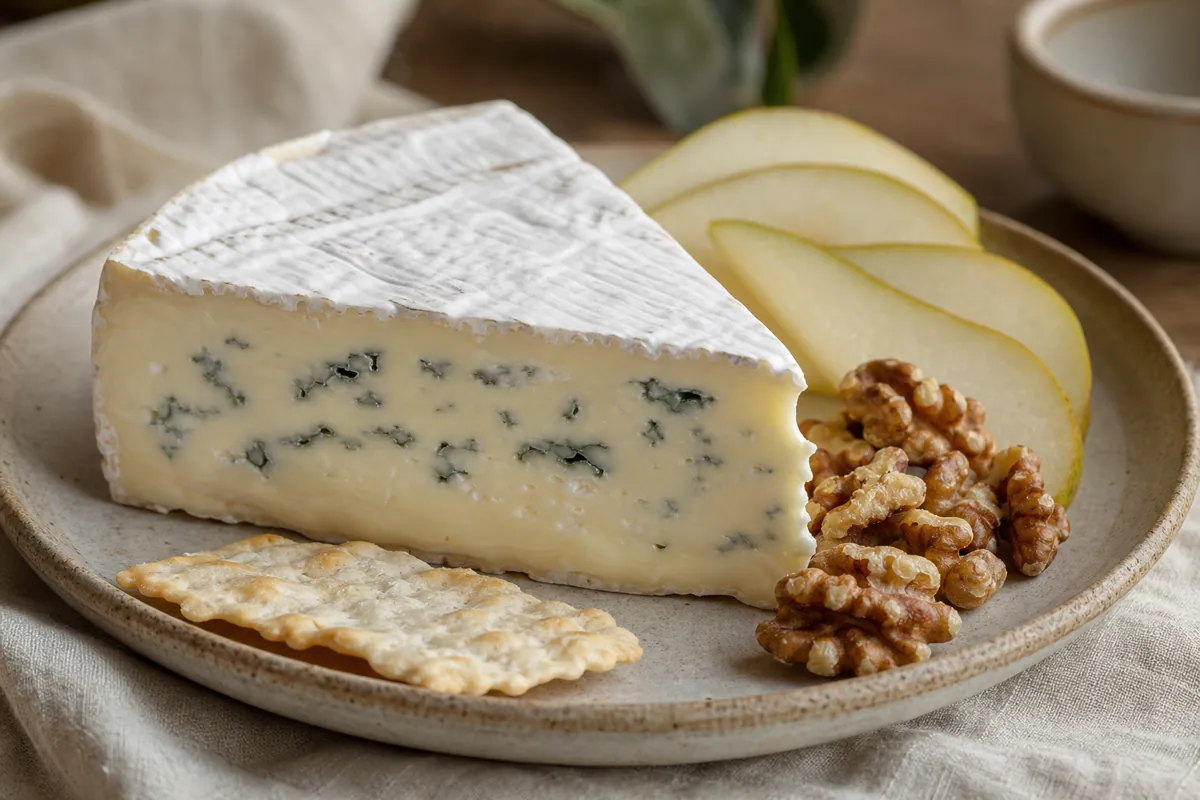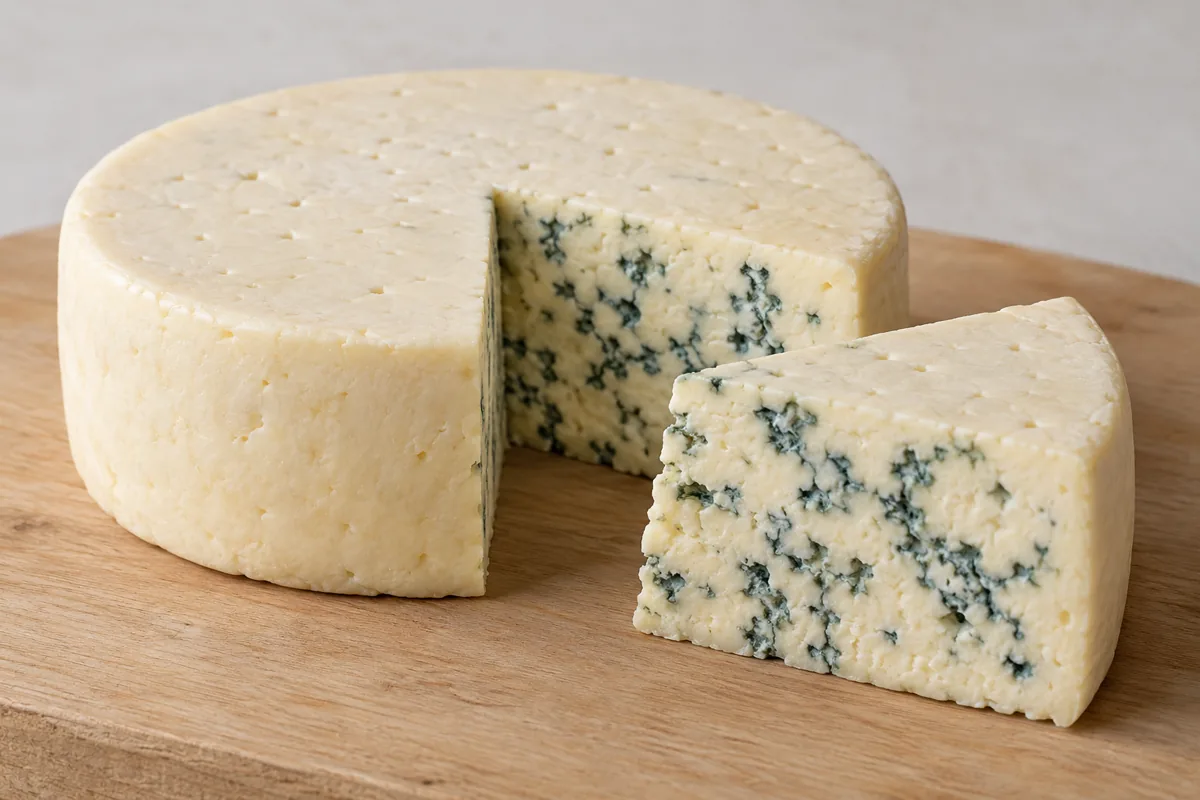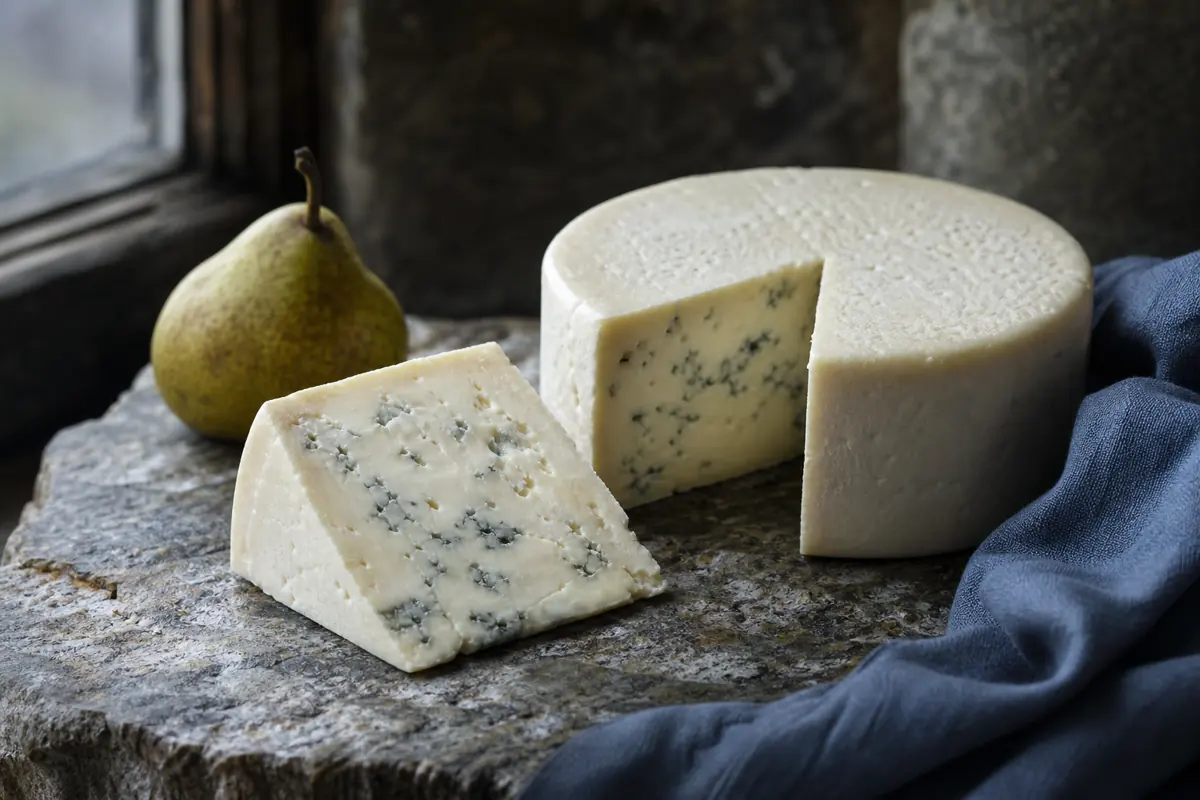
Cornish Blue is a pasteurized cow's milk blue cheese made by the Stansfield family's Cornish Cheese Company at Knowle Farm, on the edge of Bodmin Moor in Cornwall. It has been made since 2001 and was named World Champion Cheese at the 2010 World Cheese Awards.
Its maker aimed it at people who found traditional English blues such as Stilton too strong. The producer describes it as mild and creamy with a gentle sweetness, in place of the salty tang it says is common in traditional blue cheeses.
In This Article
What Is Cornish Blue Cheese?
Cornish Blue is a farmhouse blue cheese from Knowle Farm in Upton Cross, near Liskeard, in Cornwall in the United Kingdom. Philip and Carol Stansfield started making it in 2001, when milk prices had collapsed to around 15p per litre and no blue cheese was being made in Cornwall.
The producer lists cows' milk, salt and vegetarian rennet as the ingredients, labels the milk as pasteurized and says the cheese is suitable for vegetarians.
Per 100 g, the producer's label gives 417 kcal (1,730 kJ), 34.4 g fat of which 20.5 g is saturated, 1.0 g carbohydrate, 25.3 g protein and 2 g salt.
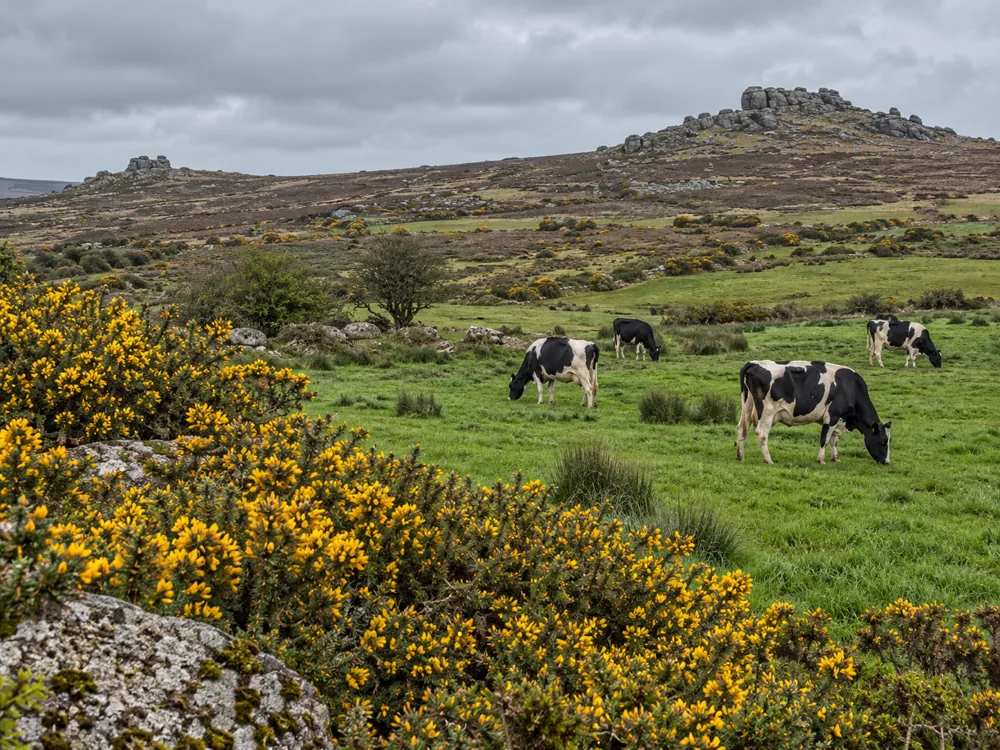
The milk comes from Friesian cows on the Stansfields' own farm, cows which a 2020 Fabulous Farm Shops review calls Holstein Friesians. Knowle Farm sits on the edge of Bodmin Moor, where the very moist climate makes good pasture for the local milk.
Around Upton Cross the moor is a landscape of hills, heath and tors, with old mine workings and yellow gorse flowers on every side.
Why Is Cornish Blue Milder Than Stilton?
Because the Stansfields set out to make a milder blue: the producer says Cornish Blue was designed to be eaten as a young cheese and is very different from traditional English blue cheeses.
In 2000 the Stansfields found that only 18 blue cheeses were made in the UK and none was a soft, mild one, and the softer, milder blues they did find were all imported. They decided not to compete with Stilton.
Other descriptions make the same contrast. CooksInfo calls the taste mild and sweet, like European blue cheeses as opposed to Stilton, and The Cheese Shed sets Cornish Blue apart from the traditional styles of Stilton and Dorset Blue Vinny.
Customers on the producer's page say much the same: one finds it gentler and less salty than other blues while still tasting like a blue, and another finds none of the bitterness of many other semi-hard blues. A third, who does not usually eat a lot of blue cheese, calls the flavor and texture sophisticated and says they will buy it again.
| Question | Cornish Blue | Blue Stilton |
|---|---|---|
| Where is it made? | Knowle Farm, Cornwall (producer) | Only Derbyshire, Leicestershire and Nottinghamshire, a PDO since 1996 (Wikipedia) |
| What milk is used? | Pasteurized cow's milk (producer) | Pasteurized local milk (Wikipedia) |
| How does the blue get in? | Mold starter culture in the milk; stainless steel rods let in air (CooksInfo) | Penicillium roqueforti added; crust pierced with stainless steel needles (Wikipedia) |
| How long does it take? | 12 to 14 weeks of maturing (producer, CooksInfo) | 9 to 12 weeks to make and ripen (Wikipedia) |
| What is the texture? | Dense, creamy and buttery (producer) | Semi-soft, crumbly, creamier with age (Wikipedia) |
| How much fat and protein? | 34.4 g fat and 25.3 g protein per 100 g (producer label) | Typically 35% fat and 23% protein (Wikipedia) |
The producer calls Cornish Blue a young cheese, yet its 12 to 14 weeks of maturing are no shorter than the nine to twelve weeks given for protected Blue Stilton. The two spans are not strictly like for like, because Stilton's figure covers making and ripening and Cornish Blue's covers maturing.
The making is alike as well: both cheeses get their blue from added mold and a piercing with stainless steel. Cornish Blue's label fat sits within a point of the 35% typical for Stilton, although one is a label figure and the other a typical value.
What Does Cornish Blue Taste and Feel Like?
The producer's words are mild, creamy, dense and buttery, and Cheese.com describes a buttery, dense texture, a creamy and sweet flavor and a mild, buttery aroma.
The product page headline still calls it a sweet, creamy, full-flavoured and veined blue cheese, and the Fabulous Farm Shops reviewer finds a buttery, flavorsome tang. The Cheese Shed puts it at the milder end of the flavor range.
On texture, the same reviewer calls it wonderfully creamy and semi-soft but not quite spreadable, and The Cheese Shed places it on the soft side of firm.
The class it is filed under depends on the description: the producer lists the style as soft, Cheese.com calls it semi-soft, and CooksInfo files it under semi-firm cheeses.
How Is Cornish Blue Made?
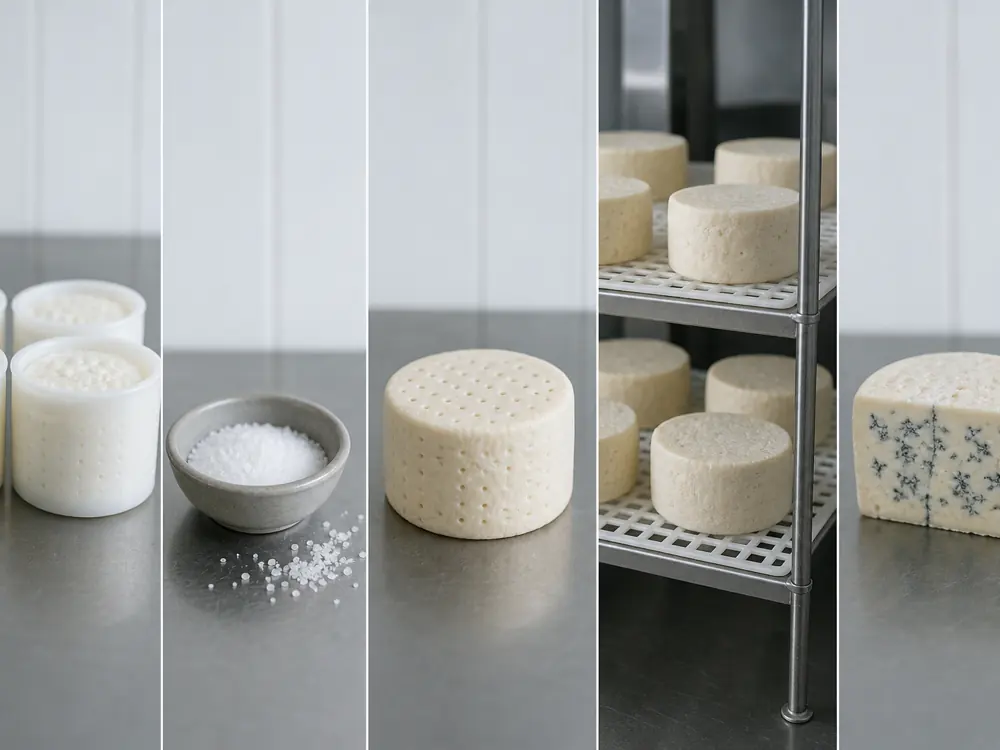
The producer makes Cornish Blue entirely by hand, in five stages.
- Set the milk: vegetarian rennet and special starter cultures go into the milk.
- Mold the curd: the curd is placed into molds.
- Salt: the cheeses are dry salted by hand.
- Pierce: stainless steel rods let air in so the mold can develop.
- Mature: the cheeses mature for between 12 and 14 weeks.
CooksInfo gives the same 12 to 14 weeks of maturing, while Cheese.com gives a wider 8 to 14 weeks.
The producer says the weeks in the maturing room let the cheeses reach their full character and flavor, and that the cheeses are checked daily and turned weekly so moisture is evenly distributed.
Getting the recipe right took a year. The Stansfields changed one thing at a time until the recipe worked, and Philip Stansfield reckons they threw away about £40,000 of cheese that could have been sold, so that the cheese was right when sales began.
Once matured, the cheese is cut and packed by hand for sale in the UK and overseas, and The Cheese Shed's profile of the dairy gives a team of five making about one and a half tons a week.
How Should You Cook with Cornish Blue?
The Fabulous Farm Shops review names salads, snacks, sauces and desserts as uses for Cornish Blue, and Cheese.com says its mild flavor suits sauce recipes.
| Use | How It Works |
|---|---|
| Salads | Fabulous Farm Shops and a customer review on the producer's product page both name salads. |
| Sauces | Fabulous Farm Shops names sauces, and Cheese.com says the mild flavor suits sauce recipes. |
| Snacks and desserts | Fabulous Farm Shops names snacks and desserts. |
For Blue Stilton, Wikipedia lists soups, a steak sauce and crumbled salads, the same kinds of dish, and what sets Cornish Blue apart in its descriptions is the milder, sweeter flavor.
One customer on the producer's page uses leftovers in soups and pasta dishes, and says grated cheese freezes well.
What Goes with Cornish Blue?
Cheese.com names port to drink with Cornish Blue, and port is also, with barley wine, the traditional match for Blue Stilton.
| Pairing | Type | Why It Works |
|---|---|---|
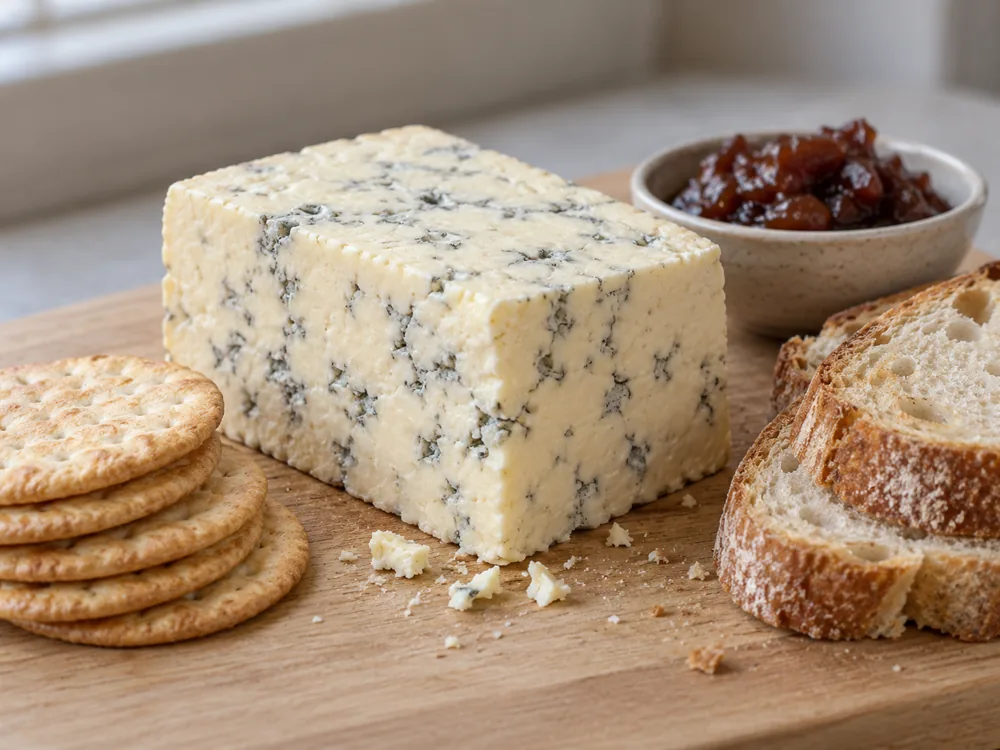
| Chutney with bread or crackers | Food | Cheese.com suggests crusty bread or a cracker with chutney. |
| Fruit, salads and biscuits | Food | A customer review on the producer's product page says the gentle flavor is delicious in salads, with fruit and with biscuits. |
| Port | Drink | Cheese.com names port as an accompanying drink. |
Wikipedia's serving notes for Blue Stilton also name celery, pears, sweet sherry and Madeira.
How Should You Buy and Store Cornish Blue?
Compare the weight and the price per kilo before you buy. The same name is sold in pieces from 100 g to 5 kg, and the producer's price per kilo more than halves from its smallest piece to its largest.
| Question | Sizes | Given by |
|---|---|---|
| What cut pieces are sold? | 100 g wedges in stores; 175 g, 500 g and 1 kg cut pieces; 250 g, 500 g and 1 kg wedges | In that order: CooksInfo; the producer; The Cheese Shed |
| What whole cheeses are sold? | Wheels of 1 kg, 2.5 kg and 5 kg; whole cheeses of 2 kg and 5 kg; a wheel of about 2.5 kg and a truckle of about 2 kg | In that order: CooksInfo; the producer; The Cheese Shed |
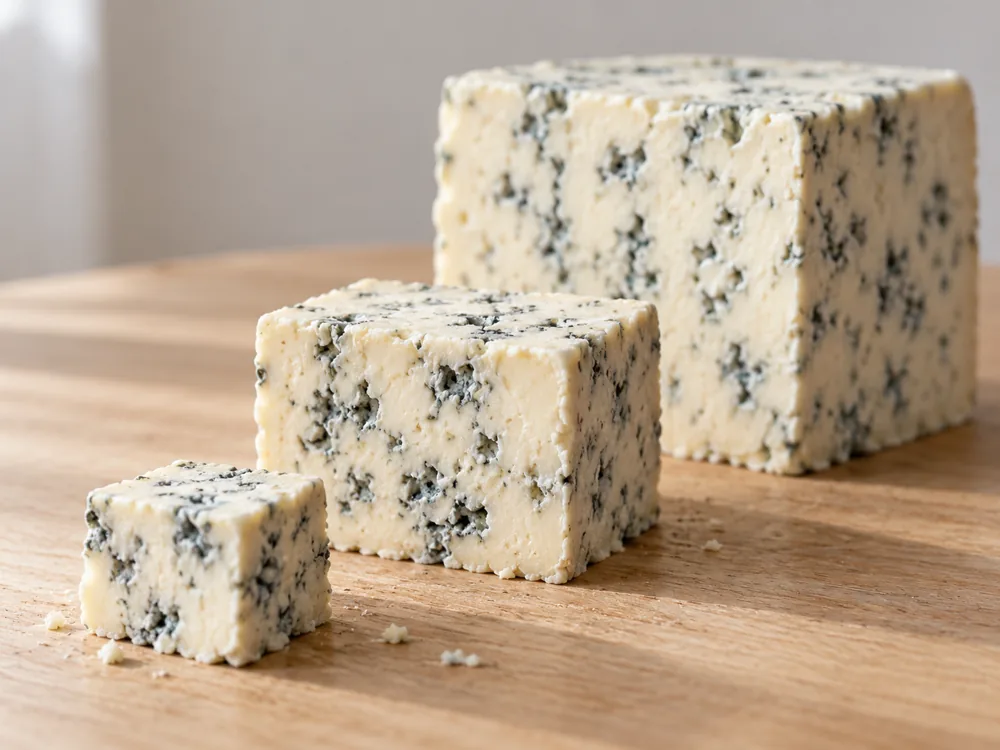
Every cheese is made and cut by hand, so the producer warns that weights can vary by about 10%, and a listed 500 g piece can differ by around 50 g.
| Format | Listed price | Price per kg | Listed dimensions |
|---|---|---|---|
| 175 g cut piece | £6 | About £34 | Not listed |
| 500 g cut piece | £12 | £24 | 100 mm x 70 mm (listed against 450 g) |
| 1 kg cut piece | £24 | £24 | 150 mm x 60 mm |
| 2 kg cheese | £45 | £22.50 | 150 mm x 120 mm |
| 5 kg cheese | £80 | £16 | 230 mm x 120 mm |
At the producer, the price per kilo falls from about £34 on the 175 g piece to £16 on the 5 kg cheese. The Cheese Shed charges about £35 a kilo on every size it lists, from a 250 g wedge to a wheel of around 2.5 kg, so a bigger piece saves nothing per kilo there.
The producer guarantees up to three weeks when the cheese is stored correctly in the fridge, which it describes as keeping it well wrapped. That three-week guarantee is the same for every size, so the 5 kg cheese carries no longer stated life than a 175 g piece.
The producer delivers on Wednesday, Thursday and Friday in parcels cooled with reusable ice packs. It says perishable orders must arrive within two days, so its courier cannot serve postcodes that include Northern Ireland (BT), the Isle of Man (IM) and the Channel Islands (GY and JE).
Is Cornish Blue Sold Under Other Names or Versions?
Yes, in the past: in the early 2000s, and at least until 2006, the cheese was also supplied to Paxton & Whitfield, which rebranded it and sold it for a time as Caradon Blue Cheese.
The producer also makes a goat's milk cheese from the Cornish Blue recipe, added in 2017 with milk from local goat farmers. It is called Cornish Nanny, and the Fabulous Farm Shops reviewer calls it earthy and creamy.
Two Cornish Blue pâtés, one with pear and walnut and one with fig, are separate products from the cheese itself.
In summer 2021 the producer built a second make room next to the blue dairy so it could make soft white cheeses, first a brie-style cheese and later a camembert, in a completely separate environment from the blue.
Is Cornish Blue Really a World Champion Cheese?
Yes: Cornish Blue was declared World Champion Cheese at the 2010 World Cheese Awards in Birmingham, which had 2,629 cheeses from 29 countries.
The champion title belongs to 2010 alone. The producer's later World Cheese Awards results are Best British Cheese in 2011, a Silver in Best Blue Cheese in 2012 and Super Gold in 2015.
The Stansfields say they were delighted to reach the top 50, never dreamed of winning, and found that the win changed the business overnight. Newspaper headlines called Cornish Blue the best cheese in the world.
A production expansion completed in 2015 met rising demand from supermarkets, delis, cafes, restaurants and online sales.
The cheese's first award was the Tesco Cheese Challenge in 2004. Its double win of Best Blue and Best English Cheese is dated 2007 on the producer's product page, while The Cheese Shed puts it two years after sales took off in 2004, which would be 2006.
Can You Eat Cornish Blue While Pregnant?
Thoroughly cooked, yes: the NHS says pasteurised or unpasteurised soft blue-veined cheeses, such as Danish blue, Gorgonzola and Roquefort, must be thoroughly cooked, and the producer lists Cornish Blue's style as soft.
The allergen advice on the producer's product page reads "Pasteurised Cows Milk", but for soft blue-veined cheese the NHS rule applies whether the milk is pasteurised or not.
For a pasteurized soft blue like Cornish Blue, the CDC's safer choice is heating it to an internal temperature of 165°F or until steaming hot; its riskier list names soft cheese made from unpasteurized (raw) milk, for example blue-veined cheese. The CDC also says pregnant women are 10 times more likely to get a Listeria infection, and its advice on cheese during pregnancy turns on pasteurization and heat.
Eaten cold, a pasteurized soft blue is on neither CDC list: its safer choices are hard cheese and five named cheeses made with pasteurized milk, none of them blue, and pasteurized soft cheese only when heated until steaming hot. Ask a midwife or doctor before eating Cornish Blue cold.
SOURCES & REFERENCES
What Else Do People Ask About Cornish Blue?
The producer calls it mild and creamy with a gentle sweetness, and The Cheese Shed puts it at the milder end of the flavor range. The Fabulous Farm Shops reviewer still notes a buttery, flavorsome tang.
The producer and CooksInfo give 12 to 14 weeks of maturing, and Cheese.com gives 8 to 14 weeks.
Yes to both. The label lists pasteurized cows' milk and vegetarian rennet, and the producer says the cheese is suitable for vegetarians.
No. Only cheese made in Derbyshire, Leicestershire and Nottinghamshire may be called Stilton, and Cornish Blue is made in Cornwall.
Yes. In 2017 the producer added a goat's milk cheese made from the Cornish Blue recipe, called Cornish Nanny.
It was declared World Champion Cheese at the 2010 World Cheese Awards, and the producer's product page lists different World Cheese Awards results for 2011, 2012 and 2015.
The NHS says pasteurised or unpasteurised soft blue-veined cheeses must be thoroughly cooked, and the CDC lists pasteurized soft cheeses heated to an internal temperature of 165°F or until steaming hot as safer. Eaten cold, a pasteurized soft blue is a type the CDC list does not cover, so ask your midwife or doctor about Cornish Blue.