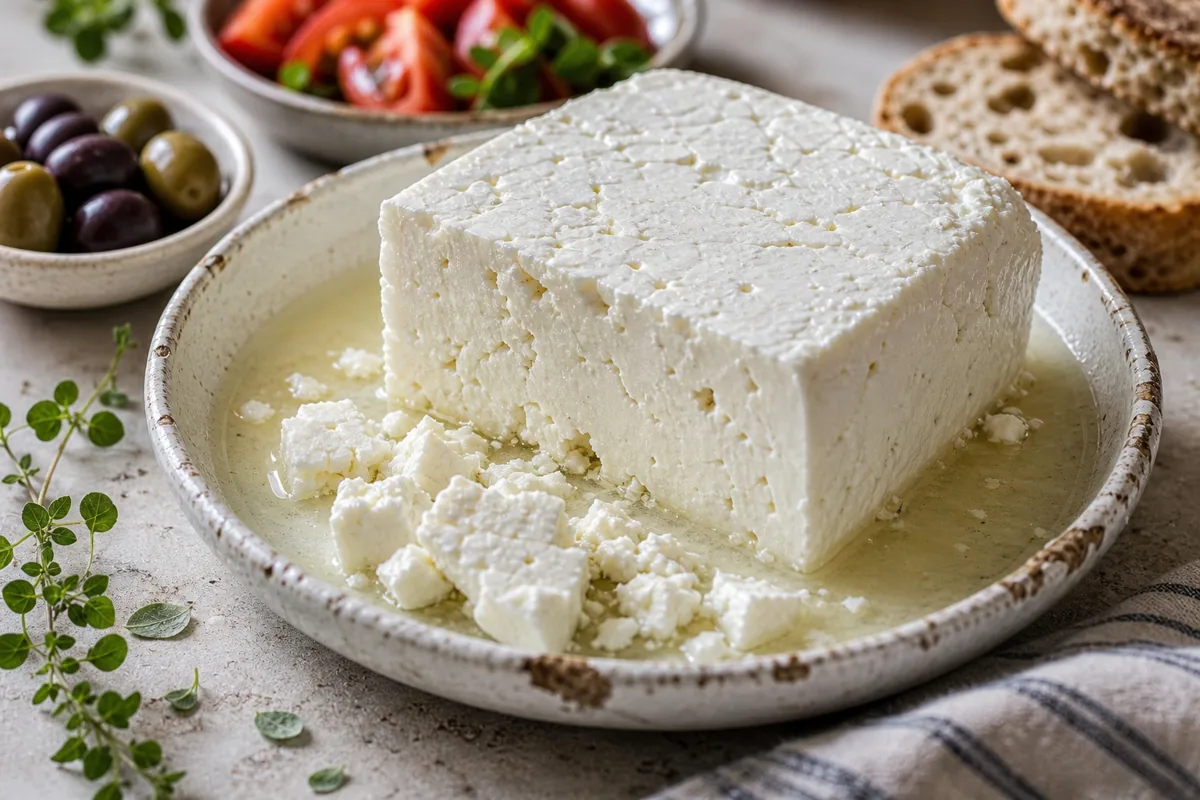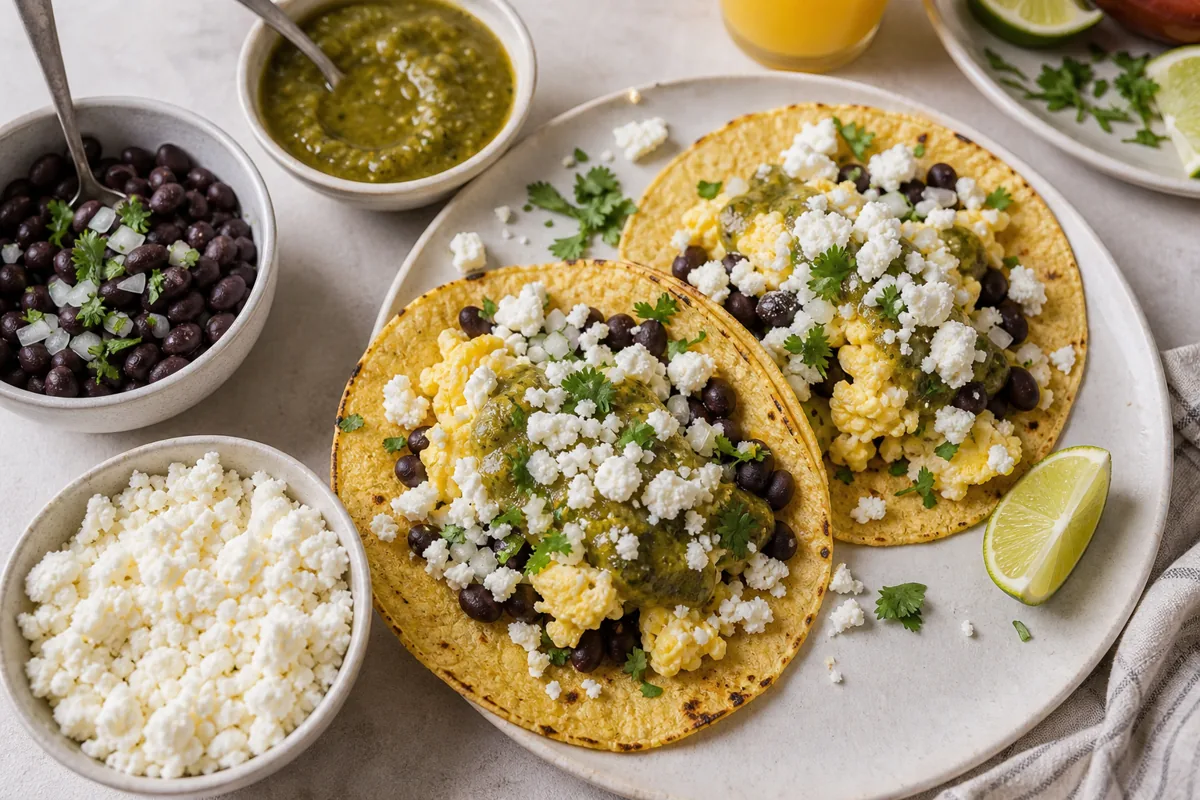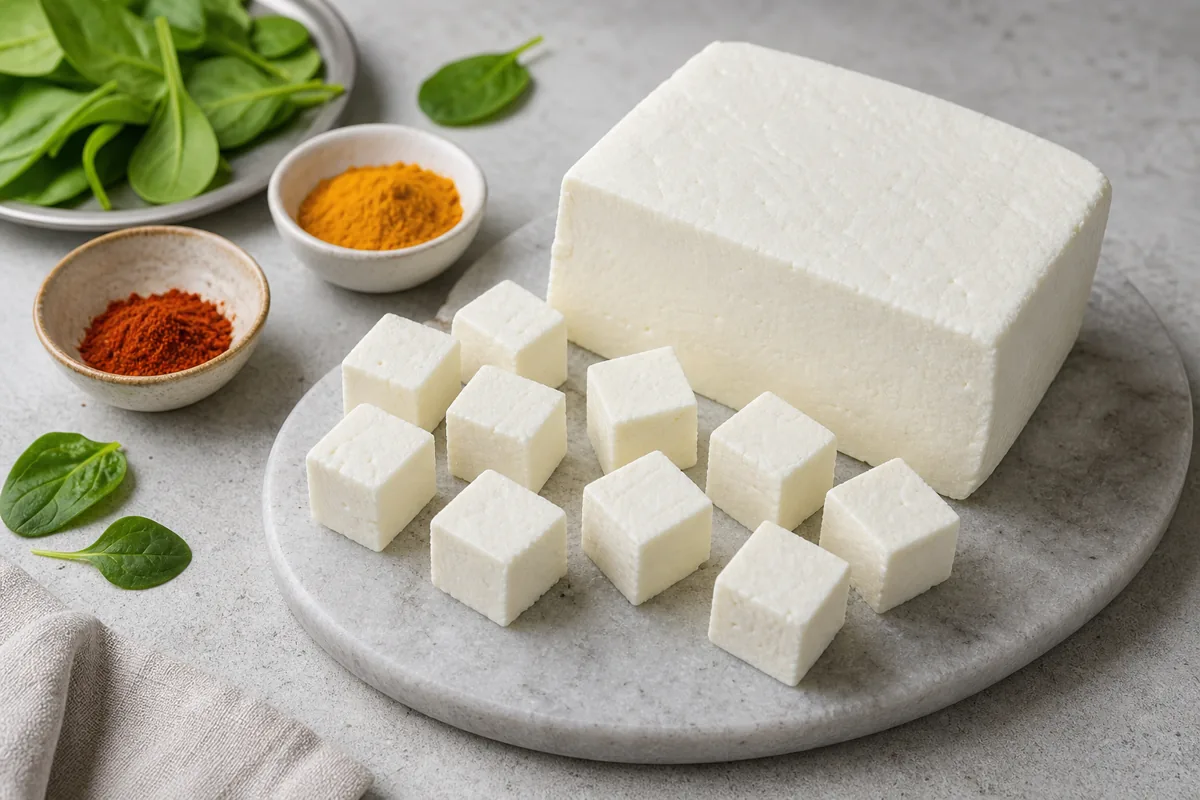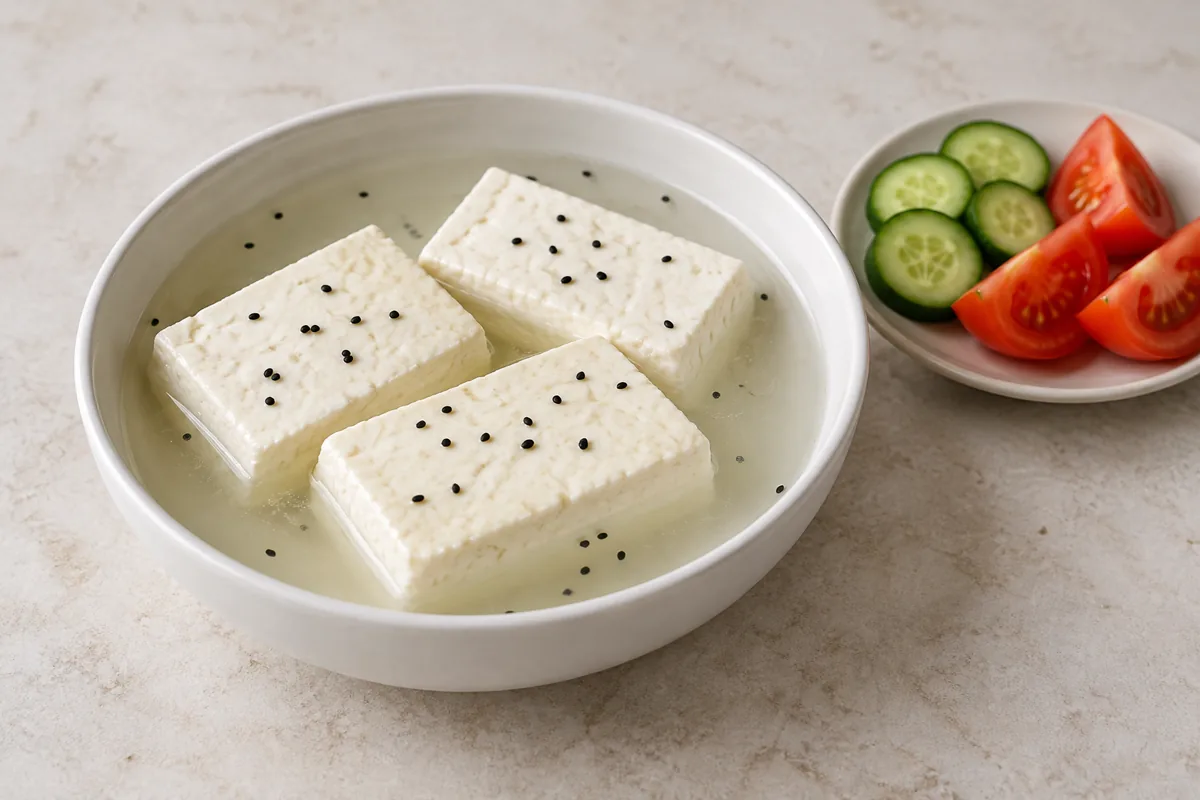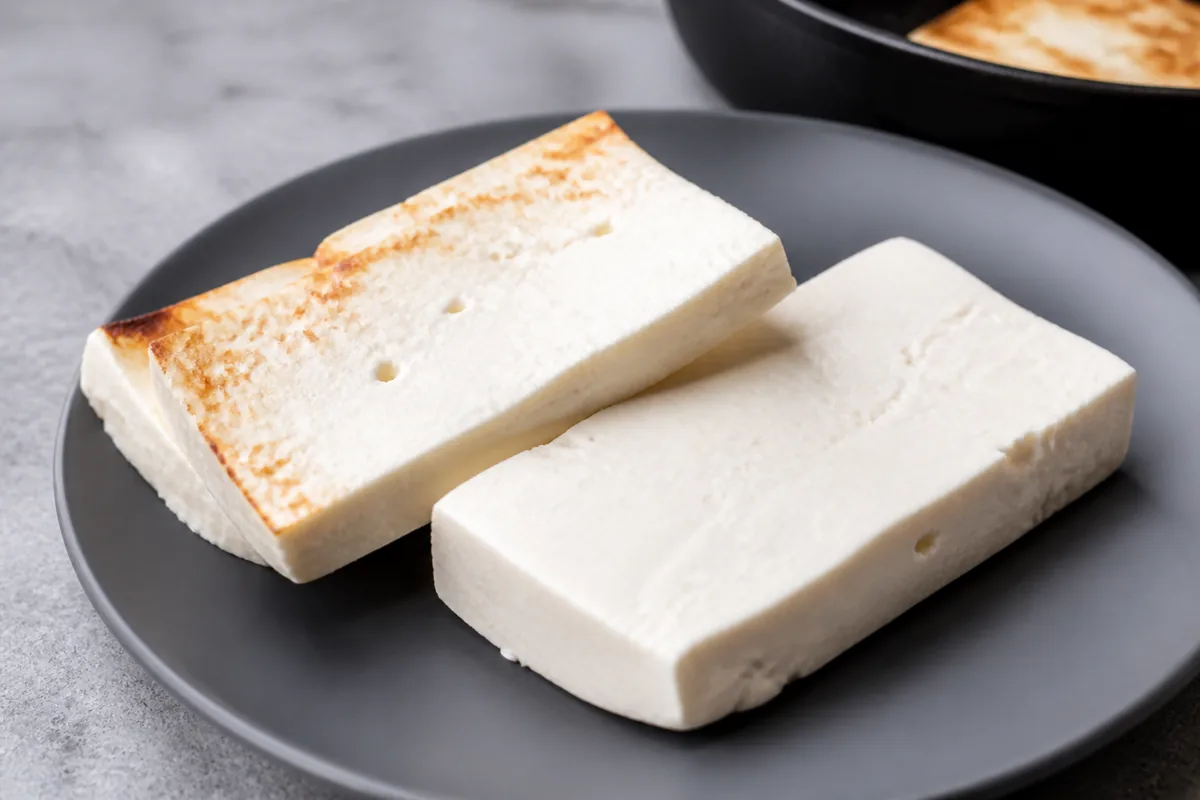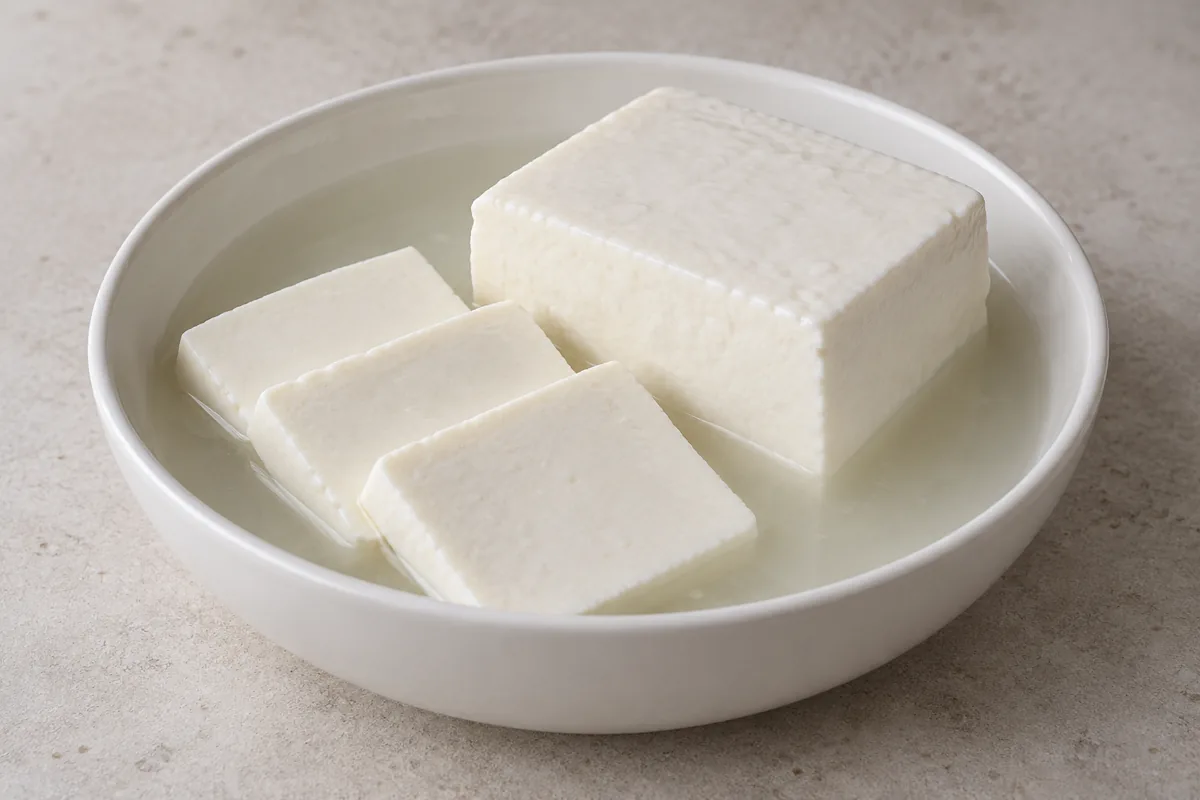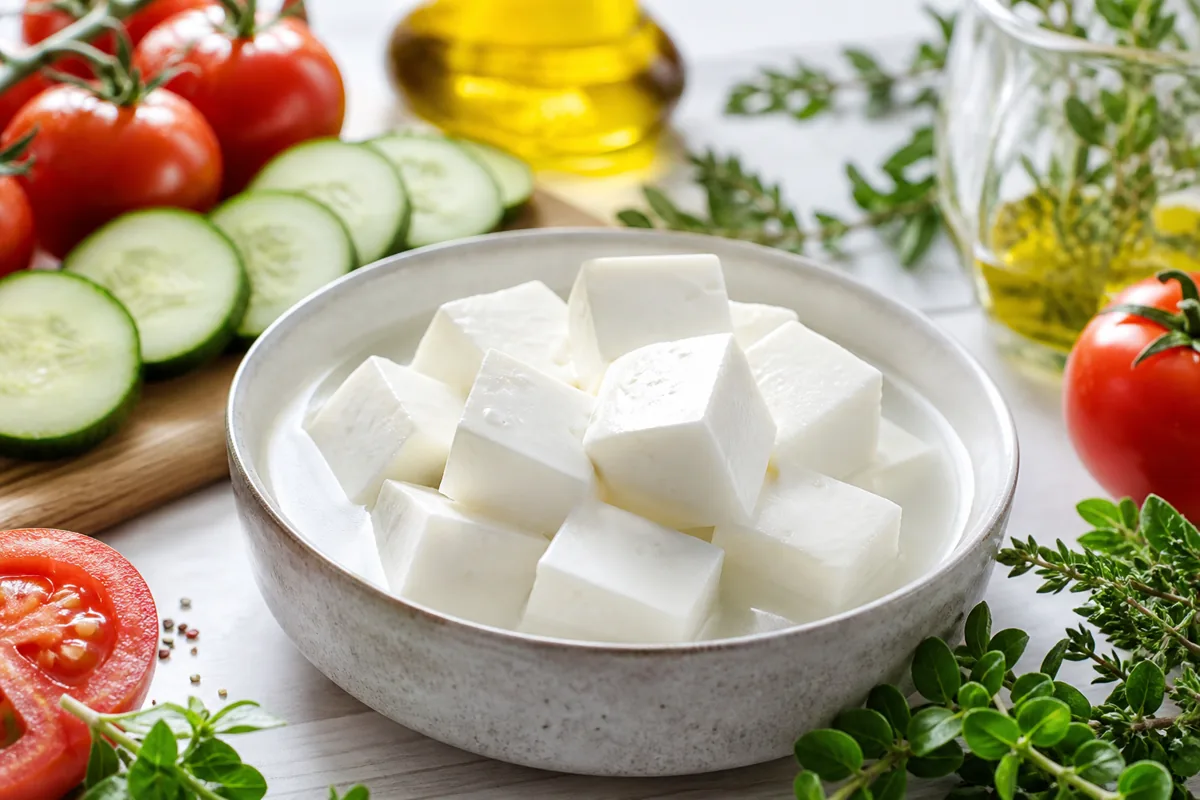
Danish feta is the search name for Danish white cheese, a mild cow's milk cheese kept in brine.
Cheese made in Denmark and sold in the EU has had to drop the feta name, so this style is sold as white cheese.
In This Article
What Is Danish Feta Cheese?
Danish feta is a cheese from Denmark made with cow's milk, also called Danish White. Cheese.com calls it a creamier variant of Greek feta with a milder taste.
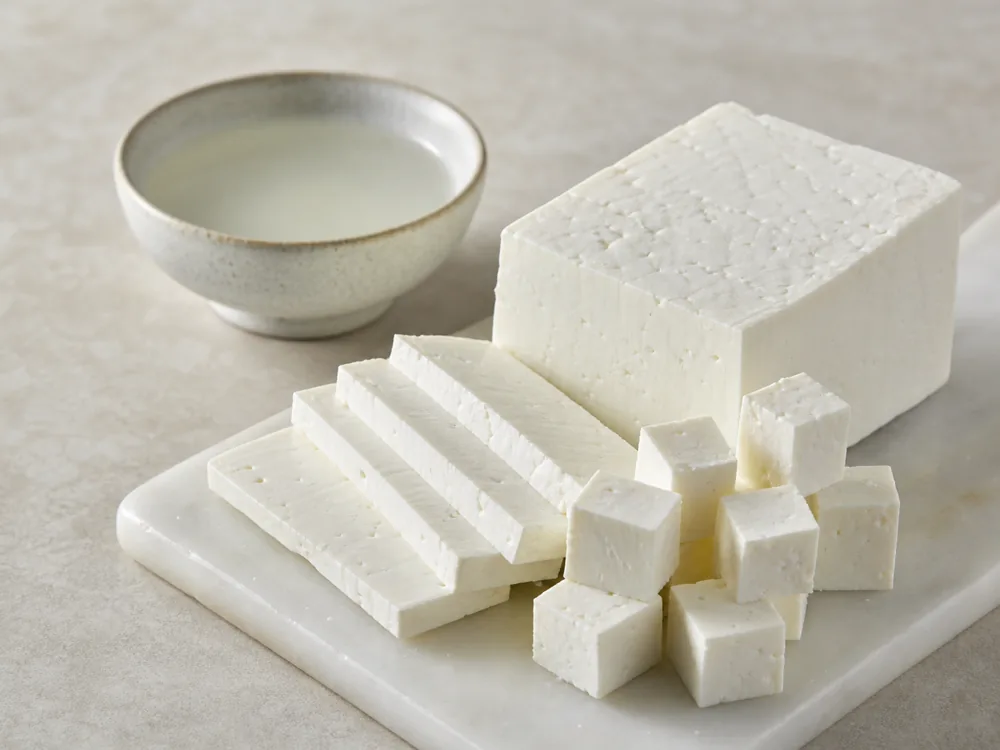
Cheese.com adds that it doesn't crumble easily when cubed or sliced.
Danish white belongs to the wider white cheese family, which is made mostly from cow's milk, with some goat's and sheep's milk, and produced all over the world. Dairy from Europe says its salty taste comes from the brine.
White cheese blocks come in round and square shapes that suit slicing, and Denmark has a long tradition of exporting white cheese to the Middle East.
That family covers more than one texture: Dairy from Europe says white cheese is sold fresh, soft and semi-hard, while Cheese.com and Arla's Apetina pack both call the Danish type semi-hard. If your pack says only white cheese, the texture is open, and a description line such as Arla's, which says semi-hard, settles it.
Why Is Danish Feta Now Sold as Danish White?
Feta became a protected designation of origin product in the European Union in 2002. Before then, Danish white cheese was promoted as feta and called feta.
The European Commission ties Feta PDO to the terrain of Greece: milk from native breeds of ewes and goats, a set production method and at least two months of ripening.
The 2002 listing was a second attempt. Greece first asked for protection in 1994 by Wikipedia's account, which has the Commission approving it in 1996, while Courthouse News dates Greece's first application to 1996.
That first approval did not stand: after Denmark, France and Germany appealed, the Court of Justice annulled the decision because the Commission had not checked enough whether feta had become a generic name.
The Commission looked again, weighed production in other member states and registered feta anew in 2002, and Denmark and Germany appealed that decision too.
In 2005 the Court upheld the 2002 registration, accepting that feta was a generic term in some member states, Denmark among them, and that cheese was made outside Greece. It still found the Greek region well defined and noted that even non-Greek producers often leaned on feta's Greek status through their packaging.
The Commission gave other countries five years to find a new name or stop production, and Arla changed the name of its white cheese to Apetina, a brand name it had used since 1991.
On 14 July 2022 the Court of Justice ruled that Denmark had failed to stop the name feta being used on Danish cheese, including cheese exported outside the EU.
Brussels brought the case because Denmark kept putting feta on cheese it exported outside the EU, and Denmark argued the 1992 rules for protected names covered only sales inside the EU. The Court's Fifth Chamber rejected that, holding that a designation of origin applies wherever the product is sold.
Outside the EU the word still turns up on packs. Wikipedia says exporters selling to markets outside the territories covered by EU trade and recognition agreements are not subject to the Commission's rules, so non-Greek EU cheese sold abroad is often labelled feta, and that the word is still used generically in the United States, Australia and New Zealand.
The 2022 judgment concerns what Denmark must stop on its exports, while Wikipedia describes how the word is used in importing markets. Check the front label to see what a particular pack says today.
Is Danish White the Same as Greek Feta?
No. The milk alone separates them: Feta PDO comes from native ewes and goats, while Danish white is made with cow's milk.
| Attribute | Danish White | Feta PDO |
|---|---|---|
| Milk | Cow's milk (Cheese.com) | Native breeds of ewes and goats, milk fat at least 6% (European Commission) |
| Texture | Creamy, crumbly and smooth; doesn't crumble easily when cubed or sliced (Cheese.com) | Crumbly and slightly grainy (Cheese.com) |
| Flavour | Mild (Cheese.com) | Salty and slightly acidic, slightly peppery (European Commission) |
| Ripening | Not stated | At least two months (European Commission) |
| Name | Danish White or white cheese | Protected in the EU since 2002 |
Cheese.com still lists Danish white as crumbly, so its point is that cubes and slices hold together, not that the cheese never crumbles.
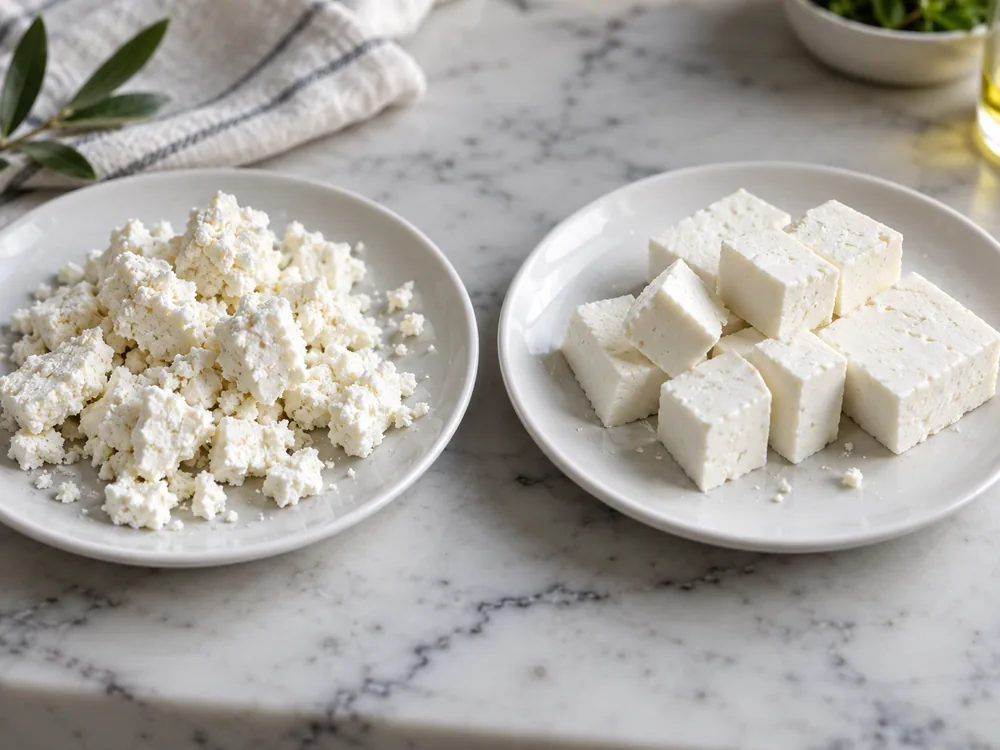
Why Does Danish White Taste Milder Than Greek Feta?
The milk explains it in Cheese.com's account: feta made from cow's milk tastes more subtle and less tangy than the sheep and goat version, which fits the mild flavour Cheese.com lists for Danish Feta. Dairy from Europe says traditional white cheese is produced in the same way as feta.
On the Greek side, the European Commission says Feta PDO comes only from native ewes and goats, which gives the cheese its white colour and can give it a slightly peppery flavour.
That milk is whole sheep's milk alone or sheep's milk with no more than 30% goat's milk, and Cheese.com's feta page says the sheep's milk is what gives feta its distinct flavour and texture.
Salting and ripening are the other variables the Commission describes for Feta PDO: the cut curd is covered in coarse salt, and microorganisms develop on its surface and add to the flavour.
Ripening then runs in two stages, up to 15 days in a chamber at 18°C or below with at least 85% humidity and then refrigerated at 2 to 4°C, for at least two months in total.
If you want the tangier taste, choose a feta whose milk line reads sheep's milk, or sheep's and goat's milk, rather than cow's milk.
What Do Feta-Style Names on a Pack Mean?
Four kinds of wording sit around feta-style cheese, and each carries a different rule or meaning.
| Wording | What the sources say |
|---|---|
| Feta, Feta PDO | In the EU only cheese made the traditional way in areas of Greece, from sheep's milk or sheep's and goat's milk, may bear the name |
| White cheese, Danish white | The family term Dairy from Europe uses for Danish white |
| Salad cheese, Greek-style cheese | Names Wikipedia says are used when describing an imitation feta |
| Feta-style, feta-type | The wording Wikipedia says new Canadian makers must use under the 2013 EU-Canada agreement, while makers already producing there kept the right to say feta |
Apetina shows how many layers one pack can carry: on Arla's UK page the brand is Apetina, the product line reads Original White Cheese in Brine, and the description says Mediterranean style semi-hard cow's milk cheese in salted water.
The same page lists Apetina paneer and a pack of green olive and garlic cubes in oil, so the brand name alone does not say which cheese is inside.
On a feta-style pack, read the milk line first and the product wording second: Feta PDO means Greek sheep's or sheep's and goat's milk, while white cheese, salad cheese, Greek-style and feta-style name other cheeses, and a brand name such as Apetina does not say which one.
What Can Replace Danish Feta?
Greek Feta PDO is the closest swap, since Cheese.com describes Danish Feta as a variant of it, but expect a different milk and a different flavour.
Cow's-milk feta made in other countries sits closer to Danish white in milk: most cheese sold as feta in the United States is American and made from cow's milk, and similar cheeses may contain cow or buffalo milk.
Cheeses sold as substitutes for feta fall into the same pool. Check the milk line first: cow's for the Danish type and sheep's and goat's for the PDO.
How Do You Use Danish White in Salads and Cooking?
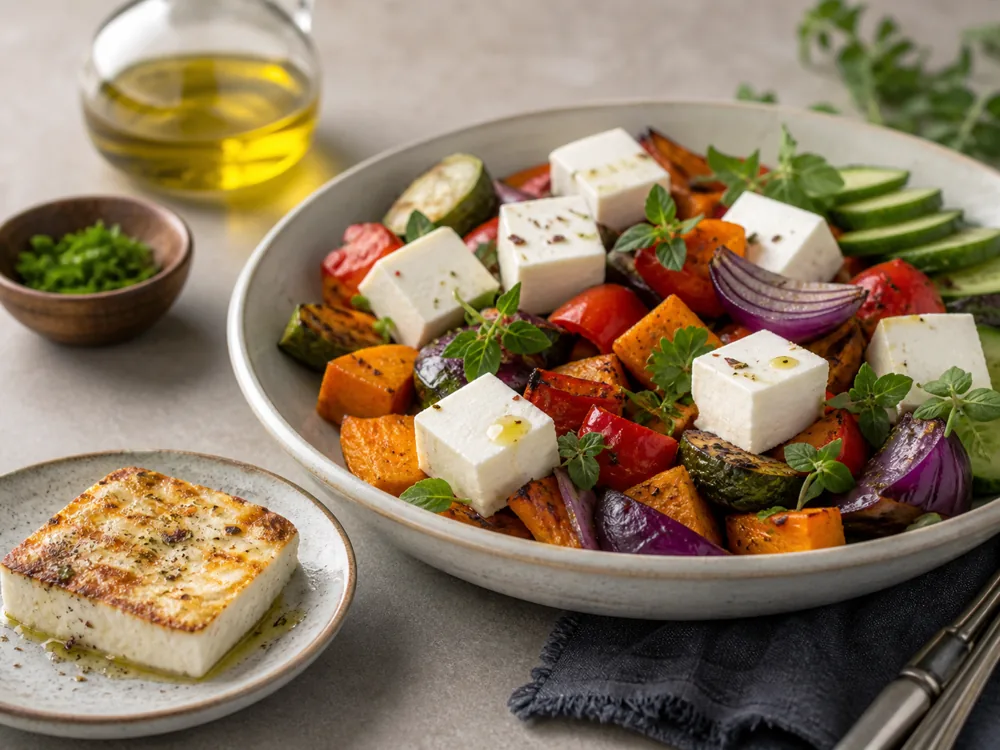
For Danish Feta itself, Cheese.com names two uses, salads and grilling, while Dairy from Europe's list for white cheese in general is much longer.
Dairy from Europe is a campaign of the Danish Dairy Board, funded by the board and the EU for 2021 to 2023, so its list promotes white cheese in general. It also offers the cheese as a salty alternative to other cheeses in a variety of dishes.
| Use | How It Works |
|---|---|
| Salads and grilling | The two uses Cheese.com names; Dairy from Europe also lists cooked or grilled. |
| Baking | Pastries, baking, oven dishes and tart fillings, per Dairy from Europe. |
| With olive oil and vegetables | Dairy from Europe lists white cheese combined with olive oil and vegetables. |
| Pita and sandwiches | Both appear in Dairy from Europe's list. |
| Dips, dressings and marinades | Dairy from Europe lists marinated white cheese and its use in dips and dressing. |
| Mince dishes | Also on the Dairy from Europe list. |
Arla suggests crumbling its Apetina white cheese over light salads or adding it to pasta dishes.
How Do You Buy and Store Danish White?
Danish white is sold in classic and herb-infused varieties, with garlic, sun-dried tomatoes and olives as the flavours.
One label shows what a pack of Danish white can list: Arla's Apetina Original White Cheese in Brine, 200 g, sold in the UK, with figures per 100 g.
Three fat figures circulate for feta-style cheese and measure different things: the Commission's 6% is the fat in the milk, and Wikipedia gives the Feta PDO rule as at least 43% fat in dry matter with at most 56% moisture. Arla's 21 g is per 100 g of the cheese on its label.
Because the bases differ, you cannot read one against another. A fat figure per 100 g compares only with another pack's per 100 g figure.
The keeping times below are Arla's, for its own pack, and the refrigerator temperature is the CDC's. On another maker's pack, follow the times printed there.
Is Danish White Safe During Pregnancy?
Neither the NHS nor the CDC names Danish white, so check your pack for a pasteurisation statement.
The NHS lists pasteurised semi-hard cheeses, such as edam, as safe to eat in pregnancy, and pasteurised soft cheeses too, among them feta, paneer, halloumi and pasteurised mozzarella. It says foods made from unpasteurised milk must be thoroughly cooked.
The CDC lists feta and mozzarella made with pasteurized milk among the safer cheeses and soft cheese from unpasteurized milk among the riskier ones. It also says pregnant women are 10 times more likely to get a Listeria infection.
Cheese.com and Arla call Danish white semi-hard, and Arla's ingredients call the cubes soft. Served cold, a pasteurized Danish white, semi-hard or soft, is a type the CDC list does not cover, so ask a midwife or doctor.
SOURCES & REFERENCES
What Else Do People Ask About Danish Feta?
Not under EU rules. The Court of Justice ruled in 2022 that only cheese produced in Greece can be called feta, including for sale outside the EU, according to Courthouse News.
Cheese.com lists cow's milk for Danish Feta, and Arla's Apetina pack page describes a cow's milk cheese in salted water.
Cheese.com lists its texture as creamy, crumbly and smooth but says it doesn't crumble easily when cubed or sliced.
Cheese.com names salads and serving it grilled, and Dairy from Europe adds baking, pastries, oven dishes, tart fillings and pita bread for white cheese in general.
Arla renamed its product Apetina after the Court of Justice upheld the feta PDO in 2005.