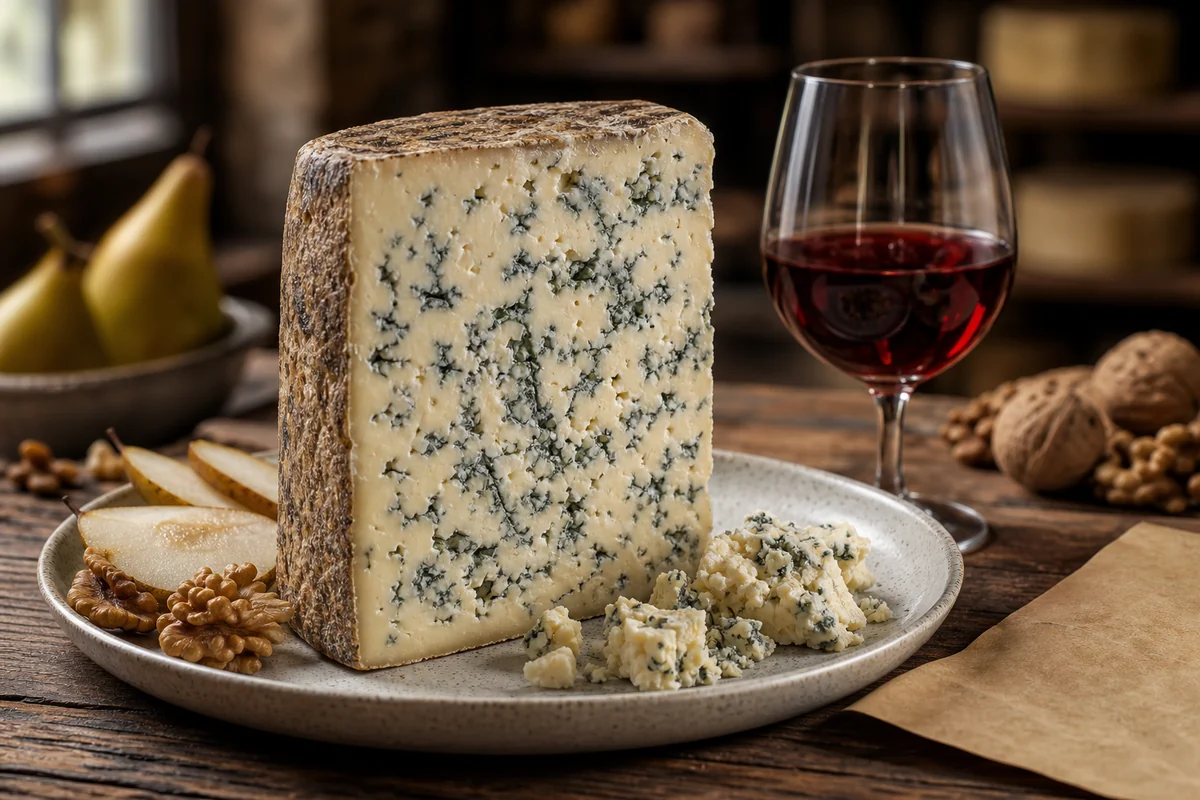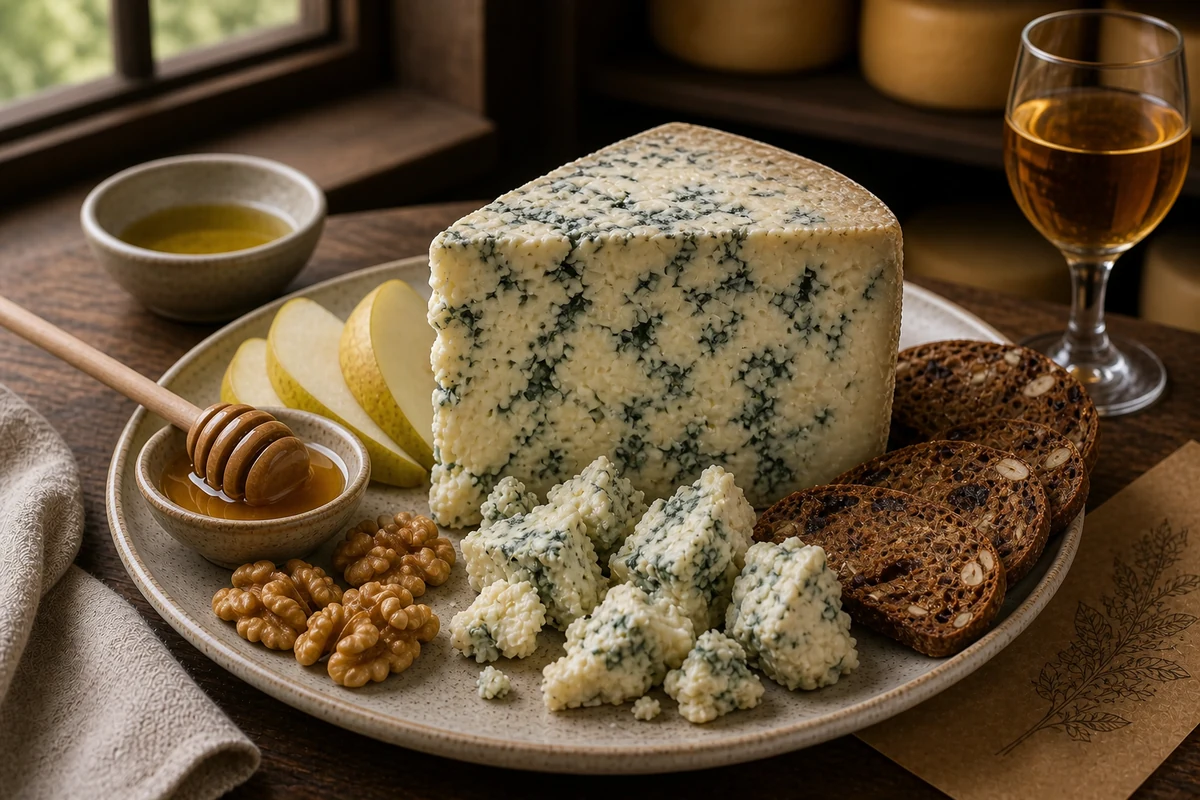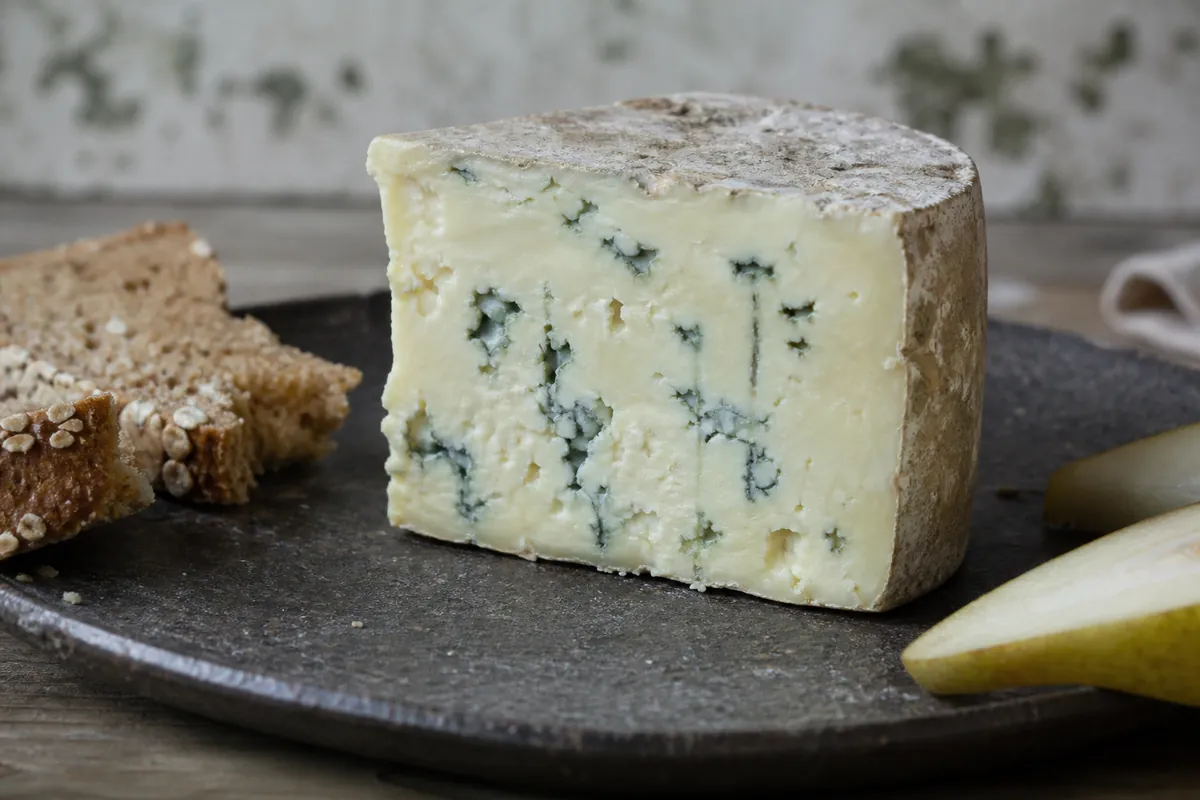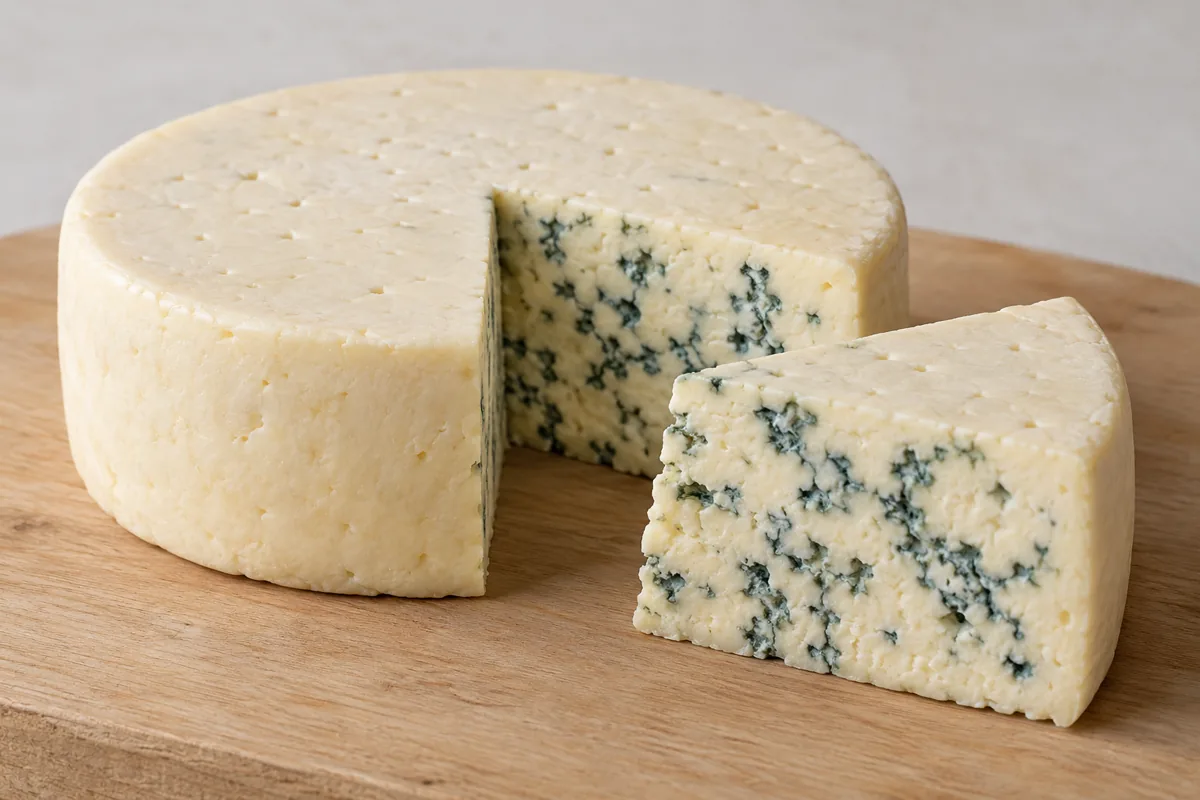
Devon Blue is a cow's milk blue cheese made by Ben Harris and his team at Ticklemore Cheese Dairy in Totnes, Devon. Most descriptions call it crumbly, the age at sale differs from seller to seller, and Culture lists the milk as raw where four other listings give pasteurised.
Before buying a piece, read the milk on its label and ask the seller how old it is.
In This Article
What Is Devon Blue Cheese?
Neal's Yard Dairy credits Robin Congdon with creating three new blues in the 1970s, when Stilton blue cheese was pretty much the only blue in production in the UK. Ticklemore dates Devon Blue itself to the late 1980s, when Congdon first produced it.
Congdon wanted a cow's milk partner for his sheep's milk Beenleigh Blue, one that could be made all year, including when sheep's milk was in short supply.
Congdon began by farming 30 sheep in the 1970s and later moved into cheesemaking. Ben Harris joined Ticklemore in 2001 and became head cheesemaker in the early 2000s.
The Cheese and Wine Shop's listing has Harris running Ticklemore now, with the sheep long since sold and cows' milk bought from the South Hams. Neal's Yard Dairy lists the ingredients as pasteurised cow's milk, salt, cheese cultures, vegetarian coagulant and Penicillium roqueforti, with the milk coming from several farms within a 10-mile radius.
The herd behind the milk differs by account: predominantly Friesian Holsteins from a local farmers' co-operative within 10 miles of the dairy for Ticklemore, pedigree Holstein cows for Cured and Whey, and Ayrshire cows' milk collected in the South Hams for The Cheese and Wine Shop. Ticklemore describes the co-operative's farms as Red Tractor assured.
How Is Devon Blue Made?
The milk is warmed, then the starter culture goes in together with Penicillium roqueforti, the mould that develops the blue veins and pockets.
The step Culture calls unusual comes after the curds are cut. They go into molds without being pre-drained, so the young cheeses hold a lot of moisture.
To offset that moisture, the wheels are turned frequently for the first two days after unmolding and kept very warm, at 72°F. After that they are rubbed with salt and pierced so that air can enter, and the piercing is what allows the blue mould to form.
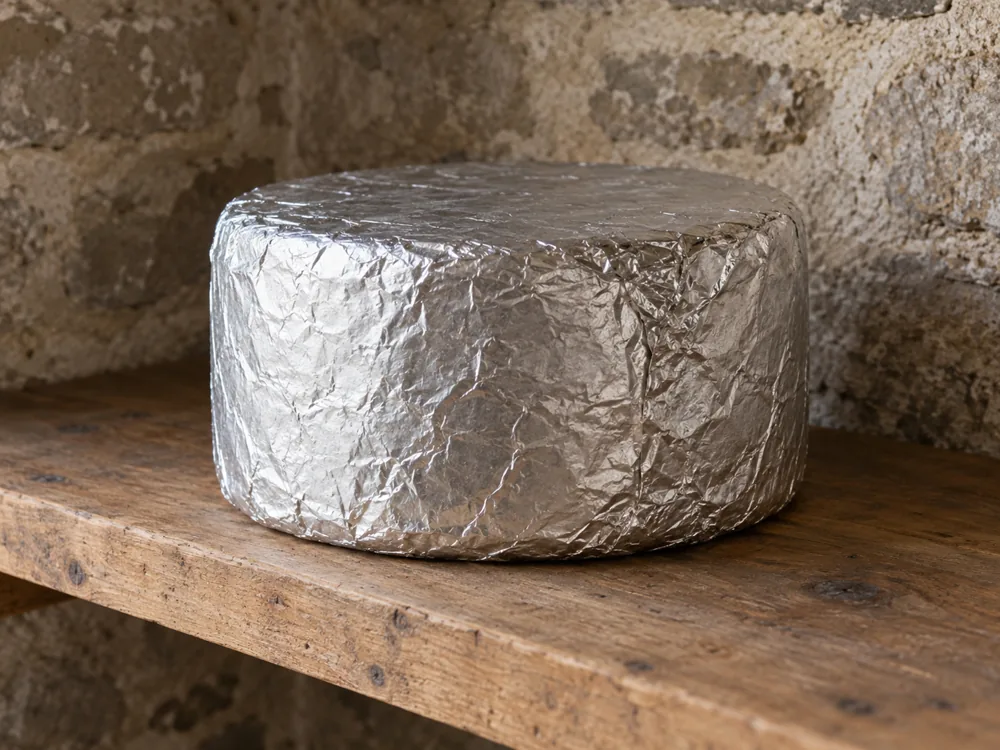
Culture has the cheeses spend three or four weeks in a maturing room, by which time the blue mould is beginning to develop. They are then wrapped in foil and matured for a further six to eight months, by which time the mould has developed fully.
The Cheese and Wine Shop gives the purpose of the foil as preventing rind development.
Robin Congdon based the original recipe on Roquefort. When he visited the place where it is made, its makers told him nothing, so he brought back a scraping of mould and started from there.
He then built a maturing cellar to mimic the conditions of the Roquefort caves, including fresh running water. The Cheese and Wine Shop adds that the cheese Ben Harris produces today is very different from Roquefort.
Is Devon Blue Made with Raw or Pasteurized Milk?
Devon Blue is listed with pasteurised milk by Neal's Yard Dairy, Chorlton Cheesemongers, The Cheese and Wine Shop and Cheese.com. Culture's cheese library, which names Ben Harris and Robin Congden as the makers, lists the milk as raw.
Check the label on the piece you buy before you rely on either answer.
What Does Devon Blue Taste Like?
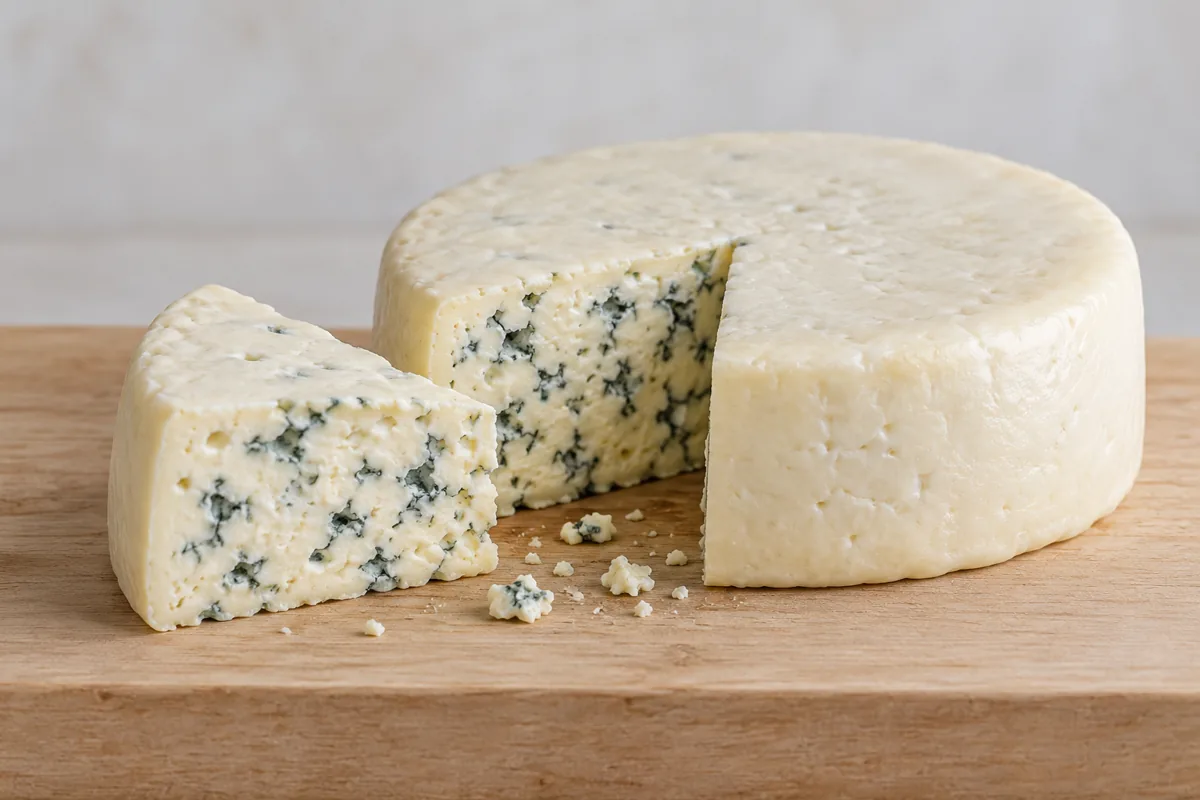
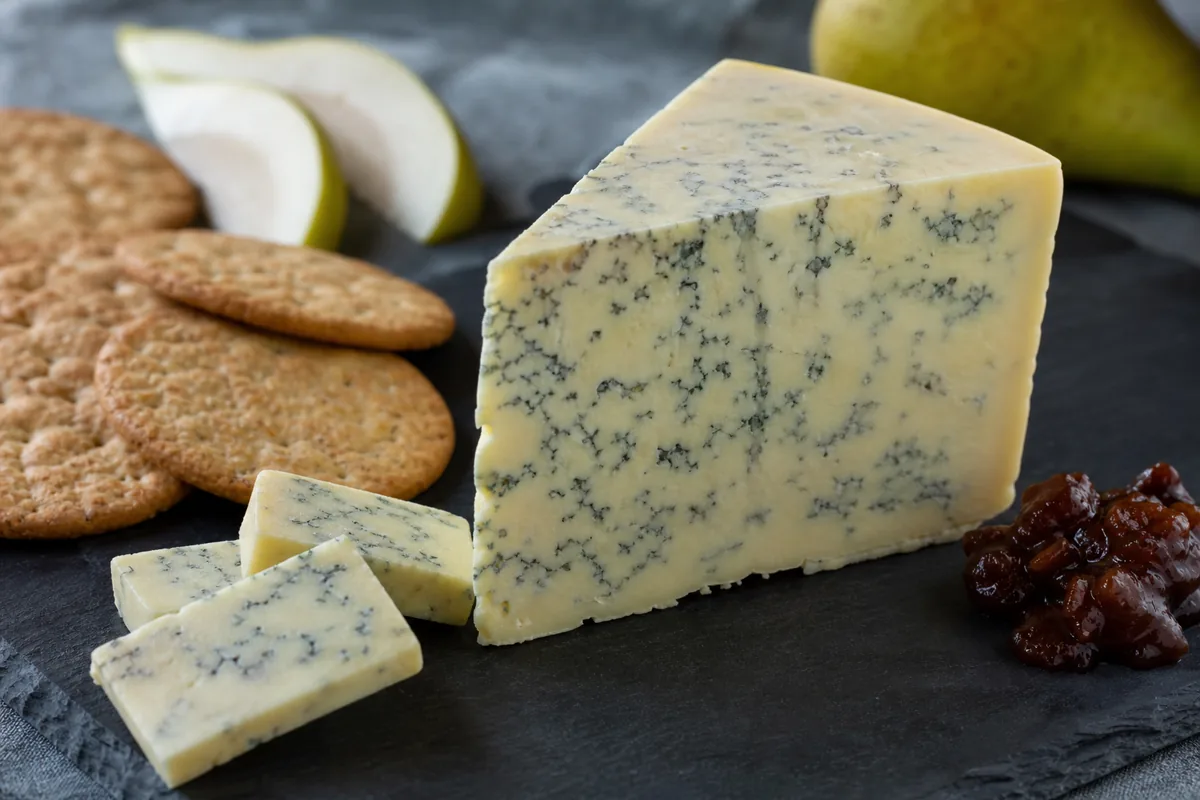
Most descriptions give Devon Blue a sweet, creamy or buttery flavour, while Cured and Whey calls it slightly tangy and spicy and Neal's Yard Dairy adds soy-sauce-like depth. Every description except Neal's Yard Dairy's calls the paste crumbly to some degree, and Neal's Yard Dairy uses the word fudgy for what it calls a pleasingly dense texture.
| Question | Answer | Given by |
|---|---|---|
| How does the paste feel? | Crumbly; crumbly and buttery; creamy and crumbly | Ticklemore Cheese Dairy and Cheese.com; Chorlton Cheesemongers; Cured and Whey |
| Dense and slightly crumbly; moist and slightly crumbly | Culture; The Cheese and Wine Shop | |
| Pleasingly dense and fudgy | Neal's Yard Dairy | |
| What does the cut face look like? | Pale yellow-cream paste stippled with blue pockets and veins; blue-green veins | Culture; Cured and Whey |
| What does it taste like? | Sweet and often punchy, with soy-sauce-like depth | Neal's Yard Dairy |
| Sweet and smooth, flinty, minerally and light | The Cheese and Wine Shop | |
| Mellow, creamy and complex, with hints of butter, spice, smoke and earth; creamy, rich and buttery | Culture; Ticklemore Cheese Dairy | |
| Rich blue | Chorlton Cheesemongers | |
| Slightly tangy and spicy | Cured and Whey |
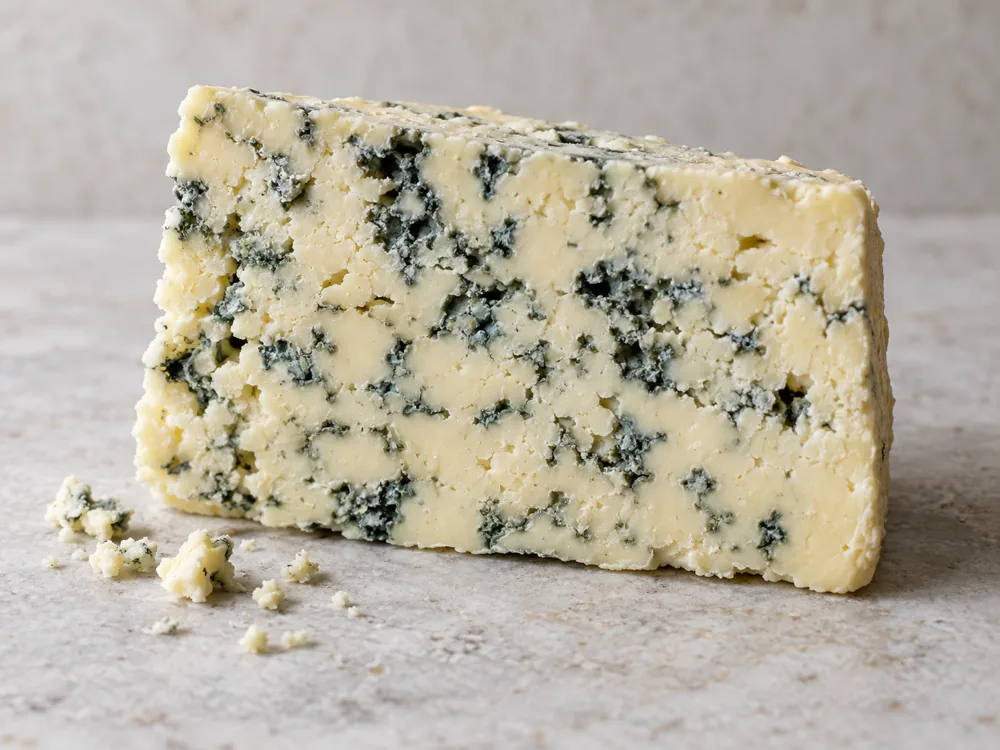
On strength the sellers split. Chorlton Cheesemongers presents it as a blue for someone who likes some power in their cheese, while The Cheese and Wine Shop calls it a medium-flavoured blue.
The Cheese and Wine Shop says older batches become creamier and stronger in flavour. If strength matters to you, ask the seller how old the piece is.
How Old Is Devon Blue When You Buy It?
The ages given for Devon Blue run from a minimum of three months at Cured and Whey to Culture's maturing timeline of about 7 to 9 months in all.
| Question | Answer | Given by |
|---|---|---|
| What is the minimum age? | Aged a minimum of three months | Cured and Whey |
| Matured at least four months | The Cheese and Wine Shop | |
| What is the average age? | 4 to 6 months | Neal's Yard Dairy |
| How long does it mature? | 3 to 4 weeks of initial maturation, then 6 to 8 months wrapped in foil | Culture |
| Does it have a rind? | Natural rind | Culture |
| Wrapped in foil to prevent rind development | The Cheese and Wine Shop |
The figures are of different kinds. Cured and Whey and The Cheese and Wine Shop give minimums, Neal's Yard Dairy gives an average, and Culture gives a timeline of 3 to 4 weeks plus 6 to 8 months, about 7 to 9 months in all.
Neal's Yard Dairy says Ticklemore matures its cheeses on the farm and delivers them ready to sell.
Whether Devon Blue is made all year is disputed. Ticklemore says it makes Devon Blue all year round, fitting it around the goat's and sheep's milk cheeses, while The Cheese and Wine Shop says it is made seasonally to fit around the other blues.
Ask the seller whether the piece you are buying has a natural rind or was kept in foil.
How Does Devon Blue Differ from Ticklemore's Other Blues?
Ticklemore makes three blues, one per milk: Devon Blue from cow's milk, Beenleigh Blue from sheep's milk and Harbourne Blue from goat's milk.
| Point | Devon Blue | Beenleigh Blue | Harbourne Blue |
|---|---|---|---|
| Milk | Cow | Sheep | Goat |
| Moisture | 41.1% | 43.2% | 39.8% |
| Salt | 2.4 g | 2.3 g | 1.9 g |
| Fat | 32 g, of which saturates 21 g | 30 g, of which saturates 19 g | 33 g, of which saturates 21 g |
| Energy | 1586 kJ / 383 kcal | 1496 kJ / 361 kcal | 1625 kJ / 392 kcal |
On Ticklemore's figures, Devon Blue has the middle moisture of the three, 41.1% against 43.2% for Beenleigh Blue and 39.8% for Harbourne Blue, and the most salt at 2.4 g. All three list 22 g of protein.
From one end of the range to the other, moisture differs by 3.4 points and salt by 0.5 g.
What Goes with Devon Blue?
For food, Cured and Whey says Devon Blue suits bread, fruit and nuts.
| Pairing | Type | Why It Works |
|---|---|---|
| Bread, fruit and nuts | Food | Named by Cured and Whey. |
| Hard cider | Drink | Named by Culture. |
| Côtes du Rhône | Wine | Named by Culture. |
| Port | Wine | Suggested by Chorlton Cheesemongers. |
| Full red wine | Wine | Suggested by Chorlton Cheesemongers. |
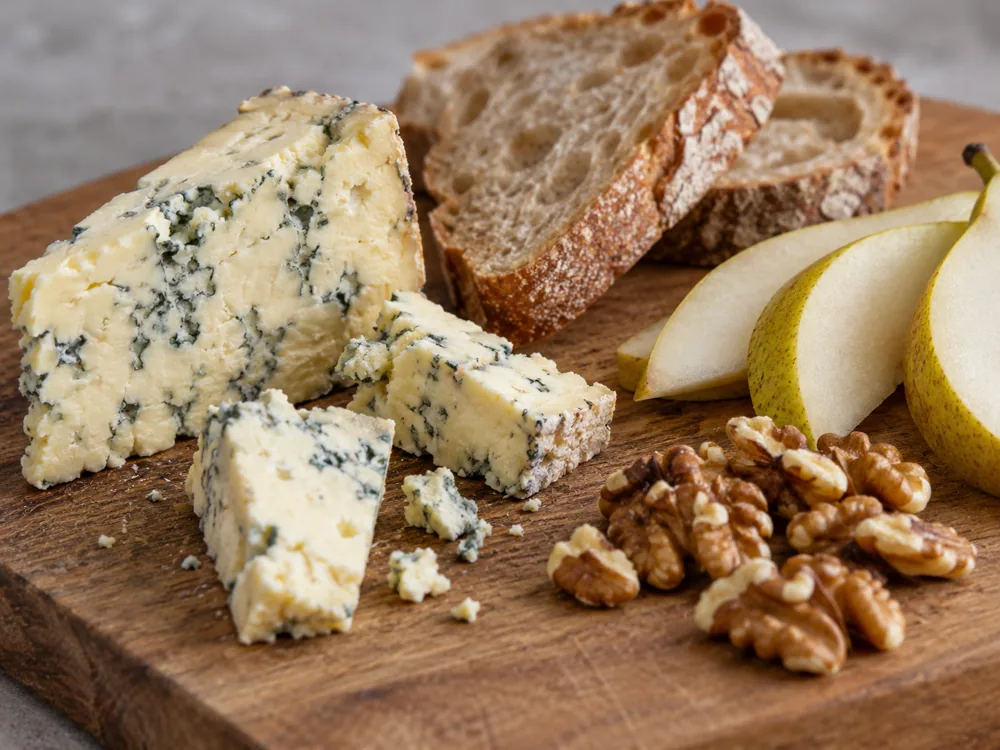
For a drink, Chorlton Cheesemongers suggests port or a full red, and writes that the cheese goes brilliantly with a thick, fruity drink. Culture names Côtes du Rhône or hard cider.
How Do You Buy Devon Blue?
In October 2026, Neal's Yard Dairy listed Devon Blue in sixteenth portions of 165 to 193 g, priced from £9.35. Divided by its weight, a £9.35 sixteenth works out to about £48 to £57 a kilogram.
Whole-cheese weights differ by account. Culture gives a wheel 8 inches across and 6 inches high that weighs about 6 pounds, roughly 2.7 kg, Neal's Yard Dairy lists a whole cheese of 2675 to 3091 g, and The Cheese and Wine Shop lists 3.5 kg.
Portions vary in the same way, with an eighth at 330 to 386 g at Neal's Yard Dairy and 425 g at The Cheese and Wine Shop. Confirm the current weight and price with the seller.
Devon Blue is made with a vegetarian coagulant and is suitable for vegetarians. Chorlton Cheesemongers lists milk as the allergen.
Culture describes Ticklemore as probably better known for its goat's and sheep's milk cheeses, yet Ticklemore calls Devon Blue its best selling cheese. Ticklemore says the 2022 World Cheese Awards gave Devon Blue a Super Gold, placing it in the top 10 of 2500 cheeses, and that it won Super Gold again in 2023.
Is Devon Blue Safe During Pregnancy?
The pregnancy rules for cheese that apply to Devon Blue turn on its milk and its class. Four listings give pasteurised milk and Culture lists raw milk, and Cheese.com describes it as semi-hard.
The NHS lists pasteurised semi-hard cheeses, such as edam, as safe to eat, the line for Cheese.com's semi-hard reading. Ticklemore, Culture and the sellers describe Devon Blue as crumbly, creamy, buttery, moist, dense or fudgy, words the NHS does not use, and for a blue-veined cheese read that way the NHS says pasteurised or unpasteurised soft blue-veined cheeses must be thoroughly cooked.
For a piece made with the raw milk Culture lists, the NHS says any foods made from unpasteurised milk must be thoroughly cooked.
The NHS also lists any cheese that's been cooked until steaming hot, including soft or blue cheese, as safe to eat.
For a piece made with raw milk, the CDC lists unpasteurized (raw) milk and dairy products made from raw milk as riskier. It also says pregnant women are 10 times more likely to get a Listeria infection.
The CDC's heated safer line names pasteurized soft cheeses only, so if you follow US advice, ask a midwife or doctor about a piece made with raw milk, even when it is cooked.
Served cold, Devon Blue is described as a pasteurized blue cheese that is semi-hard, crumbly, creamy, buttery, moist, or dense and fudgy, a type the CDC list does not cover, so ask a midwife or doctor.
SOURCES & REFERENCES
What Else Do People Ask About Devon Blue?
No. Devon Blue is made by Ticklemore Cheese Dairy in Totnes, and Neal's Yard Dairy says Robin Congdon created his new blues when Stilton was pretty much the only blue in production in the UK.
Neal's Yard Dairy, Chorlton Cheesemongers, The Cheese and Wine Shop and Cheese.com list pasteurised milk, and Culture lists raw milk. Check the ingredient line on the piece you buy.
Every description except Neal's Yard Dairy's calls it crumbly to some degree, and Neal's Yard Dairy instead describes a dense, fudgy texture.
No. Ticklemore makes Devon Blue from cow's milk and Beenleigh Blue from sheep's milk, and its nutrition page lists 41.1% moisture for Devon Blue and 43.2% for Beenleigh Blue.
Yes in every listing that says: Neal's Yard Dairy lists a vegetarian coagulant, Chorlton Cheesemongers a vegetable coagulant, Culture vegetable rennet, and Cheese.com marks it vegetarian.
Culture names Côtes du Rhône or hard cider, and Chorlton Cheesemongers suggests port or a full red.