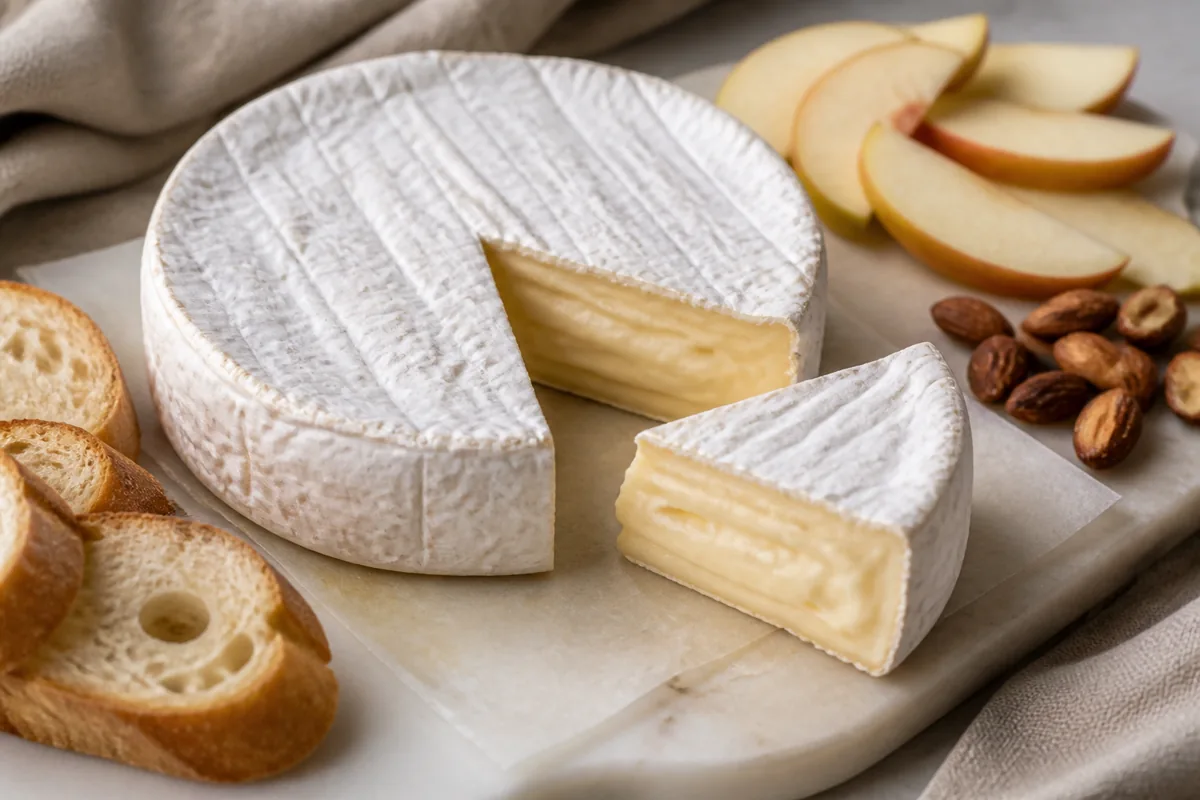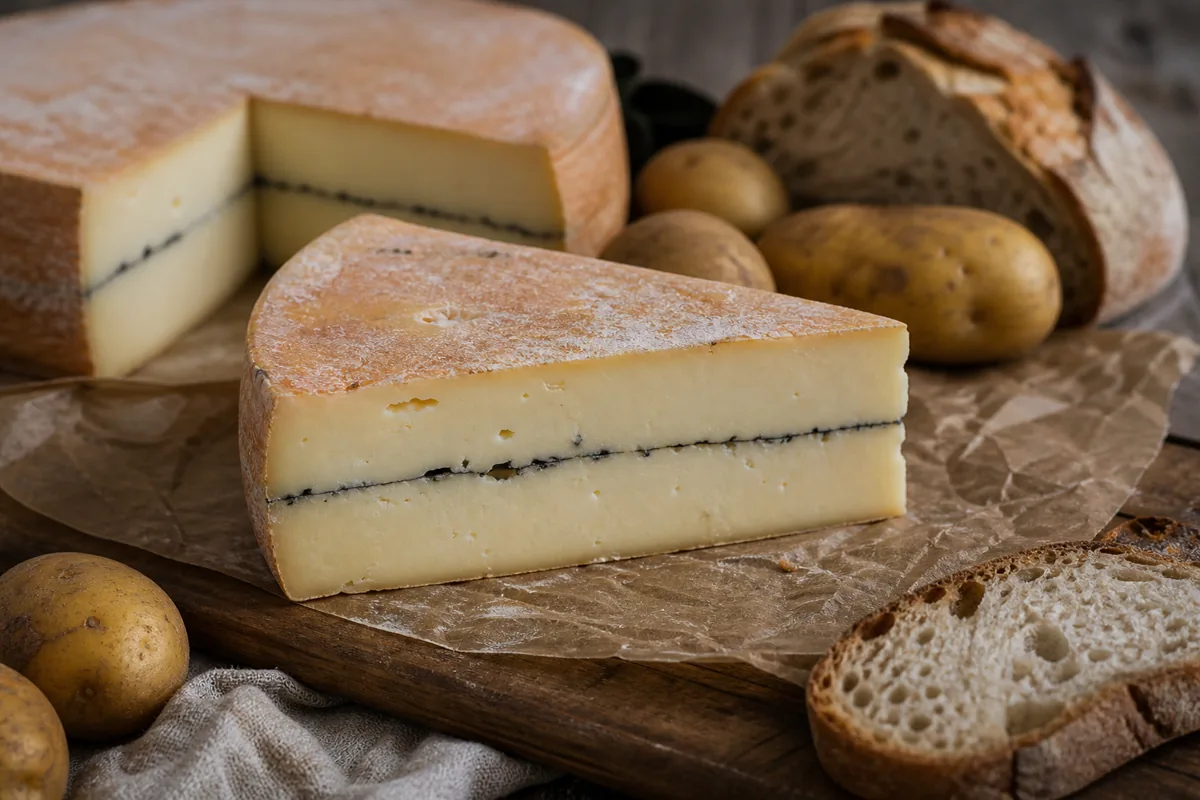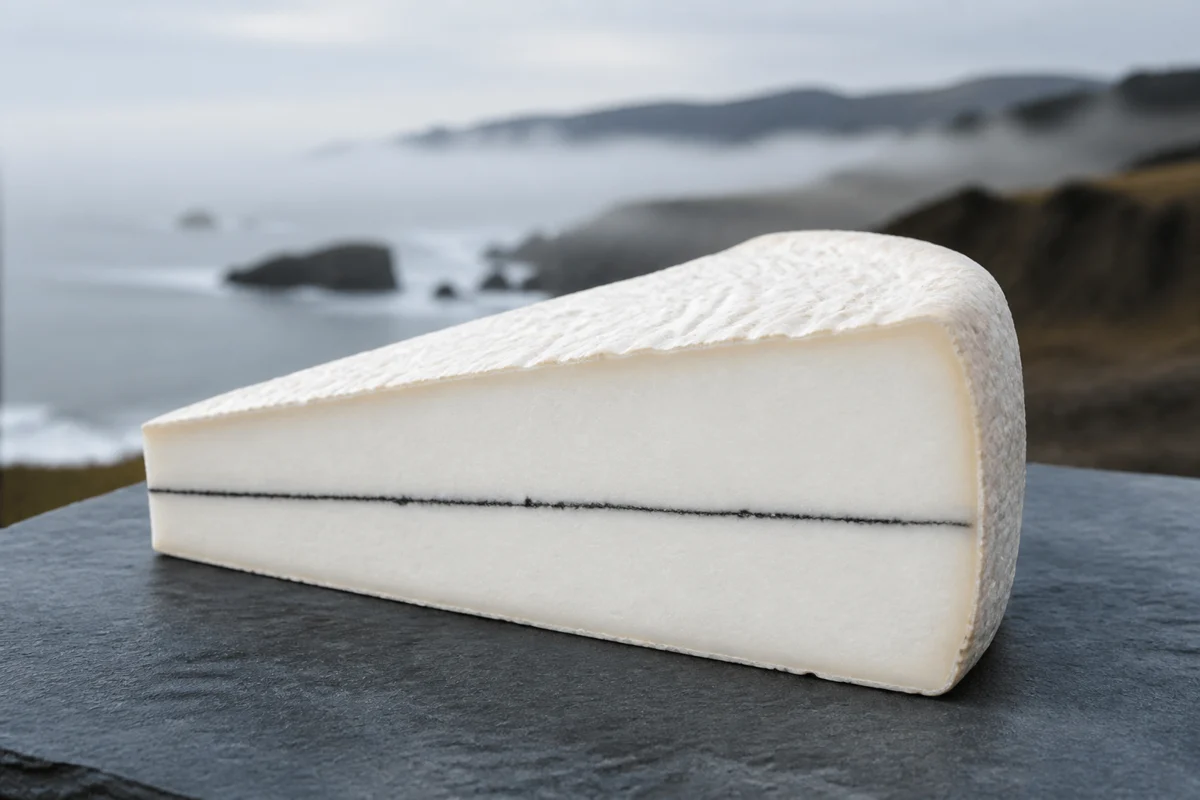
Humboldt Fog is a soft-ripened goat cheese made with pasteurized goat milk by Cypress Grove in Humboldt County, California. A line of edible vegetable ash runs through the middle of the wedge, and a white mold rind covers the outside.
As the cheese ripens, a creamy layer grows inward from the rind and the flavor gets stronger, so the age of the wedge you buy changes both its texture and its taste.
In This Article
Who Makes Humboldt Fog, and What Goes into It?
Cypress Grove makes Humboldt Fog in Arcata, California, at the creamery Mary Keehn opened in 1983. The cheese is named for the ocean fog that rolls in from Humboldt Bay.
Cypress Grove lists the ingredients as pasteurized cultured goat milk, salt, enzymes, and vegetable ash, and it names the rennet as microbial rather than animal.
You can serve it to a vegetarian guest by the producer's own word: its FAQ calls all of its cheeses vegetarian-friendly and gluten-free. A cheese made from goat milk is not vegan, though.
Cypress Grove's FAQ says partner dairy farms supply its milk, and its Our Story page says that as of May 2026 the company no longer owns a dairy and has sold its goats to other dairies. Whole Foods Market's 2011 article credits the cheese's smoothness to goat's milk from small pasture-based family farms.
Humboldt Fog is soft-ripened in Cypress Grove's description and semi-soft in Culture's and Wikipedia's. Both labels can be true of one wheel, which is described with a dense, slightly crumbly core and a softer layer under the rind.
Cypress Grove's FAQ treats goat cheese and chèvre as the same thing, since chèvre is the French word for both goat and goat cheese, though it is used most often for fresh goat cheeses.
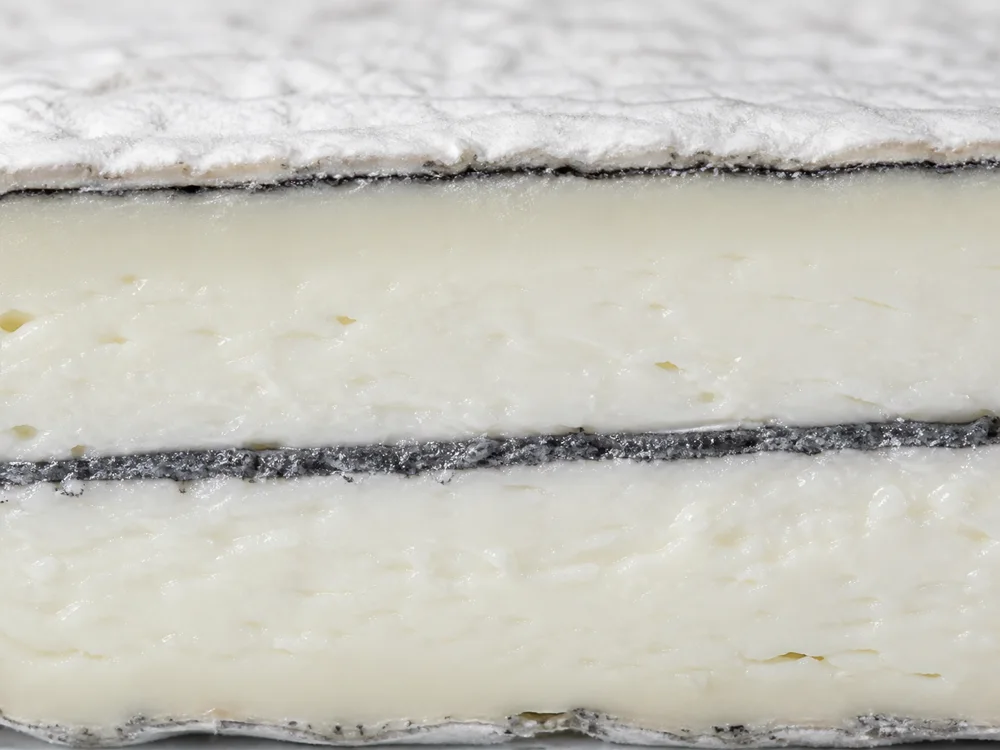
Cut a wedge and you will see four parts, as Cypress Grove, Whole Foods Market and Wikipedia describe them.
| Part | What It Is | Where You Find It |
|---|---|---|
| White rind | Edible mold rind | Outside of the wedge |
| Grey line | Edible vegetable ash | Through the center and around the outside under the rind |
| Cream line | Creamy layer produced by enzymes in the rind mold | Under the rind, wider in an older cheese |
| Inner paste | Core of fresh goat cheese | Middle of the wedge, around the ash |
Is Humboldt Fog a Blue Cheese?
No. Humboldt Fog is not a blue cheese, and Cypress Grove's FAQ calls that idea a common misconception.
The grey line you see through the center and around the outside under the rind is vegetable ash, which the producer describes as odorless, tasteless, and completely edible.
Why Does Humboldt Fog Have Ash?
The ash line began with a trip to France, where Keehn learned from makers of brie, camembert, Morbier, and other cheeses: on the flight home she woke with an image of a new cheese with a thick line of ash like the fog over the Humboldt County coast.
The idea dates to 1993, after a trip to Europe, ten years after the 1983 opening, which makes the creamery older than the cheese itself.
The central line is also a nod to the French cheese Morbier: Cypress Grove's FAQ calls the ash an ode to it, and Wikipedia compares the central line to the one in that cheese. Cut, the ash along the center and under the rind gives the cheese what Whole Foods Market calls a wedding cake appearance.
The FAQ also gives the ash a job: goat cheese is quite acidic, and the ash helps bring up the pH and encourages the mold that becomes the rind.
How Is Humboldt Fog Made?
Culture lists the steps in this order, and Wikipedia classes the result as an uncooked pressed cheese.
- Cheesemakers pasteurize goat milk in a vat and add cultures and coagulants.
- The mixture is held for acid ripening.
- It moves to a curd press, where the whey drains off.
- The curd is mixed with salt and hand-packed into cheese forms.
- The cheeses are ashed, then sprayed with mold cultures.
- They spend ten days in primary ripening, turned daily, then several more days of cold stabilization before wrapping and shipping.
So the ash is already on the cheese when the mold cultures arrive, which fits Cypress Grove's statement that the ash helps the mold grow.
What Does Humboldt Fog Taste Like?
Cypress Grove describes buttermilk and fresh cream, floral notes, herbaceous overtones, and a clean citrus finish, and The Cheese Atlas lists similar notes, with grassy undertones and a crisp citrus finish.
Whole Foods Market calls the cheese creamy and mild, with a soft, slightly tangy taste, and Cypress Grove's FAQ calls the flavor mildly acidic.
Where you cut changes what you taste: Wikipedia describes the paste as creamy, light, and mildly acidic, with a stronger flavor near the rind.
How Does Humboldt Fog Change as It Ripens?
Humboldt Fog ripens from the outside in. Whole Foods Market explains that enzymes in the rind mold digest milk proteins, a process called proteolysis, and that the creamy layer grows larger the longer the cheese ages.
Wikipedia describes the same progression as a core of fresh goat cheese inside a runny shell, with more of the crumbly core turning soft-ripened as the cheese matures.
| Young | Mature |
|---|---|
| Rind: very white (Whole Foods Market) | Rind: marbled (Whole Foods Market) |
| Paste: firm and moist (Whole Foods Market); snow-white, smooth, dense, and slightly crumbly (Culture) | Paste: more crumbly (Whole Foods Market); smoother, slightly translucent, and ultimately runny (Culture) |
| Flavor: clean citrus finish (Whole Foods Market); bright, lemony tang (Culture) | Flavor: earthier notes (Whole Foods Market); intensified (Culture) |
A mature wedge is more crumbly by Whole Foods Market's account and smoother and ultimately runny by Culture's. A cut through the middle shows both a core and a softer outer layer, so Whole Foods may be describing the core and Culture the layer under the rind.
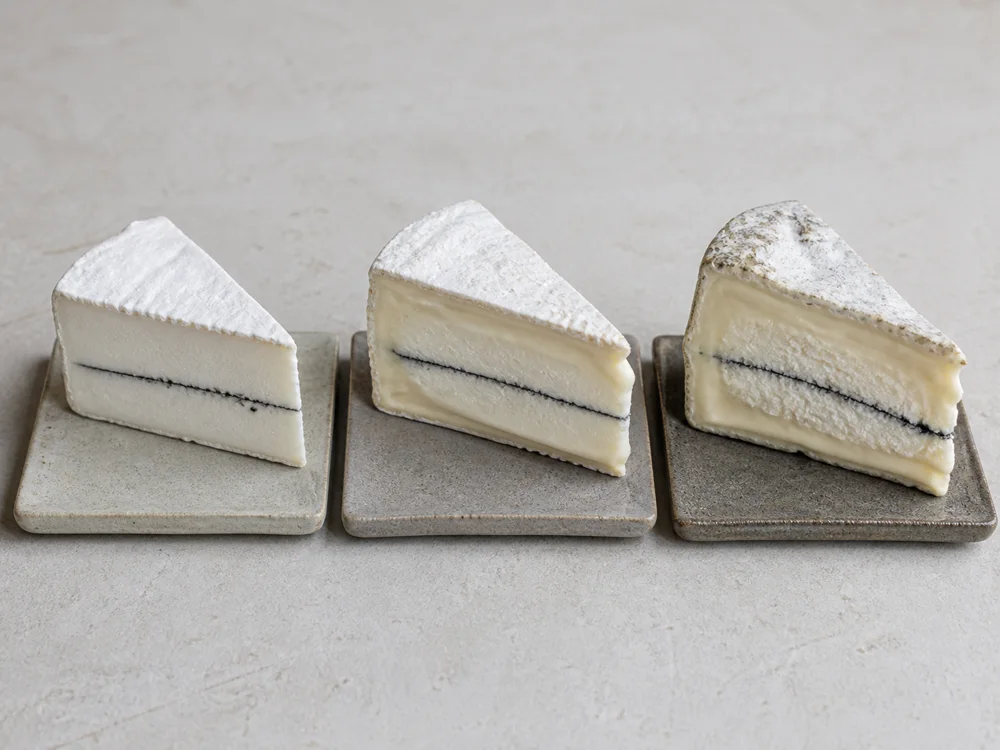
Ageing figures for the wheel run from a minimum of five weeks at The Cheese Atlas to 60 days on Wikipedia, while Culture's make ends with ten days of primary ripening and several days of cold stabilization before wrapping. Culture's count stops when the wheel leaves ripening for packaging, so the three figures may measure different spans.
To judge a wedge in the shop, look at the creamy layer: because it grows the longer the cheese ages, a wide creamy band under the rind points to an older wedge, and a narrow one to a younger wedge.
Cypress Grove's storage advice says a re-wrapped soft-ripened cheese continues to ripen, so the band shows the wedge's stage on the day you buy it and keeps widening in your refrigerator.
Can You Eat the Humboldt Fog Rind?
Yes. Cypress Grove says you can eat the rind on all of its soft-ripened cheeses and calls it a key part of the flavor that adds a textural contrast.
If you are unsure, Cypress Grove's own advice is to try a bit and keep eating the rind if you like it. The Cheese Atlas describes the white rind as paper thin.
Wikipedia gives the rind less weight, calling the bloomy mold and ash rind edible but of minute distinct taste.
For a mature wedge, Culture says the flavors can become quite assertive, especially just under the rind, which is where the creamy layer sits.
What Pairs Well with Humboldt Fog?
For a drink that more than one source backs, pour Sauvignon Blanc, rosé, or a wheat beer or IPA: each turns up in at least two of the three sources in the table.
Cypress Grove pairs by ripeness: it gives young and mature wedges the same drink list and sets the ripe wedge apart with pale ale and four wines.
| Source | Stage | Drinks | Foods |
|---|---|---|---|
| Cypress Grove | Young | IPA, porter, wheat beer, demi-sec sparkling wine, Sauvignon Blanc | None listed |
| Cypress Grove | Ripe | Pale ale, Pinot Grigio, rosé, sweet Sherry, Vouvray | None listed |
| Cypress Grove | Mature | IPA, porter, wheat beer, demi-sec sparkling wine, Sauvignon Blanc | None listed |
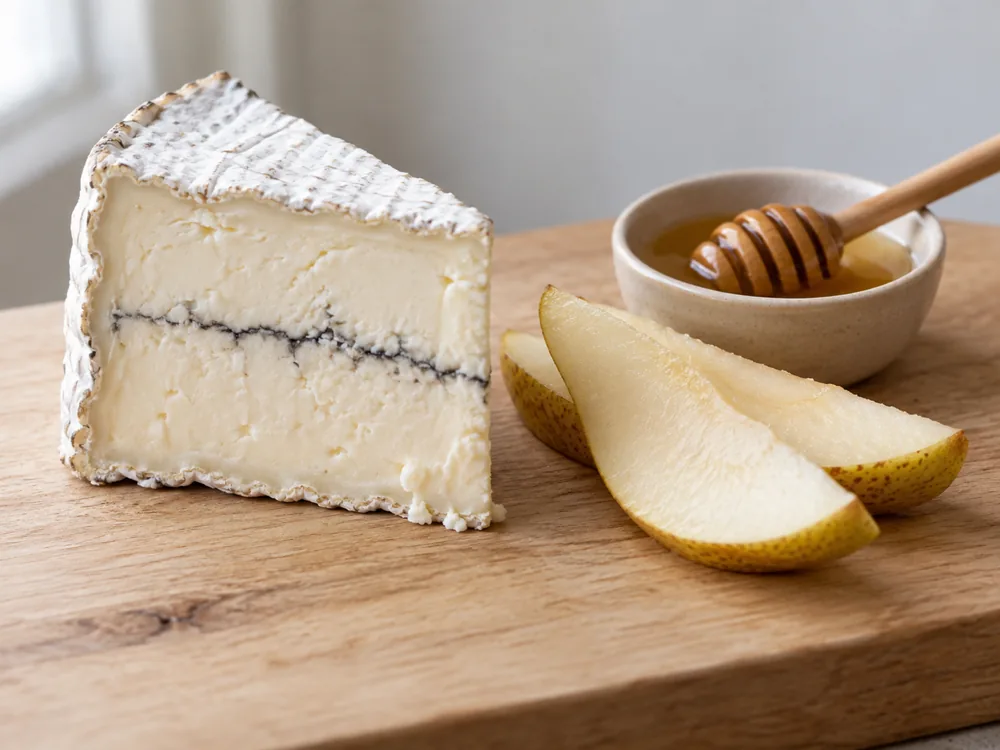
| Whole Foods Market | Not stated | Wheat beer or IPA | Pears and honey as a dessert; hot pasta in a mac and cheese |
| The Cheese Atlas | Not stated | Farmhouse ale or sour, fresh rosé, crisp Sauvignon Blanc | None listed |
The food ideas are Whole Foods Market's: pears and honey as a dessert, and hot pasta.
If you are building a board, Cypress Grove's product page shows a spring cheeseboard with Humboldt Fog, its PsycheDillic and Lamb Chopper cheeses, and seasonal vegetables, fruit, and light accompaniments.
How Much Humboldt Fog Should You Buy?
Humboldt Fog comes in wheels of 1, 3, and 5 pounds by Cypress Grove's shelf-life figures, while Culture lists the weight as 1 pound or 5 pounds.
If you want a whole wheel rather than a wedge, ask a cheesemonger to order one: many Cypress Grove cheeses are made in large wheels, which retailers cut and wrap into smaller wedges.
When you plan the amount, Cypress Grove's FAQ suggests about 1.5 ounces of cheese per person for an appetizer cheese board, and double or triple that for a main-meal board, double when there is a lot of other food and triple when there is not.
At that rate a 1-pound wheel of 16 ounces covers roughly ten appetizer portions by our arithmetic, and a 5-pound wheel roughly fifty.
Choose by size and by age: wheels come in 1, 3, and 5 pounds, shops sell cut wedges, and the creamy band under the rind shows how far a wedge has ripened.
How Do You Store and Serve Humboldt Fog?
Cypress Grove's product page says to keep the cheese cold, 32°F to 40°F, while its FAQ narrows that to 33°F to 35°F, as cold as possible without freezing and in the coldest part of your refrigerator. The CDC puts the ceiling for any refrigerator at 40°F or below.
Wrap it in waxed paper so it can breathe, as both Cypress Grove pages say. The FAQ keeps waxed paper for ripened cheeses such as Humboldt Fog and Truffle Tremor, and tight plastic wrap for its fresh cheeses and its aged Midnight Moon and Lamb Chopper.
The producer's optimal shelf life is 98 days uncut for its 3-pound and 5-pound wheels and 84 days uncut for its 1-pound wheel. For a wedge cut from one, ask the shop how long it will keep.
Cypress Grove says to take the cheese out of the refrigerator at least one hour before serving. Its FAQ adds that bringing only the portion you plan to serve to room temperature lets the full flavor emerge.
The Cheese Atlas likewise suggests enjoying the cheese at room temperature. Once your portion is out, the CDC says perishable food, dairy included, should not be left out for more than 2 hours, or 1 hour above 90°F.
Is Humboldt Fog Safe During Pregnancy?
Humboldt Fog is made with pasteurized goat milk, but pasteurization does not settle the question for a cheese of this type.
The NHS says pasteurised or unpasteurised mould-ripened soft cheeses with a white coating on the outside, such as brie, camembert and chèvre, must be thoroughly cooked. Humboldt Fog is a mould-ripened soft goat cheese with a white rind, though the NHS does not name it.
The same NHS page counts any cheese cooked until steaming hot as safe to eat, including soft cheese.
The CDC lists soft cheese made from unpasteurized milk as the riskier choice and pasteurized soft cheese heated to an internal temperature of 165°F or until steaming hot as the safer one, and it says pregnant women are 10 times more likely to get a Listeria infection.
So if you want Humboldt Fog while pregnant, cook it until it is steaming hot, which meets both the NHS rule and the CDC's safer line for pasteurized soft cheese. Served cold, Humboldt Fog is described as a pasteurized soft-ripened or semi-soft goat cheese, a type the CDC list does not cover, so ask a midwife or doctor.