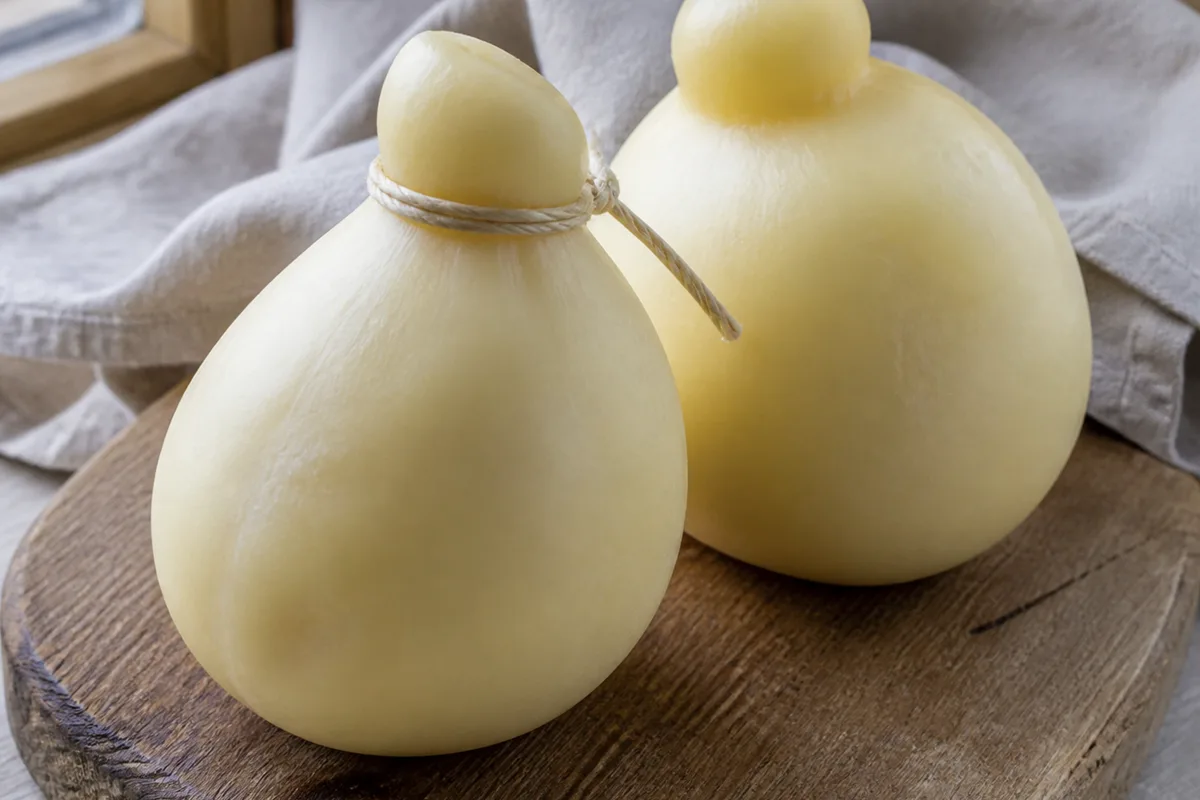
Manteca is a southern Italian cheese with a ball of butter sealed inside a shell of stretched curd, from the same family as caciocavallo. Its centre is a hand-formed block of butter, sealed inside while that curd was still hot.
The butter is the reason the cheese exists. ONAF, the Italian national organisation of cheese tasters, publishes the Basilicata and Calabria records of traditional food products, both of which describe it as a way to keep butter for a long time, and Basilicata's adds that dairies had no way to keep dairy products cold.
When you buy a piece, you are buying two ingredients: butter to spread on bread, and a shell to slice as cheese or shred into pasta.
In This Article
What Is Inside a Manteca?
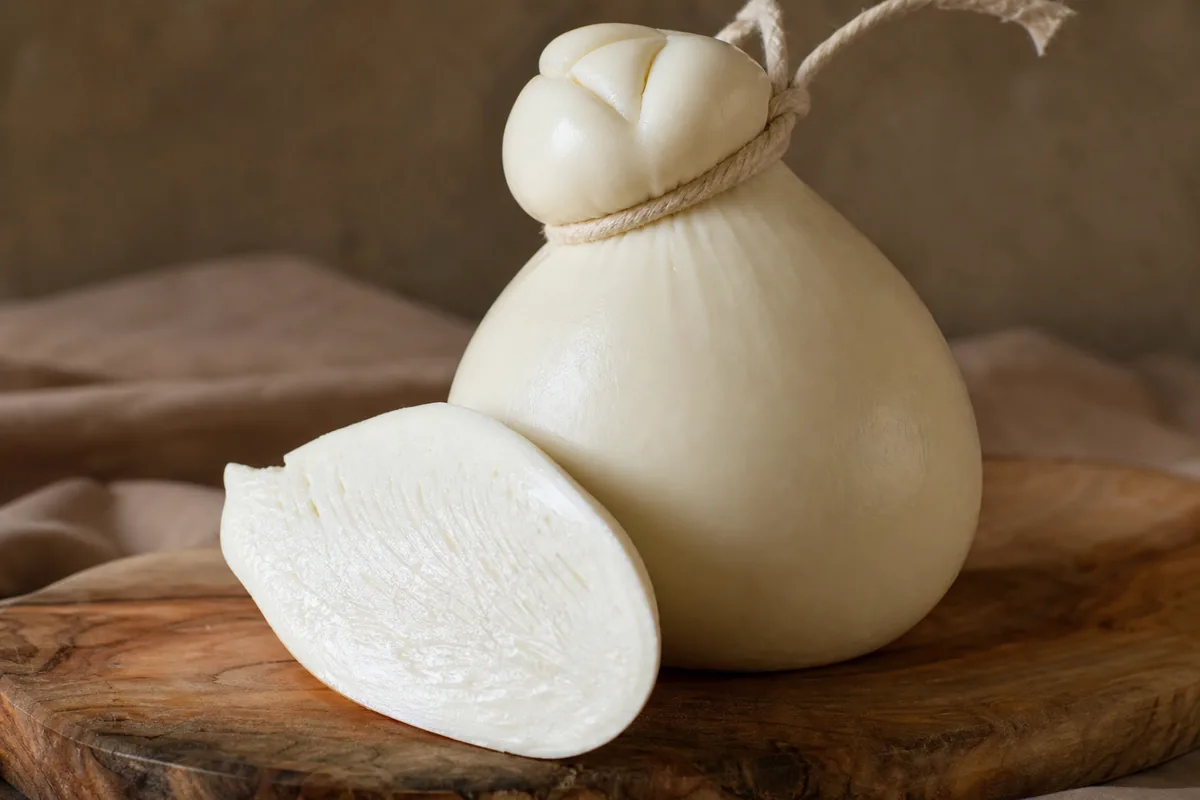
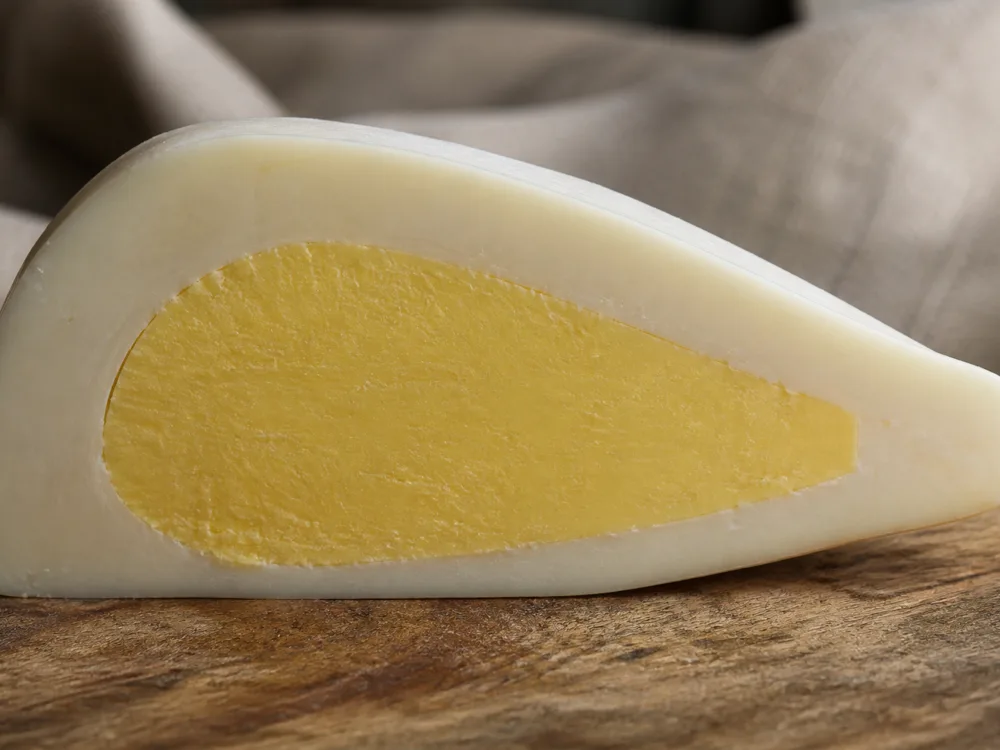
Cut one open and you find a ball of butter, wrapped completely in stretched curd. In the manteca from Caseificio Di Nucci in Alto Molise, butter makes up 60 percent, formed by hand into a ball 5 cm across.
Di Nucci's ingredient list is short: raw cow's milk, butter, whey starter, salt and rennet.
The shell is not the same cheese everywhere. Di Nucci uses a thin coat of caciocavallo paste, while Cose del Posto says Caseificio Petruzzi in Basilicata uses scamorza, and the US retailer Honey and Harp describes its manteche as provolone shaped around butter.
The butter differs too: in the traditional Basilicata manteca, it is made from ricotta.
For that ricotta, the whey left from making caciocavallo is heated to 72 °C, the ricotta is left to turn acidic from the day before, and it is worked by hand with very cold water until the fat clumps into butter. A semi-industrial version spins the whey in a centrifuge instead.
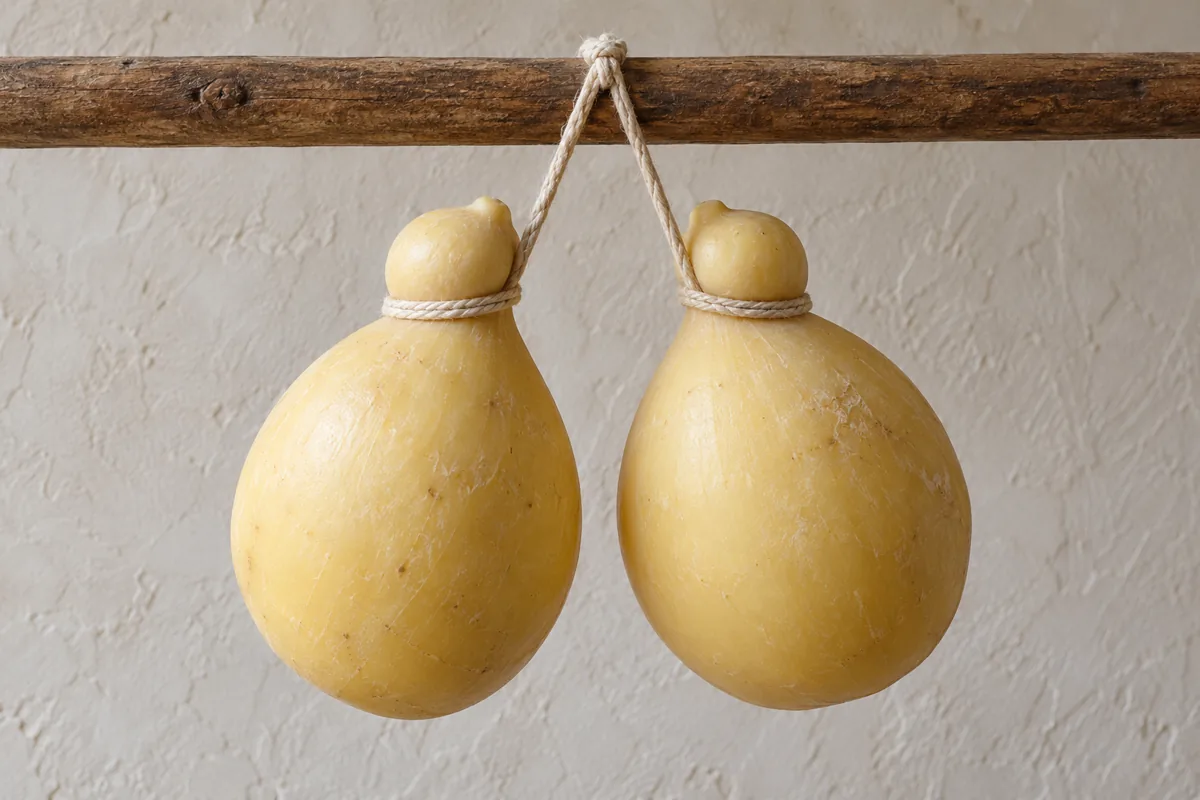
Outside, the piece is flask-shaped or pear-shaped with a small head, which ONAF's Basilicata record says is tied with raffia. The skin is smooth and fairly thin, milk-white at first and turning straw-yellow as it matures.
On a cut face, the shell paste is free of eyes, the small holes of other cheeses, in both ONAF records, and the butter centre is yellow in Basilicata's and ivory to yellow in Calabria's.
Are Manteca, Burrino and Butirro the Same Cheese?
They are names for the same style, and the one you see on a piece follows the dairy and the region more than the recipe. ONAF's Calabria record lists butirro, also known as burrino, and its Basilicata record lists manteca, also called burrino.
Guffanti sells a Molise burrino that it also calls manteca and burriello, made by cheesemakers in Molise and Puglia, and burriello is also among manteca's synonyms. Honey and Harp sells it in the US as manteche, the plural form, and says it is sometimes called burrino or butirro.
| Source | Name used | Shape and weight | Rest before sale |
|---|---|---|---|
| ONAF, Basilicata record | Manteca, also burrino | Flask or pear shape, 10 to 12 cm tall, 0.4 to 0.5 kg | 10 days listed, as a fresh product for immediate eating |
| ONAF, Calabria record | Butirro, also burrino | Pear shape with a three-pointed head, 4 to 5 cm wide, 10 to 25 cm long, 200 to 300 g | 7 days in cool rooms |
| Caseificio Di Nucci | Manteca | About 200 g per piece, sold singly or as two; the shop options say about 250 g per piece | 3 to 6 days |
| Cose del Posto, Petruzzi | Burrino o manteca | 300 g, scamorza casing | Not stated; butter takes on aromas during maturation |
Weight separates the records faster than the name does. Calabria's butirro is the smallest at 200 to 300 g, while Basilicata's manteca runs up to 0.5 kg.
Guffanti's specification sheet for its Molise burrino lists a weight of 5 kg and a diameter of 10 to 12 cm, a weight no other record comes near. So before you order, go by the seller's stated piece weight, the only figure that settles what you will receive.
The filling can change too: Basilicata also has a second type of burrino filled with aged soppressata, a southern Italian salami, instead of butter.
A Spanish recipe uses the word differently. ONAF and Guffanti both gloss manteca as the Spanish word for butter, so a recipe in Spanish that asks for manteca is not asking for this cheese.
Why Was Butter Sealed Inside Cheese?
Closed in a bag of stretched curd, away from air, the butter stayed unaltered for many weeks and even gained flavour, ONAF's Basilicata record says. Guffanti gives the same preservation effect as "several weeks" and calls the method an ancient shepherds' technique in inland southern Italy.
Honey and Harp, a US retailer, gives a supply reason as well. It says butter was not often made in Basilicata and Calabria because the regions used so much olive oil, so dairies needed a way to store the little they did make before refrigeration.
In Calabria, butirro was also used as a trade good during transhumance, the seasonal move of herds between pastures.
The story is less firm than it sounds. ONAF's Basilicata record calls the origins uncertain and says the preservation use is what is told, not what is documented.
What the records can back is recent. Basilicata's cites local testimony that the cheese has been made for at least 25 years, and Calabria's cites documents from one dairy in Celico showing the product is more than 25 years old.
ONAF's Basilicata record offers one explanation for the name. The Latin word mantica meant the sack the Arabs used to carry butter, and the Spanish word manteca, which the record glosses as butter, is the other explanation it cites.
Which Cows and Pastures Produce Manteca Milk?
The records tie the milk to pasture and to a local breed. ONAF's Basilicata record specifies milk from Podolica cows, their crosses or at least cows at pasture, grazing natural pasture in the hills and mountains of the provinces of Potenza and Matera, the same area that makes Caciocavallo Podolico.
Calabria's record is looser on breed and adds feed, allowing cows of various breeds on extensive farm or free-range pasture topped up with feed. It calls the butirro of the Sila plateau, the Pollino area and the Sibari plain particularly prized for pastures rich in fragrant plants and for Podolica milk.
Petruzzi's milk comes from a different supply: small local producers less than 1 km from the dairy, each with at most 3 cows fed alfalfa, mixed-meadow hay and corn, with concentrated feed limited to winter.
If the breed or the pasture matters to you, ask the seller: Di Nucci's product page gives the milk's origin as Italy, and Petruzzi's label lists raw cow's milk.
How Is Manteca Made and Sealed?
In the Basilicata method that ONAF's record sets out, whole raw cow's milk is set with calf or kid rennet paste at 35 to 38 °C, and the curd firms in 30 to 40 minutes.
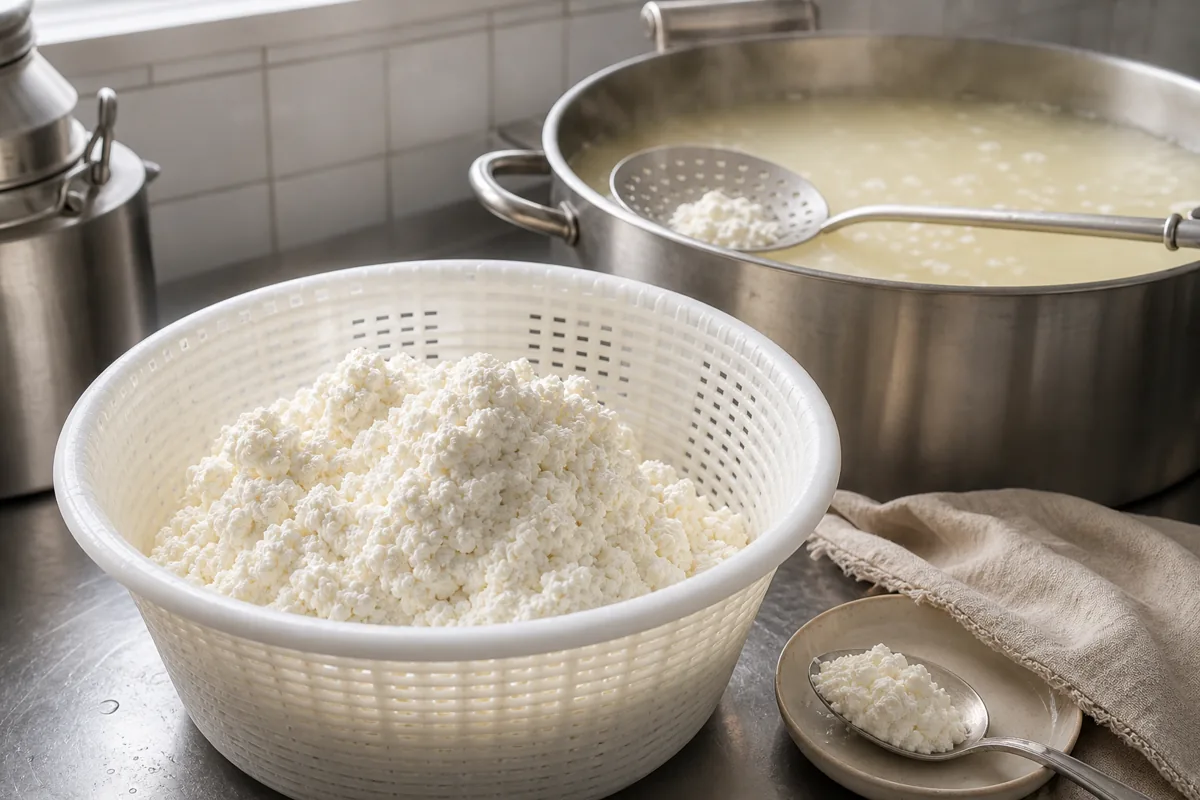
The curd is broken to rice-grain size and rested for 15 to 20 minutes, then part of the whey, which has turned rich in fat, is drawn off for the ricotta that later becomes the butter.
The curd is broken again and dosed with whey starter kept from the previous day's make, and the whey is reheated to 65 to 70 °C. It ripens for 4 to 5 hours in the same vat, then rests on a wooden table until the next day so it turns fibrous enough to stretch.
Calabria's record gives the souring step as 4 to 10 hours of lactic fermentation, held at temperature with boiling water or whey added to curd broken to walnut size.
The ripened curd is cut up, covered with boiling water, and worked with a wooden stick into one strip. A piece is pulled by hand into a pouch, the butter goes in, and the pouch is closed in water at 90 °C.
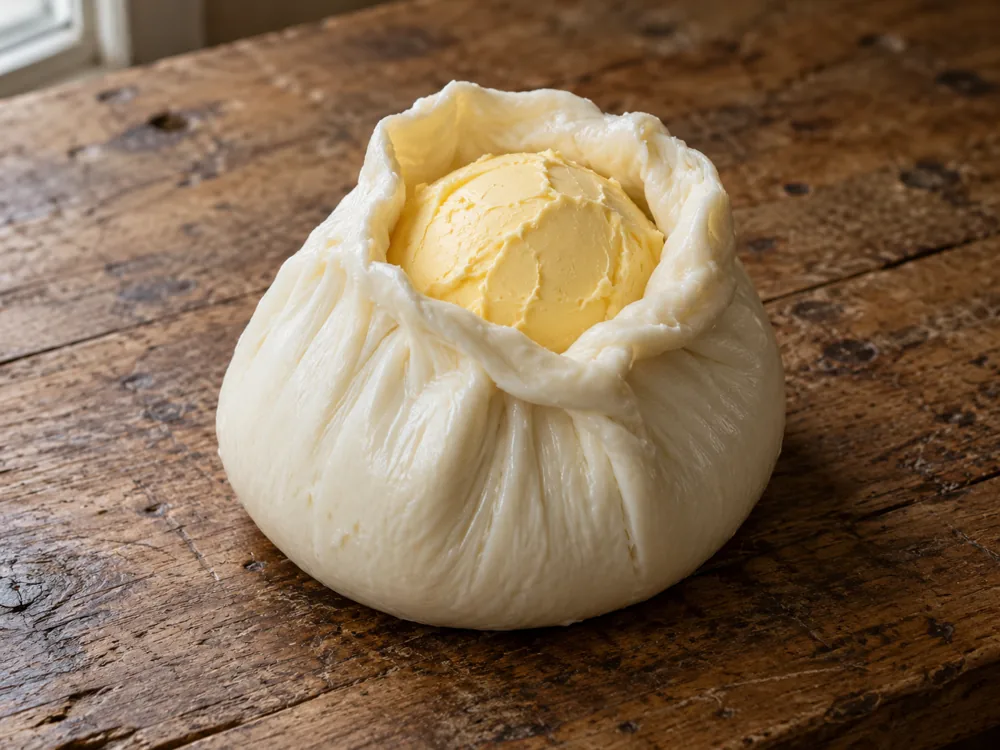
The butter goes in already firm: the small butter balls are left to set in a refrigerator or in iced water until the curd is ready to cover them.
Sealing uses different numbers in Calabria. The curd is stretched in water at 80 °C into thin sheets, a butter ball washed repeatedly to remove acidity is closed inside, and the pieces go straight into very cold water for 12 hours.
Salt comes after the sealing. Basilicata's pieces are cooled in cold water to hold their shape and then sit in brine for 4 to 5 hours, Guffanti's Molise burrino is brine-salted, and the core of Honey and Harp's manteche is a block of unsalted butter.
Basilicata's pieces are tied with raffia long enough to join two, and the record says they are kept in pairs astride a pole, as caciocavallo is.
Rest times are short: Di Nucci rests its manteca 3 to 6 days, and Calabria's record has butirro mature for 7 days in cool rooms.
If you are vegetarian, ask the dairy which rennet it used. Both ONAF records name calf or kid rennet, and Cheese.com marks the Casa Madaio manteca it describes as not vegetarian.
What Is the Soppressata-Filled Manteca?
It is the Basilicata burrino with a length of aged soppressata sealed inside in place of the butter, and a cut shows the difference at once: a dark red-brown centre where the butter version is yellow.
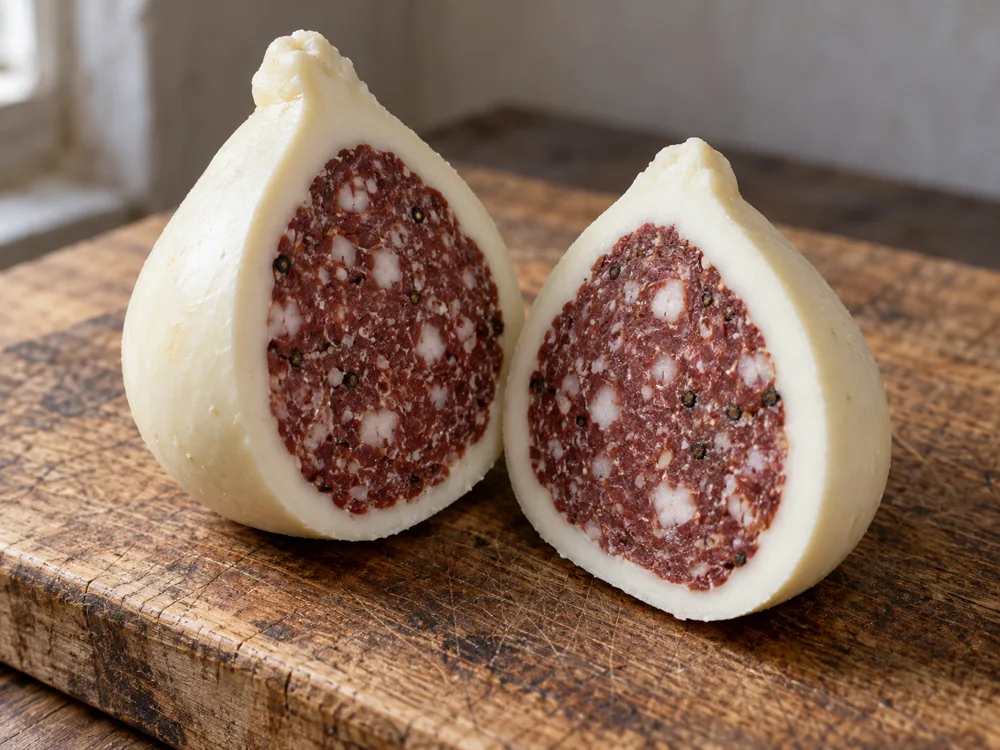
The salami is first-cut pork, fillet and thigh muscle from naturally fed pigs, cut by hand with a knife point into an even mix with cubes of lard, salt and whole black pepper.
In ONAF's Basilicata record, that mix is stuffed into a large pork casing, tied, pressed for about 24 hours and aged four to five months before a length of it goes into the cheese, and the salami may be lightly smoked.
Before sealing, the salami is coated with butter, which helps it bond with the stretched-curd shell.
The cured filling also eats differently from butter. The record lists it as medium-hard, tough and granular with little elasticity, where the butter centre is soft, plastic and fatty.
A name like burrino or manteca will not tell you which filling you are buying, and the soppressata version is a pork product as well as a cheese, so the label or the seller has to settle it.
What Does Manteca Taste Like?
Manteca's taste is milky and buttery in the words of one maker, Di Nucci, and ONAF's Basilicata tasting record rates the butter-filled version sweet and salty but not sour, with aromas of cooked milk and butter at low to medium intensity.
ONAF's Calabria record is plainer: sweet only, with a low-intensity aroma of fresh milk and fresh butter.
Cheese.com describes a different aroma, floral with hints of ripe fruit, for the Casa Madaio manteca it lists.
In a slice that carries both layers, you get two textures. The shell is elastic and slightly fibrous and dissolves little, so it chews, while the butter centre is soft and fatty.
The flavour also travels between layers. Guffanti says the buttery taste passes into the cheese that covers it, while Cose del Posto and Honey and Harp describe the butter taking on aromas and the two flavours pulling from each other over time.
A soppressata filling changes the whole profile. ONAF lists spicy aromas at medium-high intensity and a moderately hot bite for that version.
How Should You Cut and Serve Manteca?
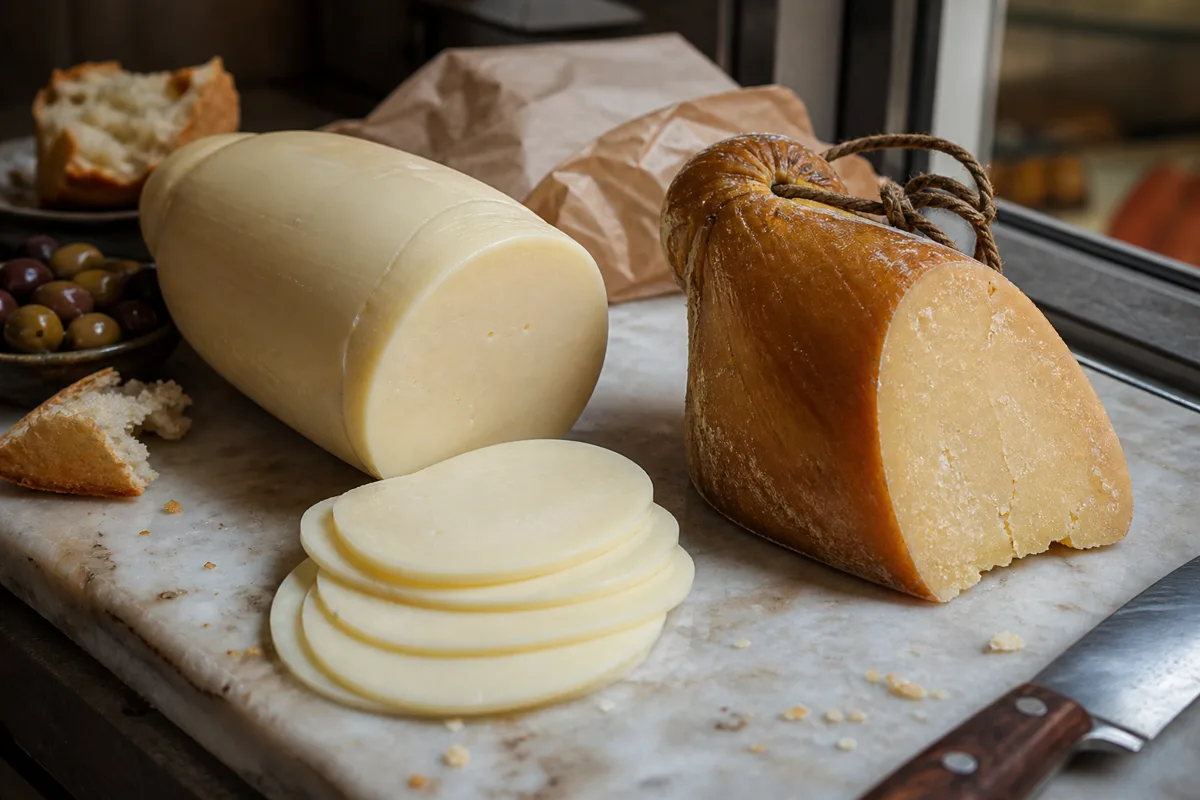
Cut it across the body into round slices, so every slice carries both the shell and the butter. ONAF's Basilicata record gives that cut because the cheese and the butter are meant to be eaten together, and Calabria's record gives the same instruction for butirro.
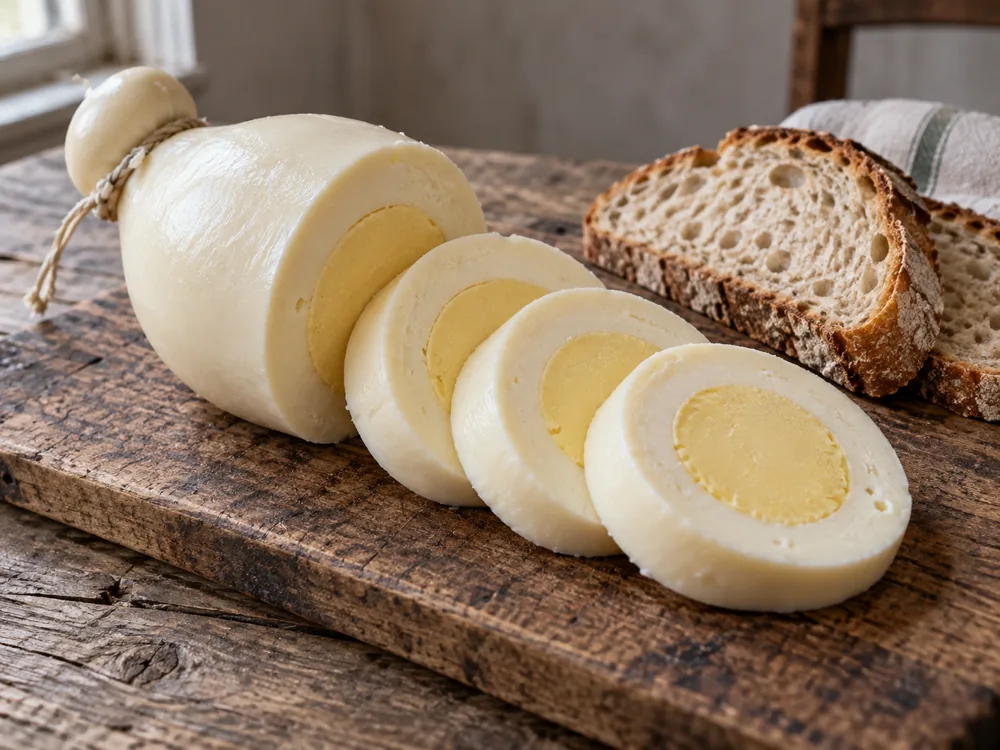
You can also take the butter out and spread it alone: ONAF's Basilicata record says the buttery part by itself goes on warm bread.
What you serve alongside depends on whose advice you follow:
- Guffanti: white wines, light beers, red tomato jam, ciabatta and bruschetta
- ONAF, Basilicata: young red wines, pears and homemade country bread
- ONAF, Calabria: sparkling white or rosé wine, and fedda rossa, a toasted bread
- Honey and Harp: quality bread spread with the butter, topped with the cheese, and optionally chopped olives or cured ham
The wine advice splits: ONAF's Basilicata record names young red wines, while Guffanti and ONAF's Calabria record, both describing butter-filled pieces, point to white wine, light beer, or sparkling white or rosé.
Can You Cook with Manteca?
Di Nucci's product page says its manteca is not to be grilled and recommends it for adding flavour to pasta and rice. Guffanti suggests pasta too, without tomatoes, for its burrino.
Di Nucci's page also splits the job by layer: you put the butter on toast, sandwiches and bruschetta, and you can shred the casing into pasta or risotto.
Why Do Two Manteca Labels Show Different Fat and Calories?
It is a fatty cheese, but the labels disagree on how fatty. Guffanti gives its Molise burrino 60 to 70 percent fat in dry matter, and ONAF classes both manteca and butirro as fatty cheeses.
Those figures measure different things. Fat in dry matter divides fat by the weight of the cheese with its water removed, so it reads higher than a per-100 g label for the same piece.
| Nutrient | Caseificio Di Nucci | Petruzzi (Cose del Posto) |
|---|---|---|
| Energy | 708 kcal (2,965 kJ) | 281 kcal (1,199 kJ) |
| Total fat | 75 g | 20.2 g |
| Saturated fat | 45.1 g | 13.6 g |
| Protein | 7.5 g | 24.8 g |
| Carbohydrates | 0.8 g | 0.1 g |
| Sodium or salt | 0.1 g sodium | 1.1 g salt |
Di Nucci's label shows 75 g of fat per 100 g and Petruzzi's shows 20.2 g, about 3.7 times less, with energy at 708 kcal against 281 kcal. A fat or calorie figure from one dairy cannot stand in for another dairy's piece, so go by the nutrition panel on the piece you buy.
The protein row suggests why. Petruzzi's label shows 24.8 g against Di Nucci's 7.5 g, a pattern that fits more shell paste and less butter per 100 g.
Where Can You Buy Manteca Cheese?
You will find it mostly at southern Italian dairies and importers. Di Nucci sells its manteca through its own shop, and on 22 October 2026 Honey and Harp listed manteche in the US as in stock at 20 dollars for a piece with a half-pound block of unsalted butter at its core.
When you can buy it depends on the dairy. Di Nucci lists availability from September to June, while ONAF's Basilicata and Calabria records list year-round production, with spring best in Basilicata and May to September best in Calabria, when the cows are on pasture.
Honey and Harp's half-pound block is about 227 g of butter alone, already close to Di Nucci's whole 200 to 250 g piece, so the US piece must be larger.
Butter share is the other figure to ask for: Di Nucci states 60 percent, so ask other dairies and shops for theirs before you compare pieces.
The label carries three facts the name does not: the filling, the milk treatment and the rennet. Italian dairies sell the same style as manteca, burrino or butirro, so none of the three can be read off the name.
A name does not show how much butter a piece holds. Compare listings by piece weight and stated butter share, and read the filling, milk treatment and rennet off the label.
How Long Does Manteca Keep?
Di Nucci gives the fresh piece 30 days and the vacuum-packed piece 3 months from the packing date. That is the dairy's own dating, not food-safety guidance, and its serving note adds that the piece can be kept refrigerated or frozen.
ONAF's Basilicata record calls the piece fresh and made for immediate consumption, while Di Nucci allows 30 days, so the record describes how the cheese is meant to be eaten and the date describes how long the dairy backs the packed piece.
At home, CDC says to keep your refrigerator at 40°F (4 °C) or below, and it adds two more limits: perishable food, dairy included, goes back in the refrigerator within 2 hours (1 hour above 90°F), and the freezer stays at 0°F (-18 °C) or below.
For how long a cut piece or a frozen piece keeps, ask the dairy or the seller. Cose del Posto says to keep it refrigerated.
What Can You Use Instead of Manteca?
Nothing reproduces the sealed core, because part of the flavour comes from the rest in the dairy, when butter and shell exchange flavour.
If you cannot find one, the closest you can get is to buy the two layers separately: a few slices of any shell cheese named above beside unsalted butter on bread keep both textures and lose the aroma exchange.
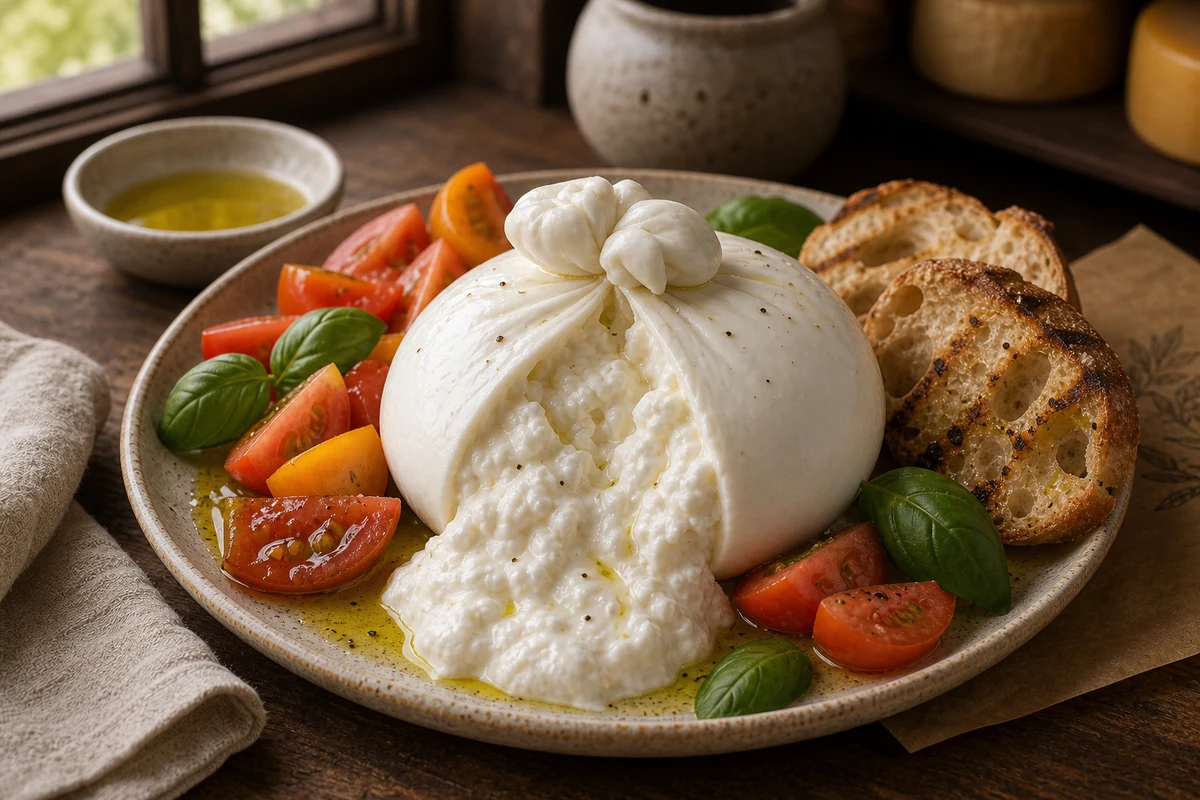
Honey and Harp compares manteche to burrata and says it tastes tangier. The comparison is about the filled-cheese idea, since the two cheeses are made differently.
Is Manteca Safe During Pregnancy?
If you are pregnant, the answer for a butter-filled piece depends on the milk and the butter.
Di Nucci, Cose del Posto for Petruzzi, Guffanti and both ONAF records list raw cow's milk. Only Cheese.com lists pasteurized milk, for a Casa Madaio manteca whose entry names Basilicata as the region but describes a farm in Cilento, Campania.
The NHS lists pasteurised soft cheeses, including mozzarella and burrata, as safe to eat, and any pasteurised butter as safe. It says to avoid unpasteurised milk, cream, yoghurt and butter.
CDC puts unpasteurized milk and dairy products made from it in its riskier column, and names soft cheese made from raw milk as riskier. It adds that pregnant women are 10 times more likely to get a Listeria infection.
Because nearly every record lists raw milk, the unpasteurised-dairy lines from both agencies, and the NHS unpasteurised-butter line, are the ones to compare with your manteca's label, which shows whether the milk was pasteurised.
A soppressata-filled piece also carries a cured pork salami: the NHS says cold cured meats such as salami should be cooked until steaming hot before eating, and CDC lists fermented or dry sausages among its riskier unheated foods, so the milk and butter are not the only things to check.
The butter core is a second thing to check: Di Nucci's ingredient list shows raw cow's milk and butter, so ask the dairy how the butter was treated.