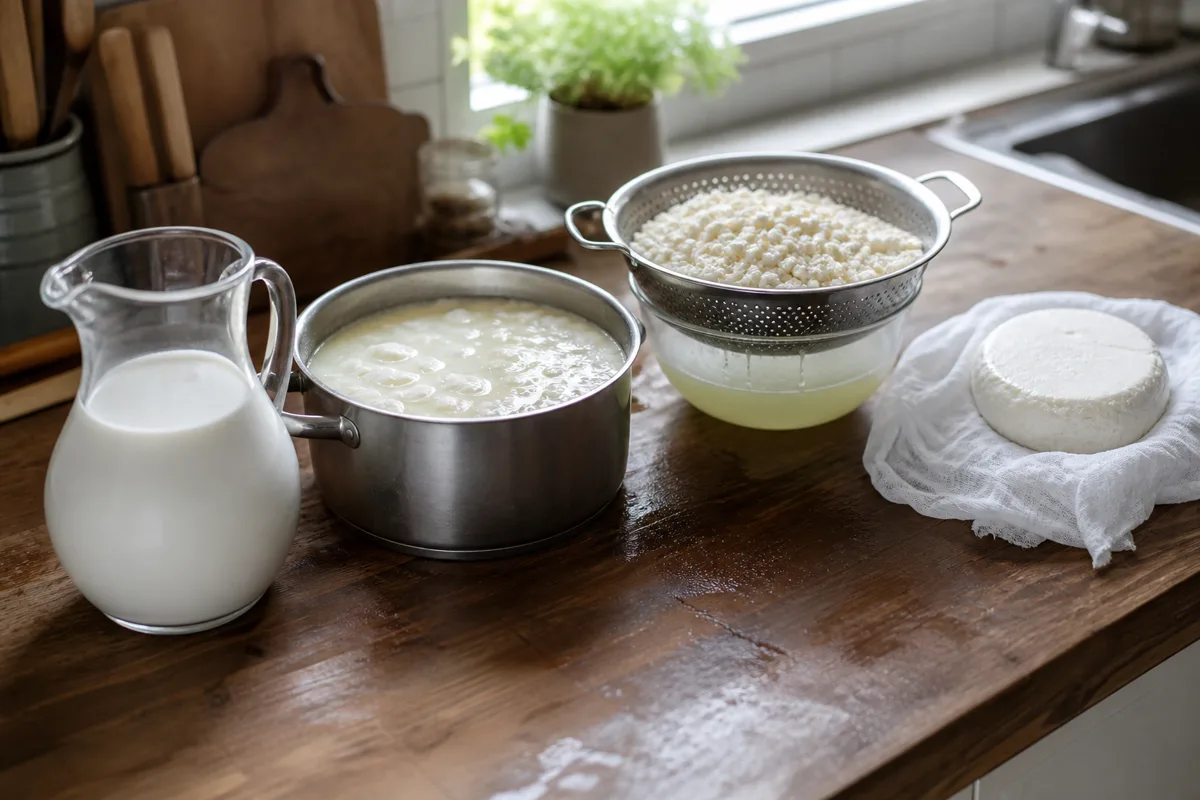
A fresh acid-set cheese and a ripened wheel do not follow an identical production schedule. Understanding where their methods differ explains more than memorising a fixed list of steps.
In This Article
How does milk become curd?
Milk composition and treatment affect the starting material. Penn State Extension notes that changing the animal species in a recipe does not necessarily produce the same cheese, and that the stronger heat treatment used for UHT milk can interfere with curd formation.
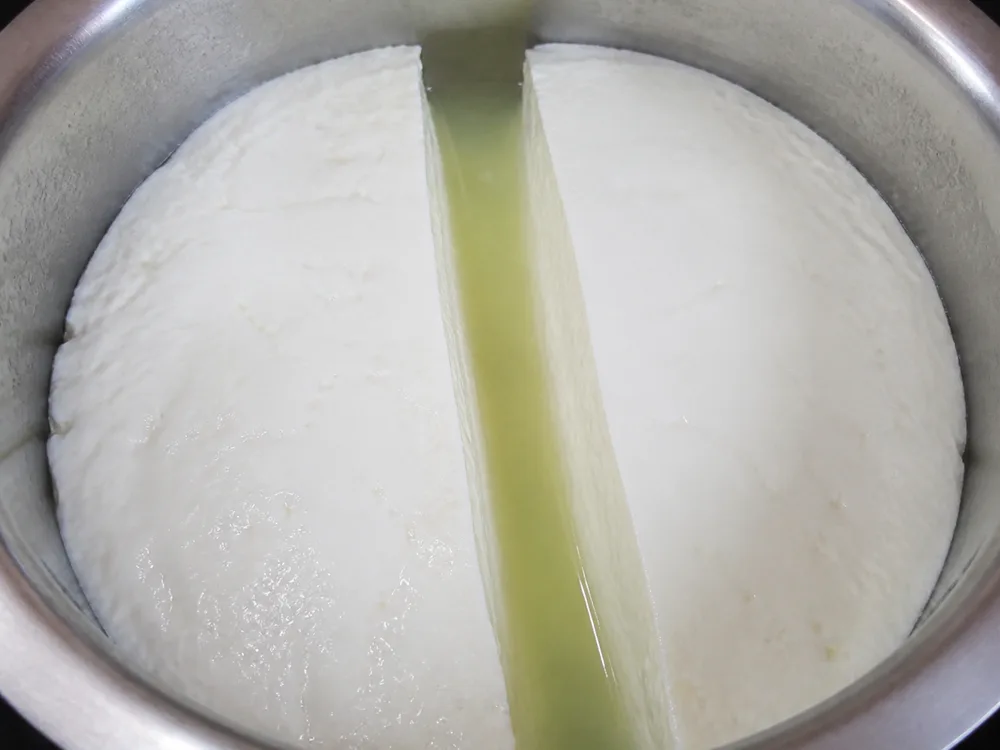
In many cheeses, starter bacteria convert lactose into lactic acid. Rennet then helps form a gel by acting on milk proteins, while other methods use added acid or acid produced by cultures to cause coagulation.
Acid and rennet are not necessarily alternatives in a recipe. A maker can use cultures to develop acidity and rennet to set the curd, with each contributing to the eventual texture.
Rennet's source matters for vegetarian choices. Animal rennet, microbial coagulants, fermentation-produced chymosin and plant coagulants are distinct options, so the word rennet alone does not settle the question.
For example, New England Cheesemaking Supply describes its liquid vegetable rennet as a microbial product but sells thistle rennet made from flowers separately. The supplier's terminology is a reason to check the specific product rather than assume every vegetarian coagulant comes from a plant.
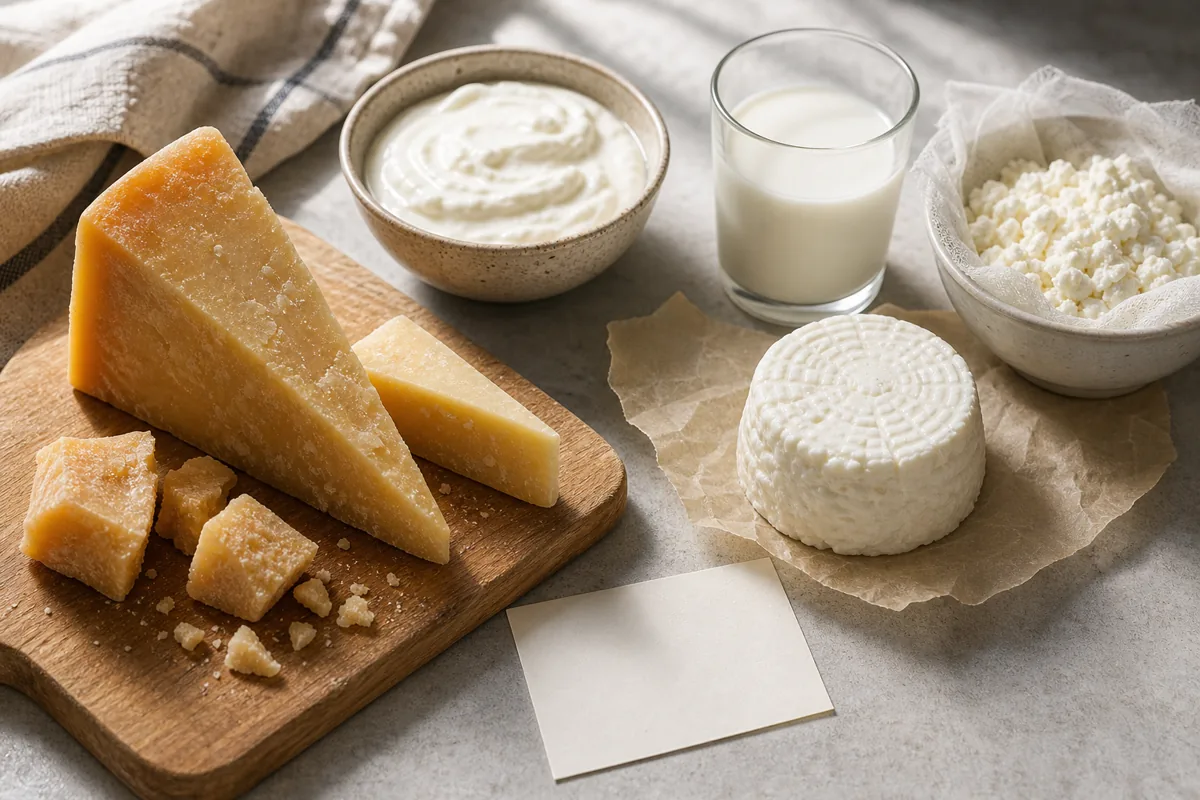
Whey cheeses add another distinction. Traditional ricotta recovers proteins from whey left after other cheesemaking, while milk-based products are also sold as ricotta.
Why Does Draining Control Moisture in Cheese?
Cutting a set curd creates surfaces through which whey can leave.
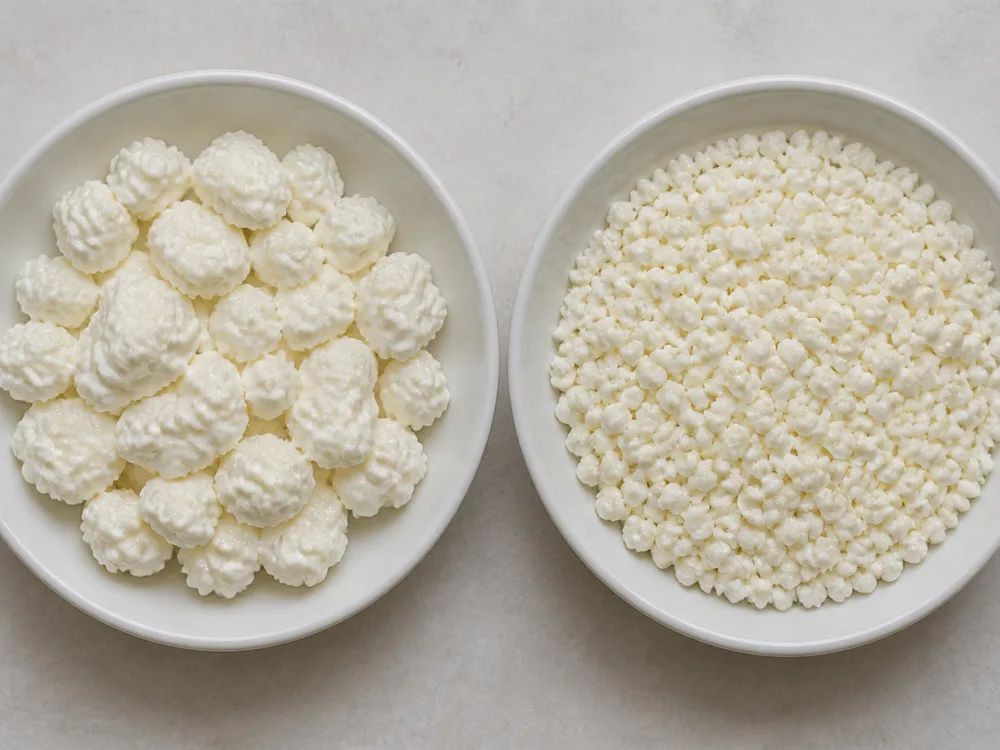
Smaller pieces generally lose more moisture, while stirring, heating and draining time also affect the result.
That is why curd size is useful to understand, but cannot predict the finished cheese on its own. Milk composition, acidity and later treatment still matter.
After draining, some curds are pressed in moulds, while others drain under their own weight.
Salting can happen in the curd or later in brine, depending on the cheese.
The chosen process determines the order and intensity of those operations. A general explanation cannot supply a pressing weight or salting time that works for every cheese.
Is Stretching Curd the Same as Cooking It?
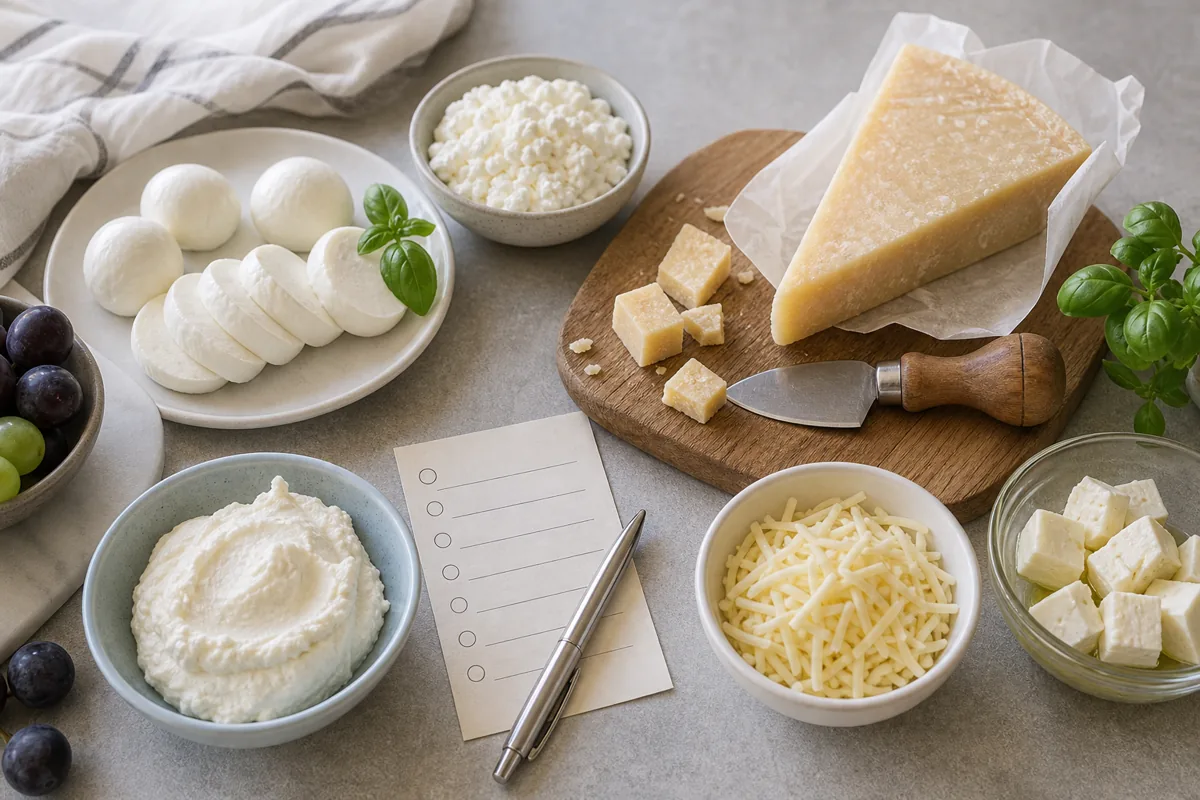
Mozzarella belongs to the stretched-curd, or pasta filata, family. Curds with suitable acidity are heated and worked until they can be stretched and shaped.
The temperature of the surrounding water is not the same as the temperature reached inside the curd. A published study of stretching treatments describes water at 90-95°C and curd reaching 58-65°C in its account of buffalo mozzarella production.
Those figures describe a particular process, not universal instructions or a home pasteurisation guarantee. The study found that microbial reductions varied with the heating and handling conditions.
Halloumi's production uses a different treatment. Cyprus's government description has the curd pressed, cooked in whey, salted and folded, rather than stretched into mozzarella-like strands.
Both processes use heat, but that shared feature does not make them the same cheese family.
Halloumi's ability to hold its shape when grilled is also a reminder that heating cheese does not always mean making it flow.
What Separates Fresh Cheese from Ripened Cheese?
Fresh cheese can be ready without a maturation period.
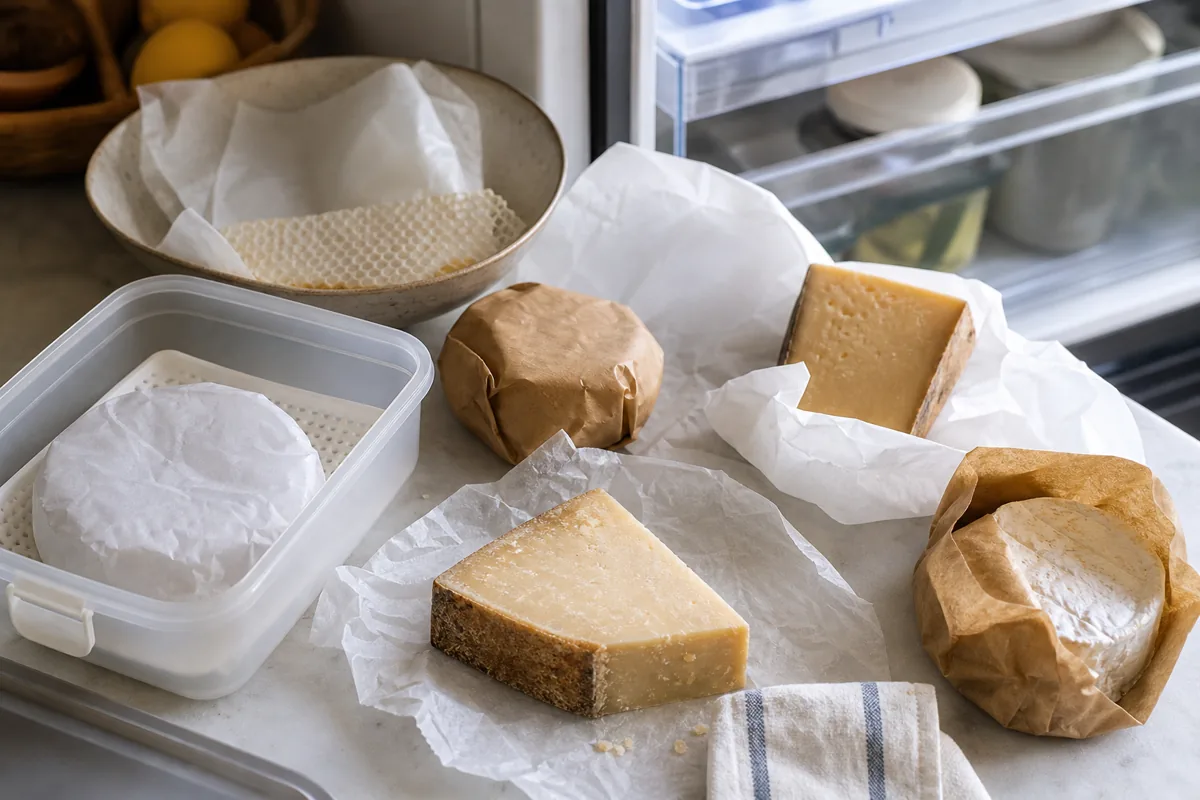
For a ripened cheese, controlled conditions allow microbes and enzymes to continue changing flavour and texture.
The organisms involved can produce visibly different results. White surface mould helps create Brie's bloomy rind, blue mould develops within blue cheeses, and gas produced by particular bacteria forms the eyes in Swiss-style cheese.
Ripening therefore involves more than leaving a wheel on a shelf. Its conditions are part of the production method, rather than something a shopper should try to recreate by storing cheese warm.
Can a Cheese Melt Without Stretching?
A cheese can soften and spread without pulling into long strings. Wisconsin's Center for Dairy Research distinguishes flow during melting from the ability of the protein network to stay connected when stretched.
As intact casein proteins break down, melting can increase while stretch decreases. This directly contradicts the idea that ageing always makes cheese less able to melt.
Moisture, acidity, calcium and previous heat treatment also influence that network.
Age alone cannot tell you whether two different cheeses will behave alike in a sauce.
For practical cooking choices, see choosing cheese for melting and stretching. A cheese that holds its shape can be useful for grilling even though it would not replace a flowing cheese in that recipe.
What Else Do You Need Before Making Cheese at Home?
A production overview is not a complete recipe. A home batch needs cheese-specific ingredients, quantities, temperatures, timing and handling instructions.
Penn State recommends starting with simpler recipes and pasteurised milk for home cheesemaking, alongside properly cleaned and sanitised equipment.
It also distinguishes cleaning away soil from sanitising a clean surface.
Follow the chosen recipe and ingredient supplier's directions throughout the batch. A photograph of a curd or a temperature borrowed from a different cheese cannot replace those instructions.