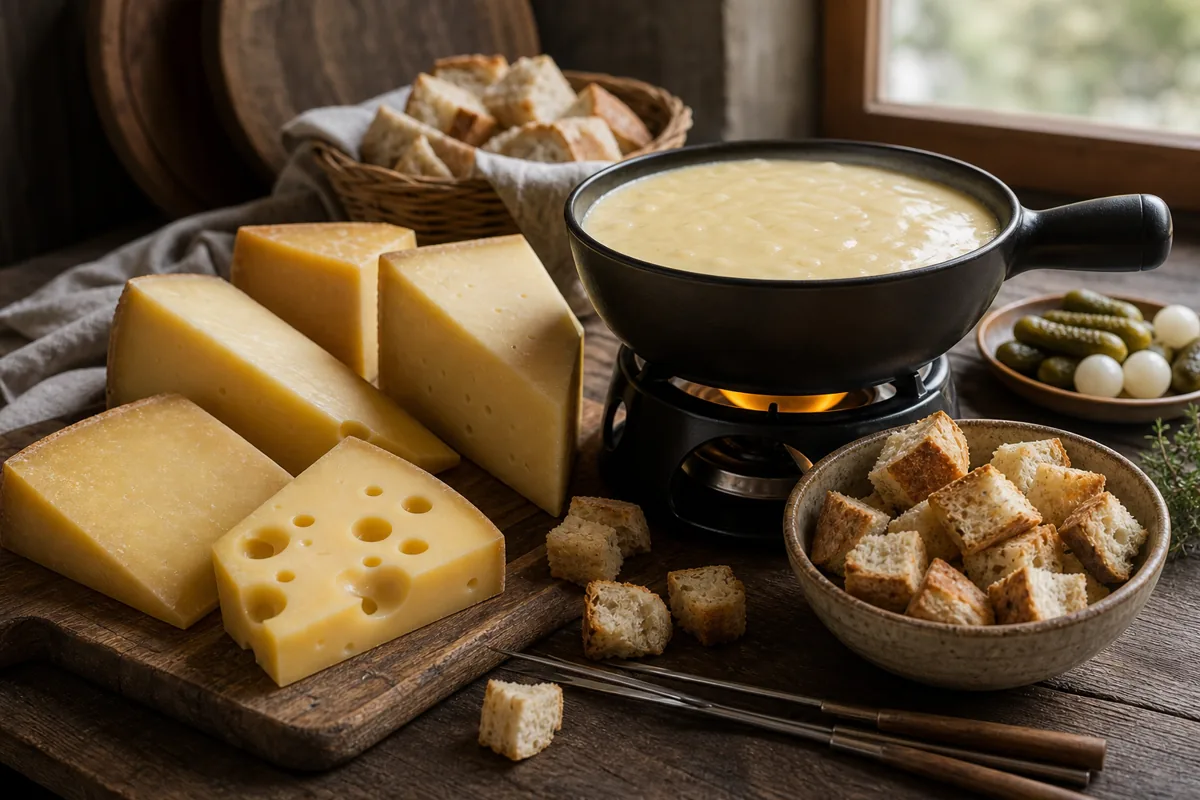
Gruyere is the safest single cheese for fondue because it melts smoothly, tastes nutty without getting lost in wine, and stays stable longer than most easy grocery alternatives. If you want the classic Swiss result, though, the better answer is not one cheese at all. It is a blend built around Gruyere and Vacherin Fribourgeois.
Fondue is one of the strictest jobs for cheese. A cheese can work on pizza or grilled cheese and still fail once it sits in hot wine for twenty minutes.
Fondue is not only about flavor. It is about how the pot behaves from the first dipped cube to the last one.
The right cheese has to melt, bind with wine, stay glossy, and keep enough flavor after bread and potatoes enter the pot.
We would choose the cheese in this order: anchor first, support second, accent third. Once you shop that way, fondue gets easier fast.
The short answer is Gruyere if you want one reliable cheese. The better answer is a blend with Gruyere doing the structural work and a creamier support cheese making the pot softer and more forgiving.
In This Article
Is Gruyere the Best Single Fondue Cheese, or Should You Blend?
Gruyere is the best starting point for most home fondue because it gives you the steadiest balance of nutty flavor, smooth melt, and hold time in the pot. It has more savory depth than Emmental, a milder Swiss wheel with eyes, and it behaves more predictably than softer cheeses that can turn slack or bland.
That said, the classic Swiss answer is not pure Gruyere. The benchmark moitie-moitie style pairs nutty Alpine Gruyere with Vacherin Fribourgeois, a creamier Fribourg cheese, so the pot gets both structure and extra creaminess.
Gruyere keeps the blend from feeling floppy. Vacherin keeps it from feeling too tight.
If your shop carries only one proper Alpine fondue cheese, buy Gruyere first. If it carries two, add Vacherin Fribourgeois before you start chasing pricier show-off wedges.
That two-cheese rule matters because fondue rarely rewards a shopping basket full of equal stars. One cheese should lead.
The others should have a reason to be there.
For most home cooks, the safest starting ratio is two parts Gruyere to one part support cheese. Move toward equal parts only when the support cheese is built for fondue, such as Vacherin Fribourgeois.
Keep stronger accent cheeses smaller so they do not dominate the pot.
This order is not judging cheese-shop prestige. It is judging how calmly each cheese behaves once wine, heat, starch, and time all start pressing on the pot.
- Best single-cheese pot: Gruyere
- Best traditional blend: Gruyere plus Vacherin Fribourgeois
- Best easy grocery blend: Gruyere plus Emmental
- Best stronger accent: a small share of herbal, washed-rind Appenzeller or younger Comte from the Jura mountains
The ranking looks different from a normal melting-cheese list because fondue needs long pot stability, not just a nice first melt. That extra demand is why a flashy cheese does not automatically become a great fondue cheese.
| Fondue goal | Best cheese move | What it prevents |
|---|---|---|
| Safest first pot | Mostly Gruyere, grated fine | Flat flavor and weak structure |
| Classic Swiss texture | Gruyere plus Vacherin Fribourgeois | A pot that feels too tight or heavy |
| Budget family pot | Gruyere plus Emmental | Overly sharp or expensive blend |
| Stronger mountain flavor | Gruyere with a small Appenzeller share | Aromatic cheese taking over the whole pot |
How Do Age and Moisture Decide Whether a Cheese Works for Fondue?
Most fondue failures start before the garlic rub or the wine even matters. The cheese is either too dry, too wet, or too weak for the job.
The sweet spot is a semi-firm Alpine cheese with enough age to taste interesting and enough moisture to still melt cleanly. That usually means younger or middle-aged wheels, not the oldest trophy wedge in the counter.
| Attribute | Fondue-Friendly Cheese | Fondue-Trouble Cheese |
|---|---|---|
| Age | Usually moderate, often 6-12 months for easy melt | Very old and dry, or very fresh and wet |
| Texture in pot | Smooth and elastic | Stringy, oily, chalky, or watery |
| Flavor under wine | Still distinct after wine and starch | Either disappears or turns harsh |
| Best role | Anchor or support in a blend | Accent only, or avoid completely |
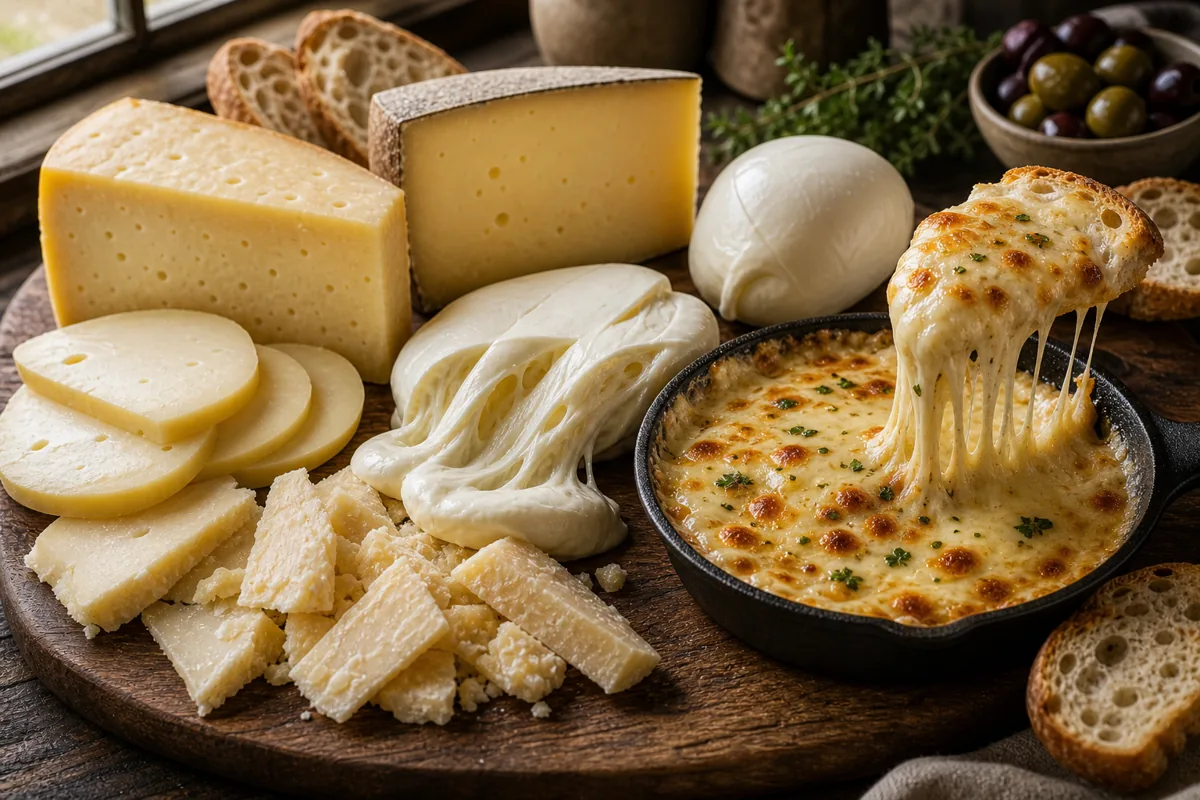
| Examples | Gruyere, Vacherin Fribourgeois, younger Comte | Fresh mozzarella, feta, very old Parmesan-style wedges |
- Moderate age wins: old enough to taste nutty, not so old that the paste goes dry and granular
- Cooked-curd Alpine styles help: they usually stay smoother in a wine-based pot
- Support cheese matters: one creamier helper often does more for texture than a third prestige wedge
- Wine does not rescue bad cheese: it can help emulsify, but it cannot fix the wrong base
If you already know why Gruyere and Emmental behave differently, this is the same logic in a wider frame. Flavor, moisture, and hold time all count more than name recognition.
Pre-shredded cheese works against that balance because the anti-caking starch is not the same as a measured fondue starch step. It may look convenient, but fresh grating gives you better control over how the cheese enters the wine and how quickly it melts.
What Blend Ratio Fits Each Fondue Style?
A bread-and-wine fondue for four, a potato-heavy winter pot, and a dinner-party fondue do not need the same blend. Once you stop chasing a single universal recipe, the shopping gets more practical.
What Goes in a Classic Swiss Fondue Pot?
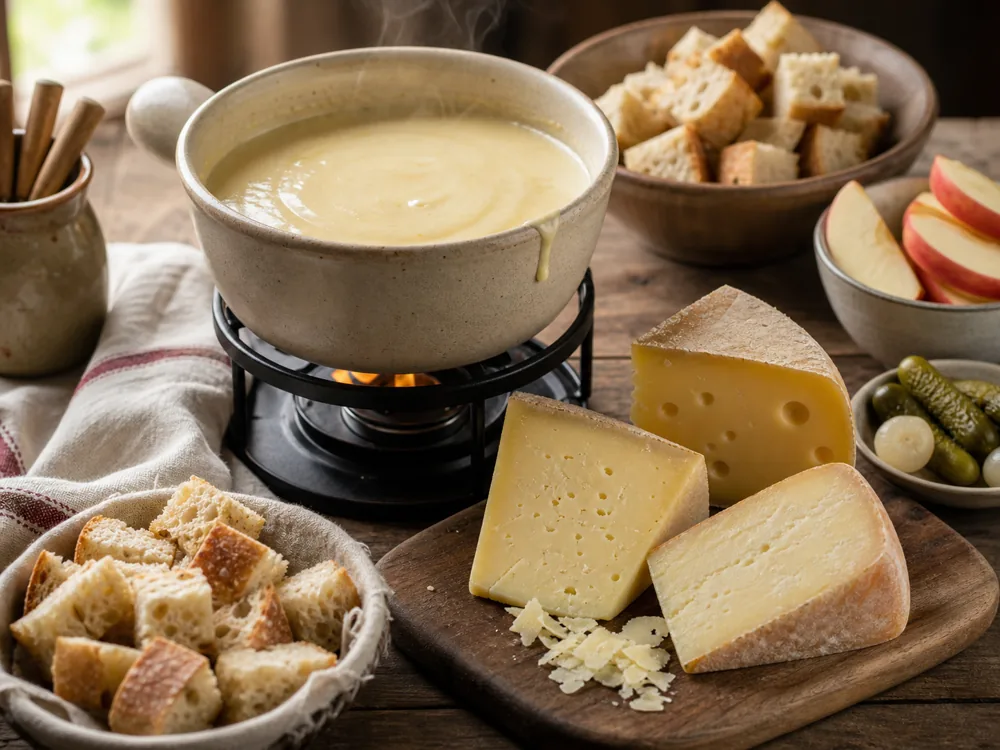
Use equal parts Gruyere and Vacherin Fribourgeois. This is the cleanest traditional answer when you want silkier texture without losing Alpine character.
Cut the cheeses small or grate them before heating. Vacherin is softer, so it can relax quickly once the Gruyere has started to loosen.
If you add both as large chunks, the softer cheese can slacken before the firmer cheese has caught up.
What Is the Easiest Grocery-Store Fondue Blend?
Use about 70% Gruyere and 30% Emmental. You give up some depth, but the pot stays friendly, familiar, and much easier to source on short notice.
This blend is useful when the table includes kids or guests who dislike stronger Alpine funk. Emmental lightens the flavor, while Gruyere keeps the center savory enough that the pot does not taste like warm milk.
What Works for a Dinner-Party Alpine Fondue?
Use Gruyere as the anchor and add a smaller share of younger Comte for a sweeter, rounder finish. This works best when bread is still the main dipper and you want the cheese to taste a little more layered.
Keep Comte younger for this job. Older Comte can taste wonderful, but the drier paste raises the chance of a tighter, less fluid pot.
A younger wedge gives you the nutty-sweet note without making the texture harder to manage.
How Do You Make a Stronger Mountain Fondue?
Keep most of the blend in Gruyere, then use a measured share of Appenzeller for extra aromatic punch. This is better with potatoes, pickles, and cured meat than with delicate bread cubes alone.
When you want more personality, change only 15% to 30% of the blend. Replacing the whole base is how a good fondue pot turns into a troubleshooting project.
The same logic applies to Raclette, the famous table-melt Alpine wheel. It is useful when you want a softer texture, but it usually works better as texture support than as the full identity of the pot.
Can Grating, Starch, and Gentle Heat Save a Fondue Pot?
Cheese choice matters most, but technique decides whether that good cheese becomes a smooth pot. Grating the cheese fine gives it more surface area, so it melts before the wine gets harsh or the bottom catches.
Starch is not filler in fondue. A small amount of cornstarch or flour helps the fat, protein, and wine stay together.
Toss it with the grated cheese before adding it to the pot, then add the cheese gradually instead of dumping in the full bowl at once.
- Start low: Warm the wine gently before cheese goes in, then keep the heat moderate.
- Add in handfuls: Let each addition loosen before adding more cheese.
- Stir steadily: Use a figure-eight motion so the cheese moves through the whole pot.
- Back off after melting: Once smooth, the pot needs holding heat, not boiling heat.
If the pot starts bubbling hard, lower the heat before you blame the cheese. Boiling pushes fondue toward oiliness even when the blend is good.
This is also why the best fondue cheese is not always the best cheese for a quick grilled sandwich. Fondue asks the cheese to stay emulsified for a meal, not just melt for one bite.
How Much Wine, Starch, and Kirsch the Pot Needs
Choosing the cheese is most of the work, and the pot still fails if the liquid ratios are wrong.
Wine runs at roughly one cup for a pound of cheese. Less and the pot turns stiff and stringy.
More and the cheese never comes together into a coating consistency.
The wine has to be dry and acidic, because the acid is doing chemical work rather than adding flavour. Swiss Chasselas is the traditional bottle and a dry Sauvignon Blanc is the easiest substitute.
An oaked or off-dry white will not help the melt.
Starch runs at about one tablespoon of cornstarch per pound of cheese, tossed through the grated cheese rather than stirred into the wine.
Kirsch is traditional and optional, at a tablespoon or two added near the end. It sharpens the finish and lifts the fat, and leaving it out costs the pot nothing structurally.
Rub the pot with a cut garlic clove before any of it goes in. That is the one step every classic recipe keeps and it takes ten seconds.
Which Cheeses Make the Fondue Pot Stringy, Oily, or Flat?
Plenty of cheeses taste good hot and still make poor fondue. The pot punishes the wrong moisture level fast, especially when the cheese has to sit over heat while people keep dipping.
The problem is not that these cheeses are bad. They are simply built for different jobs.
Fresh mozzarella wants a short melt and plenty of moisture control. Feta wants crumbling and salt.
Very old grating cheese wants to season a dish, not become the dish.
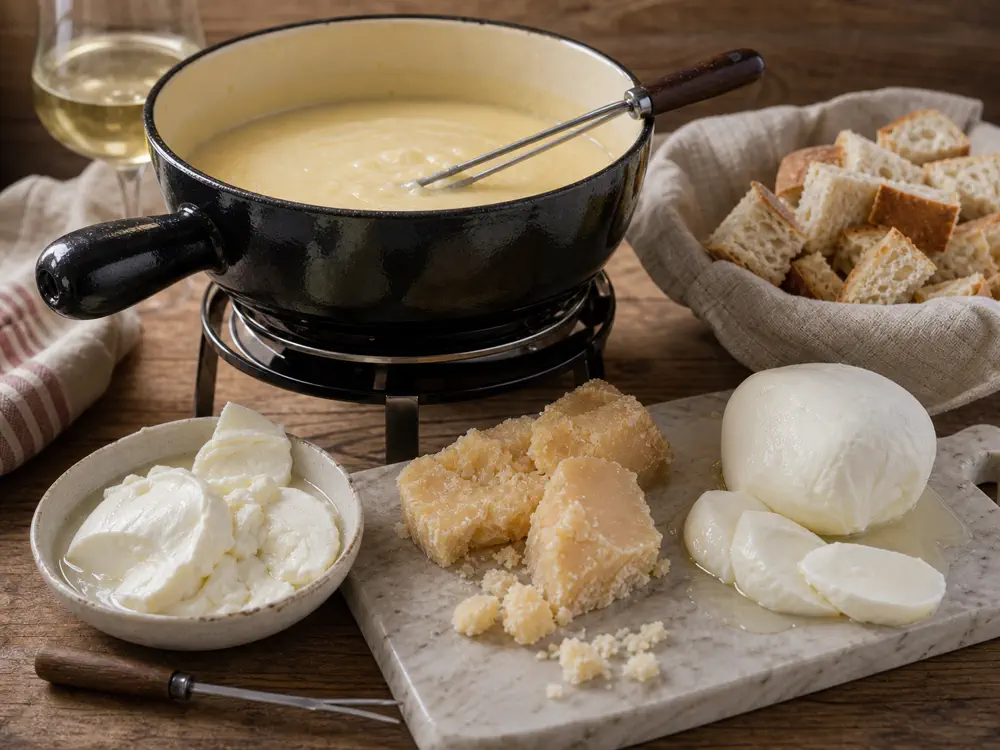
A small accent is different from a base. A little old hard cheese can deepen the flavor.
A little blue cheese can make a dramatic sauce. But once those cheeses become most of the pot, the texture usually turns harder to manage than the flavor is worth.
- Fresh mozzarella: too wet, too bland, and likely to make the pot slack
- Feta or goat cheese: too crumbly or acidic for the main melt job
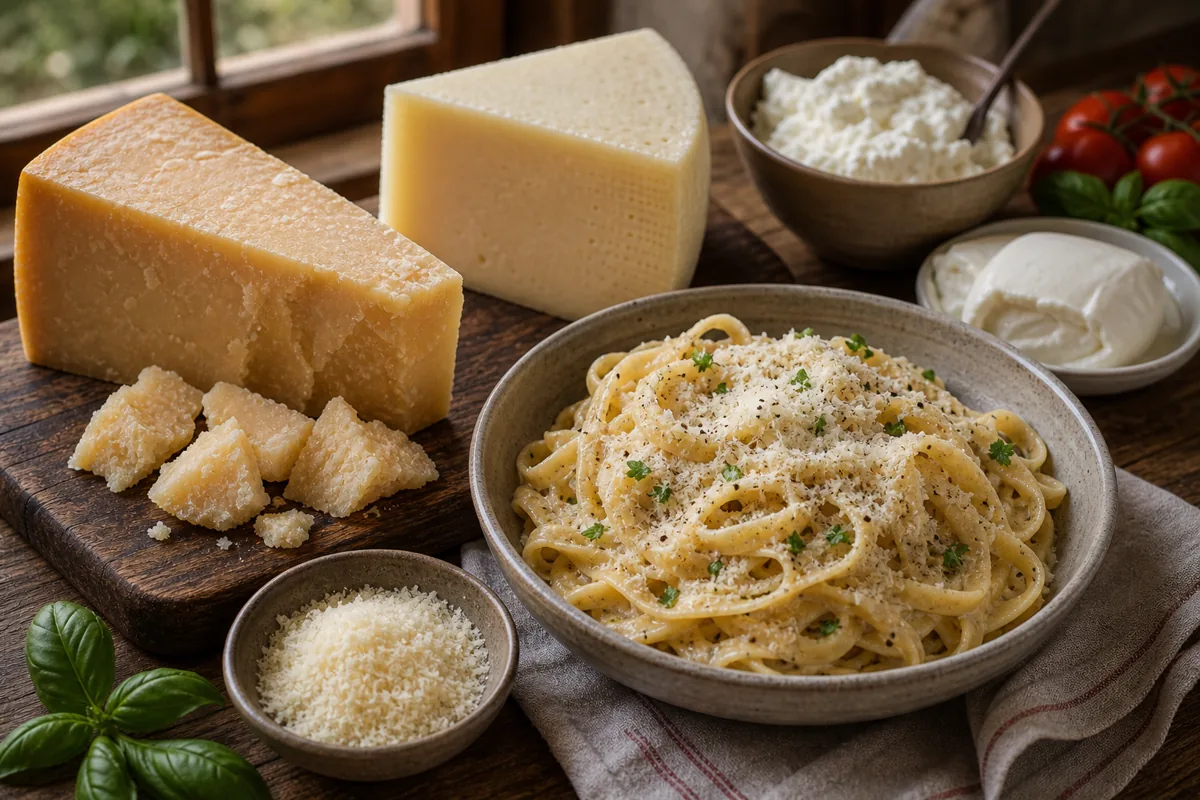
- Very old Parmesan-style cheese: great for depth in tiny amounts, rough as the base
- Sharp cheddar alone: familiar flavor, but the pot splits more easily than people expect
This is the biggest difference between fondue and broad comfort-food melts. The cheese does not just need to melt once.
It needs to stay pleasant while people keep dipping.
If you want to include a risky cheese, keep it below about a quarter of the blend and let Gruyere or another Alpine cheese carry the structure. That gives you the flavor without making every dip a texture gamble.
What Should You Ask the Cheese Counter for Fondue?
The best fondue cheese is not automatically the oldest or most expensive wedge in the case. Fondue rewards the cheese that still wants to melt, not the one that spent the longest time aging in a cave.
Ask the counter for younger or medium-aged Alpine wheels first. Tell them you are making fondue.
That one sentence usually gets you a better wedge than asking for the most premium option by name.
Also ask whether the cheese was cut recently. A freshly cut wedge grates and melts more cleanly than a dry-edged piece that has been sitting too long.
Dry edges are not automatically unsafe, but they can make the pot feel grainier.
If you keep cheese around for cold weather meals, a wedge of Gruyere plus one support cheese covers a lot. It also cross-uses well with proper hard-cheese storage and other Alpine cooking jobs.
Plan about 5 to 7 ounces of cheese per person if fondue is the main dinner, and less if it is one course among several snacks. That estimate helps you avoid the common mistake of stretching a small amount of cheese with too much wine.
Safest home fondue with the fewest moving parts
Use: Gruyere
Gruyere is the best single answer because it balances flavor, melt, and pot stability better than anything else that is easy to find.
Most traditional and best-textured Swiss pot
Use: Gruyere plus Vacherin Fribourgeois
The classic blend gives you the fuller fondue experience: structure from Gruyere and extra silkiness from Vacherin Fribourgeois.
If you want one fast rule, make Gruyere the anchor and let every other cheese justify its role. That is the simplest way to keep fondue from turning into an oily science project.
The broader Swiss Alpine tradition explains why these cooked-curd mountain cheeses still dominate the pot. They were built for this kind of heat, texture, and table use long before home fondue became party food.
SOURCES & REFERENCES
What Else Do People Ask About Fondue Cheese?
These are the questions that come up most once people move from melted-cheese ideas to a real fondue pot.
Gruyere is the best single cheese for fondue because it gives the safest mix of flavor, smooth melt, and hold time. It is easier to source than the classic Swiss support cheeses and still makes a very good pot on its own.
The classic moitie-moitie blend uses equal parts Gruyere and Vacherin Fribourgeois. Gruyere gives the structure.
Vacherin Fribourgeois adds creamier texture and a softer finish.
Yes, but it is better as a support cheese than as the whole base. Emmental keeps the pot mild and approachable, though it can taste thin if you rely on it alone.
Avoid very fresh, very wet, or very dry cheeses as the main base. Fresh mozzarella, feta, and extra-aged hard grating cheeses all make the pot harder to control.
The usual causes are the wrong cheese, too much age in the blend, or too much heat after melting. Start with Gruyere, grate it fine, and keep the pot gently hot instead of boiling.