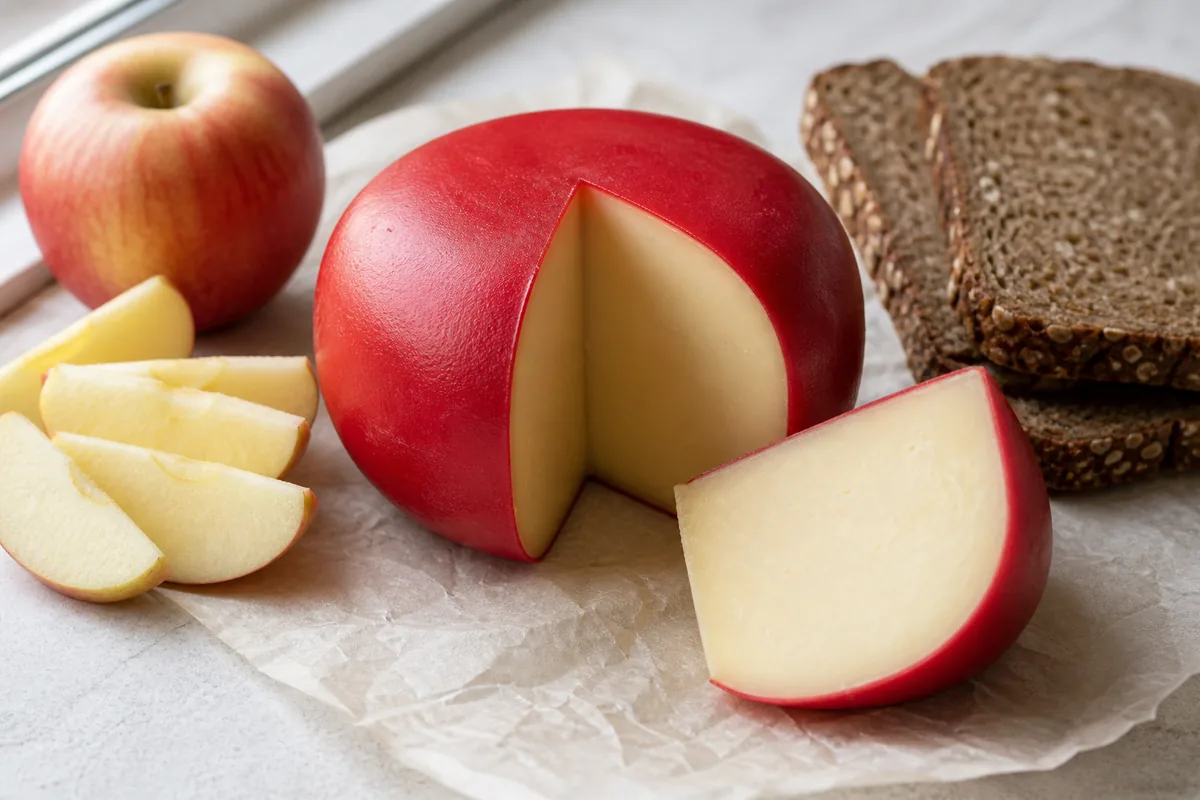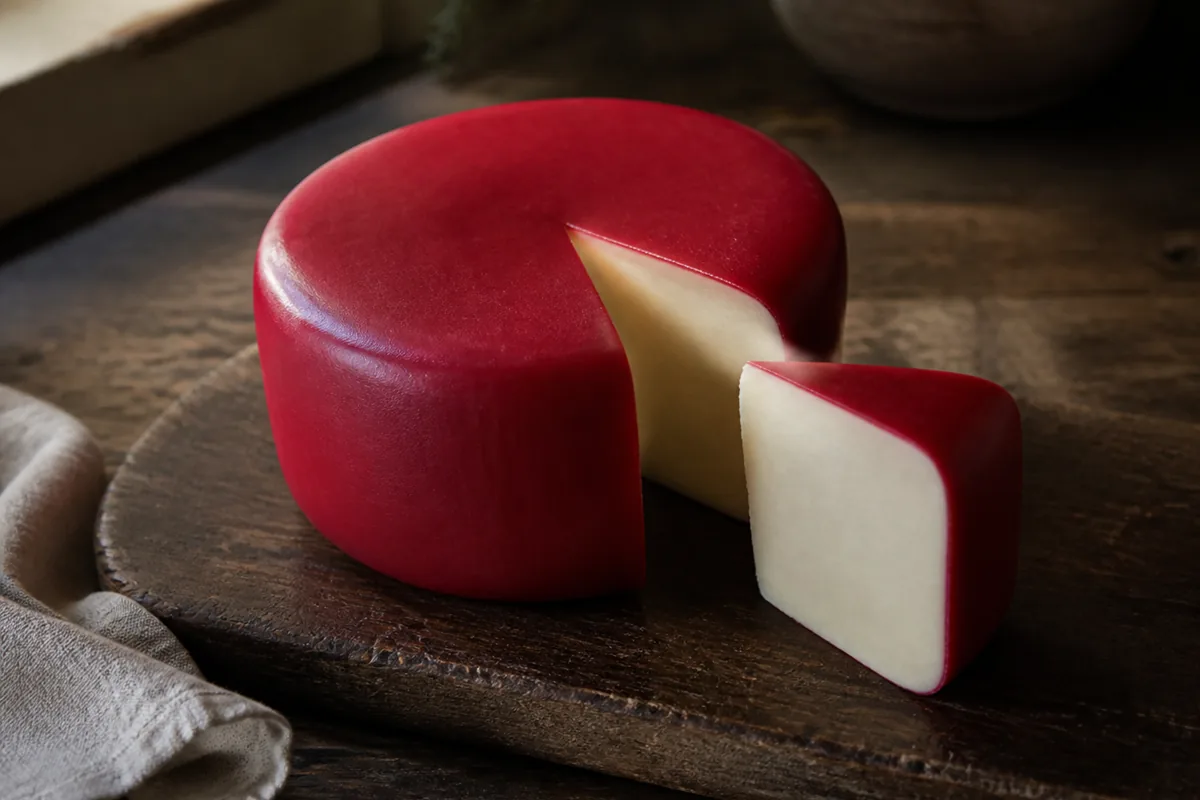
Airedale is Whitestone's New Zealand cheese sold as Aged Airedale: a semi-soft cheese with a sharp, savoury flavour beneath red wax. Whitestone applies the coating when the cheese is five days old, then matures it for at least six months.
The wax is packaging to remove, not an edible rind.
In This Article
What Does Aged Airedale Taste Like?
Expect more bite than the soft texture or bright coating might suggest. Whitestone describes a full-bodied cheese with a sharp acidic finish and a savoury aftertaste that strengthens with age.
Airedale takes its name from the district on the outskirts of Oamaru in North Otago. On the producer's current product listing, “Aged” is part of the name; it is not evidence that a shop's shorter “Airedale” label identifies a separate recipe.
If comparing two wedges, the maker and actual age are more useful than whether the shop has shortened the title. Red wax alone does not identify this cheese: other varieties, including Edam, can carry a red coating too.
Why Is Airedale Waxed at Five Days Old?
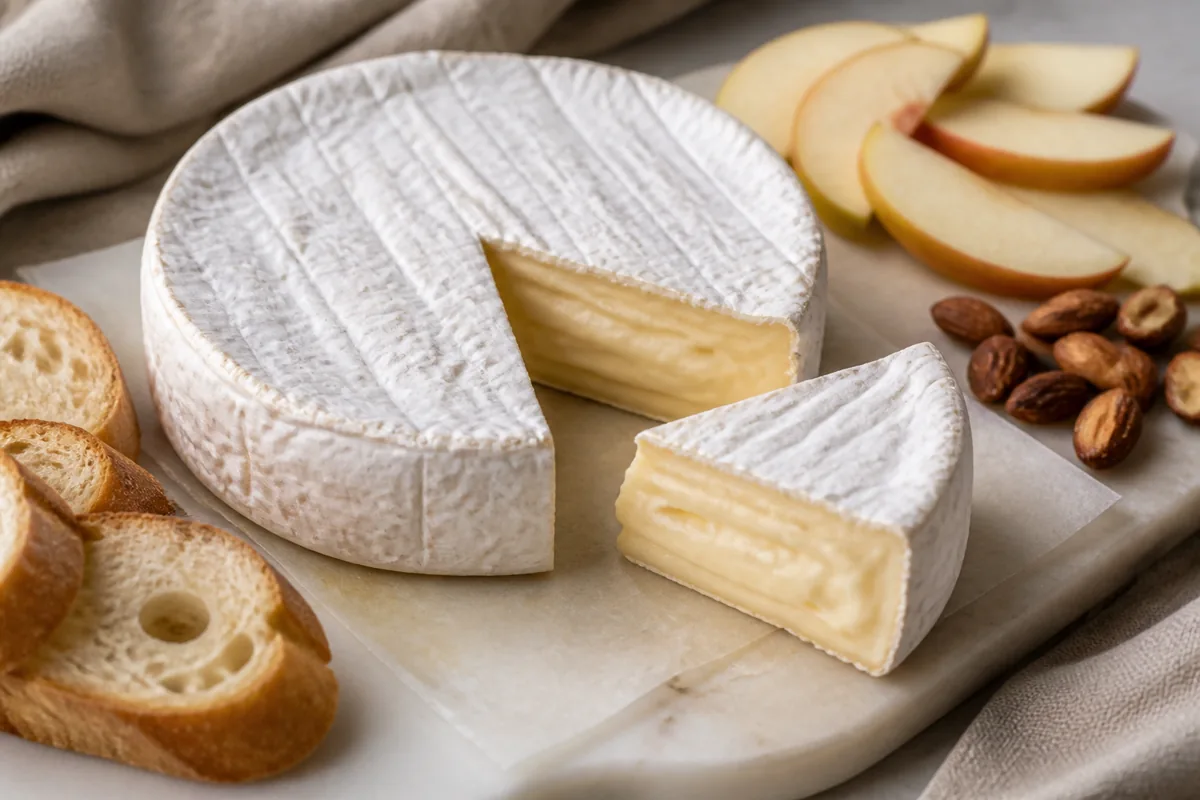
The coating surrounds the cheese during its subsequent maturation, so the five-day waxing date is not the age at which you eat it. It also distinguishes an applied shell from a living surface rind such as the white bloom on Brie.
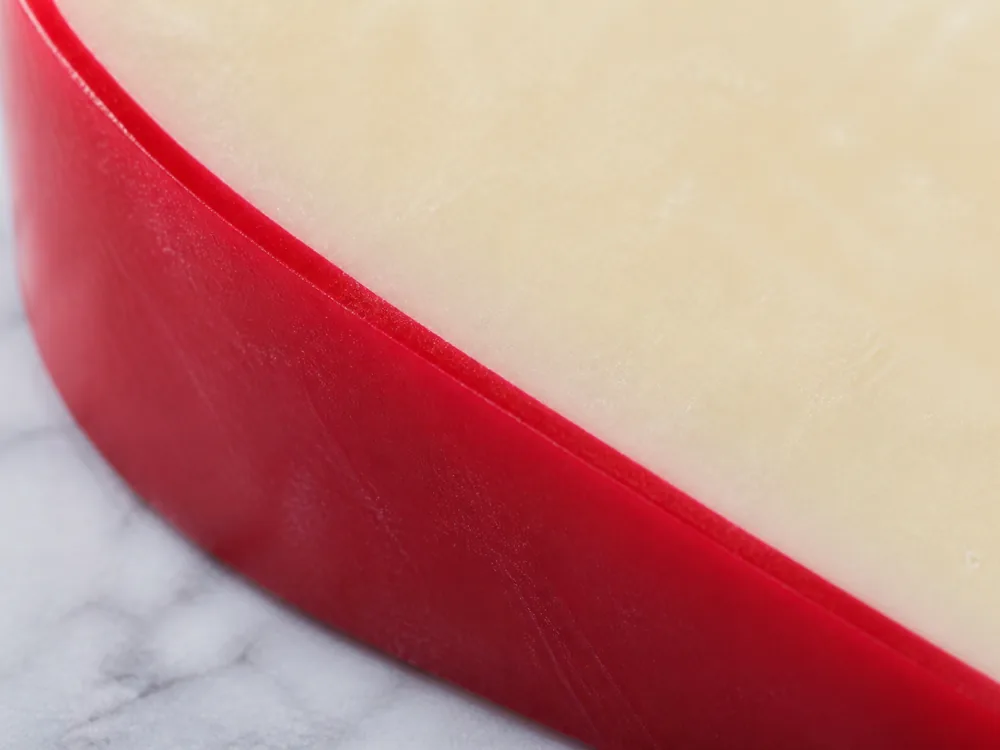
Peel or cut away the wax from the portion you are preparing, including before grating it into a sauce. Leaving the coating on a display wedge is different from letting pieces of it fall into food.
A waxed wheel still needs the storage conditions stated on its label.
Once a wedge has been cut, wax around its outside does not protect the exposed face. Wrap that face for refrigeration rather than pressing a loose piece of wax back onto it and treating it as sealed.
How Do You Make Cheese Rolls With Airedale?
Whitestone's Aged Airedale cheese-roll recipe combines grated cheese with evaporated milk and onion soup mix before spreading the filling on bread. The result depends on that sauce mixture, not on cheese alone producing a smooth filling under any heat.
The published recipe uses 400 g cheese, 340 ml evaporated milk and a 32 g packet of onion soup mix. Those quantities are useful if you want to follow the maker's version rather than substitute a wedge into an unrelated roll recipe.
The maker heats the filling gently until smooth and thick, lets it cool, then spreads it on the unbuttered side of buttered bread. The rolls bake seam-side down at 180 C for about 10–20 minutes, until the bread is golden.

Cooling the filling makes the bread easier to handle without a hot sauce running out as you roll it. Check the soup packet's ingredients if adapting the recipe for a dietary requirement; the cheese's vegetarian status does not establish the status of the whole dish.
If Airedale is unavailable, a sharp Cheddar is a practical flavour substitute, but its moisture and firmness can differ. Add it gradually to the warm liquid and assess the filling's thickness before spreading, rather than expecting identical behaviour.
What Pairs With Aged Airedale on a Plate?
Plain crackers give the sharp cheese room to stand out without adding another strong seasoning. Whitestone suggests medium-bodied reds such as Cabernet Merlot or Shiraz, and light beers such as pilsner.

Those are starting points, not rules against fruit, chutney or white wine. Try a small bite of cheese with the accompaniment before dressing the whole plate, particularly when a chutney is very sweet.
The producer also recommends Airedale for savoury sauces and fondue. For either, use a recipe that includes its required liquid and heat control; a sharp cheese can provide flavour while the recipe determines how the mixture stays smooth.
How Do You Buy and Store an Airedale Wedge?
Whitestone lists an approximately 110 g wedge and a 1.9 kg round. The smaller pack is convenient for a plate, while the roll recipe above needs considerably more than one small wedge.
The maker states that its cheeses use microbial rennet and are suitable for vegetarians.
Use the actual pack for milk treatment, allergens and nutrition; a red coating or six-month age does not establish lactose-free status. The vegetarian statement concerns the rennet, not an absence of milk.
Follow the pack's date and after-opening directions, with the exposed cheese wrapped and kept apart from other foods. Whitestone's care advice emphasizes returning leftovers to the fridge promptly; it does not justify deciding safety by taste after the stated limit.
For household refrigeration, keep the temperature at 4 C / 40 F or below. Serve a portion and keep the remainder cold, rather than leaving a large round out throughout an evening.
The FDA's limit for perishable food is two hours outside refrigeration, reduced to one hour above 32 C / 90 F. Normal appearance or smell cannot establish safety after poor storage, and intact wax is not permission to ignore the label.