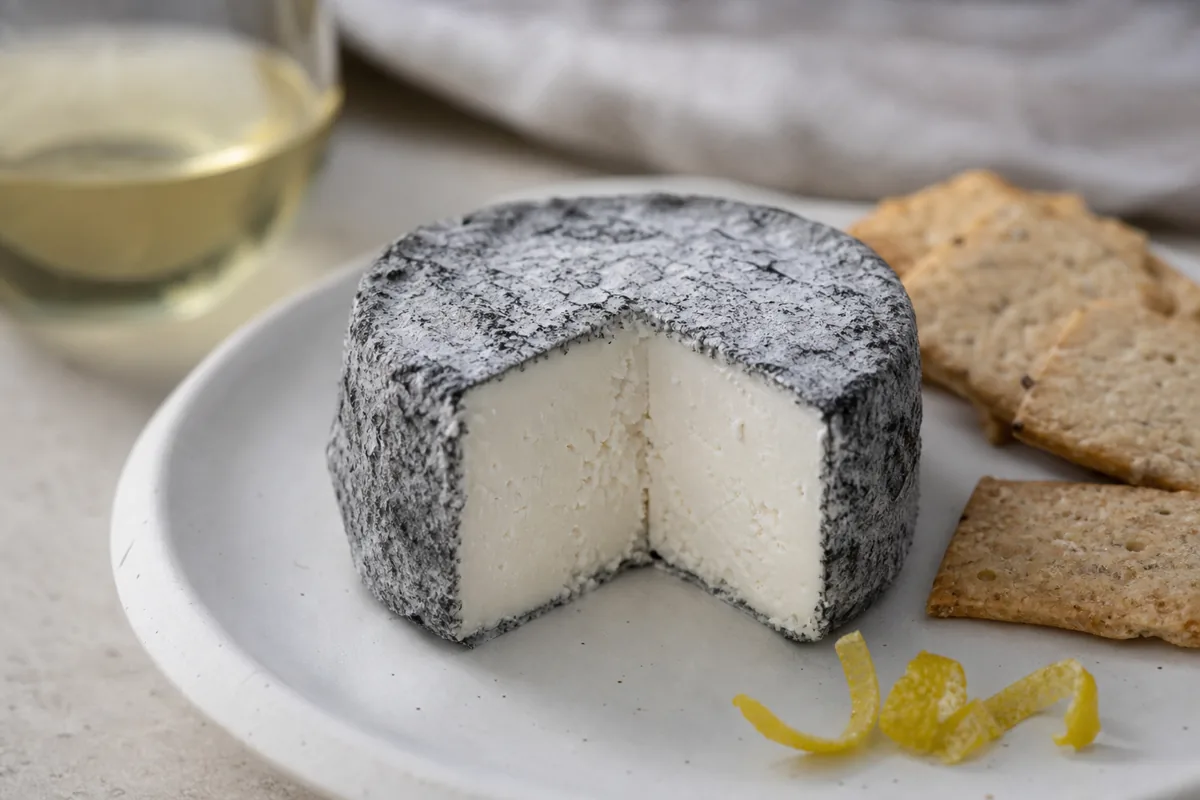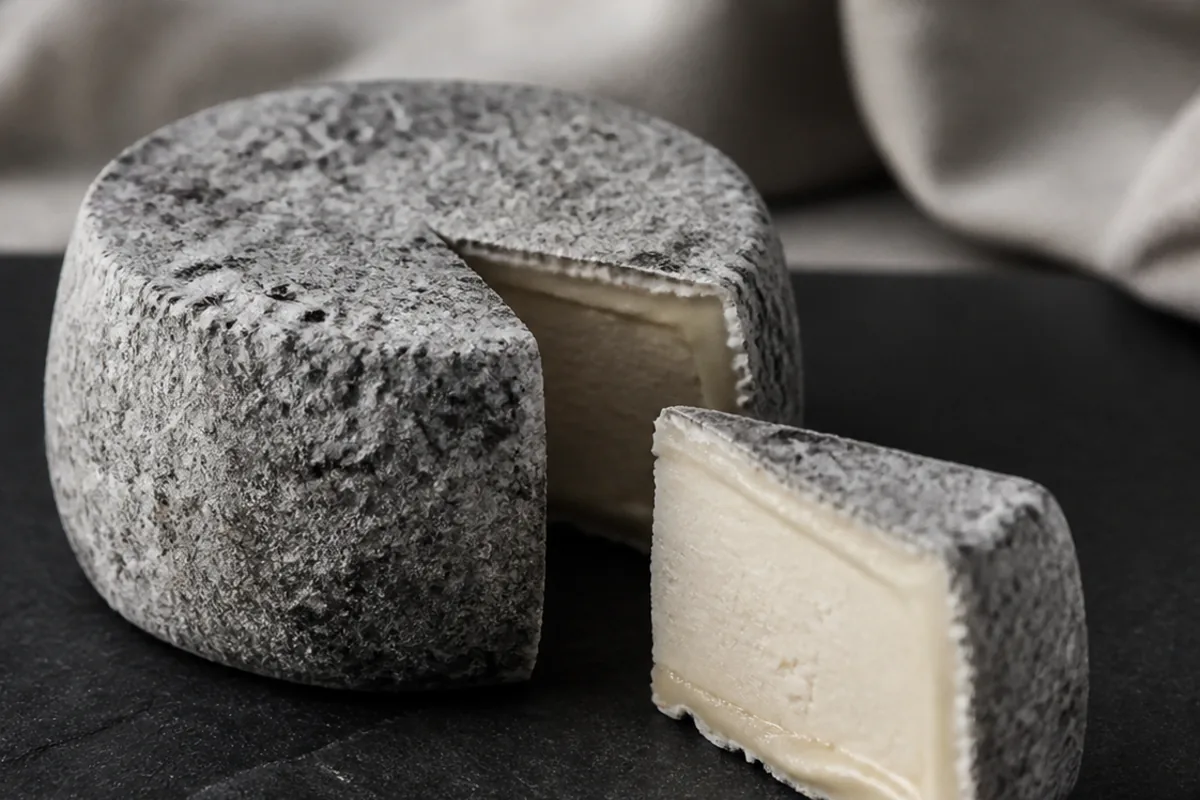
Aisy Cendré is Berthaut's soft Burgundy cow's-milk cheese, finished with a grey coating of wood ash after washing during maturation. The ash is a food ingredient, and the cheese continues to ripen beneath it; it should still be kept refrigerated at home.
In This Article
What Happens Before the Ash?
Berthaut's technical sheet describes four weeks of maturation, with saltwater washes gradually enriched with Marc de Bourgogne. Wood ash is applied afterwards, and ripening continues under the coating.
That sequence explains why describing it as a fresh cheese simply rolled in ash misses part of its character.
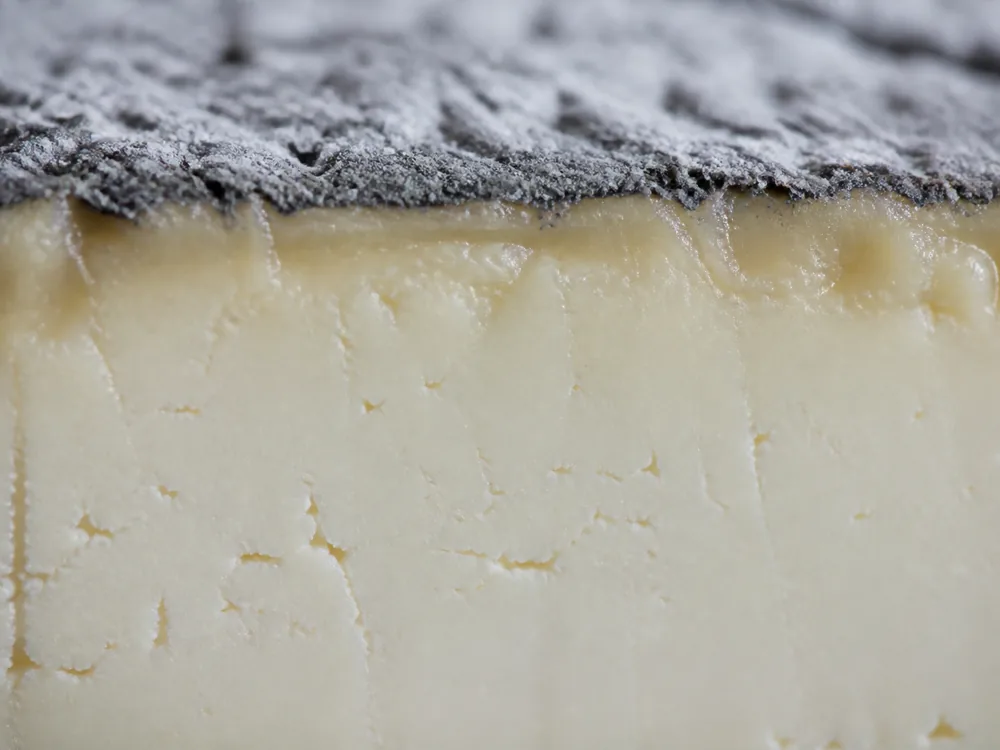
The sheet describes a creamy, melting texture with a centre that can remain slightly crumbly, alongside lactic and woody flavours. A cut piece therefore need not have one uniform texture from its edge to its middle.
The current Berthaut 250 g listing at Carrefour names pasteurized whole cow's milk, wood ash, salt, rennet, cultures and Marc de Bourgogne. It does not identify the wood as vine shoots, so that more specific claim should not determine your purchase.
Is Aisy Cendré the Same as Époisses?
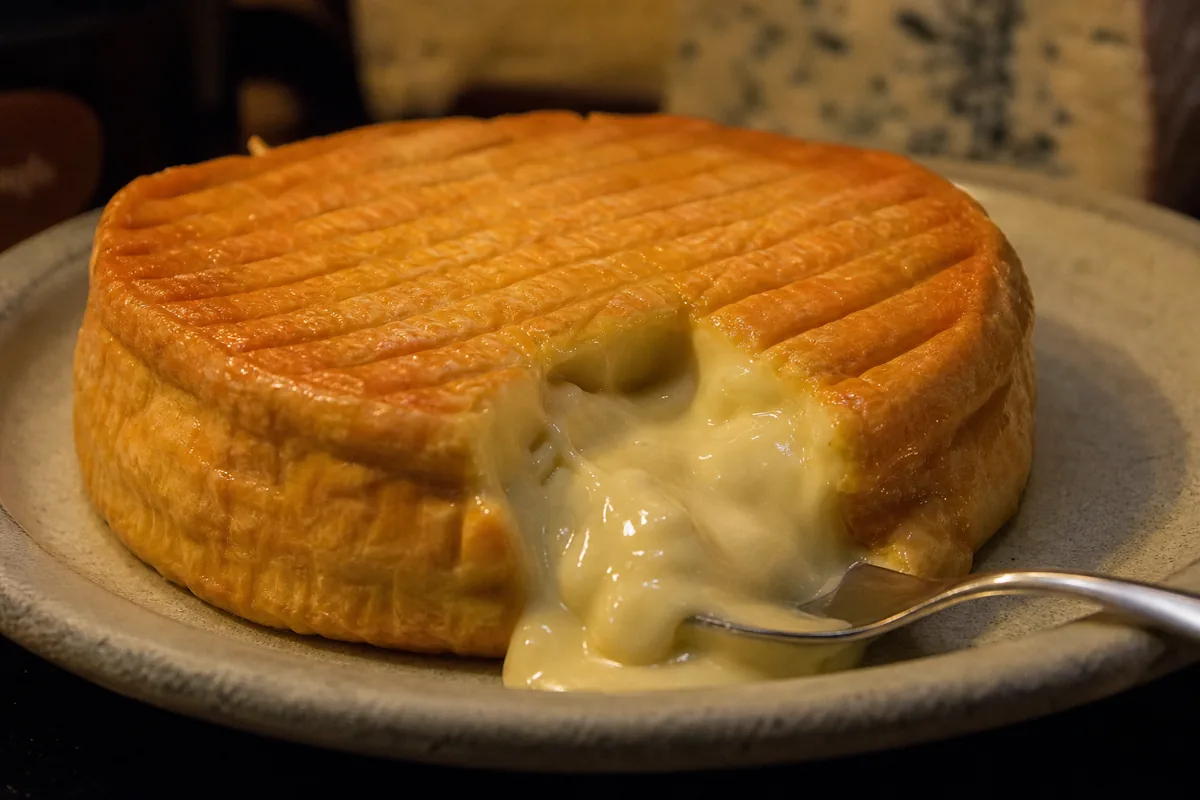
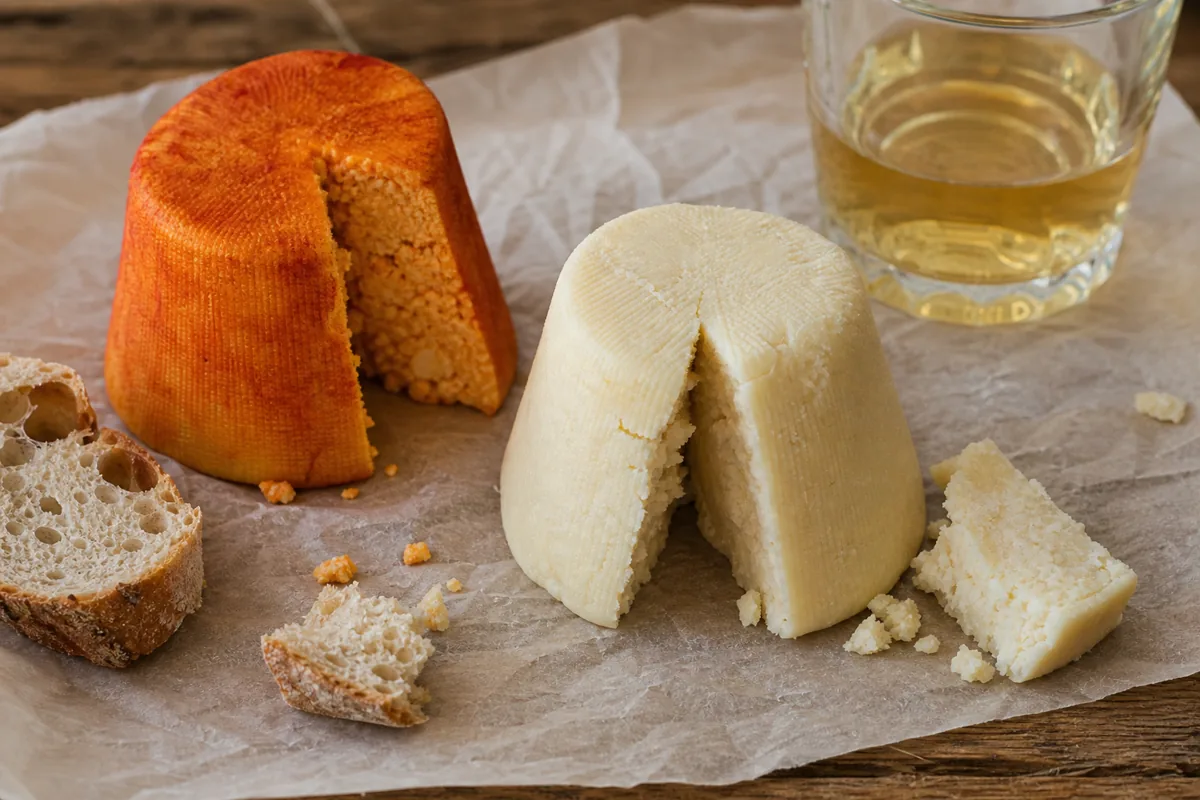
They share the Berthaut maker and a connection with Burgundy's washed-rind cheeses, but Aisy Cendré is a separately named product. Its ash coating is the obvious distinction from the orange surface associated with Époisses.
If you order Époisses, an ash-covered Aisy Cendré is a substitution rather than the same item in different packaging.
The exact label matters more than a grey surface, because other cheeses also use ash. Check for the Berthaut name, Aisy Cendré and the milk ingredients; a seller's comparison with Époisses does not transfer an appellation or establish an identical recipe.
Neither the colour nor the shared maker tells you which particular wedge will taste stronger. Age, condition and the portion of surface eaten can change the experience, so an absolute ranking would promise more than the available product information establishes.
Can You Eat the Ash on Aisy Cendré?
The coating can be eaten, but you do not have to keep all of it on every bite. Berthaut's serving notes explicitly allow scraping away some ash and suggest rye bread, Burgundy reds or Chablis.
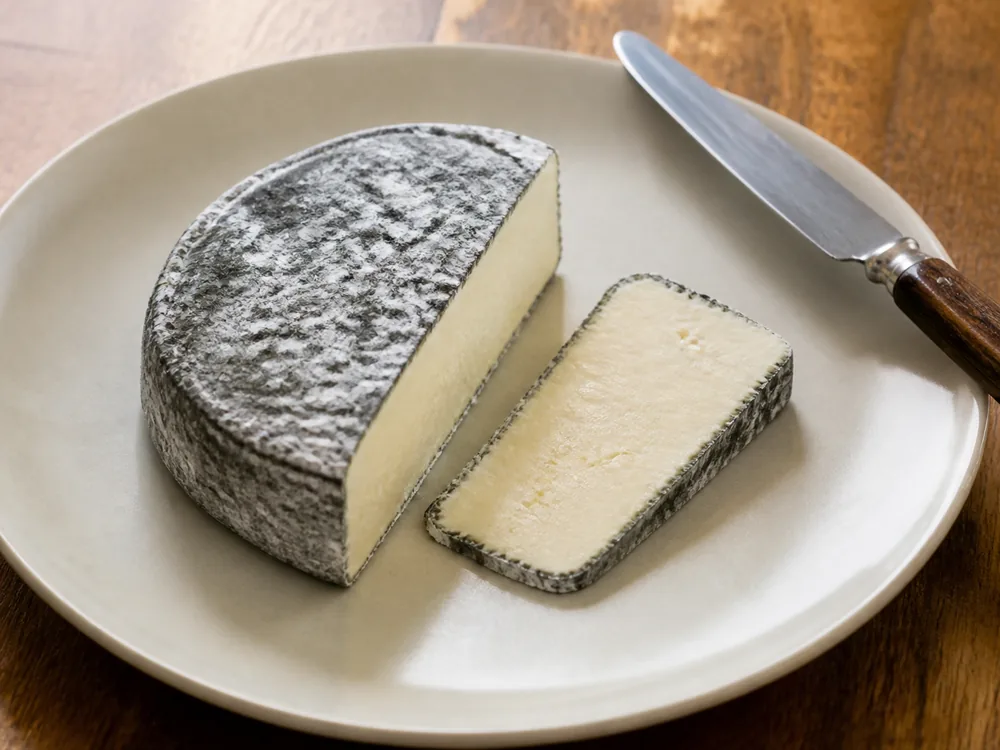
Start with a small piece containing both paste and surface, then adjust the amount of ash to your preference. This is a serving choice, not a way to make improperly stored cheese safe.
For a shared plate, a separate knife keeps grey ash from marking neighbouring cheeses. Bread is also useful for gathering a soft edge that no longer makes a tidy slice.
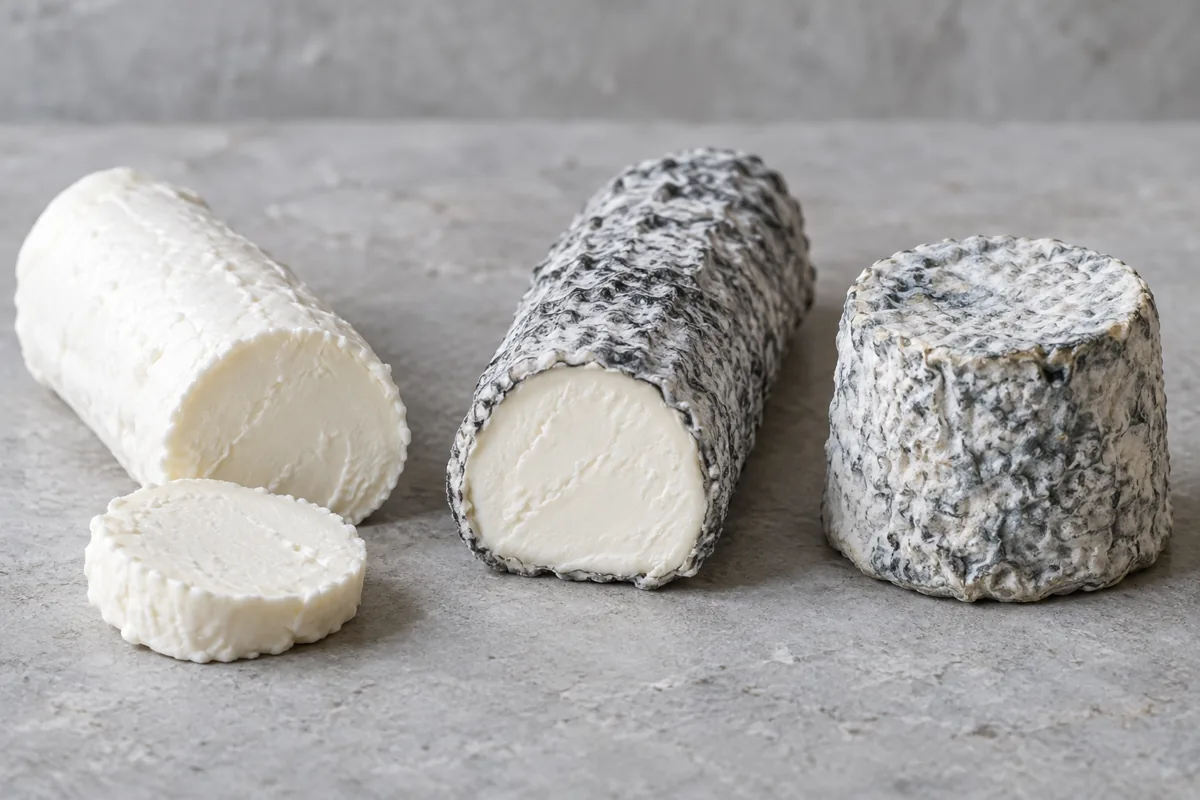
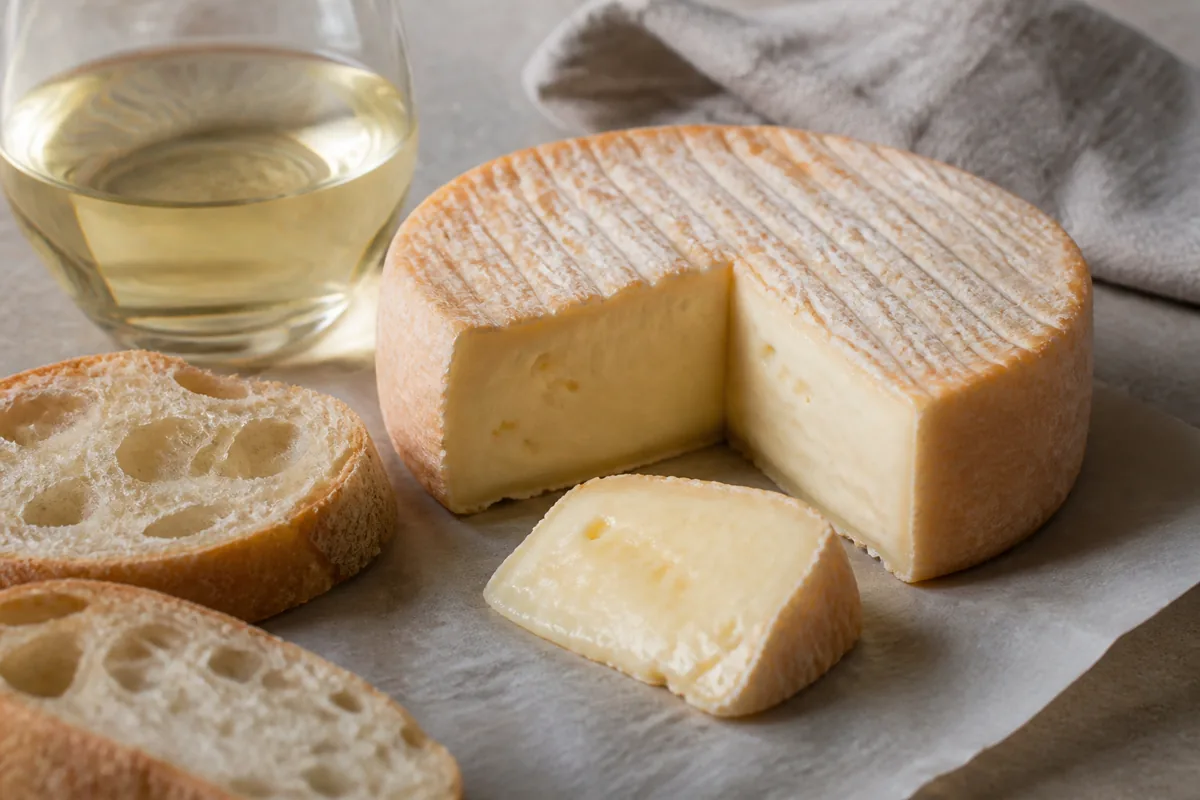
If replacing Aisy Cendré, decide which feature matters: another soft washed-rind cheese can supply a creamy, savoury element, while an ash-coated goat cheese changes the milk and flavour as well as the texture. Matching the grey colour alone is a poor substitution test.
What Does the Berthaut Label Tell You?
The Carrefour listing identifies a 250 g Berthaut round, EAN 3307950040344. Its displayed figures are for 100 g, not for the whole round or a small wedge.
| Measure | Per 100 g, listed | Per 30 g, calculated |
|---|---|---|
| Energy | 306 kcal | About 92 kcal |
| Total fat | 25 g | 7.5 g |
The 30 g column is simple portion arithmetic, not a recommended serving size. Use the current pack if its panel differs.
A percentage expressed as fat in dry matter uses the cheese after excluding its water; it cannot be substituted for grams of fat in 100 g of the food. Here, the displayed 25 g is actual total fat per 100 g.
The ingredients say rennet without specifying its origin, so they do not establish vegetarian suitability. Marc de Bourgogne is also listed; do not assume an alcohol-free product or invent a residual alcohol figure.
How Should You Store Aisy Cendré at Home?
Do not leave Aisy Cendré at room temperature for a day or two to soften it. Home storage follows the pack's refrigeration, date and after-opening directions, not an attempt to reproduce a cheesemaker's controlled maturation.
The FDA recommends a household fridge at 4 C / 40 F or below. Keep the cheese covered, protect it from contact with other foods, and refrigerate the portion you are saving promptly.
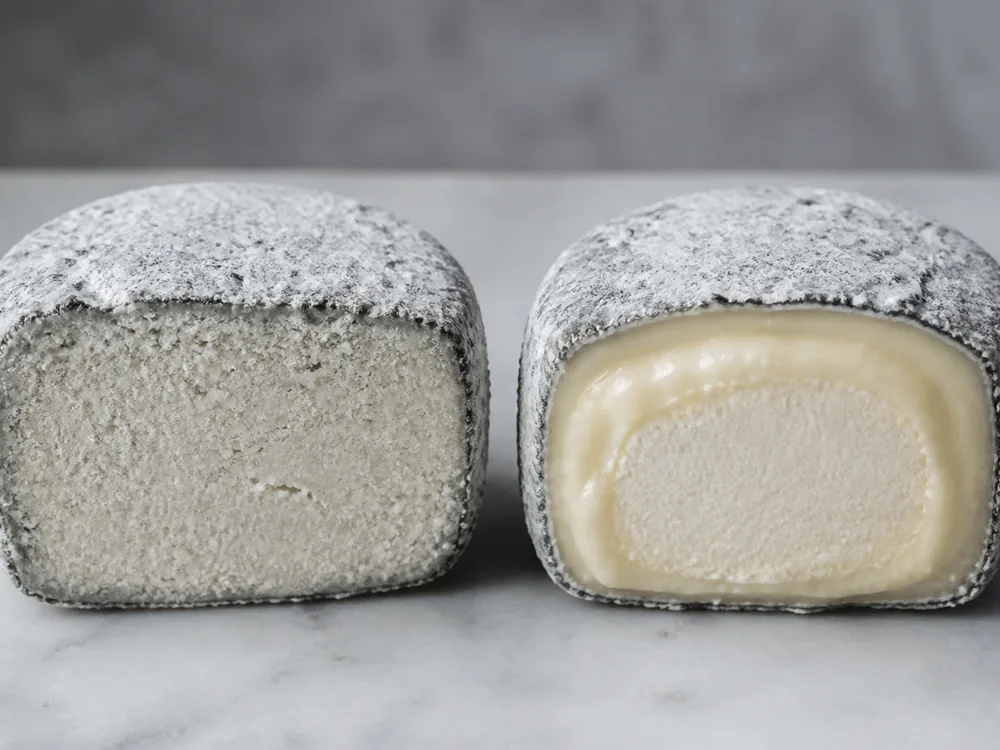
For a meal, put out a portion rather than leaving the whole round on the counter while waiting for its centre to change. FDA guidance limits unrefrigerated perishable food to two hours, or one hour above 32 C / 90 F.
Normal smell and appearance cannot prove safety after excessive time out of refrigeration.
The supplied ash is expected; unexpected mould, damaged packaging or storage outside the stated conditions calls for a different decision. Do not taste the cheese to test safety, or scrape off a problem area and assume the rest is safe.
Is Aisy Cendré Safe During Pregnancy?
French public-health guidance on Manger Bouger advises pregnant people to avoid soft washed-rind cheeses, even when made with pasteurized milk. Aisy Cendré's pasteurization does not remove that category-specific caution.
Scraping away the ash is not a substitute for that advice. Choose a cheese permitted by the guidance where you live, and ask your maternity team if you need help identifying the category on an unfamiliar label.