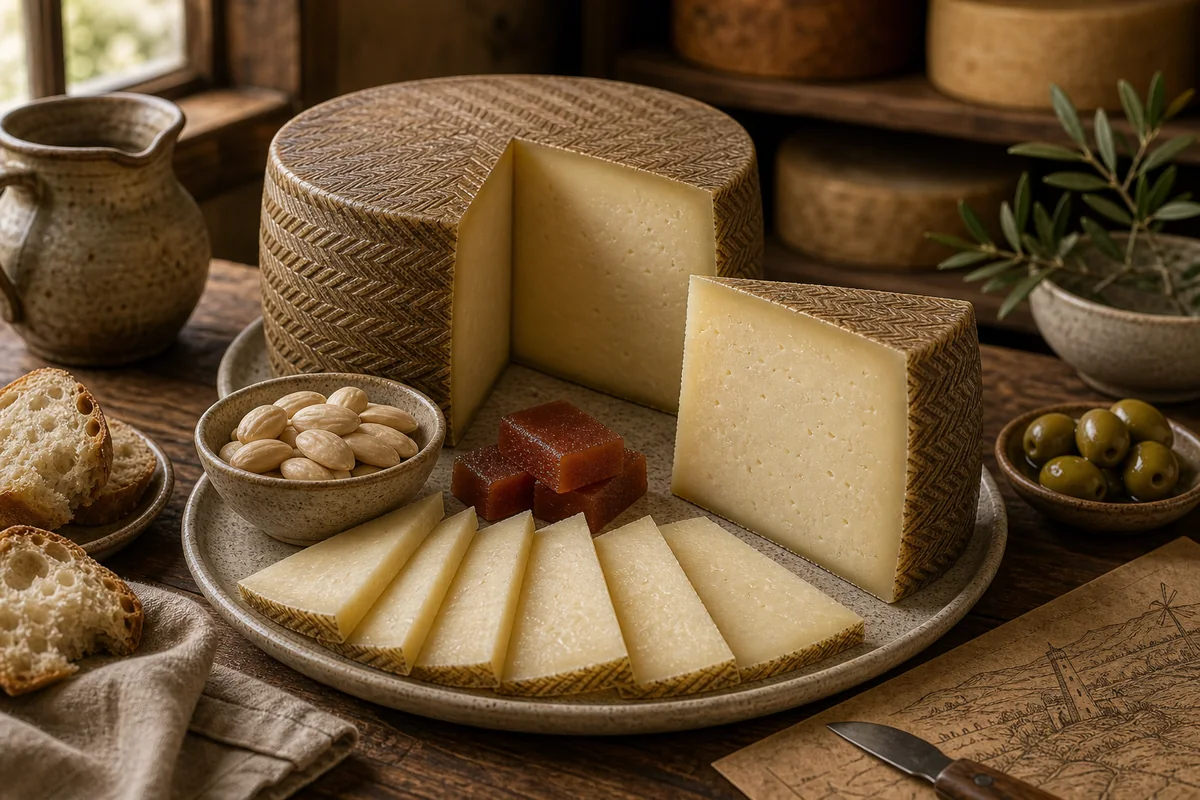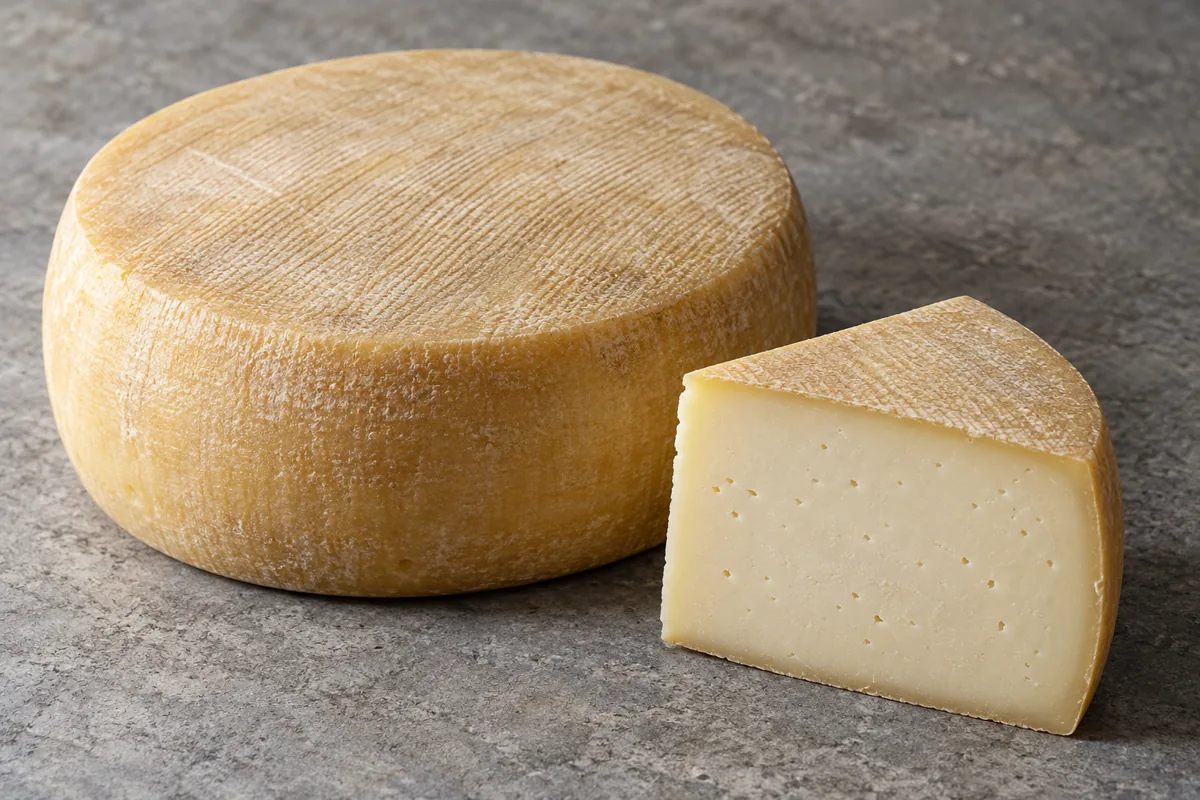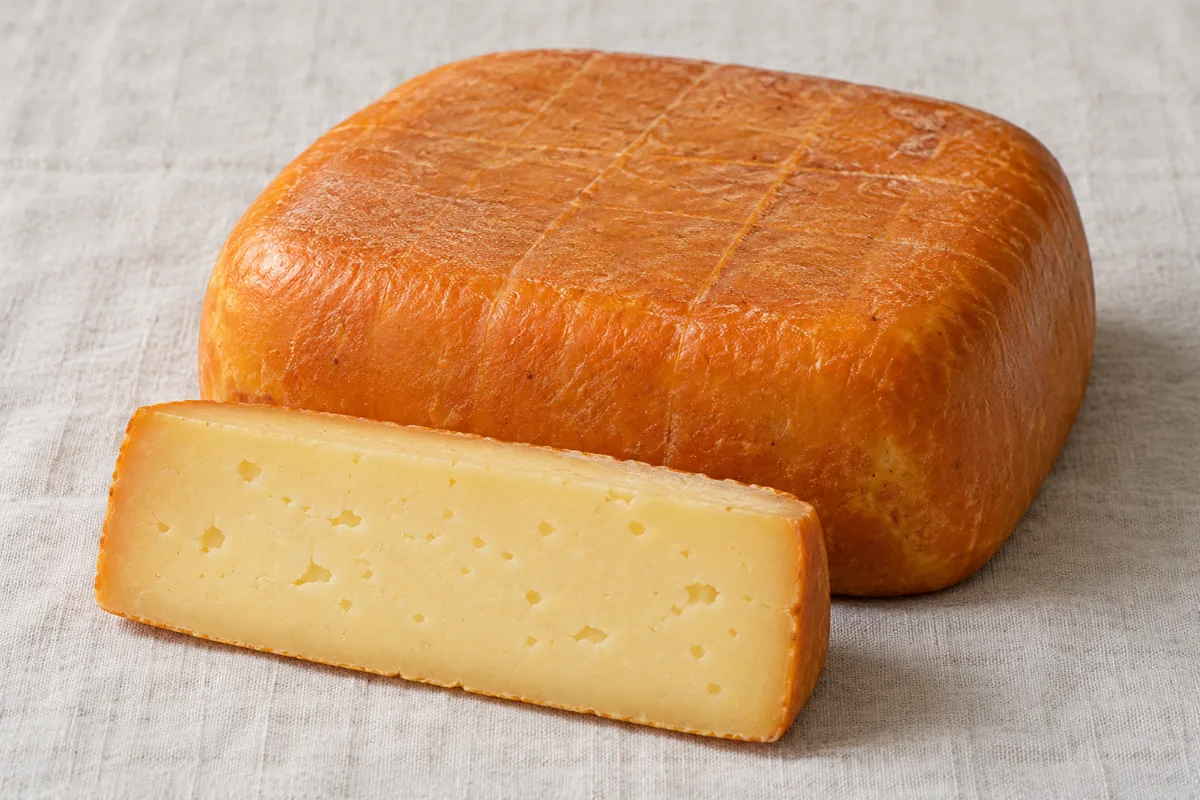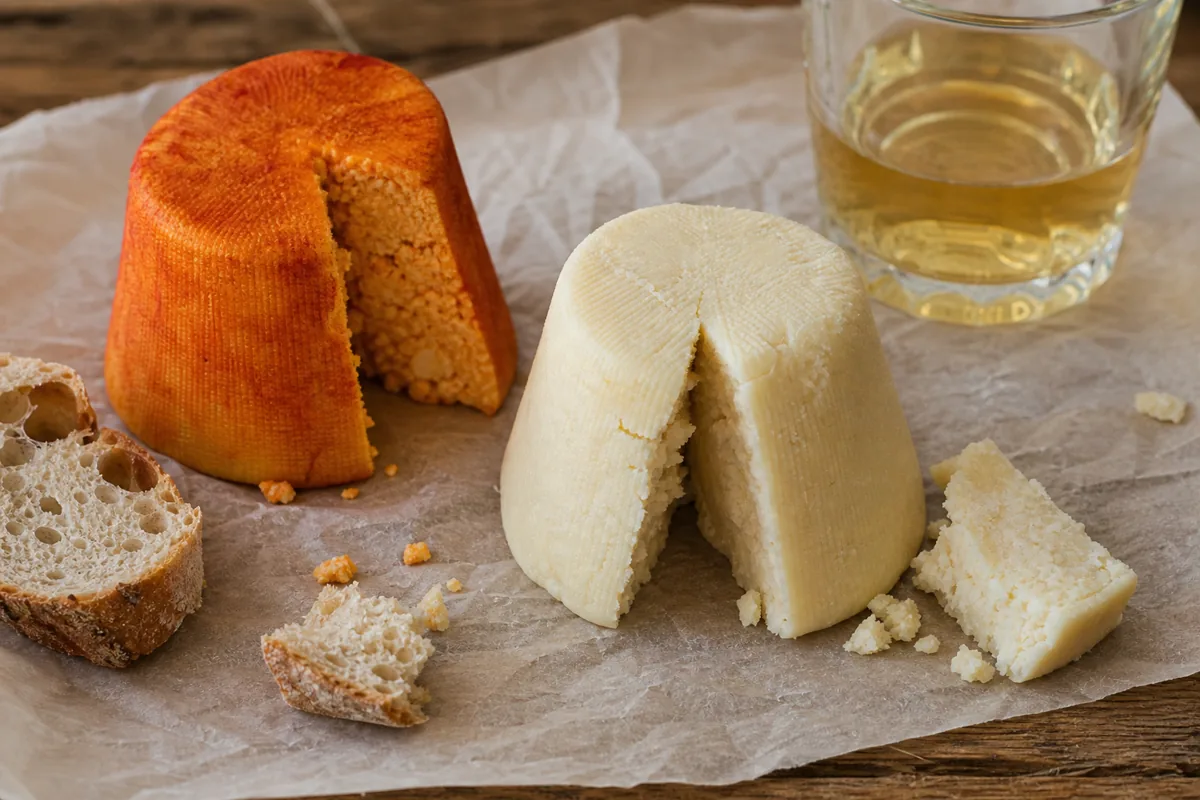
Afuega'l Pitu is a lactic cow's-milk cheese from Asturias: choose Blanco for the white cheese without paprika, or Roxu for paprika flavour and warmth. Both can be young or more mature, so red does not automatically mean older or drier.
The other choice is shape: a truncated cone or a rounded cheese formed in cloth. Together, those two choices explain the four traditional varieties better than a single mild-to-strong ranking.
In This Article
What Are the Four Afuega'l Pitu Varieties?
The PDO council uses the Asturian names Blancu and Roxu for colour, and Atroncau and Trapu for shape. Spanish labels may use Blanco, Rojo or Troncado for the corresponding terms.
| Variety | Shape | Curd and colour |
|---|---|---|
| Atroncau Blancu | Truncated cone | White curd, not kneaded |
| Atroncau Roxu | Truncated cone | Kneaded curd with paprika |
| Trapu Blancu | Rounded, with cloth folds | Kneaded white curd |
| Trapu Roxu | Rounded, with cloth folds | Kneaded curd with paprika |
For the kneaded varieties, the curd is worked after its first drainage; paprika is mixed into the red versions. It then returns to a cone-shaped mould or drains in cloth tied at the top, which leaves folds in the Trapu surface.
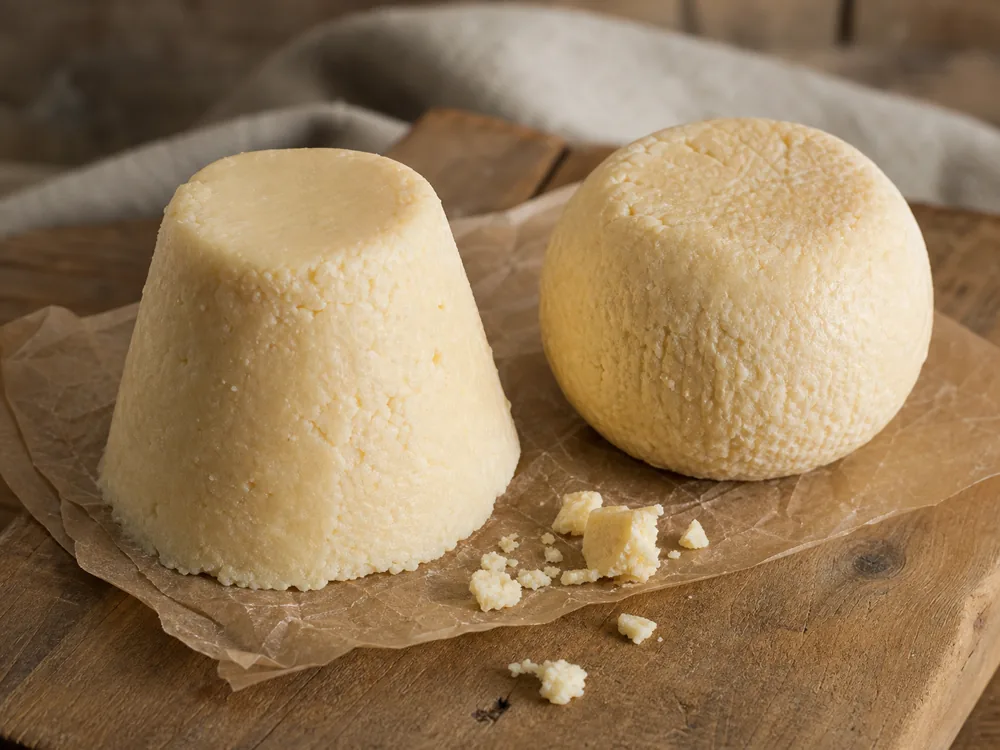
Atroncau Roxu and Trapu Roxu therefore share paprika, while differing in shaping. White Trapu is also kneaded, so kneading alone does not identify a red cheese.
How Does Afuega'l Pitu Taste and Change with Age?
Afuega'l Pitu has a distinctive adhesive texture that can cling to the mouth even when the cheese feels creamy. The PDO council connects its Asturian name with the throat; the spelling Afuegal Pitu commonly seen without an apostrophe refers to the same cheese.
The council describes fresh dairy acidity and butter notes, developing yeast-like notes as the cheese matures. Longer maturation makes the body firmer and more compact, rather than turning it into a flowing cheese.
For example, Rey Silo uses sun-dried Murcia paprika in its Rojo, describing a salmon-coloured interior, granular texture and slight spicy aftertaste. Its choice also shows why a red cheese need not have a smoked-paprika flavour.
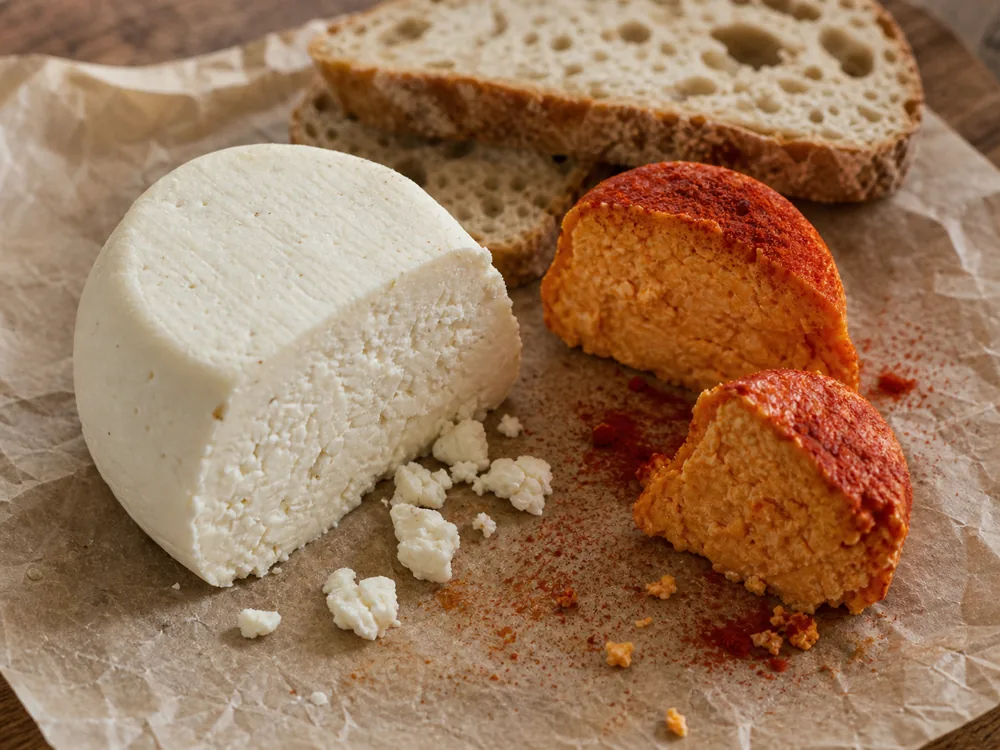
For a first comparison, choose white and red pieces of similar maturity from the same maker. That keeps age from obscuring the difference paprika makes.
What Do the Milk and Maturation Labels Mean?
The protected cheese comes from a defined part of Asturias around the Nalon and Narcea rivers and the Sierra del Aramo. Its whole cow's milk comes from Friesian and Asturiana de los Valles cattle and their crosses.
Slow, mainly acid coagulation takes 15-20 hours, followed by drainage under the curd's own weight. The cheese is not mechanically pressed into a hard wheel.
The PDO council describes a minimum maturation of five days for pasteurized-milk cheese and 60 days for raw-milk cheese. Those are production minima, not the age of every piece on sale or a measure of how long it will keep after opening.
The maker's commercial label and the council's certification label together identify the protected product.
Colour and shape alone cannot tell you the milk treatment.
How Should You Serve, Cook, or Substitute Afuega'l Pitu?
A softer piece can be spread on bread; a firmer one can be served in small pieces with bread alongside. Apple is a useful serving suggestion if you want a crisp contrast to the dense, adhesive cheese.
Cooking does not have to mean expecting a stretchy melt. In Restaurante Balbona's recipe published by the PDO council, Afuega'l Pitu is blended with cream under heat to make a sauce served with prawns.
That is a different result from laying a slice over hot food: the added liquid and blending help form the cream. Follow a complete recipe for the dish rather than assuming the cheese will flow by itself.
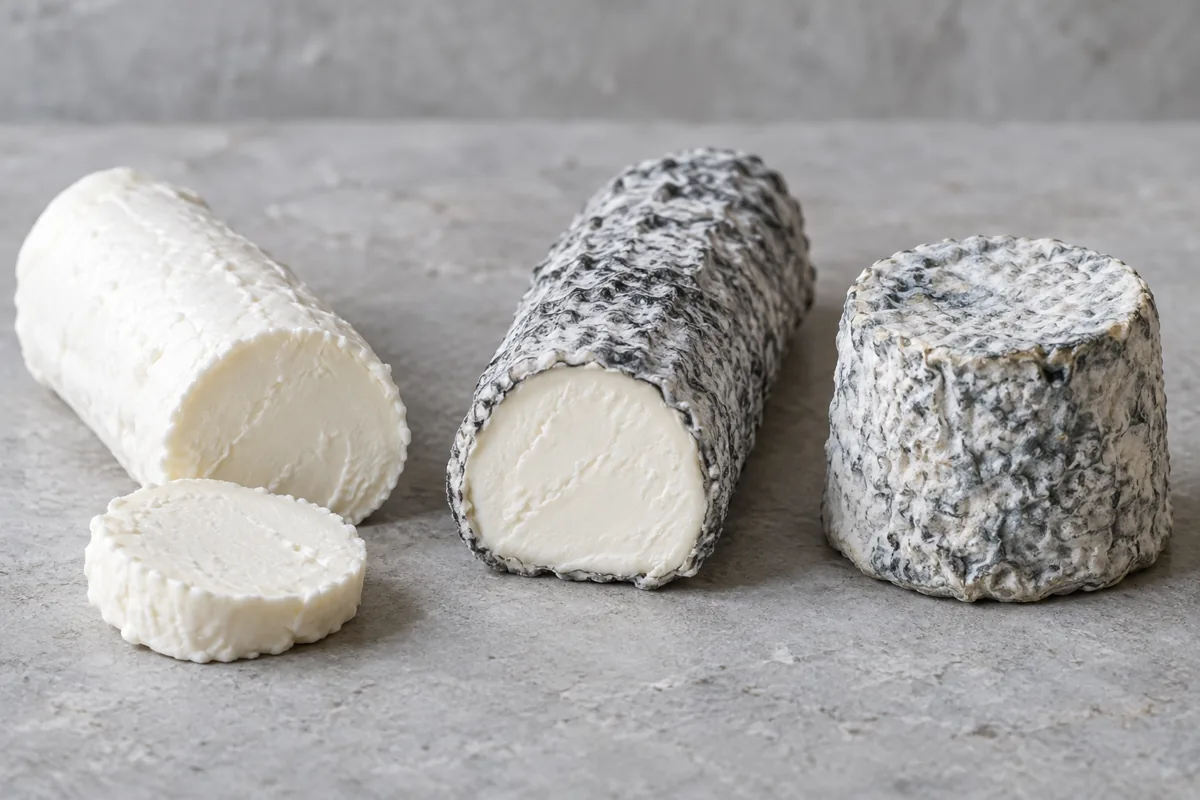
For a white version used as a tangy spread, fresh goat cheese is a possible substitute, with a different milk flavour.
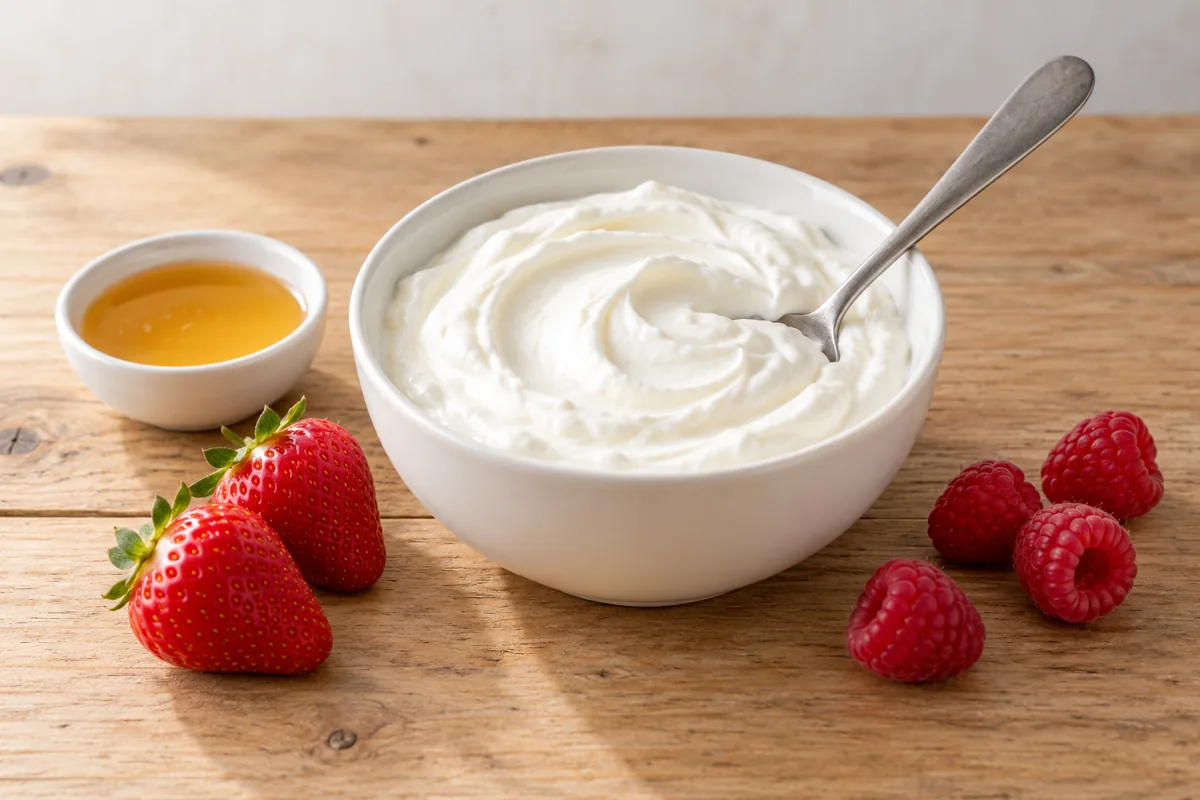
Fromage blanc can supply lactic acidity in a cream or dip, but its wetter texture will not reproduce a firm piece of Afuega'l Pitu.
A little paprika added to a tangy fresh cheese can suggest the red version in a spread. It will not recreate the texture or flavour developed during the original cheese's maturation.
What Are the Ingredients and Nutrition Facts?
Afuega'l Pitu contains cow's milk, and the red versions include paprika.
Rey Silo's Rojo ingredient list names rennet but does not specify its origin, so that list alone cannot establish vegetarian suitability.
The PDO council gives a minimum of 45% fat in dry matter, which excludes the cheese's water from the calculation. It is not a declaration of 45 g fat per 100 g of cheese.
For calories, salt or lactose claims, use the specific pack's information. The white/red distinction and apparent dryness do not supply a nutrition panel.
How Should You Store a Cut Afuega'l Pitu?
Follow the maker's storage directions, use-by date and any after-opening limit. A fresh pasteurized cheese and a mature raw-milk product need not carry the same instructions.
Rey Silo recommends consuming its Rojo within ten days of opening for quality, wrapped in its food paper inside an airtight container in the refrigerator. That is advice for this product, not a ten-day allowance for every Afuega'l Pitu.
FDA household guidance sets refrigeration at 40 F (4 C) or below. If the product label gives a stricter condition, follow that condition.
Put out only the portion for the meal, keeping the rest chilled. FDA limits perishable food outside refrigeration to two hours, or one hour above 90 F (32 C), including any time spent softening before serving.
Discard cheese left out beyond those limits; a normal smell or a tidy cut face cannot rule out harmful bacteria.
Is Afuega'l Pitu Safe During Pregnancy?
The raw-milk version's 60-day maturation rule does not establish that it is a suitable cold cheese during pregnancy. A PDO label certifies the product's identity, not its suitability for every eater.
In Spain, AESAN advises avoiding fresh or soft cheeses unless the label states that they use pasteurized milk. It also advises removing cheese rinds and avoiding industrially sliced or grated cheeses; removing a rind does not make a raw-milk soft cheese an equivalent choice.
In the US, CDC lists soft cheese made from unpasteurized (raw) milk and dairy products made from raw milk as riskier choices. It lists pasteurized soft cheeses heated to an internal temperature of 165 F (74 C), or until steaming hot, as a safer choice, so merely warming a spread is not the same condition.
Served cold, Afuega'l Pitu is described as a pasteurized lactic, adhesive cheese that grows firmer with maturation, a type the CDC list does not cover, so ask a midwife or doctor.
In the UK, the NHS lists pasteurised or unpasteurised hard cheeses, pasteurised semi-hard cheeses and pasteurised soft cheeses as safe to eat, and it says foods made from unpasteurised milk must be thoroughly cooked. The council describes a curd that is not pressed into a hard wheel, so for a raw-milk piece the NHS line to follow is the one for unpasteurised milk.
These recommendations have different scopes. Follow the guidance for your country and the actual milk label, rather than inferring safety from Blanco, Roxu or a firmer texture.