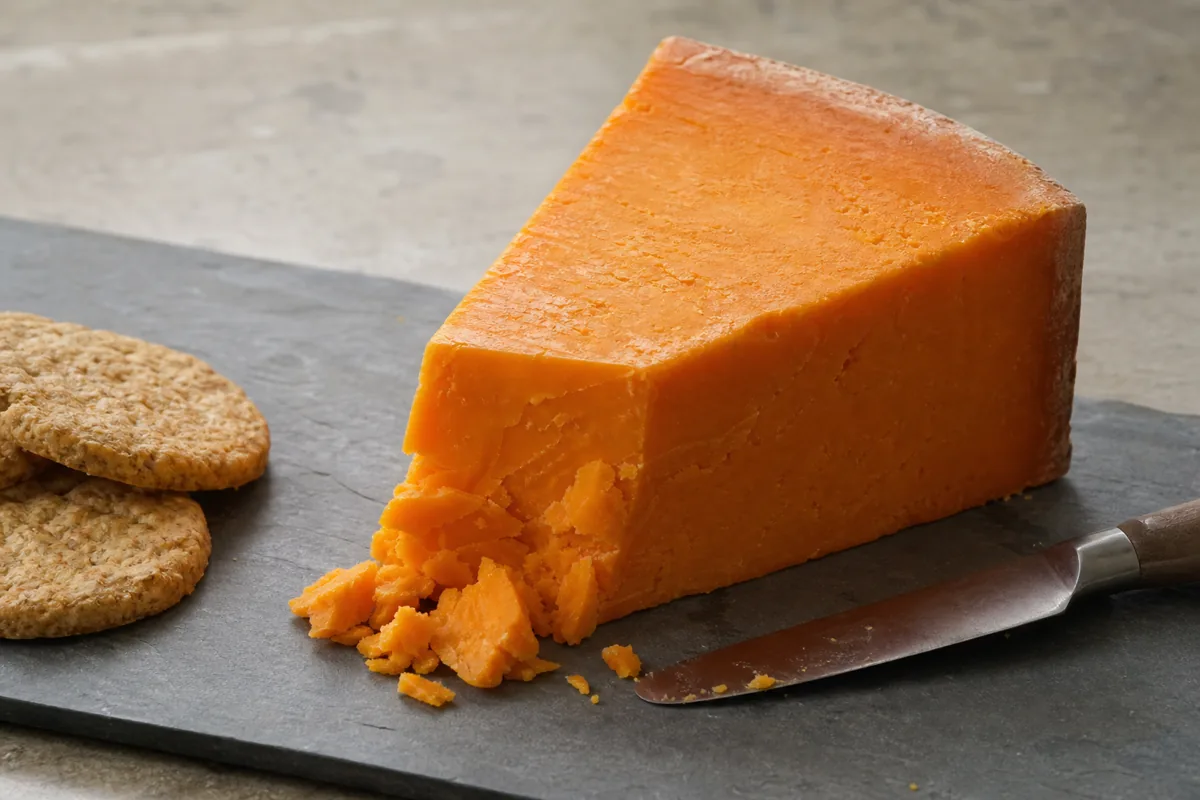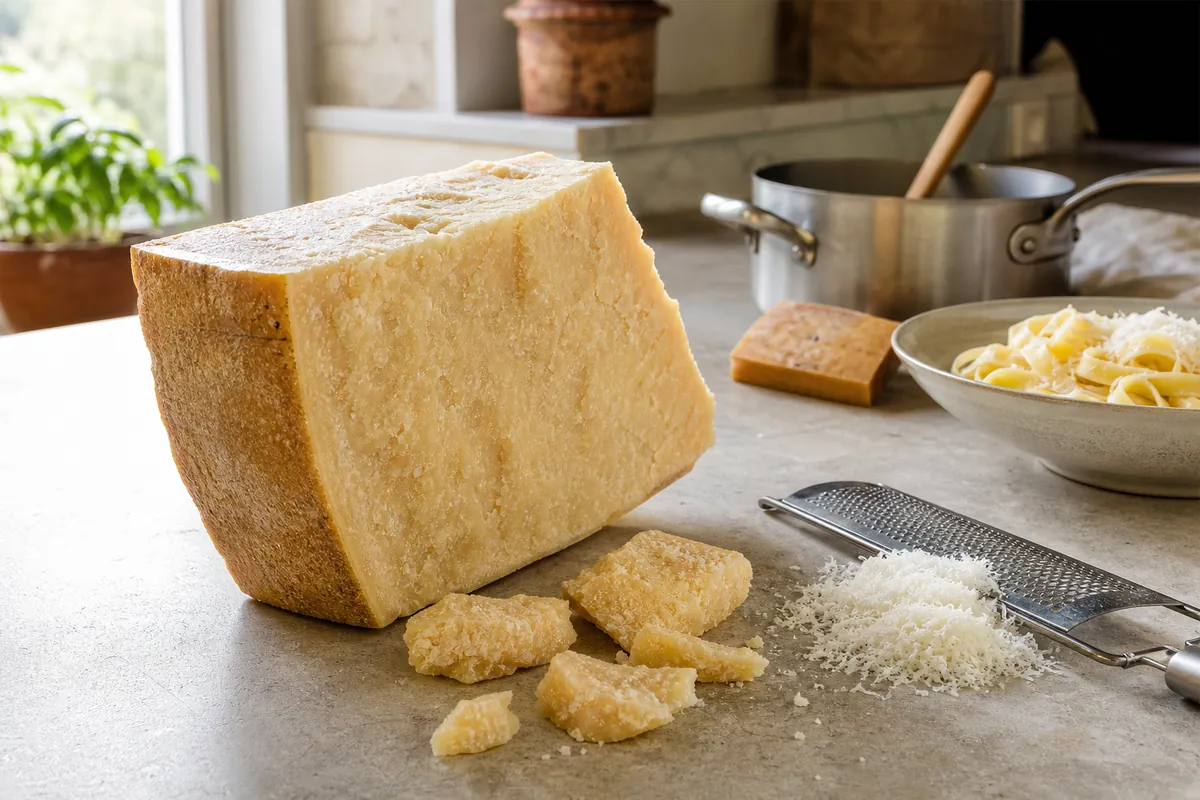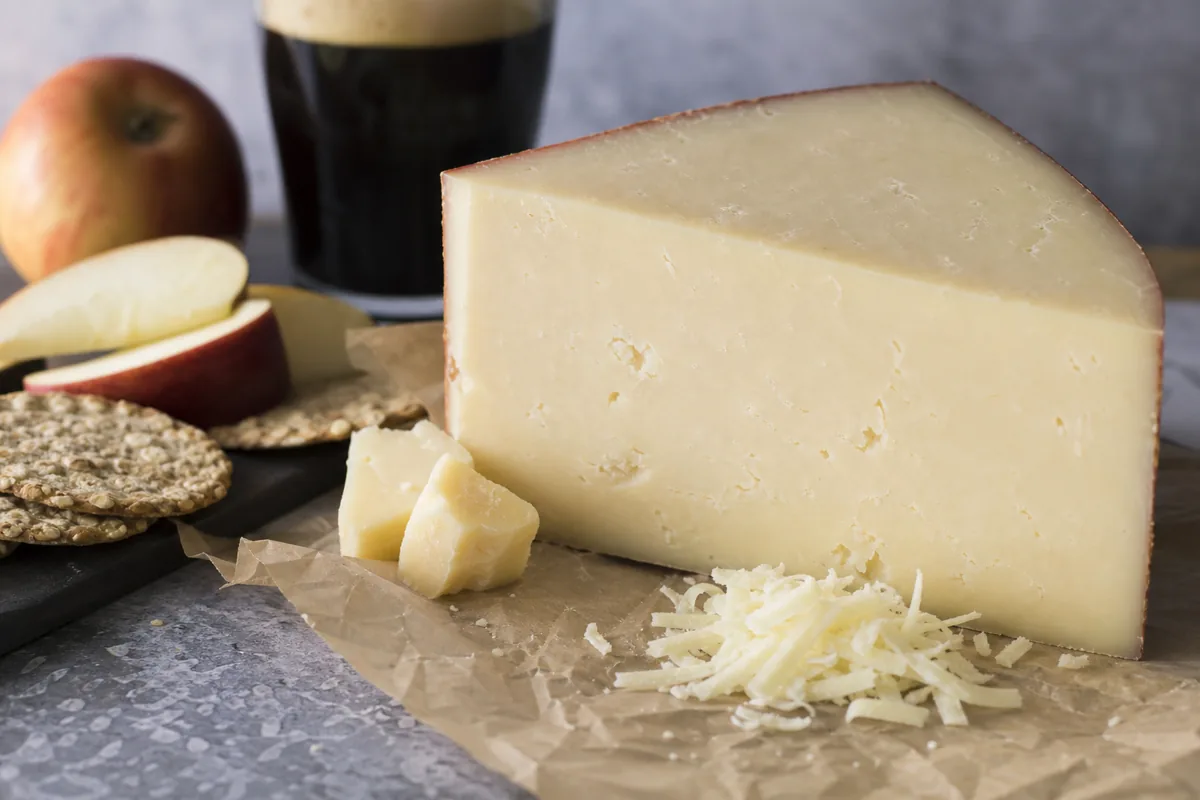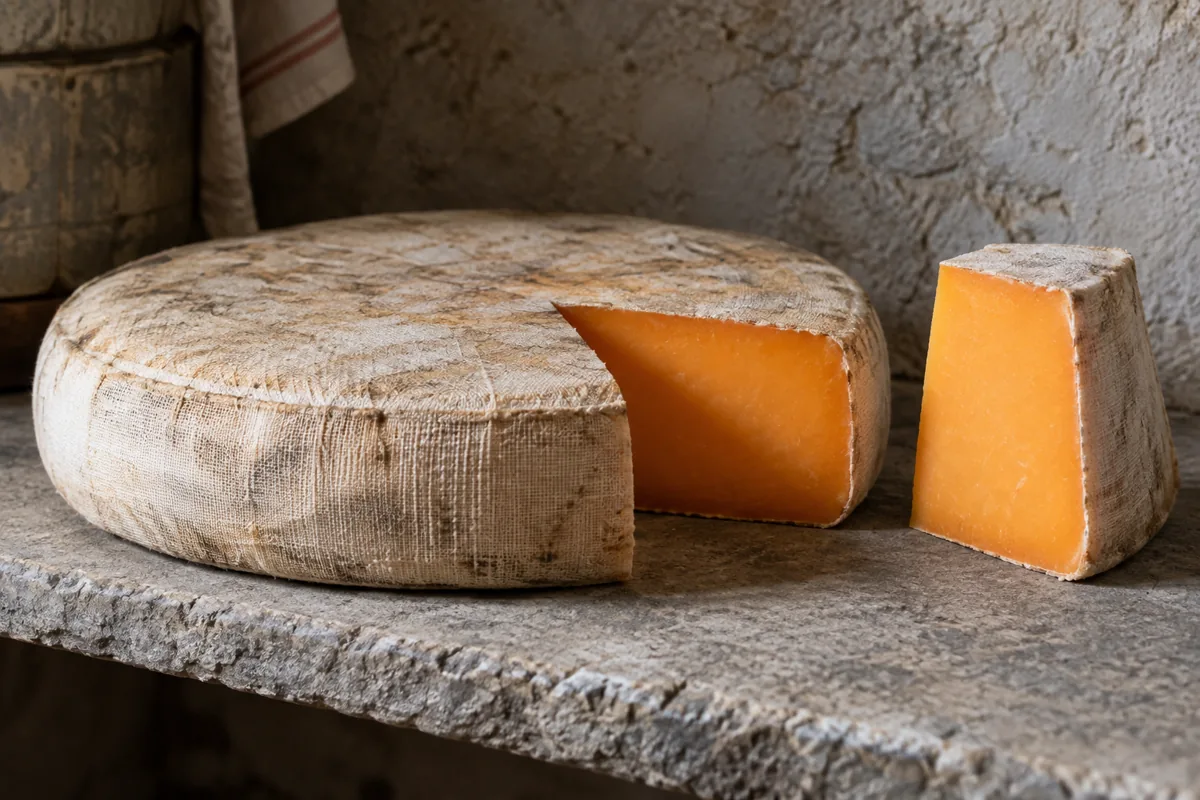
Sparkenhoe Red Leicester is a cloth-bound, larded farmhouse wheel made by David and Jo Clarke at Sparkenhoe Farm in Upton, Leicestershire, from the raw milk of the farm's own herd.
The Cheese Professor calls Sparkenhoe the only producer of traditional raw milk Red Leicester in the country, and Neal's Yard Dairy says the waxy supermarket block shares only the colour and the name.
It is set with animal rennet, and the sources disagree on how long it is aged, so the milk treatment and the age on the label tell a buyer more than the name does.
In This Article
What Is Sparkenhoe Red Leicester?
Culture magazine's cheese library records Sparkenhoe as a farmstead cheese from the Leicestershire Handmade Cheese Company in Upton, in south-west Leicestershire. The Clarkes make it to a traditional local recipe from the farm's own cows' milk.
The milk comes from about 150 Holstein Friesian cows, pedigree animals descended from the herd David Clarke's grandfather bought in the 1940s, according to The Cheese Professor.
Farming UK adds that the cows are fed on the farm's pastures and calve all year round, which it says keeps the milk supply as consistent as possible.
The wheels are large and flat. Culture gives a diameter of 16 to 18 inches (roughly 41 to 46 cm) and a height of 6 inches, in 22 lb and 44 lb sizes.
Culture lists the cheese as firm, and The Cheese Professor describes Red Leicester as a hard pressed cheese similar to Cheddar in texture.
Why Did Farmhouse Red Leicester Disappear for 50 Years?
Raw milk, clothbound Red Leicester had been extinct for about 50 years when the Clarkes revived it in 2005, according to Neal's Yard Dairy.
Neal's Yard Dairy quotes Trevor Hickman's history of Leicestershire cheese for the cause. During the Second World War annatto was banned as a non-essential import and every pressed cheese came out yellow, which Hickman says ended cheesemaking on the farms of the Sparkenhoe Hundred.
One farmer, Robert Shepherd, came through the war years and began making Red Leicester again in 1948, but his family could not compete with the mass-production dairies and national bureaucracy, and the farm stopped making cheese in 1956.
By 1960, Hickman writes, farmers in west Leicestershire were making no pressed cheese at all, because of the restrictions the Milk Marketing Board placed on their dairies.
Neal's Yard Dairy gives a second reason in its product notes. Red Leicester was conceived as a long-lasting cheese that used up surplus milk from Stilton production, and as Stilton grew more popular that surplus disappeared.
It adds that more Red Leicester is now made outside Leicestershire than inside it.
The Clarkes came to the cheese from the opposite direction. The farm's own account says selling liquid milk was making next to no profit, so they needed to add value to keep the dairy herd.
They knew Red Leicester had been made on the farm from 1745 until 1875, but they first dismissed the idea, because the style had a reputation for being boring and rubbery and what remained was factory cheese that bore little resemblance to the farmhouse originals.
What changed their minds, the farm says, was a friend's memory of collecting the cheese from a local farm as a child and sitting on top of the 20 kg cheeses in the back of a butcher's van.
They started in 2005 with an old recipe and a cheese-making course. Neal's Yard Dairy says neither of them had cheesemaking experience and that they settled on a recipe from old books and local advice.
The Cheese Professor adds that there was no Red Leicester left to copy, so they tested old recipes with neighbours until the results became consistent.
Farming UK dates the start to the beginning of November 2005 and reports about 200 kg a week by early 2006. The same report says the launch was set for the Leicestershire County Show on 30 April and 1 May 2006.
The sources date the farm's earlier cheesemaking differently. The farm and Farming UK give 1745 to 1875, with Farming UK naming Mr George Chapman as the maker in 1745, while The Cheese Professor says Red Leicester was made at Sparkenhoe around 1756, from Longhorn cows' milk.
How Does Sparkenhoe Differ From Supermarket Red Leicester?
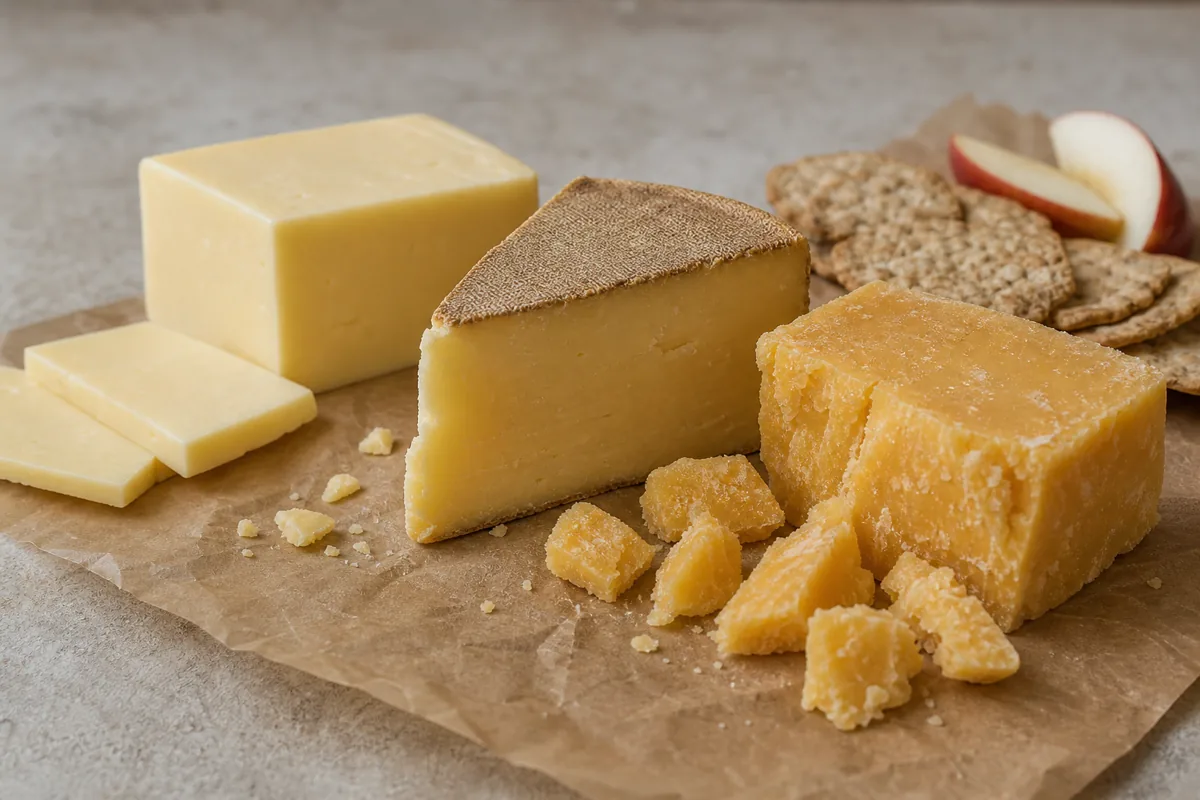
Neal's Yard Dairy says the waxy block in supermarket fridges does not really resemble the large round cheeses once made around Sparkenhoe, and that it carries only the colour and the popularity of a name.
| Feature | Sparkenhoe wheel | Factory block |
|---|---|---|
| Format | Large flat wheel (Culture) | Waxy block (Neal's Yard Dairy) |
| Maturing | Bound in cloth and lard, then held in a cheese store (producer) | Vacuum packing is the modern industrial method (Wikipedia) |
| Texture | Traditionally made wheels are fairly firm and dry and friable (Wikipedia); Sparkenhoe descriptions vary, see the taste section | Moister and creamy (Wikipedia) |
| Colour | Annatto (producer) | Typically annatto in supermarket versions (Wikipedia) |
Colour is the one row where the two match, so the orange alone cannot tell a shopper which cheese is in front of them. Size, cloth and the way the cheese is matured can.
Wikipedia adds that smaller farmhouse makers usually still mature Red Leicester in cloth, which it says gives better flavour development.
Hickman's account shows how loose the name has always been. Until the First World War the Midlands had two cheeses, Leicestershire cheese and Leicester cheese, with the Leicestershire cheese lighter in colour.
The red Leicester cheese was made in Derbyshire and Warwickshire and spread south into Somerset and other counties, and Hickman calls it a different pressed cheese from those made in south-west Leicestershire. After the Second World War it was marketed as Red Leicester and its popularity soared.
Neither Neal's Yard Dairy's extract of Hickman's history nor the farm says which of those two cheeses the Sparkenhoe recipe follows.
How Is Sparkenhoe Red Leicester Made?
The producer says the milk is pumped from the milking parlour straight into the cheese room at 5 am. Culture describes milk from the previous day's milking moved at 4:00 am, so the two accounts differ on how fresh the milk is.
The make, as the producer lays it out, runs in this order.
- Animal rennet goes into the milk first and sets the curd, and then the annatto is poured in.
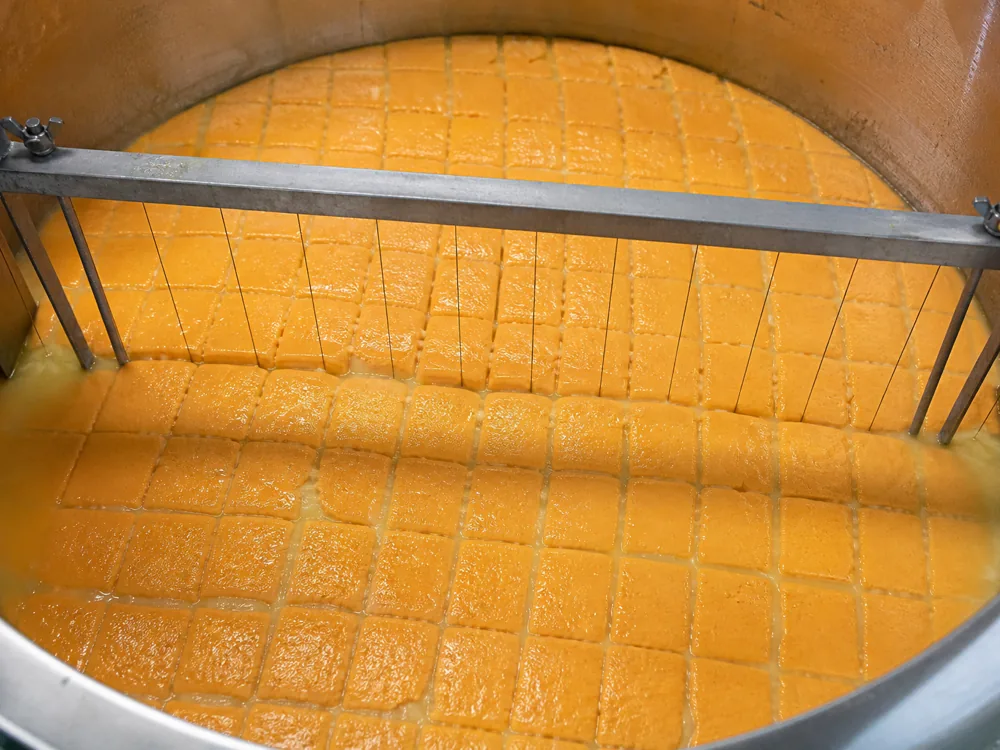
- The curds and whey are gently scalded and separated, and the curd is cut into blocks, turned by hand, put through the mill and salted.
- The salted curd goes into moulds, where it is pressed and turned for 24 hours; Culture describes 24 hours of pressing, a turn, and a further 24 hours.
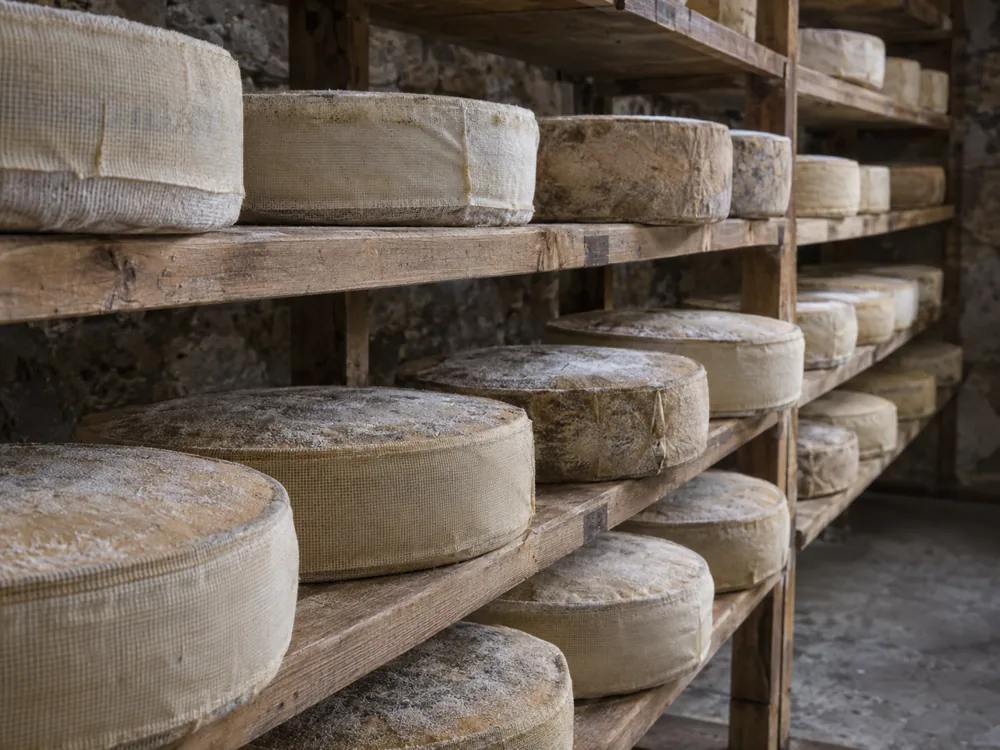
- The wheels are bound in cloth and lard and taken to the cheese store.
- They mature in the cheese store at about 11°C (Culture gives 50°F, about 10°C).
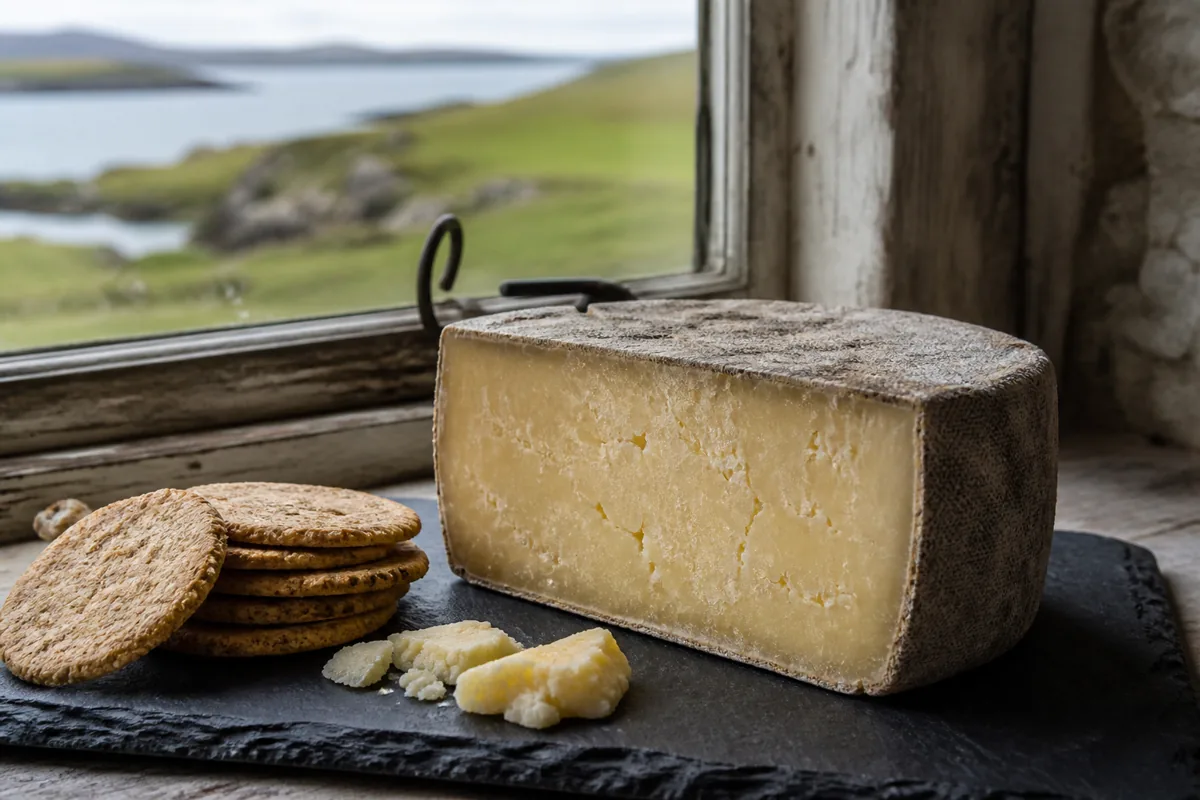
The cloth and lard do the work that a wax coat or a plastic pack would do on a block. The producer says they let the Red Leicester form a natural rind and let the cheese breathe, and that the rind contributes to its flavour and complexity.
Why Is Sparkenhoe Red Leicester Orange?
The orange is annatto, a natural dye from the seeds of the achiote tree. The producer pours it into the milk in the vat after the rennet.
Because it goes into the milk before the curd forms, the colour is carried through the curd and does not depend on anything applied to the outside of the wheel.
Neal's Yard Dairy describes annatto as a plant dye from a South American bush that has coloured cheese for almost 300 years. Wikipedia likewise says Red Leicester has been coloured with annatto since the 18th century.
Hickman traces how it reached Leicester cheese. Annatto reached England as a cloth dye through Brazilian trade with Portugal, arriving as a cake that was ground into a bright deep orange-red, and unlike some other vegetable dyes it was non-poisonous.
In the 1840s, he writes, annatto used with rennet from the rumen of an unweaned calf became widespread, although many traditional farmers around Hinckley kept using lady's bedstraw to coagulate the milk.
Lady's bedstraw was also the older colourant in Hickman's account: its roots, boiled, gave a red dye, and he credits the plant with the deep orange-red cheese Leicestershire became known for. Wikipedia names carrot or beetroot juice as the earlier colouring instead.
Hickman says the reason for colouring at all was competition: the cheese factors wanted a distinctive Leicester cheese to set against Cheddar, then England's main speciality cheese, which was a rich orange.
The Cheese Professor reports the same belief, that the colour was added to tell Leicester apart from Cheddar and other hard cheeses.
Is Sparkenhoe Red Leicester Vegetarian?
No. Sparkenhoe is set with animal rennet, which the producer, Culture and Neal's Yard Dairy's ingredient list all state.
The rind adds a second animal ingredient. Neal's Yard Dairy's ingredient list ends with Clothbound with Lard, after milk, salt, animal rennet, annatto and cheese cultures.
What Does Sparkenhoe Red Leicester Taste Like?
The sources agree on a nutty, slightly sweet cheese with a citrus edge, and they describe its texture in opposite directions.
| Source | Texture | Flavour |
|---|---|---|
| Culture | Firm and smooth, with relatively high moisture evenly distributed | Deep, full and pleasing, balanced by a citrus tang that lingers to the finish |
| Neal's Yard Dairy | At once chewy and moist; the selected batches are succulent but chewy | Complex and balanced, nutty and mellow, with no aggressive acidity |
| The Cheese Professor | Hard and pressed like Cheddar; it should snap like a carrot when bent, per Jo Clarke. Describes traditional Red Leicester wheels as dry and crumbly | Slightly sweet and nutty, with caramel notes and a somewhat citrus finish |
| Wikipedia (traditional wheels) | Fairly firm and dry, friable | Slightly sweet and mellow, stronger as the cheese matures |
Age is the likeliest reason for the gap. Neal's Yard Dairy says the texture dries and the flavour strengthens and deepens as the cheese matures, from savoury, smooth and mellow to nutty and rich.
That would fit a younger piece reading as moist and chewy and an older one as dry enough to snap, though no source compares the two directly.
Batch variation is a second candidate, because The Cheese Professor says the Clarkes accept that each handmade batch differs slightly.
Which Age and Version Should You Buy?
The farm sells two versions, a traditional wheel matured for 6 to 8 months and a vintage matured for 12 to 14 months. Other sellers give different figures.
| Source | Age stated |
|---|---|
| Producer | 6 to 8 months for traditional, 12 to 14 months for vintage |
| Neal's Yard Dairy | Average 5 to 6 months, plus a Mature version selected from wheels aged up to a year |
| Delicious magazine | Six months on beech shelves before sale |
| Culture | About 4 months at 50°F |
Part of the spread comes from who does the maturing. Neal's Yard Dairy says it visits the farm once a month to taste and select batches.
At its Bermondsey arches the cheeses are turned and brushed once a week, so the age at its counter reflects its own selection as well as the farm's.
Pieces run from a smallest cut of 295 to 329 g up to a whole wheel of about 9.6 to 10.5 kg on Neal's Yard Dairy's page.
The milk treatment can differ between pieces. Neal's Yard Dairy's page says it sells both a pasteurised and a raw milk version, each labelled with its milk treatment.
The farm itself describes only raw milk; the label is the reliable way to know which piece is raw and which is pasteurised.
Check two things on the label: the age, and whether the milk is raw or pasteurised.
How Do You Serve and Cook With Sparkenhoe Red Leicester?
The Cheese Professor recommends it for a cheese board, where it adds colour, and says it melts easily into sauces and soups.
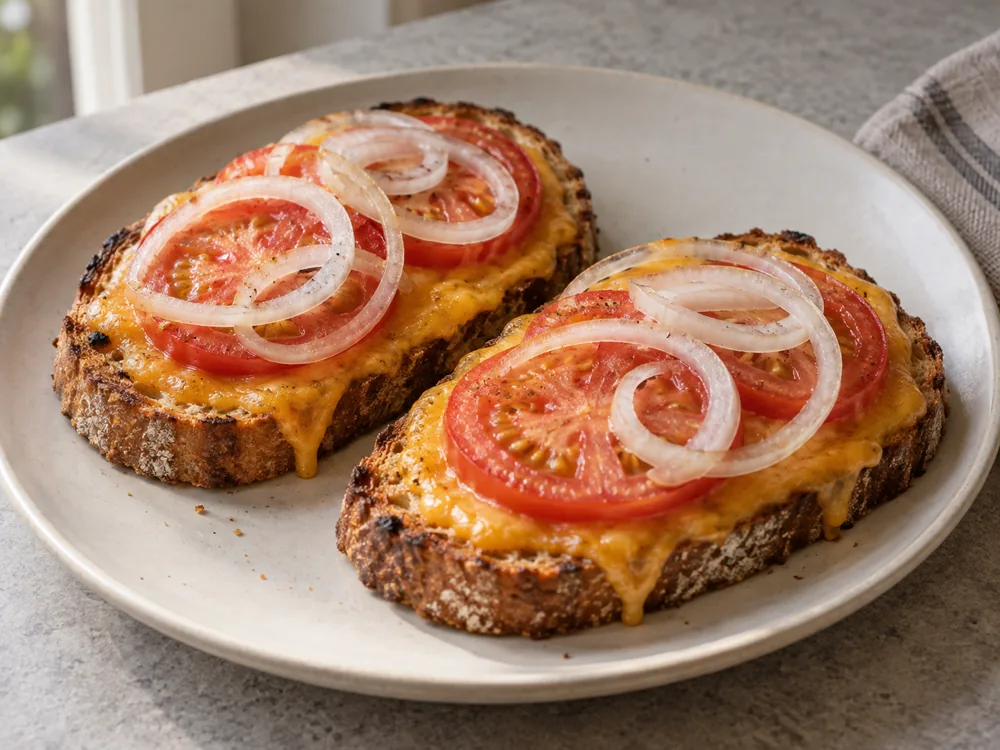
Jo Clarke's preferred use, quoted by The Cheese Professor, is melted on toast, especially with a bit of fresh tomato and onion. She adds that the family use it like parmesan.
For a drink, Culture calls Sparkenhoe a beautifully balanced cheese that would suit brown ale.
Is Sparkenhoe Red Leicester Safe in Pregnancy?
The NHS lists pasteurised or unpasteurised hard cheeses, such as cheddar, gruyère and parmesan, as safe to eat in pregnancy, and it does not name Red Leicester.
Culture lists Sparkenhoe as firm and The Cheese Professor calls Red Leicester a hard pressed cheese similar to Cheddar, so the match to the NHS hard cheese line rests on those descriptions.
The NHS names hard cheeses on a separate line from its caution that foods made from unpasteurised milk, such as soft ripened goats' cheese with a white coating, must be thoroughly cooked.
The CDC draws the line differently. Its cheese row names hard cheese made with pasteurized milk as safer, and its milk row lists dairy products made from raw milk as the riskier choice, so a raw milk Sparkenhoe is a case where the two agencies differ.
The CDC adds that pregnant women are 10 times more likely to get a Listeria infection. Where a pasteurised Sparkenhoe is on sale, that version is the one the CDC table covers.