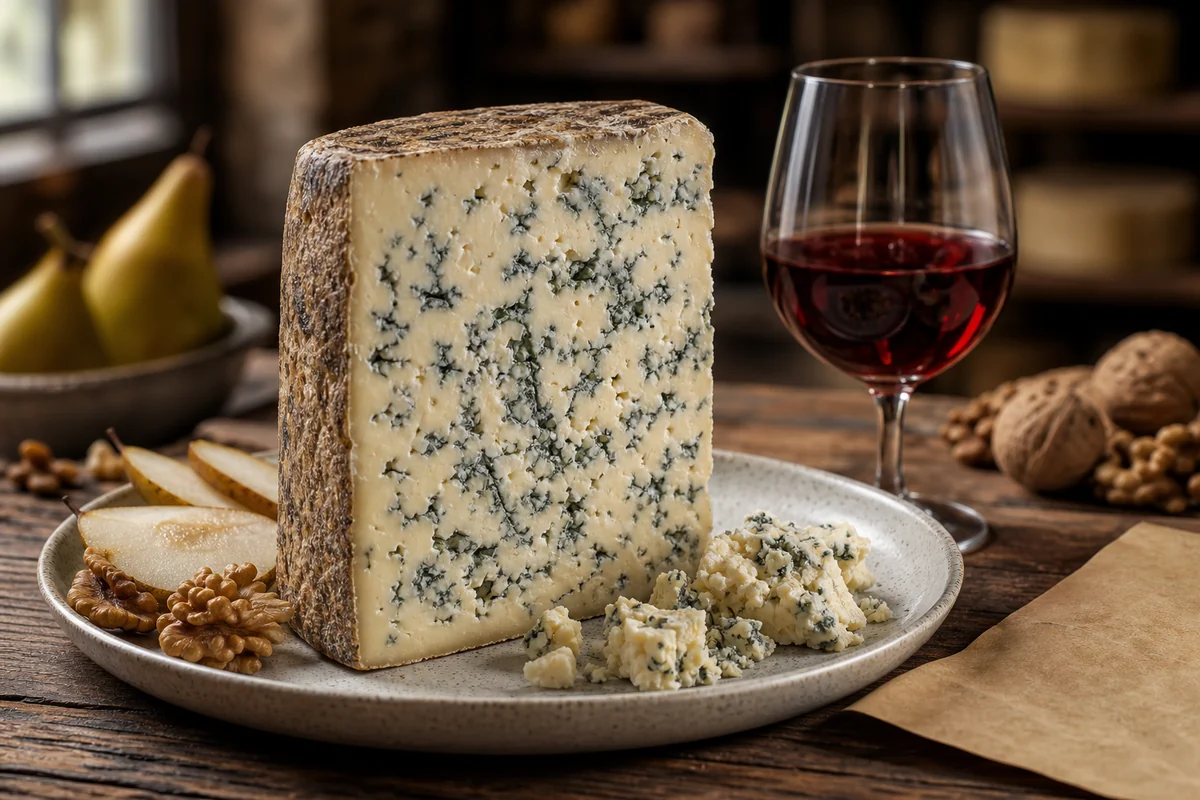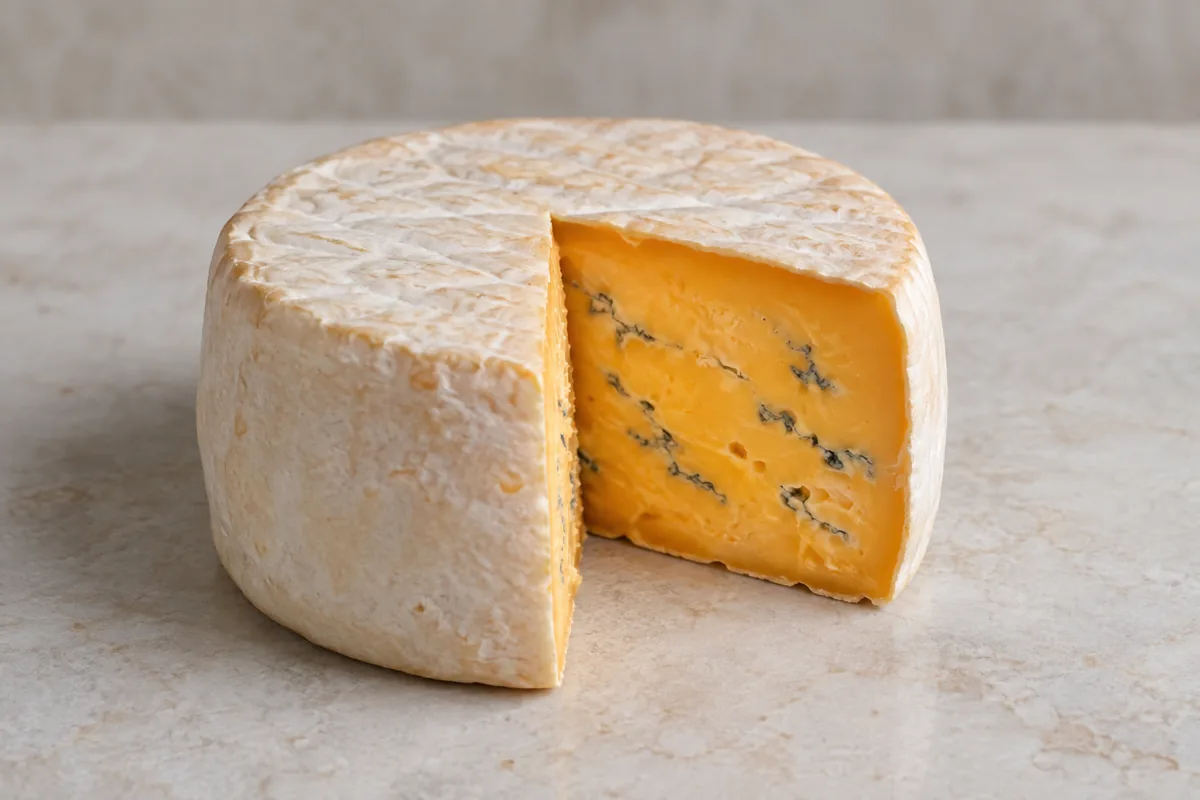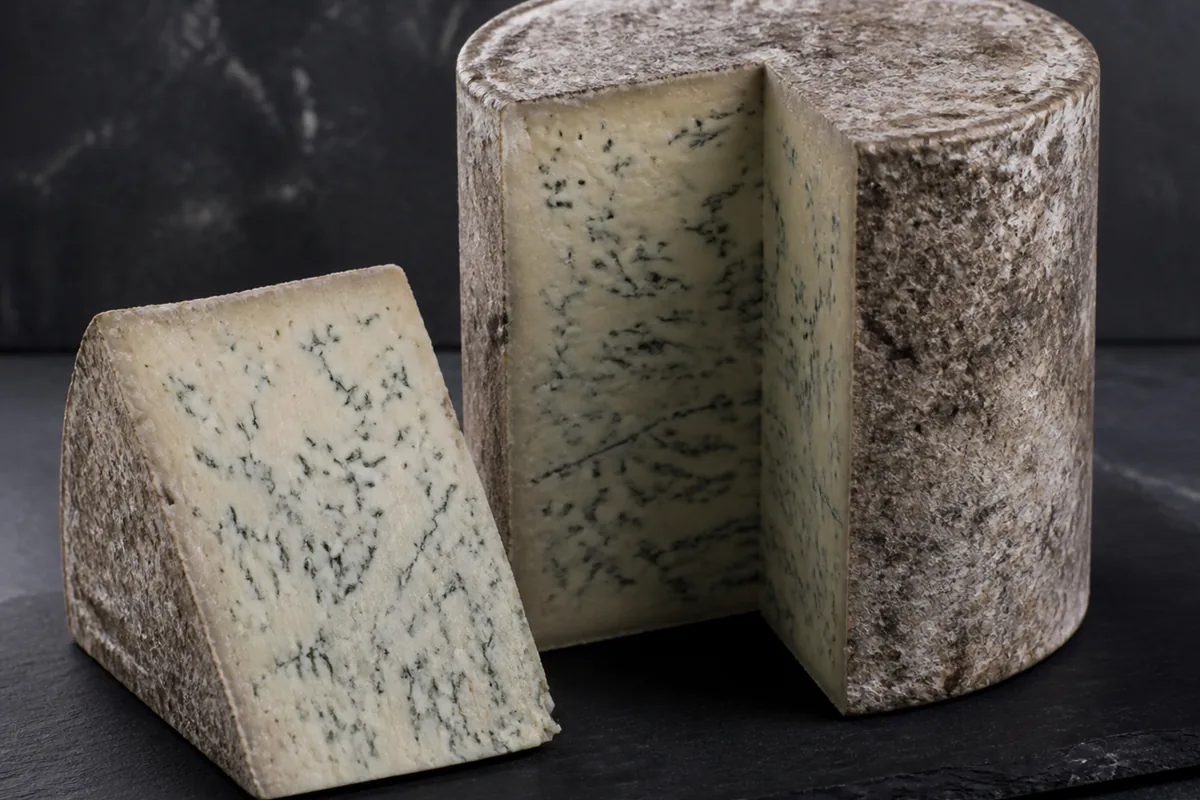
If most blue cheese makes you brace for salt and pepper, Bayley Hazen Blue gives you more room to settle into the flavour. Blue spice is still there, but toasted nuts, grass, anise and deep savoury notes arrive around it.
The dense, creamy paste feels closer to fudge than to a loose, wet blue. That texture slows the bite down, which helps you notice the milk, rind and blue veining as separate parts of the cheese.
Jasper Hill Farm makes the cheese in Greensboro, Vermont, from raw cow's milk, ageing it under a dry mottled natural rind while piercing lets fine blue-green veins develop through the interior.
Ageing usually runs three to four months. At the counter, the Jasper Hill name, raw-milk wording, clean dense paste and refrigerated delivery tell you more than a generic “Vermont blue” description.
In This Article
What Is Bayley Hazen Blue?
Bayley begins with whole raw milk from Jasper Hill's own Andersonville herd and matures as a tall cylinder of about 7 pounds. You will normally meet it as a wedge or eighth-wheel rather than the full blue cheese.
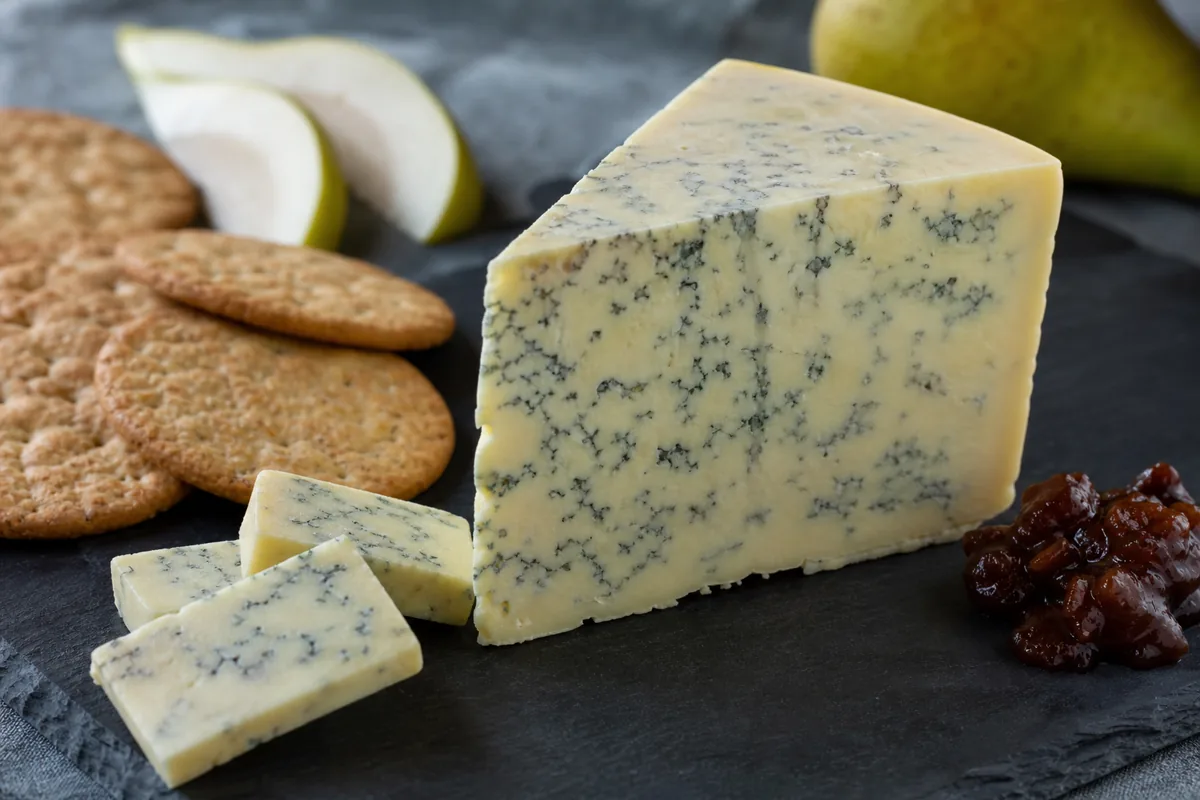
In a cut wedge, one edge may carry the firm natural rind while fine veins thread through compact cream-coloured paste instead of collecting in a few cavernous blue pockets.
How Is Bayley Hazen Blue Made and Aged?
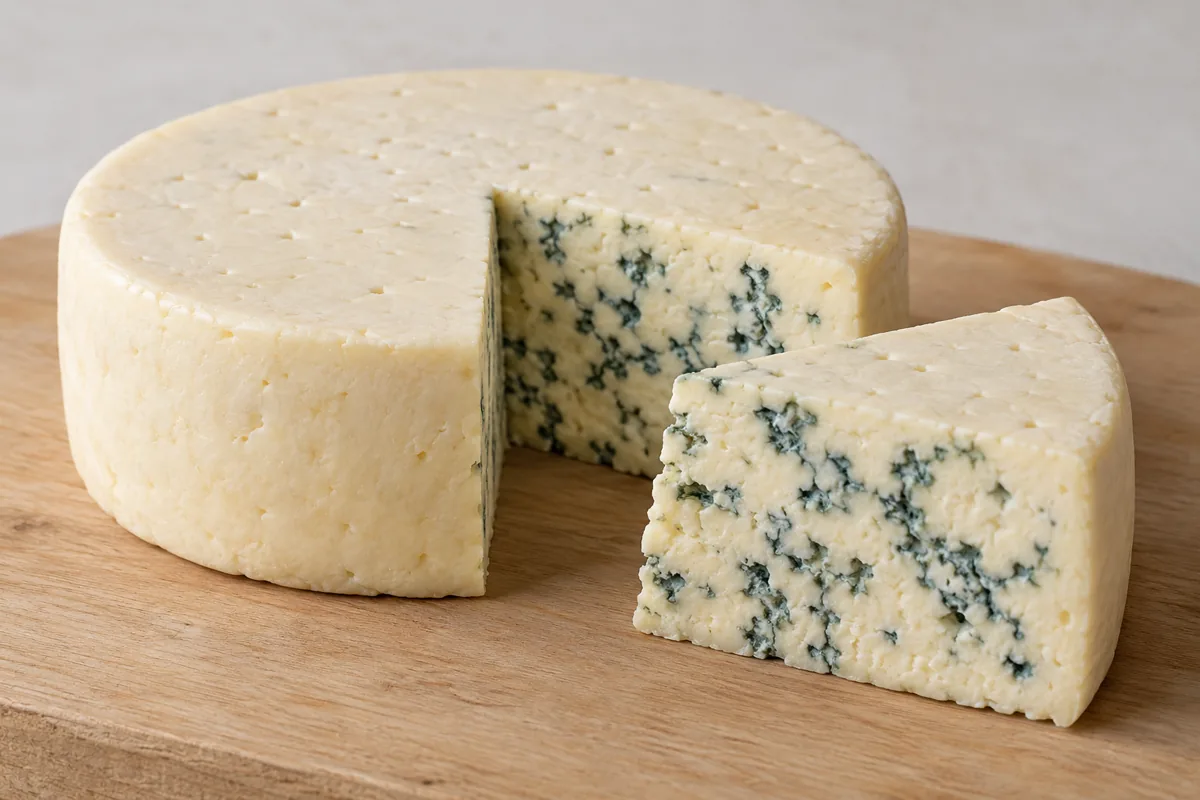
After the milk sets, the fragile curd is cut, stirred and drained into tall perforated moulds. The wheels are turned as they settle, salted and then pierced, creating narrow channels that bring oxygen to the blue culture inside the paste.
Bayley then moves into Jasper Hill's underground cellars, a 22,000-square-foot facility with seven vaults calibrated for different cheeses. It is the signature wheel of Vault 7, where young cheeses spend their first 60 days on pine boards.
High humidity slows drying and strong air exchange supplies oxygen, allowing the interior veining and surface flora to develop together rather than as unrelated features.
Pine boards moderate moisture where each wheel meets the shelf, and workers turn and rub the cheese as it ages. That care helps the cylinder hold its shape and keeps one patch of rind from taking over, giving you a balanced natural surface around the blue interior.
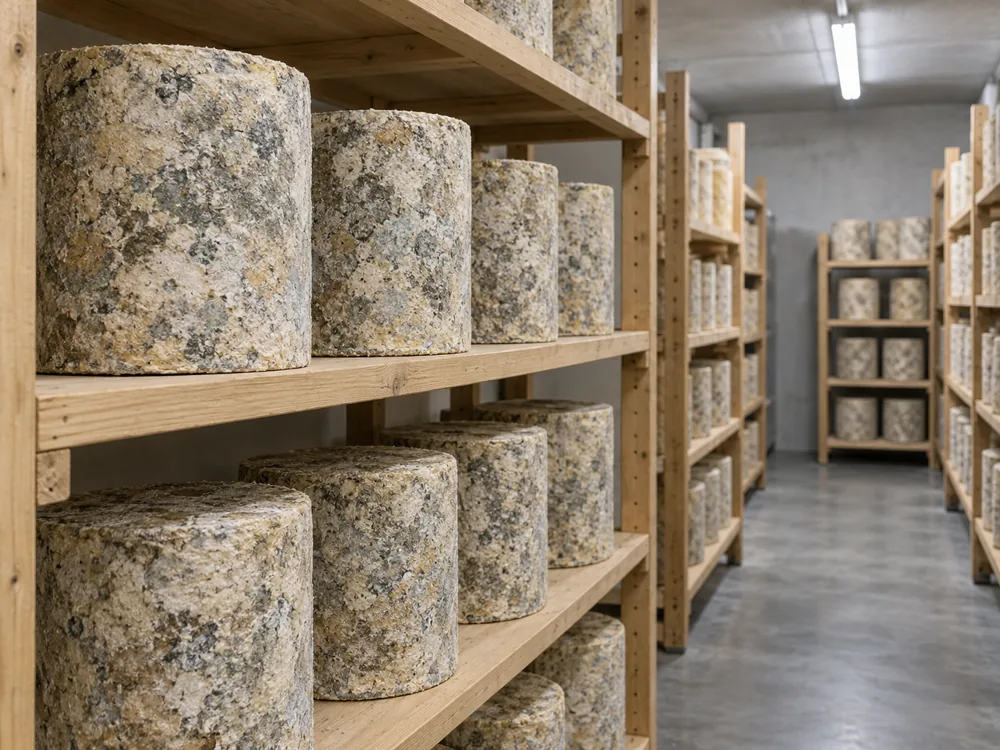
How Long Is It Aged, and What Texture Should You Expect?
The current producer range is three to four months, long enough for the rind to establish itself and for roasted savoury flavour to develop in the paste. It is still a range rather than a fixed release day, because milk, moisture and cellar progress vary from batch to batch.
Expect a dense, creamy paste with a slight crumble at the cut. “Fudge-like” captures the experience well: your knife first meets resistance, then the cheese softens richly on the palate.
A small crumble belongs to the style, while a chalk-dry wheel or loose wet interior gives you a practical warning before you focus on individual flavour notes.
Let your serving portion warm briefly before you judge it. Straight from the refrigerator, firmer fat and muted aromas can make both texture and flavour seem flatter than they will at the table.
Why Does Bayley Hazen Blue Have a Natural Rind?
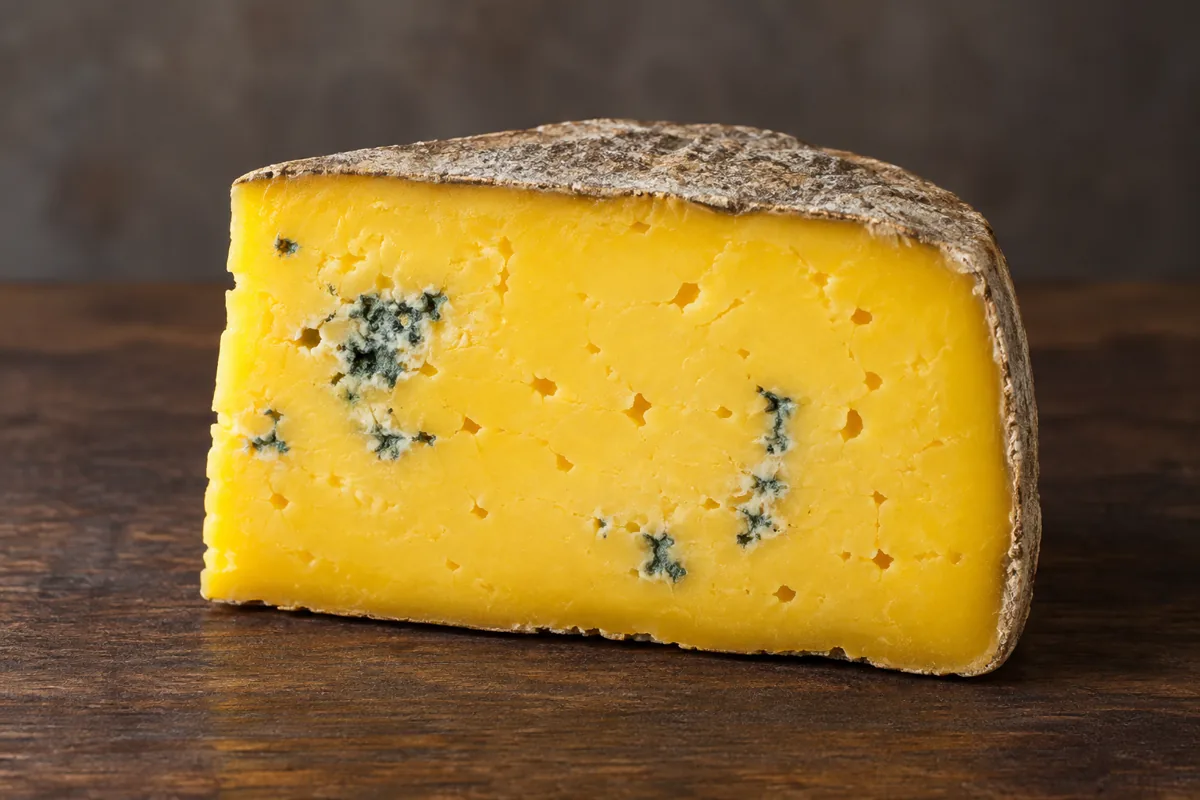
Many familiar blue cheeses reach you in foil, but Bayley Hazen develops an exposed natural rind in the cellar. The surface becomes firmer than the paste and takes on a mottled grey to whitish-grey coat over an orange background.
A mature rind carries yeasts, moulds and bacteria that contribute mushroom and earth aromas. Its mixed, mottled appearance is therefore expected, while a perfectly uniform white coat would not match the normal description.
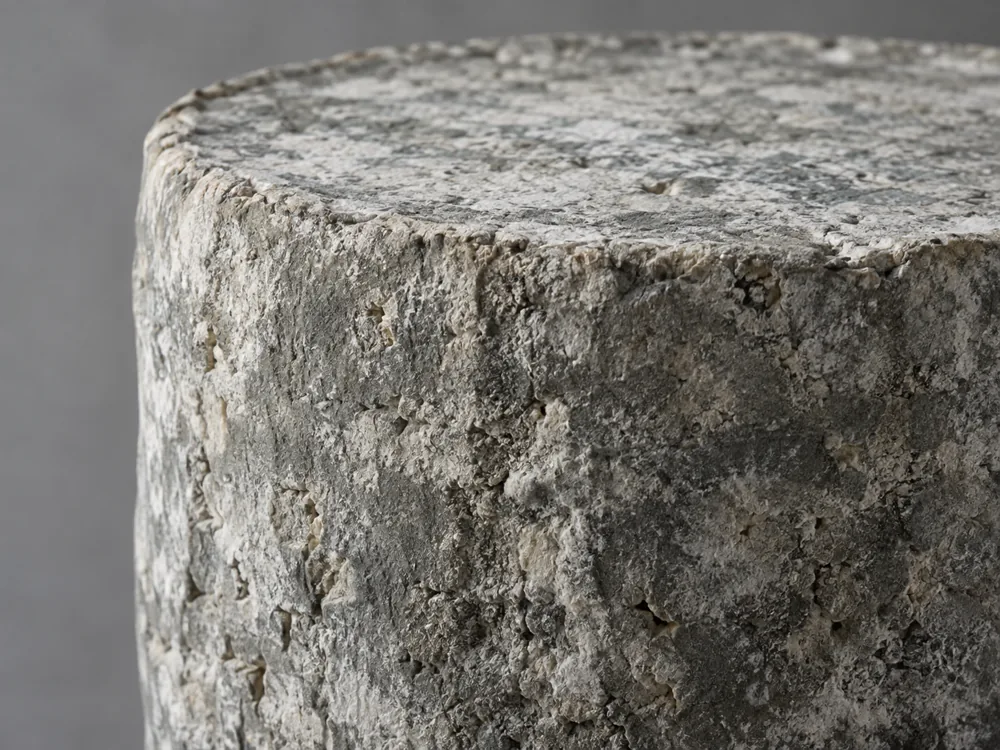
The rind stabilises the tall wheel and adds earthy, mushroom-like aromas, but its open-air flora remain distinct from the internal blue growing along oxygen channels created by piercing.
How Did Bayley Hazen Blue Get Its Name?
Mateo Kehler began with an English Devon Blue recipe, then changed the format and ageing to suit Jasper Hill's Vermont milk and cellars. The lineage explains comparisons with Stilton, while the raw farmstead milk, natural rind and Vault 7 treatment explain why Bayley tastes like its own cheese.
The name comes from the Bayley-Hazen Military Road, commissioned by George Washington during the Revolutionary War. The road brought early settlers toward Greensboro and still crosses the region, so the label gives you a local place-name rather than two founders' surnames.
What Does Bayley Hazen Blue Taste Like?
The usual peppery attack of blue cheese is subdued here, allowing toasted nuts, grass and creamy milk to reach you first. If assertive blues normally put you off, that order makes Bayley more approachable without making it mild.
As the bite develops, brown butter and earth can move toward anise or liquorice, with a dark savoury note holding the sweetness in place well enough for burgers or dessert wine.
- Sweet and dairy: cream, butter, toasted-nut sweetness and occasional chocolate.
- Green and earthy: grass, nuts, mushroom and earth from the milk and natural rind.
- Spice: anise, liquorice and pepper, with salt becoming clearer in the finish.
- Intensity: expressive enough for blue-cheese fans, yet balanced enough for a first serious blue.
A documented tasting sequence moves from cream, brown butter, nut and earth into peppery spice and salt. “Balanced” is therefore more accurate than “mild”: the pepper arrives later, but you will still taste it.
Which Awards Has Bayley Hazen Blue Won?
| Year | Competition | Result |
|---|---|---|
| 2014 | World Cheese Awards, London | Super Gold and World's Best Unpasteurized Cheese |
| 2014 | World Championship Cheese Contest | Best in Class |
| 2019 | International Cheese Awards, Nantwich | Gold in its class and Reserve Supreme Champion |
| 2019 | American Cheese Society Competition | Bronze medal in its class |
| 2024 | World Cheese Awards, Viseu | Super Gold, fifth overall and Best American Cheese |
Awards become meaningful only when you read them at their actual level. A class medal covers one category, Super Gold places the cheese among a competition's leading entries, and Reserve Supreme Champion means runner-up for the overall title.
The 2024 result gives you the clearest scale: Bayley scored 83 points, three behind the overall winner, in a field of 4,786 cheeses. It was the only American entry in the final top 14 and took the Best American Cheese trophy.
Seen together, the table shows repeated performance across different years and competitions without turning one award into several claims or treating a class prize like an overall title.
How Should You Serve Bayley Hazen Blue?
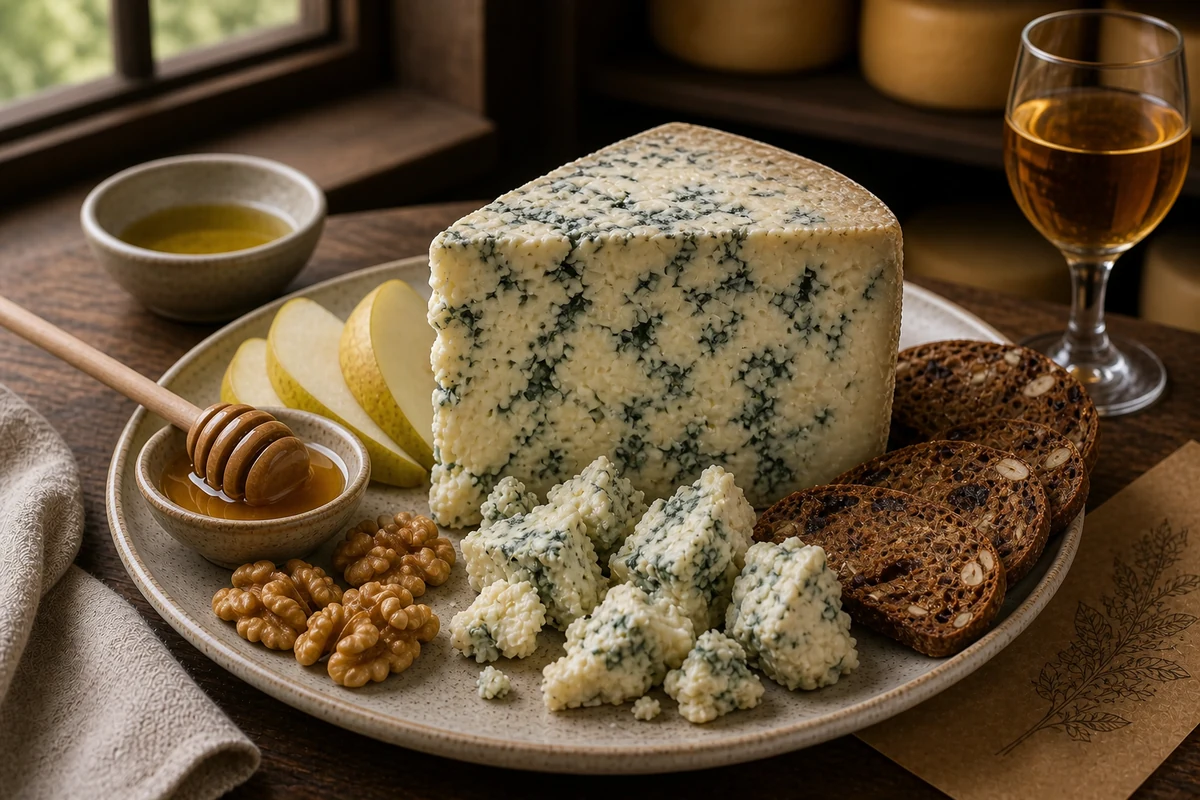
We would build a blue cheese pairing around contrast rather than adding more pungency. Sweet fruit softens the salt, while roasted malt or cocoa meets the nutty savoury side.
You do not need many accompaniments because leaving space around a slowly warming wedge makes its later anise, earth and pepper notes easier to follow.
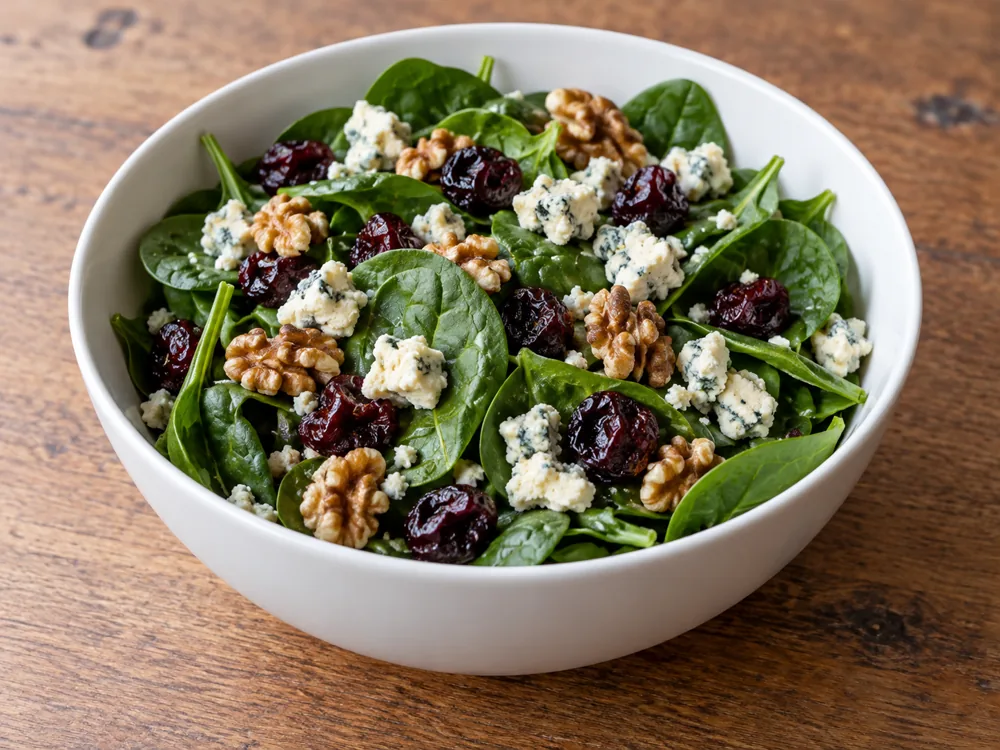
For a hot use, crumble it over burgers so small pieces melt into the meat. On spinach, walnuts and dried tart cherries add bitterness, crunch and tart fruit around the creamy blue.
| Pairing | Type | Why It Works |
|---|---|---|
| Dark chocolate | Food | Bitterness reins in the salt, while cocoa picks up the cheese's occasional chocolate and roasted notes. |
| Imperial stout | Drink | Roasted malt meets the nutty, savoury flavours and has enough body for the dense paste. |
| Fruity red dessert wine | Wine | Sweet fruit counters salt and pepper while leaving the anise and grass notes visible. |
| Port or sweet Bordeaux | Wine | Both bring sweetness and dark-fruit depth; pour a small glass because the cheese is already intense. |
| Fig jam and toasted nuts | Food | Jam supplies concentrated fruit, while almonds or walnuts echo the toasted-nut sweetness. |
| Fresh pear | Food | Crisp water-rich fruit refreshes the palate between dense, salty bites. |
For a cheese plate, cut a cohesive wedge and let it warm; for a salad or burger, crumble it while cold, when the paste is easier to control. Start modestly because the salt and blue character become more obvious as the food heats or the cheese sits on the plate.
Can You Eat Bayley Hazen Blue During Pregnancy?
Bayley Hazen Blue is made from raw, unpasteurised cow's milk and has blue veins. When you compare it with pregnancy guidance, those facts carry more weight than the cheese's age, firmness or awards.
CDC guidance lists soft cheese made from unpasteurised milk, including blue-veined cheese, among the riskier choices. Bayley Hazen is not named, so the guidance does not settle how its dense natural-rind style should be classified.
The same guidance places hard cheese made with pasteurised milk, such as Asiago, among safer choices. Bayley Hazen does not meet the pasteurised-milk condition, even if a particular cut feels firm.
NHS guidance permits hard cheeses but requires soft blue-veined cheeses to be cooked until steaming hot. Its examples include Danish blue, Gorgonzola and Roquefort, but not Bayley Hazen Blue.
Your clinician may distinguish between a cold serving and cheese cooked until steaming. Ask before serving it to someone at higher risk rather than using the wheel's firm texture as a safety category.
An FDA survey tested 1,606 raw-milk cheeses aged at least 60 days and found pathogens in fewer than one percent of samples, while still identifying Listeria in semi-soft cheese as a concern. That broad surveillance result is not a safety clearance for Bayley Hazen or for cheese during pregnancy.
Where Can You Buy Bayley Hazen Blue, and What Works as a Substitute?
You are most likely to find Bayley Hazen Blue through US specialty cheesemongers and retailers with refrigerated shipping. A whole wheel weighs 6 to 7 pounds, so an eighth-wheel or smaller cut is the practical size for most homes.
On 7 October 2026, the producer shop listed a roughly 12 oz eighth-wheel at $30, while Formaggio Kitchen listed $18.95 to $41.95 across its options. Those prices become comparable only after you match the weight and add cold-shipping cost.
Once you open the cheese, wrap the cut in cheese paper or parchment and keep it in a humid refrigerator compartment. Jasper Hill's care guidance recommends checking and rewrapping leftovers every few days.
A natural-rind blue can move blue, green, white or grey flora onto a cut face, so ask the seller when you cannot tell whether new growth belongs to the cheese rather than guessing from colour alone.
Devon Blue is the closest documented relative because its recipe provided the starting point. Stilton can fill a similar tall British-style blue role, but neither gives you Bayley's combination of raw Vermont milk, natural rind and nutty-anise flavour.
You can eat it if you enjoy the flavour and texture, and the retailer's care guide notes that most cheese rinds are edible. Jasper Hill explains that its natural rinds contain intentionally cultivated moulds, yeasts and other microflora, so taste a small edge with the paste and trim it if it dominates the bite.
No under the current retail specification, because Formaggio Kitchen lists animal rennet in the product details. Check the label on your own cut if the ingredient determines what you buy.
Jasper Hill does not recommend freezing cheese because texture and flavour can suffer. Its care guidance makes one practical exception: shredded cheese intended for cooking can freeze acceptably, where the texture change matters less.