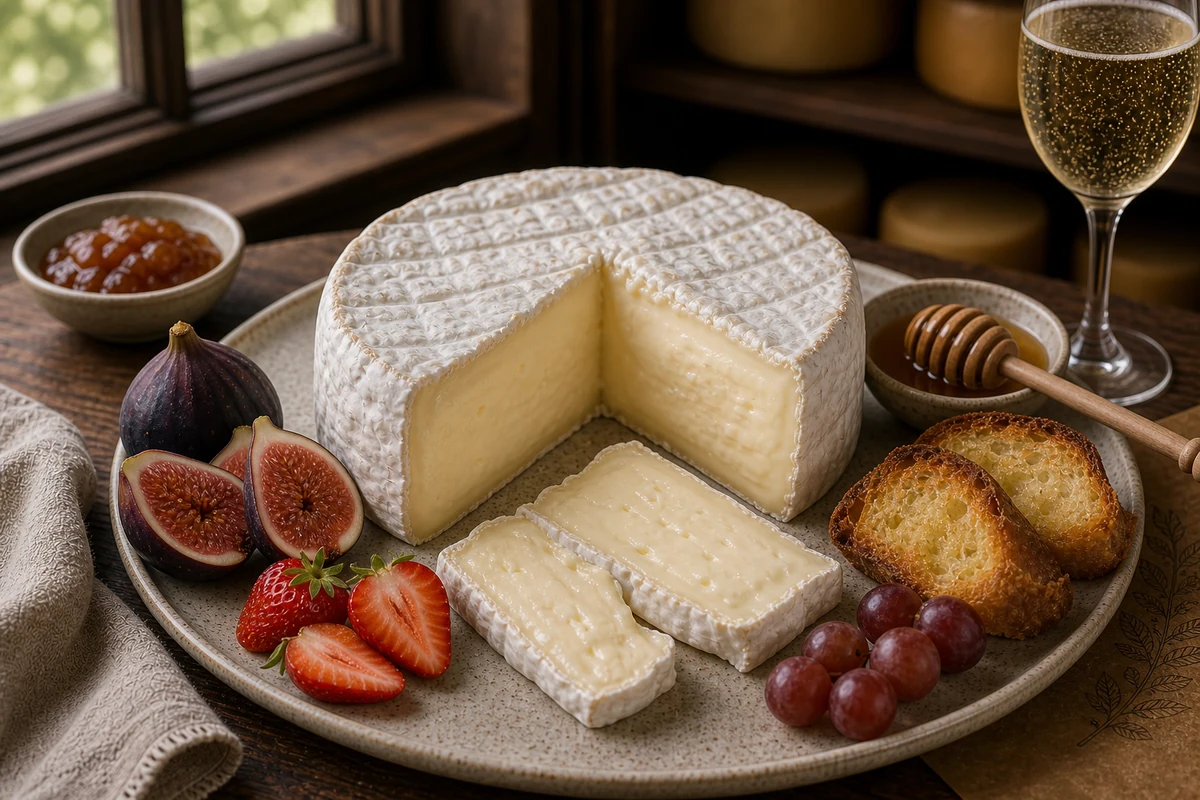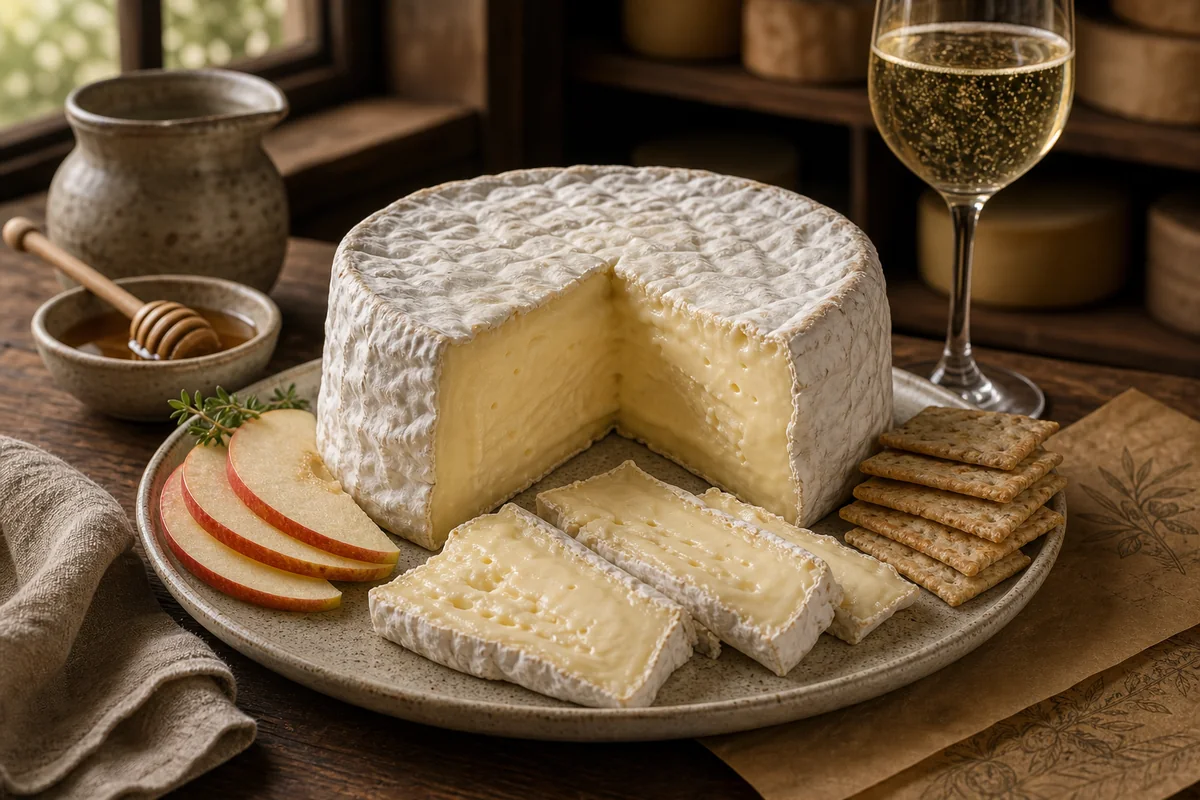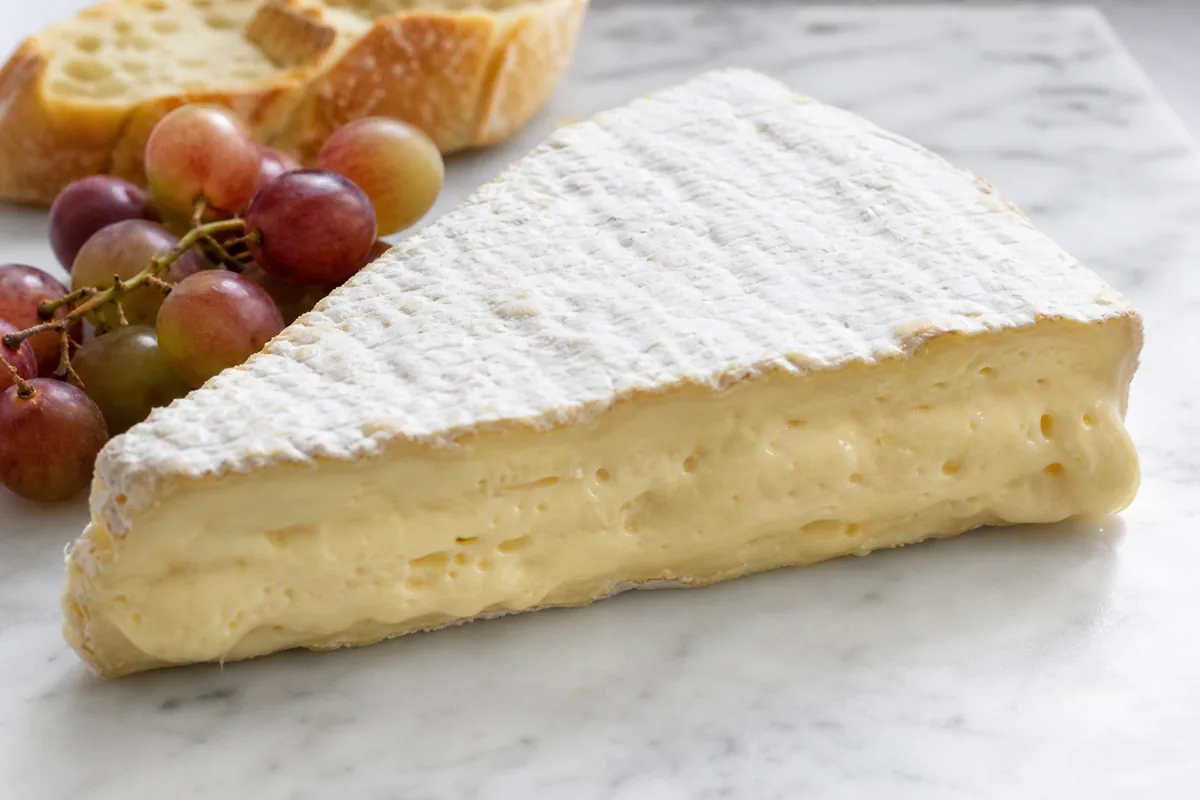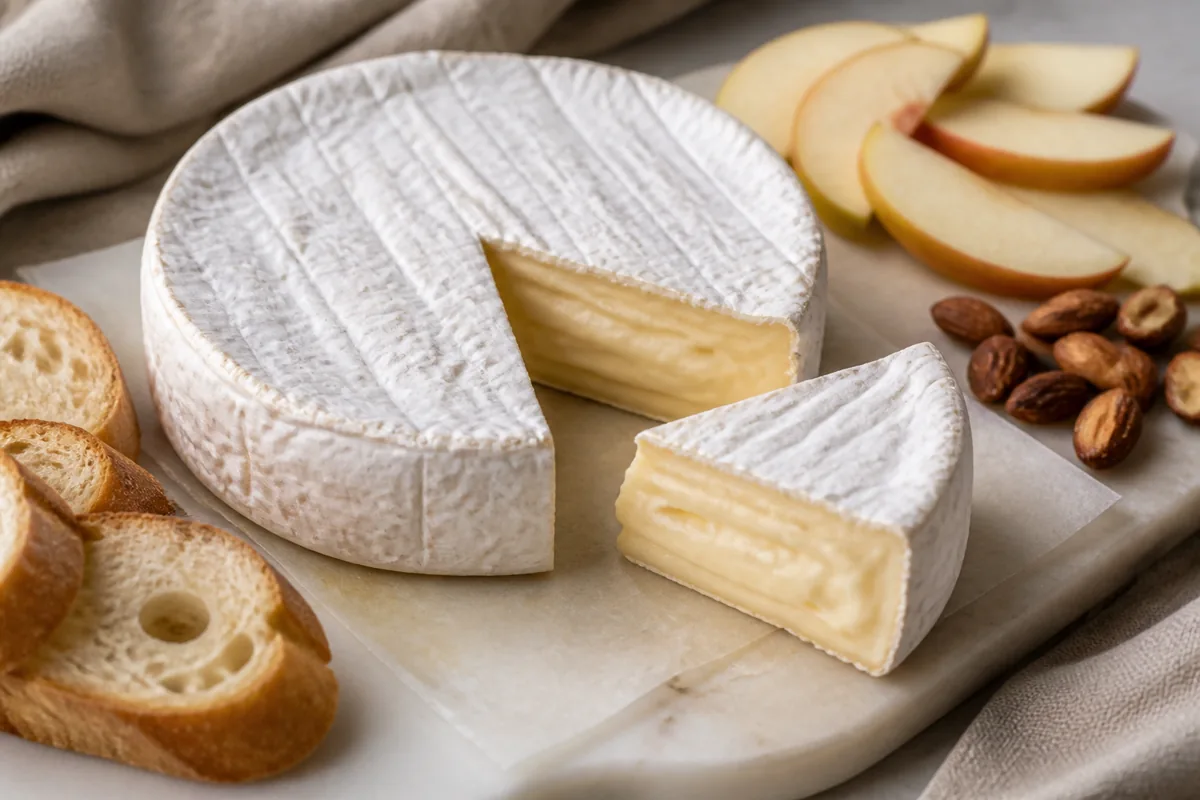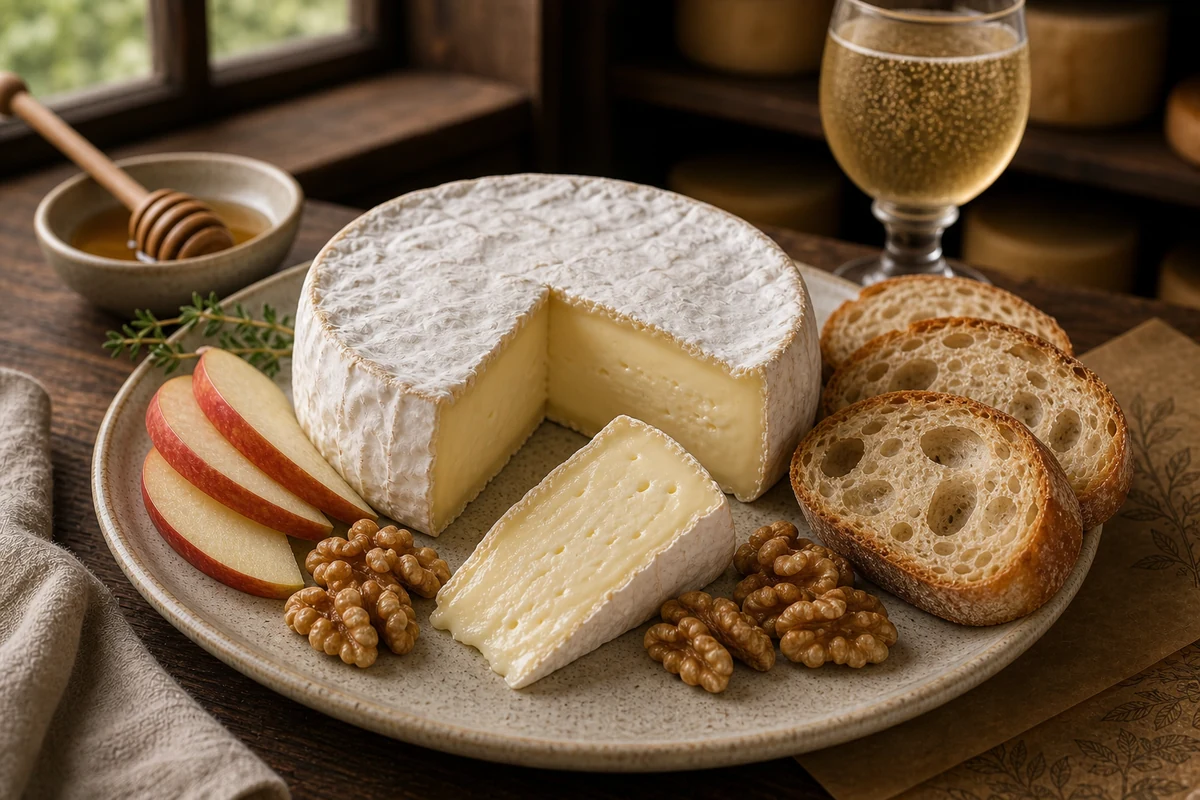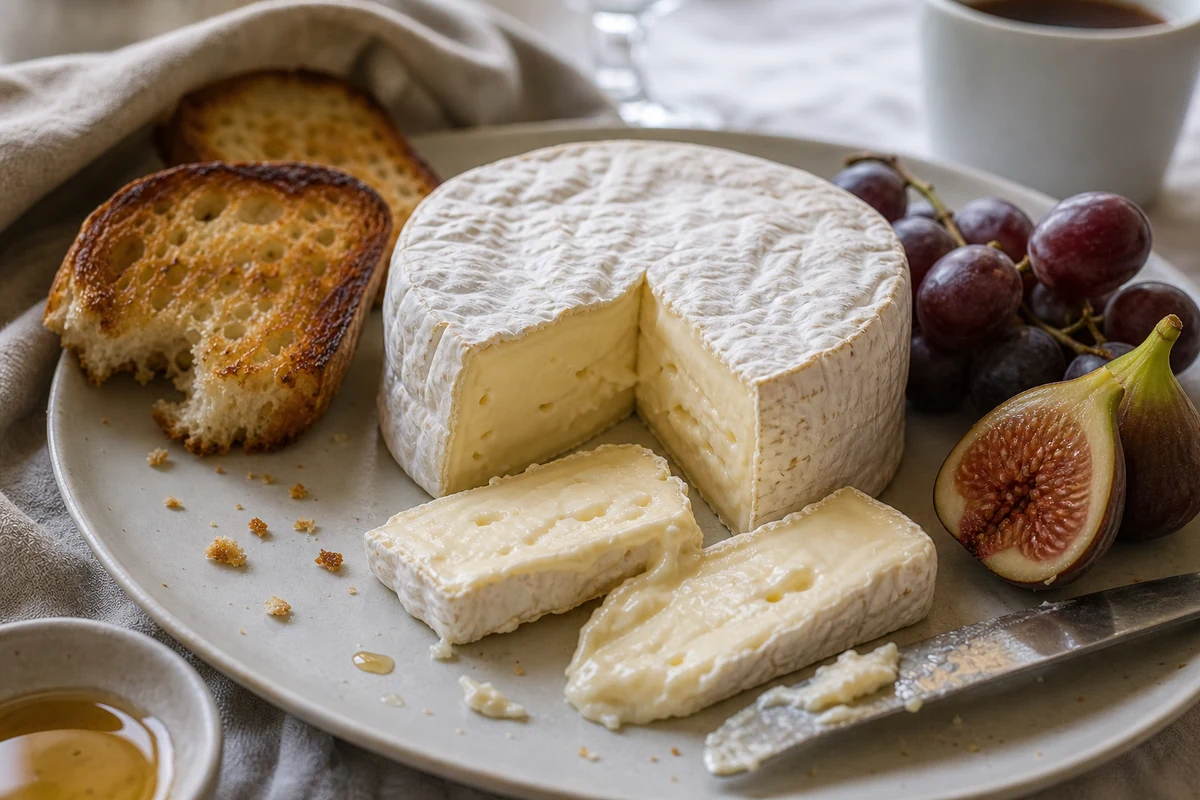
Explorateur is a pasteurized cow's-milk cheese from Seine-et-Marne, France. It is enriched with cream and sold as a soft, bloomy-rind cheese with a rich paste and a white surface.
The name alone does not tell you how ripe a particular piece is or how long it will keep after opening. Use the cut face, package date, storage instructions, and milk statement on the cheese you are buying.
In This Article
What Explorateur is
Les Produits Laitiers, the French dairy industry reference, records Explorateur as a pure cow's-milk cheese with a soft bloomy rind.
It traces the cheese to Seine-et-Marne in the 1950s and links the name to the Explorer rocket launch.
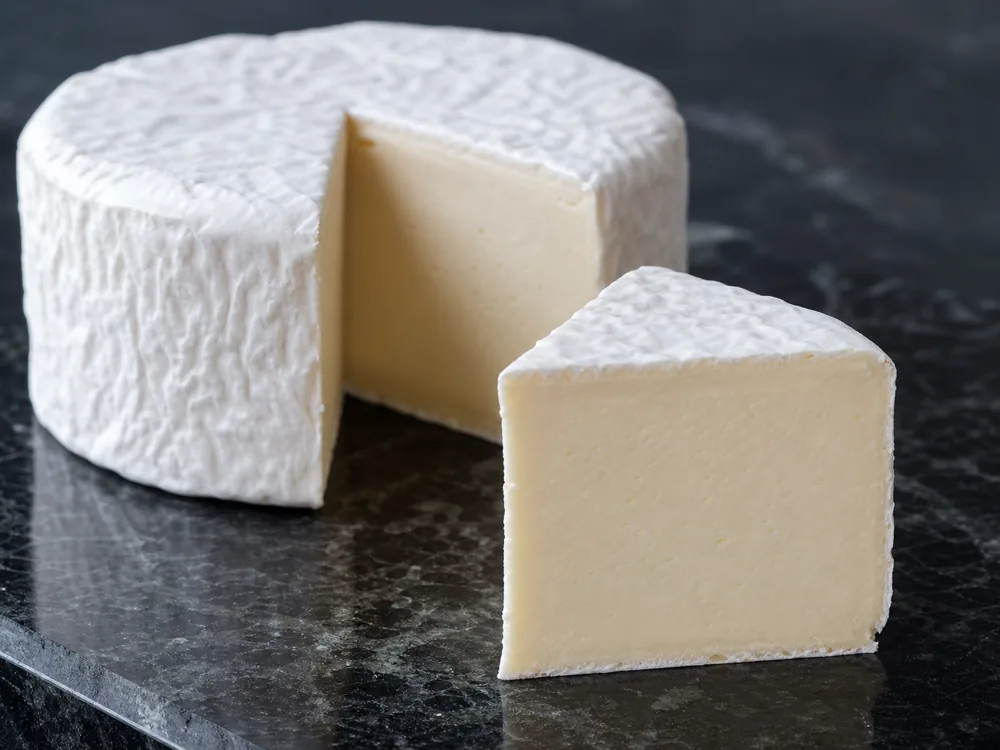
The same reference lists flat cylinders of 250 g, 450 g, and 1.6 kg, with 38 percent fat by total weight.
Culture's cheese library describes the ripened product as a triple-cream made with pasteurized cow's milk and reports 75 percent fat in dry matter.
Those percentages use different bases. The 38 percent figure refers to the cheese as sold, while fat in dry matter excludes its water, so the two numbers should not be compared as if they measured the same thing.
How Does Explorateur Taste and Feel?
Les Produits Laitiers describes the paste as exceptionally soft and butter-like, with gentle cream and mushroom aromas when the rind has bloomed.
Culture also records a mild, rich, buttery profile and an ivory paste with a dense, fluffy texture.
The rind adds the mushroom note, while the center carries more of the cream and butter character. Exact intensity changes with ripeness and storage, so a package description and the condition of the wedge are more useful than a fixed tasting script.
Taste one bite with the rind and one from the center. That simple comparison shows whether you enjoy the bloomy surface or mainly want the cream-rich paste.
How to read ripeness
Bloomy-rind cheese softens from the surface toward the center as its surface cultures work. A firmer central band can therefore coexist with a softer layer under the rind, but the amount of contrast depends on the individual cheese.
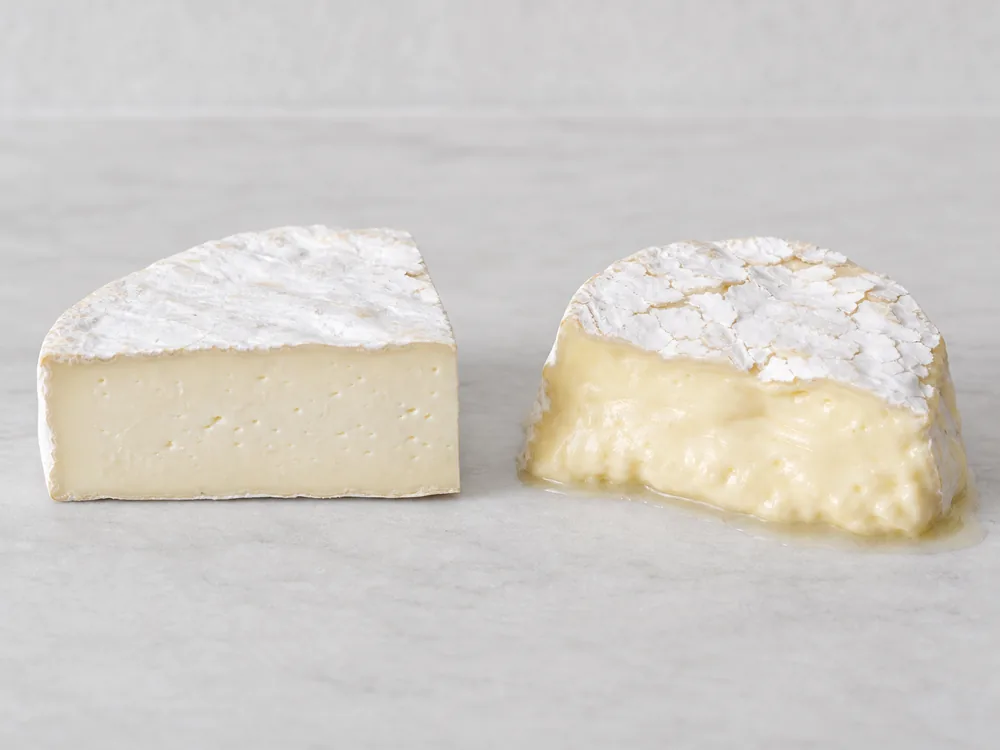
- For neat wedges: Choose a piece that yields slightly but still holds its sidewall when cut.
- For a softer spread: Look for paste that has softened toward the center without a broken rind or pooled liquid.
- For safety: Do not rely on smell or appearance alone. Check the use-by date, seal, and cold chain.
Strong collapse, a damaged wet rind, or unexpected discoloration gives you a reason to leave that package behind. None of these cues can replace the printed date or storage instructions.
Which Foods and Drinks Pair Best with Explorateur?
Cut narrow wedges that include rind and center, then let diners decide how much rind they want. Plain baguette or a dry cracker gives the soft paste support without adding more fat or sweetness.
Pear, tart apple, or grapes bring freshness.
Dry sparkling wine, dry cider, or sparkling water with lemon can clear the palate between bites, which helps when the cheese occupies the richest slot on a board.
For a mixed board, pair Explorateur with a firmer cheese and one fresher or more acidic item. You can vary textures across the cheese board without repeating the same role.
| Pairing | Type | Why It Works |
|---|---|---|
| Baguette | Food | A plain base supports the soft paste without covering the cream and mushroom notes. |
| Pear | Food | Juicy fruit adds freshness beside the rich paste. |
| Tart apple | Food | Acidity and crunch contrast with the soft texture. |
| Dry sparkling wine | Wine | Acidity and bubbles refresh the palate between bites. |
| Dry cider | Drink | Apple acidity works with the same fruit pairing in a lighter format. |
| Sparkling water | Drink | A squeeze of lemon provides an alcohol-free acidic counterpoint. |
How Do You Buy and Store Explorateur?
Check the product label for the maker, milk treatment, net weight, use-by date, and storage range. The French dairy reference identifies pasteurized milk, while a Carrefour Belgium listing for a 125 g product gives a storage range of 2 to 7°C, but your own package remains the controlling instruction.
The FDA advises keeping a refrigerator at or below 40°F (4°C) and returning perishable food to refrigeration within two hours, or within one hour above 90°F (32°C).
Once the package is open, there is no reliable universal three-day or five-day rule for every Explorateur format.
Rewrap the cut face so it does not dry out, keep the cheese away from raw-food drips, and use a clean knife.
Discard it if the package is damaged, the date has passed, or you are unsure that it stayed cold.
What Does the Explorateur Nutrition Label Show?
The Carrefour Belgium page for one 125 g Explorateur listing reports the following values per 100 g. These figures belong to that listing and should not be applied to every format or importer.
| Nutrient | Per 100 g |
|---|---|
| Energy | 389 kcal |
| Fat | 38 g |
| Saturated fat | 26 g |
| Carbohydrate | 1.8 g |
| Sugars | 1.8 g |
| Protein | 10 g |
| Salt | 1.3 g |
The listing names pasteurized cow's milk, salt, lactic cultures, and animal rennet. Check the package in your market for the final ingredient and allergen statement.
Can You Eat Explorateur During Pregnancy?
Pasteurization does not make cold Explorateur automatically suitable during pregnancy because it is a mould-ripened soft cheese. Current NHS guidance says pasteurized or unpasteurized mould-ripened soft cheese with a white rind should be cooked until steaming hot.
The CDC lists pasteurized soft cheeses heated to an internal temperature of 165°F (74°C) or until steaming hot as safer. Served cold, Explorateur is described as a pasteurized triple-cream soft cheese with a bloomy rind, a type the CDC list does not cover, so ask a midwife or doctor.
Which Cheeses Are Similar to Explorateur?
Brillat-Savarin and Saint-André are useful substitutes when you want another rich French triple-cream.
Délice de Bourgogne also fills a creamy bloomy-rind role, while Fromager d'Affinois works when easy spreading matters more than matching the exact identity.
- For triple-cream richness: Start with Brillat-Savarin or Saint-André.
- For a soft board cheese: Délice de Bourgogne or Fromager d'Affinois can fill the same service slot.
- For cooking during pregnancy: Choose a soft cheese that can be heated evenly until steaming hot.
These are functional substitutes. Their makers, moisture, rind development, and label values differ, so none should inherit Explorateur's exact facts.