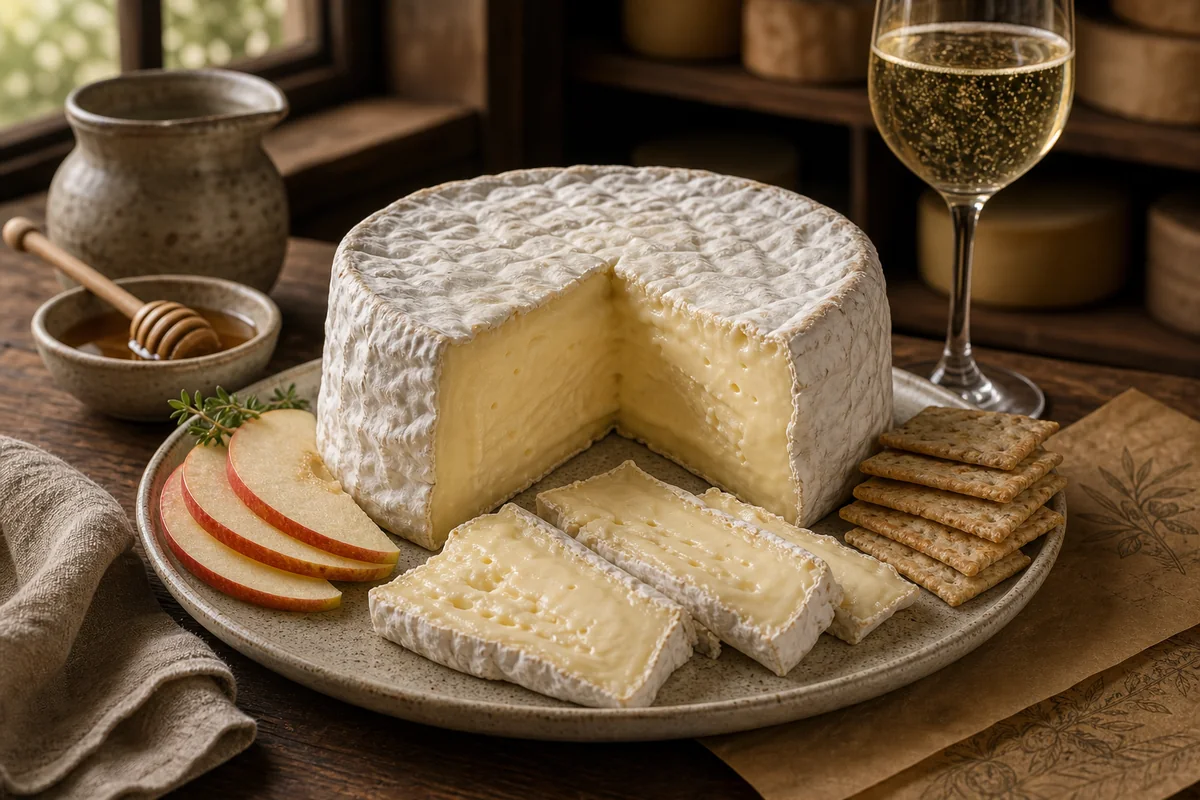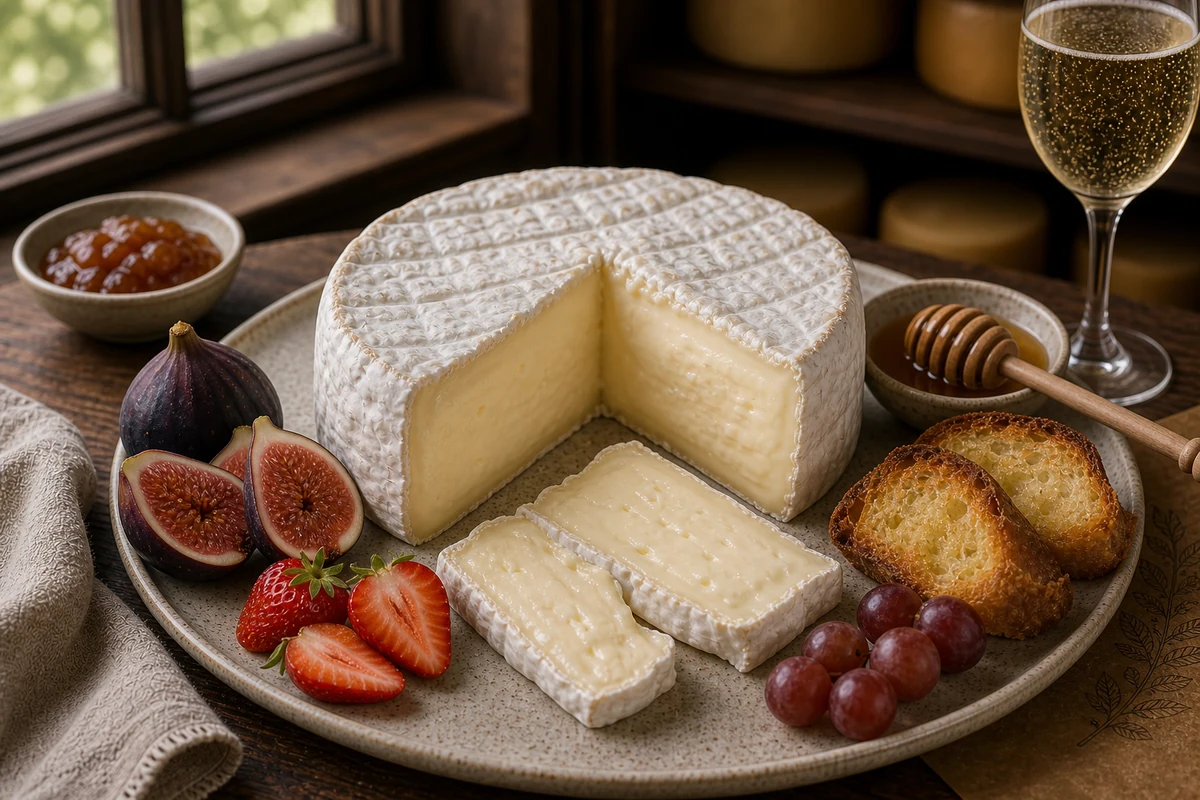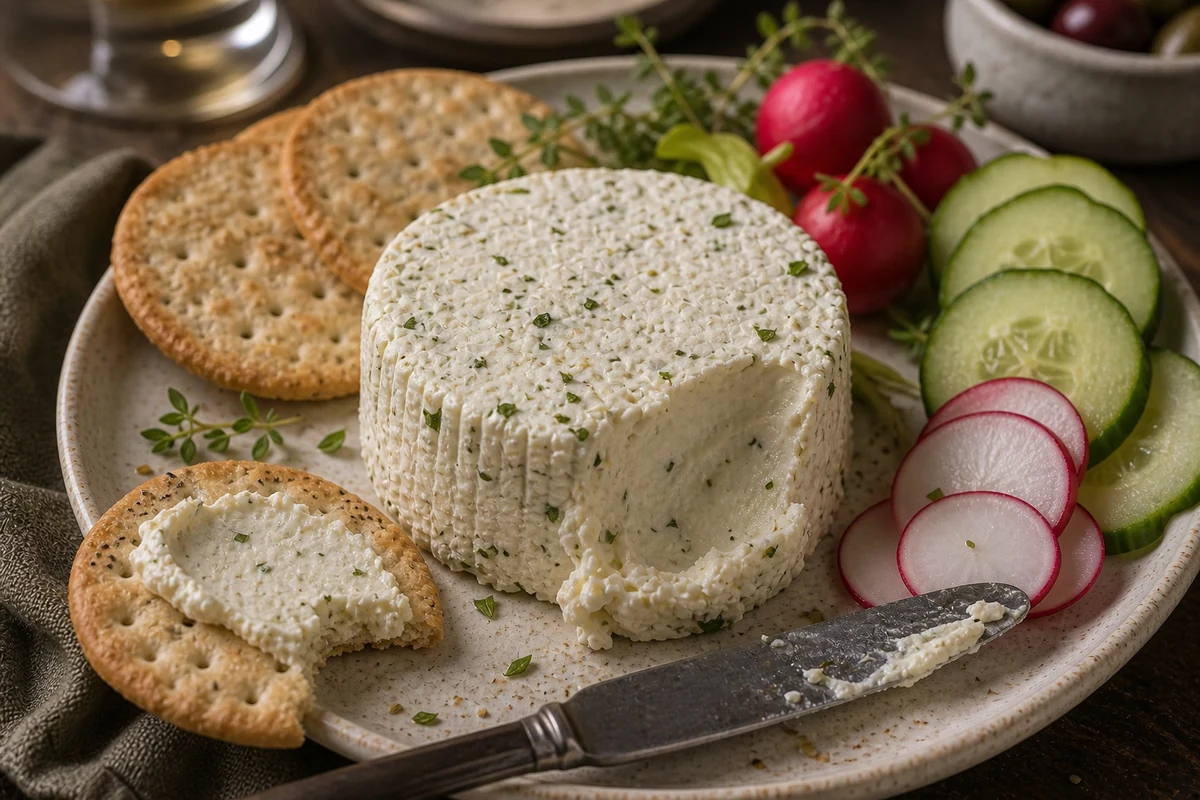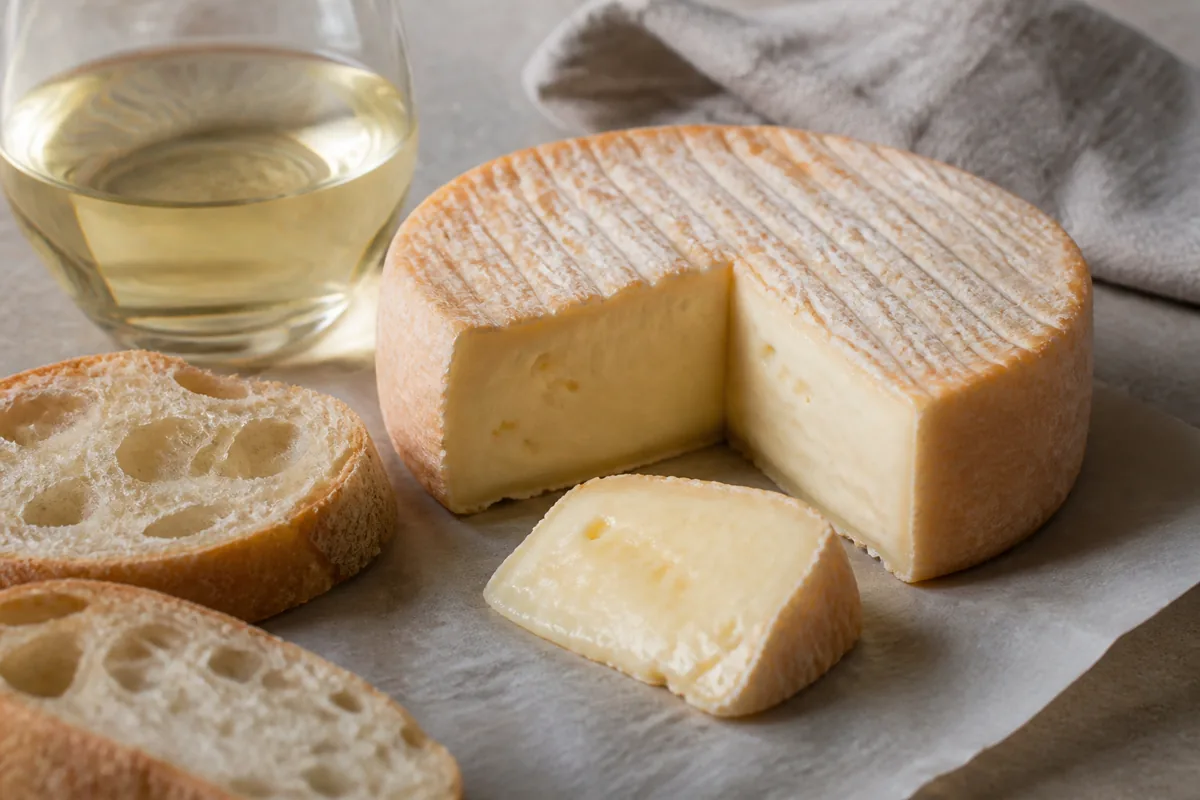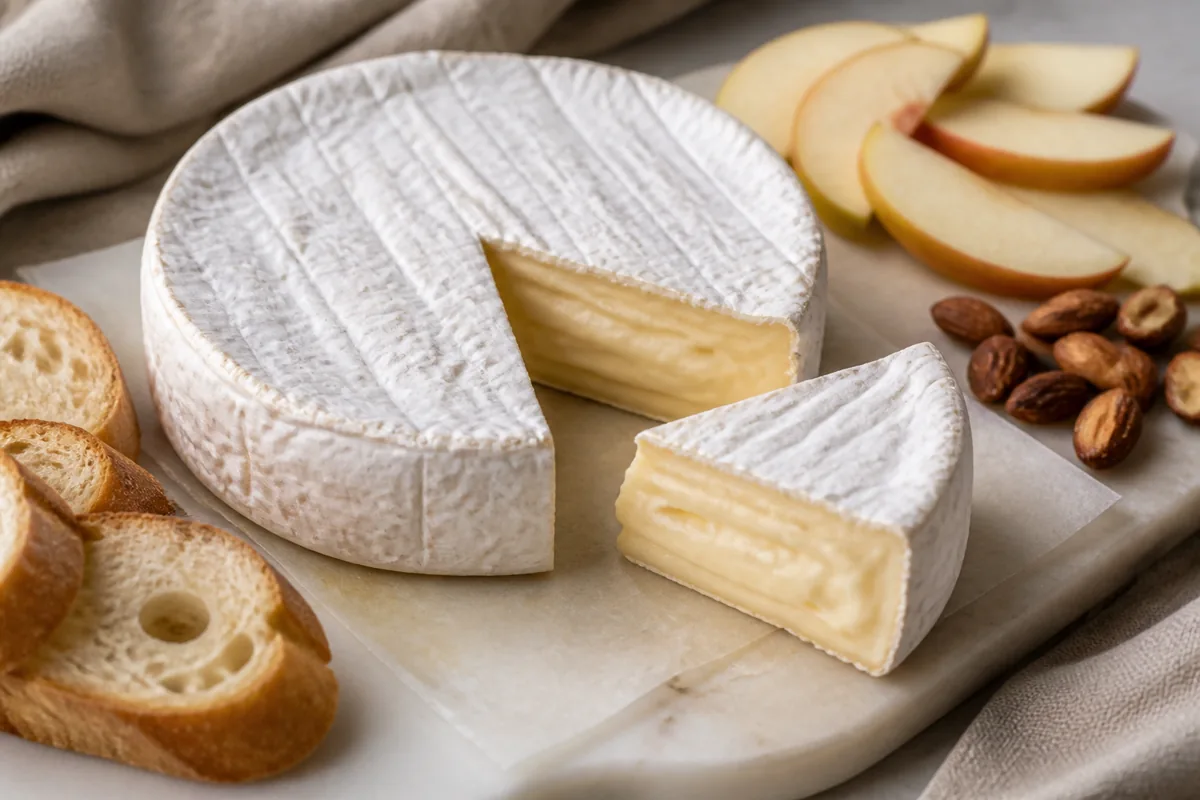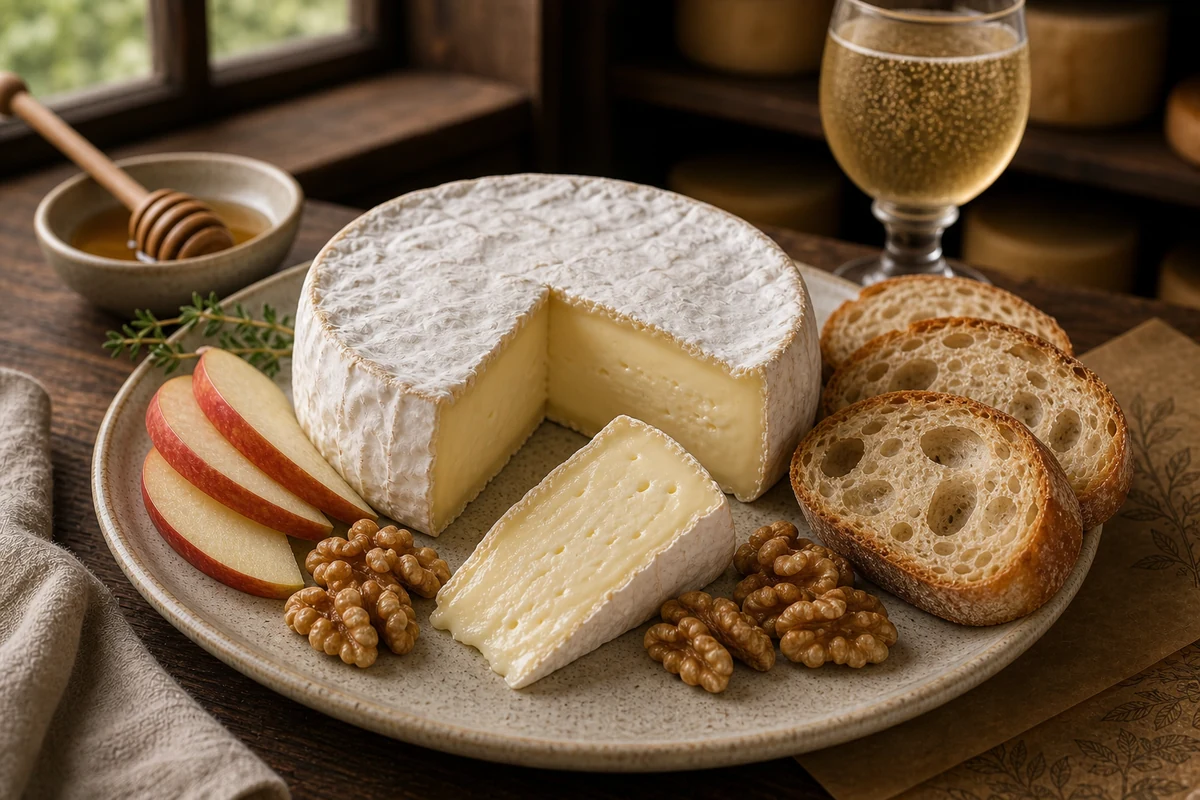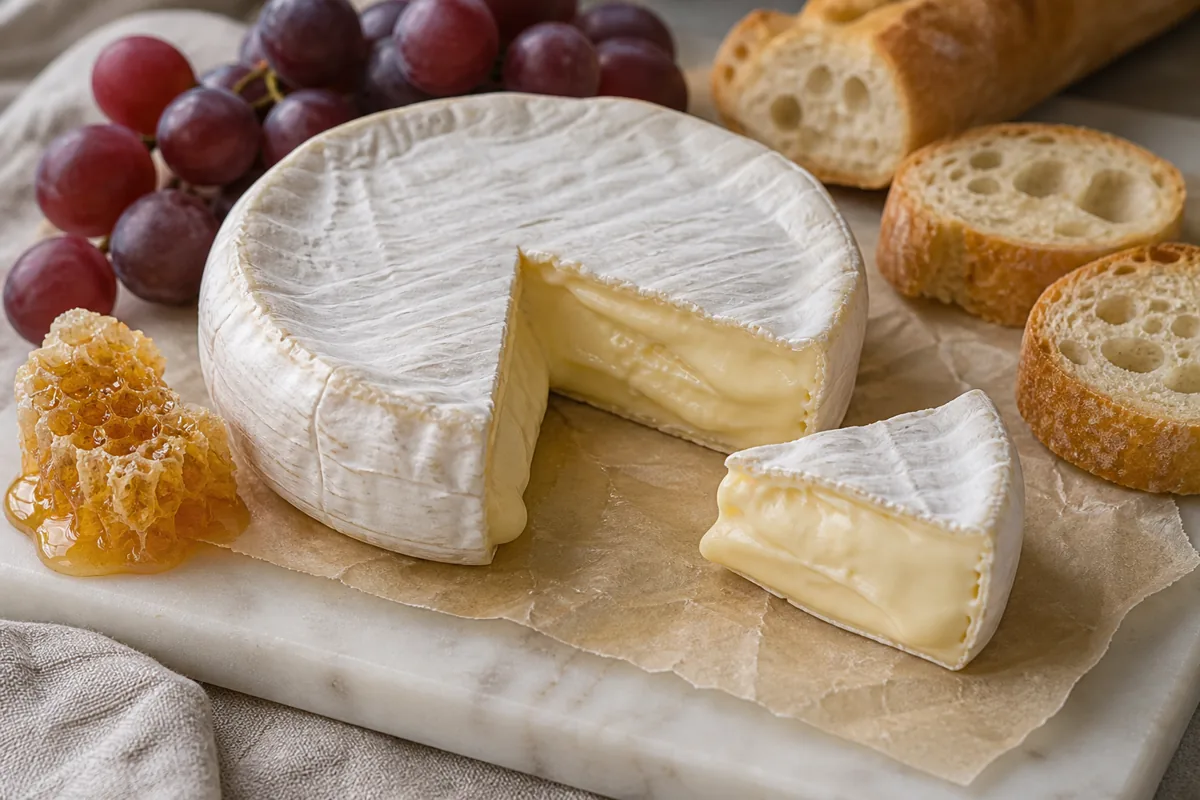
Fromager d'Affinois is a range of French soft-ripened cheeses made by Fromagerie Guilloteau in Pélussin. The main product, Le Fromager, is a mild double-cream cow's-milk cheese with a thin white rind, while the range also includes small prepacked formats and products with different formulas.
The shared production idea is ultrafiltration. The producer says fine membranes remove excess water while retaining nutrients and minerals before cheesemaking, which helps distinguish these products from regular Brie.
This guide uses Le Fromager for its main taste and nutrition record and names the Petit d'Affinois Double Cream 150 g package when discussing its explicit pasteurization statement. Check the exact label in front of you because one product page does not define the whole range.
In This Article
What Is Fromager d'Affinois?
Fromagerie Guilloteau describes Le Fromager as a French double-cream cheese with cow's milk, cream, cultures, salt, and microbial enzymes. Its current product page identifies a thin rind, mild flavor, and a texture that moves from firm toward oozy as the cheese ripens.
The brand's dairy page traces the process to Pélussin in the Rhône-Alpes region and says ultrafiltration happens before the cheese is made. The page supports the basic process description, but it does not justify a fixed aging time or one storage window for every product.
- Main product: Le Fromager is the brand's current double-cream reference product.
- Process: Ultrafiltration removes some water while retaining nutrients and minerals in the milk.
- Rind: The producer describes the white rind as thin and edible.
- Texture cue: Le Fromager is ready for a softer serving when the rind begins to bulge and the center turns oozy.
- Range warning: Petit, triple-cream, goat, blue, truffle, and other products have their own ingredients and nutrition panels.
Le Fromager resembles Brie-style wheels in shape and rind, but its producer presents it as a distinct product with its own process and label.
What Does Ultrafiltration Change?
The producer defines ultrafiltration as passing milk through fine membranes before cheesemaking. The process removes excess water while retaining nutrients and minerals, creating a more concentrated starting material.
Le Fromager's current product page describes the finished cheese as mild, rich, buttery, and spreadable when ripe. Those are product facts, while claims about a guaranteed shelf life, production speed, or identical texture across every wheel need separate evidence.
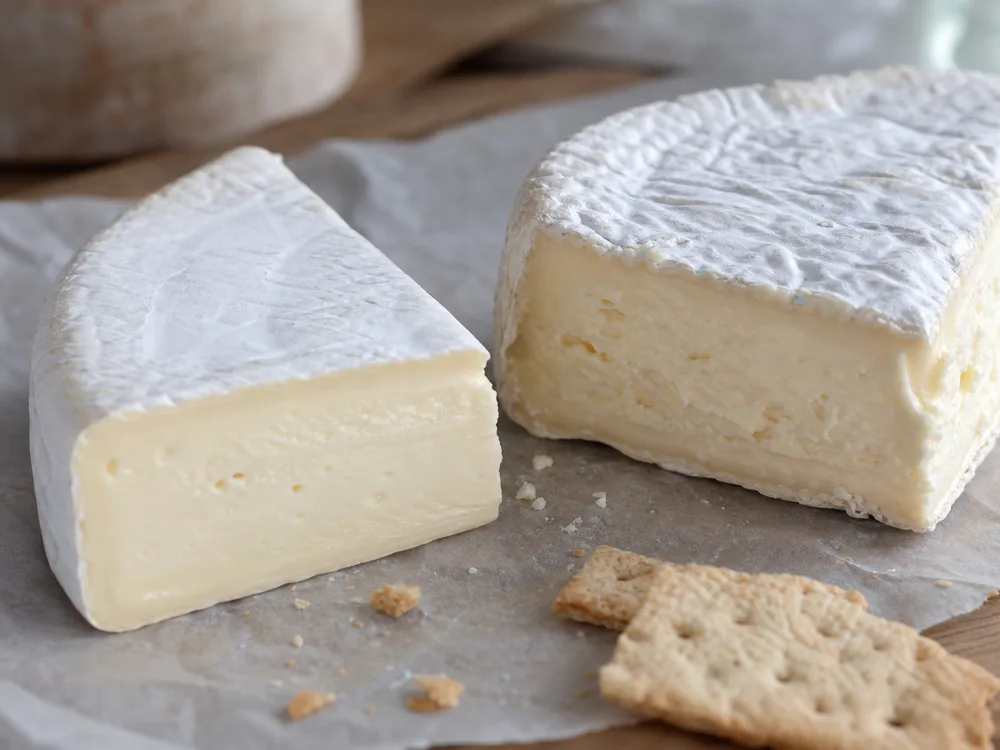
- Le Fromager: The current product page lists 41 g fat per 100 g and describes a double-cream product.
- Petit Double Cream: The current 150 g prepack page lists 31 g fat per 100 g, so the two panels are not interchangeable.
- Rind: Both product pages describe a thin rind, but flavor and format still depend on the exact cheese.
- Buying cue: Match the package name to the product record before using its ingredients or nutrition values.
Use the name on the package as the first decision point. Le Fromager, Petit Double Cream, Petit Triple Cream, Florette, Bleu, and the flavored products belong to one range but do not share one formula.
How Can You Tell When Fromager d'Affinois Is Ripe?
The producer gives a visible cue for Le Fromager: the rind begins to bulge and the center becomes oozy. A firmer, colder piece will cut more neatly, while that softer condition suits spreading or grilled-cheese use.
Use the package date together with the rind and center. The page does not provide a universal number of aging days or a fixed counter-warming time, so the article does not add either one.
Temper only the amount you plan to serve. Return the rest to the refrigerator rather than warming the whole package for a long service.
When Does Fromager d'Affinois Work Best on a Board?
Le Fromager fills the mild, creamy slot on a cheese board. Its producer pairs it with crisp lavosh, quince paste, and bubbles, which gives a practical starting point without turning those suggestions into universal rules.
For a mixed board, use one crisp base and one sweet or acidic accent, then add a firmer cheese for texture contrast. Plain baguette, apple, pear, or radish can serve the same balancing job when quince paste feels too sweet.
- For a cheese board: Serve a modest wedge with crisp bread and a tart or lightly sweet accompaniment.
- For wine: The producer recommends sparkling wine or Champagne, and sparkling water provides the same palate-clearing bubbles without alcohol.
- For grilled cheese: Le Fromager's product page specifically recommends its oozy texture for this use.
- For baking: Follow a recipe written for the exact product and format rather than assuming every wheel behaves like Brie.
Why Are Le Fromager and Petit Double Cream Different Products?
Le Fromager is the main wheel used for the taste and ripeness discussion here. Its current page lists cow's milk, cream, cultures, salt, and microbial enzymes, then gives nutrition for both 100 g and 30 g.
Petit d'Affinois Double Cream 150 g is a prepacked product that the producer links to Le Fromager's taste and texture. Its page explicitly lists pasteurized cow's milk and cream, but it has a separate formula and nutrition panel.
- Shared family: Both are cow's-milk double-cream, soft-ripened products with a thin rind.
- Different fat panels: Le Fromager lists 41 g fat per 100 g, while Petit Double Cream lists 31 g per 100 g.
- Pasteurization record: The current Petit Double Cream 150 g page explicitly says pasteurized. The Le Fromager page used here does not state milk treatment.
- Practical rule: Use the exact package label for ingredients, pasteurization, serving size, nutrition, storage, and date information.
This distinction matters in shops that shorten the name to "d'Affinois." The brand name alone does not identify which product record belongs to the cheese in the case.
How Should You Buy and Store Fromager d'Affinois?
Start with the exact product name, package date, and storage directions. The producer pages used here do not support a universal 70-day shelf life or one after-opening limit for every wheel and prepacked format.
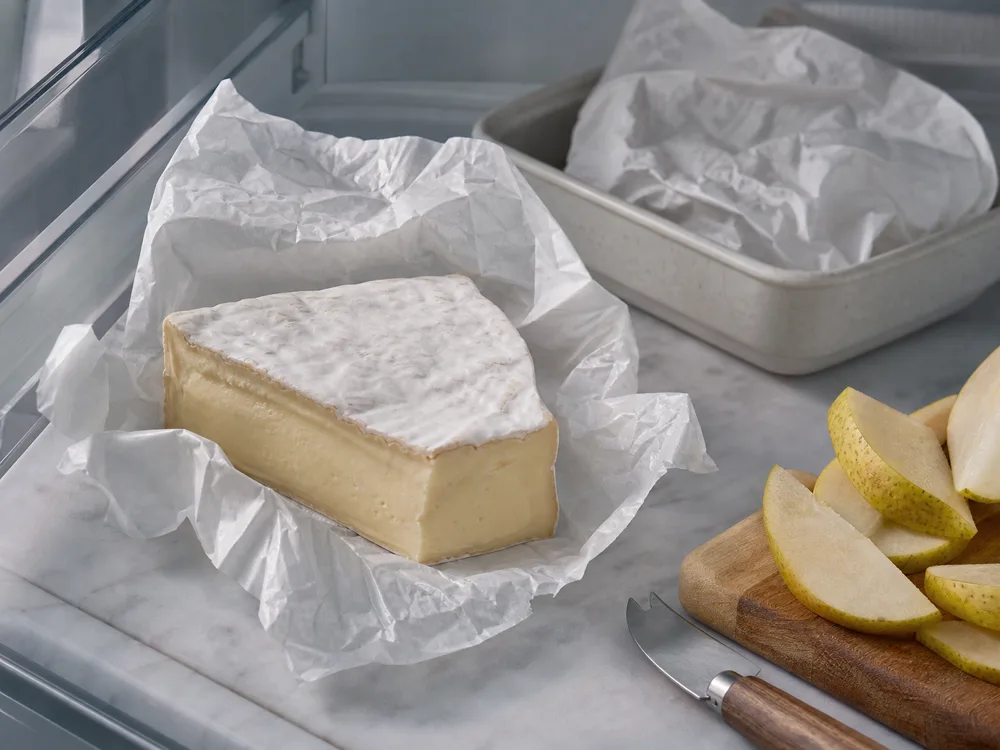
The storage card sets the safety limits. The shopping checks below help you choose the right package and serving condition before it enters that storage cycle.
The U.S. Food and Drug Administration recommends keeping the refrigerator at 40 F (4 C) or below and limiting perishable food to two hours at room temperature. That clock covers the whole service period, not each trip between the board and refrigerator.
Briefly temper the serving portion if you want a softer center. Keep the remaining cheese refrigerated and covered.
Can You Eat the Rind?
Yes. The producer describes the thin white rind as edible, so it can be served with the center.
The rind adds a different texture and a little more surface character to the bite. A guest who dislikes bloomy rinds can trim a narrow outer strip from their own portion without changing how the rest of the cheese is served.
Which Cheese Is Closest to Fromager d'Affinois?
Choose a substitute by the part of the experience you need. Brie is the closest familiar shape and rind reference, while Saint-André and Brillat-Savarin move toward a richer triple-cream role.
- Brie: Choose it when a white rind and soft center matter more than the ultrafiltered process.
- Saint-André: Choose it when you want a distinctly rich triple-cream cheese and have checked the exact format.
- Brillat-Savarin: Choose it for another French triple-cream board cheese with its own identity and ripeness cues.
- Boursin: Use it only when spreadability matters more than an edible rind or sliceable wheel.
For a mild soft-ripened board cheese, start with Brie. For a spread, Boursin solves a different job and should not be treated as the same cheese.
Is Fromager d'Affinois Pasteurized?
Check the exact package. The current Petit d'Affinois Double Cream 150 g page explicitly lists pasteurized cow's milk and cream, while the Le Fromager page used for the nutrition panel lists milk and cream without stating milk treatment.
For Le Fromager, the current producer panel gives the following values per 30 g serving. These numbers should not be copied to Petit Double Cream or another product in the range.
The same Le Fromager panel lists 0.2 g carbohydrate and 93 mg calcium per 30 g. Use the package in your market when the printed values differ.
Pasteurization does not turn a cold white-rind soft cheese into a blanket pregnancy recommendation. The Le Fromager page does not state the milk treatment, and the CDC lists soft cheese made from unpasteurized (raw) milk as riskier, so check the exact package label.