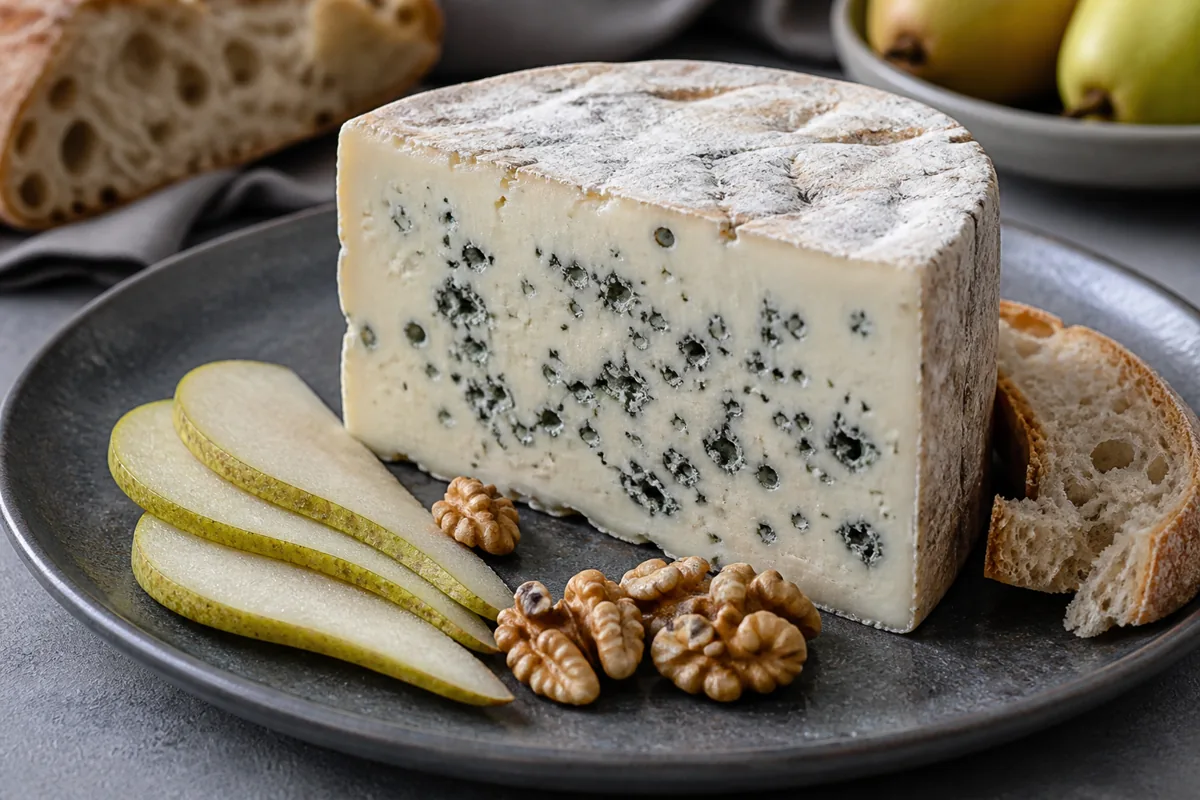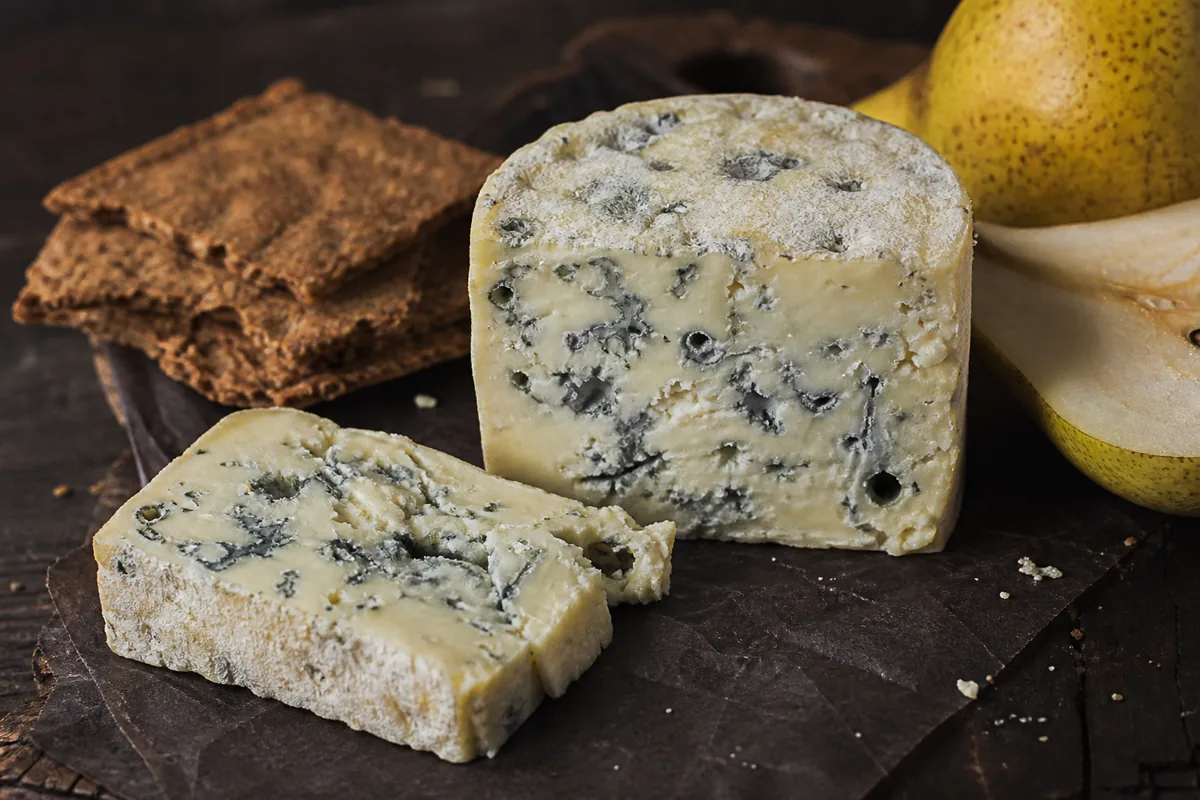
Ädelost is a Swedish blue-cheese category, not one fixed recipe. Swedish producers sell several versions under the term, including milder creamy products and firmer, saltier cuts.
Kvibille's cow-milk versions range from piquant to milder and creamier. The producer and product name tell you more about that choice than the amount of blue visible in a photograph.
In This Article
Is Ädelost One Cheese or a Swedish Blue-Cheese Category?
Swedish shops and recipe publishers use ädelost broadly for blue cheese, while individual makers attach the word to specific products. English references often present Adelost as a single Swedish cheese, which can hide the variation you see on actual labels.
A creamy Ädel product and a firm mature one may differ in salt, moisture, veining, and cooking behavior even when both are authentic Swedish blue cheeses.
Treat Ädelost as a Swedish blue-cheese label that needs a producer and product name. Do not assume every package has the same age, milk treatment, strength, or texture.
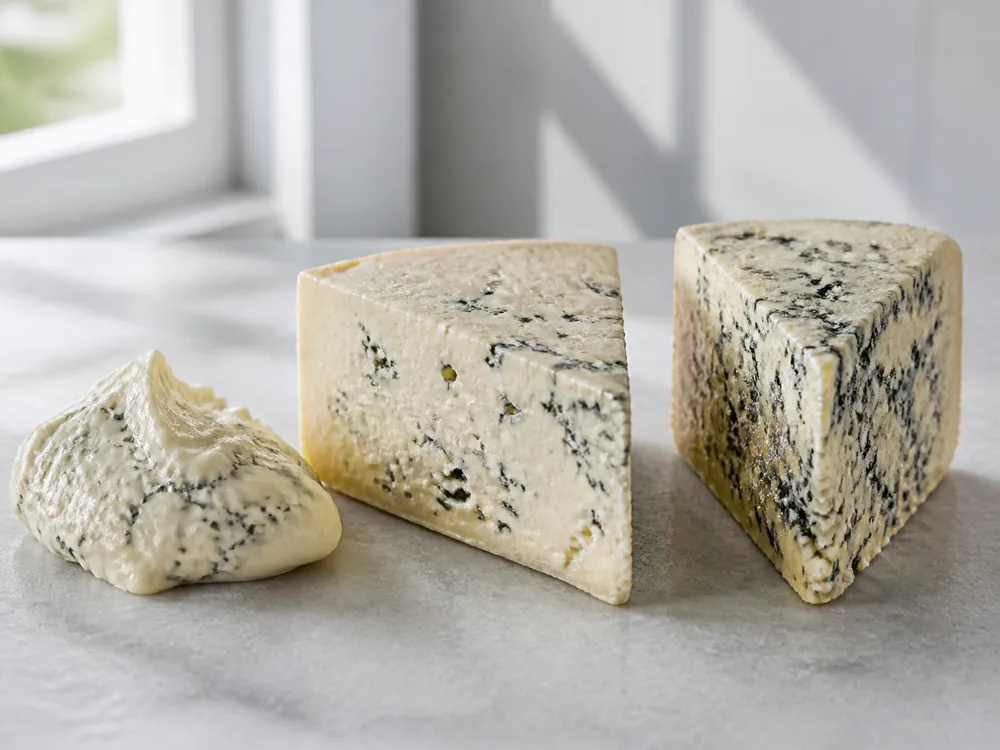
Current Kvibille listings include Ädel 30%, Ädel Grädd 36% and Ädel Special 45%. Arla describes the Special as milder and creamier because of its extra cream, so Special does not mean the strongest blue flavour.
Those numbers describe fat content rather than a quality or strength ladder. We recommend choosing from the maker's flavour description first, then comparing the nutrition panel if richness or portion size matters to you.
| Kvibille product | Arla's description | Suggested first use |
|---|---|---|
| Ädel 30%, whole 1.5 kg | Piquant with pronounced saltiness | Salad or sauce when you want a clear blue flavour |
| Ädel Grädd 36%, 140 g | More cream gives a softer, fuller flavour than Ädel | Pear, bread or a gingerbread spread |
| Ädel Special 45%, whole 1.5 kg | Mild, full and aromatic, with a creamier texture | A creamy portion on a cheese plate |
Where Is Swedish Ädelost Made?
Ädelost is a Swedish category, so there is no single protected place that defines every cheese carrying the word. For a concrete producer example, Arla's Kvibille dairy in Halland makes several current Ädel products and traces cheesemaking at the site to the 1920s.
Arla describes Kvibille as Sweden's only dairy making both Ädelost and Cheddar. That statement identifies the current Kvibille range, but it does not turn every blue cheese sold in Sweden into the same recipe or make Kvibille the definition of the category.
Outside Sweden, a retailer may shorten a Kvibille product to Adelost. Ask for a photograph of the full label or the exact variant name because origin alone will not tell you whether the wedge is creamy, standard, special, whisky-flavored, or longer-aged.
Which Ädelost Should You Buy?
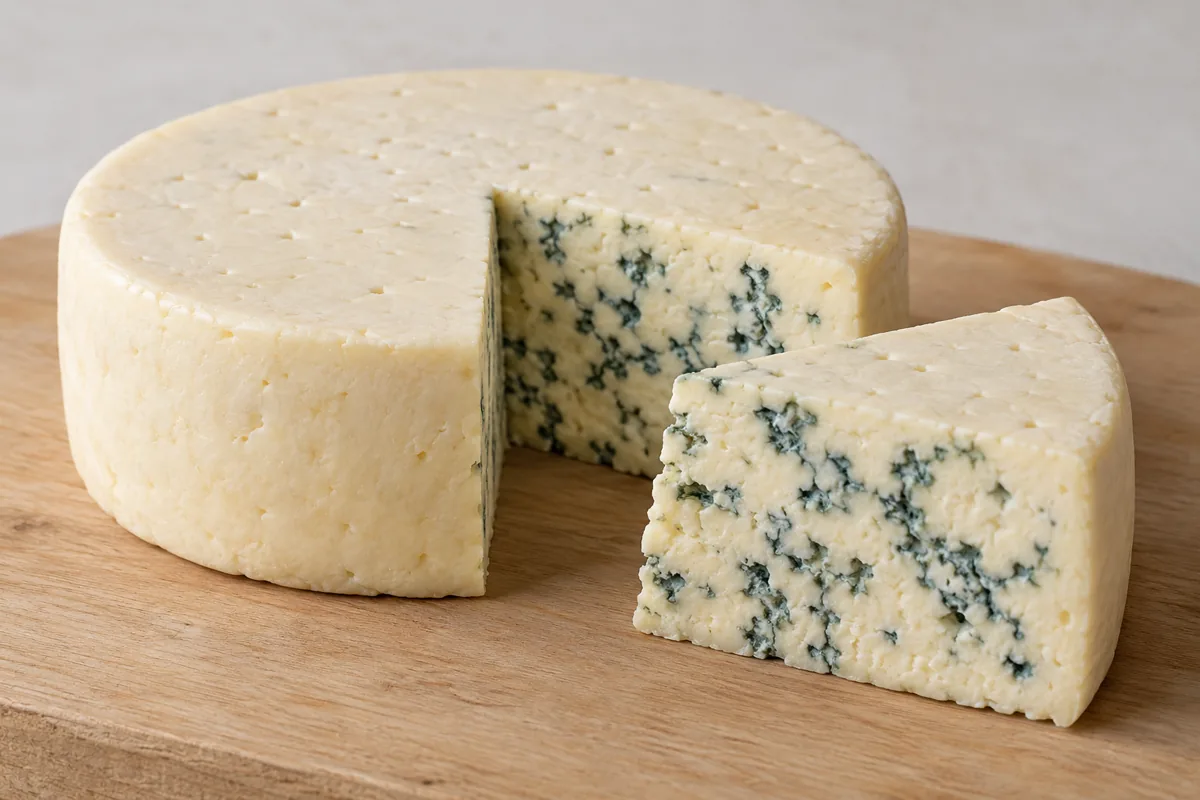
A full product label is more useful than a photograph for choosing Ädelost. Blue veining identifies the style, but its pattern cannot establish the product's fat content, age or safety.
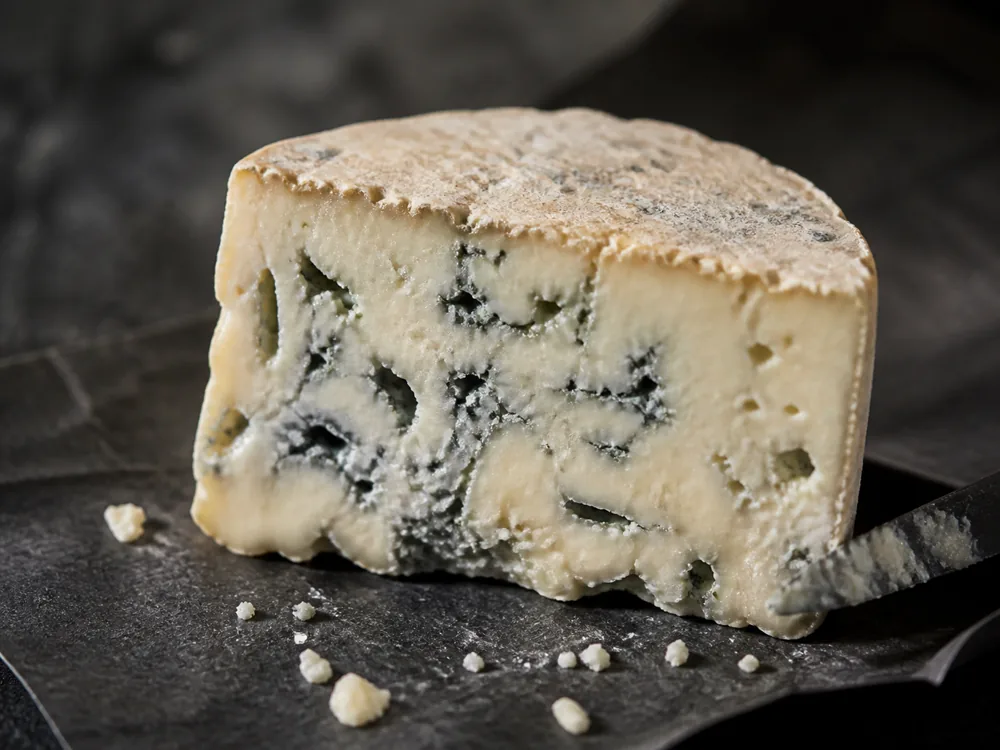
The outer surface varies with format, so the cut face is more reliable than a memorized rind color.
Read the milk treatment, producer, strength wording, and use-by information on the pack.
| Package detail | What it answers | What it does not establish |
|---|---|---|
| Producer and variant | Which product you are buying | The identity of an unlabelled cheese in a photo |
| Milk treatment | Whether the milk is pasteurized | Whether a cold soft blue is suitable during pregnancy |
| Fat per 100 g | A comparable amount of fat by product weight | A strength score or percentage of dry matter |
| Date and storage instructions | The manufacturer's handling conditions | That the cheese has stayed cold since purchase |
A foil-wrapped supermarket piece can be perfectly legitimate. Packaging style does not determine quality, but a clean cold chain and a readable product identity do.
For a prepacked wedge, compare the ingredient list, fat percentage, weight, and strength description before using price per pack. A 140-gram creamy product and a 1.5-kilogram food-service wheel solve different needs even when both sit under the same category.
What Do 30%, 36%, and 45% Mean on Kvibille Ädelost?
On the current Kvibille range, these figures identify different product formulations and fat levels. They are not the number of months aged, a measure of blue mold, or a promise that the highest number will taste sharpest.
The panels list 30, 36 and 45 grams of fat per 100 grams of cheese for the products above. These are product-weight percentages, not fat in dry matter; moisture remains part of the 100-gram basis.
All three compared products list 3 grams of salt per 100 grams, so the creamier option is not lower in salt on that basis. A 20-gram portion supplies 0.6 grams of salt, calculated from those panels; salt is not the same measurement as sodium.
The ingredient lists say ystenzym, a cheese-making enzyme, without identifying its origin on these pages. That wording alone does not establish vegetarian suitability, and the listed sugar value is not a lactose-free certification.
How Sharp Does Ädelost Taste?
For a pronounced salty, piquant flavour, the standard Kvibille Ädel description is a useful starting point. For a gentler, creamier choice, Arla's Special description points in the other direction despite its higher fat number.
These are the maker's descriptions, not a tasting scale we measured. A counter sample, when available, can help you choose between products before buying a whole pack.
Use the first bite to set the portion. A stronger product may need only a few crumbles, while a mild creamy version can support a wider spread on bread.
Crumbling gives you a way to adjust the amount in each bite. Pear or bread changes the balance of a mouthful, but does not remove salt from the cheese.
How Do Blue Veins Change the Cheese?
The compared Kvibille ingredient lists identify Penicillium roqueforti. Blue-cheese makers can pierce wheels to admit air for mould development, as Neal's Yard Dairy explains for its Stilton; that example does not establish Kvibille's exact piercing schedule.
More visible blue does not automatically mean better or stronger.
The recipe and maturation also matter, so a dark patch is not a reliable strength score. Intended blue mould likewise does not make every new growth on a stored piece harmless.
This mechanism explains why crumbling distributes flavor so effectively. Each small piece carries both paste and a portion of the blue network.
Why Do Pear and Gingerbread Work with Ädelost?
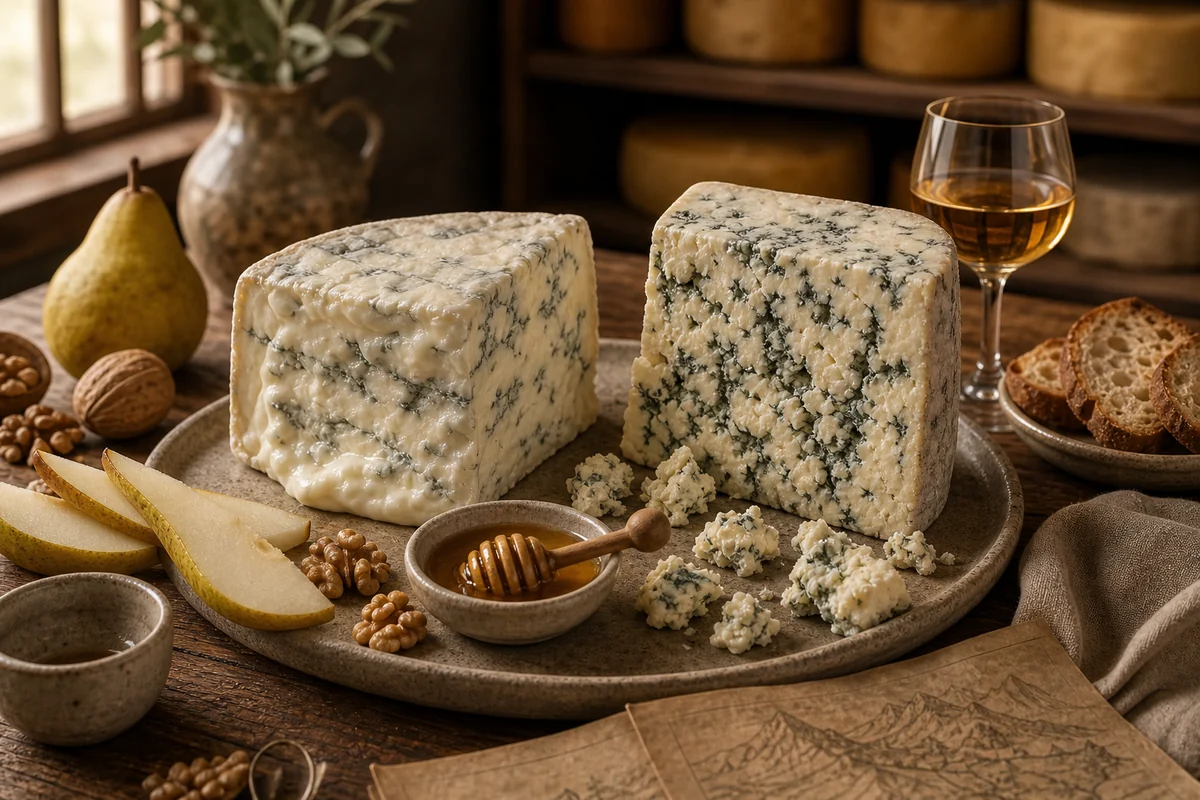
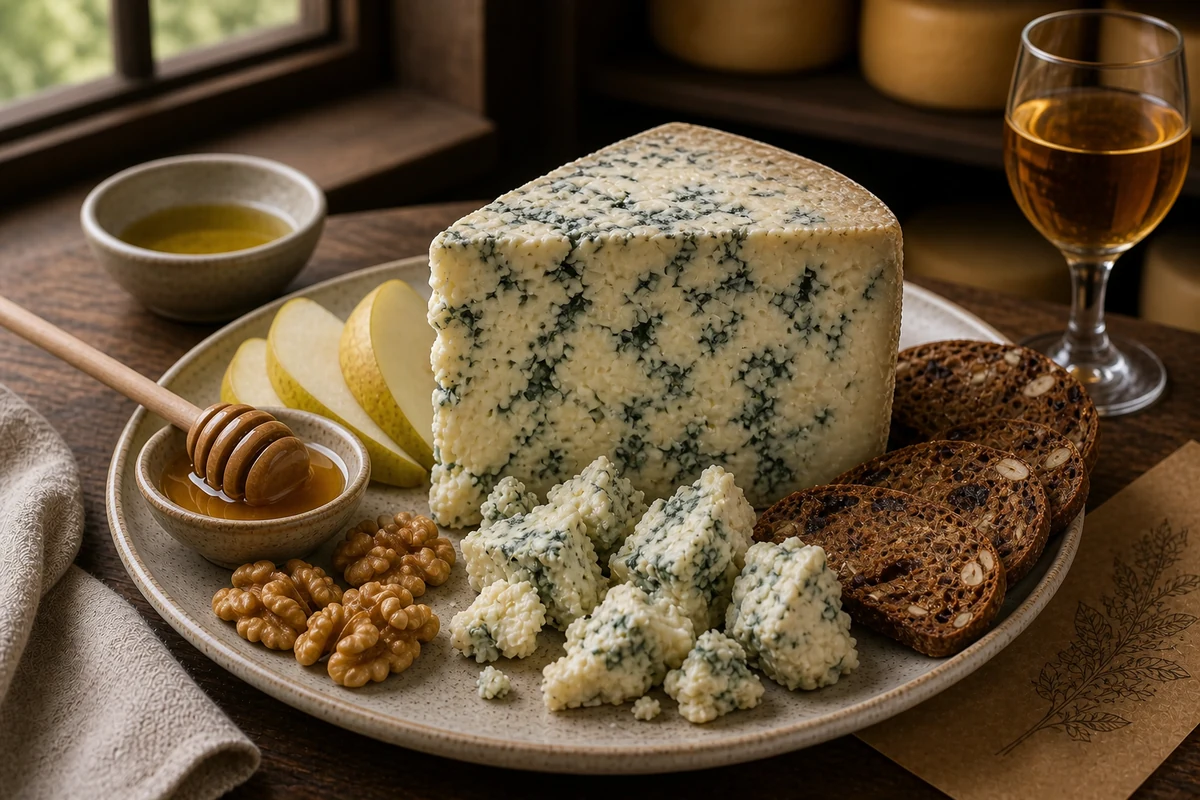
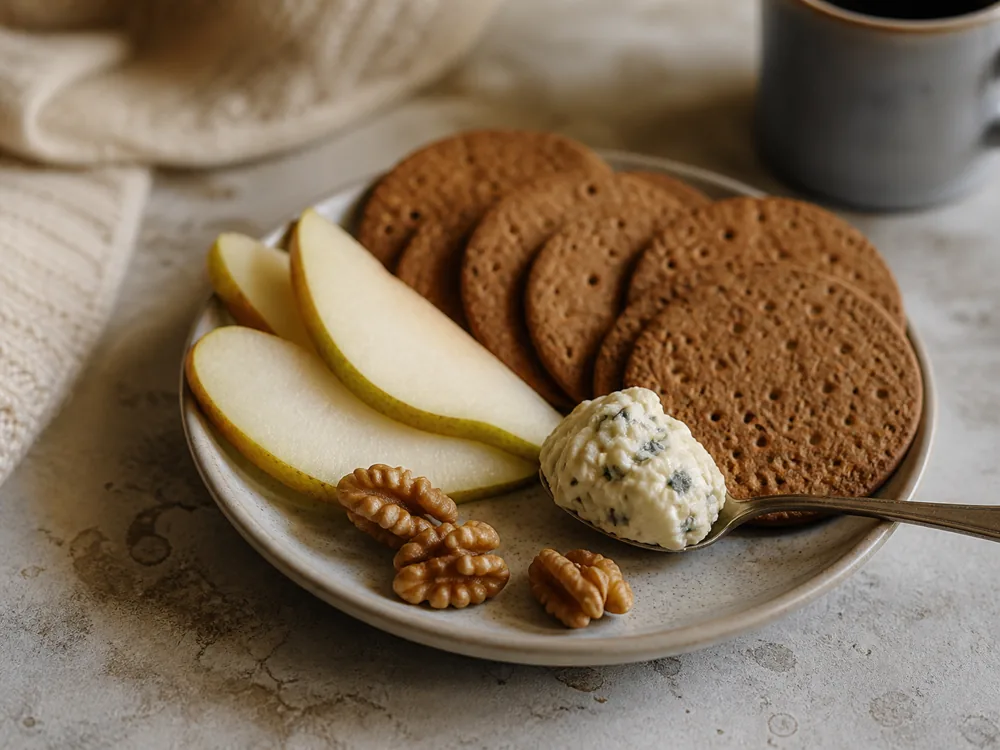
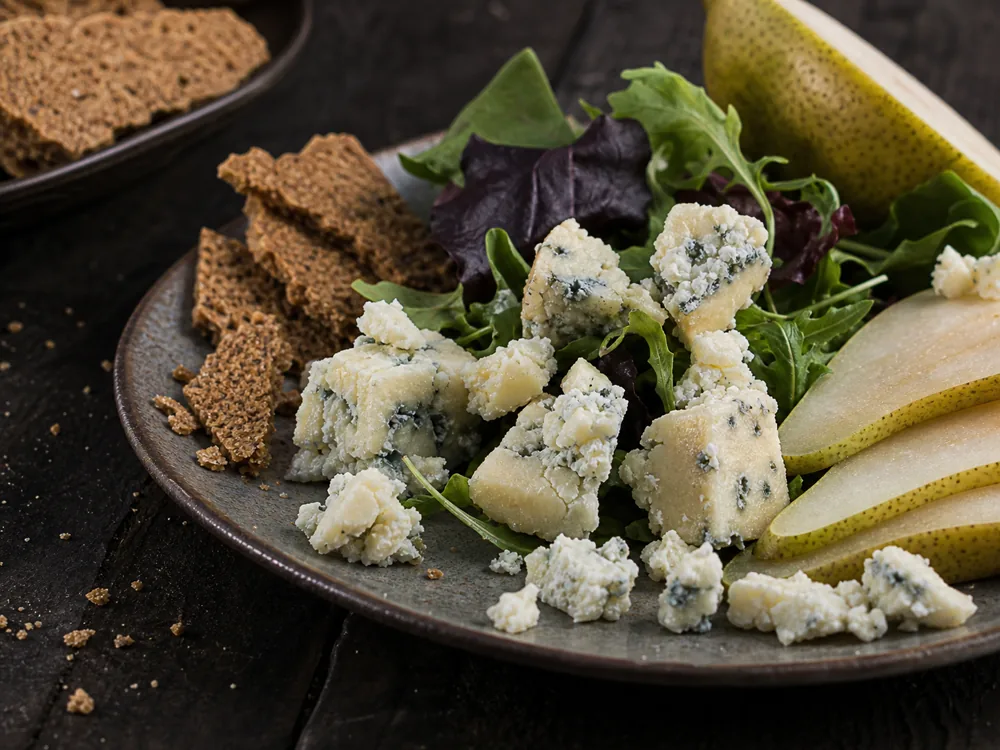
Pear supplies juice and sweetness against salt, while rye crispbread adds dry crunch. Walnuts echo the earthy mold aroma without adding another salty ingredient.
Swedish recipe collections also pair Ädelost creams with pepparkakor, the thin spiced gingerbread biscuits served around winter gatherings.
Sweet spice and crisp texture soften the blue edge, so the cheese can be spread in a much smaller dose.
| Pairing | Type | Why It Works |
|---|---|---|
| Pear | Food | Juice and sweetness reduce the impression of salt. |
| Rye crispbread | Food | Dry crunch gives the creamy paste a clean base. |
| Gingerbread biscuit | Food | Sweet spice turns a small blue-cheese spread into a winter appetizer. |
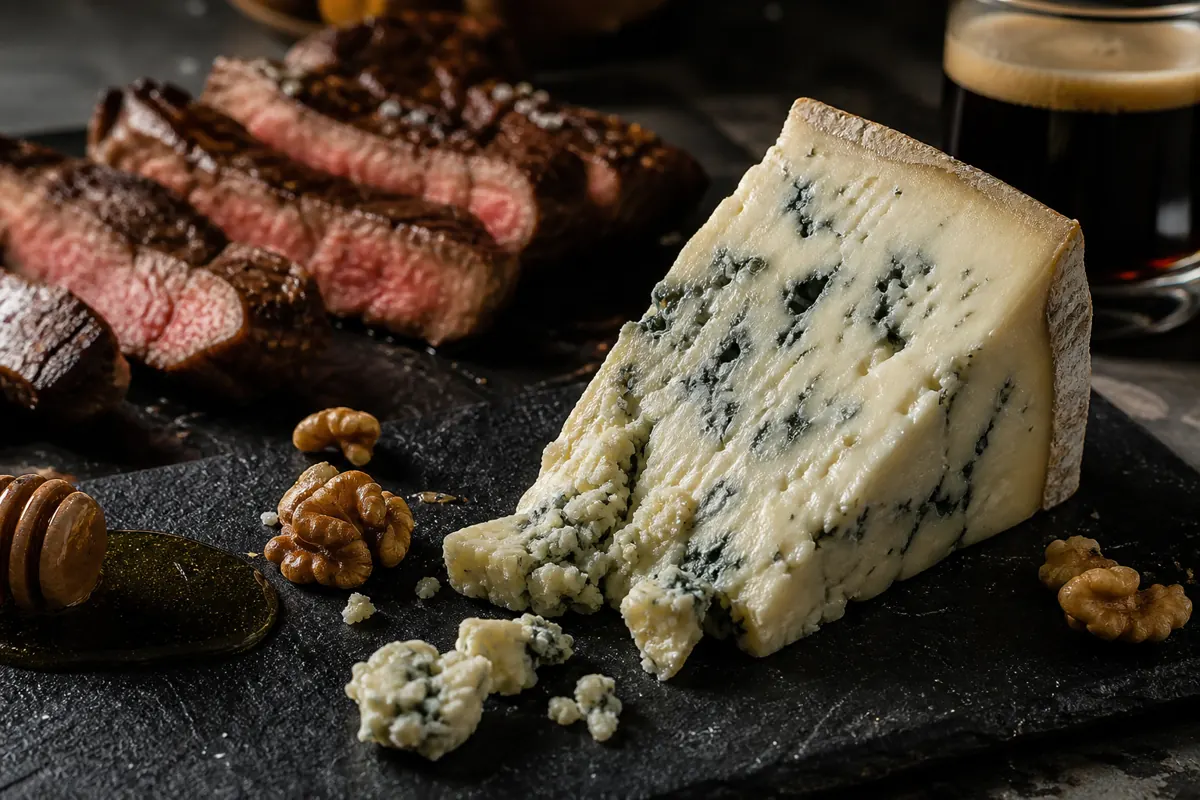
| Dark or bitter beer | Drink | Malt supports the cheese while carbonation clears the fat. |
Keep cured meat and pickles restrained when the plate already contains salty blue cheese. One sweet or crisp counterweight does more useful work than several savory additions.
For gingerbread, mash a small amount of cheese with a neutral creamy base and spread it thinly. For pear, keep the cheese in distinct crumbs so each bite can vary from fruit-led to blue-led.
How Should You Cook with Ädelost?
Add small crumbles to pear salad, roasted potatoes, pizza, or a cream dressing. The blue flavor spreads quickly, so taste the dish before adding more cheese or salt.
For sauce, Arla warms the cream, then melts crumbled cheese into it while stirring. Adding the cheese gradually also lets you taste before deciding whether the dish needs more salt.
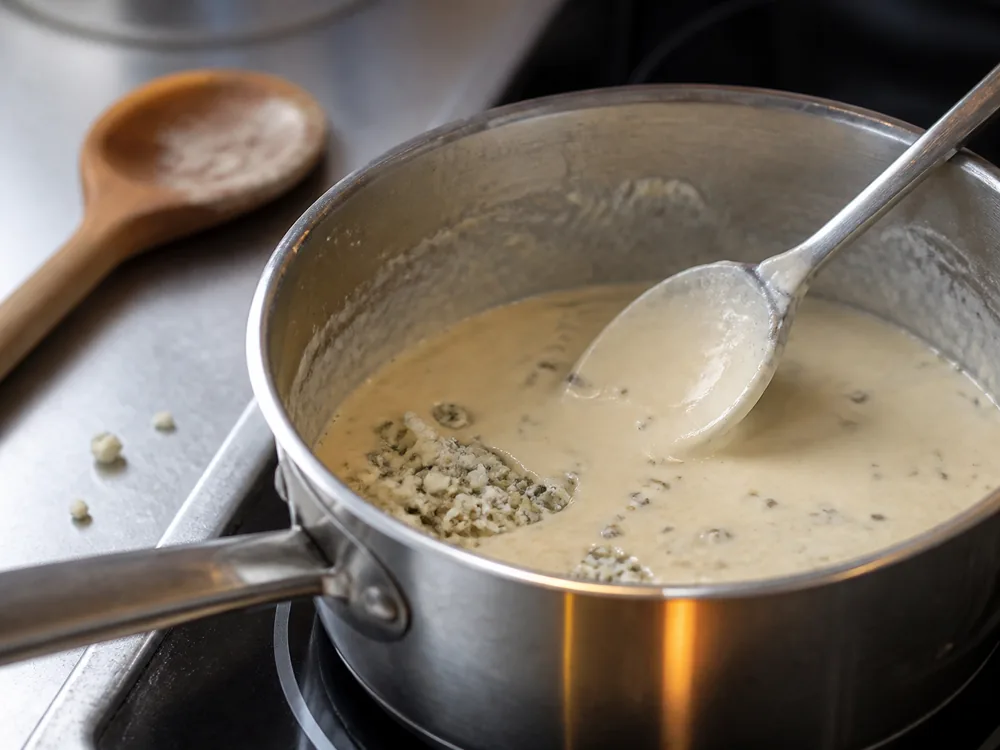
Arla's basic Ädelost sauce uses 140 grams of cheese with 2.5 deciliters (250 ml) of cream for six portions. That is one published recipe ratio, not a required amount for every variant or dish.
| Use | How It Works |
|---|---|
| Pear salad | Crumble after dressing so each piece stays distinct. |
| Roasted potatoes | Add at the end and let residual heat soften the cheese. |
| Cream dressing | Mash with sour cream or yogurt, then fold in a few fresh crumbs. |
| Pizza or tart | Use small pieces with pear, onion, or mushrooms and reduce added salt. |
A recipe that asks for blue cheese usually accepts Ädelost, but the exact variant can change the result. A small addition followed by tasting is more useful than assuming that every mature cheese needs precisely half the recipe quantity.
In a tart or pizza, place small pieces between pear, onion, or mushroom rather than forming a solid layer. Separate pockets preserve contrast and keep blue mold and salt from dominating every bite.
How Do You Keep One Ädelost from Flavoring Everything Else?
Keep Ädelost in its recommended wrapping inside a covered container, separate from uncovered foods. A clean knife also avoids leaving blue-cheese crumbs in butter or another cheese.
The cited Kvibille product pages specify storage at no more than 8°C. For household refrigeration, the FDA recommends 40°F (4°C) or below, which is also below that product maximum.
Arla's whole 30% and 45% records list 70 days of shelf life; the 140-gram Grädd record lists 63. Those figures are not a promise of that many days after opening: the package date and any after-opening instructions govern the piece you have.
Under the FDA's household rule, discard food that needs refrigeration after more than two hours at room temperature, or one hour above 90°F (32°C). Take out only the serving you need, because returning an over-limit portion to the fridge does not undo that exposure.
Appearance and smell cannot prove food is safe. A normal-looking blue pattern therefore cannot replace storage instructions, and the illustrations in this article are not tools for diagnosing a suspect wedge.
Can you eat Ädelost during pregnancy?
Sweden: Livsmedelsverket advises pregnant people to avoid cold mould-ripened cheeses made with either pasteurized or unpasteurized milk, including cold spreads containing them. Its guidance permits food heated thoroughly until steaming hot and explains that Listeria dies at at least 70°C.
UK: NHS guidance says pasteurised or unpasteurised soft blue-veined cheeses must be thoroughly cooked, and that is the line to follow for creamy and firm Ädel alike. In the US, the CDC lists pasteurized soft cheeses heated to an internal temperature of 165°F or until steaming hot among safer choices.
Served cold, Ädelost is described as a pasteurized creamy or firm blue-veined cheese, a type the CDC list does not cover, so ask a midwife or doctor.
These conditions change the choice of cheese during pregnancy: a cold gingerbread spread or cheese softened on a warm potato has not necessarily met them. Melting the cheese for texture is different from heating the whole dish thoroughly.
What Is the Best Ädelost Substitute?
Danish Blue is the practical substitute for salads, sauces, and potatoes because it offers cow milk, clear salt, and blue force. Taste before matching the quantity because individual Ädelost products can be milder.
Gorgonzola works when you want a creamier Italian direction, Stilton when a firmer British board cheese makes sense, and Roquefort when a stronger sheep milk flavor is acceptable.
| Everyday salad or sauce | Danish Blue |
| Creamier spread or pasta | Gorgonzola Dolce |
| Firm board portion | Stilton |
| Stronger sheep milk bite | Roquefort |
None of these keeps a specifically Swedish plate intact. When rye crispbread, pepparkakor, or a Swedish holiday menu matters, seek a labeled Swedish Ädelost and adjust the portion to its stated strength.