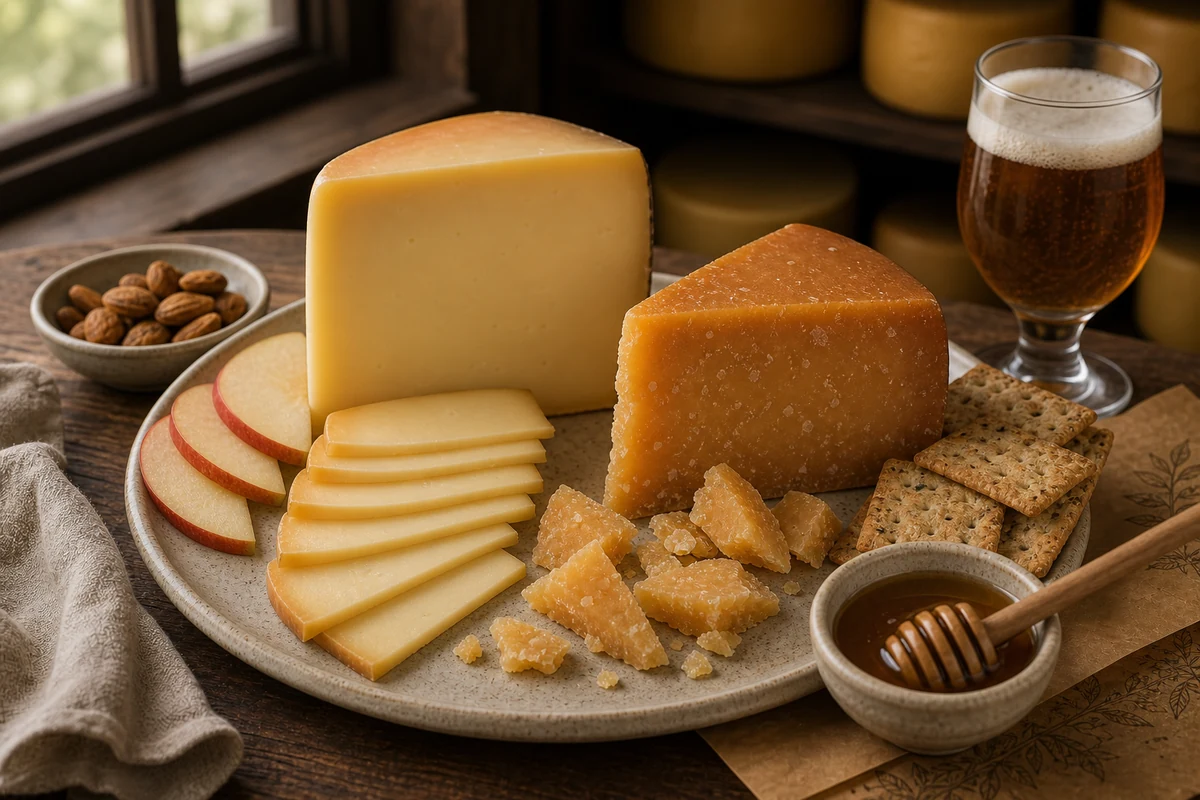
Cheese Profile

What Is Airedale Cheese, and Why Is It Sealed in Red Wax?

Airedale is a semi-soft New Zealand cheese from Whitestone, waxed red at five days old and aged six months. What it tastes like and how to use it.

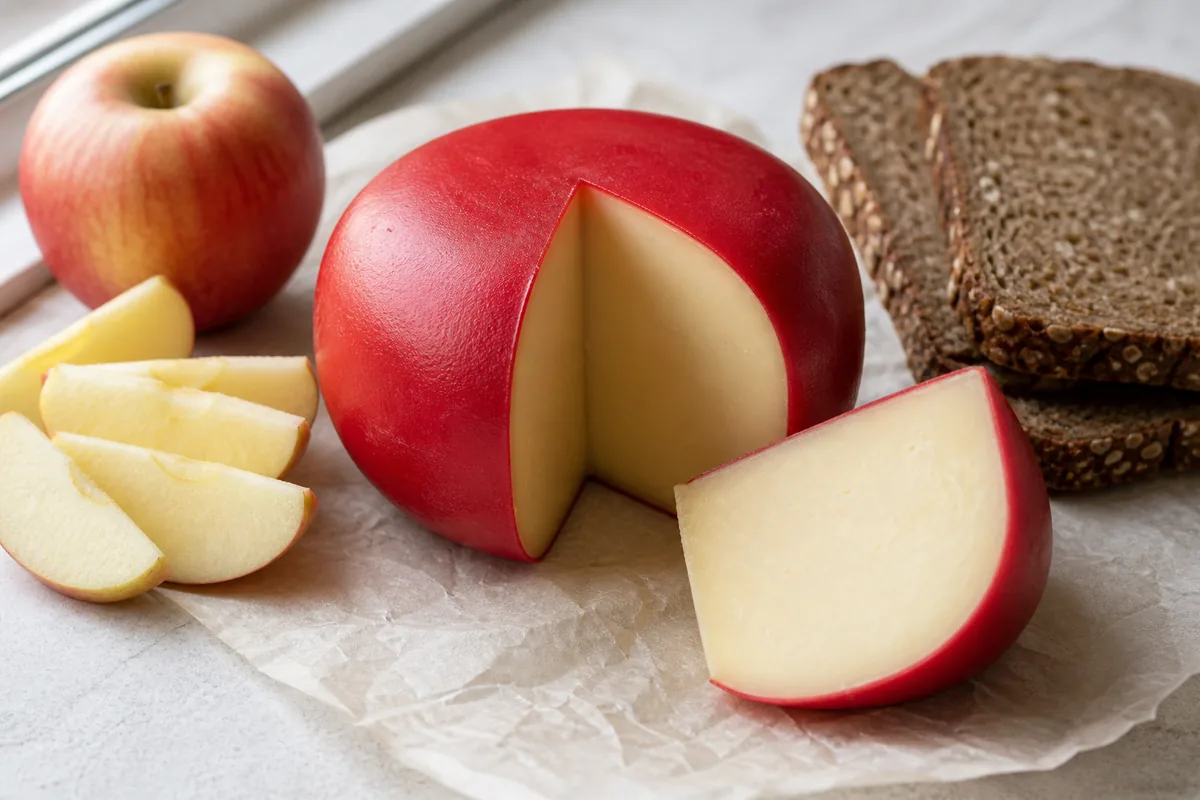
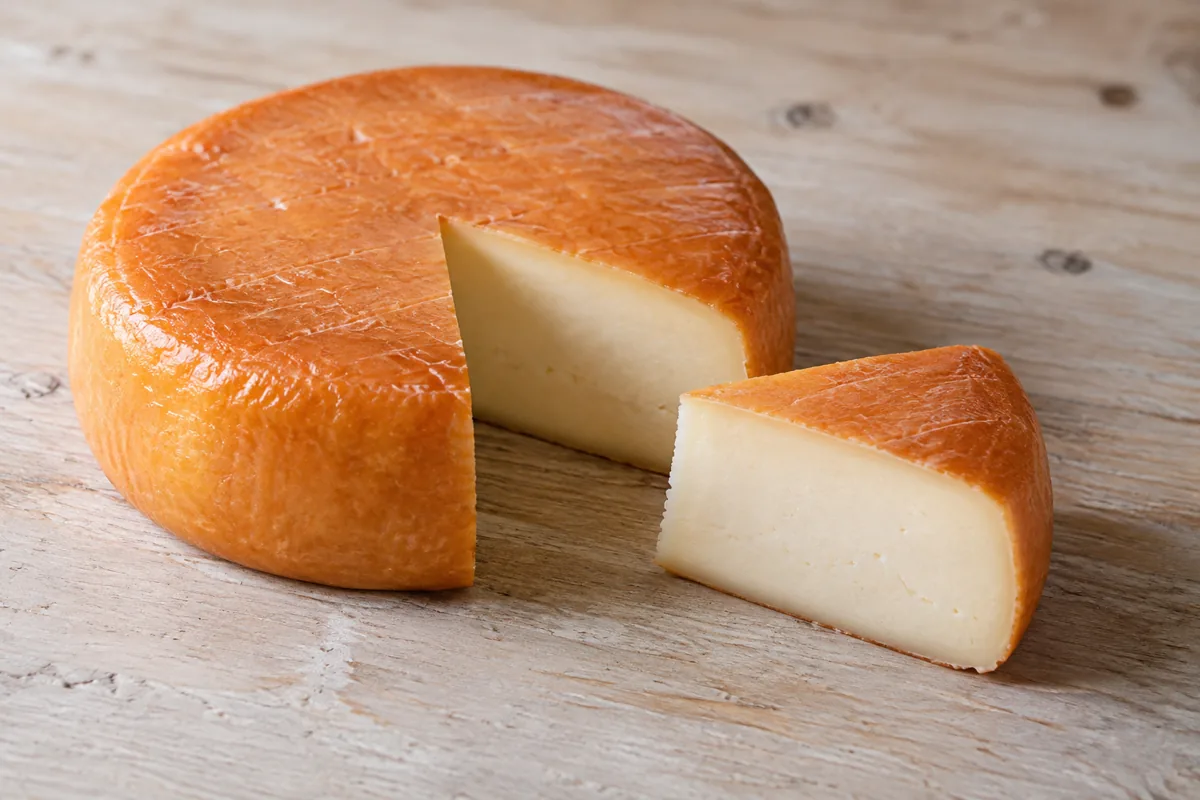
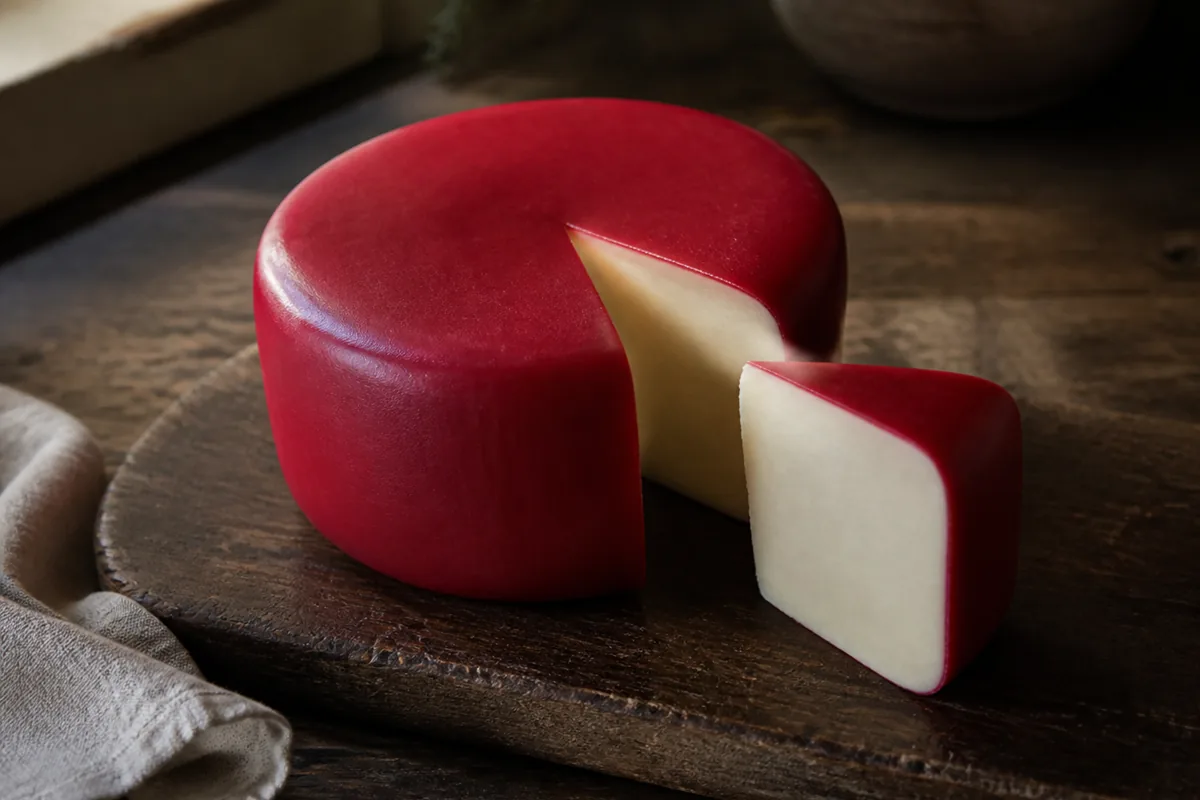
Deep red waxed round with a cut wedge showing pale cream paste - Airedale | KnowTheCheese
AIREDALE QUICK FACTS
OriginOamaru, North Otago, New Zealand
MilkCow
TextureSemi-soft, firming as it ages
RindNone, sealed in red wax instead
AgingMinimum six months
FlavorFull bodied with a sharp savoury finish
AvailabilityNew Zealand retailers and specialist importers
PriceAround NZ$7 for a 110g wedge

Airedale is a semi-soft cow's milk cheese made by Whitestone Cheese in Oamaru, on New Zealand's South Island, and sold under a thick shell of deep red wax.

Whitestone calls it their first semi-soft cheese and makes it nowhere else. It is aged for at least six months, which is a long time for a cheese in that category.

Most people meet it as a 110g wedge with a red rim. What that wax is doing, and what six months does to the flavour, are the two things worth understanding before you buy it.

What Is Airedale Cheese?

A semi-soft cow's milk cheese, waxed rather than rinded, aged a minimum of six months, and unique to one dairy in North Otago.

Whitestone sells it in a 110g wedge and a 1.9kg round, at around NZ$7.10 for the small size. The wedge is the format almost everyone buys, and it is enough for a board rather than a dinner.

The paste is pale and light in colour with a grassy smell. It stays pliable rather than firming into a hard block, which is what keeps it in the semi-soft category despite the long ageing.

It has collected a Silver Medal at the New Zealand Champions of Cheese Awards in 2026 and another at the Outstanding New Zealand Food Producer Awards in 2020.

Why Does Airedale Come in Red Wax?

The wax goes on when the cheese is five days old, and it decides everything that happens after that.

A natural rind lets a cheese breathe, dry, and pick up the surface moulds and bacteria that work inward.

Wax does the opposite. It seals the young cheese so almost no moisture escapes and nothing colonises the surface.

What the wax changes
Sealed in waxLeft with a natural rind
MoistureHeld in, so the paste stays semi-soft for monthsEscapes steadily, so the paste firms and dries
Surface lifeNone, nothing can colonise the shellMoulds and bacteria settle and ripen the cheese inward
Where flavour developsInside the paste, as acidity and savoury depthFrom the rind inward, adding mushroom and cellar notes
EdibleNo, cut the wax away at the rimUsually yes, depending on the rind
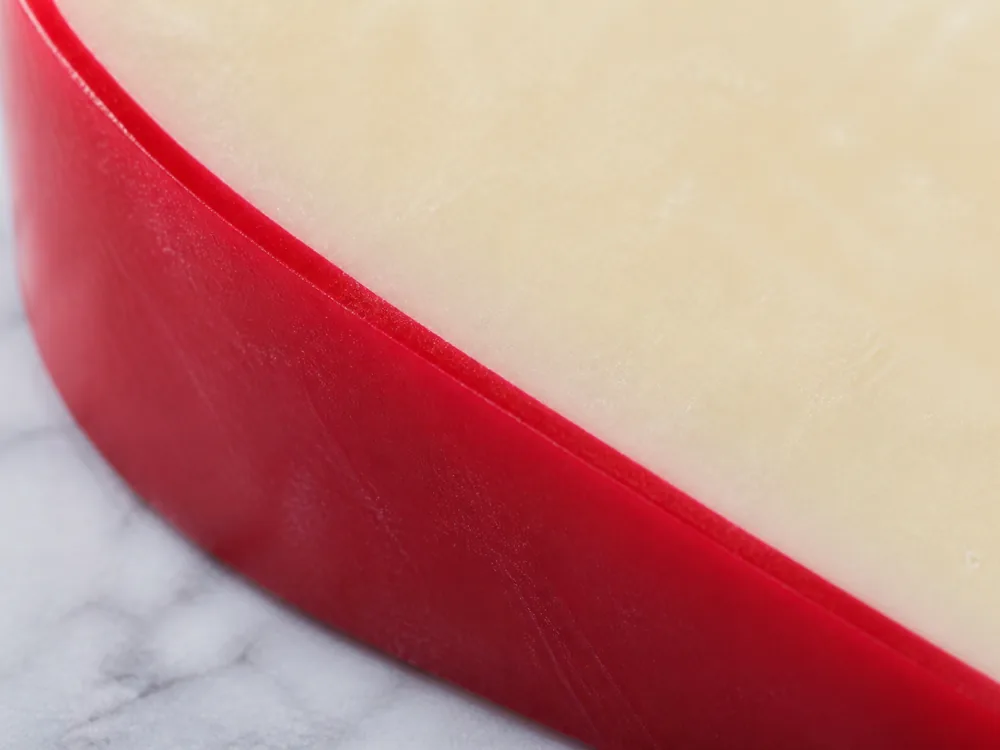
Close cross-section showing the red wax shell sitting directly on pale paste - Airedale | KnowTheCheese
The wax is an applied shell, not a rind. There is no ripened band underneath it, because nothing grew on the surface to work inward.

That is why a six-month Airedale is still semi-soft. A cheese of the same age with an open rind would have dried into something much firmer.

It also explains the flavour direction. With no surface flora, the maturing happens inside the paste, so what develops is acidity and savoury depth rather than the mushroom and cellar notes a washed or bloomy rind produces.

Do not eat the wax. Cheese wax is food grade so a swallowed fleck will not hurt you, but it is a packaging material and it has no flavour to give.

Cut it away at the rim as you slice rather than peeling the whole shell off at once. The wax is protecting whatever you are not eating today.

Is Airedale the Same as Aged Airedale?

A cheese with one maker sits differently from a cheese with a style behind it, and this one is at the extreme end of that. On a New Zealand shelf today it is effectively the only one.

Whitestone's current product is sold as Aged Airedale, and the six-month minimum is part of that name. Some retailers, particularly exporters, still list it simply as Airedale on the same 110g pack.

Treat the two names as one cheese unless the pack tells you otherwise. If a listing gives no age at all, it is worth asking, because the maturity is the whole point of this one.

The producer is explicit that the finish sharpens as the cheese gets older. A younger piece and an older piece of the same cheese are genuinely different eating.

NOTE

Airedale and Aged Airedale are sold as one name with a modifier, and they are not the same eating. Ask which one is behind the glass before you buy on the name alone.

What Does Six Months of Age Do to the Flavour?

Smoking is usually a cosmetic addition to a cheese that would be fine without it, and here it is closer to a rewrite. It turns a mild semi-soft cheese into a loud one.

Whitestone describes the result as full bodied and punchy, with a strong to sharp acidic finish and a savoury aftertaste. That sharpness intensifies the longer the cheese matures.

The useful part of that description is the word acidic. This is not the salty, crystalline sharpness of a long-aged hard cheese, and it is not the ammonia edge of an over-ripe soft one.

It is a tang that sits on the finish and lingers. If you find aged cheddar's sharpness too dry and blue cheese too aggressive, this lands somewhere else entirely.

Serve it at room temperature, which Whitestone recommends and which matters more here than for a hard cheese. Cold, a semi-soft paste holds its aromatics in and you lose the savoury tail you paid six months for.

Why Airedale Is the Cheese for Southland Cheese Rolls

The cheese roll is a real regional dish, not a novelty, and Airedale is what a New Zealand cook reaches for to make it.

A Southland cheese roll is a slice of white bread spread with a thick sauce of grated cheese, evaporated milk and onion soup mix, rolled up and toasted until the outside crisps. The oldest written recipe ran in the New Zealand newspaper Truth in 1935.

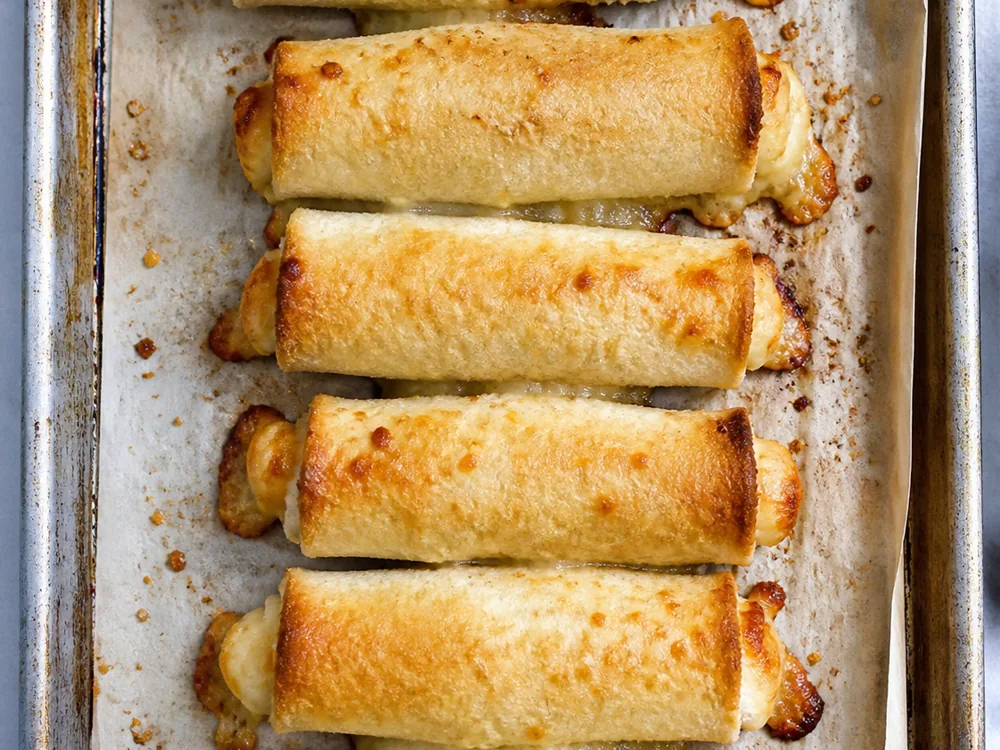
Tray of baked Southland cheese rolls, golden and crisp with filling at the seams - Airedale | KnowTheCheese
Rolled, not open. The bread crisps on the outside while the cheese sauce stays soft inside.

Whitestone publishes its own version, and the quantities show how much cheese the dish actually carries.

400
Grated Airedale g
Melted into the sauce rather than sprinkled on top.
340
Evaporated milk ml
One tin, which is what makes the filling sweet enough to need a sharp cheese.
32
Onion soup mix g packet
The seasoning, so the cheese does not have to carry salt as well.
2
Per slice tablespoons
Spread on the unbuttered side, then rolled firmly.
180
Bake degrees C
Ten to twenty minutes, until the outside is golden and crisp.

That ratio tells you what the cheese has to do. It is carrying a sauce built on evaporated milk and packet soup, so a mild cheese would vanish and a dry aged one would go grainy.

A semi-soft paste melts smoothly into the milk without splitting, and six months of acidity cuts through the sweetness of the evaporated milk. That is a genuinely unusual combination to need, and it is why the pairing stuck.

The same logic makes it work in savoury sauces and fondue, which Whitestone also suggests. Anywhere a sauce needs both melt and a sharp edge, this does two jobs at once.

Where Does the Name Come From?

The name sends almost everyone to the wrong country, which is worth clearing up before anything else. It comes from a farming district, not from Yorkshire and not from the dog.

Airedale is a rural district in North Otago's rolling lowlands, on the outskirts of Oamaru. Whitestone named the cheese after the country its milk comes from.

The dairy's own name works the same way. Whitestone is the local limestone, the Oamaru stone quarried around the town and used in its buildings.

The company started in 1987, founded by Bob and Sue Berry after drought and the rural downturn of the 1980s made farming untenable. It now makes 23 different cheeses and employs more than 70 people.

That history is not decoration. A cheese named after the paddocks next door, made by people who were farming them a few years earlier, is the reason the range is built around local milk rather than imported styles.

BUYING TIPS
Check the wax
An unbroken red coat means the piece has not been cut and rewrapped.
Ask smoked or plain
The smoked version is a different cheese rather than a variation, so say which.
Ask the age
Six months is the standard, and younger is noticeably milder and softer.
Expect to order it
Outside New Zealand this is a specialist import rather than a counter cheese.

What Should You Drink With Airedale?

A cheese this mild is easy to bury, so the drink matters less than what you do not put beside it. A medium-bodied red or a plain cold beer will do, and not much else on the plate.

Whitestone points at cabernet merlot, cabernet sauvignon and shiraz, or a light beer or pilsner. All five choices have the same logic behind them, which is enough structure to stand up to a sharp finish without piling on more flavour.

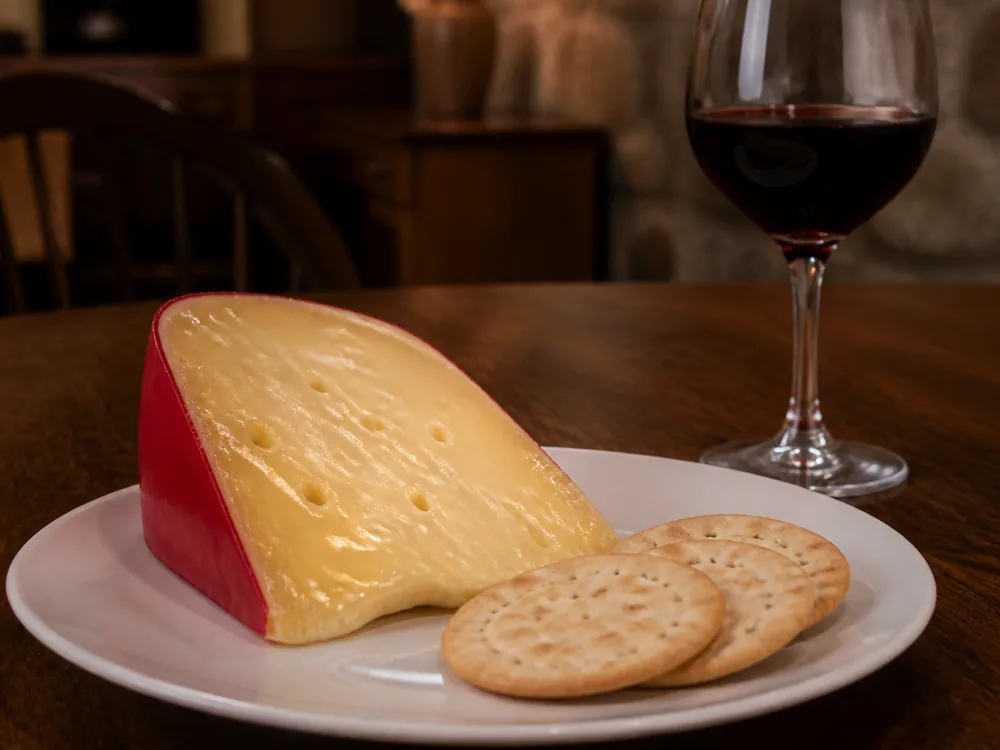
Wedge with its red wax rim on a plain plate with water crackers and a glass of red wine - Airedale | KnowTheCheese
Plain crackers and a medium-bodied red. A sharp savoury cheese does not need chutney competing with it.

Keep the crackers plain. The producer's own serving note says plain crackers, and a cheese finishing this sharp is easily buried under fruit paste or a sweet chutney.

Skip the very big reds. A heavy tannic wine and an acidic cheese fight each other, and the cheese usually loses.

What Can You Use Instead of Airedale?

Match the job, because outside New Zealand this is a hard cheese to find at all.

For the cheese roll and for savoury sauces, a sharp cheddar is the practical stand-in. It brings the acidity, though it is drier and more likely to go grainy if the sauce gets too hot.

For the board, a waxed Gouda with some age on it is closer in presentation and in the way the wax has kept the paste supple. Expect it sweeter and nuttier where Airedale is tangy.

If what you want is the semi-soft texture rather than the sharpness, a young Havarti gives you the melt without the finish. Havarti carries almost no acidity of its own, so use it where the sauce is already sharp enough.

For the cheese roll specifically, an American cook is better served by Colby, which melts into a sauce more smoothly than an aged cheddar and sits on most supermarket shelves. It carries less acidity, so season the sauce a little harder to make up for it.

None of these is the same cheese. Airedale sits in an unusual spot, semi-soft but sharply aged, and most shelves make you choose one or the other.

SOURCES & REFERENCES


1.
Whitestone Cheese producer
Used for the five-day waxing, the six-month minimum age, the flavour description, the 110g and 1.9kg formats, the price, the awards, and the serving and pairing advice.

2.
Whitestone Cheese producer
Used for the producer's own cheese roll quantities, the two tablespoons per slice, and the baking time and temperature.

3.
Wikipedia reference
Used for the 1987 founding by Bob and Sue Berry, the drought and rural downturn, the Oamaru stone name origin, the 23 cheeses, and the staff number.

4.
196 Flavors reference
Used for the composition of the dish and the 1935 New Zealand Truth recipe as the oldest written record.

Airedale Cheese FAQ

Two questions the sections above do not settle.

Only through specialist importers and online New Zealand food retailers that ship chilled. It is not a supermarket cheese anywhere else.

Once the seal is broken the cheese behaves like any cut semi-soft, so wrap the cut face and finish it within a week or two. Leave the wax on the sides you have not reached yet.