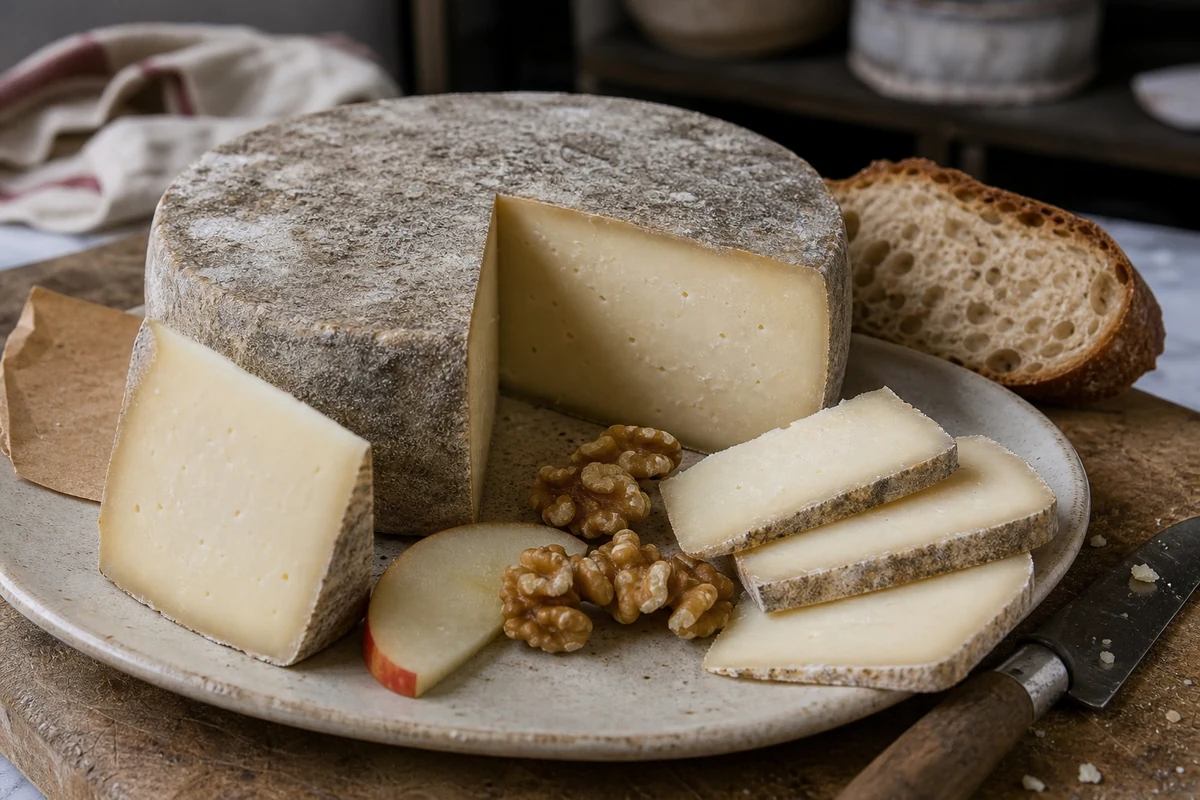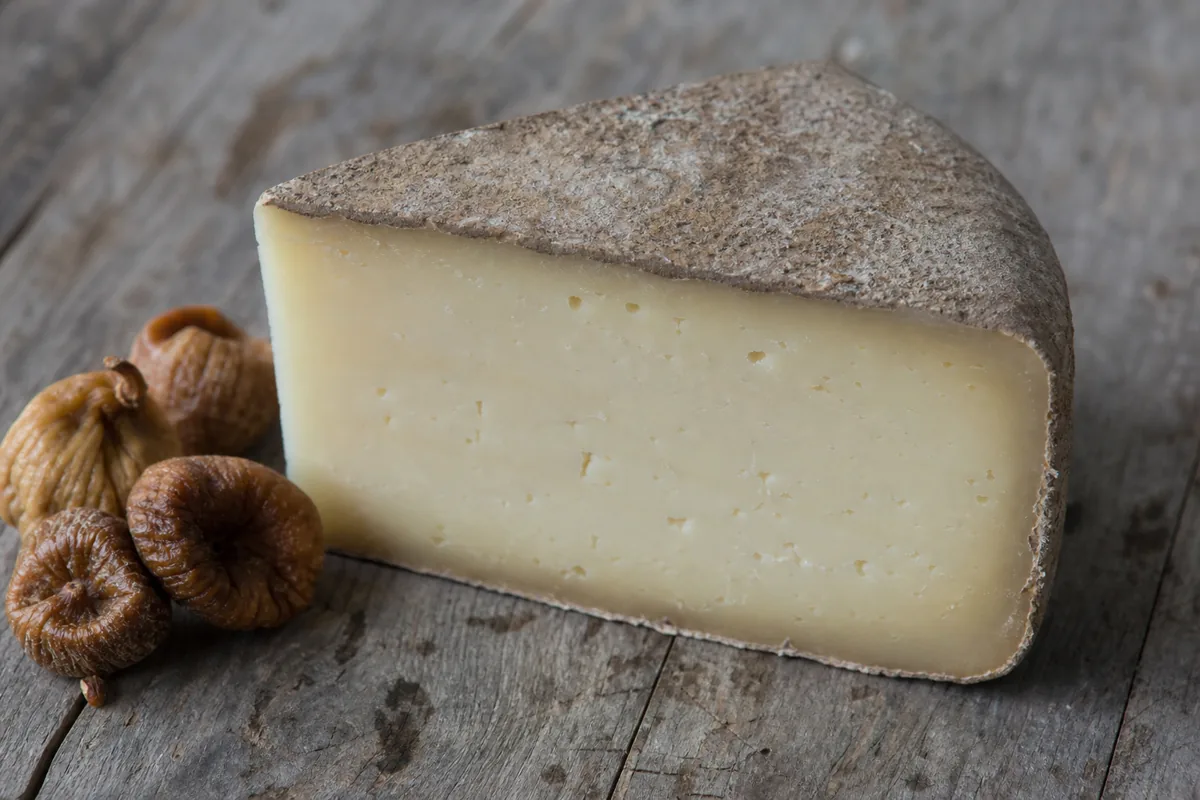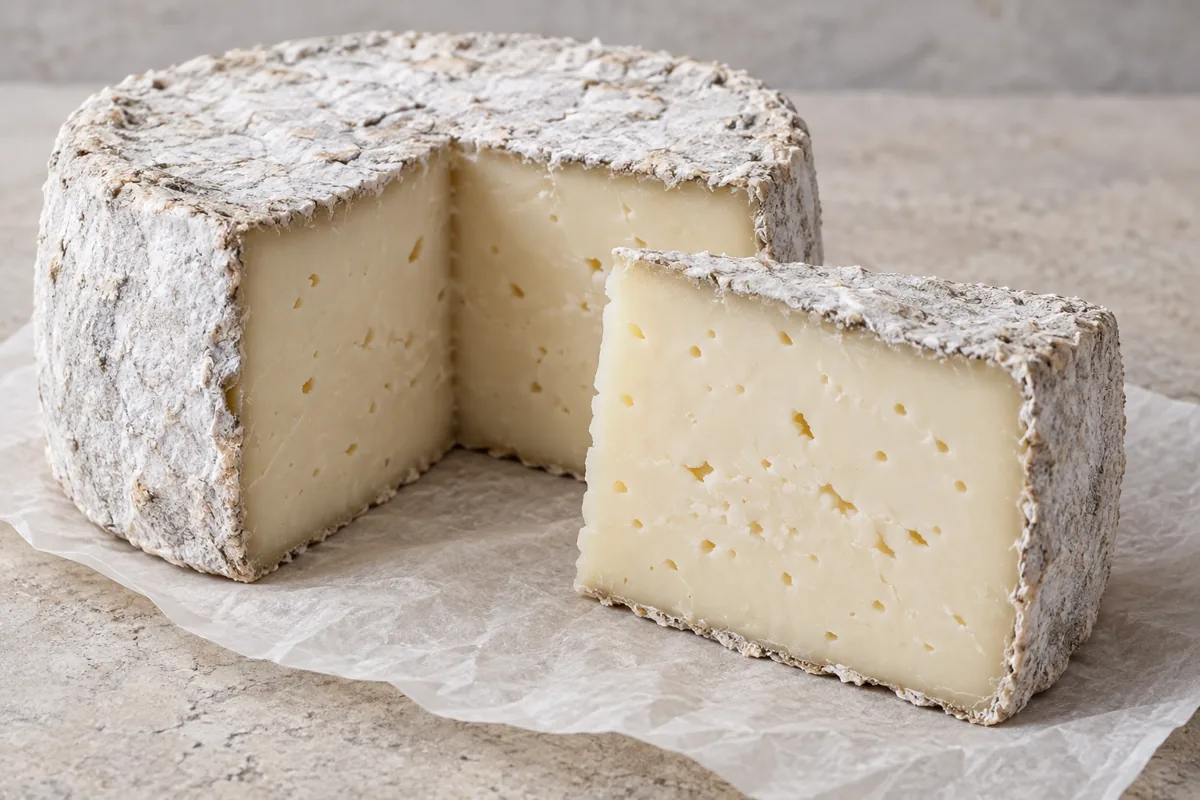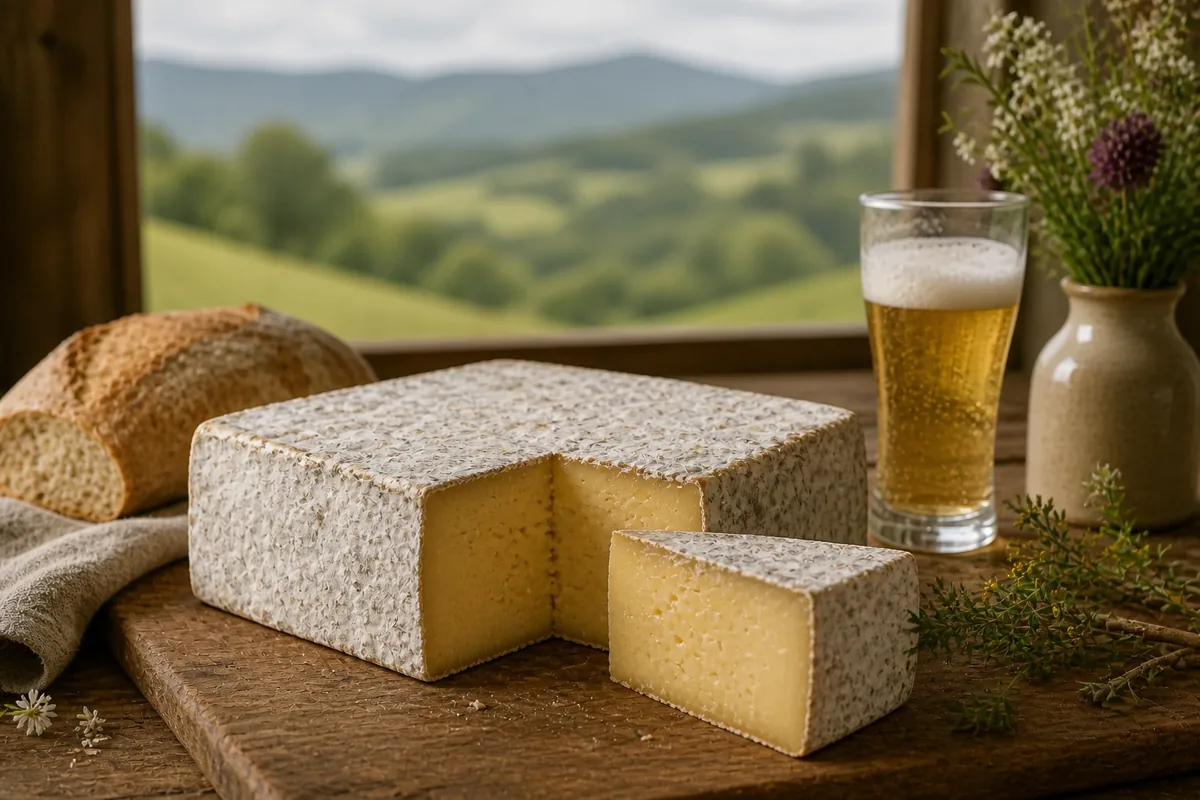
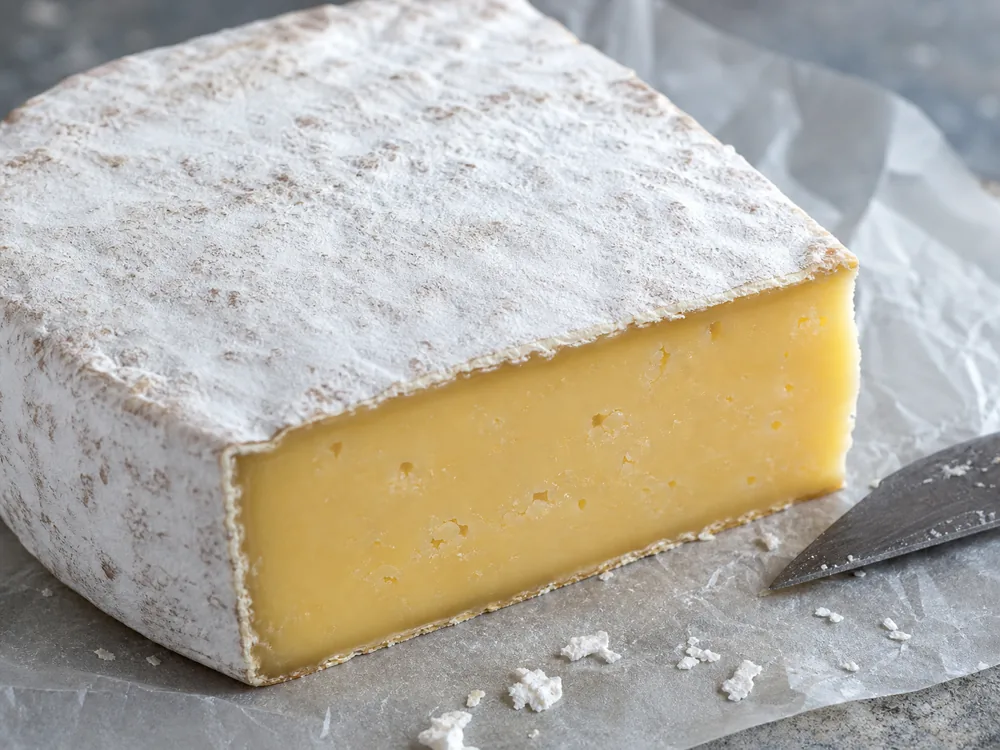
Appalachian is Meadow Creek Dairy's founding cheese, a raw cow's-milk, tomme-style wheel made in Galax, Virginia. The dairy sells it after at least 90 days in its cellars, with a white penicillium coat and a flavor it sums up as cream, butter, and mushroom, with lemon notes that shade to toasted.
Age is the ripeness cue the sources support: a stated floor of 90 days for the regular wheel and more than eight months for the separate Extra-Aged wheel.
In This Article
What Is Appalachian Cheese and Who Makes It?
Meadow Creek Dairy calls Appalachian its founding cheese, and Cheese.com, Culture Cheese Magazine, Heritage Foods, Saxelby Cheesemongers, Counter Cheesemongers, Fairfield Cheese Company and Cheese Grotto all tie the name to that one dairy.
The dairy was founded in 1988 in the Appalachian Mountains around Galax and describes itself as a seasonal grazing dairy that makes raw cheese. Its About Us page says the herd began as purebred Jerseys and has since changed through breeding research to suit seasonal grass dairying.
By the maker's account, the dairy designed the cheese to show that milk instead of imitating an existing style, and the process centers on aging and a white penicillium coat.
Heritage Foods gives the ingredients as cultured raw milk, salt, and animal rennet, so if you avoid animal rennet, Appalachian is not a cheese for you.
For the style, Cheese.com calls it a lightly cooked, pressed-curd cheese. Saxelby Cheesemongers and Heritage Foods both place it in the tomme style.
Culture Cheese Magazine is the only source that gives the shape as square, describing wheels about 9 inches across and 3 inches high that weigh 8 pounds.
How Do You Tell When Appalachian Is Ripe?
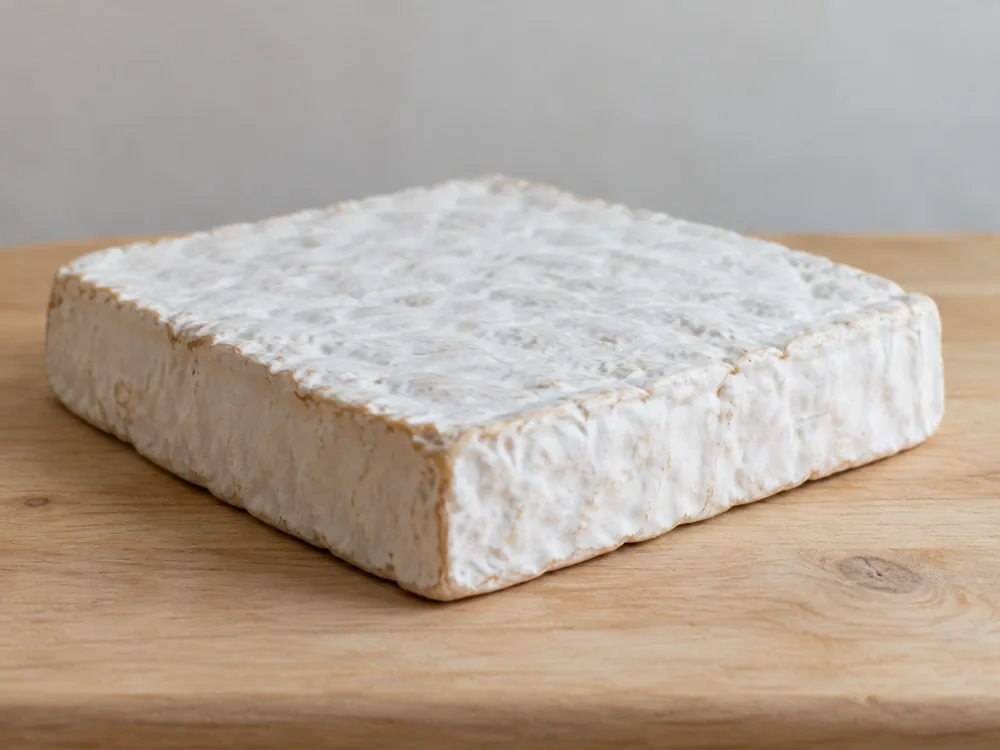
You judge Appalachian by its age, and the floor comes from the producer: its product page says Appalachian is aged for at least ninety days in its cellars. Cheese.com and Culture Cheese Magazine repeat that figure, while retailers report anything from two months to five.
| Source | Age stated |
|---|---|
| Meadow Creek Dairy product page | At least ninety days in the cellars |
| Cheese.com | Minimum 90 days |
| Culture Cheese Magazine | 90 days before release |
| Fairfield Cheese Company | 2-3 months |
| Cheese Grotto | 3 months |
| Heritage Foods | At least four months |
| Saxelby Cheesemongers | 4-5 months |
Fairfield Cheese Company's two-to-three-month listing sits below the producer's own 90-day minimum, so when a shop gives you a younger age, the producer's page is the stronger source for the floor. The four-to-five-month and four-month-minimum figures fit wheels sold above that floor.
The producer publishes a minimum age, not a fixed age. Ask the shop how old the wheel is, because listings run from two months to five.
What Does Appalachian Taste Like, and Why Do Sources Differ?
The producer describes a lush, vibrant cheese that recalls cream and butter, with a mushroom earthiness that recalls the intensity of the cellars. It says the lemon notes shade to toasted as the cheese ages and calls the texture velvety, melting on the tongue.
| Source | Texture | Rind | Flavor |
|---|---|---|---|
| Meadow Creek Dairy | Velvety, melting on the tongue | White penicillium mold coat | Cream, butter, mushroom earthiness; lemon shading to toasted |
| Culture Cheese Magazine | Firm, supple; deep straw-yellow paste | Natural, thin, brown-grey | Fruit, especially lemon, plus cream and butter |
| Saxelby Cheesemongers | Golden paste, supple yet snappy | Snow white, mushroomy | Grassy, buttercream sweet |
| Counter Cheesemongers | Semi-soft, higher moisture | Natural rind with a delicate mix of molds | Meadow grasses, egg custard, digestive biscuits, sauteed hen-of-the-woods, toastiness |
The sources agree on cream, butter, and a supple paste and split on the finer notes. Heritage Foods also reports notes of pineapple, and Fairfield Cheese Company calls the texture supple and pliable.
The rind is the one direct conflict, since Culture Cheese Magazine likens its thin brown-grey natural rind to the rind on Tomme de Savoie while the producer and Saxelby describe a white coat. The producer's current page is stronger for the wheel sold today, so the white coat is what you are most likely to see on a piece bought now.
Season may explain part of the spread, because Saxelby says Appalachian is made only while the cows are on pasture, from about mid-March through November, and credits that with a bright yellow paste.
Heritage Foods adds that the cows calve together in the spring and are dried off in winter. The dairy itself says its seasonal raw milk means no two makes are the same, so two pieces you buy months apart may not taste alike.
How Extra-Aged Appalachian Differs
Meadow Creek sells a second wheel, Extra-Aged Appalachian, which its product page says spends over eight months in the cellars. Its cheese page says aging to eight months gives a lush, fruity cheese with overtones of toasted butter and a crunch.
| Feature | Appalachian | Extra-Aged Appalachian |
|---|---|---|
| Age | At least 90 days | Over eight months |
| Flavor | Cream, butter, mushroom earthiness; lemon shading to toasted | Fruity, with overtones of toasted butter, mushroom earthiness, and a tangy, smooth finish |
| Texture | Velvety, melting on the tongue | Firm but velvety, melting on the tongue, with a crunch |
Both descriptions keep the mushroom earthiness, and what changes in the producer's account is the turn from lemon to toasted butter, a tangy finish, and a firmer body. Ask for the Extra-Aged wheel if you want that toasted butter and the crunch, and for the regular wheel if you want the lemon notes.
What to Serve with Appalachian
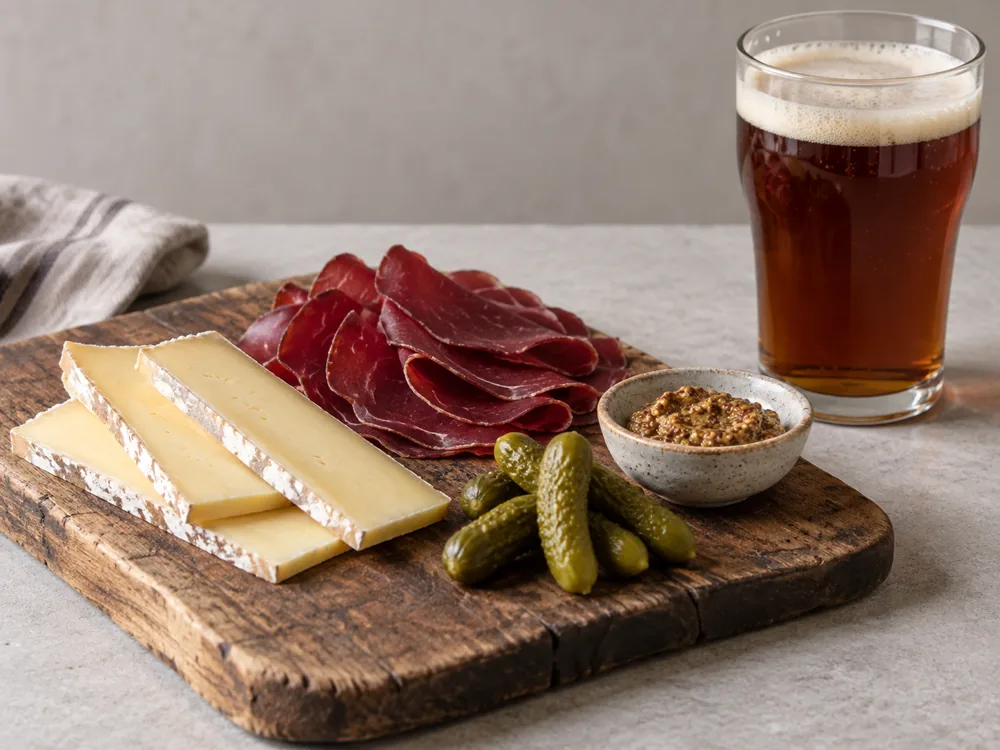
Three retailers publish pairings for Appalachian, and each suggests something different. If you want wine, Fairfield Cheese Company is the only one that names one, Pinot Gris, alongside a lager.
| Pairing | Type | Why It Works |
|---|---|---|
| Bresaola | Food | Cheese Grotto's suggested cured meat. |
| Cornichons and mustard | Food | Cheese Grotto pairs the cheese with cornichons and multi-grain mustard. |
| Crackers and jam | Food | Counter Cheesemongers suggests cultured crackers with a strawberry, black currant, and rosemary jam. |
| Brown ale, lager, or Pinot Gris | Drink | Cheese Grotto names a brown ale, and Fairfield Cheese Company names Pinot Gris or a lager. |
If you are thinking of cooking with it, the producer's texture line, velvety and melting on the tongue, describes mouthfeel and not how the cheese behaves in a pan. Meadow Creek describes a different cheese, Galax, as a mellow, melting Gouda-style cheese.
Where Can You Buy Appalachian, and What Does It Cost?
On September 29, 2026, Counter Cheesemongers listed wedges from a half pound at $21 up to a whole 8-pound wheel at $320, about $40 to $42 a pound. Saxelby Cheesemongers showed every size as sold out that day.
Counter Cheesemongers lists the cheese as available year round, although Saxelby dates the make to a mid-March-through-November season.
Once you get a piece home, follow the wrapping and date guidance from the shop that cut the piece.
Is Appalachian Safe to Eat During Pregnancy?
Appalachian is a raw-milk cheese, and milk treatment is what advice on cheese during pregnancy turns on. The CDC advises avoiding soft cheese made from unpasteurized milk and names queso fresco, camembert, blue-veined cheese, and unpasteurized brie.
The NHS draws a different line. It lists unpasteurised parmesan, cheddar, and gruyère as safe hard cheeses to eat, and it says white-coated mould-ripened soft cheeses, pasteurised or not, must be thoroughly cooked.
Appalachian sits between those groups. Sources call the paste semi-soft, supple, or firm and semi-hard, and the rind is a white mold coat, so the agency wording above does not place it clearly on either side.
Because the rules turn on milk treatment, softness, and whether the cheese is cooked, your clinician is the right person to place a raw-milk wheel that straddles both groups.
SOURCES & REFERENCES
Ask the shop whether to eat or trim the rind. The producer builds the cheese around its white penicillium coat, and Saxelby calls the rind mushroomy.
Follow the wrapping and date guidance from the shop that cut the piece.
The dairy also makes Grayson, a washed rind it calls bold and earthy, Mountaineer, an Alpine-style cheese, and Galax, a mellow, melting Gouda-style cheese.