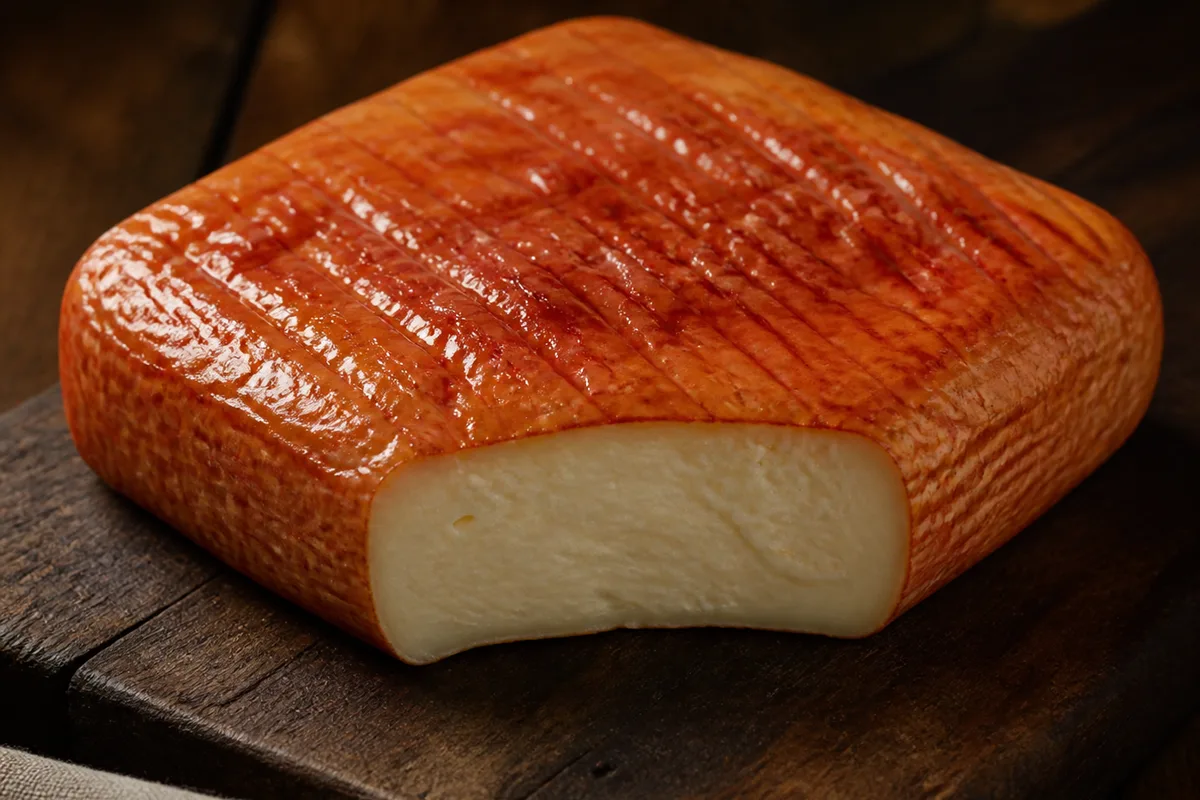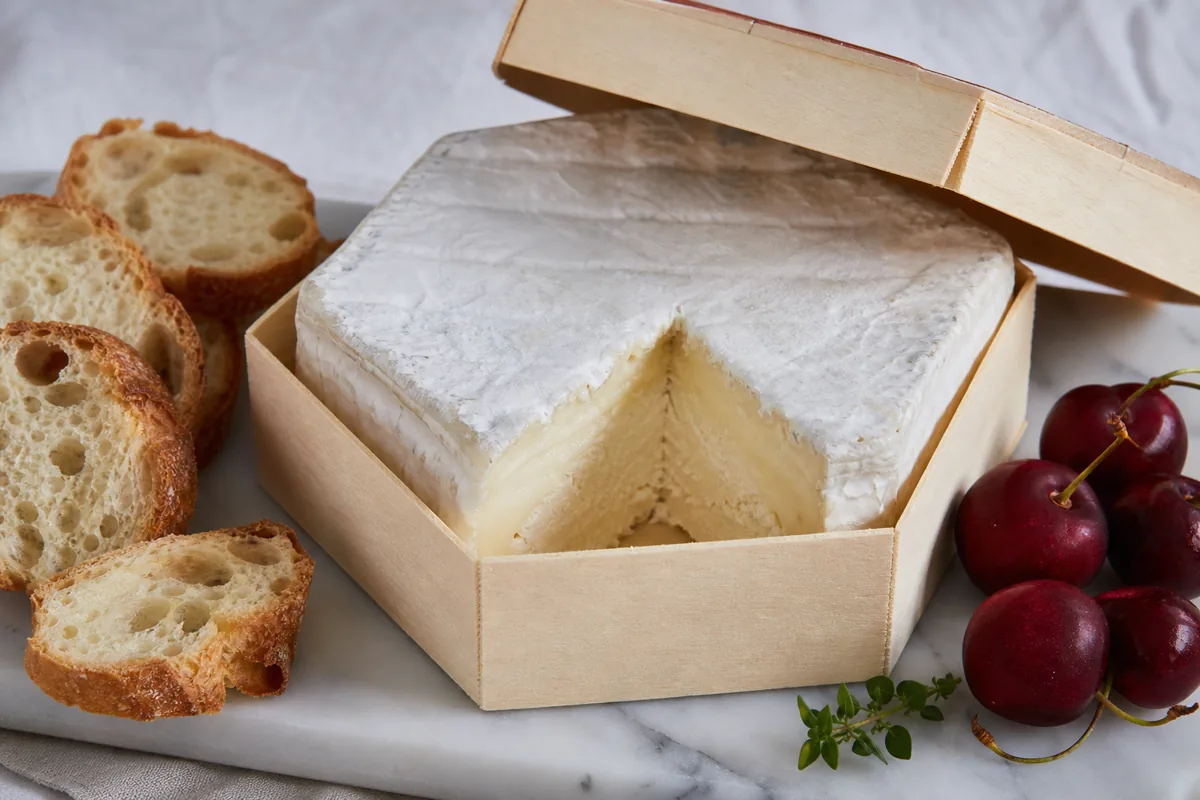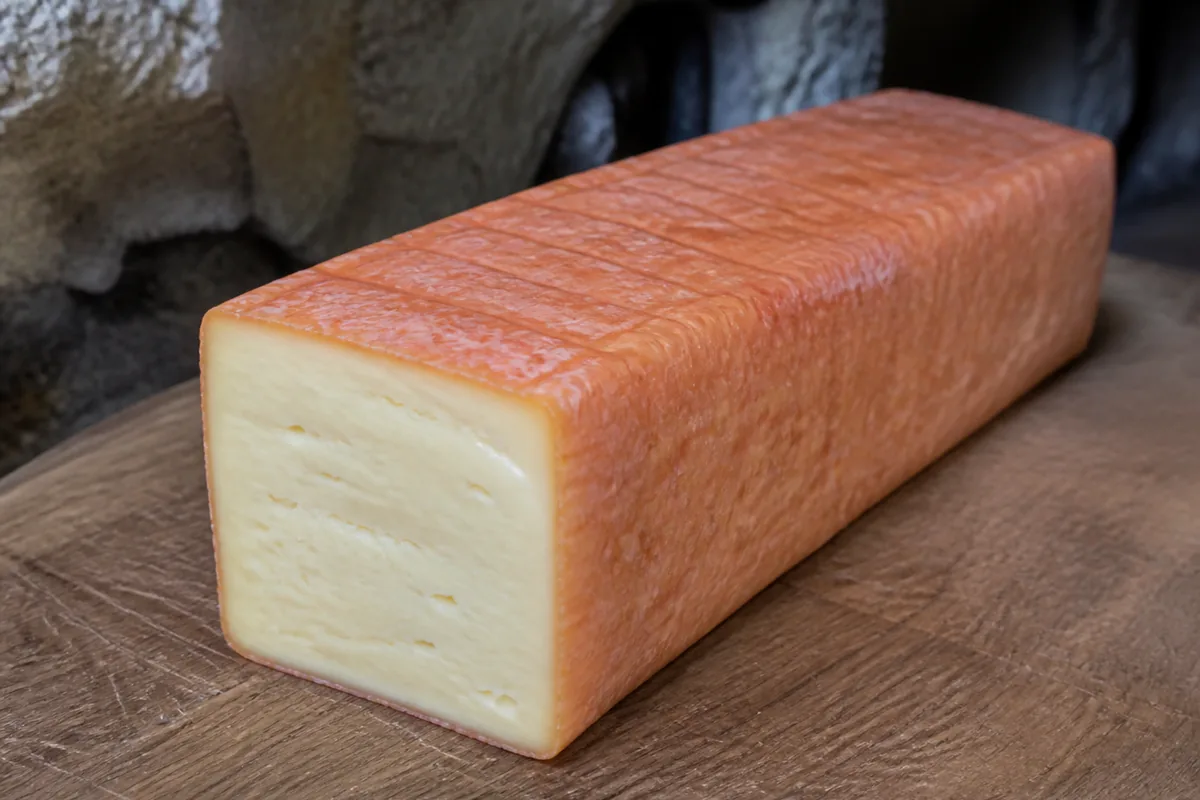
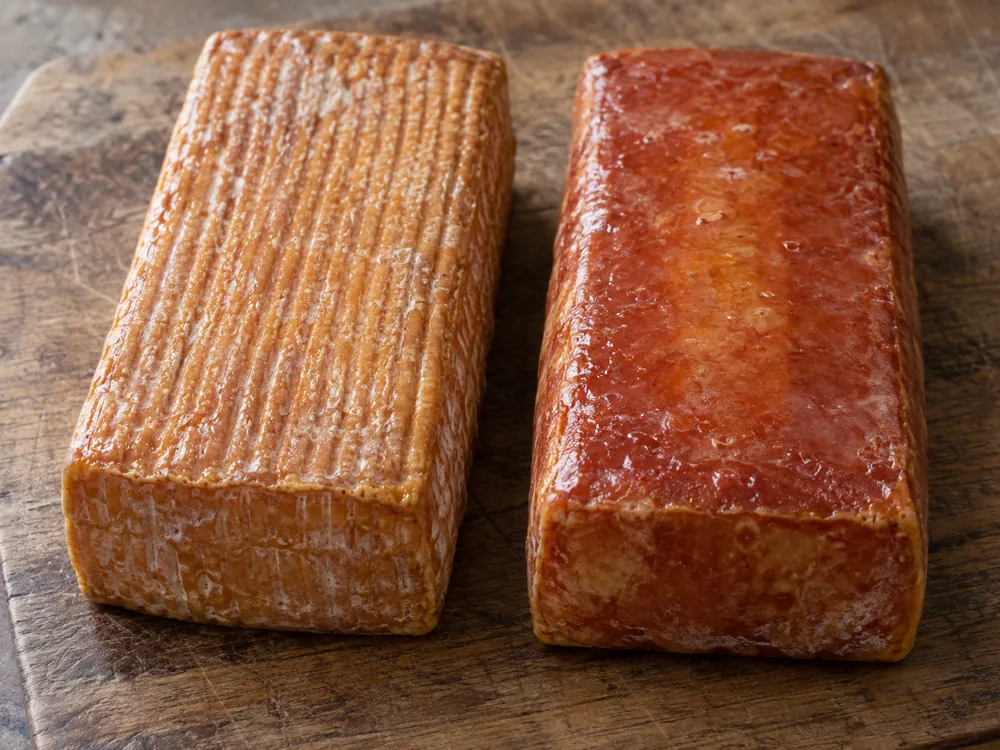
Baguette laonnaise is a soft, washed-rind cow's-milk cheese from Laon in the Aisne, shaped as a bar about 15 cm long with a 6 cm square section.
Sources call it a variation or cousin of Maroilles. Its milk is raw in some descriptions and pasteurized in others, so the label on the piece in your hand carries more weight than any description.
In This Article
What Is Baguette Laonnaise?
It is a cheese of northern France, from Laon in the Aisne, in the Hauts-de-France region.
Baguette laonnaise was invented in the 1940s by most pages' dating, while Androuet places it between the two World Wars and English Wikipedia, citing a cheese book by Jean Froc, gives about 1930.
The name comes from the shape, a rectangular baguette, and it is also sold as baguette de Thiérache. English Wikipedia adds losange and dauphin as further names, although our own Dauphin profile is a different cheese, a bloomy-rind double-cream cheese.
French Wikipedia files all of these names under one entry titled Dauphin, which describes fresh Maroilles mixed with tarragon and pepper. English Wikipedia's baguette entry also says pepper and tarragon go into the curd.
Ask the seller or read the ingredient list for tarragon and pepper before you count on a plain washed-rind flavour.
How Big and Heavy Is a Baguette Laonnaise?
The standard bar is roughly 15 cm long, 6 cm square in section and 500 g.
The piece you buy may be smaller: the cheese also comes as a 250 g demi-baguette, and Fromageries Philippe Olivier sells pieces of about 200 g.
If you know Maroilles, the baguette shares its thickness but not its footprint. The Maroilles AOP body describes a 13 cm square that is 6 cm thick, while the baguette is long and narrow instead of square.
How Is Baguette Laonnaise Washed and Aged?
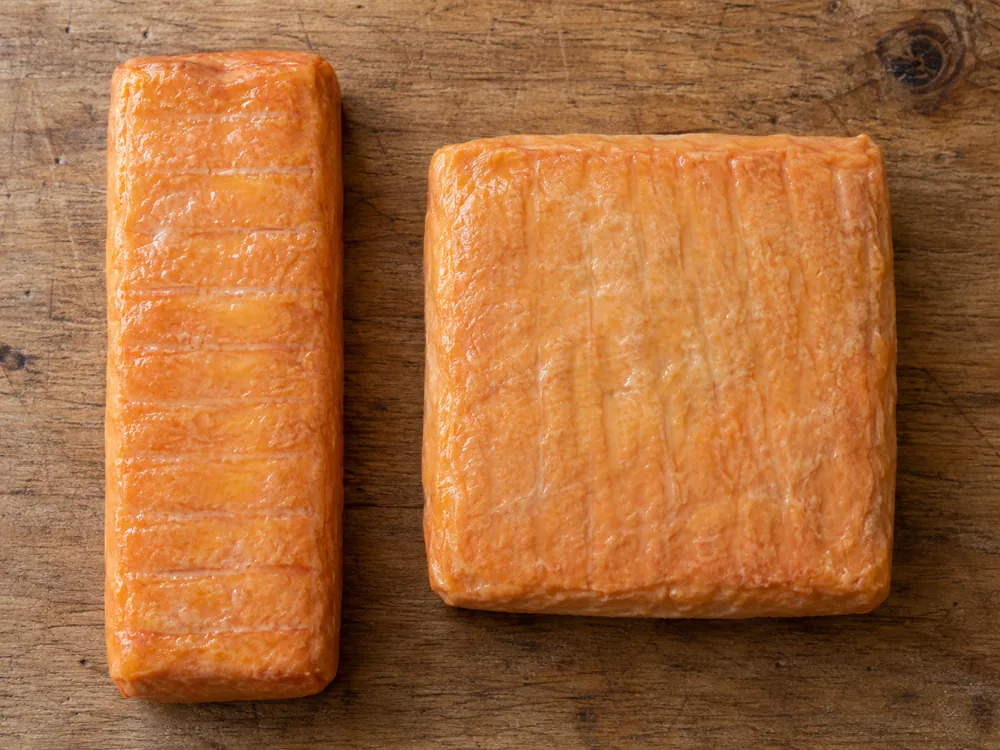
The bar is washed with salt water and aged in a humid cave for three to four months in Androuet's description, a range English Wikipedia, Cheese.com and Le Guide du Fromage share, while Bellait gives a shorter two to three months.
Bellait's shorter figure is the same one French Wikipedia gives for its Dauphin entry, which says the rind is often washed with salted water and darkens from brown to orange.
Either range is long next to Maroilles, for which the AOP page lists 3 to 5 weeks of ripening depending on size.
Is Its Milk Raw, Pasteurized or Thermized?
Baguette laonnaise is made from pasteurized cow's milk according to Bellait, Le Guide du Fromage, produits-laitiers.com and Cheese.com, from thermized milk according to Fromageries Philippe Olivier, and from raw whole milk according to è molto goloso and Fromages de Terroirs.
| Source | Milk | Ageing | Fat |
|---|---|---|---|
| Bellait | Pasteurized cow's milk | 2 to 3 months | Not stated |
| Le Guide du Fromage | Pasteurized cow's milk | 3 to 4 months | 23% |
| Produits-laitiers.com | Pasteurized whole cow's milk, farmhouse | Humid cave, months not stated | 23% |
| Cheese.com | Pasteurized cow's milk | 3 to 4 months | 28.5% |
| Fromageries Philippe Olivier | Thermized cow's milk | Sold at chosen stages | 23% |
| è molto goloso | Raw whole cow's milk | 3 to 4 months | 45% |
| Fromages de Terroirs | Raw whole cow's milk | Humid cave, months not stated | 45% |
| English Wikipedia | Cow's milk, treatment not stated | 3 to 4 months | 45% |
| Androuet | Cow's milk, treatment not stated | 3 to 4 months | Not stated |
Its fat splits into three groups too: 23% from Le Guide du Fromage, produits-laitiers.com and Philippe Olivier, 28.5% from Cheese.com, and 45% from è molto goloso, Fromages de Terroirs and English Wikipedia.
French Wikipedia's Dauphin entry lists the cheese under both raw-milk and pasteurized-milk categories. Judge the bar in front of you by the milk statement on its own label.
What Does Baguette Laonnaise Taste Like?
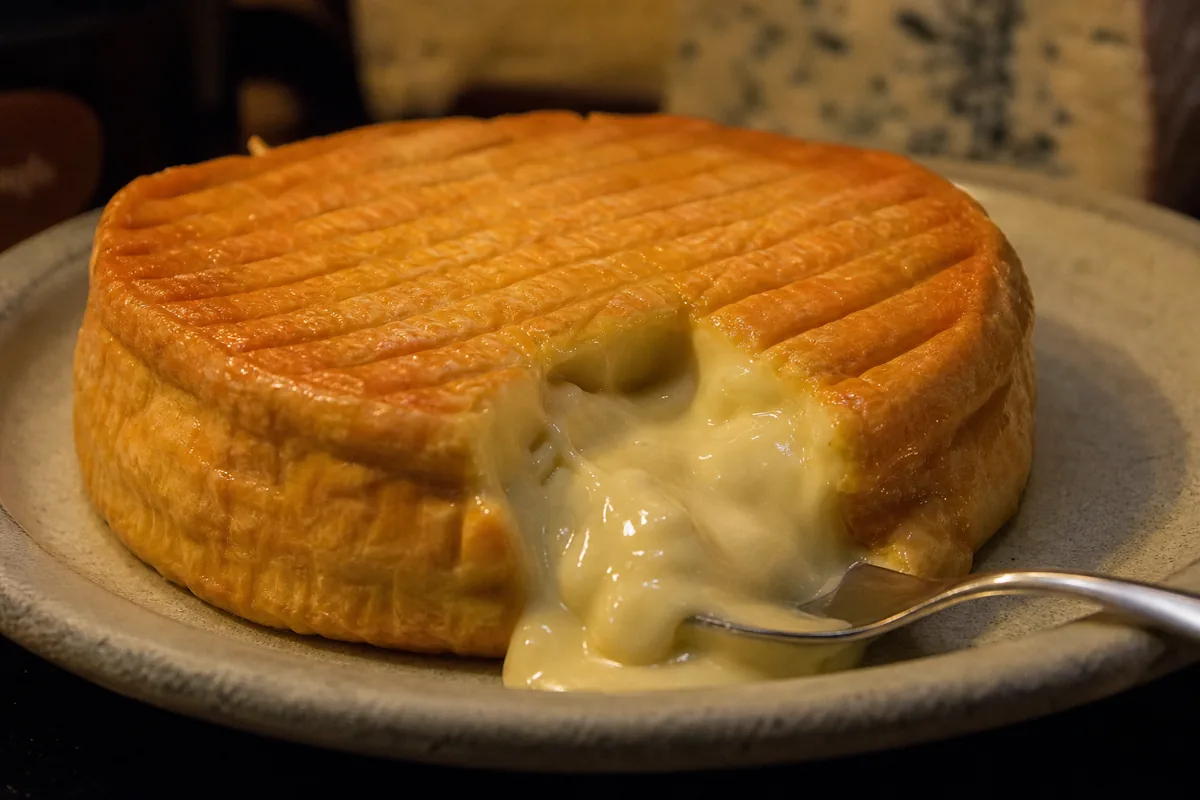
Maroilles is the reference point for the flavour. Bellait and produits-laitiers.com call the taste close to Maroilles, and produits-laitiers.com adds a pronounced rind smell and a flavour that lingers.
Androuet rates the intensity as very pronounced and Cheese.com calls it spicy and pungent, while Fromageries Philippe Olivier says the paste is softer and the aroma milder than full Maroilles.
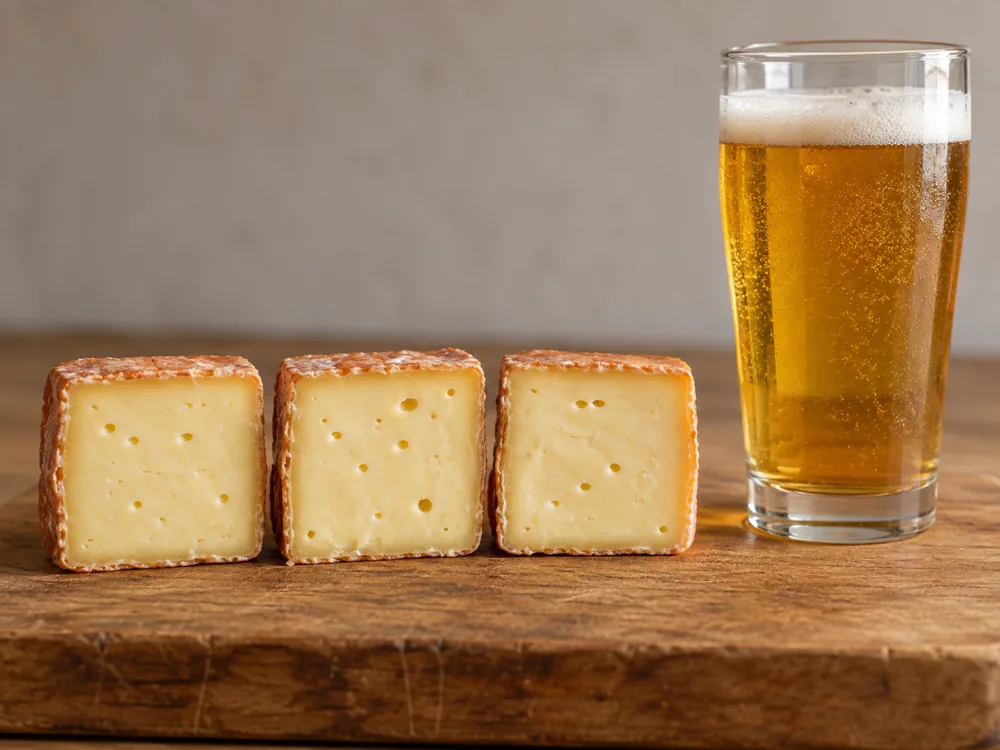
Inside the bar, produits-laitiers.com describes a paste that is supple and glossy with small holes. Cheese.com calls it pale yellow, and Olivier says white to cream depending on the season.
The rind is brown-orange, moist and striated at Bellait, Le Guide du Fromage and produits-laitiers.com, but brown-red, smooth and shiny at Androuet.
What Should You Drink with Baguette Laonnaise, and How Do You Store It?
For the match with the most backing, choose a blonde beer: it is the only pairing two sources share, while each wine comes from one.
| Pairing | Type | Why It Works |
|---|---|---|
| Blonde beer | Drink | A special blonde beer of the Angélus type, per Fromages de Terroirs and è molto goloso. |
| Full-bodied red wine | Wine | Named by è molto goloso as a match. |
| Riesling | Wine | The pairing Cheese.com recommends. |
Once you have a bar home, English Wikipedia and Cheese.com both warn that keeping the cheese too long in the refrigerator can dry the rind and leave a sour, bitter taste.
Can You Still Buy It?
It is hard to find: produits-laitiers.com says it has become very rare, and Fromages de Terroirs calls it almost impossible to find. Bellait lists it in its cheese database but not in its regular selection.
Fromageries Philippe Olivier does list it, at 8.75 euros for a piece of about 200 g, sold in its shop or reserved by phone. Olivier's page says the cheese is eaten from September to May.
If you cannot find a bar, Maroilles is the cheese Bellait and produits-laitiers.com compare its taste to.
Can You Eat Baguette Laonnaise While Pregnant?
The milk statements conflict, so its pregnancy status depends on the label on your bar and on heat.
The NHS says mould-ripened soft cheeses with a white coating on the outside, such as camembert, must be thoroughly cooked. Baguette laonnaise has a brown-orange or brown-red rind instead, and the NHS lists pasteurised soft cheeses and any cheese cooked until steaming hot as safe to eat but says foods made from unpasteurised milk must be thoroughly cooked.
The CDC lists soft cheese made from unpasteurized (raw) milk as riskier. It lists pasteurized soft cheeses heated to an internal temperature of 165°F or until steaming hot as a safer choice.
Served cold, a pasteurized baguette laonnaise is described as a soft, washed-rind cheese, a type the CDC list does not cover, so ask a midwife or doctor.
A bar labelled raw milk falls in the CDC's riskier group. If yours has no milk statement, it cannot be placed in the safer one, so leaving it out follows both agencies' wording, while heating it until steaming hot follows the NHS wording.
SOURCES & REFERENCES
What Do Buyers Often Ask About Baguette Laonnaise?
It is a soft, washed-rind cow's-milk cheese from Laon in the Aisne, France, shaped as a bar about 15 cm long with a 6 cm square section and a 500 g weight. Sources describe it as a variation or cousin of Maroilles.
It is listed as pasteurized by four sources, thermized by one and raw by two, so the label on the piece is the only reliable answer.
No. The name comes from the shape of the cheese, a rectangular baguette.
Yes. Bellait and Wikipedia list the cheese under both names, and English Wikipedia adds losange and dauphin.
Androuet, English Wikipedia, Cheese.com and Le Guide du Fromage say three to four months in a humid cave with salt-water washing. Bellait says two to three months.
It depends on the milk and on heat. The CDC lists soft cheese made from unpasteurized (raw) milk as riskier and pasteurized soft cheeses heated to an internal temperature of 165°F or until steaming hot as safer, and the NHS lists pasteurised soft cheeses and any cheese cooked until steaming hot as safe to eat but says foods made from unpasteurised milk must be thoroughly cooked.
Served cold, a pasteurized baguette laonnaise is described as a soft, washed-rind cheese, a type the CDC list does not cover, so ask a midwife or doctor.
It is very rare. Fromageries Philippe Olivier lists it in its shop and by phone reservation.