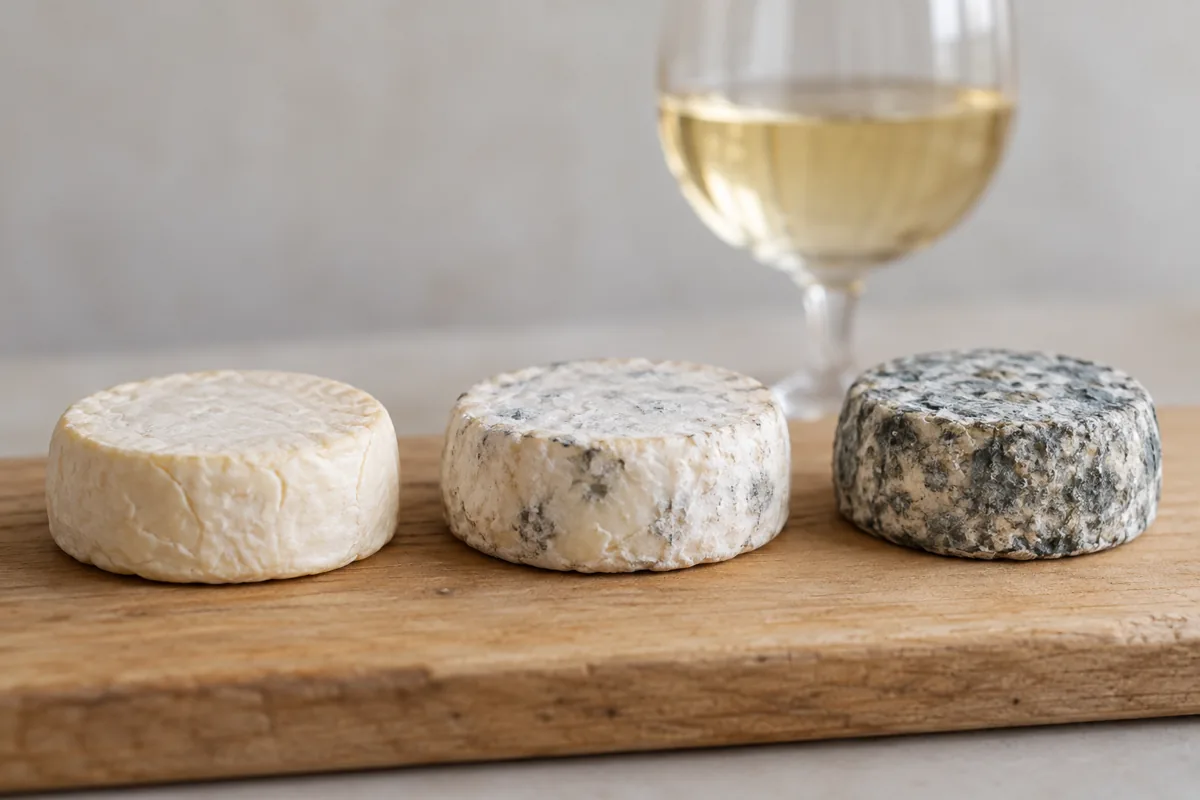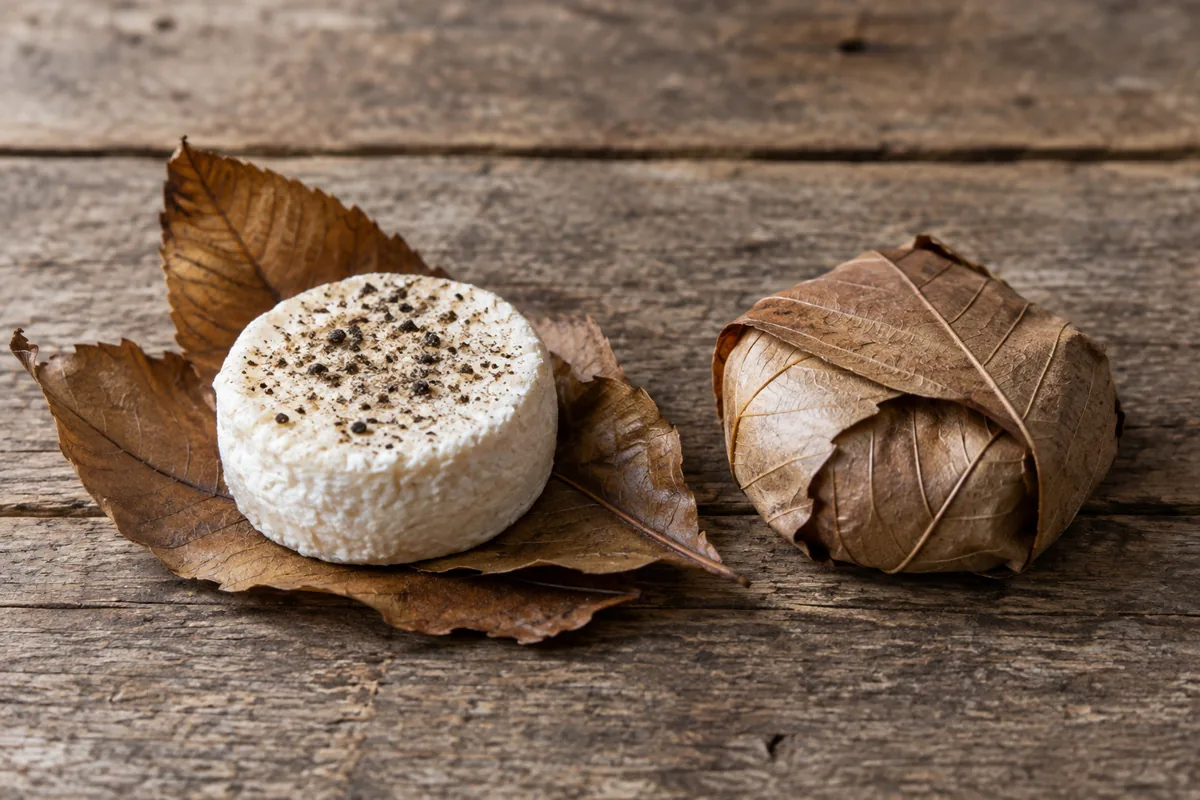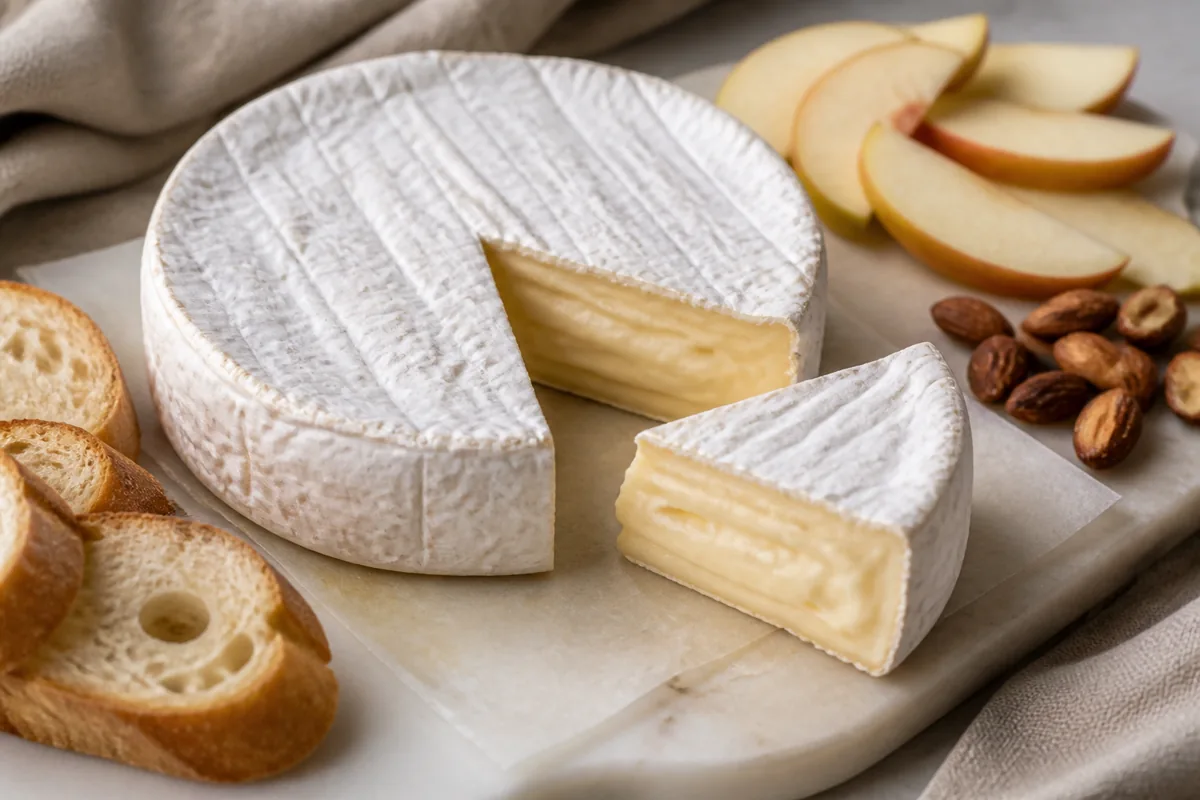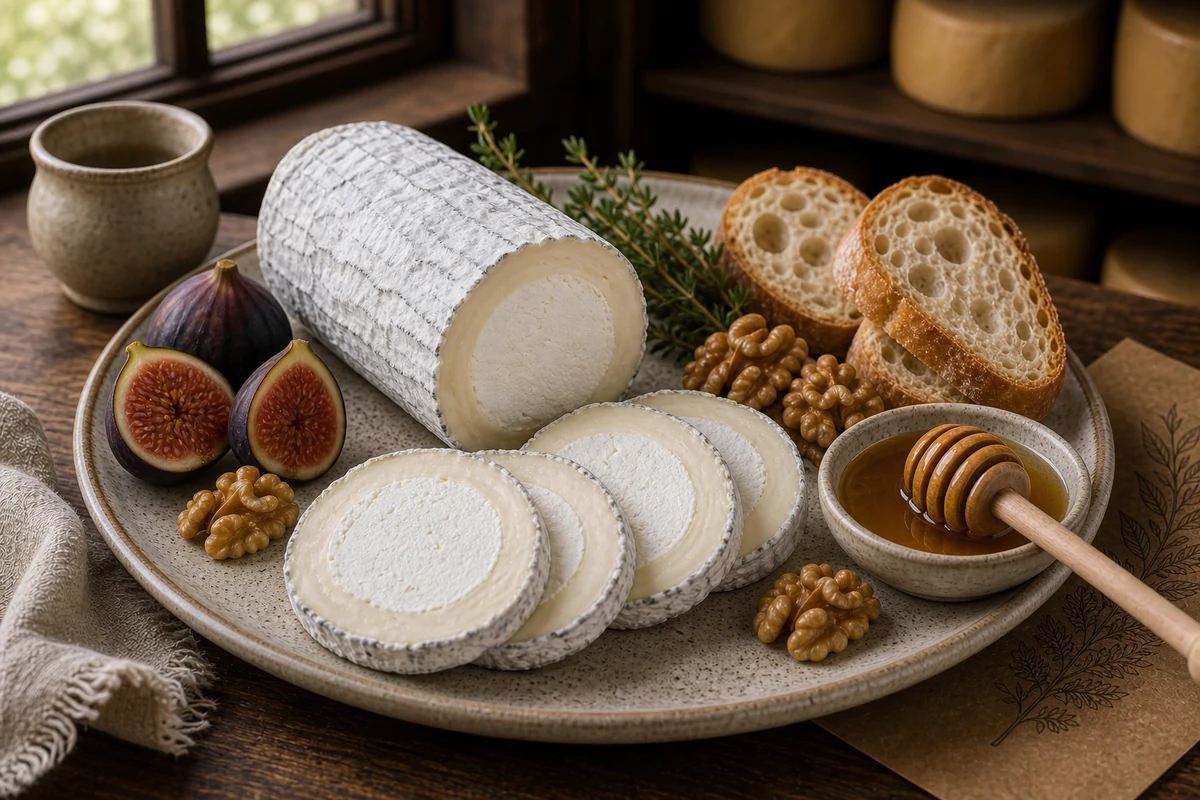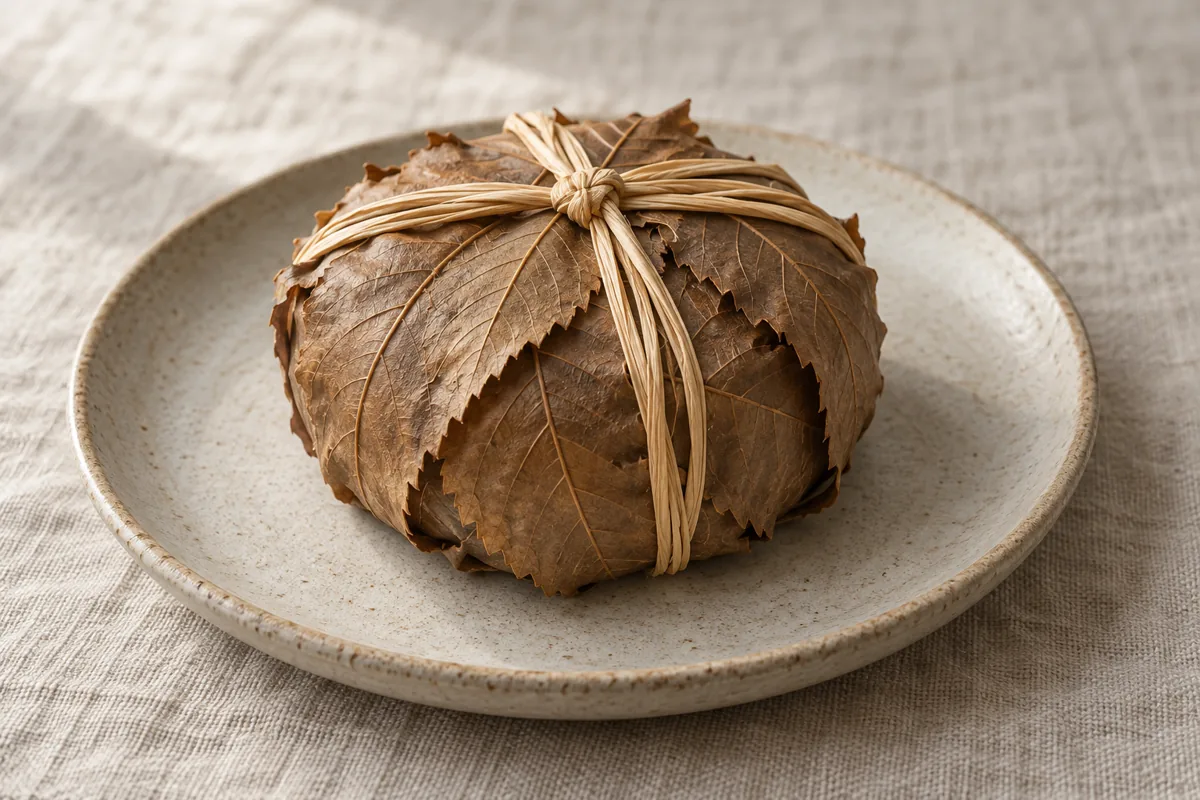
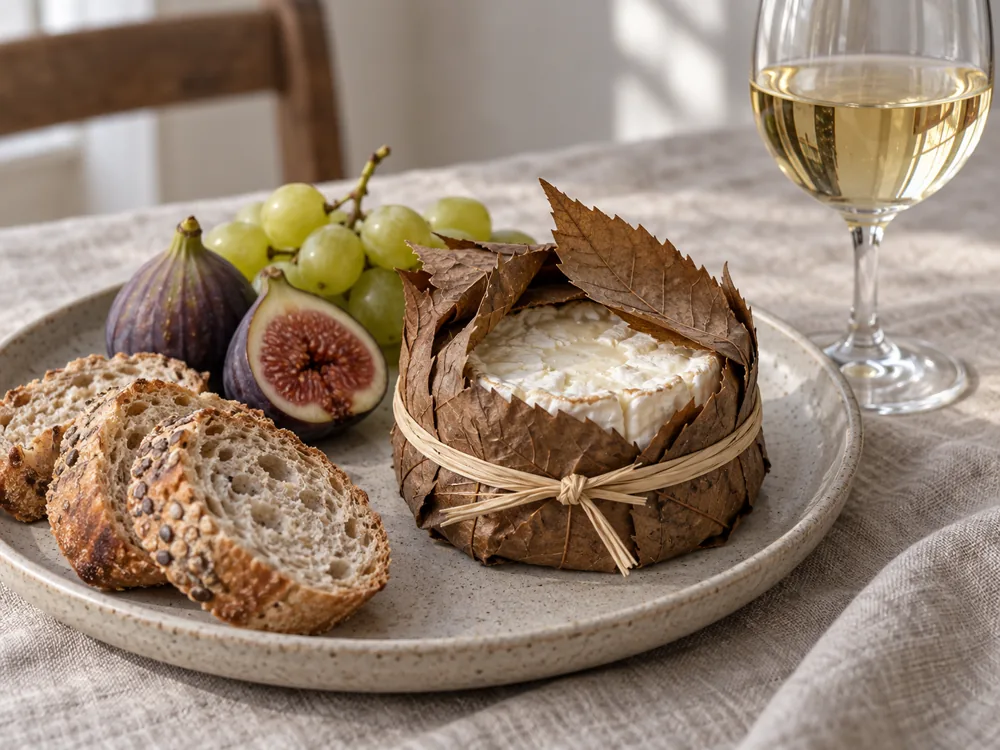
Banon is a soft French cheese made from raw, whole goat's milk, ripened at least 15 days, and folded entirely in brown chestnut leaves tied with raffia.
Every Banon sold under the protected name follows one written specification, so that document, rather than a shop label, is where you check its milk, age and size. It also means every AOP Banon is a raw-milk cheese, which changes the answer if you are pregnant.
In This Article
Where Does Banon Come From, and What Sets It Apart?
The cheese takes its name from the town of Banon in the Alpes-de-Haute-Provence, a place of fairs and trade since the Middle Ages. Its protection is much newer: the appellation dates from 23 July 2003, and the PDO label from 2003.
The specification calls Banon doubly original among goat cheeses: its curd is set quickly with rennet, which is the Provençal habit, and the finished cheese is wrapped in chestnut leaves.
That quick set stands against northern France, which leans on slow lactic coagulation of around 24 hours.
What Is Alpicrème, the Goat Cheese from the Alpilles?
The Parc naturel régional des Alpilles lists Alpicrème among the goat cheeses of La Fromagerie des Alpilles, a dairy it places at Les Joncades Basses near Saint-Rémy-de-Provence.
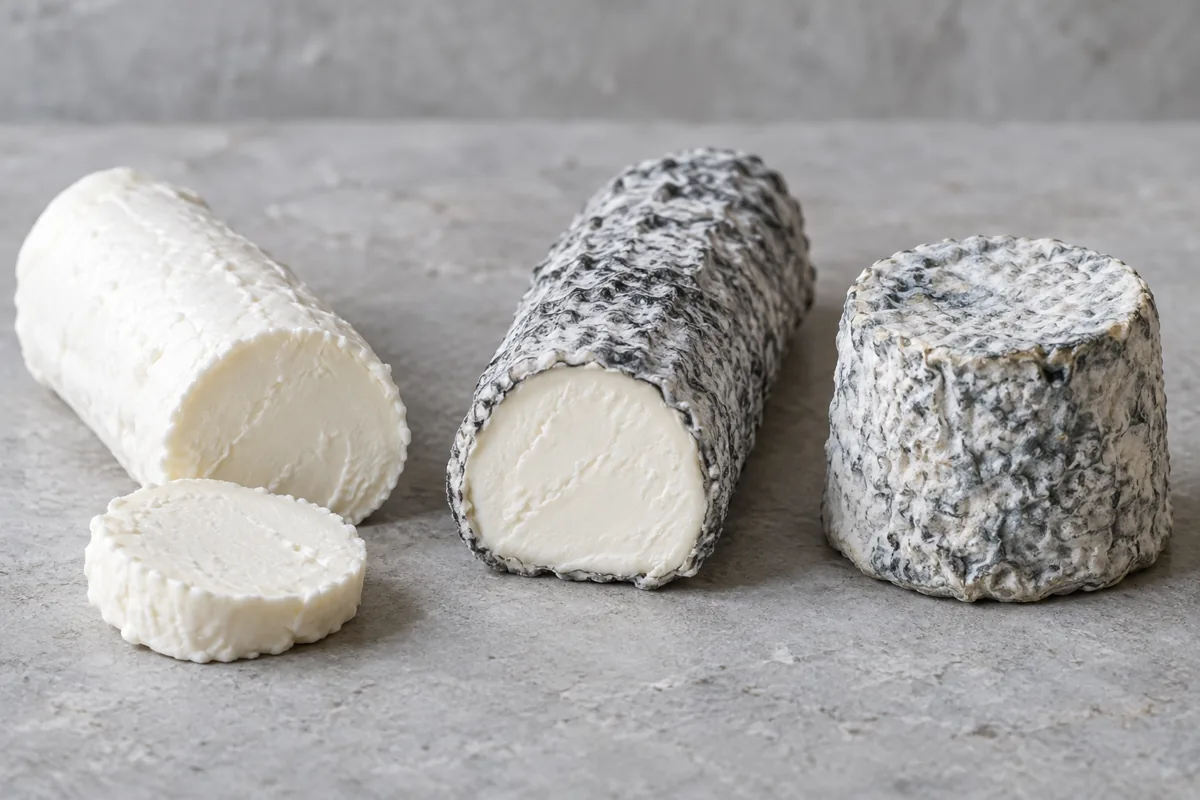
In her farm-visit report for Marcelle, Marie Le Marois describes Alpicrème as creamy and flavourful, with a thin bloomy rind, where a Banon ripens inside brown chestnut leaves.
The park's directory lists the dairy's other products as brousse, fresh cheeses and a tommette with olive oil and herbs or berries, and its outlets as direct farm sales and regional shops. Those are separate products from the same farm, so ask for Alpicrème by name when you buy there.
What Do the AOP Rules Fix for Milk, Ripening and Size?
The Banon specification fixes the milk, the goats, the ripening time, the weight, the size, the composition and the wrap, and those are the figures to check a shop description against. INAO, the French national body for origin and quality labels, publishes it.
| Item | What the specification says |
|---|---|
| Milk | Goat's milk only, raw and whole, not standardised in protein or fat |
| Breeds | Commune Provençale, Rove and Alpine goats and their crosses |
| Ripening | At least 15 days after renneting, including at least 10 days under the leaves |
| Net weight | 90 to 110 g without the leaves, after ripening |
| Size with leaves | 75 to 85 mm across and 20 to 30 mm high |
| Composition | At least 40 g dry matter per 100 g of cheese, and 40 g fat per 100 g after complete drying |
| Wrap | Natural brown chestnut leaves, tied with natural raffia in 6 to 12 strands |
The 15 days are counted from renneting. Before wrapping, the bare cheese ripens 5 to 10 days at 8 °C or above until it has an even surface flora, a fine cream-white crust and a supple centre.
After wrapping it sits at 8 to 14 °C with humidity above 80%, for at least 10 days under the leaves.
From 1 January 2014 the milk comes only from Commune Provençale, Rove and Alpine goats and their crosses, which graze the area's rangeland and meadows at least 210 days a year.
Produits Laitiers AOP counts 24 milk producers, 18 farmhouse producers and 3 production plants, and 87 tonnes sold in 2020.
Why Is Banon Wrapped in Chestnut Leaves, and How Are They Prepared?
The leaves cover the cheese completely, insulating it from air while it finishes ripening and helping its aromas develop. Chestnut is chosen over vine, plane or walnut leaves for its strong structure and its tannins.
The leaves are picked brown in autumn as they fall and stored dry. Before wrapping they are rehydrated in boiling water, in boiling water with 5% vinegar, or in 5% vinegar water.
Producers may also dip the cheese in wine eau-de-vie or grape marc before wrapping it. Culture says the leaves are occasionally dipped in vinegar or eau-de-vie, while the specification puts hot water and vinegar on the leaves and the spirit on the cheese.
Is Banon Always Goat's Milk, and How Many Leaves Wrap It?
A cheese sold as AOP Banon is a goat's milk cheese, because the INAO text of 2012 allows goat's milk only, even though Culture lists sheep's milk as allowed. Only the specification is a legal text, so on a label, look for the AOP name as well as the milk.
| Question | Value or range | Given by |
|---|---|---|
| Milk | Raw goat's milk only; unpasteurized goat's milk; whole, raw sheep's and/or goat's milk | INAO specification (raw goat's milk only); Wikipedia and Cheese.com (unpasteurized goat's milk); Culture (whole, raw sheep's and/or goat's milk) |
| Ripening | At least 15 days, 10 of them under the leaves; at least 2 to 3 weeks; a minimum of two weeks; a few weeks to months | INAO specification (15 days minimum, 10 under the leaves); Wikipedia (at least 2 to 3 weeks); Culture (minimum two weeks); Cheese.com (a few weeks to months) |
| Size | 75 to 85 mm across and 20 to 30 mm high with the leaves; about 7 cm across and 2.5 cm high; 3 inches across and 1 inch high | INAO specification (with the leaves); Wikipedia (about 7 cm by 2.5 cm); Culture (3 inches by 1 inch) |
| Weight | 90 to 110 g net without the leaves; about 100 g; 2 to 4 oz | INAO specification (90 to 110 g); Wikipedia (about 100 g); Culture (2 to 4 oz) |
| Leaves per cheese | Full cover; 5 to 8 leaves; four or more | INAO specification (fully covered); French Ministry of Agriculture (5 to 8); Culture (four or more) |
Each cheese is wrapped in 5 to 8 chestnut leaves by the French agriculture ministry's count, while Culture says four or more.
What Does Banon Taste Like?
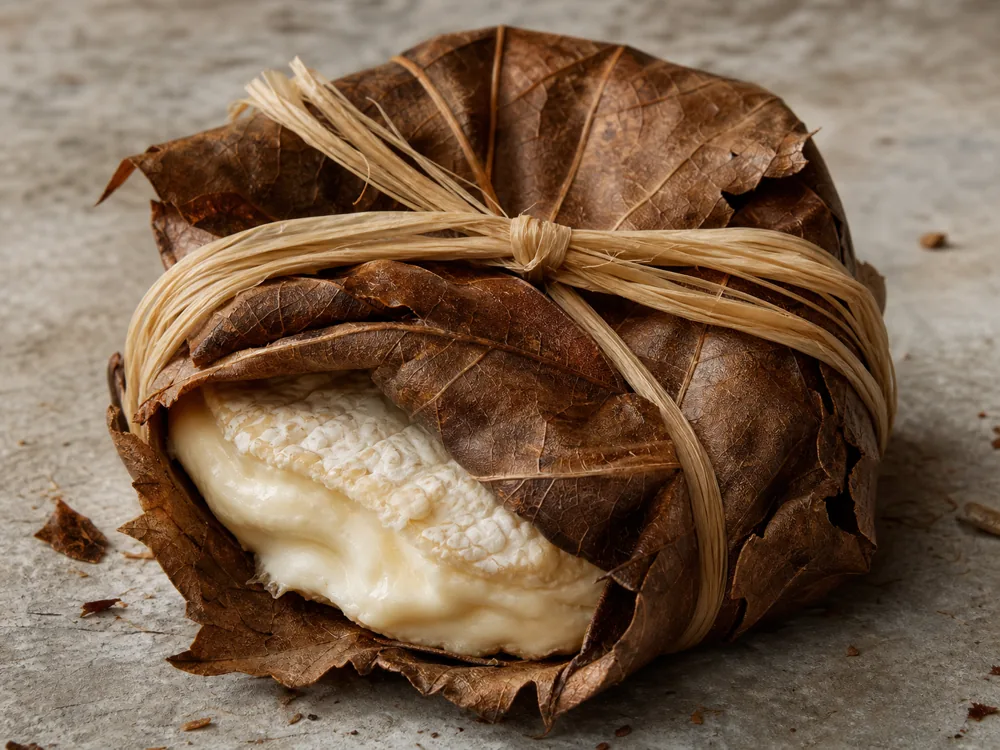
Under the leaves, the specification describes a cream-yellow crust over a paste that is homogeneous, creamy, unctuous and supple, and Cheese.com says the paste turns runny and gooey as the cheese matures.
Produits Laitiers AOP lists animal and plant aromas and a taste that mixes soft and strong notes, and Culture adds vegetal, goaty, yeasty and savory aromas. Culture also ties the flavour back to the make, crediting the rennet-set curd of Provence for a taste it calls sweet, not acidic.
Is Banon Safe During Pregnancy?
The specification allows only raw goat's milk, so every AOP Banon is a raw-milk cheese, and both agencies sort cheese in pregnancy by milk treatment as well as cheese type. If you are pregnant, no pasteurized AOP version exists to choose instead.
The NHS says any foods made from unpasteurised milk must be thoroughly cooked. It lists any cheese that's been cooked until steaming hot, including soft or blue cheese, as safe to eat.
The NHS also says pasteurised or unpasteurised mould-ripened soft cheeses with a white coating on the outside, such as brie, camembert and chèvre, must be thoroughly cooked. The specification gives Banon a fine cream-white crust before wrapping and a cream-yellow one under the leaves, so whether that line fits a wrapped Banon stays open, but the unpasteurised-milk line already covers every AOP Banon.
The CDC lists unpasteurized (raw) milk and dairy products made from raw milk, and soft cheese made from unpasteurized (raw) milk, as riskier choices. It says pregnant women are 10 times more likely to get a Listeria infection.
The CDC's safer line for pasteurized soft cheeses heated to an internal temperature of 165°F or until steaming hot does not cover a raw-milk cheese. Before you cook or eat Banon itself, ask a doctor or midwife.
Alpicrème, the Alpilles goat cheese described with a thin bloomy rind, is a separate case, so check its label or ask the dairy whether its milk is pasteurised. The NHS says pasteurised or unpasteurised mould-ripened soft cheeses with a white coating on the outside must be thoroughly cooked, and so must any foods made from unpasteurised milk.
If its milk is raw, the CDC lines above for unpasteurized (raw) milk and for soft cheese made from unpasteurized (raw) milk apply to it too. Served cold, Alpicrème made from pasteurized milk is described as a creamy cheese with a thin bloomy rind, a type the CDC list does not cover, so ask a midwife or doctor.
How Should You Serve Banon, and What Goes with It?
Grand Frais advises taking the cheese out of the refrigerator at least 30 minutes before you taste it and opening the chestnut leaves when you cut it. A single Banon weighs 90 to 110 g, so on a cheese board with other cheeses you set out one small round rather than a wedge to cut from.
| Pairing | Type | Why It Works |
|---|---|---|
| Breads | Food | Seeded baguette, Vienna bread, traditional baguette or fruit bread, per Produits Laitiers AOP. |
| Regional white wines | Wine | Whites from Pierrevert, Côtes de Provence and Côtes du Lubéron, per Produits Laitiers AOP; Grand Frais names Côtes de Provence and Luberon. |
| Sweet wines for a mature cheese | Wine | Muscat de Beaumes-de-Venise or golden Rasteau, per Grand Frais. |
If you want fruit on the plate, Grand Frais adds fresh or dried figs, grapes, Granny Smith apples, fig or cherry jam and lavender honey. Culture keeps it simpler, with a crusty baguette and a glass of dry white wine.
How Do You Store Banon and Spot the Real Thing?
At home, keep Banon the way the retailer Grand Frais advises: in its chestnut leaves in the lower part of the refrigerator, in a kraft bag if needed, and never in an airtight box because it can mould.
Grand Frais gives up to 3 weeks as the shelf life, which describes that retailer's product and not every producer's cheese. For a Banon bought elsewhere, ask the seller how long it keeps.
Each AOP Banon carries an identification label handed out by the producers' syndicate, so look for it when you buy.
SOURCES & REFERENCES
Banon is a soft French cheese made from raw, whole goat's milk and folded in brown chestnut leaves tied with raffia. The AOP specification sets a ripening minimum of 15 days and a net weight of 90 to 110 g.
Yes. The specification allows only raw goat's milk, so every AOP Banon is a raw-milk cheese.
Grand Frais advises opening the leaves when cutting the cheese.
The specification requires at least 15 days after renneting, including at least 10 days under the chestnut leaves. Cheese.com says a few weeks to months, and Culture says a minimum of two weeks.
Banon AOP is always raw goat's milk, and the NHS says any foods made from unpasteurised milk must be thoroughly cooked and lists any cheese that's been cooked until steaming hot as safe to eat. The CDC lists soft cheese made from unpasteurized (raw) milk as a riskier choice, so ask a doctor or midwife before eating Banon.
Produits Laitiers AOP suggests seeded baguette, Vienna bread, traditional baguette or fruit bread, with white wines from Pierrevert, Côtes de Provence or Côtes du Lubéron. Grand Frais also lists figs, grapes, Granny Smith apples and lavender honey.
Grand Frais gives up to 3 weeks for its product, kept in the leaves in the lower part of the refrigerator and never in an airtight box.