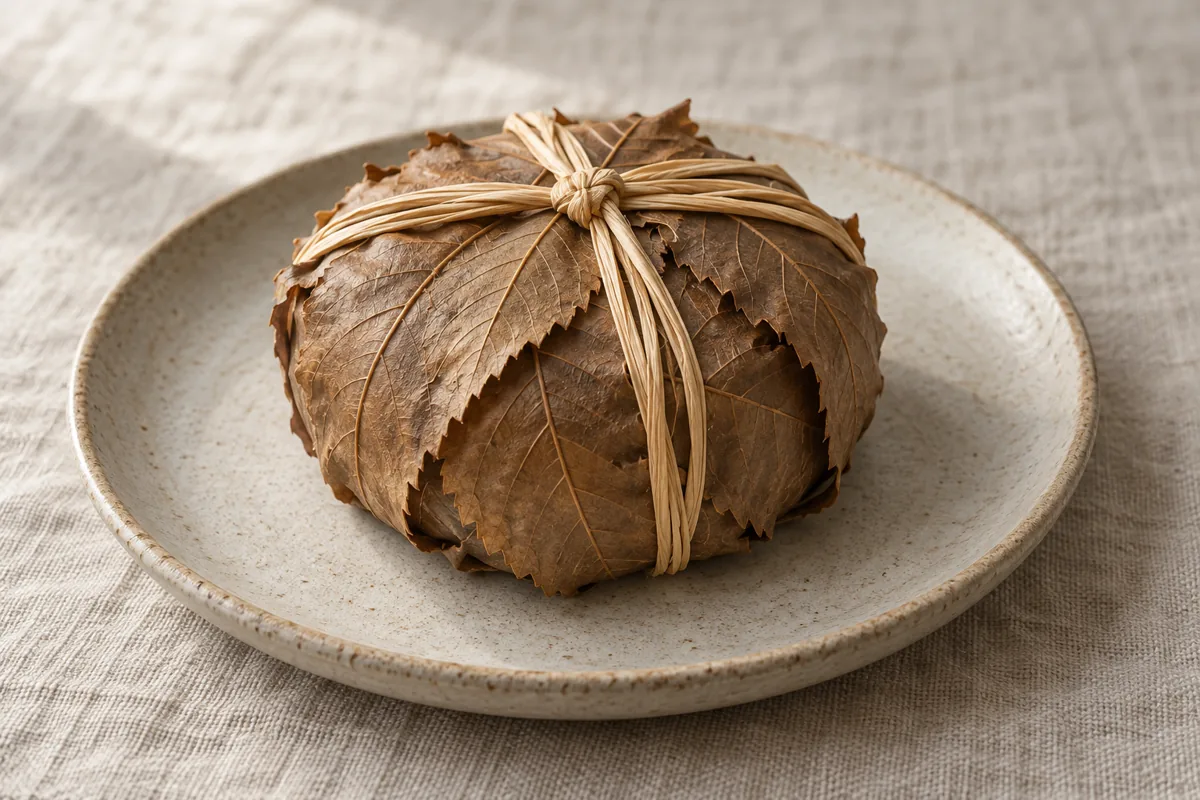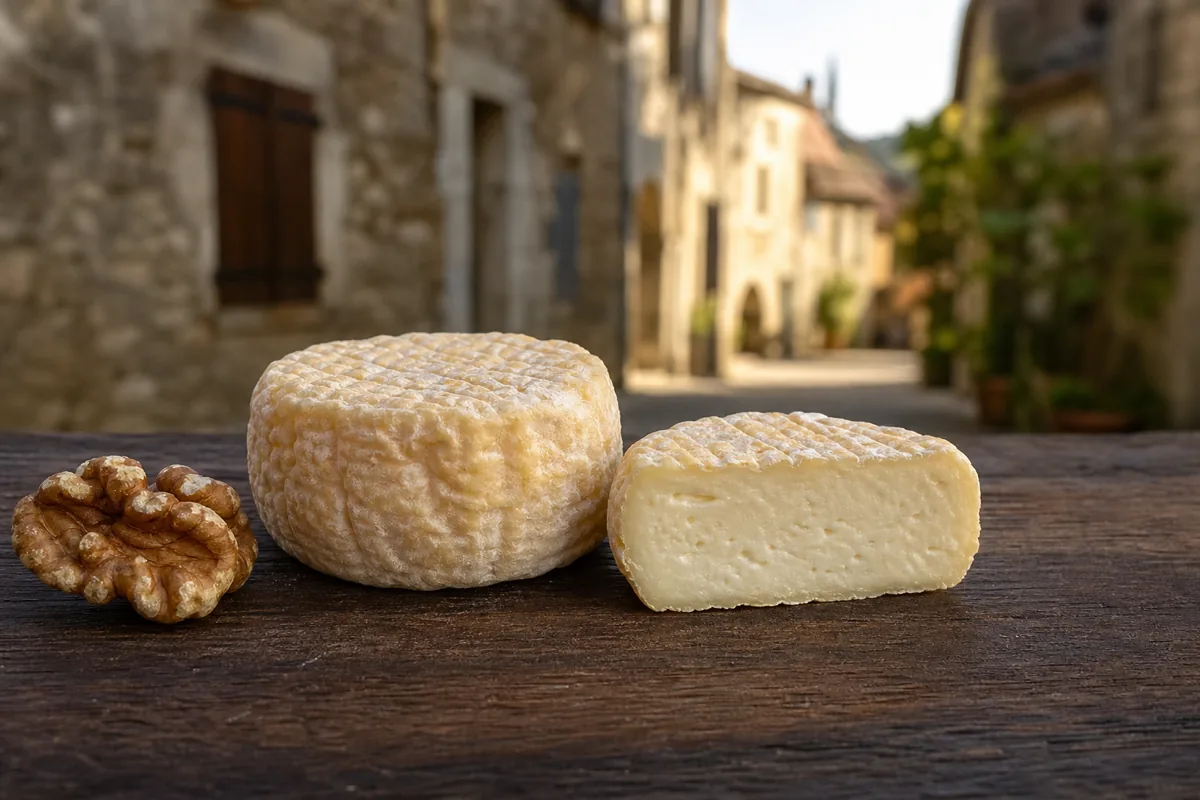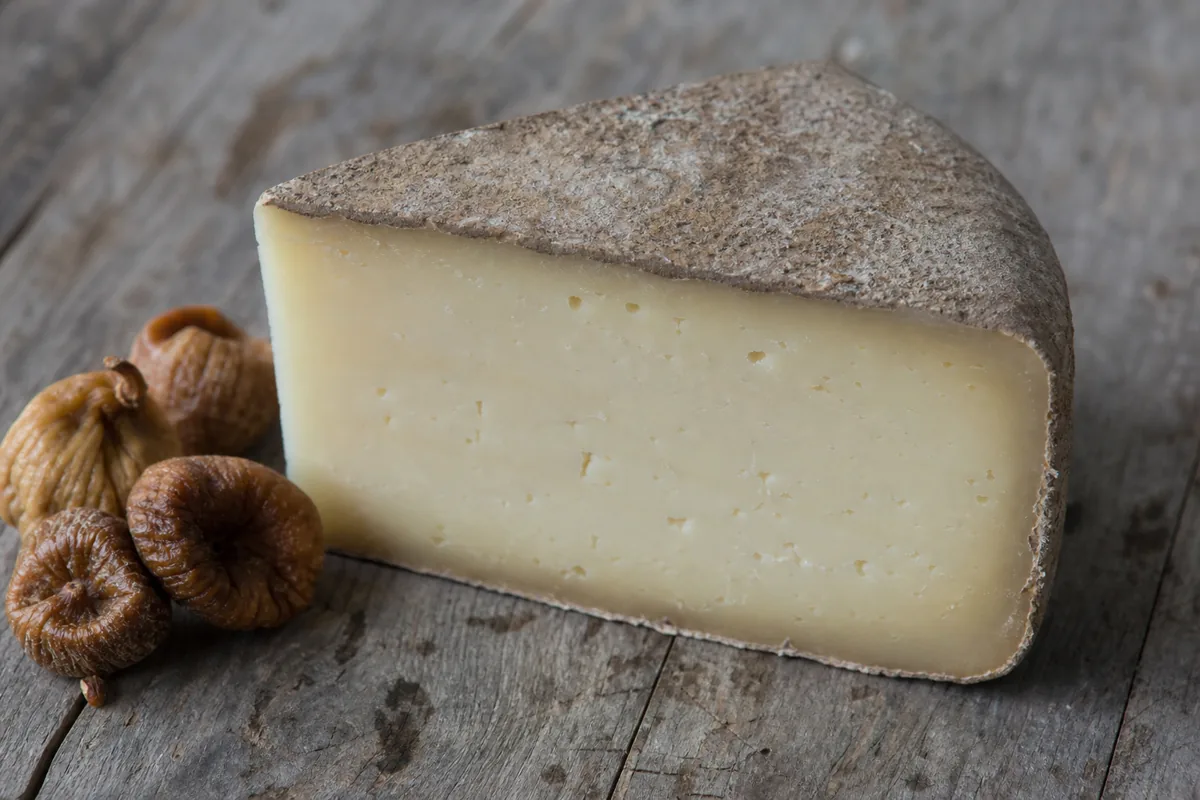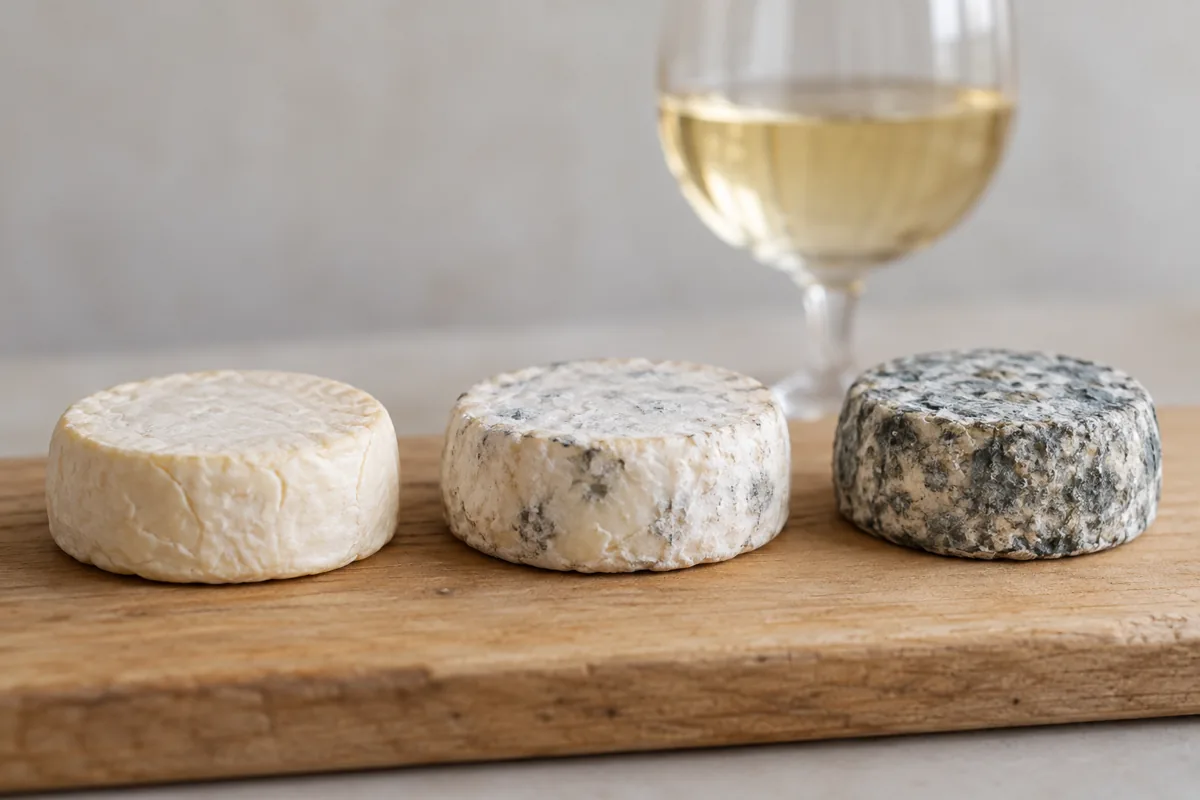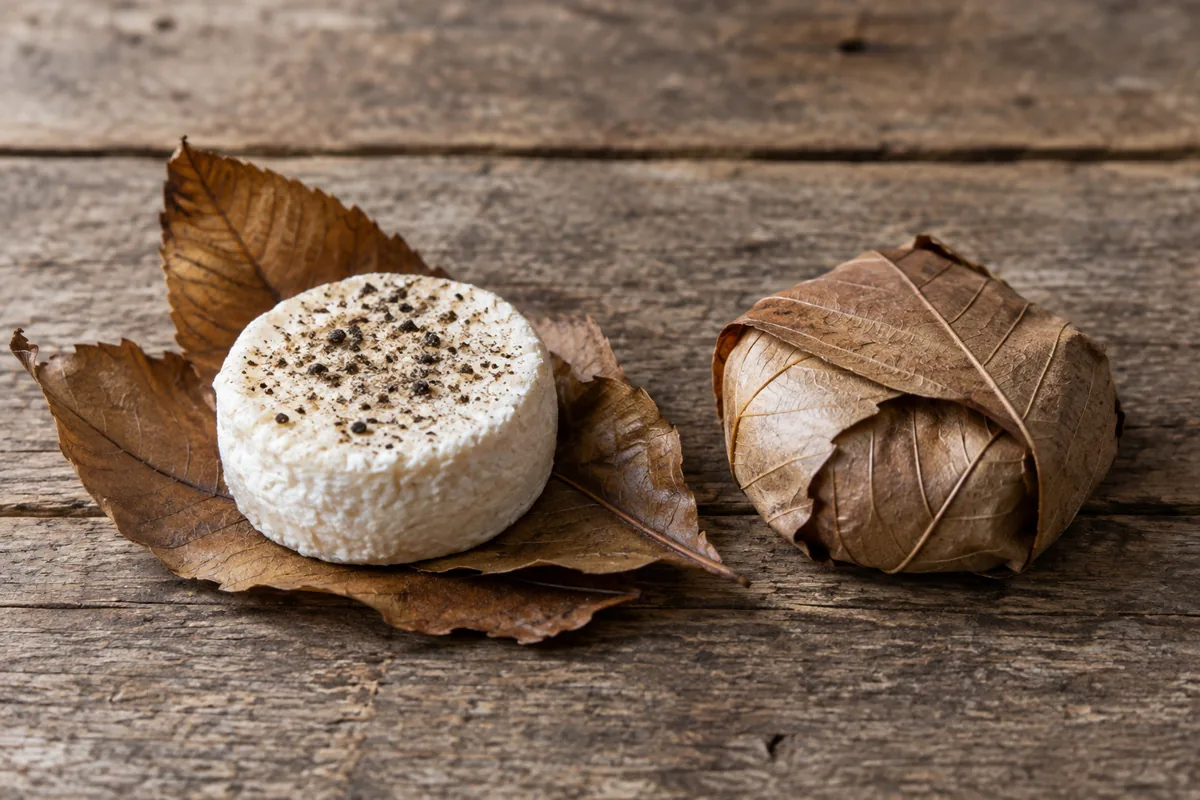
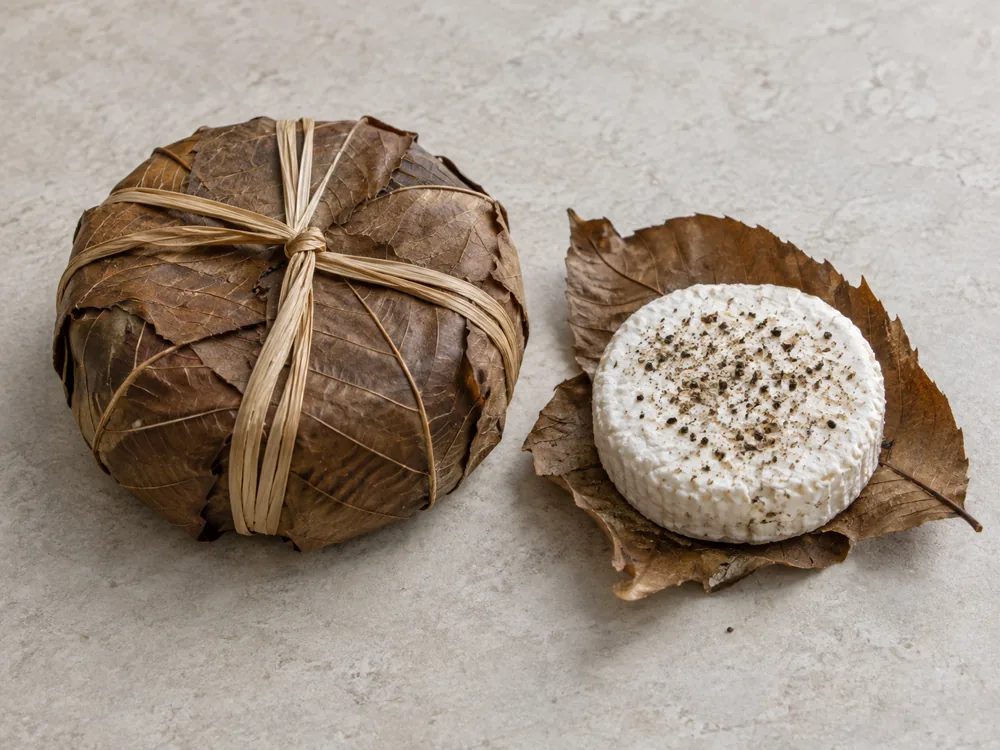
Cabécou Feuille d'Armagnac is a small, soft goat cheese from the Périgord area of southwestern France, dipped in brandy, sprinkled with black pepper, and wrapped in chestnut leaves, according to Cheese.com.
The name says Armagnac, but Cheese.com's own description says plum brandy, so when you pick one up, the spirit is the first detail to check on the label.
In This Article
What Is Cabécou Feuille d'Armagnac?
Cheese.com lists it as a fresh, soft, artisan goat cheese with a white, smooth paste and a natural rind, and it marks the cheese as not vegetarian.
Cabécou is the family name: a cabécou is a small goat's-milk cheese shaped like a thin cake, and the word is recorded across nine departments, from Ariège and Aveyron to Dordogne.
Cabécous run 4 to 6.5 centimetres across and 1.5 to 2.5 centimetres thick, generally under 40 grams. Those are figures for the family, so for the leaf-wrapped version you buy, check four details on the label:
- Maker or brand
- Weight and diameter
- Milk treatment: raw or pasteurised
- Protected name: an AOP or AOC name like Rocamadour's or Banon's
How Is the Cheese Finished with Brandy, Pepper, and Leaves?
The finish takes three steps, which Cheese.com gives as dipping the cheese in plum brandy, sprinkling it with a little black pepper, and wrapping it in a couple of chestnut leaves.
The leaves serve as wrapping, and Cheese.com's separate Cabécou entry says the leaf wrap is used for ageing and calls the pepper coarse.
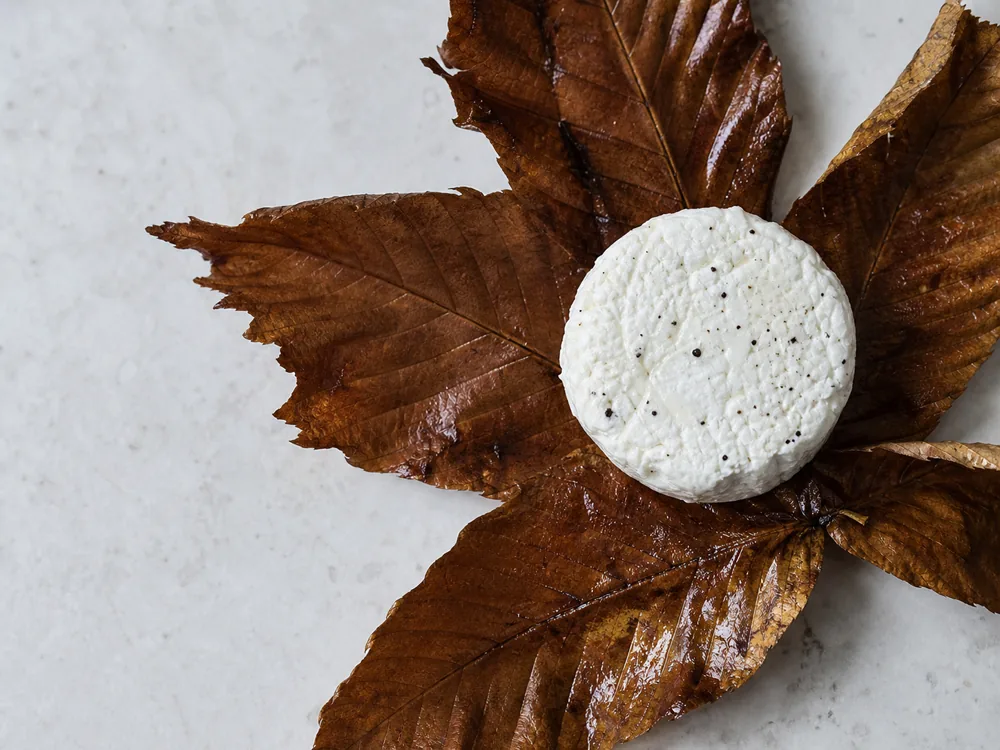
Older records of cabécou show the same three elements of spirit, pepper and leaf, though they describe traditional cabécous, not this retail cheese.
The Institut occitan de l'Aveyron records that dry cabécous were rubbed with eau-de-vie, peppered, wrapped in vine or walnut leaves, and packed into a stoneware pot under white wine. The Dictionnaire des régionalismes de France lists cabécous soaked in Armagnac, preserved in a chestnut leaf, macerated in marc, and peppered.
Is the Spirit Armagnac or Plum Brandy?
The spirit is plum brandy in Cheese.com's entries for this cheese and for Cabécou, while the Dictionnaire des régionalismes de France gives Armagnac for traditional cabécous.
| Source | Spirit it names |
|---|---|
| Cheese.com, Cabécou Feuille d'Armagnac | Plum brandy |
| Cheese.com, Cabécou | Plum brandy |
| Cheese Notes blog, 2009 | "Plum Armagnac" |
| Dictionnaire des régionalismes de France | Armagnac, for traditional cabécous |
| Institut occitan de l'Aveyron | Unspecified eau-de-vie, for traditional cabécous |
A 2009 post on the Cheese Notes blog mixes the two names into one, "plum Armagnac".
A label reading plum brandy and one reading Armagnac name different spirits, so if the spirit matters to you, go by the ingredient list rather than the name.
What Does Cabécou Feuille d'Armagnac Taste Like?
Cheese.com lists the flavour as fruity, spicy, and tangy, with an aromatic smell and a smooth texture, and its Cabécou entry adds a smooth, tangy taste with brandy notes.
The Cheese Notes post describes a slight kick from the spirit followed by a smooth, soft finish. Read together, the three descriptions put the spirit and the pepper first and the smooth goat's milk behind them.
Which Wines Go with Cabécou Feuille d'Armagnac?
Cheese.com suggests fruity wines such as Pinot Noir, Riesling, or Shiraz for the leaf-wrapped cheese. Its Cabécou entry, which describes the same brandy, pepper, and chestnut-leaf finish, says the cheese goes well with Chardonnay.
| Pairing | Why It Works |
|---|---|
| Pinot Noir | Listed first among the fruity wines Cheese.com suggests for the leaf-wrapped cheese. |
| Riesling | Listed second in that Cheese.com list. |
| Shiraz | Listed third in that Cheese.com list. |
| Chardonnay | Suggested on Cheese.com's Cabécou entry. |
How Should You Buy and Store It?
Cheese.com calls it a fresh cheese meant to be eaten immediately and gives it only a few weeks before it passes its prime, so buy it close to when you plan to eat it and go by the pack date alongside the general rules for storing cheese.
Is It Safe During Pregnancy?
It depends on the milk treatment and the rind, so if you are pregnant, check the label for whether this cheese is made with raw or pasteurised milk. The family name does not settle it: Cheese.com's Cabécou entry describes pasteurized goat's milk, while Wikipedia says cabécou is generally made with raw goat's milk.
The CDC lists soft cheese made from unpasteurized (raw) milk as riskier and pasteurized soft cheeses heated to an internal temperature of 165°F or until steaming hot as safer. It adds that pregnant women are 10 times more likely to get a Listeria infection.
The NHS says pasteurised goats' cheese without a white coating is safe to eat, while mould-ripened soft cheese with a white coating, such as chèvre, must be thoroughly cooked whether it is pasteurised or unpasteurised. It also says any foods made from unpasteurised milk must be thoroughly cooked, so a raw-milk piece needs cooking whatever its rind.
Cheese.com lists this cheese's rind as natural and its colour as white, so check the pack for whether it carries a white coating: the NHS rules for eating cheese in pregnancy treat pasteurised goats' cheese with and without one differently.
Served cold, a pasteurized Cabécou Feuille d'Armagnac is described as a fresh, soft goat cheese, a type the CDC list does not cover, so ask a midwife or doctor.
What Can Replace Cabécou Feuille d'Armagnac?
If you cannot find it, the nearest documented alternative is Banon from Provence, which is also dipped in eau de vie and wrapped in chestnut leaves.
Rocamadour and plain cabécou share the small goat-cheese format but not the finish.
| Cheese | Milk | Size | Finish and protection |
|---|---|---|---|
| Cabécou Feuille d'Armagnac | Goat; treatment not stated | Not stated | Brandy, pepper, chestnut leaves; protected name not stated (Cheese.com) |
| Cabécou, the family | Generally raw goat's milk | 4 to 6.5 cm across, under 40 g | No single finish (Wikipedia) |
| Rocamadour | Raw goat's milk | 35 g, 6 cm across | AOP; leaf or spirit not stated (produits-laitiers-aop.fr) |
| Banon | Goat's milk, unpasteurized | About 8 cm across, about 100 g | AOC since 2003; dipped in eau de vie, wrapped in chestnut leaves tied with raffia (Wikipedia) |
A fresh goat cheese gives you the goat's-milk base but not the leaf, pepper, or spirit.
SOURCES & REFERENCES
It is a small, soft goat cheese from the Périgord area of France, dipped in brandy, sprinkled with black pepper, and wrapped in chestnut leaves, according to Cheese.com. Check the pack for a protected name such as AOP.
Cheese.com says the cheese is dipped in plum brandy, while a French regional dictionary lists traditional cabécous soaked in Armagnac, so the ingredient list is the best check.
The leaves serve as wrapping.
Cheese.com lists the flavour as fruity, spicy, and tangy with a smooth texture, and a 2009 tasting note describes a slight kick from the spirit and a smooth, soft finish.
Cheese.com says it lasts only a few weeks before passing its prime and is meant to be eaten immediately. The pack date is the best guide.
Check the label for the milk treatment and whether the rind carries a white coating, as both affect the CDC and NHS advice, and ask your midwife or doctor.