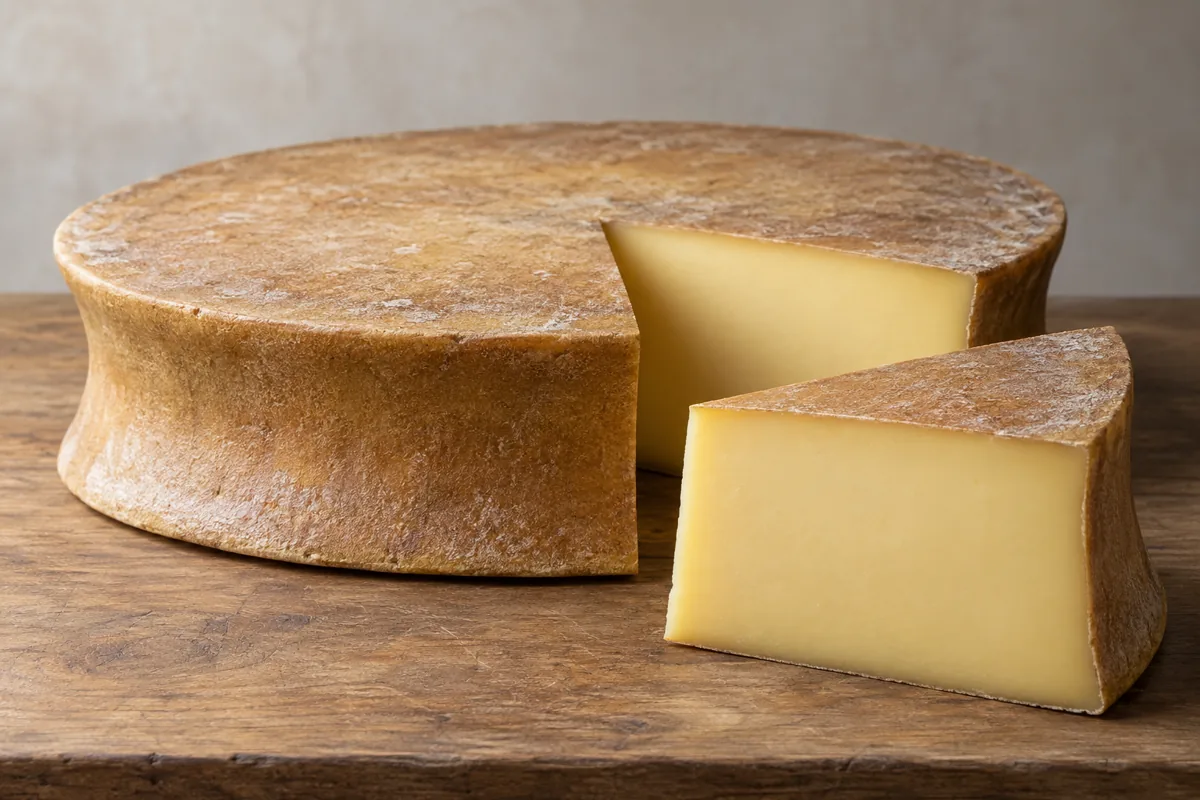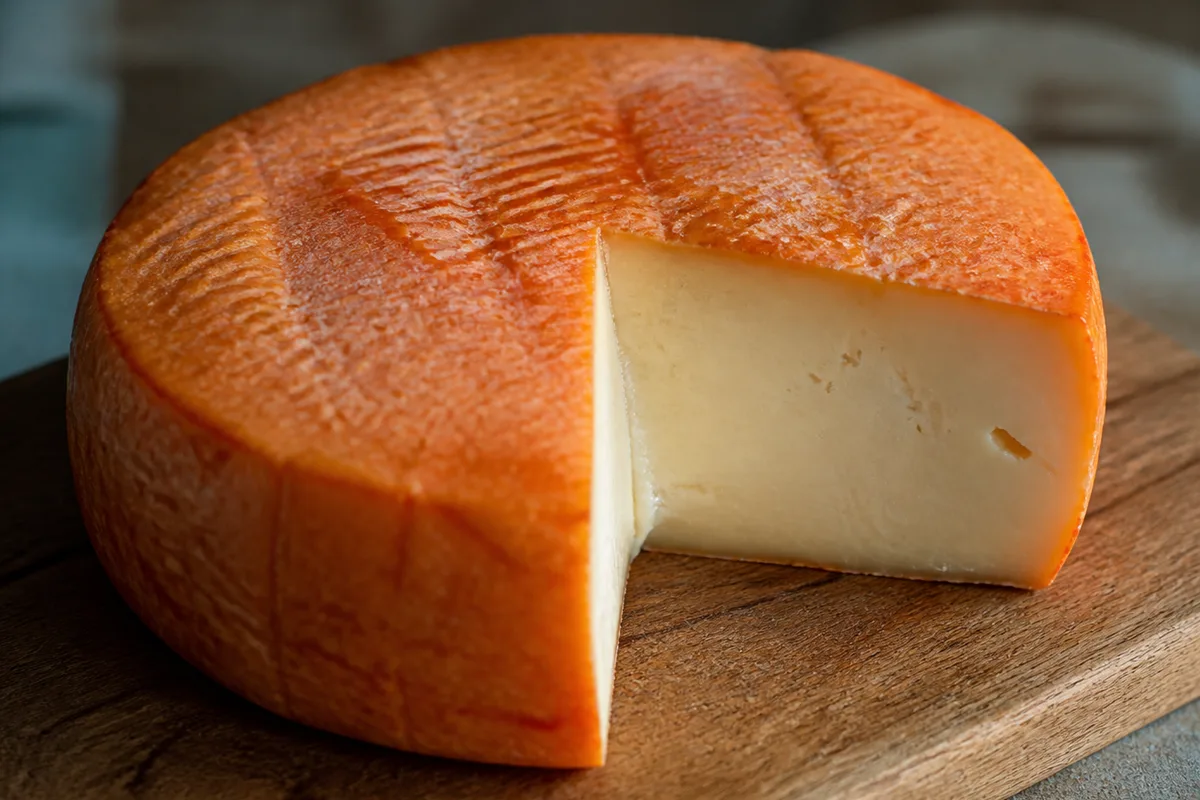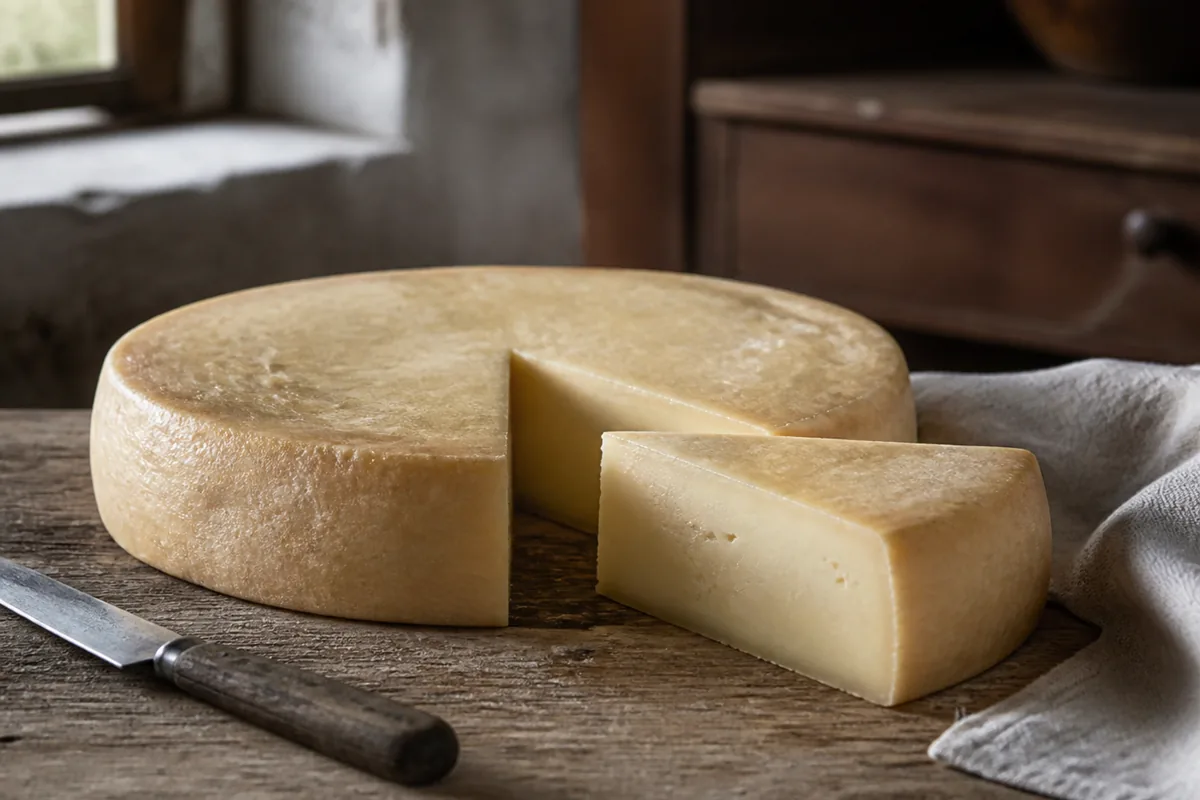
Choose Beaumont by format and milk label. A small 1.5kg washed-rind disc and a 50kg raw-milk wheel both carry this Haute-Savoie name, including the longer name Beaumont de Savoie, and the name alone cannot identify your wedge.
This French cheese began in 1881, when Jérémie Girod created it at Saint-Julien-en-Genevois. For buying or serving, start with the differences below, then match the pack to the format.
In This Article
Disc or wheel: which Beaumont are you buying?
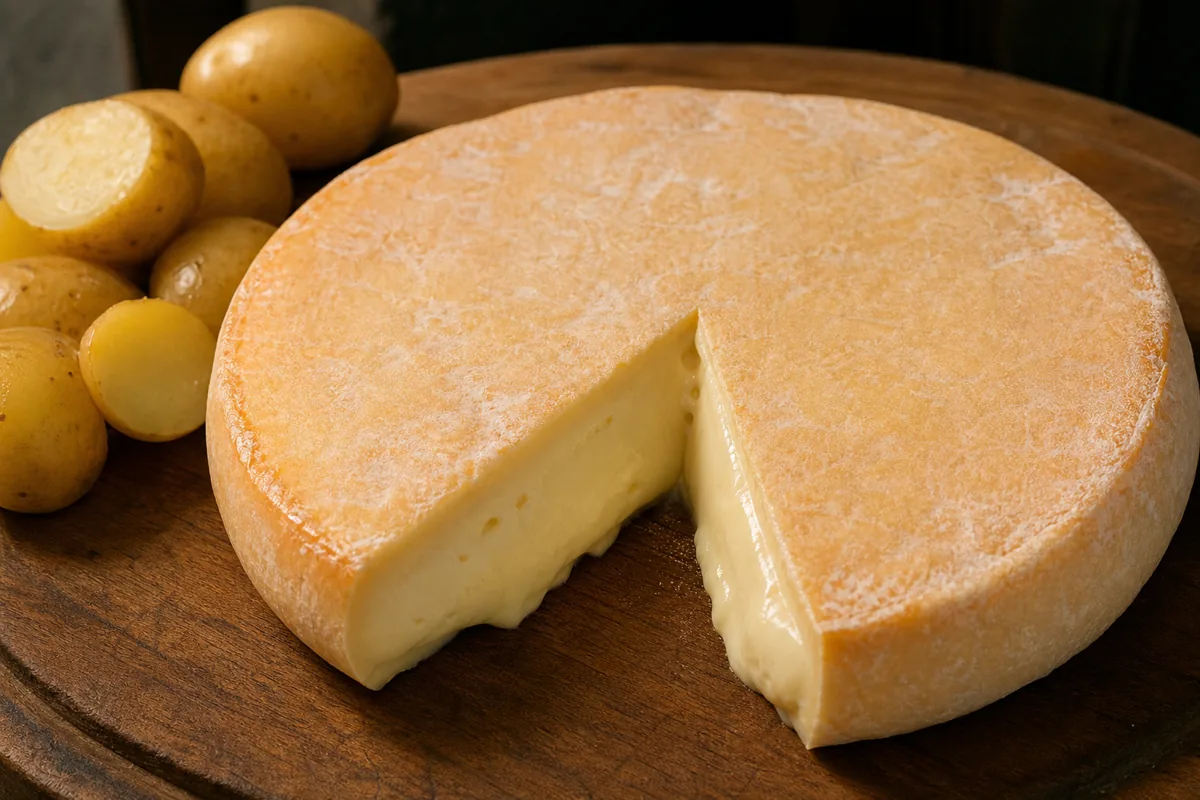
The standard disc measures 20cm across and 4 to 5cm thick and weighs about 1.5kg. It has a pressed, uncooked paste and a pale yellow washed rind, is made in the Faucigny and Genevois areas of Haute-Savoie, and also goes by tomme de Beaumont.
Expect a ripening period of six weeks in humid, cool cellars or one and a half to two months, with some discs aged up to nine months in a humid cellar. The rind becomes slightly yellowed, and inside, the paste is tender, creamy and a brighter yellow than the rind.
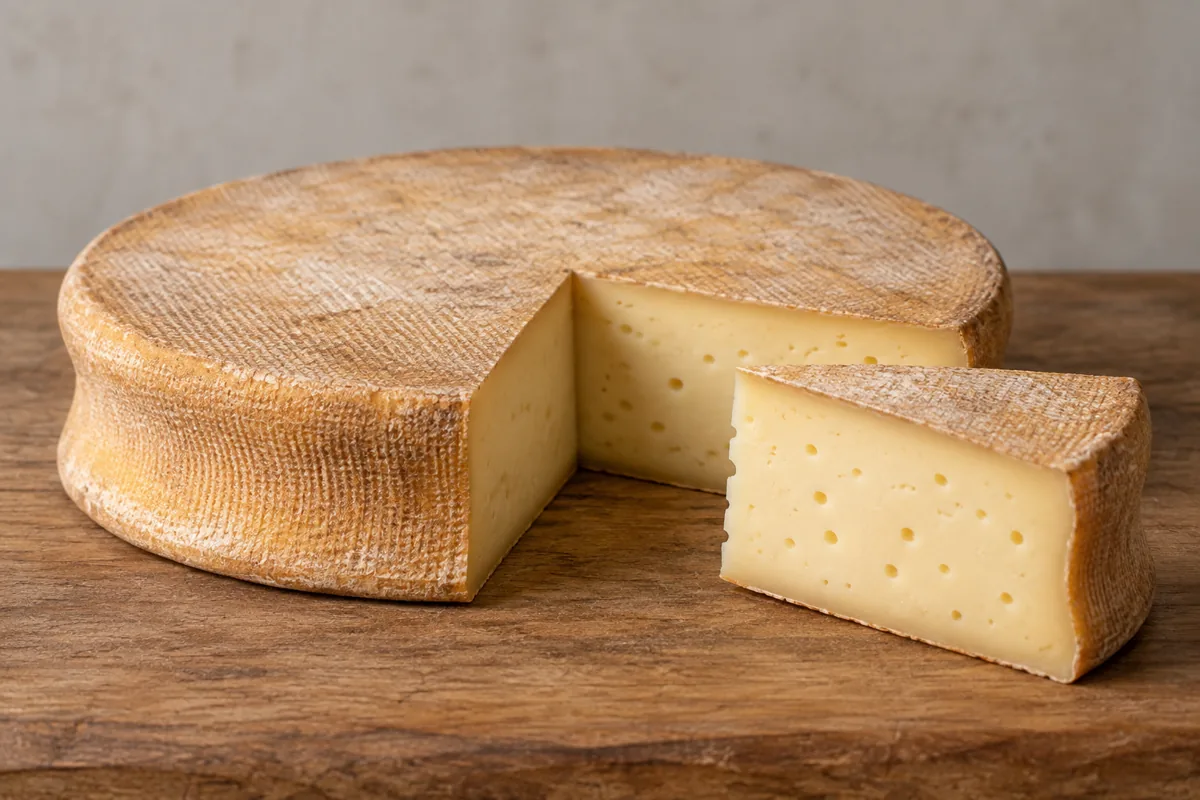
The much larger wheel is made with raw whole cow's milk and matured for at least five months. The Vieille Réserve version has a stated minimum of six to eight months.
| Point | Beaumont disc | Beaumont de Savoie wheel |
|---|---|---|
| Curd | Pressed, uncooked | Maker description: cooked, and glossary: uncooked. Confirm the product. |
| Milk | Check the pack: milk treatment varies between product records | Raw whole cow's milk |
| Ageing | Six weeks or 1.5 to 2 months, and up to 9 months in a humid cellar | At least 5 months, and Vieille Réserve 6 to 8 months |
| Weight | About 1.5kg | 50kg |
| Size | 20cm across, 4 to 5cm thick | 55 to 65cm across, 16 to 19cm high |
| Rind | Washed, pale yellow | Natural, described as morgée |
| Described taste | Mild and creamy | Tender texture, fruity taste, rich aromas |
| Maker named | Not stated, and ask the seller | Pochat & Fils, at Eteaux |
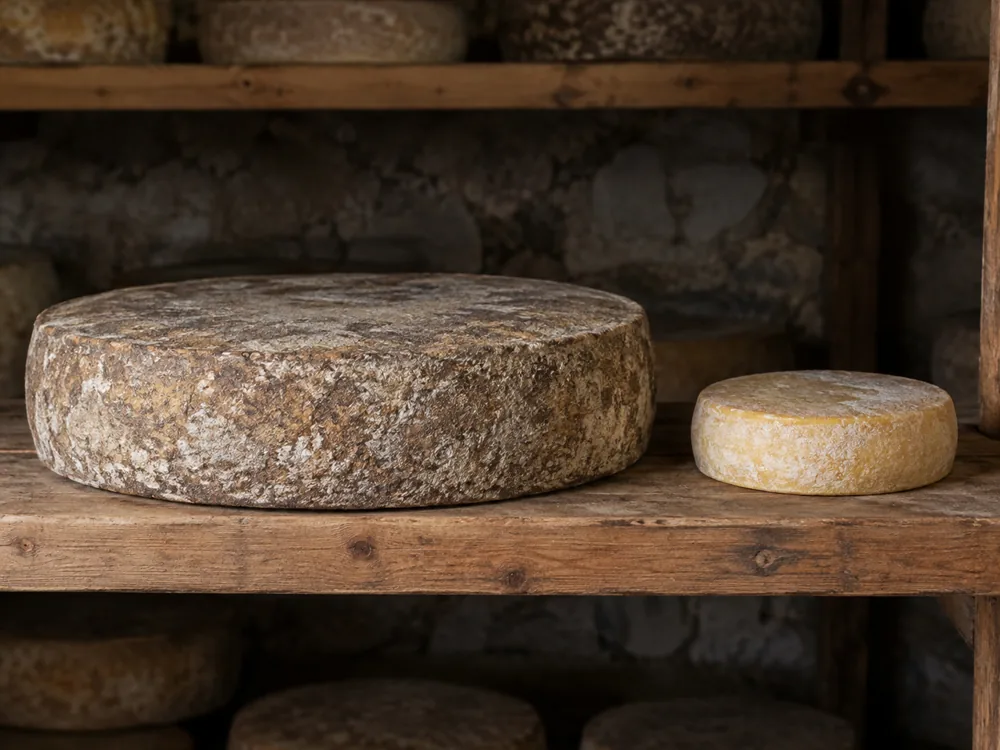
Check milk and curd treatment separately. On Pochat's product page, the wheel's description says pressed and cooked, but its glossary places Beaumont de Savoie among uncooked pressed cheeses, and that internal conflict remains unresolved.
Other raw-milk, cooked-paste cheeses aged six months are found under the Beaumont de Savoie name.
Even Beaumont de Savoie is an ambiguous name: the regional dairy body CRIEL uses Beaumont de Savoie for the 1.5kg disc, while Pochat & Fils, Le Guide du Fromage and Wikipedia use it for the large raw-milk wheel. Give a seller the weight and maturation you want, rather than relying on that name.
Read the milk statement before choosing a wedge
Disc milk records give pasteurised cow's milk, raw or pasteurised whole cow's milk, or unpasteurised cow's milk. Those are different product descriptions, so read your pack or ask the seller to confirm its milk treatment.
A flattened disc aged six months, with 50% fat of unspecified basis, appears in that unpasteurised entry. Its milk and age overlap the longer-aged raw-milk Beaumont de Savoie records, rather than the six-week pasteurised disc.
A retailer's listing can blur the formats too. In French Click's description, a 200g Pochat & Fils Beaumont Grand Affinage portion has pasteurised milk and 1.5 to 2 months' maturation, and the maker's wheel record instead gives raw milk and at least five months.
Confirm the particular pack before treating that retail portion as the wheel.
Flavour, aroma and the best season for the disc
Choose a gentle cheese with the disc's mild and creamy profile. In the maker's wheel profile, it is tender in texture and fruity in taste, with rich aromas.
Aroma descriptions differ for the disc: no special smell in the Androuet profile, compared with fruity and floral aromas in the CRIEL profile. Allow for that difference when choosing for someone sensitive to cheese aromas.
The CRIEL seasonal recommendation is more character from July to November. Longer-aged cheeses are also described there as giving stronger aromatic notes on leaving the cellar.
The six-month unpasteurised entry has its own aroma profile: Cheese.com lists mild, nutty, barnyardy, earthy and rich aromas. Keep that description with that longer-aged entry, rather than expecting every young disc to have the same notes.
Serving Beaumont on a board or in a baked dish
Give the mild disc an early place on a cheese board if you are serving stronger cheeses too: tasting it afterwards can obscure its aroma. For the two published serving orders, Androuet serves it at the end of a meal, while CRIEL puts it early for that reason.
A summer composed salad is another use for the disc's creamy flavour and texture in the CRIEL serving advice. With an adult wine pairing, the regional whites Crépy and Roussette appear in both that advice and Androuet's, and the CRIEL recommendation is for dry Savoie whites in moderation.
| Pairing | Type | Why It Works |
|---|---|---|
| Crépy | Wine | A Savoie white paired with the disc by both Androuet and CRIEL, and listed by CRIEL among dry Savoie whites to drink in moderation. |
| Roussette | Wine | The other regional white in both of those pairings. |
| Summer composed salad | Food | A fresh composed salad, which the creamy flavour and texture of the disc complete. |
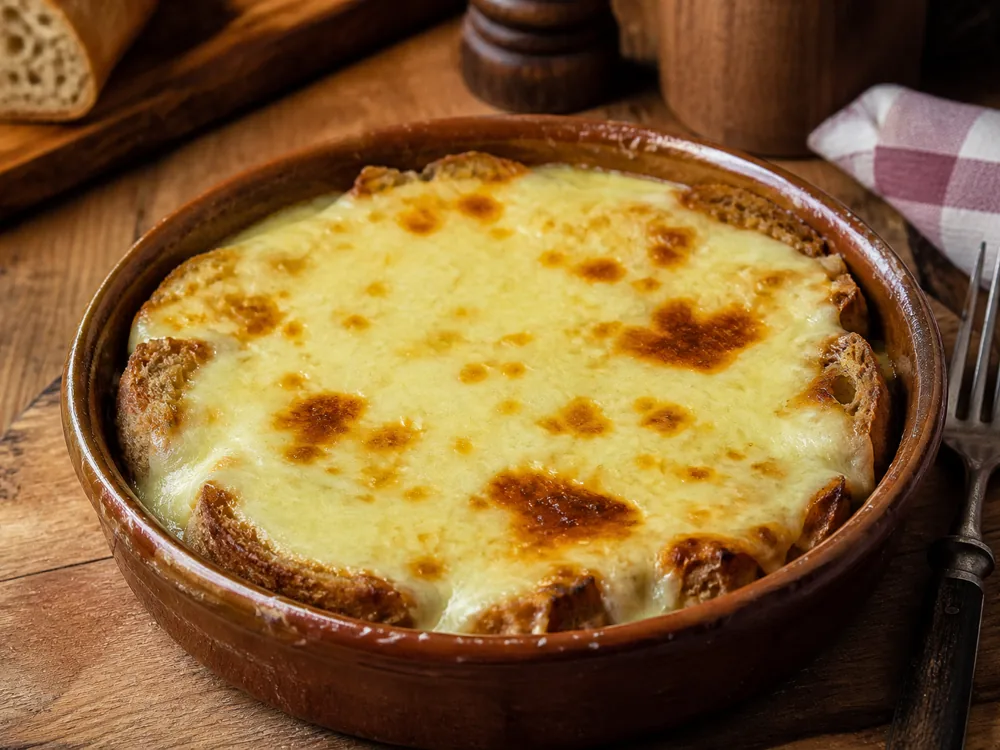
| Croûte au fromage | Food | A Savoie dish of bread and baked cheese, named as a use for Beaumont. |
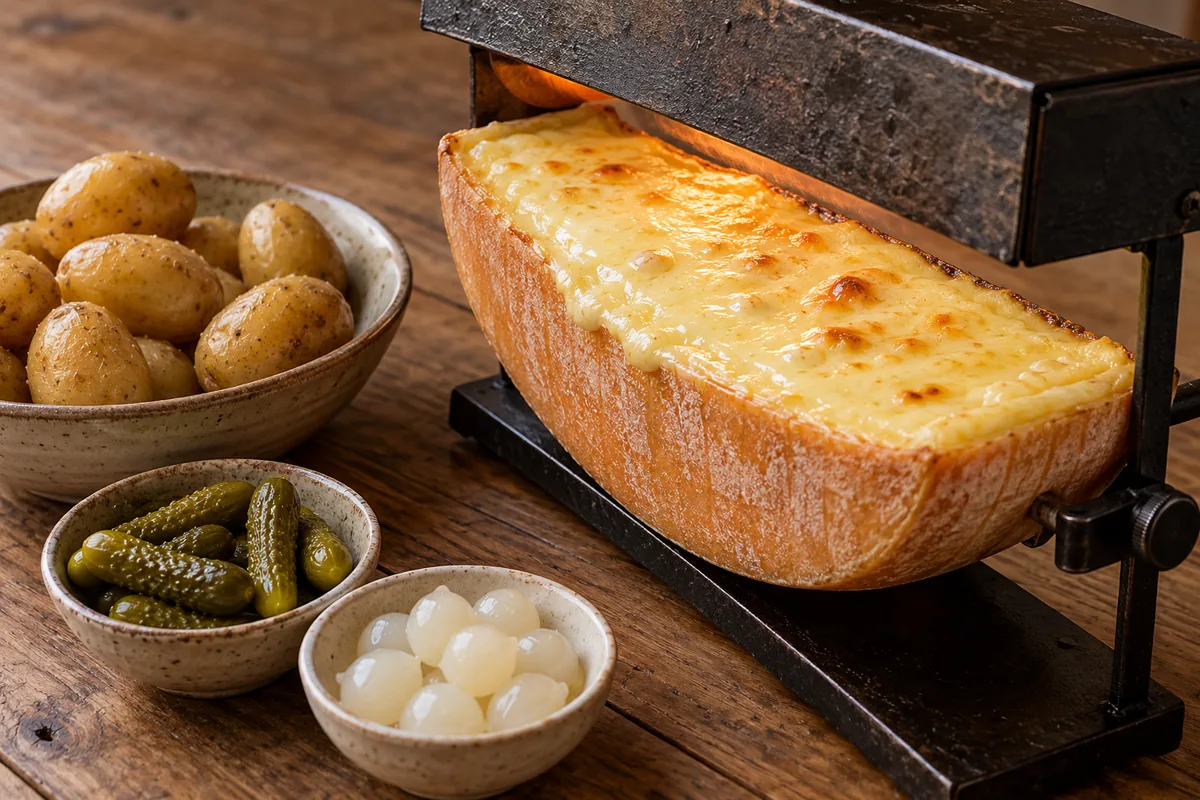
In hot food, Beaumont is named as a use for croûtes au fromage. This Savoie and Swiss dish uses bread soaked in local white wine, covered with grated cooked pressed cheese, traditionally with Abondance, Gruyère or Raclette, then baked and served with pickled pearl onions and cornichons.
The Beaumont disc is an uncooked pressed cheese, so it falls outside that cooked-curd description of the dish's cheese. Using the disc follows Androuet's named serving suggestion, and the distinction does not establish cooking times or prove how a particular Beaumont will melt.
How it compares with other Savoie cheeses
Beaumont de Savoie is less well known than neighbours such as Reblochon and Abondance. Reblochon and Beaufort have AOP protection, and Beaumont de Savoie carries no protected label.
If protected origin matters to you, check for the AOP or PDO mark on the cheese you buy.
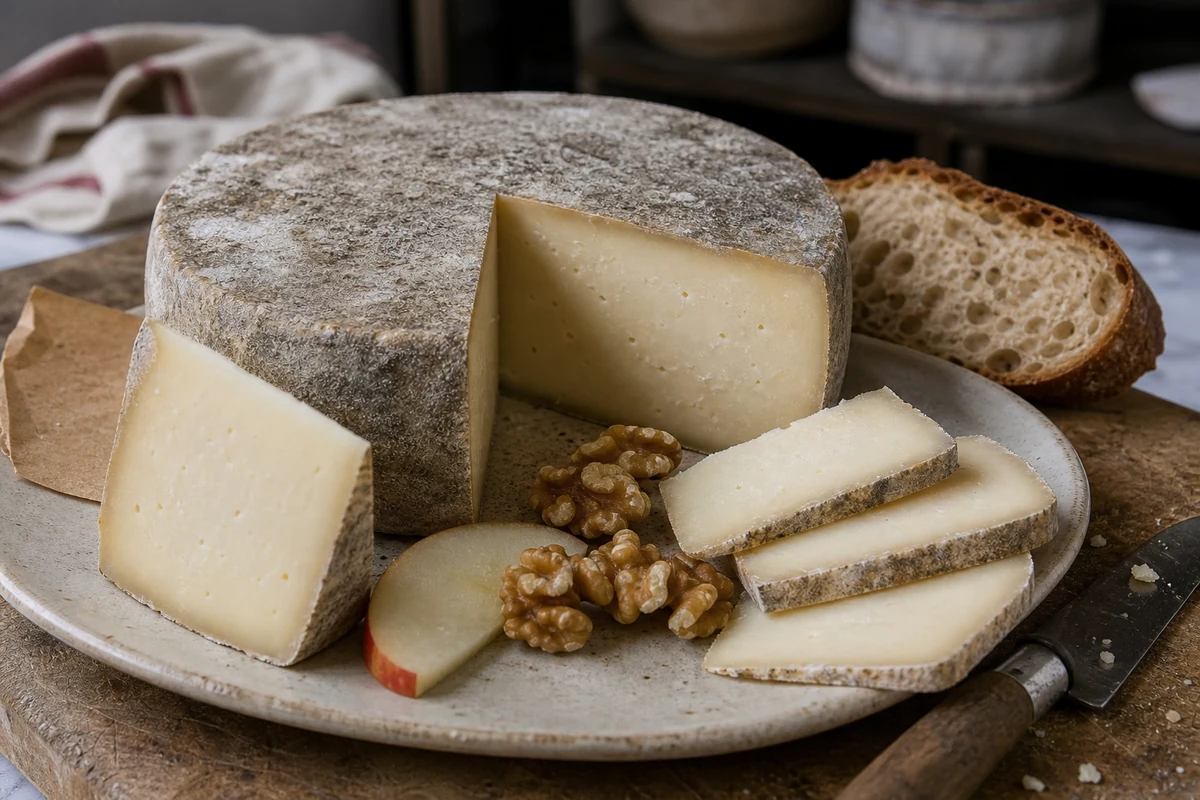
The name tomme de Beaumont can also bring Tomme de Savoie to mind. For a rind comparison, Tomme de Savoie has a suede-like grey to brown natural rind dotted with yellow, red and white mould and ivory paste with numerous holes, and the disc has a regular, pale yellow washed rind instead.
Maker, maturation and buying checks
Pochat & Fils runs six Haute-Savoie dairies and makes Beaumont de Savoie at Eteaux, its largest site. The wheels mature in the caves at Minzier.
Its other dairies include Féternes, making Abondance AOP, and Frangy, making Raclette de Savoie IGP and Tomme de Savoie IGP. To buy the Beaumont wheel, the maker sells it in supermarkets, packaged or by the slice, and this describes its sales format, without confirming stock at any particular shop.
Ask the seller to identify the maker of a disc. Its creator Jérémie Girod was the founder of the Girod cheese dairies, but that history does not identify the producer of a pack on sale now.
On the disc, the stated rind cue is a regular, pale yellow rind that is thin and supple to the touch. Use that to recognise the format, without treating appearance as proof of milk treatment or safety.
Beaumont during pregnancy: check milk and guidance
Establish the milk treatment for the actual piece first. The disc records span pasteurised at Androuet, raw or pasteurised at CRIEL, and unpasteurised at Cheese.com, and Pochat's 50kg wheel is raw milk.
Cooking the curd during cheesemaking does not mean that the milk was pasteurised.
UK: the NHS clears pasteurised semi-hard and soft cheese. With a confirmed pasteurised Beaumont disc in those classes, that permits eating it cold, and without confirmed pasteurisation, retain the cook-first approach and heat it until steaming hot throughout.
US: the CDC rates raw-milk dairy riskier. With raw milk or unconfirmed milk treatment, Beaumont has no CDC safer route, even cooked, and heating is not automatic clearance.
A confirmed pasteurised soft disc has a US safer choice: heating to an internal 165°F or until steaming hot throughout. A confirmed pasteurised semi-hard Beaumont sits in neither CDC column, heated or not, because its place in the CDC hard-cheese row is not confirmed.
If neither the seller nor the pack confirms the cheese's class, the NHS route of cooking any cheese until steaming hot still applies. A browned croûte topping alone does not establish that temperature, and see the guide to raw-milk cheese in pregnancy.