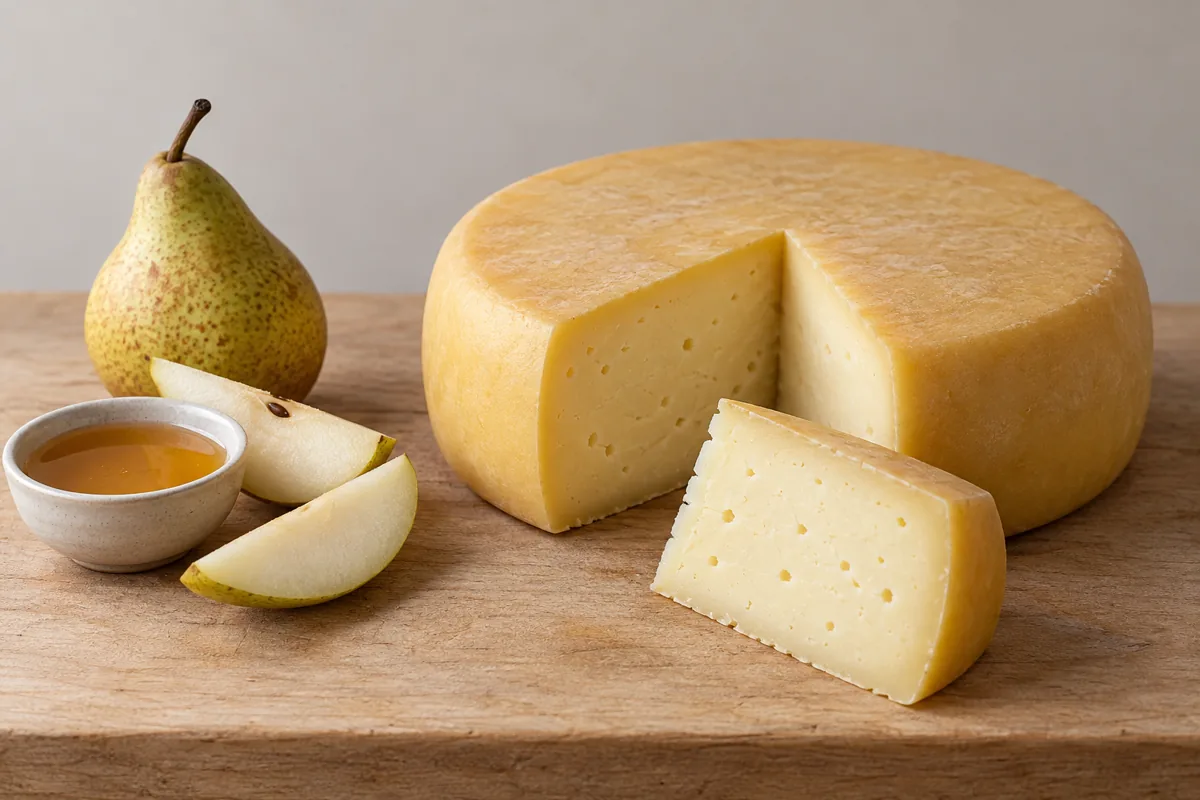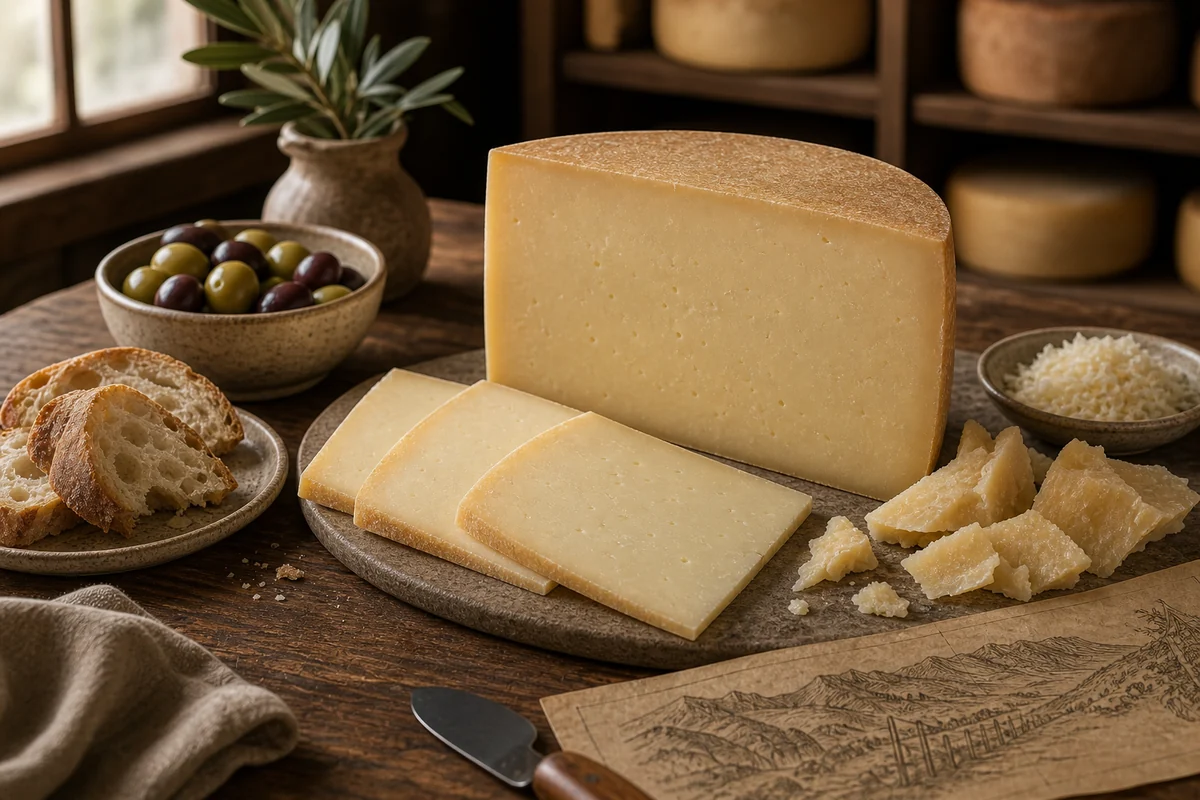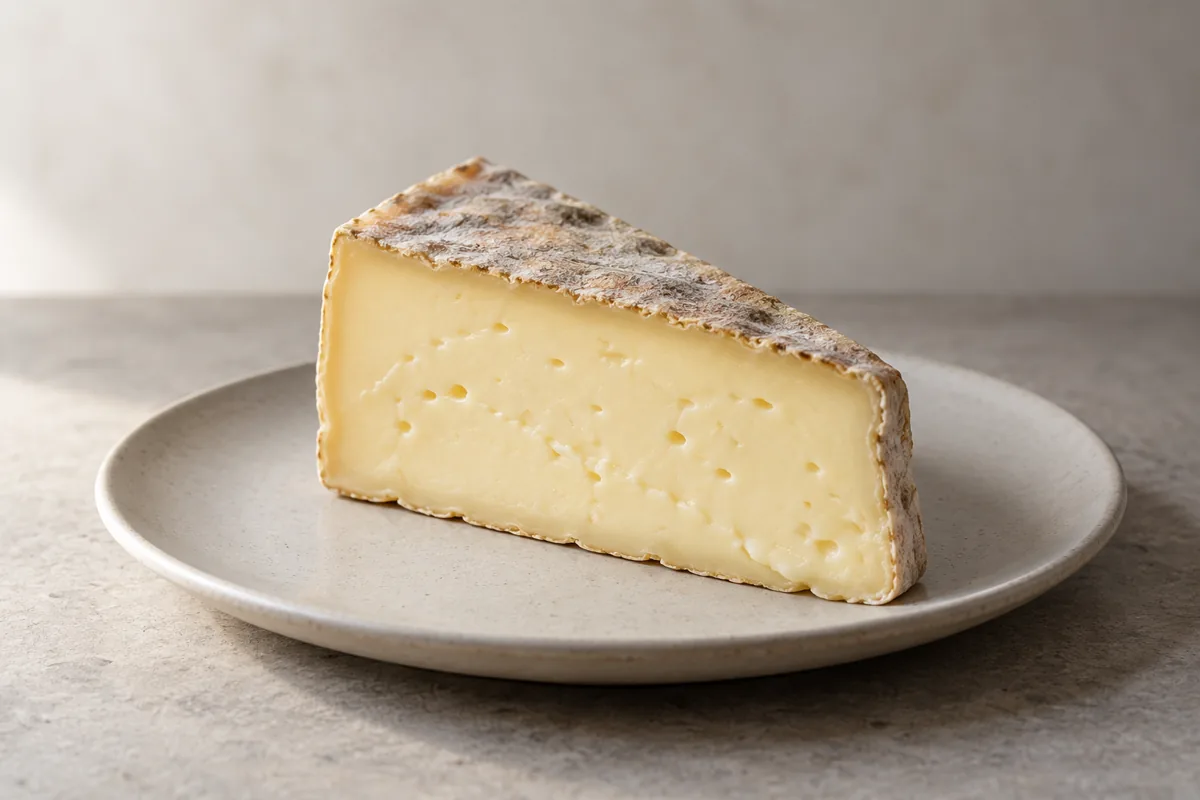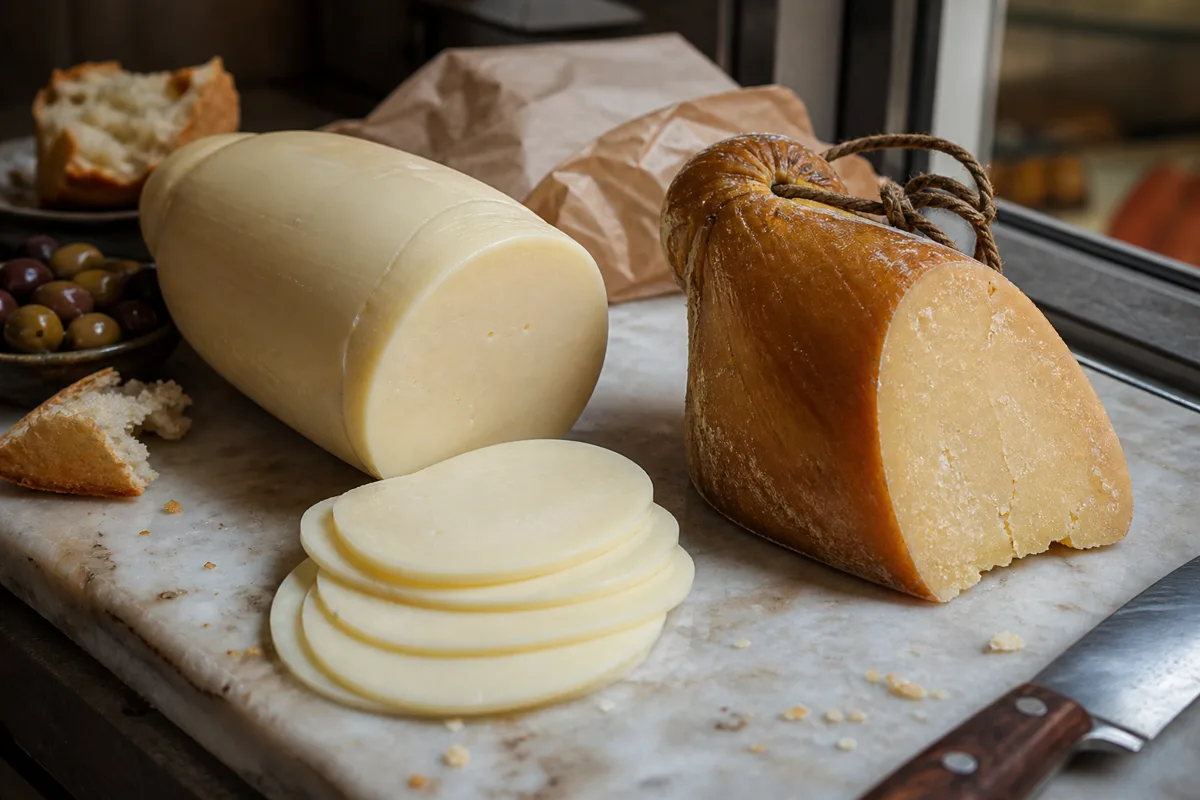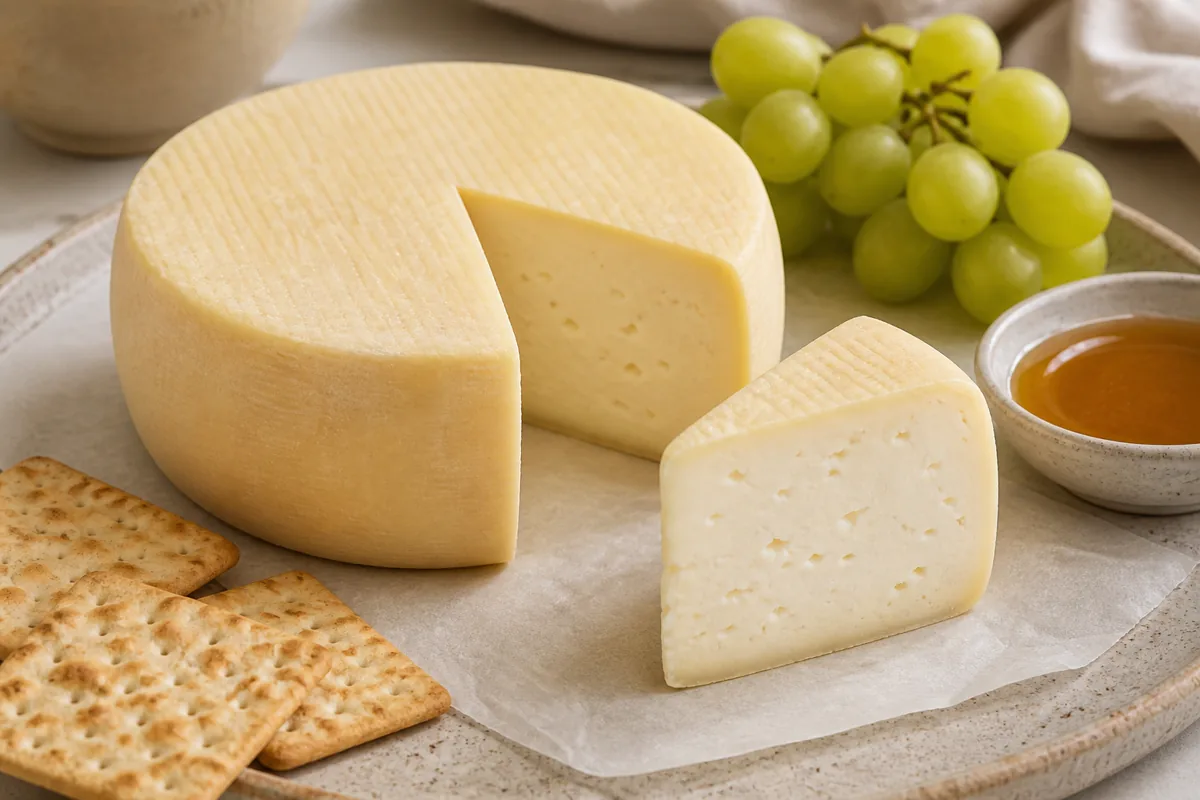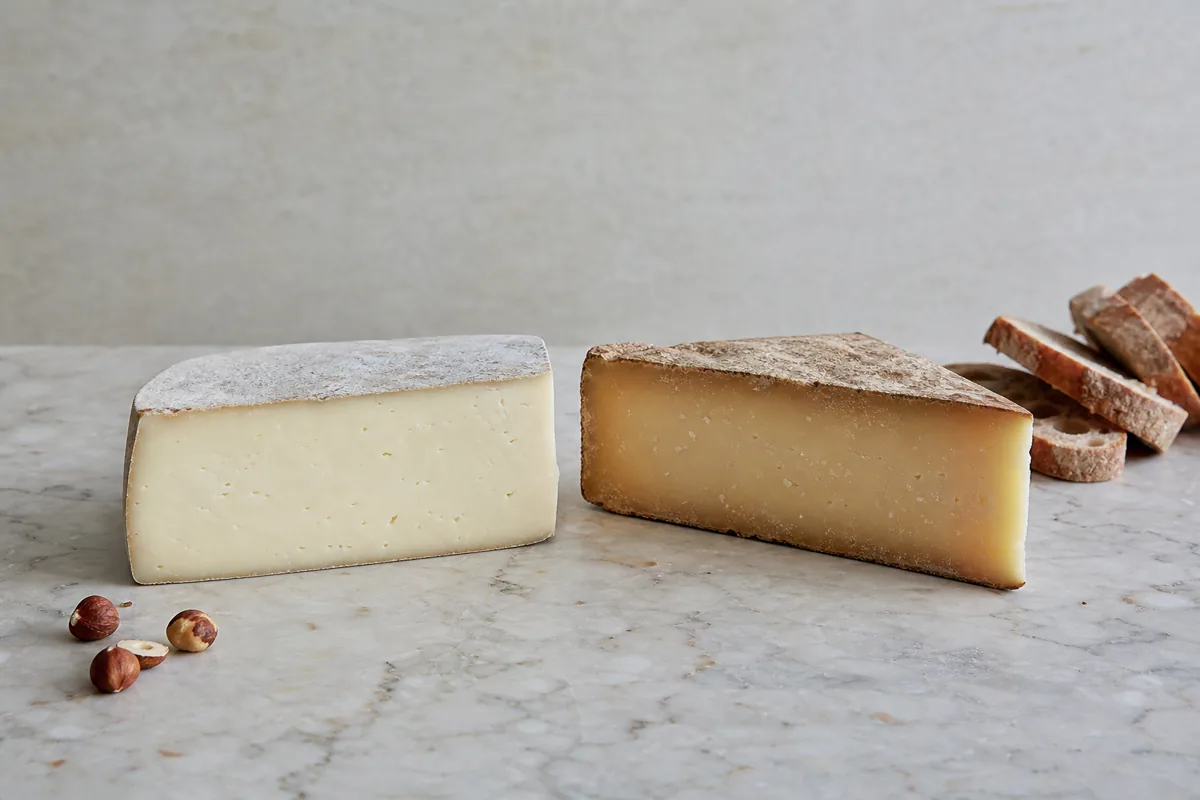
Bra is an Italian PDO cheese sold as two different products: Tenero, aged at least 45 days, and Duro, aged at least 180 days.
Tenero has a white to ivory paste that is moderately firm and elastic, while Duro runs from light straw to ochre and tastes fuller. The paper label on a genuine wheel names the type, so a wedge that says only Bra leaves you guessing which one you hold.
In This Article
What is Bra cheese?
Bra is a pressed cheese from Piedmont in northwest Italy, made from cow's milk. The protected area for milk, cheesemaking, and ripening is the whole province of Cuneo plus the municipality of Villafranca Piemonte in the province of Turin.
The Bra tourism office says both types have held PDO status since 1996, and that a consortium to protect the cheese has been active since 1984.
The EU single document describes a cylinder with flat faces and a slightly convex heel, made with at least 32 percent fat in the dry matter. Sheep's or goat's milk may be added to the cow's milk, and two sources give different ceilings for it.
| Point | EU single document (2021) | Bra consortium site |
|---|---|---|
| Sheep or goat milk added | Up to 20 percent | Up to 10 percent combined |
| Wheel weight | 6 to 9 kg | 5 to 9 kg |
| Heel height | 6 to 10 cm | 5 to 10 cm |
The EU single document was published in December 2021 with Italy's application to amend the specification, and Commission Implementing Regulation (EU) 2022/1246 approved those amendments in July 2022.
Should you buy Bra Tenero or Bra Duro?
Buy Tenero for a mild, elastic cheese and Duro for a fuller, saltier one. The EU single document separates them by age, rind, paste color, and taste.
| Bra Tenero | Bra Duro |
|---|---|
| At least 45 days | At least 180 days |
| White or ivory paste | Light straw to ochre paste |
| Light grey, smooth, elastic, inedible rind | Hard, dark beige rind, possibly treated with edible oil |
| Delicate aroma, remarkably mild flavor | Fuller, stronger aroma with sweet and salty notes |
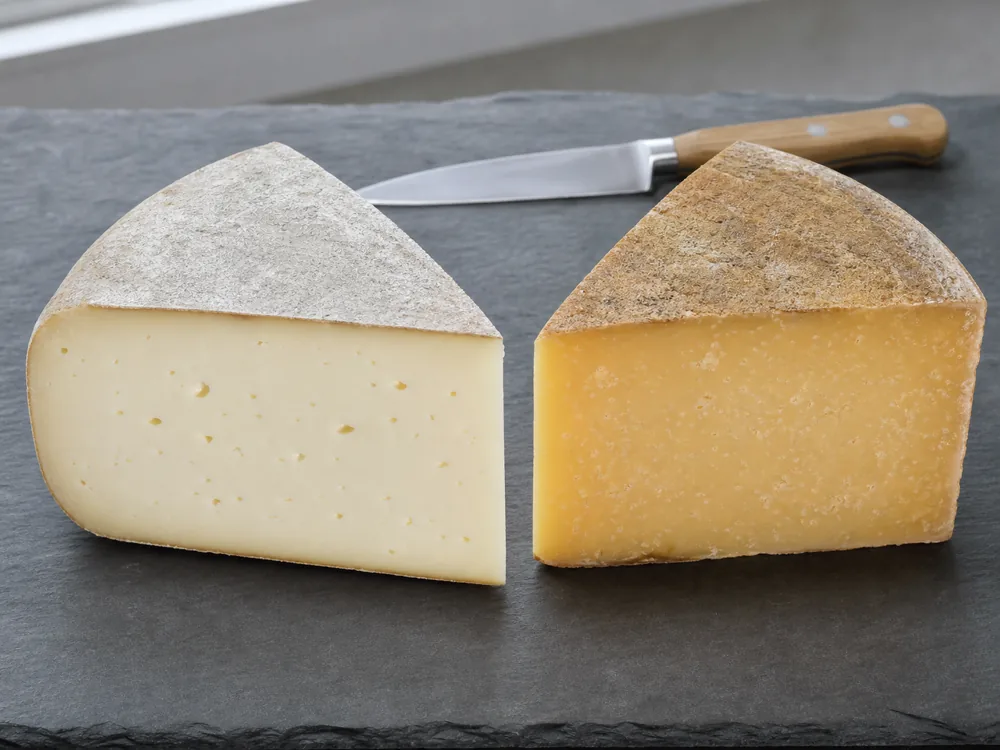
The EU document gives Tenero a body that is moderately firm and elastic with just a few small eyes. It also describes Duro with just a few small eyes, and Tino Paiolo, a Piedmont farm that sells both types, calls Duro rather firm and hard.
Two sellers describe Tenero's look differently from the EU text. Guffanti lists a straw-yellow paste with medium holes, and The Cheese Store of Beverly Hills describes a thin, dark-yellow natural rind.
Guffanti, an Italian cheese merchant, says Tenero was developed for shoppers who wanted fresher, more delicately flavored cheese than the traditionally more mature wheels.
Sellers describe Tenero differently, so expect some range. The Cheese Store of Beverly Hills calls it gentle and milky with a short lactic finish, while Guffanti lists an intense, fresh taste with notes of sheep's and goat's milk.
For Duro, Tino Paiolo describes savory and intense flavor with animal and dried-fruit notes, and Cheese.com lists it as salty and savory.
Why is a Cuneo cheese named after the town of Bra?
The EU single document calls the town of Bra the main historical market for the cheese, and says the cheese took its name from it. The Bra tourism office adds that the town was a center for aging and trading cheeses made by the malgari, the mountain herders of Cuneo.
The consortium says Bra's merchants aged the local cheese, then carried it to Piedmontese markets and above all to Liguria, where it was prized as a pesto ingredient.
Wheels first traveled on horse-drawn carts. Piedmontese emigrants later asked for the cheese, and the consortium says it reached the Americas because it withstood months at sea and temperature swings.
The same page says not a single wheel of Bra is made in the town of Bra today. A genuine wheel can therefore come from anywhere in the protected area.
How is Bra made, and where do Tenero and Duro split?
The EU single document sets curdling between 27 and 38 °C. Animal rennet must contain at least 80 percent chymosin, and a non-animal coagulant is allowed.
After the second cut, the curd particles average the size of maize kernels for Tenero and of paddy rice grains for Duro.
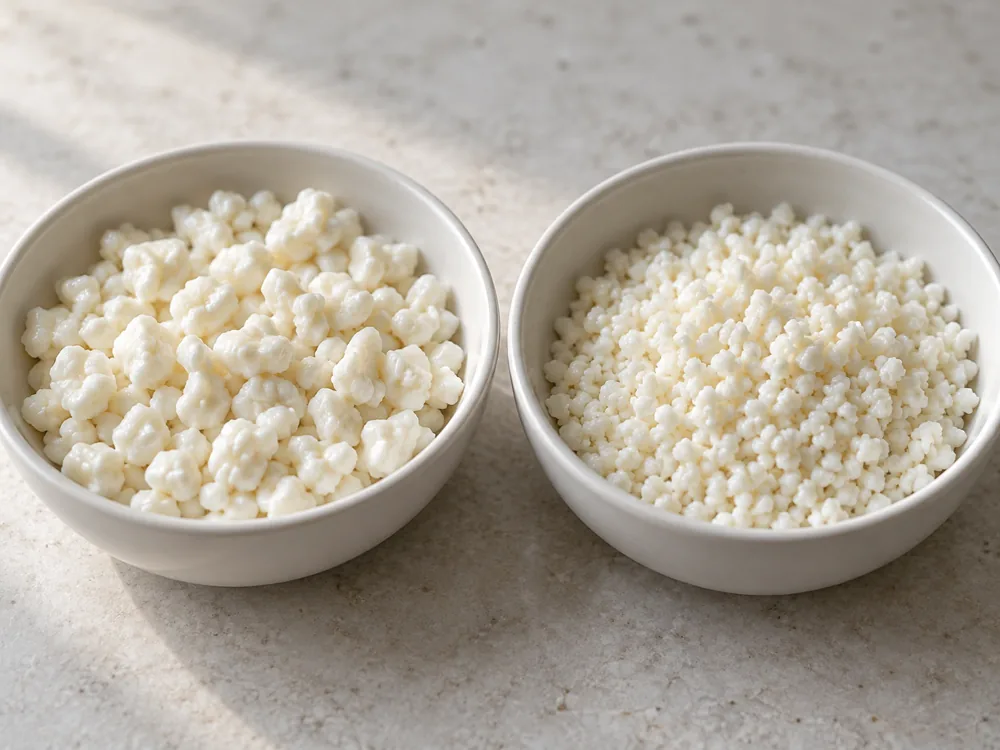
Guffanti's Tenero sheet lists dry salting.
Ripening rooms run at no more than 15 °C for Tenero and 18 °C for Duro, with humidity up to 95 percent for both. The amendment applicants say the warmer room lets Duro lose more acidity, which keeps the taste milder even after more than 12 months.
The consortium and the Bra tourism office give the minimum ages as 45 days for Tenero and 180 days, or six months, for Duro. Cheese.com lists Tenero as aged up to 45 days and Duro at 5 to 6 months.
A Duro ripened for more than a year may add the word Stravecchio on a band attached to the paper label.
The EU single document allows semi-skimmed milk for Bra Duro and for both d'Alpeggio types. Ordinary Bra Tenero is not on that list.
What does d'Alpeggio mean on Bra cheese?
Bra Tenero d'Alpeggio and Bra Duro d'Alpeggio are made from milk of cows grazing mountain pasture during the migration period from June 1 to October 15. To supplement grazing, the cows may receive feed supplements of up to 10 percent of the dry matter in their daily feed.
On stable mountain farms, the milk must come from animals grazing pasture above 900 meters, following the same dates and feed rules.
The paper label helps you spot it, because the EU document gives ordinary Bra a straw-yellow halftone background and d'Alpeggio a green one.
The word is not unique to this cheese. Tino Paiolo lists a Castelmagno di Alpeggio, and the consortium describes a Raschera d'Alpeggio made above 900 meters.
The specification defines where the cows grazed, not how the cheese tastes.
Which Bra works for the table, melting, and grating?
The EU single document says Bra suits salads and baked dishes, and that grated Duro has many uses in the kitchen. It describes the body as compact but never dry, so it can be grated.
Sellers split on Tenero. The Cheese Store of Beverly Hills recommends slicing it onto a board for the table, cubing it into salad, or melting it slowly with milk into a fonduta that it says stays smooth instead of stringy.
Tino Paiolo, by contrast, calls Tenero a traditional table cheese and also suggests grating it over pasta or risotto.
| Pairing | Type | Why It Works |
|---|---|---|
| Tenero with red wine or dark beer | Wine | Guffanti lists red wines and dark beers for Tenero, and Tino Paiolo suggests full-bodied reds. |
| Tenero with jam and bread | Food | Guffanti names grape jam, green tomato jam, and whole wheat bread; Tino Paiolo also suggests fruit jams. |
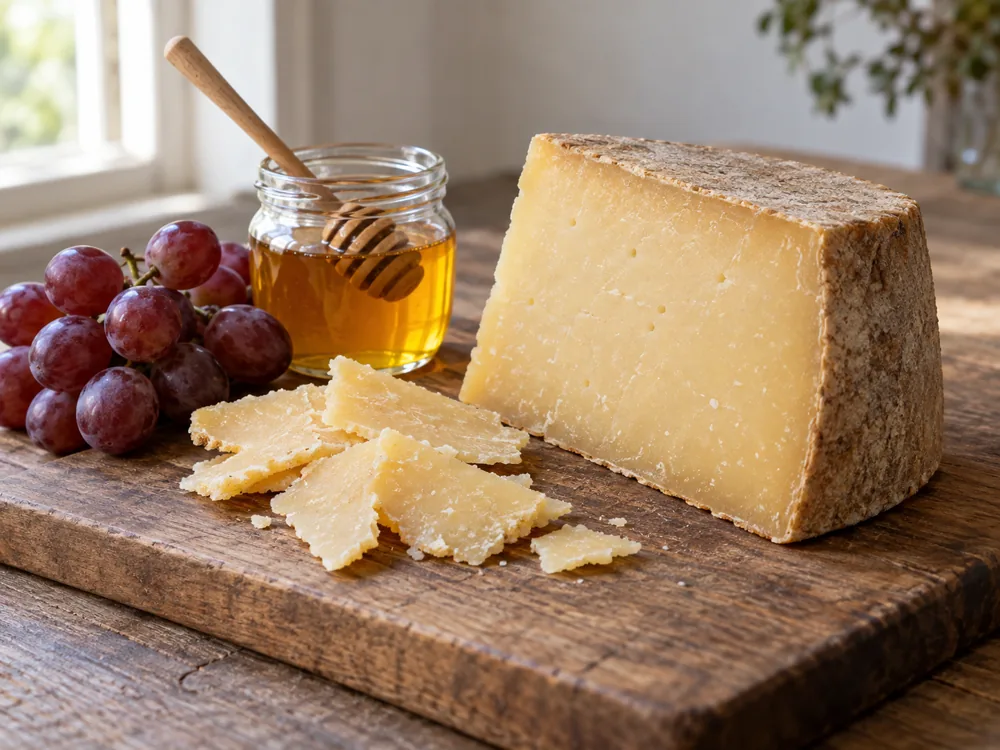
| Duro with honey, grapes, and fruit mustard | Food | Tino Paiolo pairs Duro with fruit preserves, grapes, honey, and fruit mustards. |
| Duro with Barbera or Nebbiolo | Wine | Tino Paiolo recommends intense, structured wines such as Barbera or Nebbiolo, or IPA beers. |
Is Bra cheese pasteurized?
Bra can be made from raw or pasteurized milk, and sources split on which each type uses: Cheese.com describes Bra Duro as made from pasteurized cow's milk, while Guffanti lists raw or pasteurized milk for Tenero.
The Cheese Store of Beverly Hills sells its Tenero as raw cow's milk, and Castagna Formaggi lists its Duro as raw cow's milk. Tino Paiolo says it makes both types from its own cows' raw milk, and English Wikipedia says either treatment is used.
The NHS lists pasteurised or unpasteurised hard cheeses such as cheddar, gruyère, and parmesan as safe in pregnancy, along with pasteurised semi-hard cheeses such as edam. Tenero is described as moderately firm, which does not map cleanly onto those categories.
The CDC's safer line for hard cheese requires pasteurized milk, so it does not cover a raw-milk Bra of either type. Its riskier list names soft cheese from unpasteurized milk, and the agency says pregnant women are 10 times more likely to get a Listeria infection.
With producers split on milk and neither agency naming Bra, the label's milk statement is the only reliable answer.
How can you recognize Bra and read its label?
After molding, each wheel is stamped on the heel with a stylised letter B, the type (Duro or Tenero), and a producer code made of a province abbreviation and two digits. A round paper label 20 to 28 centimeters across carries the words Bra Tenero or Bra Duro next to the EU logo.
The Bra logo shows a small man with a moustache and hat carrying a cheese with a piece cut out. It is red for Bra Tenero and brown for Bra Duro.
Cut portions carry the same logo, which may appear in black and white. Cutting, pre-packing, and grating may happen outside the production area, and only Duro may be sold pre-packed grated.
The Tenero rind is described as inedible. The Duro rind was once described that way too, but the amendment applicants call that an error and deleted the word, so it is hard and may be treated with edible oil.
Fine natural veins sometimes appear just below the rind of both types. The amended text now lists them as a normal feature, because inspectors had been recording them as a failure to comply.
How should you store Bra?
Castagna Formaggi's Duro data sheet lists a minimum shelf life of 60 days without saying which pack it covers.
For a wedge at home, the general cheese storage rules apply.
SOURCES & REFERENCES
The EU single document calls Tenero delicate with a remarkably mild flavor, and Duro fuller and stronger with sweet and salty notes. Sellers add their own wording, such as milky for Tenero and savory and intense for Duro.
Tenero is moderately firm and elastic, and Duro is firmer, described by one Piedmont farm as rather firm and hard. The minimum ages are 45 days and 180 days.
One seller says Tenero melts smooth into a fonduta when heated slowly with milk.
The Tenero rind is described as inedible. The Duro rind is hard and may be treated with edible oil.
It means the milk came from cows grazing mountain pasture between June 1 and October 15, with supplements limited to 10 percent of the dry matter in the daily feed.
Sources differ. Some sellers say raw cow's milk and Cheese.com says pasteurized, so the label's milk statement decides.