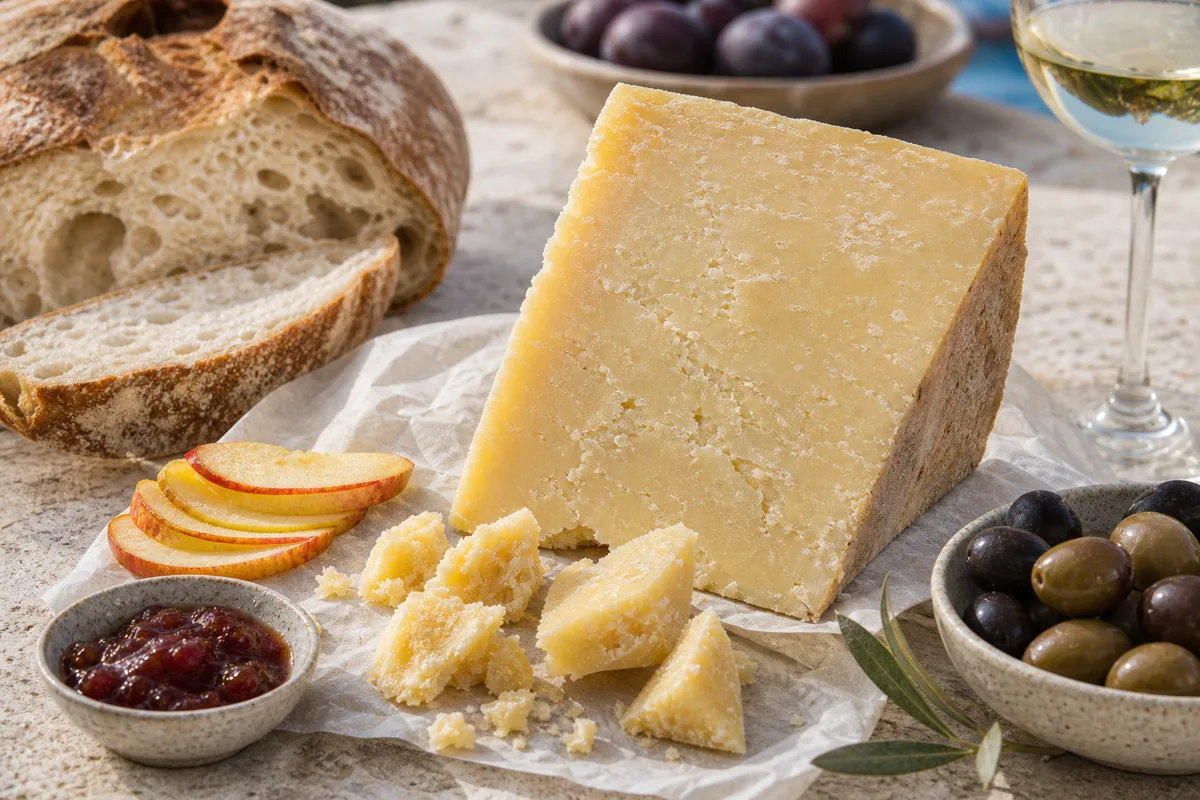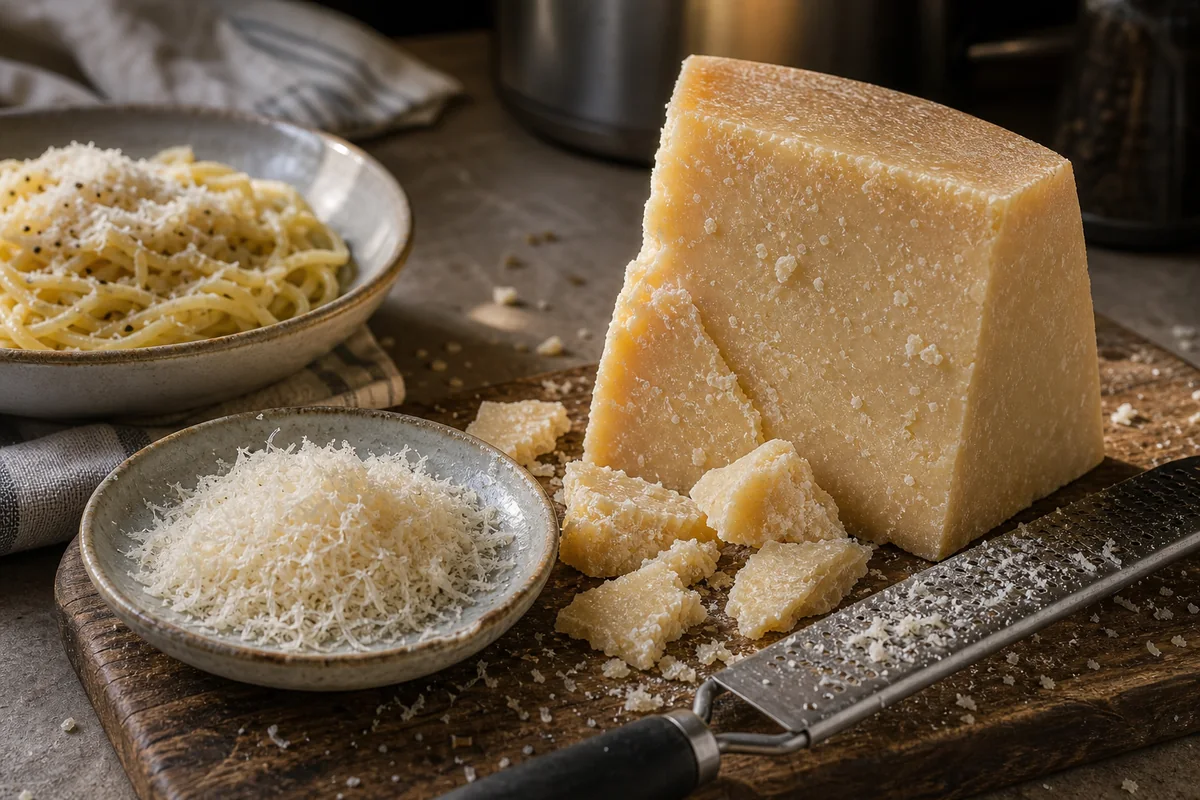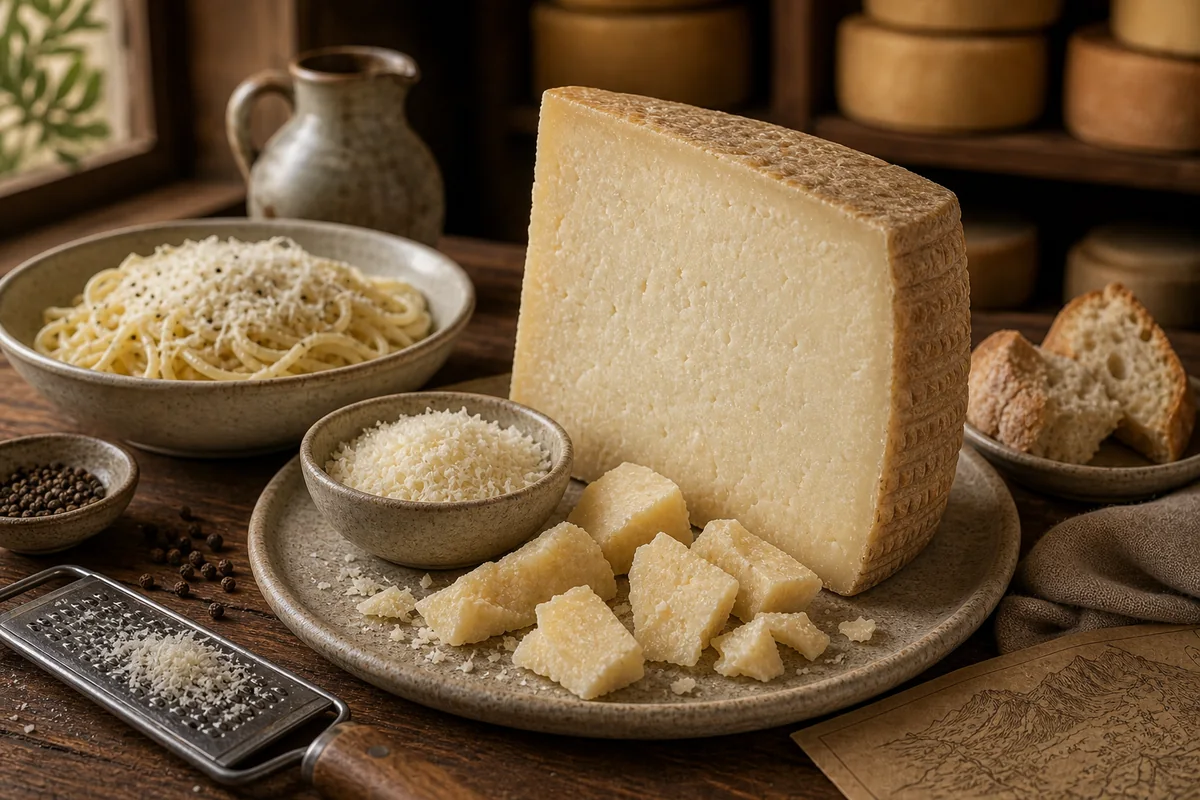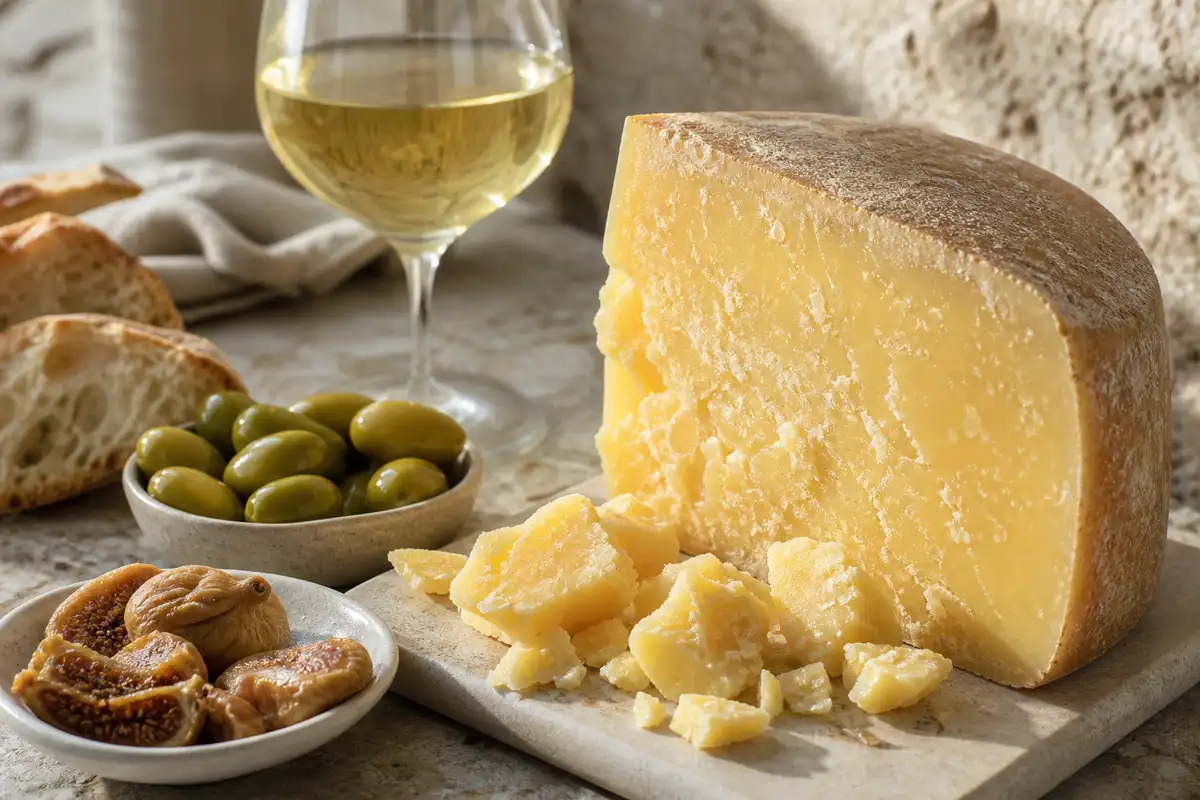
Zigljen Iz Extra Mature is a hard Croatian cheese from Sirana Gligora in Kolan on the island of Pag, made from cow and sheep milk. Cheese.com gives the blend as 80% cow milk and 20% sheep milk, says the milk is pasteurized, and gives the minimum age as 8 months, longer than the standard Zigljen.
Gligora writes the name Žigljen and says it comes from the Croatian word for a traditional salt pan, a nod to the island of Pag's long tradition of making salt and cheese.
Check the age before you buy. Gligora's shop gives 6 months for its standard Žigljen, and the "Extra Aged" version appears only inside a platter assortment.
In This Article
What Milk and Rennet Go into Zigljen Iz Extra Mature?
Cheese.com gives the blend as 80% cow milk and 20% sheep milk, and the same entry says the cheese is pasteurized and set with vegetarian rennet. It marks the cheese as vegetarian but not vegan.
Gligora's shop describes the mixed milk as giving the cheese balance, with the depth and character of sheep milk lifted by the creamier body of cow milk. If you need the exact split, ask the seller to confirm Cheese.com's 80/20 for your piece.
Another Gligora page credits the cow milk with mildness and the Pag sheep milk with a distinctive sharpness. If Cheese.com's split holds for the extra mature wheel, sheep milk is the minority milk, which makes Zigljen a different proposition from Paški sir, a cheese Gligora makes from sheep milk alone.
Why Did Gligora Make Zigljen from Cow and Sheep Milk?
Gligora's shop says Zigljen was created in 1996 and began as a blend of Pag sheep milk and cow milk from the Zadar hinterland, because in the first year there was not enough Pag milk to make Pag cheese.
Ivan Gligora told the Croatian newspaper Novi list in 2011 the same story from the maker's side: at the start he could not win the trust of the island's sheep farmers, so he could not buy enough milk for Paški sir. He chose to make a cheese he could source milk for, and in his first year he made nothing else.
Novi list added that Sirana Gligora buys the milk for Zigljen in Ravni kotari, while the milk for Paški sir comes from island sheep farmers.
The blend therefore began as a supply decision. A major result came in 2011, when Novi list reported a Supergold medal at the World Cheese Awards in Birmingham and a place on the list "The Worlds Best 50 cheeses", judged by a panel of 200 experts.
The maker was still small then. Novi list says the dairy won its first gold medal in 2002 for Paški sir, and about two years before the 2011 report it opened a new dairy built with SAPARD funds, which the newspaper called one of the technologically best-equipped food plants in Croatia.
How Long Is Zigljen Iz Extra Mature Aged?
Zigljen Iz Extra Mature is aged at least 8 months in Cheese.com's entry, which calls it a premium Zigljen "further matured for minimum 8 months", while Gligora's shop says its standard cheese matures for a minimum of 6 months.
Cheese.com describes the extra mature cheese as having more complexity and strength than the base cheese and a texture that is "much harder and crumbly". Gligora describes the standard cheese's paste as already firm with a fine crystalline structure, so any extra months build on a cheese that is not soft to begin with.
An extra-aged Zigljen does exist: Gligora lists a "Žigljen Extra Aged" in a 530 g platter assortment.
If you find a piece sold as extra mature or extra old, several ages are in circulation: Cheese.com's 8 months, the 6 months of the standard cheese, and whatever the maker prints on that piece. The printed figure is the only one that describes your wedge.
What Does Zigljen Iz Extra Mature Taste Like?
Expect a pronounced, salty and sweet flavour with what Cheese.com calls "a delicate balance between sweet and salt with a long finish". The texture is crumbly and grainy, and the paste is yellow per the same entry.
Gligora describes the standard cheese with different words. The 650 g piece has pronounced nutty aromatics and a long savoury finish, and the 190 g piece has a savoury-sweet profile with notes of grass and dry fruit.
Gligora's 650 g special pack is described as intensely savoury, with a nutty undertone and a mineral-rich character.
Zigljen has a sweet side, a savoury or salty side and a long finish in both Cheese.com's and Gligora's descriptions. Cheese.com puts the sweet-salt balance at the centre, and the maker adds nutty, mineral, grass and dry-fruit notes.
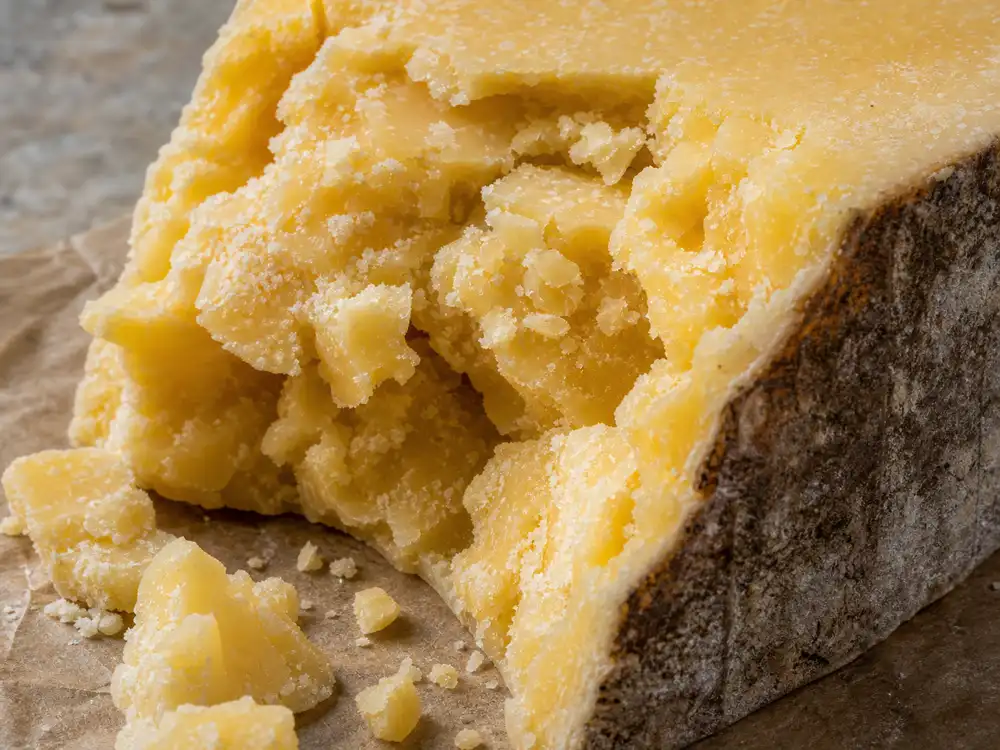
The paste is yellow in Cheese.com's entry and deep-golden, golden-amber or straw-coloured in Gligora's listings for different pieces, so do not rely on colour to tell one Zigljen from another.
What Do You Serve with Zigljen Iz Extra Mature?
For the extra mature cheese, Cheese.com suggests a white Malvasia from Degrassi and a red Cuvée from Vina Vrsaljko.
Gligora's shop attaches different suggestions to different pieces. It describes its 650 g quarter wheel as one for slow slicing over weeks, and its 190 g piece as one to slice or cube for an aperitif.
| Pairing | Type | Why It Works |
|---|---|---|
| White Malvasia from Degrassi | Wine | Cheese.com's suggestion for the extra mature cheese. |
| Red Cuvée from Vina Vrsaljko | Wine | Cheese.com's second suggestion for the extra mature cheese. |
| Croatian reds, cured meats, olive oil | Food | Gligora's suggestion for its 650 g piece of aged Žigljen. |
| Pršut, olives, Žlahtina or Pošip | Food | Gligora's suggestion for its 190 g piece, sliced or cubed. |
| Prosciutto, capers, nuts, Merlot | Food | Gligora's suggestion for a set of Kolan, Žigljen and Dinarski, with fuller white wines or medium-bodied reds. |
Gligora's lists were written for its 6-month cheese and Cheese.com's for the extra mature one, and they overlap on red wine and on a Croatian white.
For the extra-aged version, Gligora has its own platter for four people, which puts Žigljen Extra Aged beside Paški sir, Kolan, pršut, pečenica, cheese-stuffed olives, grapes, almonds and crackers.
Gligora's general Zigljen page calls the cheese versatile in the kitchen. Ask the seller whether it suits melting or grating.
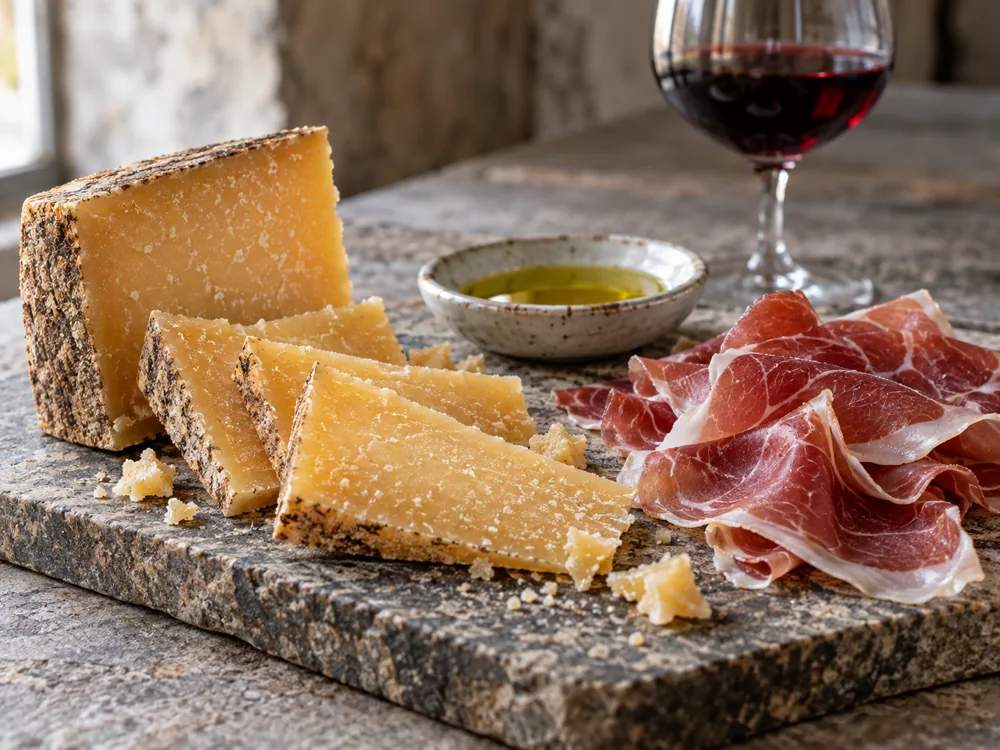
On a board, keep the cheese out for no more than 2 hours, or 1 hour above 90°F, per CDC's perishable-food guidance. The same guidance says to keep your refrigerator at 40°F or below.
How Does Zigljen Differ from Paški Sir and Gligora's Other Hard Cheeses?
Milk is the first thing that separates Zigljen from Paški sir, and Gligora's shop describes four cheeses that sit close together.
| Cheese | Milk | Age the shop gives | Shop description |
|---|---|---|---|
| Žigljen | Sheep and cow | Minimum 6 months | Firm deep-golden paste, fine crystalline structure, nutty and savoury |
| Paški sir (PDO) | 100% Pag sheep | 60 days on a 325 g pack, 6 to 12 months in a set, minimum 12 months for extra old | Firm and slightly granular, clean savoury finish |
| Kolan | 100% cow | Minimum 4 months | Firm yet melting texture, pleasant aroma |
| Jadranski | Cow and sheep, slightly more cow | Not stated | Semi-hard, milder than Žigljen, described as its younger brother |
Zigljen sits between the all-cow Kolan and the all-sheep Paški sir. Paški sir's age in Gligora's shop runs from 60 days to a 12-month minimum depending on the version, so compare age numbers only within the same cheese.
The shop also gives each cheese a different source of flavour. It credits Paški sir to Pag sheep grazing herbs dusted with sea salt by the bora wind, and says Zigljen is aged for at least six months in the bora-swept climate of Pag.
Paški sir also carries a protected designation of origin, which Wikipedia says the European Commission granted on 25 November 2019. Žigljen carries no protected designation.
Jadranski is the closest neighbour in milk. Gligora calls it the younger brother of Žigljen with a slightly milder flavour, so it is the gentler choice if you want a milder cow-and-sheep cheese.
Which Version of Zigljen Should You Buy, and What Does It Cost?
On 2 October 2026, Gligora's webshop listed the plain Žigljen at 6 months in three sizes, beside a special pack with extended aging, two pomace-finished versions and an eighths set, at the prices below.
| Format | What the shop says | Price | Price per kg |
|---|---|---|---|
| Full wheel, aged 6 months, 2.6 kg | The shop's largest format | €90.97 | €34.99 |
| Aged 6 months, 650 g | Quarter wheel, firm deep-golden paste | €23.99 | €36.91 |
| Special pack, 650 g | Extended aging | €24.99 | €38.45 |
| Aged 6 months, 190 g | Vacuum-packed piece, straw-coloured paste | €7.99 | €42.05 |
| Grape must finish, 325 g | Violet-tinted rind, special pack | €19.99 | €61.51 |
| Marasca cherry pomace finish, 325 g | Rose-tinged rind, special pack | €19.99 | €61.51 |
| Eighths set with Kolan and Dinarski, 675 g | One-eighth wheel of each cheese | €29.99 | About €44 (calculated) |
If you buy the 190 g piece, you pay about 14% more per kilogram than for the 650 g quarter wheel, while the full 2.6 kg wheel is about 5% cheaper per kilogram than the quarter wheel. The two pomace-finished versions cost about two-thirds more per kilogram than the plain 650 g piece.
The eighths set is the shop's way to taste Zigljen next to Kolan and Dinarski, and the pomace versions are different products, not the extra mature cheese. Gligora finishes those wheels in grape must or marasca cherry pomace, which gives the violet or rose rind and a fruit note, and pairs them with Plavac Mali or Dingač, figs, and walnuts or dark chocolate.
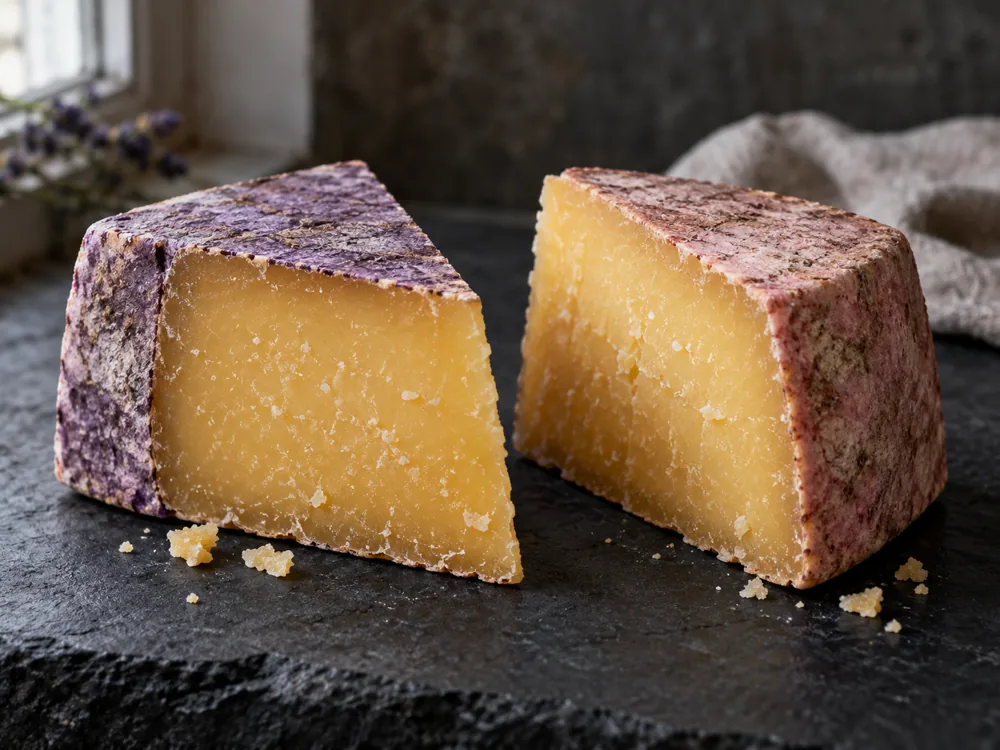
Gligora's shop lists a pomace-finished version called Zigljen Iz Mosta. The pomace comes from pressed red wine grapes.
At 650 g, Gligora lists Paški sir extra old at €60.99 and a Paški special pack at €55.99, against €23.99 for the 6-month Žigljen, so the sheep-milk cheese costs well over twice as much per piece.
Check the month count printed on the piece. On 2 October 2026, a plain 650 g Žigljen cost about €37 per kilogram on Gligora's shop, and the pomace versions are separate, pricier products.
Can You Eat Zigljen Iz Extra Mature While Pregnant?
Both Cheese.com and Gligora call Zigljen a hard cheese, and the NHS lists pasteurised or unpasteurised hard cheeses, such as cheddar, gruyère and parmesan, among the cheeses that are safe to eat while pregnant. The CDC's safer list names hard cheese made with pasteurized milk.
Confirm pasteurization on your label: the NHS line covers a hard cheese either way, but the CDC's safer choice is hard cheese made with pasteurized milk.
SOURCES & REFERENCES
It is a hard Croatian cheese from Sirana Gligora, described by Cheese.com as pasteurized, made from 80% cow milk and 20% sheep milk, and matured for at least 8 months.
Gligora's shop lists Zigljen as a sheep and cow milk cheese with a 6-month minimum, while Paški sir is made from 100% Pag sheep milk and carries a protected designation of origin.
On Gligora's webshop on 2 October 2026, the 650 g aged piece was €23.99, about €36.91 per kilogram, and the 190 g piece was €7.99.
NHS lists pasteurised or unpasteurised hard cheeses as safe, and Cheese.com lists Zigljen as a pasteurized hard cheese. Confirm pasteurization on your label.