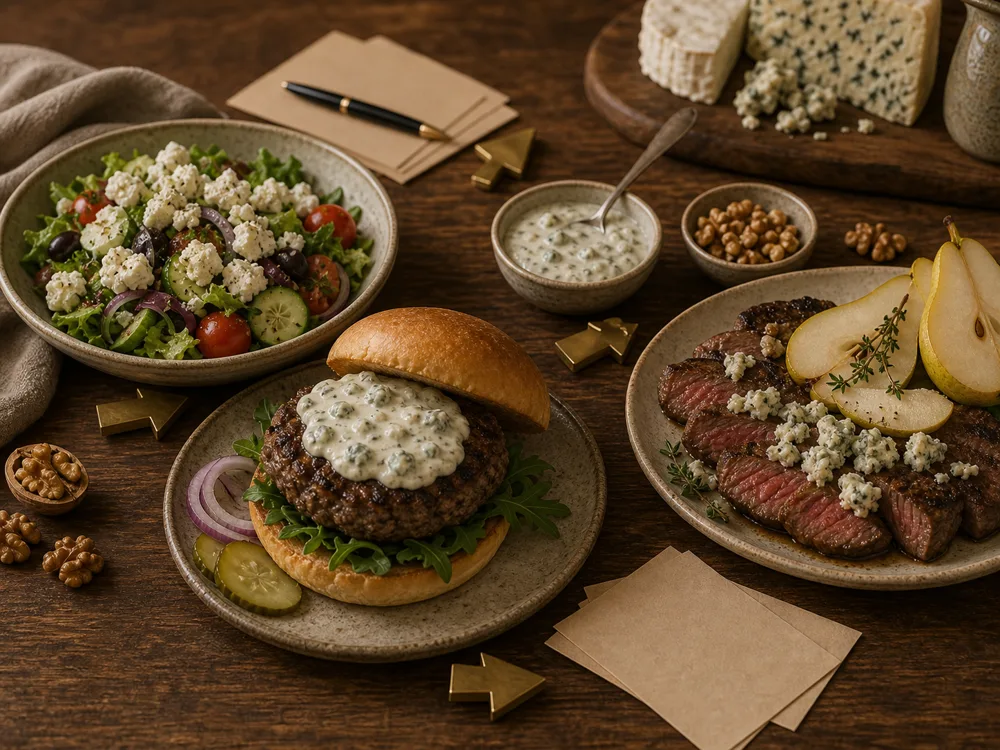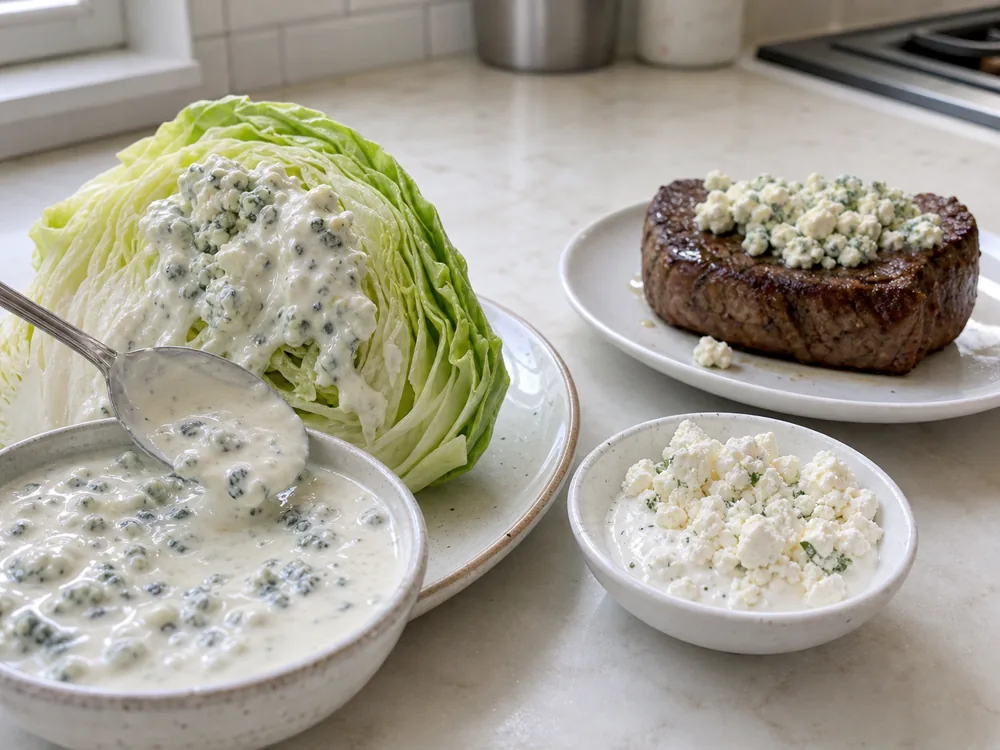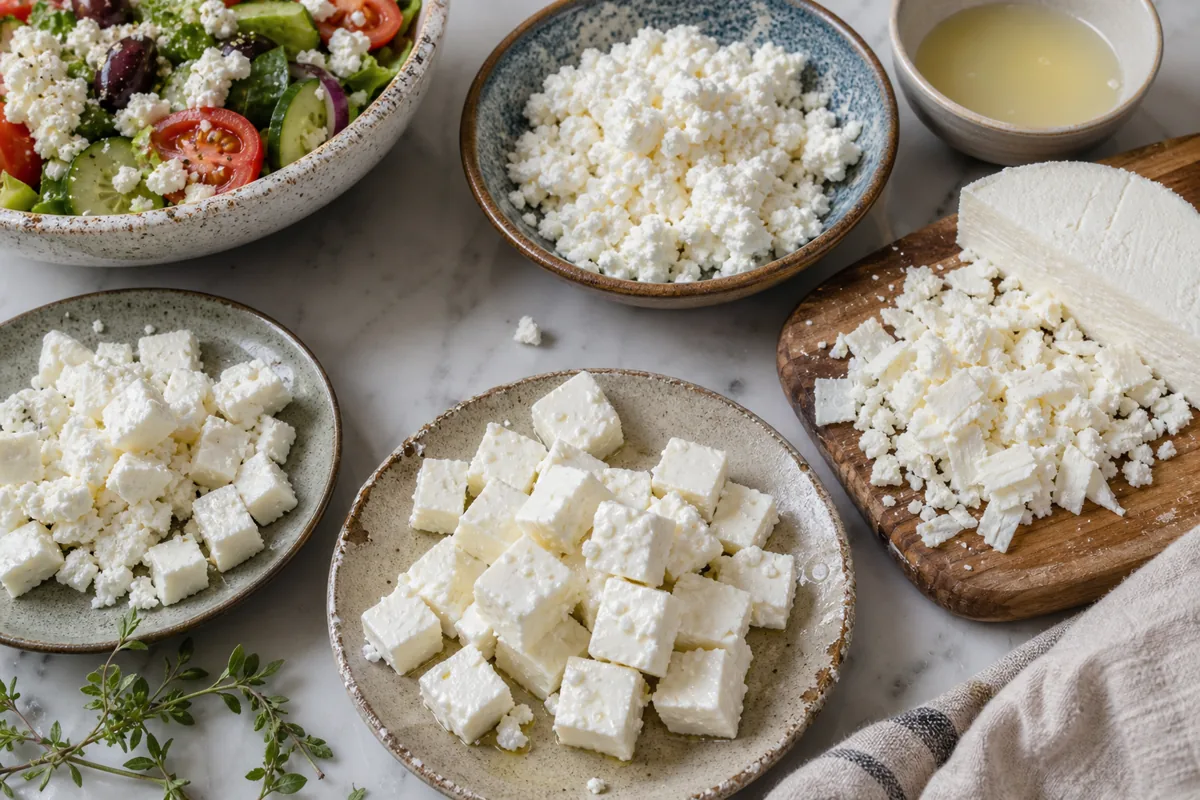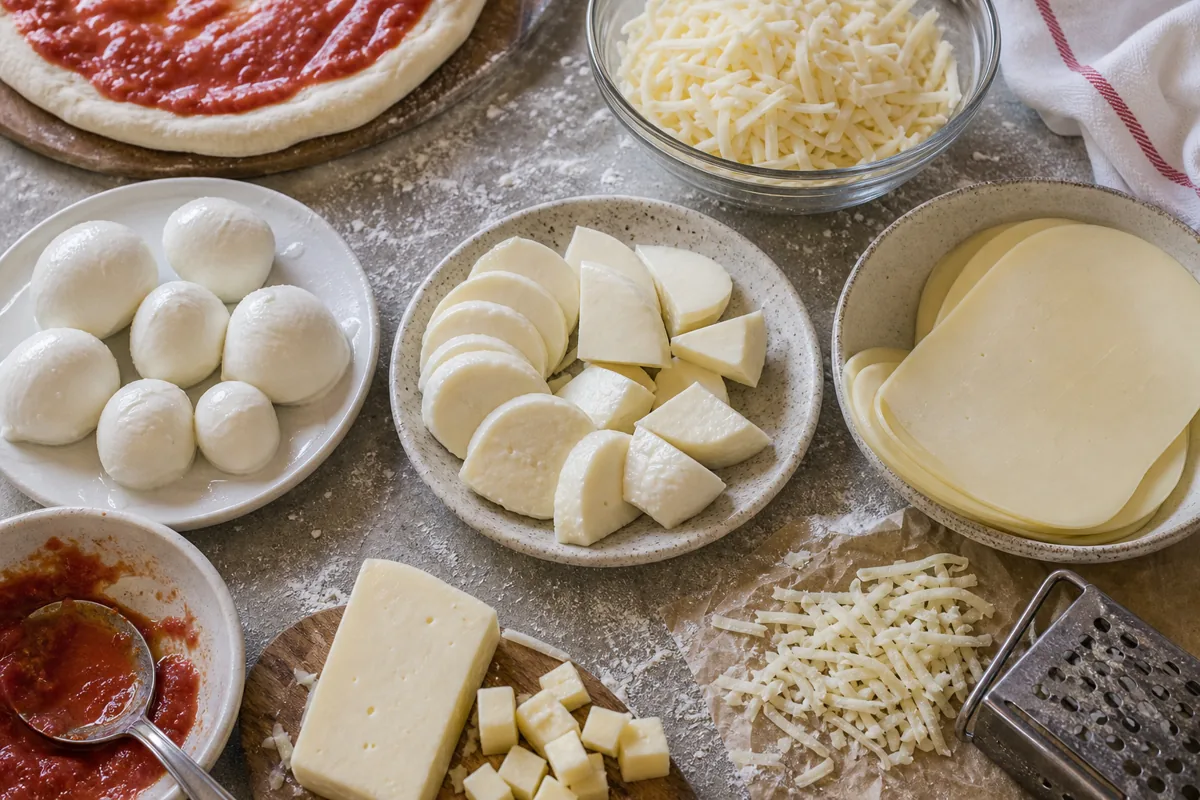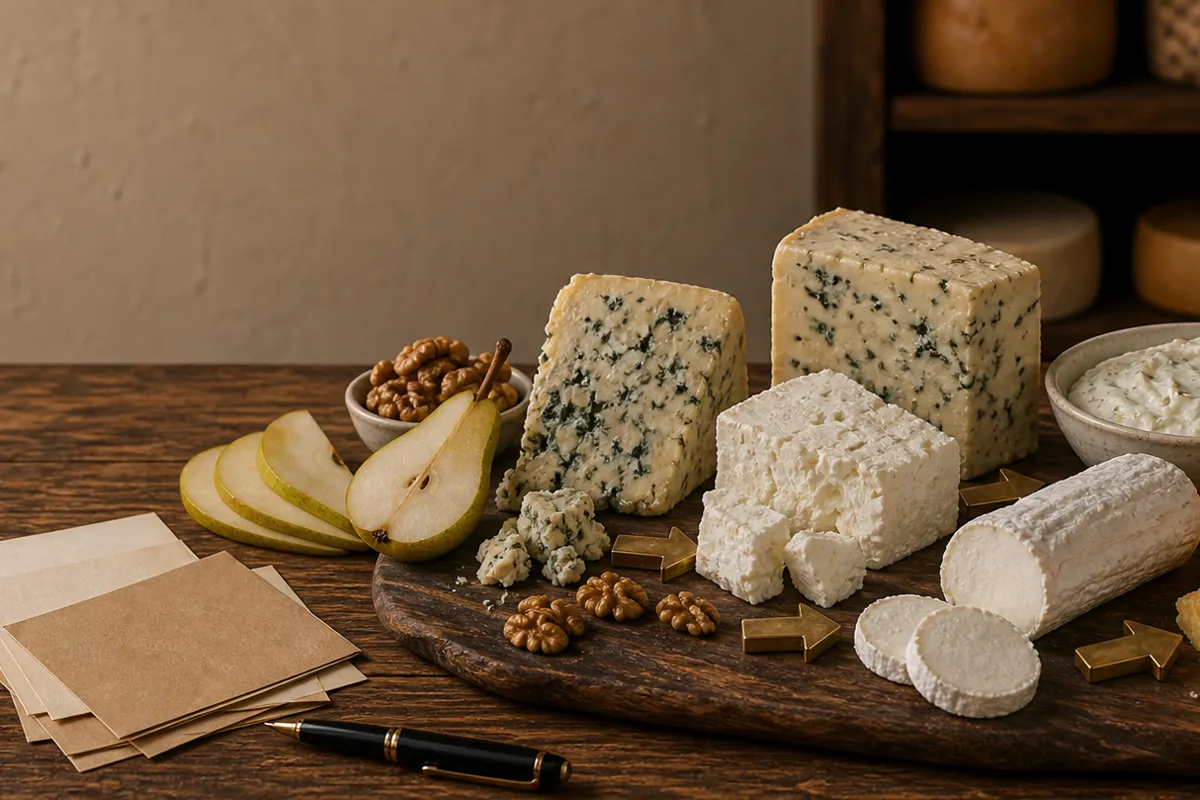
A blue cheese substitute starts with one question: do you still want blue mold flavor, or do you only need a salty crumbly cheese? Those are separate problems.
If the recipe needs blue flavor, stay in the blue family and adjust intensity. If the recipe only needs crumble, salt, and tang, use feta or goat cheese.
A non-blue cheese can save a salad, but it will not make a blue cheese dressing taste like blue cheese.
The swap that passes in a thick dressing can fail on a steak, because a dressing hides texture and a hot steak shows every crumb. Start from the dish, then decide how much blue mold flavor it can carry.
In This Article
7 Blue Cheese Substitutes: Best Alternatives for Dressings and Salads
Four of these keep real blue flavour and three only replace the crumble, so the list runs from closest match to furthest.
Each entry gives the dish it suits, the adjustment it needs, and the point where it stops working.
The two zeros are the point of the scale rather than a gap in it. Feta and goat cheese replace the crumble and the salt while leaving the mould flavour out entirely.
1. Gorgonzola Dolce
The safest swap whenever the recipe names blue cheese and the real problem is intensity.
It keeps the veining, the creaminess and the savoury mould flavour, but it is aged young and stays soft, so the peppery bite that puts people off never fully develops.
Swap it one to one and fold it straight into sour cream, mayonnaise, yogurt or a warm pasta sauce. It needs no mashing because it is already spreadable at fridge temperature.
In a dressing, blend it in first and hold back a little of the salt, then correct at the end once the cheese has loosened.
It fails where you need crumbles, and the symptom is a salad with pale smears instead of visible pieces. It is too soft to break cleanly, so use it when the cheese disappears into the dish rather than sits on top of it.
Build a crowd dressing on Gorgonzola dolce, then crumble in a little Stilton or Roquefort at the very end. You get real blue depth without a dressing half the table will refuse.
2. Danish Blue
The everyday choice for crumbles and dressings when you want the job done without hunting a specialist counter.
It is a cow-milk blue made for volume, salty and direct rather than complex, and it is on almost every supermarket cheese shelf.
Swap it one to one, but taste before you add any salt to the dish. It lands sharper and saltier than the mild blues, and a dressing built on it can end up over-seasoned before you notice.
Chill it hard before crumbling so it breaks into pieces rather than pasting onto the knife.
It fails on subtlety, and the symptom is a delicate dressing that suddenly tastes only of cheese. Where Gorgonzola dolce sits quietly under buttermilk and lemon, this pushes to the front.
3. Stilton
For boards, port and any dish that needs a firm, earthy blue with some restraint to it.
It is denser and drier than the Italian and Danish blues, with an earthy, almost mineral flavour that stays controlled rather than sharpening on the finish.
Crumble it straight from the fridge so it breaks into clean pieces instead of smearing. On a hot steak, use it in chunks rather than crumbs so it softens without disappearing into the juices.
Serve it with something sweet alongside, since honey, pear and walnut are what its earthiness is built to sit against.
It fails as a mild option, and the symptom is a dressing that a blue-cheese sceptic will not touch. Its force is the point, so it belongs where the dish can carry it.
4. Roquefort
For steak, bitter greens, walnuts and pears, where the cheese has to cut through strong company.
Raw sheep milk makes it sharper and more piercing than any cow-milk blue, and it is salted by hand at the surface, which is why it reads saltier than the others before it reads blue.
Use noticeably less than the recipe states, around two thirds, and season the dish only after the cheese is in. Crumble it rather than blending it whole into a dressing so you can stop when the flavour is right.
The cue is the finish. A dressing has enough when the blue lingers after the acidity clears, not while it is still on the tongue.
It fails as a general substitute, and the symptom is a dish that tastes of Roquefort and nothing else. Anything mild underneath it simply disappears.
Use about two thirds of the quantity the recipe gives, and season the dish only after the cheese is in. Roquefort is salted by hand at the surface, so it brings more salt than any cow-milk blue on the list.
5. Cambozola
For a board where people want Brie-style creaminess with only a hint of blue.
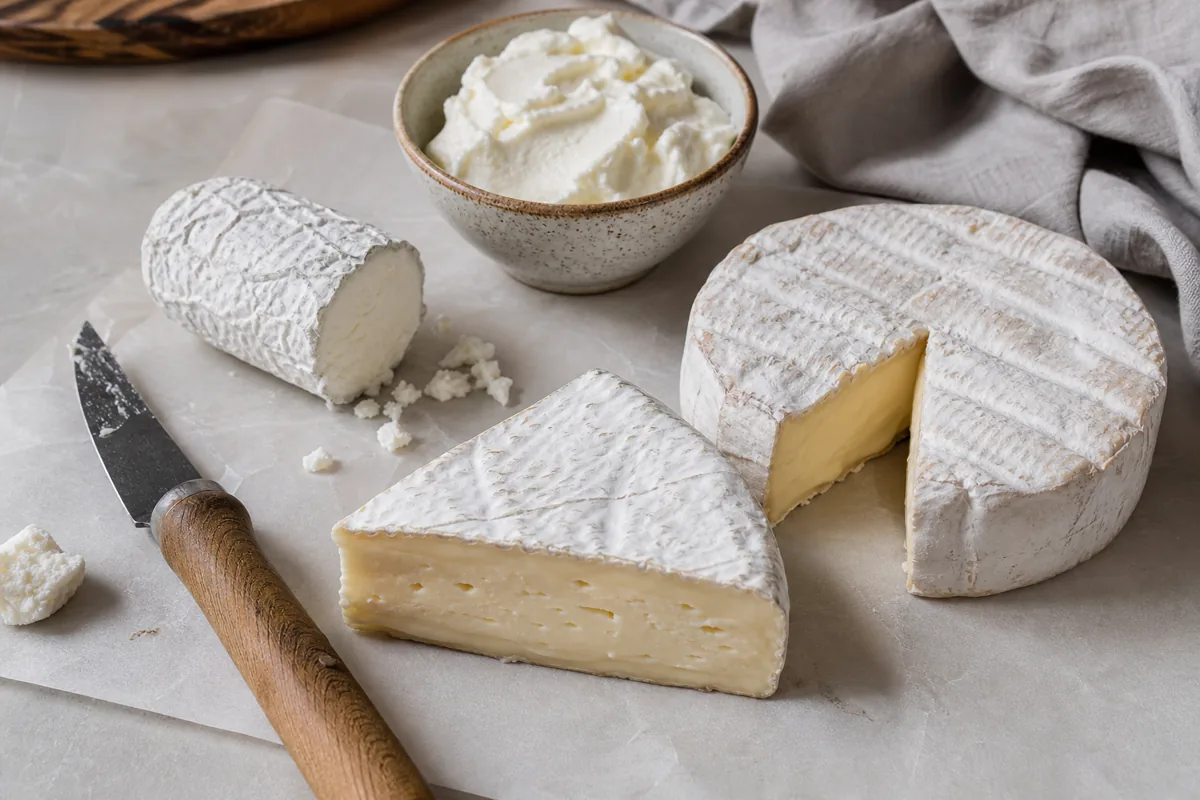
It is a hybrid: a bloomy rind over a triple-cream paste with a light blue veining, so the mould flavour arrives as an accent rather than as the main event.
Serve it as a spread with a knife rather than trying to portion it into cubes, and take it out of the fridge 30 minutes ahead so the paste loosens.
Pair it with plain crackers and fruit, since anything strongly flavoured beside it will cover the little blue character it has.
It fails in cooking, and the symptom is a sauce that tastes creamy but not blue. It is too mild for steak or a strong sauce, and the texture smears instead of breaking.
6. Feta
For salads that need salty crumble and nothing else, including plates for people who dislike blue cheese.
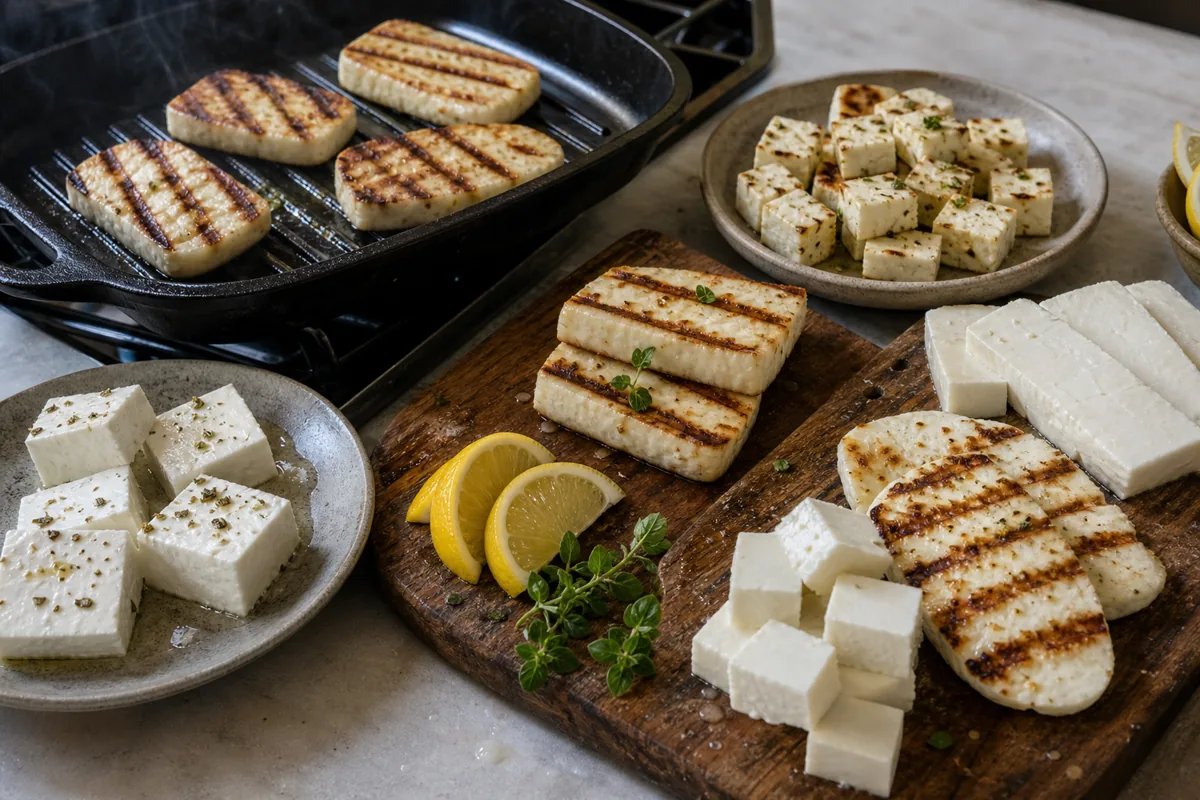
It is a brined sheep or sheep-and-goat cheese, so it brings salt and sharp lactic acidity in place of mould flavour, with a crumb that holds its shape on a plate.
Use it where the cheese is scattered rather than blended, and rinse it briefly if the brine is aggressive. Add cracked black pepper to stand in for the bite the mould would have brought.
It suits lettuce wedges, beets, tomatoes, cucumbers, olives and grilled vegetables, where contrast is the job rather than blue character.
It fails in any blue dish, and the symptom is a dressing that tastes good and wrong at once. There is no mould flavour at all, so name it a feta dressing rather than pretending it is the original.
If the dish names blue cheese in its own title, a non-blue swap changes what you are serving. Rename it rather than substituting quietly.
7. Fresh Goat Cheese
For dishes that wanted tang more than blue bite, and for a creamier result than feta gives.
It is a soft lactic cheese, so it spreads rather than crumbles and brings brightness where feta brings salt.
Add it off the heat in cooked dishes so it stays creamy rather than splitting, and thin it with a spoonful of cream or yogurt if it needs to coat rather than sit.
It works on roasted beet salad, crostini and warm vegetables, where soft pockets of cheese are more useful than dry pieces.
It fails on the same point as feta, and the symptom is a plate that reads sharp rather than savoury. It replaces texture and acidity, never the mineral peppery mould flavour.
- Wedge salad without blue: feta gives the closest crumble and salt.
- Roasted beet salad: goat cheese gives creamy tang and a softer bite.
- Grain bowl: feta or ricotta salata gives visible salty pieces.
- Blue cheese dressing or burger: neither works, because the name promises mould flavour.
Decide whether you need blue flavor or only salty crumble
Gorgonzola dolce is the safest substitute when the recipe names blue cheese and the real issue is intensity.
It keeps blue veining, creaminess, and savory mold flavor, but it lands softer than Roquefort, strong Stilton, or Danish blue.
Feta solves a different job. It gives salt, tang, and crumble without mold flavor.
That makes it useful for diners who dislike blue cheese, but it is not a flavor match. Goat cheese is creamier and brighter, so it works when the dish wanted tang more than blue bite.

That split protects the dish. A wedge salad can work with feta if the goal is salty crumble.
A blue cheese burger, sauce, or dressing usually needs a real blue, because mold flavor is part of the promise.
Look at where the cheese appears in the bite. If it is scattered over lettuce, the crumble may be enough.
If it is blended into a dressing, melted into sauce, or packed into a burger topping, the blue flavor has to survive mixing, fat, and heat.
Smell is another clue. If the recipe expects a sharp blue aroma when the dish reaches the table, stay with a real blue cheese.
If the aroma would scare off the people eating it, move to Gorgonzola dolce, Cambozola, or a non-blue crumble and be honest about the flavor change.
Non-blue substitutes replace texture and salt. They do not replace the mineral, peppery, mold-driven flavor of blue cheese.
Mild blue swaps are for skeptics and creamy dressings
Use Gorgonzola dolce when the recipe wants blue cheese but the table does not want a harsh bite. It is creamy, spreadable, and easier to fold into sour cream, mayo, yogurt, or a warm pasta sauce.
Cambozola is even gentler. It works on a board for people who like Brie-style creaminess but want a little blue character.
It is less useful when a recipe needs crumbles, because the texture smears more than it breaks.
| Substitute | Best use | Limit |
|---|---|---|
| Gorgonzola dolce | Dressing, pasta, salads, mild boards | Too soft for firm crumble. |
| Cambozola | Gentle boards and spreads | Too mild for steak or strong sauces. |
| Danish blue | Everyday crumbles and dressings | Sharper than mild blues. |
| Feta | Non-blue salads | No blue flavor at all. |
For mild blue boards, pairing matters. Sweet pears, honey, walnuts, and sparkling wine can make a gentle blue taste balanced instead of timid.
The broader sweet-and-salty board logic guide handles those pairing details.
Mild blues are also useful when the recipe has other strong flavors. Bacon, steak, bitter greens, black pepper, and hot sauce can make a strong blue feel harsh.
A milder blue keeps the dish recognizable without turning every bite into the cheese.
If a blue cheese dressing tastes too strong, do not just add more mayo. Blend in a milder blue first, then adjust lemon and salt.
Strong blue swaps need matching force
Roquefort, Stilton, Valdeon, and strong Gorgonzola piccante are not interchangeable by name, but they live in the stronger blue lane. Use them when the dish needs a clear salty punch, peppery mold, and enough force to stand up to steak, port, walnuts, pears, or bitter greens.
Raw sheep-milk blue is sharper and more piercing than most blues because of its milk and aging style. English blue for port is firmer, earthier, and more controlled on a board.
Valdeon brings a bold Spanish blue profile that can stand in when the recipe wants intensity more than a specific origin.
When the original recipe names Roquefort, a mild blue will make the dish quieter. That can be good for guests, but it is still a change.
Add less at first with strong blues, then increase by taste.
Strong blues should be cut smaller than mild blues. A large chunk of Roquefort or Stilton can dominate a salad or board, while small crumbs spread the flavor more evenly.
That portion control is often a better fix than changing the cheese.
Do not substitute strong Roquefort one-to-one for a mild blue in dressing. It can make the dressing too salty and sharp before the texture is right.
Non-blue substitutes belong in salads, not blue sauces
Feta is the best non-blue substitute for salads because it crumbles, salts the plate, and brings sharp acidity. It works with lettuce wedges, beets, tomatoes, cucumbers, olives, and grilled vegetables when the goal is contrast.
Goat cheese is better when you want creamy tang instead of dry crumble. It can sit on roasted beet salad, crostini, or warm vegetables, but it does not give the same salty snap as feta.
- Wedge salad without blue: feta gives the closest crumble and salt.
- Roasted beet salad: goat cheese gives creamy tang and a softer bite.
- Grain bowl: feta or ricotta salata gives visible salty pieces.
- Blue cheese sauce: use a real blue, not a non-blue cheese.
If you are choosing between feta and goat cheese, feta preserves brine and crumble, while goat cheese adds tang, spreadability, and soft pockets in warm dishes.
Non-blue substitutes are especially useful when the blue cheese was not named in the title of the dish. A house salad, grain bowl, or roasted vegetable plate can tolerate feta or goat cheese.
A blue cheese burger or blue cheese dressing cannot make the same move without changing its promise.
Dressing and cooked dishes need blue flavor under control
Blue cheese dressing needs two separate controls: cheese intensity and dairy base. Sour cream, mayonnaise, buttermilk, yogurt, and lemon can soften the cheese, but they cannot add blue flavor if the cheese is absent.
For a crowd-friendly dressing, use Gorgonzola dolce and crumble in a small amount of stronger blue at the end. For a non-blue dressing, use feta with sour cream and lemon, but name it as a feta dressing.
It will taste good, not blue.

- Dressing: start with mild blue, then add stronger crumbles to taste.
- Steak topping: use Stilton, Roquefort, or another firm strong blue.
- Pasta sauce: use Gorgonzola dolce and low heat.
- Board service: pair strong blue with honey, pear, nuts, or sweet wine.
- For creamy pasta, compare against Dolce-style Italian blue first.
- For non-blue crumble, compare against brined salty feta first.
- For creamy tang, compare against fresh goat-milk cheese first.
Heat can make blue cheese taste more intense and salty. Stir it in off heat when possible, especially in cream sauce.
If the sauce breaks, the issue is usually temperature, not the substitute itself.
For steak and burgers, keep the substitute dry enough to stay on top. Gorgonzola dolce can slide off a hot patty unless it is mixed with a firmer blue or chilled before service.
Stilton-style crumbles hold shape better, but they taste stronger.
For dressing, the dairy base controls spread. Mayo makes a rounder dressing, sour cream makes it tangier, and buttermilk thins it for salads.
Pick the base first, then choose how much blue flavor the dressing can carry.
For boards, portion size controls intensity better than a long list of substitutes. Serve strong blue in small pieces with fruit, nuts, honey, or sweet wine.
Serve mild blue in larger wedges when you want the cheese to feel creamy and approachable.
For shopping, buy the smallest wedge that solves the job. Blue cheese aroma spreads in the refrigerator, and strong blues can overpower leftovers.
If you only need dressing, a mild blue in a small amount is often better than a large wedge of a famous intense cheese.
If a guest dislikes blue cheese, do not hide a strong blue in the dish and hope the dressing masks it. Make a mild real-blue version or a clear non-blue feta version.
That keeps the substitute decision honest and avoids ruining the whole plate for one group.
For leftovers, wrap blue substitutes separately from mild cheeses. Even a small piece of strong blue can scent butter, fruit, and soft cheeses nearby.
Keeping it isolated protects the rest of the board for the next day.
If you are unsure, serve the substitute on the side first. Guests can add more blue flavor, but they cannot remove it once it is mixed into dressing.
The best substitute depends on whether the recipe was asking for mold flavor, salt, crumble, creaminess, or strength. Once that is clear, the choice is much less risky.
SOURCES & REFERENCES
Blue Cheese Substitute FAQ
These answers cover the most common blue cheese replacement situations.
Gorgonzola dolce is the best substitute when you still want real blue flavor but a milder taste. Feta is the best non-blue substitute when you only need salty crumble.
Use Gorgonzola dolce for a mild real-blue dressing. For a non-blue dressing, use feta with sour cream, lemon, and black pepper, but expect a tangy feta dressing rather than blue cheese flavor.
Feta can replace blue cheese when the dish needs salt and crumble, especially in salads.
It cannot replace the moldy, mineral, peppery flavor of a real blue cheese.
Cambozola is one of the mildest blue-style substitutes for boards. Gorgonzola dolce is a better mild substitute for dressing, pasta, and everyday cooking.
Valdeon or a strong Stilton can stand in when you need a forceful blue. They will not copy Roquefort exactly, but they bring enough salt, blue flavor, and intensity for many recipes.