Provolone is the best mozzarella substitute when the recipe needs melt and stretch. Use mild provolone for pizza and baked pasta, burrata for cold tomato plates, Oaxaca for long cheese pull, and fontina when you want a richer sauce-friendly melt.
The right mozzarella substitute depends on which mozzarella job you are replacing. Low-moisture mozzarella gives pizza stretch and browning, while fresh mozzarella gives cold dishes a milky bite, so those uses require separate swap decisions.
That is why one substitute cannot win every recipe. Start with provolone for hot dishes, move to burrata for caprese-style plates, and use Monterey Jack only when you need a mild grocery-store melt that will not take over the dish.
Judge a substitute by moisture, age, salt, and melt before comparing flavor, since a delicious wet fresh cheese can still ruin a crisp pizza and an excellent aged cheese can overpower a mild lasagna.
In This Article
Which Mozzarella Substitute Fits Each Cooking Job?
Provolone suits hot dishes such as pizza and baked pasta because it is also a stretched-curd cheese. Burrata suits cold dishes because its mozzarella shell and cream center still taste milky beside tomato, basil, and olive oil.
Age matters inside each name because young provolone stays pliable and mild, while an aged wedge becomes sharper, firmer, and less convincing as a neutral mozzarella layer.
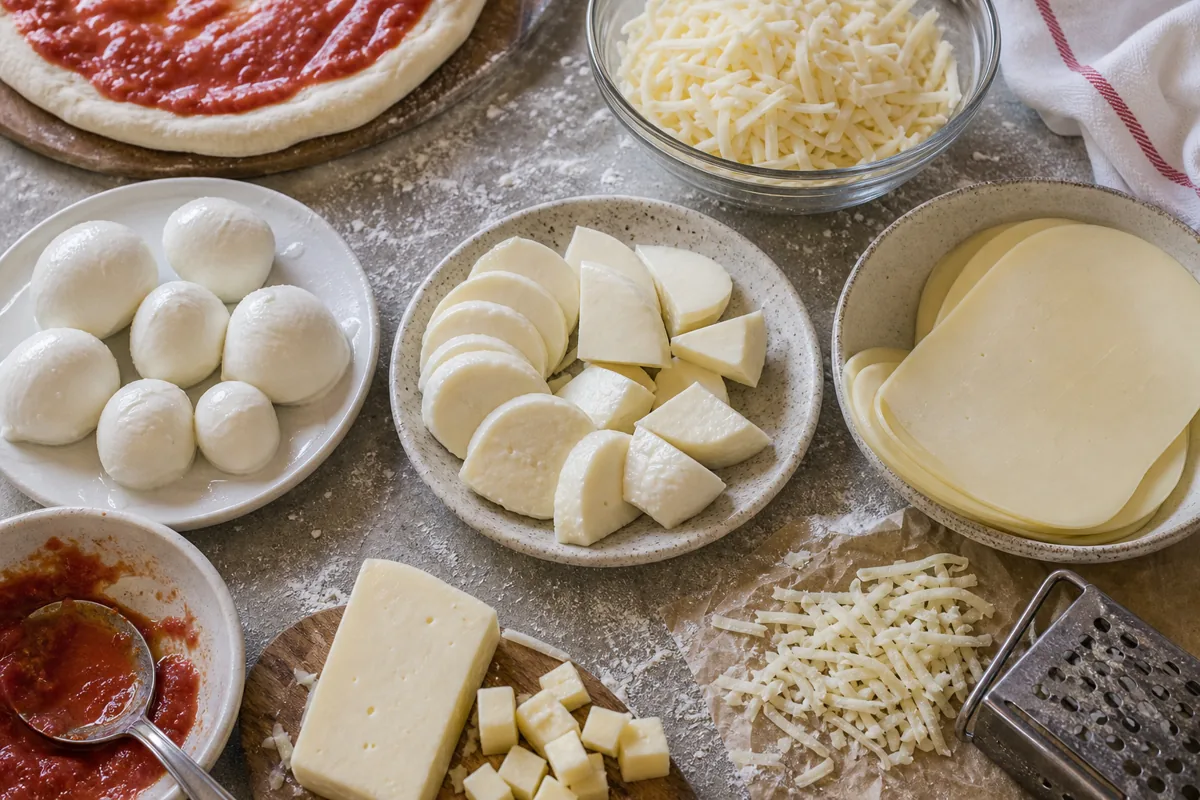
Package format is another clue because a block you shred yourself usually melts more evenly than coated pre-shredded cheese, while brine-packed pieces belong to fresh service or careful post-bake use.
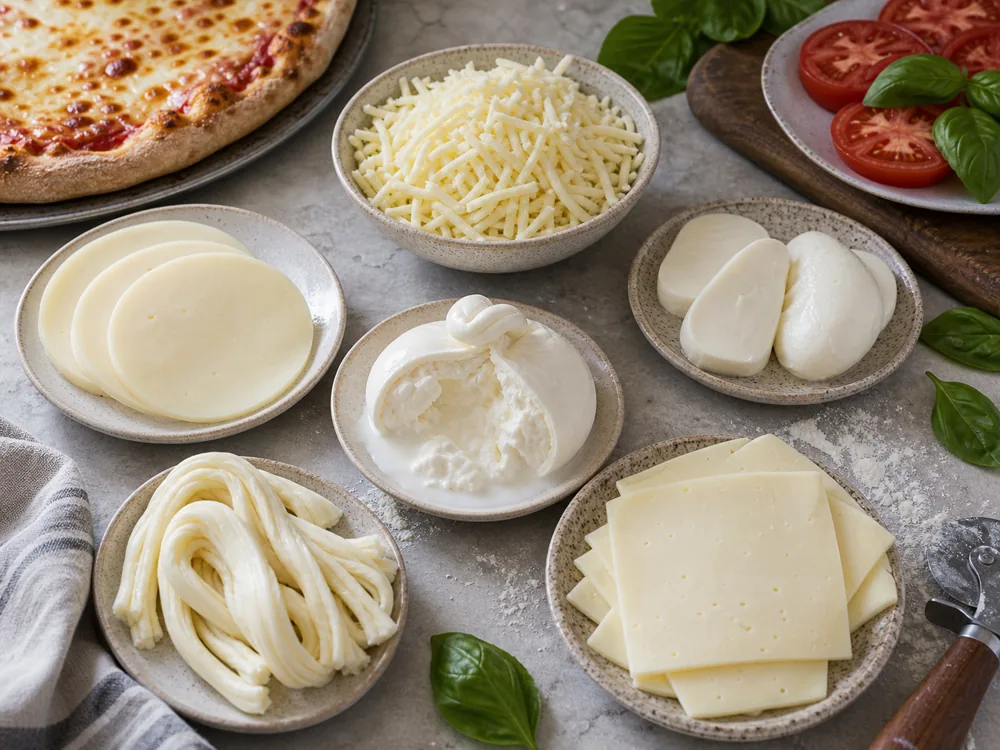
- Pizza: choose provolone, scamorza, or Oaxaca because they stretch and brown.
- Caprese: choose burrata because it keeps the fresh, milky experience.
- Lasagna: choose provolone, Monterey Jack, or fontina because they melt into layers.
- Cold pasta salad: choose burrata pieces, bocconcini, or ricotta salata depending on moisture.
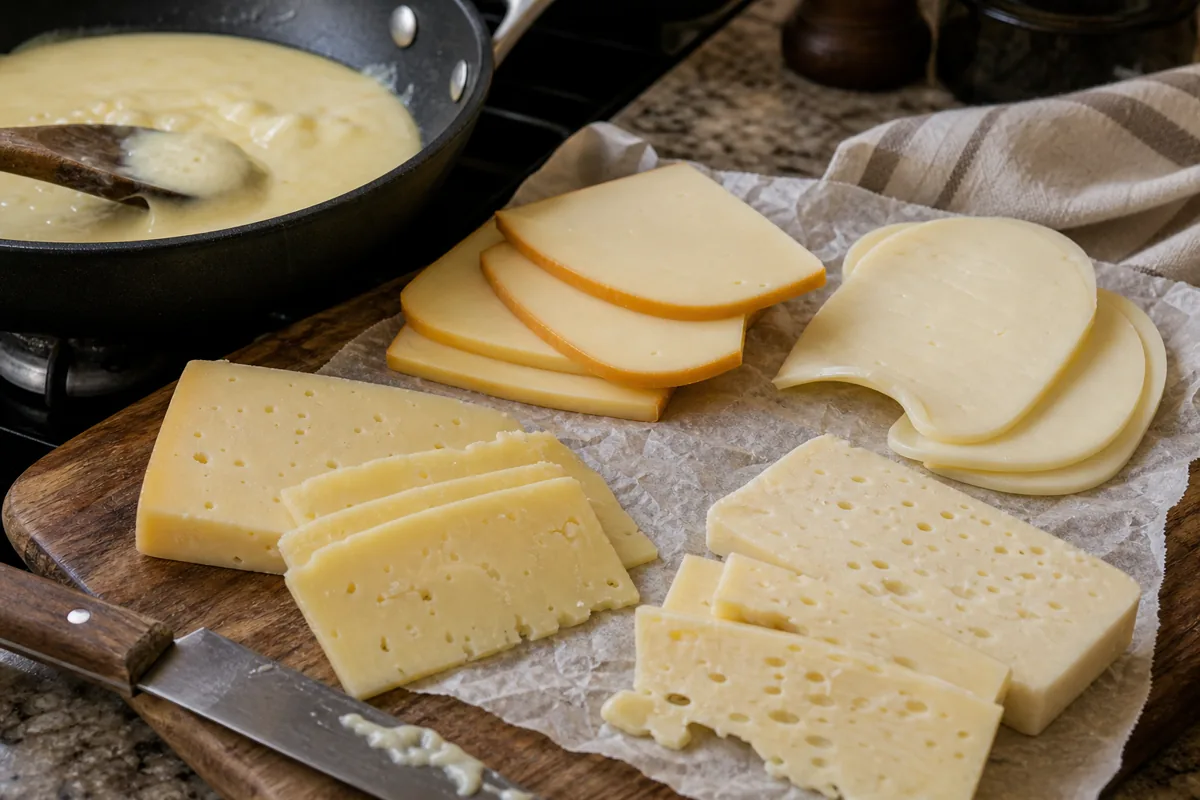
If the recipe depends on visible pull, stay close to the stretched-curd family. Young provolone melt, Italian scamorza, and Oaxaca strands behave more like mozzarella than cheddar or feta because their curd structure was stretched during production.
8 Mozzarella Substitutes: Best Alternatives for Pizza and Baking
1. Provolone
For pizza, provolone is the safest mozzarella substitute because it melts in a sheet, stretches when the slice is lifted, and does not release much water. Use slices or freshly shredded mild provolone at the same volume as low-moisture mozzarella.
2. Scamorza
Scamorza gives pizza a more savory Italian result, while smoked scamorza adds a light campfire note that suits mushroom, sausage, pepper, or white pizza better than a delicate tomato-basil pie.
3. Oaxaca
Oaxaca is useful when slice lift matters more than browning, but it can hold more moisture than low-moisture mozzarella. Tear it into small strands and use it as a stretch helper rather than the whole layer on a wet tomato pizza.
Keep the cheese layer modest when trying a substitute for the first time because extra cheese traps steam and makes moisture problems look like a failure of the dough or oven.
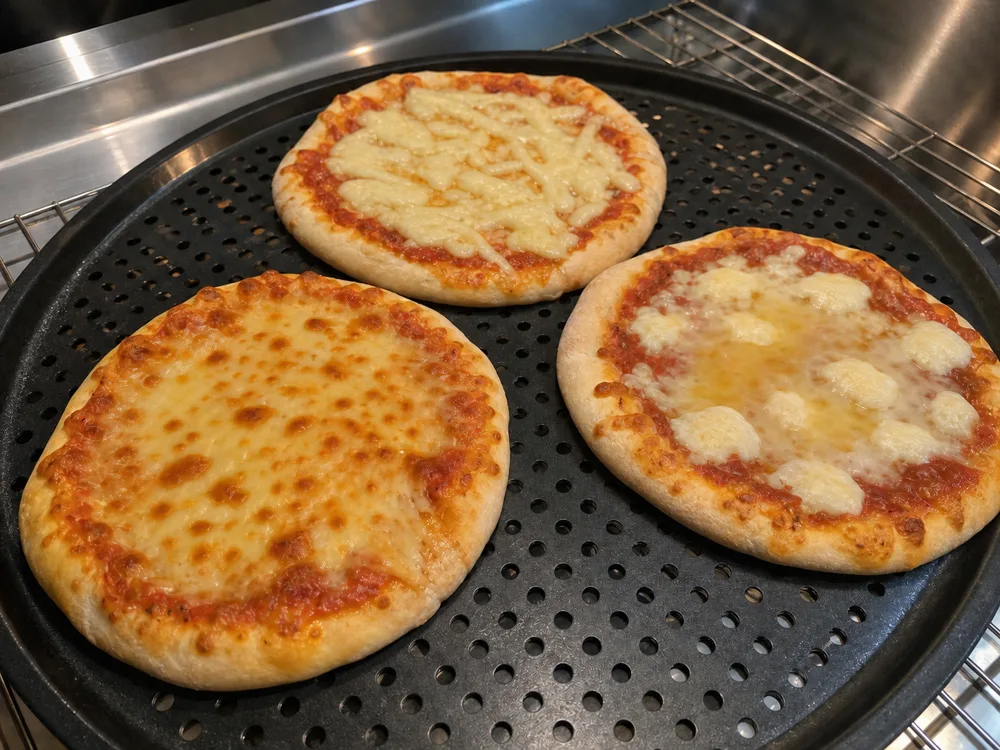
Fresh mozzarella and burrata can still belong on pizza, but they are not clean oven substitutes. Drain fresh pieces first, use fewer slices, and add burrata after baking so the center becomes a creamy finish instead of a watery layer.
Pat drained fresh pieces dry and keep wet vegetables or sauce under control, since several small sources of water can combine into a soft center even when each ingredient looks harmless alone.
A pizza blend works best when every cheese has one purpose, such as provolone for stretch, Jack for smooth coverage, and a small amount of hard grating cheese for seasoning.
4. Burrata
Cold mozzarella dishes need softness, milkiness, and clean moisture, not stretch. Burrata is the closest practical substitute because it keeps a mozzarella shell while adding cream and shredded curd inside.
Bocconcini or fior di latte-style balls are better than aged sliced cheese when the plate is tomato, basil, olive oil, and salt. They keep the dish fresh instead of turning it into a sandwich-cheese plate.
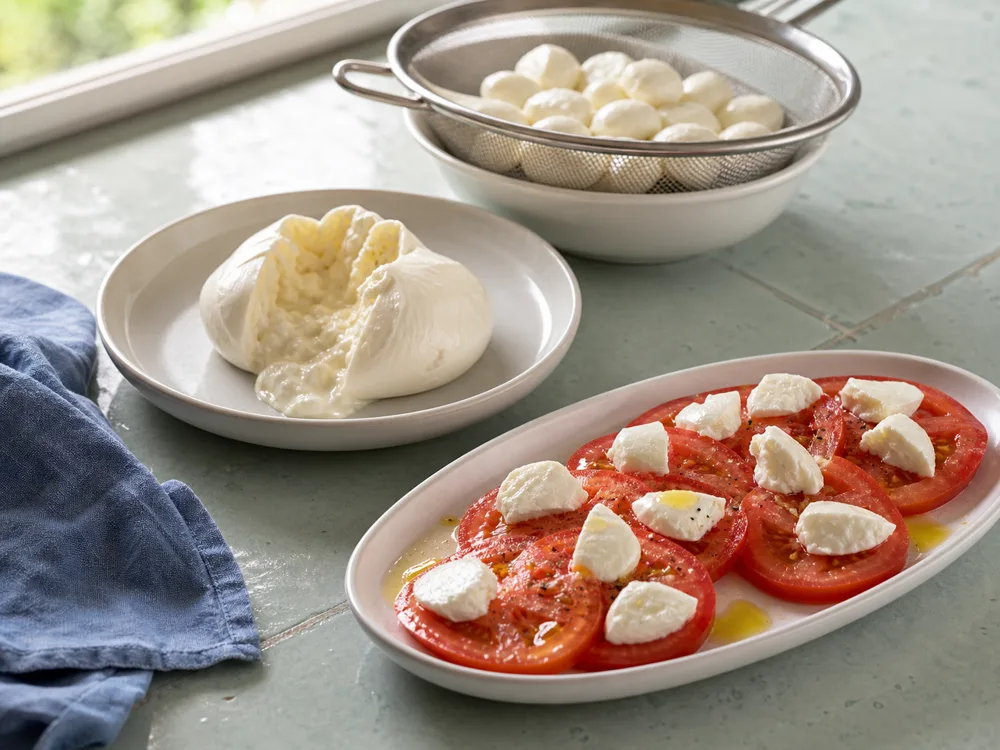
Let the sieve remove surface brine before the cheese reaches the plate, then add salt after tasting because brine-packed substitutes can already season the tomatoes.
For caprese, do not use provolone just because it wins for pizza. Use burrata, bocconcini, or another fresh mozzarella-style cheese so the tomato stays the main flavor.
- Burrata: best for tomato plates, bruschetta, and post-bake pizza.
- Bocconcini: best when you need small fresh bites in salad or skewers.
- Ricotta salata: best when the dish can handle a salty crumble instead of a soft slice.
- Marinated tofu: useful for dairy-free cold plates, but it will not taste like fresh mozzarella.
Burrata and fresh mozzarella overlap most in cold service. The tradeoff is richness: burrata tastes more luxurious, but it can make a simple tomato plate heavier.
Burrata also loses its cream center once cut, so open it near serving time.
5. Monterey Jack
Monterey Jack gives baked pasta a mild, smooth melt when stretch matters less than even coverage. Shred a block rather than using coated pre-shredded cheese, and use it 1:1 for low-moisture mozzarella.
Jack is less elastic than mozzarella, so blend it with provolone when a lasagna or pizza still needs visible pull.
6. Fontina
Fontina is the richer choice for white lasagna, spinach bakes, and creamy pasta. Use about 15 percent less when it is the only cheese because its butteriness can make the dish feel heavier.
Use fontina with a thick sauce that can carry the extra richness. A loose tomato sauce usually works better with drier provolone.
7. Young Gouda
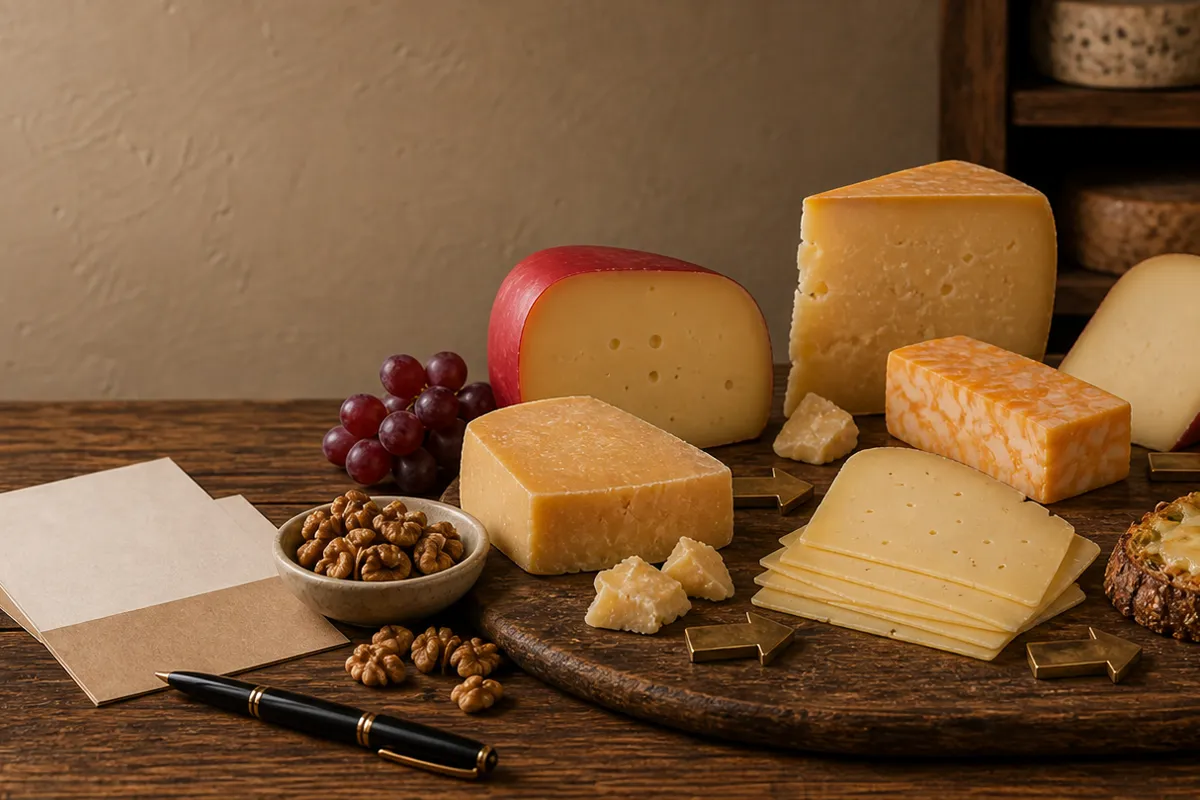
Young Gouda melts smoothly and adds a slight sweetness. It works best in a pizza blend with provolone, because Gouda alone covers the surface without matching mozzarella's stretch.
Choose a young, supple wedge. Aged Gouda is too firm, sweet, and intense for this job.
8. Ricotta Salata
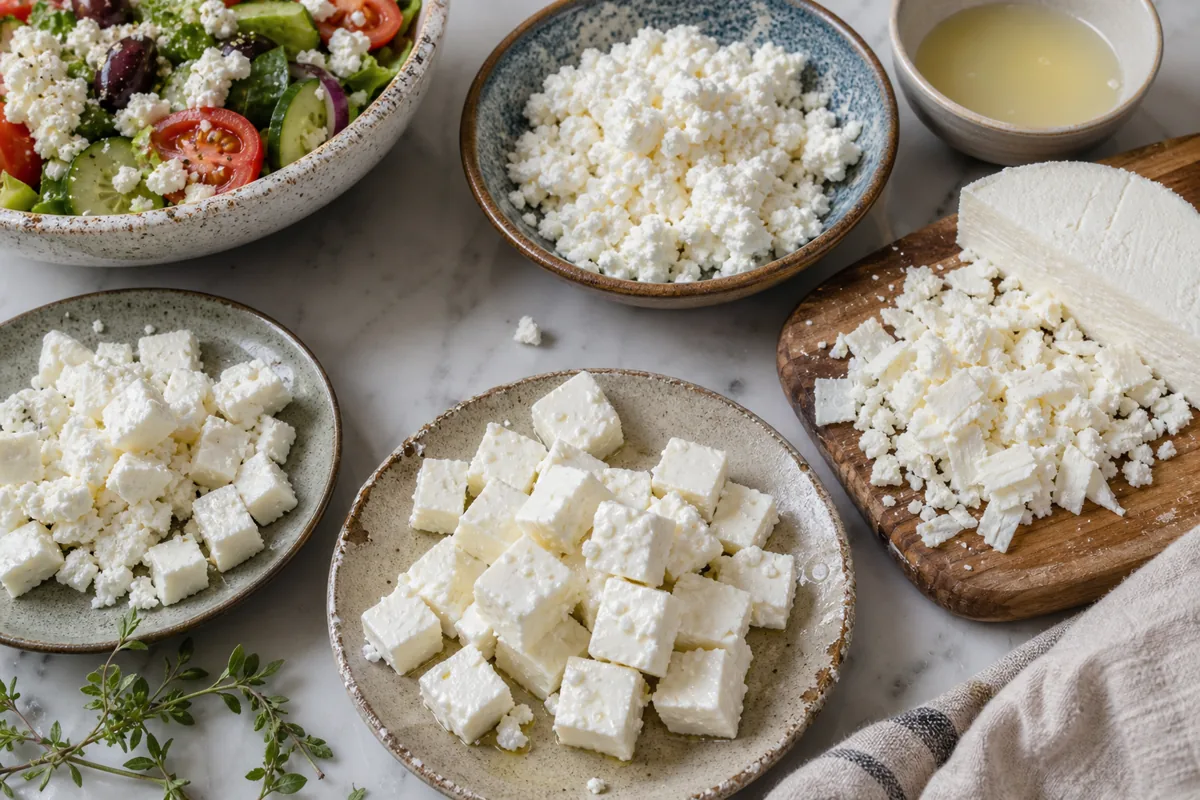
Ricotta salata replaces mozzarella only when the cheese is a cold garnish on salad, pasta, or grain bowls. Crumble it sparingly because it is saltier, drier, and does not melt.
Do not use it for pizza or a baked cheese layer. It supplies a firm white accent rather than mozzarella's soft melt.
Do Dairy-Free Mozzarella Substitutes Actually Work?
Most dairy-free mozzarella substitutes can soften and brown without dairy mozzarella's stretch.
For cold dishes, marinated tofu or cashew ricotta gives you a white, mild, seasoned element, but it is a different food. Make the dressing stronger with olive oil, lemon, salt, basil, and tomato juice so the plate still has purpose.
Best dairy-free substitute for hot dishes
Use cashew mozzarella-style shreds or rounds
They melt and brown better than most firm tofu options, though the stretch remains limited.
Best dairy-free cold plate
Use marinated tofu or cashew ricotta
These options take seasoning well and work with tomatoes, herbs, and olive oil instead of pretending to be fresh mozzarella.
Dairy-free pizza benefits from restraint. Use less substitute than you would dairy cheese, bake hot enough for browning, and add olive oil or basil after the oven for flavor.
Test a small portion after it cools for several minutes because some plant-based products look fluid from the oven and then become waxy or firm before the slice is eaten.
Check the ingredient base because coconut-oil shreds often melt fast but can taste waxy as they cool, while cashew or almond-based rounds may taste cleaner and brown less. Choose according to whether the recipe needs hot pizza coverage, a cold white element, or a creamy baked layer.
Can You Use Cheddar or Blue Cheese Instead of Mozzarella?
Cheddar, blue cheese, feta, and goat cheese can all be good cheeses, but they do not replace mozzarella's neutral job. They add tang, salt, funk, or oil in places where the recipe often needs a quiet melt.
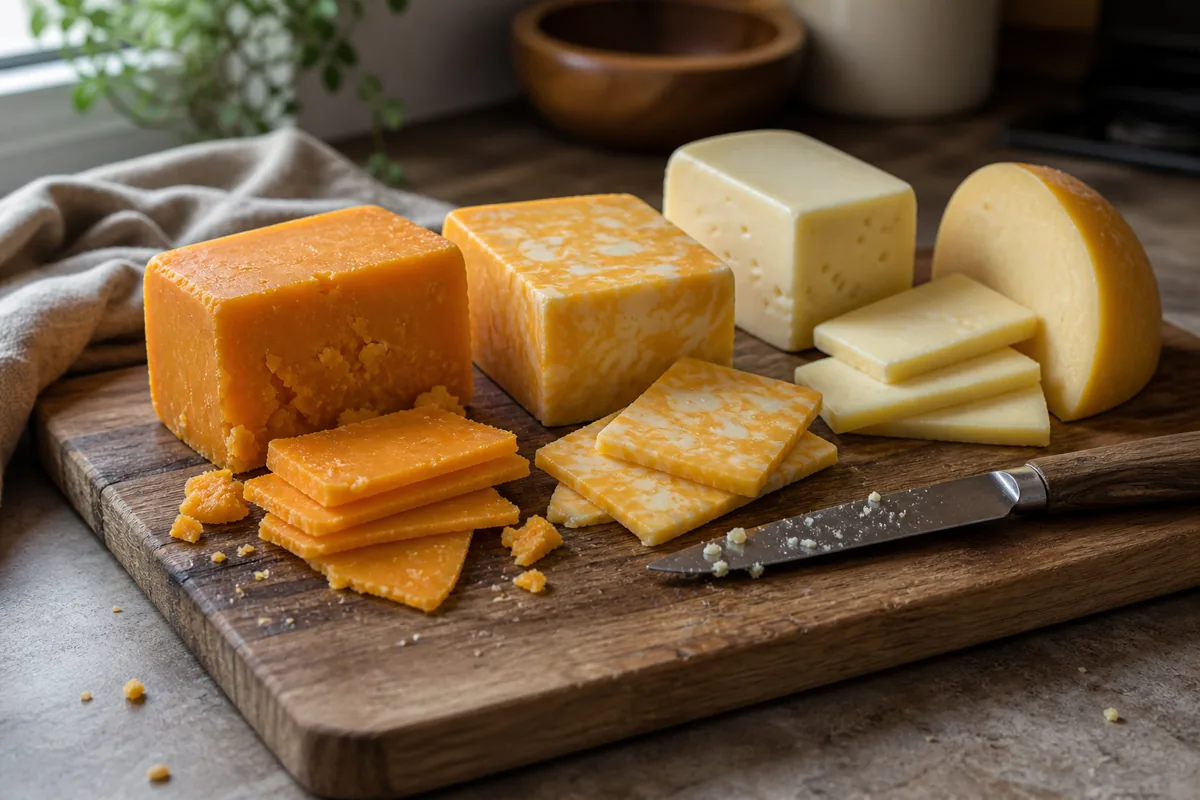
Cheddar is a common pizza mistake because it melts without mozzarella's stretch and can turn greasy under high heat, so keep it to a small flavor blend with provolone or Jack.
- Feta: use only for salty crumble, not for melt or stretch.
- Blue cheese: use as a topping accent because its salt and mold flavor dominate.
- Parmesan: use as a finishing cheese after the main melt is solved.
What Ratio and Storage Rules Apply to Mozzarella Substitutes?
Use most hot mozzarella substitutes at a 1:1 ratio by volume. The exceptions are fontina, which tastes richer, and burrata, which should be added after cooking rather than measured into the oven layer.
Opened substitute blocks dry quickly once cut. Wrap firm cheeses in cheese paper or parchment inside a loose container, and keep fresh cheeses in their liquid if they came packed in brine.
Store firm melting blocks separately from brine-packed fresh substitutes because one needs protection from drying while the other needs its original liquid and a tightly closed container.
For leftovers, the same cheese storage rules apply: protect the cut face, avoid airtight plastic against the cheese for long storage, and use fresh substitutes quickly.
SOURCES & REFERENCES
What Else Do People Ask About Mozzarella Substitutes?
These are the practical questions that decide which substitute belongs in the recipe.
Mild provolone is the best substitute for mozzarella on pizza because it melts in a sheet, stretches well, and carries little excess water. Choose scamorza for more savory flavor or Oaxaca for more pull.
Burrata is the richest fresh mozzarella substitute for caprese, while bocconcini or fior di latte-style balls give cleaner individual pieces. Provolone makes the plate firmer and more sandwich-like.
Yes, Monterey Jack can replace mozzarella in baked pasta, casseroles, quesadillas, and casual pizza because it melts smoothly and tastes mild, although it stretches less than mozzarella or provolone.
Cheddar can melt, but it is not a close mozzarella substitute when stretch matters. Keep it as a minor flavor accent because it browns faster, releases more oil, and gives the dish a sharper profile.
Cashew-based mozzarella-style shreds or rounds are usually the best dairy-free substitute for hot dishes. For cold tomato plates, use marinated tofu or cashew ricotta and season it well with olive oil, lemon, salt, and herbs.