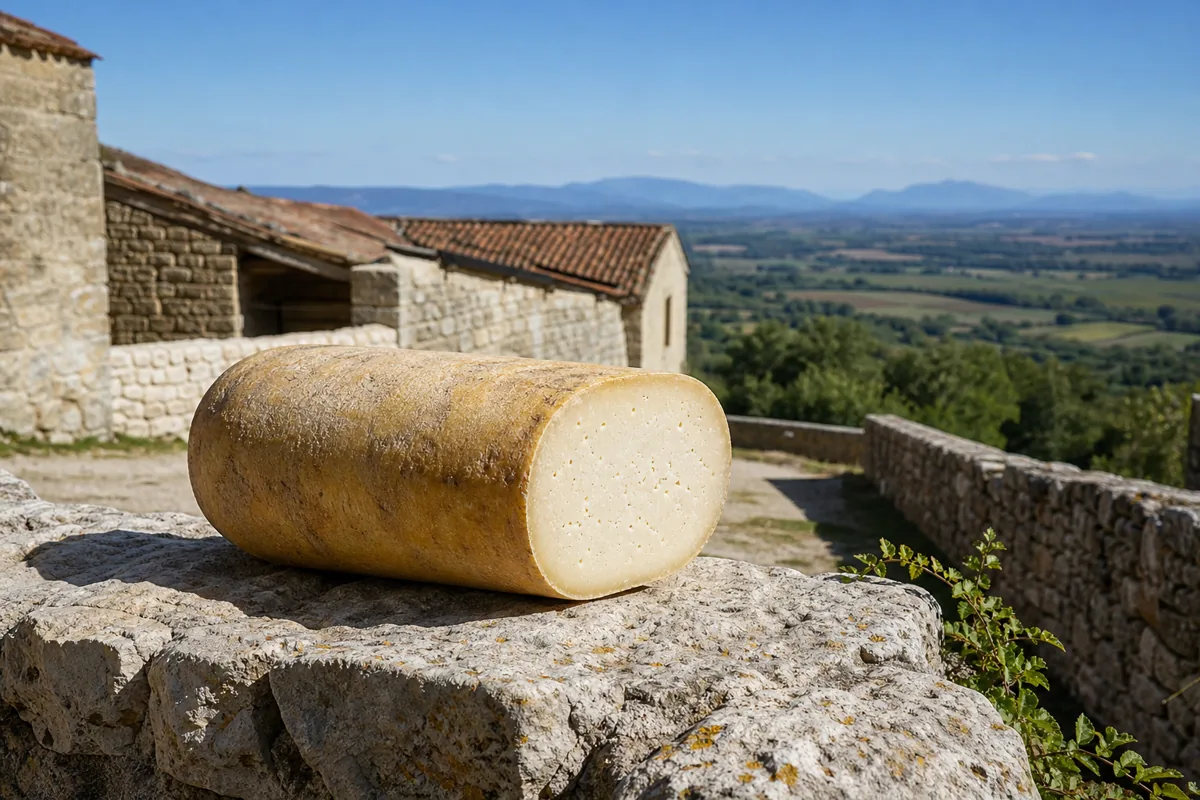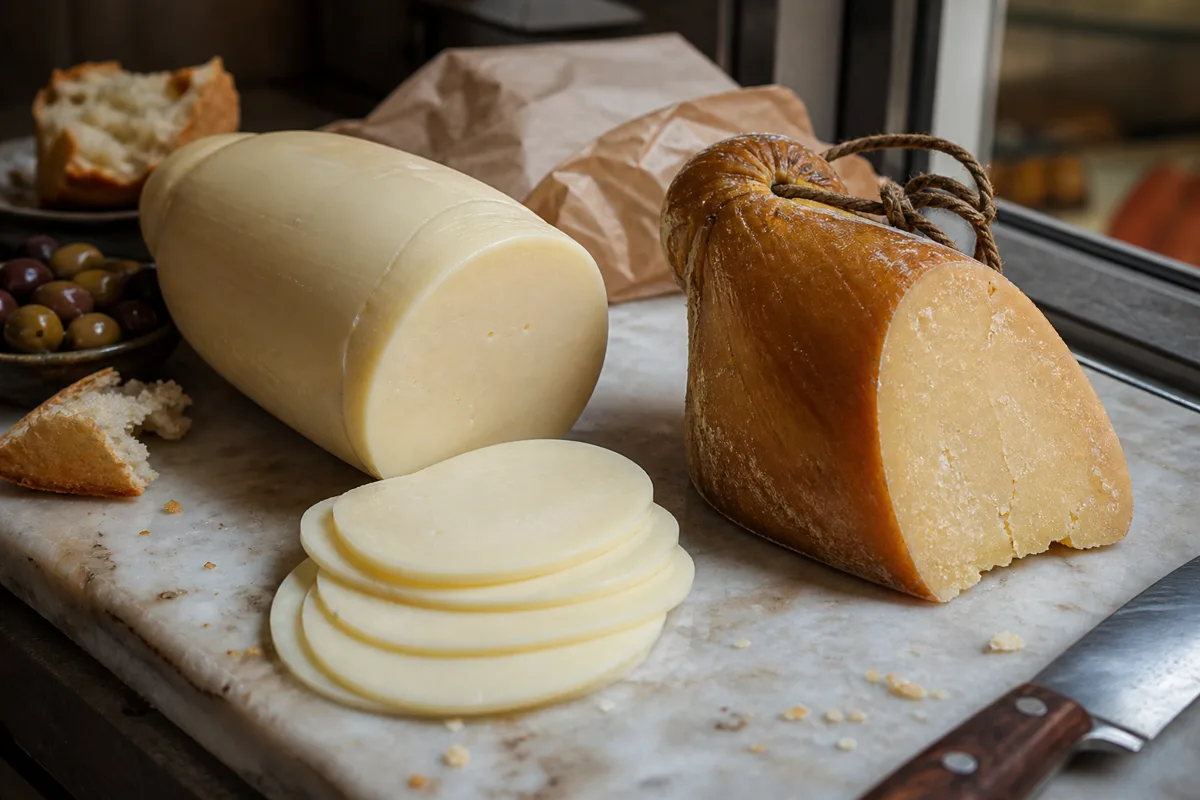
Provolone is two cheeses in one name inside the Italian stretched-curd family. Provolone Dolce is young, mild, and melts into smooth, stretchy pools on sandwiches and pizza.
Provolone Piccante is aged, sharp, and crumbles over pasta like a southern Italian Parmesan.
Understanding this split is the key to using Provolone correctly. It belongs beside mozzarella and caciocavallo, but its aging range gives it versatility that fresh mozzarella cannot match.
In This Article
What Is Provolone?
The curd is stretched the way mozzarella's is. This is a semi-hard, pasta-filata cow's milk cheese from Italy.
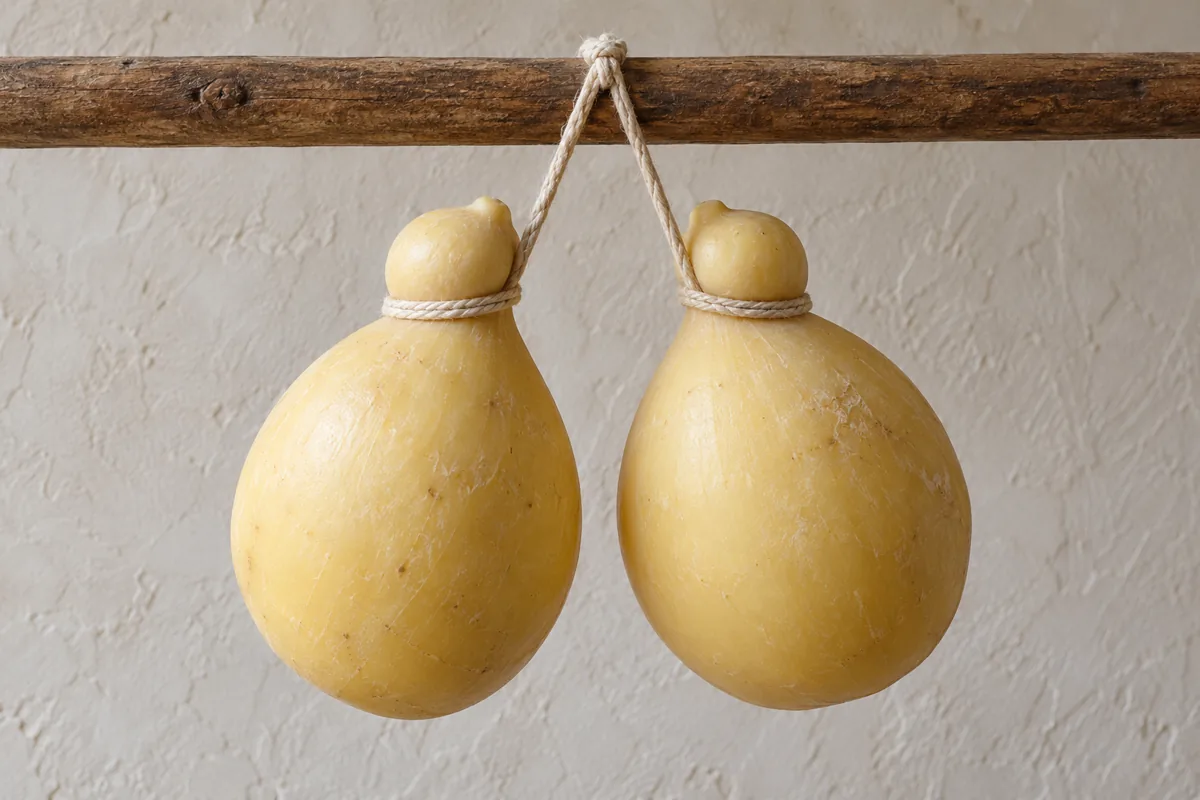
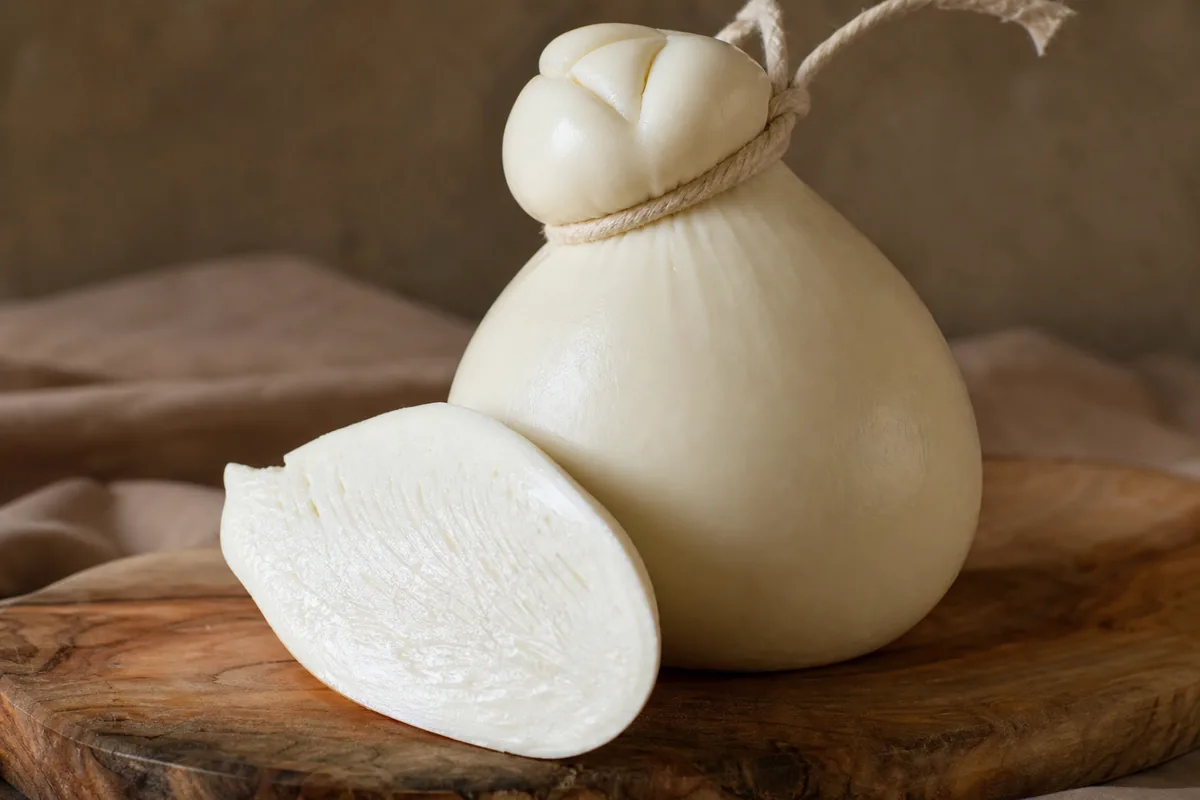
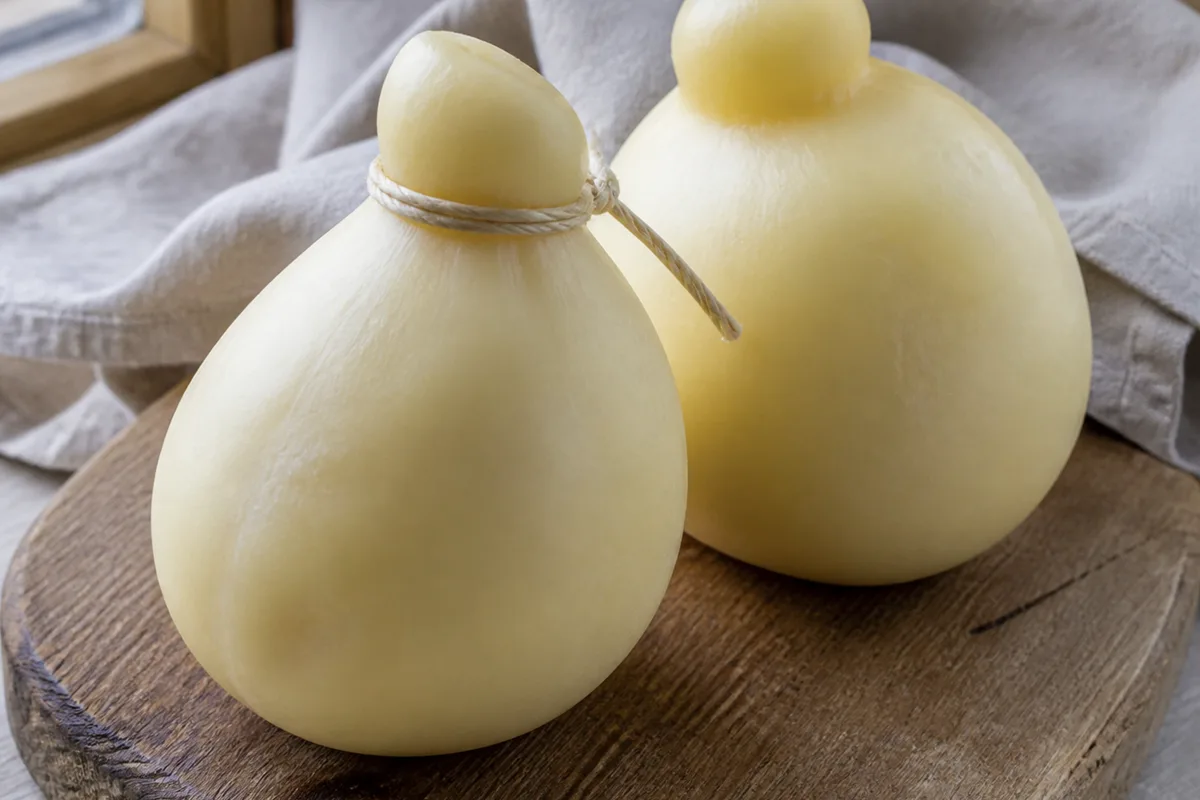
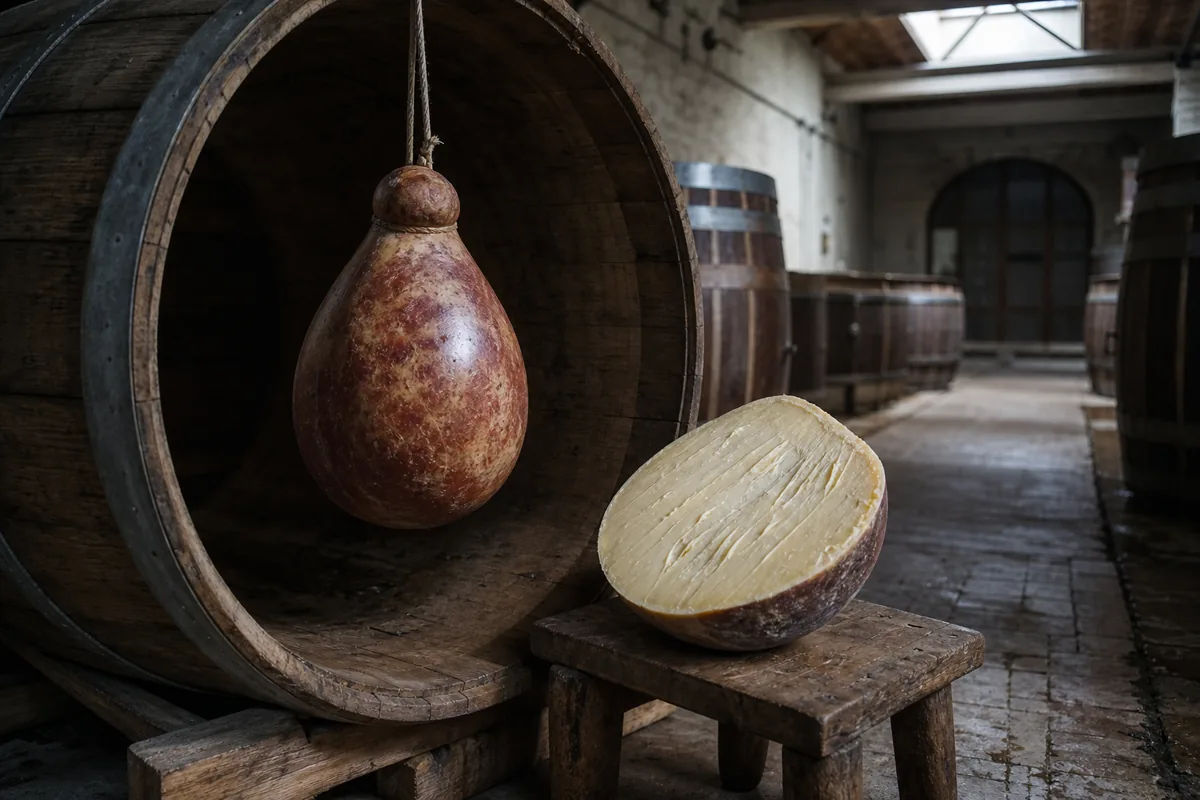
The curd is stretched in hot water (the same technique used for mozzarella), then shaped, tied with rope, and hung to age.
The cheese originated in southern Italy, likely in Basilicata or Campania. During the 19th century, production migrated north to the Po Valley in Lombardy and Veneto, where the modern DOP versions are made today.
- Dolce (sweet/mild) -- aged 2-3 months, smooth, mild, great for melting
- Piccante (sharp) -- aged 4-12+ months, firm, sharp, for grating and boards
- Pasta-filata method -- curd stretched in hot water before shaping
- Rope-hung aging -- wheels hang from ropes instead of sitting on shelves
- Traditional shapes -- pear, sausage, cone, and melon, each hand-formed
The Provolone Valpadana DOP specification was granted in 1996. It covers production in Lombardy, Veneto, Emilia-Romagna, and Trentino-Alto Adige.
A separate DOP, Provolone del Monaco, was established in 2010 for a specific style from the Sorrento Peninsula in Campania, made from the milk of Agerolese cattle.
The rennet type creates the flavor split. Dolce uses calf rennet, which produces a mild, clean flavor.
Piccante uses goat or lamb rennet (lipase-rich), which produces the sharp, piquant bite that gives the style its name. This is not just an aging difference.
It is a fundamentally different enzyme at work.
Dolce or Piccante: Which Should You Buy?
The two styles of Provolone are different enough to be treated as separate cheeses in the kitchen. Buying the wrong one for your recipe produces a noticeably different result.
This describes Provolone Dolce. Piccante is saltier, far more savory, distinctly bitter, and much less creamy as the paste firms and dries with age.
- Dolce texture -- smooth, supple, sliceable, melts into elastic, stretchy pools
- Dolce flavor -- mild, buttery, slightly sweet, clean finish
- Piccante texture -- firm, dense, crumbly at long ages, dry and granular
- Piccante flavor -- sharp, piquant, spicy bite from goat/lamb rennet, lingering finish
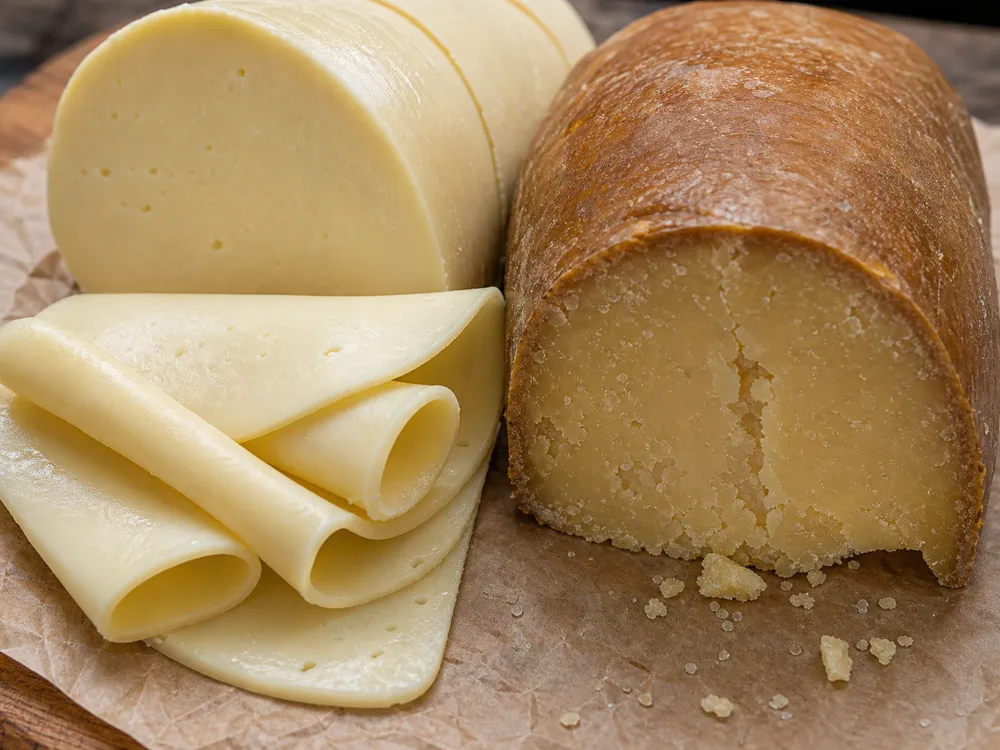
At the deli counter in American grocery stores, most sliced Provolone is Dolce (or a domestic mild version). It is the Provolone used on Philly cheesesteaks, Italian subs, and deli sandwiches.
Piccante is harder to find in the US. Look for it at Italian specialty stores or cheese shops.
The label should say "Piccante" or "Provolone Stagionato." If the cheese is sold pre-sliced in the deli case without further description, it is almost certainly Dolce.
To taste the Dolce-Piccante difference side by side, buy a slice of deli Provolone and a wedge of aged Provolone Piccante from a cheese shop. Eat them 10 minutes apart at room temperature. The mild, buttery Dolce and the sharp, spicy Piccante taste like they come from different animals, even though both start with cow's milk.
How Is Provolone Made?
Production follows the pasta-filata stretching tradition shared by mozzarella, rope-hung caciocavallo, and scamorza. The defining step is stretching the acidified curd in hot water until it becomes elastic and smooth.
What makes Provolone unique is what happens after stretching: the cheese is shaped by hand into traditional forms, tied with rope, and hung to age suspended from the ceiling.
- Acidify the milk -- natural whey starters develop the acidity needed for stretching
- Rennet and set the curd -- calf rennet for Dolce, goat/lamb rennet for Piccante
- Stretch in hot water -- curd is pulled and kneaded at 80-85 degrees C until smooth
- Shape by hand -- traditional pear, sausage, or cone shapes formed while the curd is warm
- Brine and tie -- immersed in salt brine, then tied with cord for hanging
- Hang to age -- suspended from ropes in aging rooms for 2-12+ months
The hanging method is not decorative. Gravity affects the aging process.
A wheel resting on a shelf develops a flat spot where moisture collects. A hanging wheel ages uniformly on all sides, producing an even rind and consistent paste texture throughout.
Traditional shapes carry cultural significance. The pear shape (pera) is the most common.
The sausage shape (salame) is used for larger wheels. The melon shape (melone) can weigh 50-100 kilograms and ages for years in some cellars.
Each shape produces slightly different aging characteristics because the surface-to-volume ratio varies.
Which Provolone Melts and Which One Slices?
The right Provolone for the job depends entirely on whether you need Dolce (melting, sandwiches) or Piccante (grating, boards). Using Piccante on a cheesesteak or Dolce on a cheese board gives a wrong result.
| Use | How It Works |
|---|---|
| Philly Cheesesteak | Provolone Dolce is the traditional choice for an authentic Philly cheesesteak. It melts over the hot steak without overpowering the beef. Lay thin slices on the hot meat and let residual heat do the work. |
| Italian Subs | Dolce slices layered with capicola, salami, and mortadella on a hoagie roll. The mild flavor supports the cured meats without competing. A deli counter staple. |
| Pizza | Dolce shredded as a mozzarella blend component. It adds stretch and a subtle tang. Mix 70% mozzarella with 30% Provolone Dolce for a more complex pizza cheese. |
| Cheese Board (Piccante) | Aged Piccante cut into wedges for a cheese board. It stands alongside Parmesan and aged Cheddar at the sharp end of the board. Pair with olives, dried fruit, and aged balsamic. |
| Grating (Piccante) | Well-aged Piccante grates over pasta, risotto, and soups. Use it as an alternative to Parmesan when you want a sharper, more pungent finish with a slight spicy kick. |
- Dolce for melting -- cheesesteaks, subs, pizza blends, grilled sandwiches
- Dolce for layering -- lasagna, eggplant parmesan, baked pasta dishes
- Piccante for boards -- sharp wedges with olives, honey, and dried fruit
- Piccante for grating -- over pasta, soups, and risotto as a Parmesan alternative
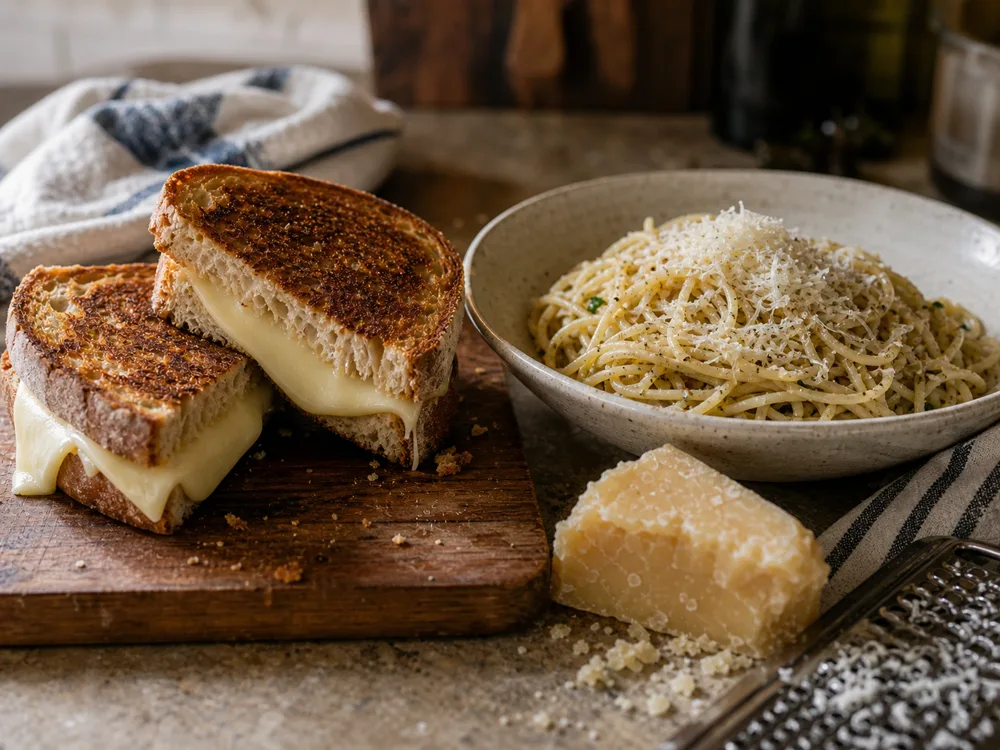
Provolone Dolce melts smoothly and stretches well because the young paste retains moisture and the calf rennet produces a clean, elastic melt. For hot sandwich melts, Dolce ranks among the best for grilled applications.
All of this describes Provolone Dolce. Piccante is too firm and dry to melt well, and both its flavor and its sharpness climb steeply.
They are genuinely different cheeses in use.
In American deli culture, Provolone Dolce is the default sandwich cheese for Italian-style subs alongside spicy pepper Jack and Swiss. Its mild flavor and good melting properties make it the most versatile deli option for hot sandwiches.
What Pairs With Each Style?
Pairing depends on the style. Dolce pairs like a mild cheese and Piccante like a sharp aged one.
They call for different accompaniments.
That split matters most when you decide whether Provolone is acting as a quiet support cheese or the thing the table is supposed to notice. Dolce disappears nicely into an Italian sub, a beer-and-sandwich lunch, or a casual snack plate.
Piccante needs the opposite treatment. Give it sharper companions, smaller bites, and enough contrast to keep the finish from feeling flat.
| Pairing | Type | Why It Works |
|---|---|---|
| Chianti Classico (Piccante) | Wine | Medium-bodied Tuscan red with cherry fruit and moderate tannins. The acidity matches Piccante's sharp bite. A classic Italian wine-and-cheese combination. |
| Lager or Pilsner (Dolce) | Wine | A clean, crisp lager refreshes the palate after Dolce's mild creaminess. This is the natural pairing for Provolone on a cheesesteak or Italian sub. |
| Salami and Capicola | Food | Italian cured meats are Provolone's natural partners. Dolce supports the meats on a sandwich. Piccante stands equal to them on a board. |
| Olives and Roasted Peppers | Food | Briny olives and sweet roasted red peppers complement both styles. The olive salt plays against the cheese, and the pepper sweetness softens any sharpness. |
| Aged Balsamic (Piccante) | Food | A few drops of aged balsamic vinegar on a chunk of Piccante. The concentrated sweetness and acidity of good balsamic brings out the best in aged Provolone. |
- Dolce -- lager, crisp whites, cured meats, pickled vegetables, mustard
- Piccante -- Chianti, Barolo, aged balsamic, olives, dried fruit, honey
- Both styles -- Italian bread, roasted peppers, olive oil
Provolone Dolce is a team player. It enhances other flavors without demanding attention.
Piccante is a solo performer. Give it space on the board beside aged Parmesan wedges and pair it with ingredients that match its intensity.
If you are building one table for both styles, treat them as two different stops instead of one cheese line. Put Dolce near bread, pickled vegetables, and deli meats where people can stack bites quickly.
Move Piccante toward olives, balsamic, and a firmer red wine so the sharper flavor reads clearly instead of getting lost.
How Do You Store Provolone?
The cut face is the part to protect. It stores well because its lower moisture content compared to fresh cheeses resists spoilage.
Dolce and Piccante have slightly different storage timelines.
- Wax paper or cheese paper -- the best wrapping for both styles
- Dolce dries out faster -- higher moisture means shorter shelf life once cut
- Piccante stores like hard cheese -- lower moisture gives it a longer window
- Both freeze well -- slice or shred before freezing for cooking applications
If you buy Provolone at a deli counter, ask for it sliced to order and use the slices within a week. Pre-sliced and packaged Provolone from the refrigerated section lasts longer because the sealed environment prevents drying, but check the sell-by date.
Semi-firm cheese storage keeps provolone from drying at the cut face while limiting trapped moisture near the rind.
What Replaces Provolone?
Substitutes depend on which Provolone you need to replace. Dolce and Piccante require different swaps.
The easiest mistake is chasing the name instead of the job. A sandwich cheese needs the same smooth melt and mild salt level as Dolce, while a finishing cheese needs the firmer texture and sharper edge of Piccante.
If the replacement gets those two things wrong, the dish changes fast even when the cheese still looks "Italian" on paper.
- Low-moisture mozzarella for Dolce -- similar melt, milder flavor, widely available
- Fontina for Dolce -- creamier alpine melt, nuttier, excellent on sandwiches and in baked dishes
- Aged Asiago for Piccante -- sharp aged Asiago, granular, similar intensity, good for grating
- Caciocavallo for Piccante -- same pasta-filata family, similar sharp aged character
For a low-moisture mozzarella and Provolone blend on pizza, you can swap the Provolone portion with young Gouda or Fontina without a major flavor shift. The key is matching the melt behavior and the mild flavor profile.
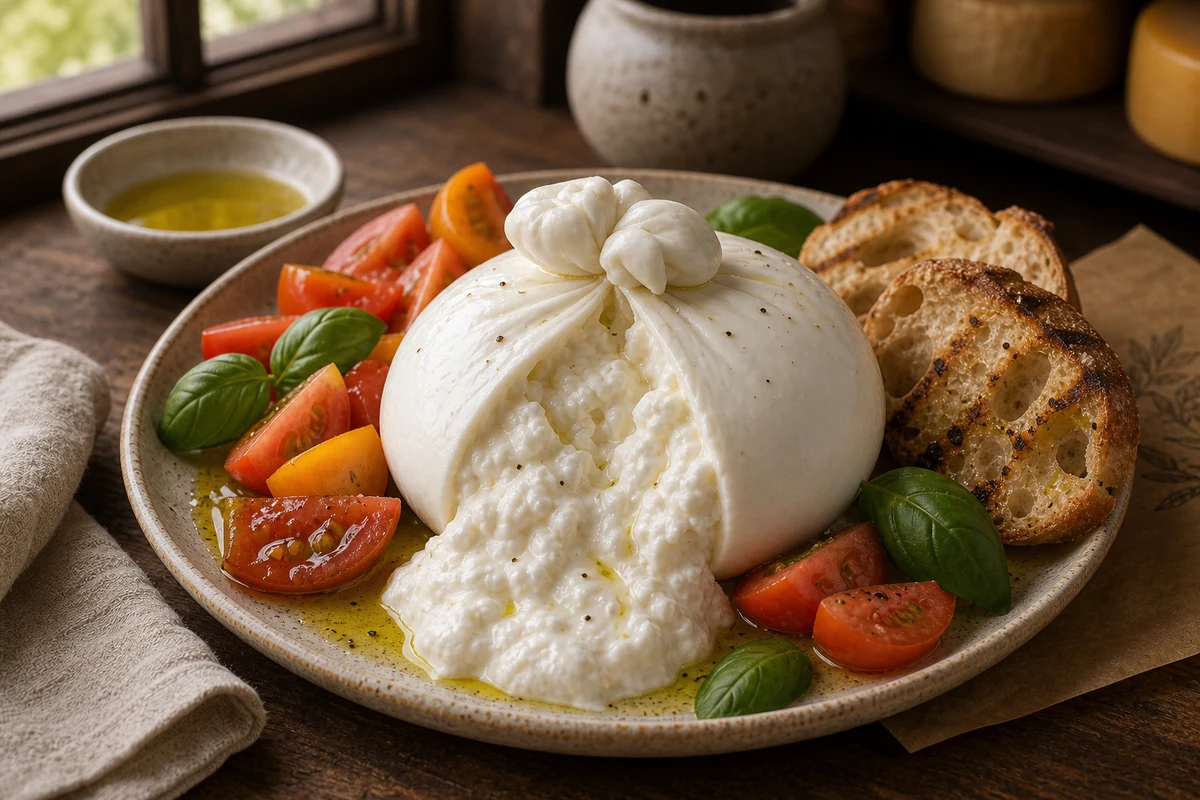
Avoid fresh mozzarella, burrata, or very soft washed-rind cheeses when a recipe expects Provolone. They bring too much moisture and not enough structure.
At the sharp end, Parmesan can cover the salty aged-cheese job, but it will not mimic Piccante's firmer slice-and-grate middle ground, so use it as a flavor replacement, not a direct one-to-one texture swap.
How Does Age Change the Nutrition?
The figures sit in the middle range for cheese nutrition. It is lower in fat than triple-creme cheeses and higher than fresh cheeses like fresh ricotta tubs.
- Low lactose -- aging converts most lactose, especially in Piccante
This makes it a practical addition to sandwiches and meals where protein intake matters.
The CDC lists unheated cheese sliced at a deli as riskier and deli-sliced cheeses heated to 165°F or until steaming hot as safer.
Lactose is low in Provolone, especially Piccante. The aging process breaks down lactose over months.
Dolce aged 2-3 months retains slightly more lactose than Piccante aged 6-12 months, but both are well-tolerated by most lactose-sensitive individuals.
SOURCES & REFERENCES
What Do People Ask Most About Provolone?
Nearly every Provolone question turns on which of the two styles is in the wrapper.
Age, rennet, and flavor. Dolce is aged 2-3 months with calf rennet, producing a mild, smooth, elastic cheese that melts well.
Piccante is aged 4-12+ months with goat or lamb rennet, producing a sharp, firm, crumbly cheese with a spicy bite. They look similar but taste and behave very differently in the kitchen.
Provolone Dolce is one of the best melting cheeses available. It melts smoothly, stretches well, and has a mild flavor that supports other ingredients.
It is the traditional choice for Philly cheesesteaks and Italian subs. Provolone Piccante does not melt well because the aged, dry paste crumbles rather than flows.
Provolone Dolce can substitute for low-moisture mozzarella in most cooked applications. It melts similarly and adds a slightly stronger flavor.
For fresh applications like caprese salad, mozzarella and Provolone are not interchangeable because the textures are completely different. On pizza, a blend of mozzarella and Provolone Dolce produces a more complex flavor than either cheese alone.
The sharp, spicy flavor comes from the rennet. Provolone Piccante uses goat or lamb rennet, which contains lipase enzymes that break down fat into pungent compounds during aging.
Calf rennet (used in Dolce) lacks these lipase enzymes, which is why Dolce stays mild even after months of aging. The rennet choice is the primary flavor driver.
Sliced Provolone Dolce from the deli lasts 7-10 days wrapped in wax paper or a zip-lock bag. A whole vacuum-sealed piece lasts 2-3 months.
Provolone Piccante, being drier and harder, lasts 3-4 months as a wedge wrapped in wax paper. If surface mold develops on Piccante, trim a quarter inch past the mold and eat the rest.
Mold on sliced Dolce means discard the affected slices.