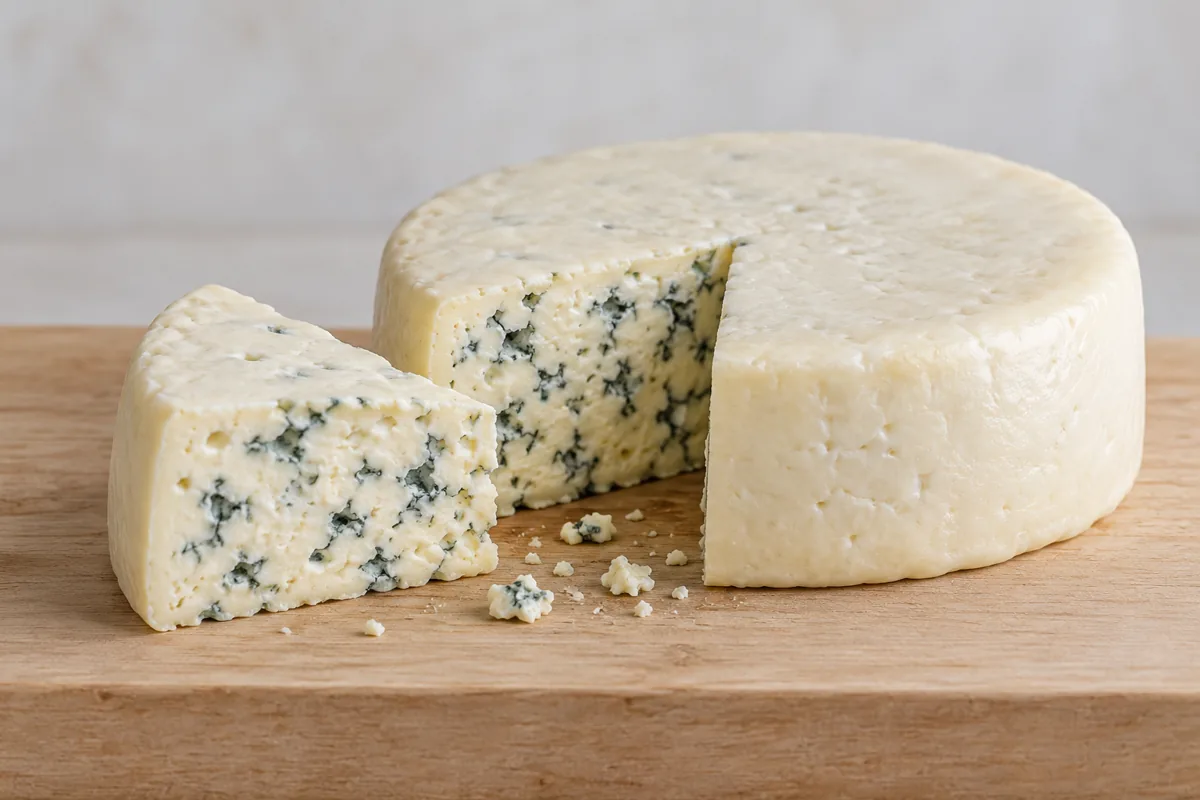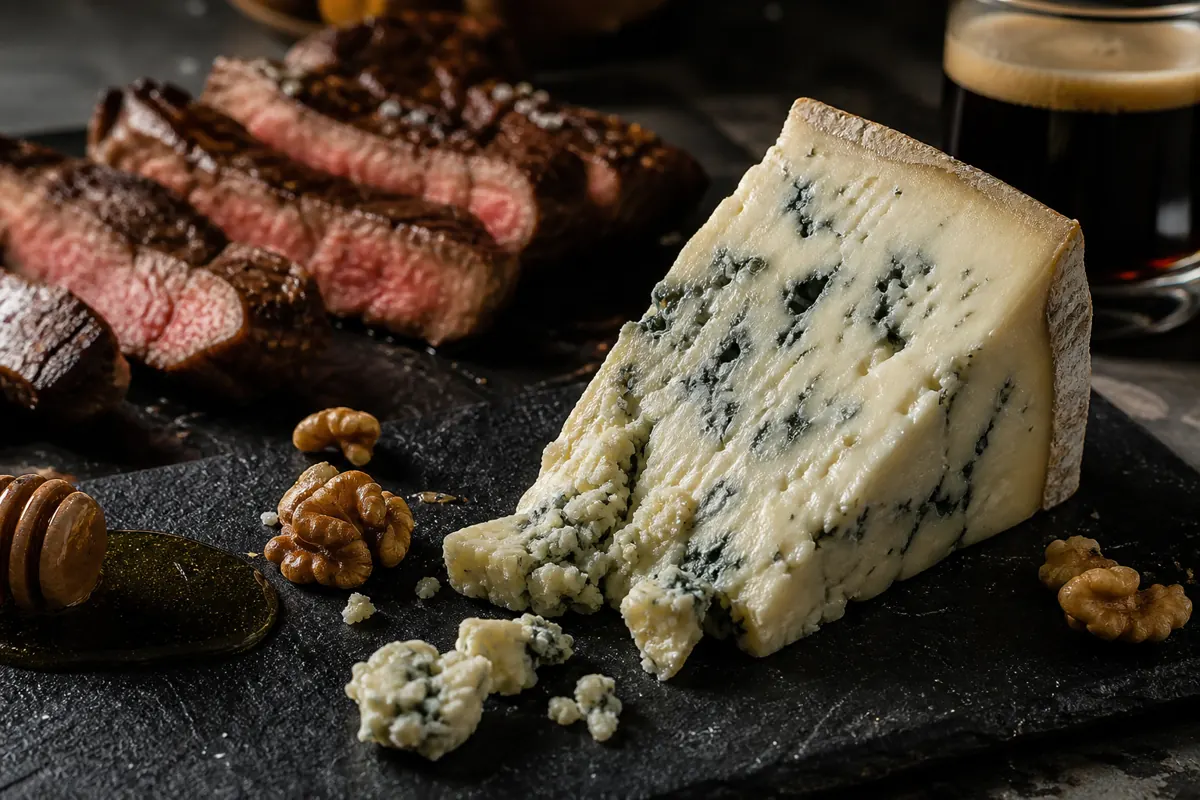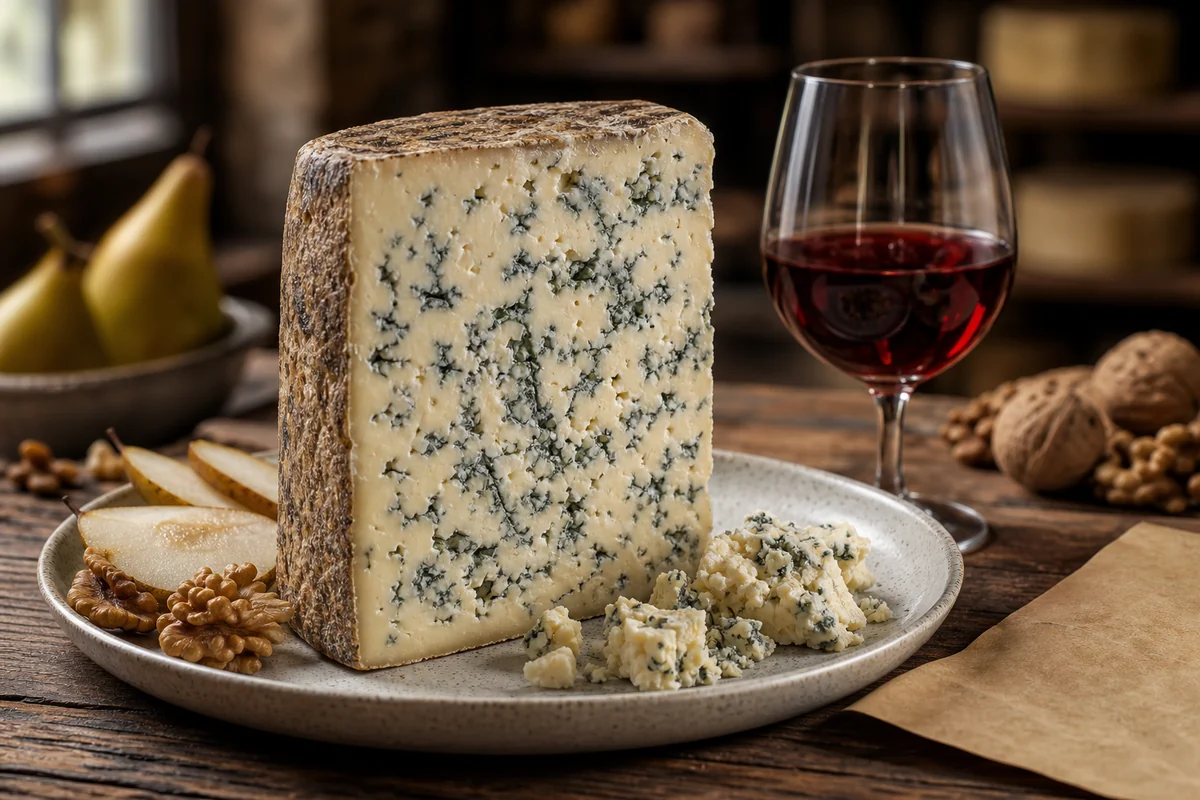
Among British blue cheeses, Stilton is England's most celebrated cheese and one of only a handful of British foods with PDO protection. The blue-veined version is what most people mean when they say "Stilton," though a rarer White Stilton also carries the PDO.
The blue veining delivers a sharp, mineral tang that sits on top of a buttery, crumbly base, and the combination has made Stilton the traditional partner for port wine since at least the 18th century. It sits with other English and British cow's milk cheeses, but its blue veining makes the eating job much more specific.
Only six dairies in three English counties hold licenses to produce Blue Stilton PDO. The cheese cannot legally be made anywhere else, not even in the village of Stilton in Cambridgeshire, which gave the cheese its name but falls outside the protected production zone.
This geographic restriction makes Stilton one of the most tightly controlled PDO cheeses in Europe.
In This Article
What Is Stilton?
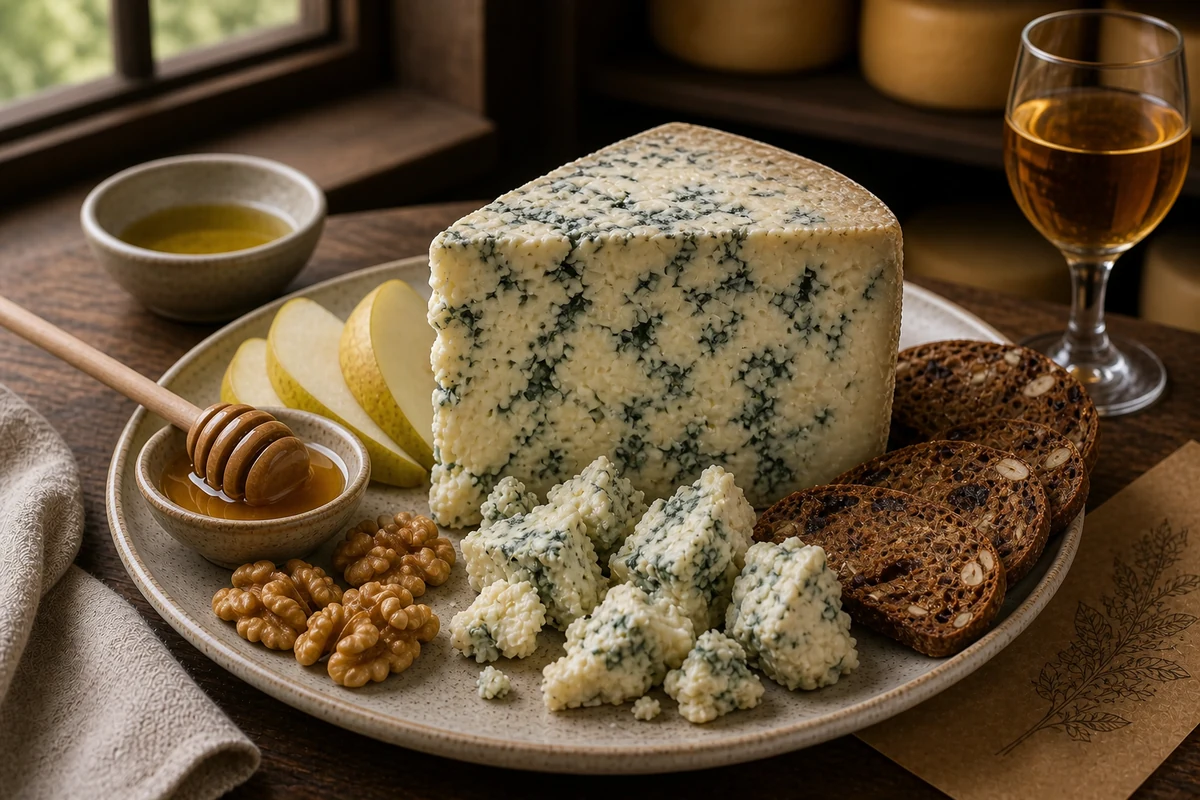
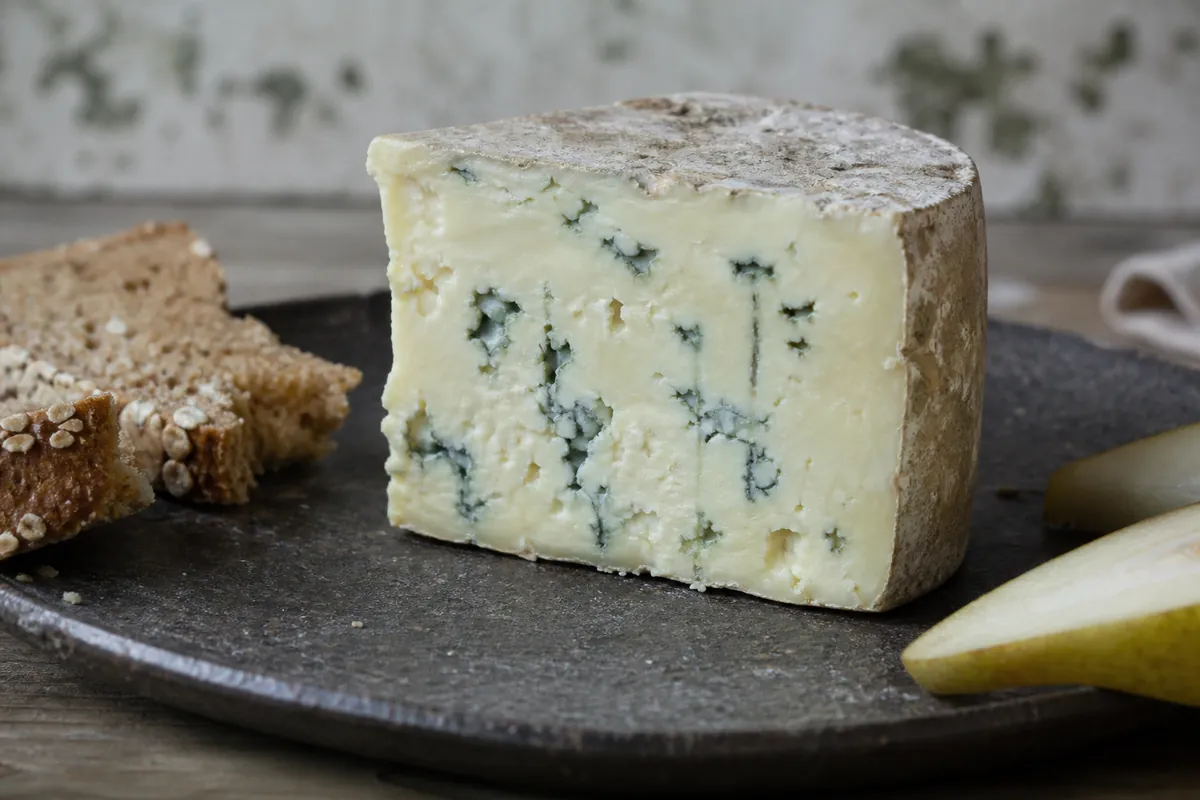
Blue Stilton is a semi-soft to firm cow's milk cheese with Penicillium roqueforti blue mold veining throughout the paste. The blue veining develops naturally along cracks and fissures created during production, producing irregular blue-green streaks that radiate from the center outward.
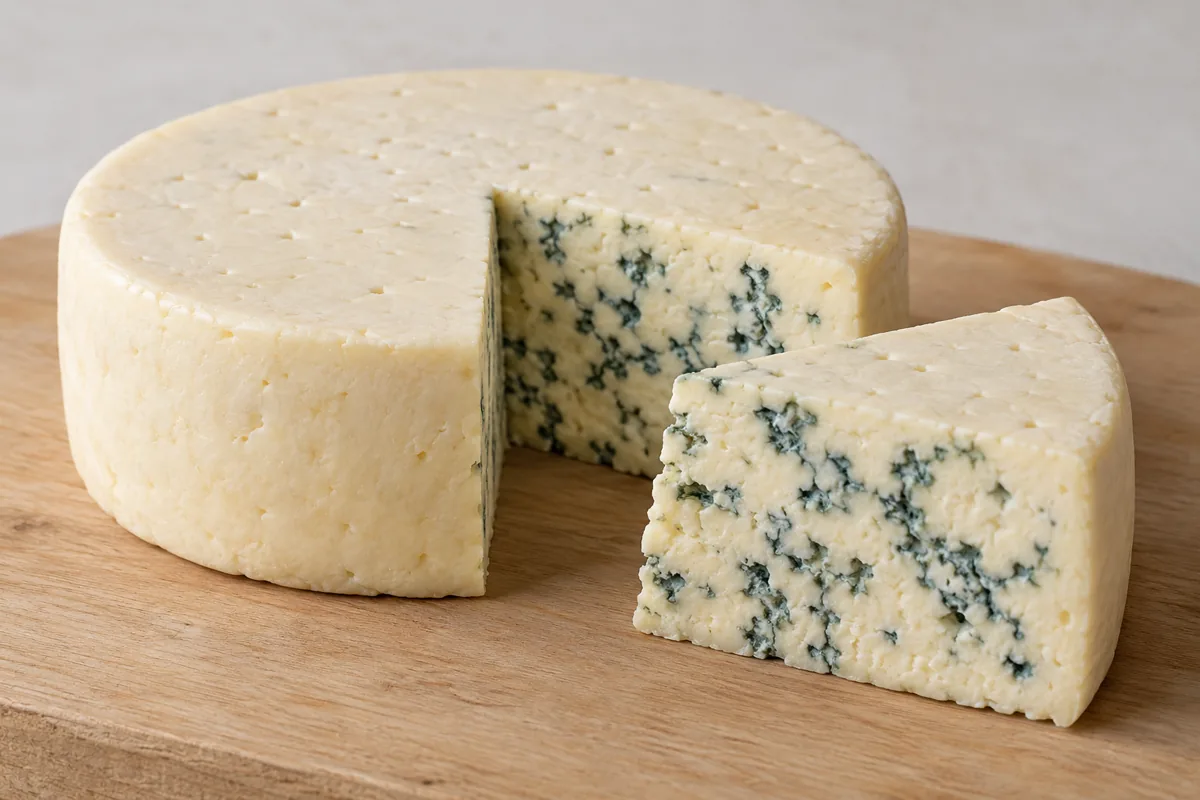
No two wheels have the same veining pattern, which separates it from the cleaner paste in Danish blue wheels.
PDO rules restrict production to Derbyshire, Leicestershire, and Nottinghamshire. The milk must come from local herds and must be pasteurized.
Unlike most blue cheeses worldwide, Stilton's PDO specifically requires pasteurization, which means raw-milk Stilton cannot carry the PDO name. This rule has generated ongoing debate, with some cheesemakers producing raw-milk blue cheeses in the same style but selling them under different names like Stichelton.
The six licensed dairies produce roughly 1 million wheels per year. Each wheel weighs about 8 kilograms and ages for a minimum of 9 weeks, though most are sold at 12 to 16 weeks when the blue veining has fully developed and the paste has reached the right balance of creamy and crumbly.
- Origin - three English counties: Derbyshire, Leicestershire, and Nottinghamshire
- Milk - pasteurized cow's milk from local herds only
- Blue mold - Penicillium roqueforti, developing along natural fissures in the paste
- Licensed dairies - only six in the world may produce Blue Stilton PDO
- Key trait - the rind is never pierced; blue veining follows natural cracks, creating unique patterns
One production detail separates Stilton from most other blue cheeses: the wheels are never pierced with needles to introduce air into the paste. In Roquefort and Gorgonzola, long needles are pushed through the wheel to create channels where blue mold can grow.
Stilton relies instead on natural fissures that form as the loosely packed curd settles and compresses. The mold colonizes these fissures without mechanical intervention, which produces an irregular, organic veining pattern rather than the uniform radial lines seen in pierced blues.
White Stilton is a separate PDO product: the same base cheese without blue mold inoculation, sold young at 4-6 weeks. It is crumbly, mild, and slightly sour. Fruit-flavored versions (apricot, cranberry, lemon) are popular holiday gifts in the UK. White Stilton is a fundamentally different eating experience from Blue Stilton.
What Does Stilton Taste Like?
The flavor of Blue Stilton operates on two layers. The base paste is buttery, rich, and mildly tangy, similar to a high-quality aged Cheddar.
The blue veining adds a sharp, mineral, metallic tang that intensifies toward the center of the wheel where the veining is densest. Eating a bite from the edge (more paste, less blue) tastes dramatically different from a bite near the center.
The texture varies across a single cross-section. Near the rind, the paste is softer and creamier because moisture migrates outward during aging.
At the center, the paste is drier and more crumbly. The blue veins themselves are slightly softer than the surrounding paste, creating tiny pockets of concentrated flavor.
Savory depth and salt dominate, with significant bitterness from the Penicillium roqueforti. The bitterness is a feature, not a flaw.
It gives Stilton its characteristic sharpness and makes it one of the few cheeses that can stand up to port wine's intense sweetness without being overwhelmed.
- 9-10 weeks: Mild blue flavor, creamy paste, gentle tang. The blue veining is developing but not dominant.
- 12-14 weeks: Full blue character with sharp mineral tang. Crumbly center, creamy edges. The classic eating stage.
- 16+ weeks: Intense, pungent, and very crumbly throughout. Strong ammonia notes near the rind. For blue cheese enthusiasts.
The crumbly center of a well-aged Stilton is prized by affineurs. When the paste breaks into irregular shards rather than cutting cleanly, it indicates proper moisture loss and protein breakdown.
This crumble is what makes Stilton ideal for scattering over salads and soups, where the irregular pieces melt at different rates and create varied flavor intensity in each bite.
How Does Stilton Get Its Blue Veins?
The production method is unusual among blue cheeses because the blue mold develops without mechanical piercing. The process relies on deliberately loose curd packing that creates air pockets for the Penicillium roqueforti to colonize.
After the curd is cut and drained, it is ladled into moulds by hand rather than pressed. The hand-ladling leaves irregular air gaps between the curd pieces.
Over the first few days, the curd settles under its own weight but never compresses into a solid mass. These gaps become the fissures where blue mold grows.
- Hand-ladle into moulds - curd is spooned in loosely, creating air gaps
- Drain without pressing - the curd settles under its own weight over 5-6 days
- Coat with salt - wheels are hand-rubbed with salt to form the rind and control moisture
- Age at 10-12 degrees C - the cool, humid environment lets blue mold colonize the internal fissures
- Turn regularly - each wheel is turned daily to ensure even moisture distribution
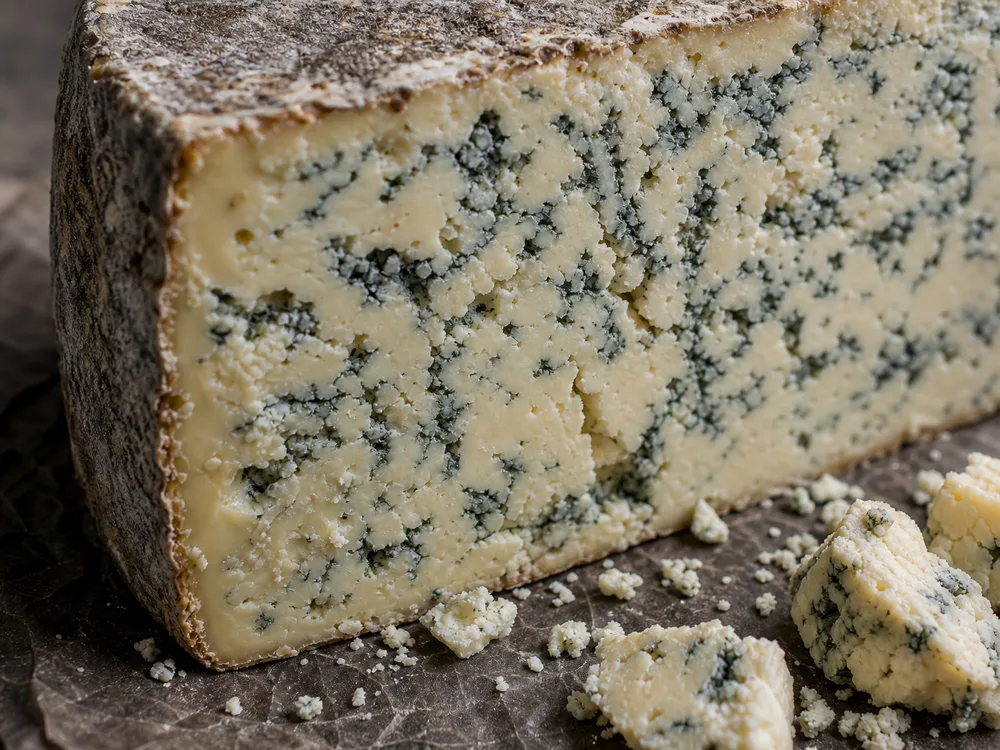
The Penicillium roqueforti spores are added to the milk before coagulation. They remain dormant until the cheese is moved to the aging room, where the temperature and humidity activate germination.
The spores grow along the air-filled fissures, consuming fat and producing the sharp, metallic compounds that define blue cheese flavor.
Piercing creates uniform channels that fill with mold in predictable lines. Stilton's unpierced fissures are irregular and branch naturally through the paste, producing a more complex, web-like veining pattern. Each wheel develops differently depending on how the curd was ladled and how it settled. This natural variation is why two wheels from the same dairy, made on the same day, can look and taste slightly different.
The rind forms during the first two weeks of aging as salt drawn to the surface crystallizes and dries into a rough, grey-brown crust. The rind is edible but intensely flavored, with a stronger ammonia note than the interior paste.
Most people trim it, though some cheesemakers argue the rind carries the most complex flavors in the wheel.
Port is classic because sweetness softens salt and blue-mold bite. The same balance drives sweet wine with blue cheese from Sauternes, sherry, and late-harvest whites.
For burgers, Stilton needs restraint because the salt can dominate beef. It works best as a small blue burger topping with bacon or black pepper.
How Do You Cook With Stilton?
Think of it as a finishing ingredient or a featured cheese rather than a background component. Its intensity means a small amount goes a long way.
Crumbling it over a dish adds concentrated bursts of sharp, salty, umami-rich flavor that no mild cheese can replicate.
| Use | How It Works |
|---|---|
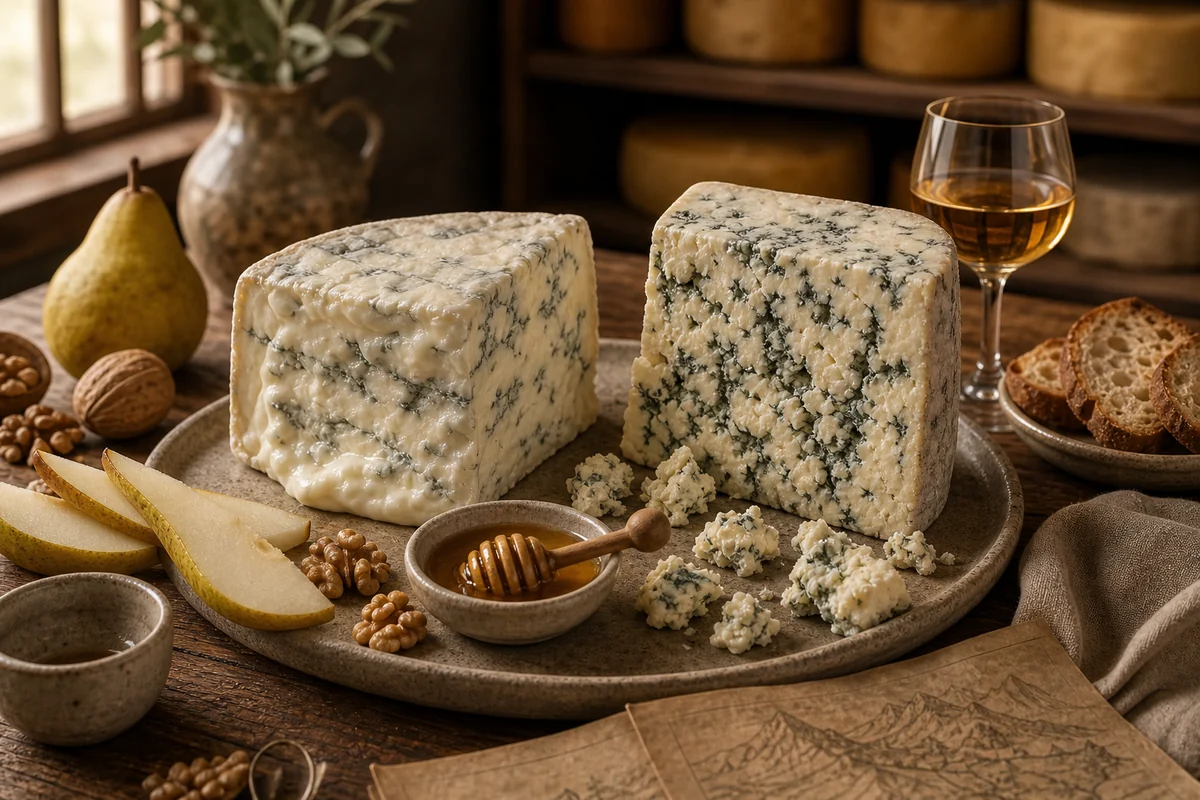
| Cheese Board | The centerpiece of a British cheese board. Serve at room temperature with port, walnuts, and celery. |
| Salad | Crumbled over pear and walnut salad with a light vinaigrette. The blue tang cuts through the sweetness. |
| Soup | Stirred into broccoli or cauliflower soup just before serving. Melts into sharp, creamy pockets. |
| Steak | Crumbled over grilled steak as a finishing garnish. The blue tang and salt replace the need for sauce. |
| Pasta | Stirred into hot penne with cream and walnuts. A small amount creates a pungent, rich sauce. |
| Crackers | Spread on water crackers with a dot of honey for a simple appetizer that showcases the cheese. |
- Cheese board - the anchor of a British board with port, walnuts, and celery
- Salad crumble - scattered over pear, walnut, and bitter green salads
- Soup finisher - stirred into hot soup for sharp, creamy pockets of flavor
- Steak topping - crumbled over grilled beef as a finishing salt with umami depth
When cooking with Stilton, add it at the very end. The blue mold compounds break down rapidly under sustained heat, losing their sharp character and turning bitter.
A brief melt into hot soup or pasta is fine. Baking Stilton into a casserole for 30 minutes wastes most of what makes it worth buying.
For a cheese board, remove Stilton from the refrigerator 45 to 60 minutes before serving. Cold Stilton tastes sharper and more metallic than the same piece at room temperature.
The buttery base notes only emerge when the fat softens, which requires time outside the fridge. Serve alongside strong aged Cheddar for a classic English board progression from mild to bold.
Why Are Port and Stilton Served Together?
The pairing goes back to at least the 1700s, when both were luxury products served at the end of formal English dinners. The pairing works because of a specific flavor interaction: port's residual sugar and fortified alcohol cut through Stilton's salt and fat, while the cheese's sharp blue tang prevents the wine from tasting cloying.
| Pairing | Why It Works |
|---|---|
| Vintage Port | The classic pairing. A 10-to-20-year vintage port with dried fruit and toffee complexity against Stilton's sharp blue tang. The definitive English after-dinner combination. |
| Tawny Port | Nutty, caramel-forward tawny port with 10 or 20 year age statement. Less fruit-forward than vintage port, more oxidative. Works with well-aged, crumbly Stilton. |
| Sauternes or Late-Harvest Riesling | Sweet white wines with enough acidity to balance the blue tang. The botrytis notes in Sauternes complement Stilton's mushroomy undertones. |
| Walnuts and Celery | The traditional English board accompaniment. Celery's crunch and water content cleanse the palate. Walnuts add bitterness that frames the blue. |
| Dark Honey or Fig Jam | Thick, bitter-edged honey or fig jam against the salty, tangy paste. The sweetness tames the blue without hiding it. |
- Vintage port - the definitive pairing, dried fruit and toffee against sharp blue tang
- Tawny port - nutty and caramel-forward, better with very crumbly aged Stilton
- Sweet whites - Sauternes or late-harvest Riesling with enough acidity to balance the salt
- Walnuts and celery - the traditional English board accompaniment
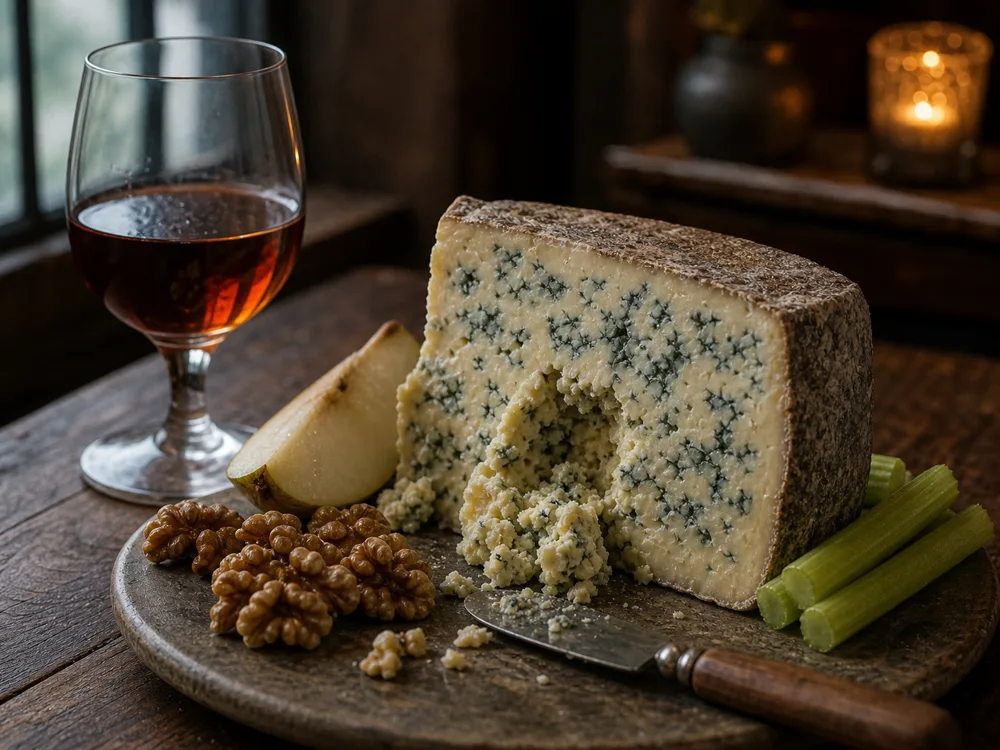
Avoid pairing Stilton with dry red wines. The tannins clash with the metallic compounds in the blue veining, creating a bitter, metallic taste that overwhelms both the wine and the cheese.
If you want a red, choose something low-tannin and slightly sweet, like a Maury or Banyuls from southern France.
The port-and-Stilton tradition typically places both at the end of the meal, after the main course and before dessert. In formal English dining, the Stilton is presented as a whole or half wheel and guests carve their own portions with a cheese scoop or flat blade.
How Do You Store Stilton?
Blue cheese needs slightly different handling than hard cheeses because the blue mold is a living culture that continues developing in the refrigerator. Too much air accelerates the blue growth and increases bitterness.
Too little air traps ammonia against the paste and creates off-flavors.
- Foil or wax paper - protects the cut face while allowing slight air exchange
- Loose plastic bag - prevents the cheese from drying out without trapping ammonia
- Do not seal airtight - the blue mold produces ammonia that needs to escape slowly
- Use within 2-3 weeks - the blue intensifies and can become overly bitter after that
Stilton stored too long develops an increasingly pungent ammonia smell near the rind. A mild ammonia note is normal and dissipates after the cheese sits at room temperature for 15 minutes.
A strong, persistent ammonia smell that does not fade indicates the cheese is past its peak. It is still safe to eat but the flavor has shifted toward bitter and metallic.
If you buy a whole or half wheel, scoop portions from the center outward using a Stilton scoop or a large spoon. Do not cut straight across, which removes the creamy outer layer and leaves the dry, intensely blue center for last.
Scooping preserves the ratio of creamy edge to crumbly center in every serving. Our loose blue-cheese wrapping covers blue cheese handling in more detail.
Choose a wedge with even veining and a creamy paste near the rind. Sheep-milk Roquefort bite is sharper and saltier, so it changes the board balance.
How Do You Pick a Good Stilton?
With only six licensed dairies, the range of producers is small. Each has a slightly different style, but all produce cheese within the PDO specification.
The most important buying decision is age and condition rather than producer.
- PDO stamp - confirms production in one of three English counties by a licensed dairy
- Even blue distribution - veining spread throughout, not clumped in one spot
- Creamy edges - the paste near the rind should be soft and spreadable, not dry
- Mild ammonia - a faint smell is normal; a strong, persistent smell means the cheese is old
Colston Bassett is widely considered the finest Stilton producer. Their wheels are handmade in small batches with a creamier, denser paste than the larger producers.
The blue veining is well-distributed but not overwhelming, and the buttery base has more depth. It costs more per ounce but delivers a noticeably better eating experience.
Stilton makes an ideal gift cheese, especially around Christmas when UK sales peak. A half wheel in its ceramic jar, paired with a bottle of vintage port and a bag of walnuts, is the classic English holiday cheese gift.
If Stilton tastes too mineral, creamy Gorgonzola dolce gives a softer blue note. It will not crumble as cleanly, but it spreads better.
For a non-blue board contrast, aged Cheddar crumble keeps the British feel while removing the mold bite.
What Can You Substitute for Stilton?
For eating on a board, Roquefort is the closest substitute in intensity and complexity. Roquefort uses sheep's milk and has a creamier paste, but the blue character and pairing compatibility with port and sweet wines overlap significantly.
For cooking, Gorgonzola Dolce (the young, creamy Italian blue) melts more smoothly than Stilton and works better in sauces and pasta. It is milder, so increase the quantity by about 25% to match Stilton's flavor impact.
- Roquefort - closest in intensity; sheep's milk, creamier, sharper blue character
- Gorgonzola Dolce - milder, creamier, better for cooking and sauces
- Cashel Blue (Ireland) - milder than Stilton with a similar crumbly-creamy texture
- Fourme d'Ambert - gentle French blue with a buttery base, less pungent than Stilton
No substitute replicates Stilton's specific combination of crumbly-creamy texture, unpierced veining pattern, and buttery-sharp flavor. For a port pairing board specifically, Stilton is the correct choice and worth sourcing.
For a milder British board, pair Stilton with a firm non-blue wedge. Double Gloucester nuttiness keeps the regional feel without adding blue mold.
Is Stilton Healthy?
Expect calorie density, with high fat and sodium. The intensity of flavor means portions are naturally small, which keeps actual intake reasonable.
A thumb-sized piece of Stilton on a cracker with honey delivers enough flavor that you do not need a large serving.
The blue mold in Stilton produces small amounts of roquefortine C, a mycotoxin present in all Penicillium roqueforti cheeses. The levels in properly aged Stilton are far below any threshold of concern for healthy adults.
People with penicillin allergies can generally eat mold-ripened blues safely, as the mold species is different from the one used to produce the antibiotic, but consult a doctor if uncertain.
Stilton's high sodium makes it a cheese to use as a seasoning rather than eating in large quantities. A small crumble over salad or soup provides intense flavor with a modest calorie and sodium contribution per serving.
SOURCES & REFERENCES
What Questions Do First-Time Stilton Buyers Ask?
Most Stilton questions come from first-time buyers, and nearly all of them are really about condition rather than about the dairy.
The village of Stilton in Cambridgeshire gave the cheese its name because it was a major coaching stop where travelers bought the cheese in the 18th century. However, the village sits outside the three counties (Derbyshire, Leicestershire, Nottinghamshire) designated in the PDO.
The cheese was made in those counties and sold through Stilton, so the name stuck even though the village never produced it.
Stilton is a type of blue cheese, but not all blue cheese is Stilton. Blue Stilton PDO is made only in three English counties using pasteurized cow's milk and a specific unpierced production method.
Other blue cheeses like Roquefort (sheep's milk, France), Gorgonzola (cow's milk, Italy), and Danish Blue (cow's milk, Denmark) are made differently and taste different.
The rind is edible but intensely flavored, with a strong earthy and slightly ammonia-tinged taste. Most people trim it and eat only the paste.
Some cheese enthusiasts enjoy the rind for its concentrated flavor. If the rind tastes strongly of ammonia or is excessively dry and hard, trim it off.
Port wine is the classic and best pairing for Stilton. Vintage port (10-20 years) with dried fruit and toffee complexity against Stilton's sharp blue tang is the definitive combination.
Tawny port works with very crumbly, well-aged Stilton. Sweet whites like Sauternes also pair well.
Avoid dry red wines, as their tannins clash with the blue mold compounds.
Properly wrapped in foil or wax paper and loosely bagged, cut Stilton lasts 2 to 3 weeks in the cheese drawer. The blue veining continues to develop and intensifies over time, so the cheese at 3 weeks will taste sharper and more pungent than at 1 week.
If the ammonia smell becomes strong and persistent, the cheese is past its peak but still safe to eat.