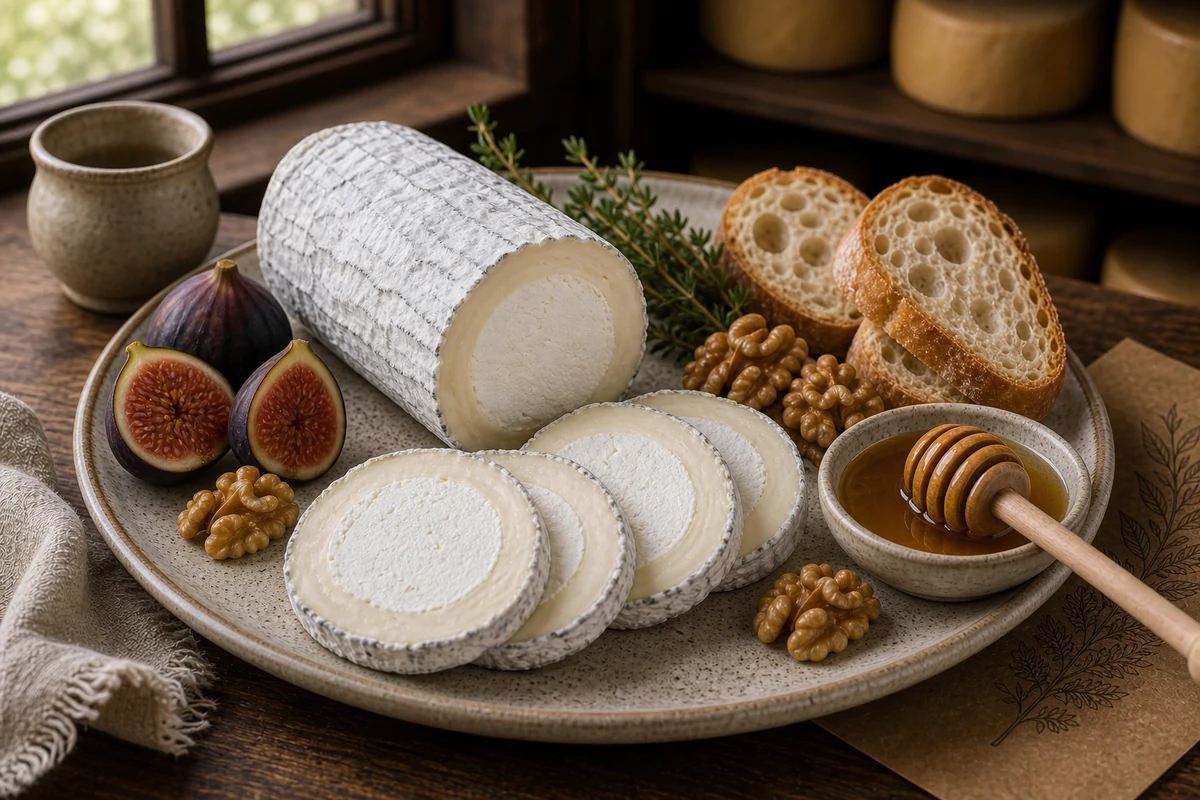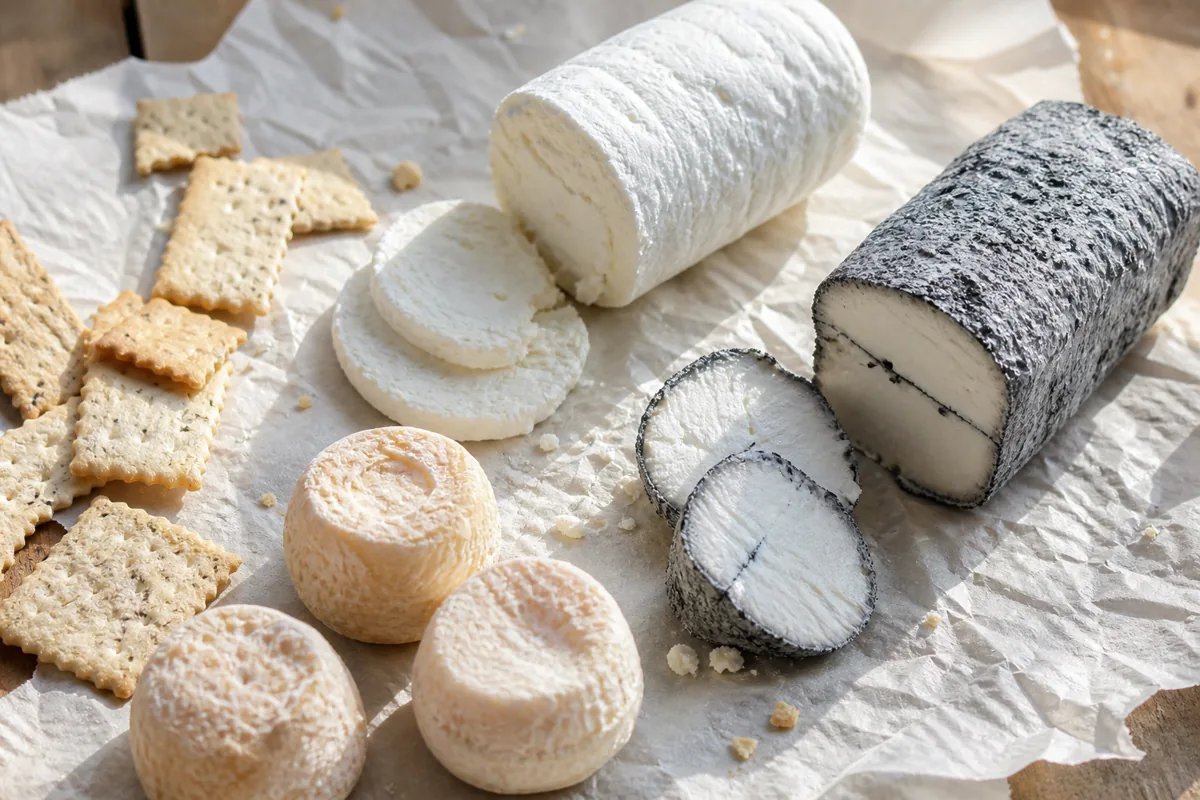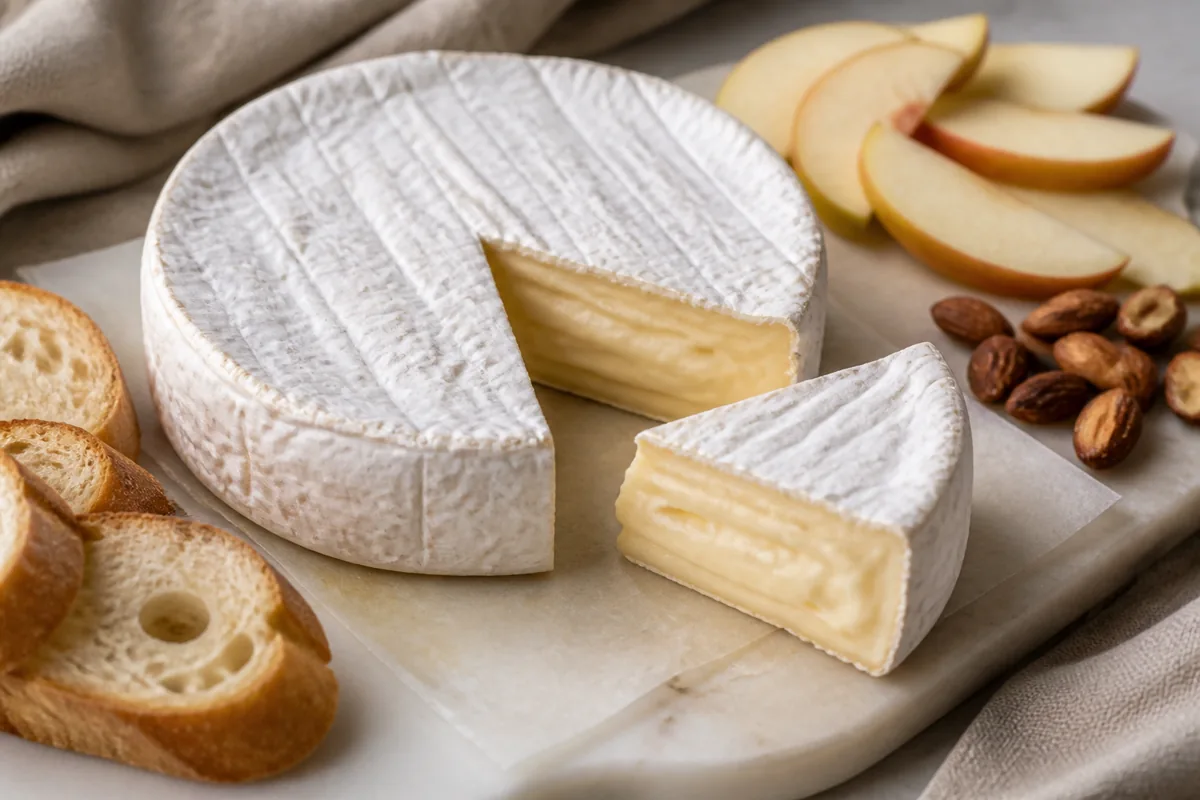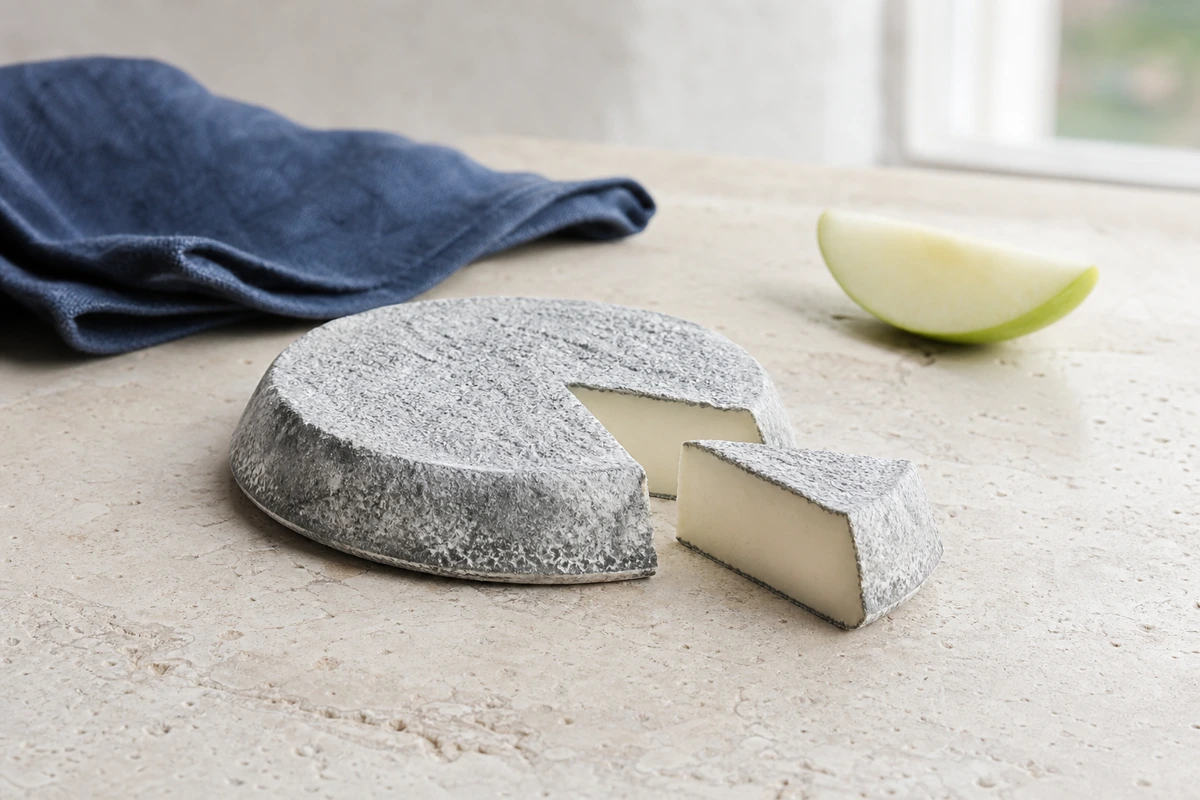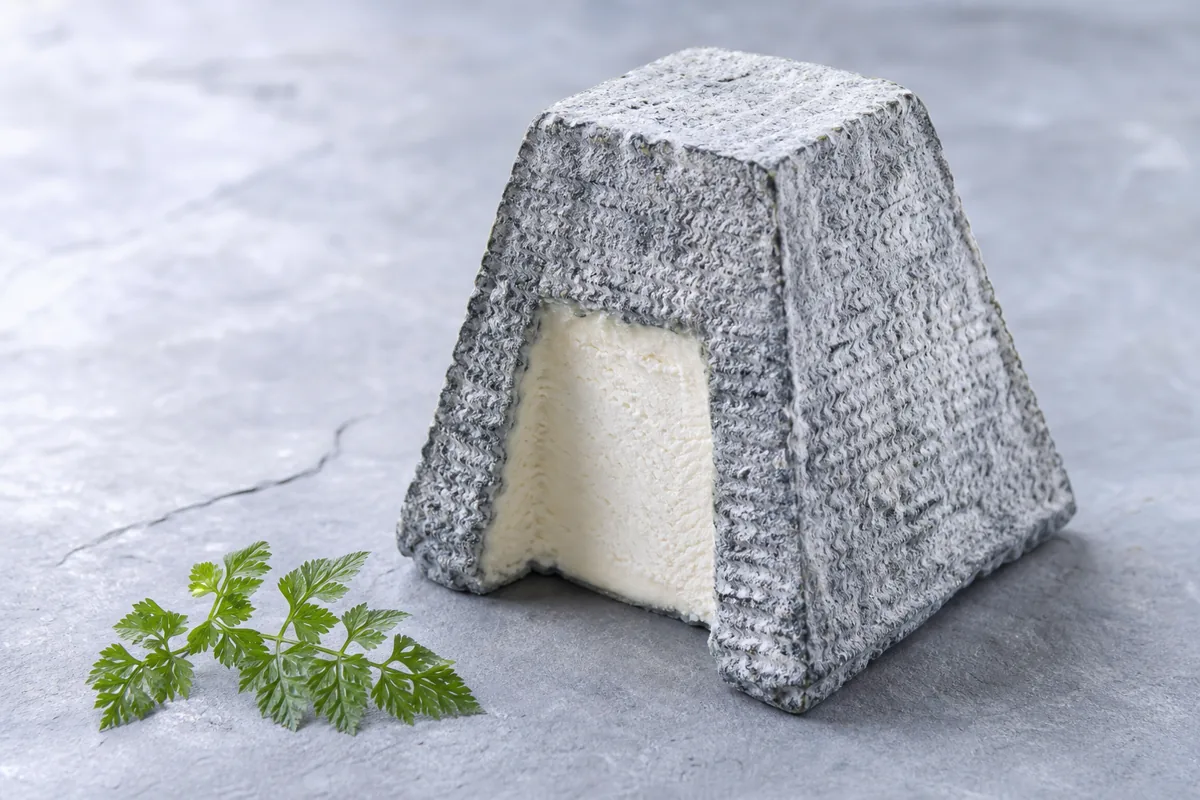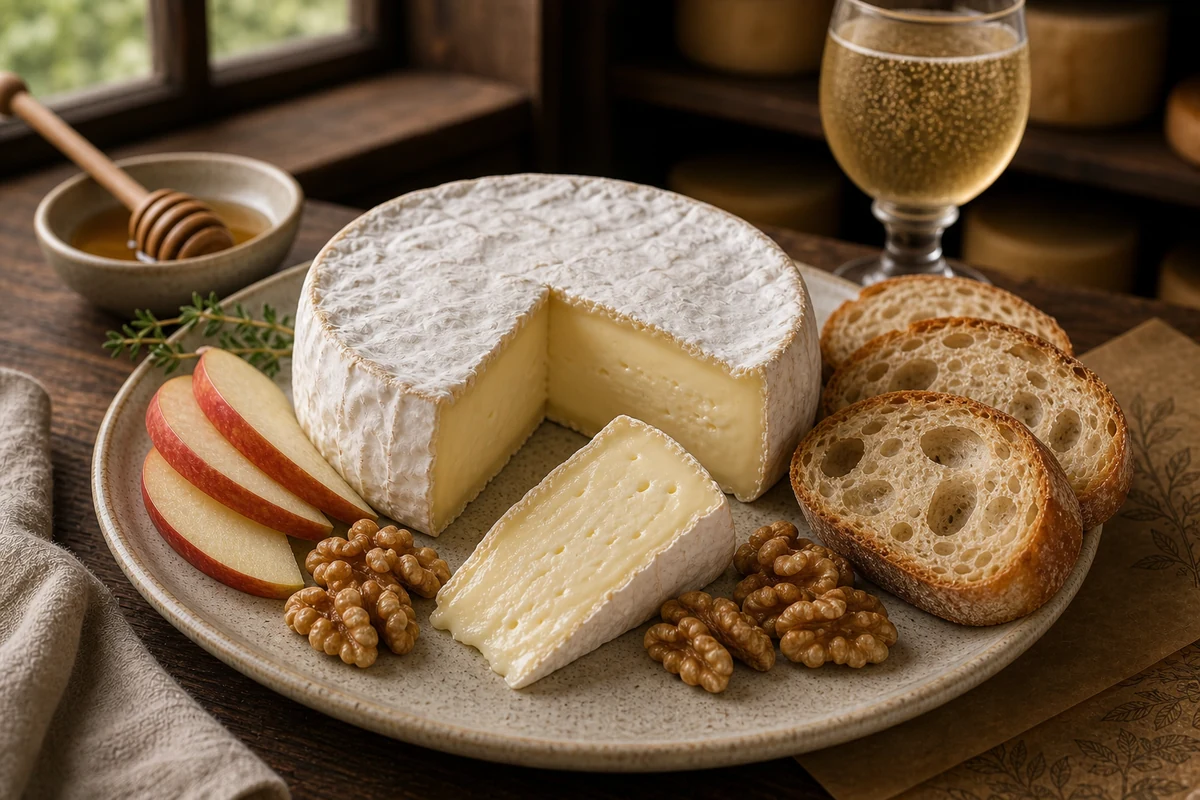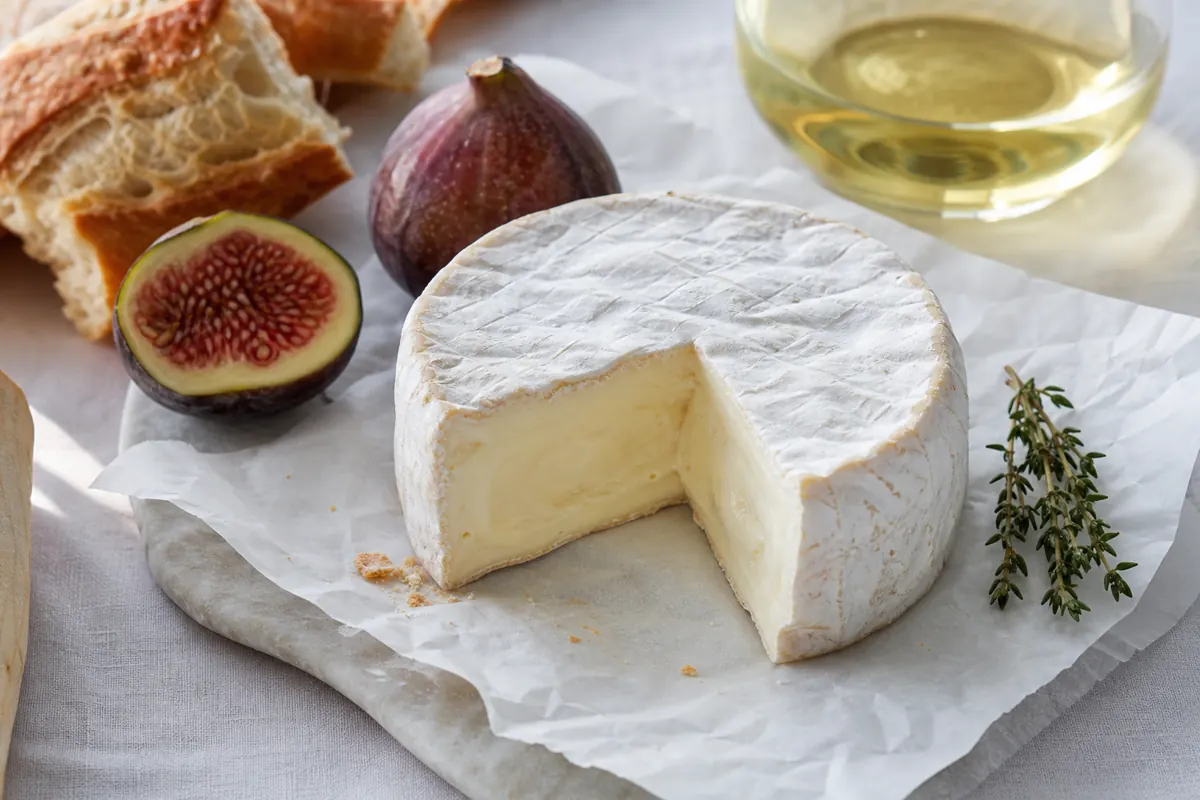
Amalthée, often written without the accent as Amalthee, is a French soft-ripened goat cheese from the Charentes-Poitou area. The direct answer is that it is a raw goat milk cheese with a white bloomy rind, a mild grassy-sweet flavor, and a Brie-like softness.
The first thing to settle is which kind of goat cheese this is. It is a single soft-ripened wheel with a bloomy rind, not a fresh chevre and not a whole French goat category.
It is closest to the soft-ripened goat lane, where the rind and paste change the eating experience.
This page covers source confidence, milk, rind, texture, flavor, serving, storage, and substitutes. It does not replace a full goat cheese explainer or a protected-origin profile such as a Loire goat cheese.
In This Article
Amalthée is a named soft-ripened goat cheese, not fresh chèvre
Texture is the distinction that decides whether you bought the right cheese. Fresh chèvre is bright, spreadable, and sold without a rind, so it never develops the softening edge this one has.
Amalthée is described as soft-ripened, with a white bloomy rind and a creamy interior. That puts it closer to a small goat-milk Brie-style cheese.
Cheese.com lists Amalthée as goat milk from France's Charentes-Poitou region, with bloomy rind, mild grassy-sweet flavor, and goaty aroma. The description also says it is made from fresh raw goat milk and has a natural white mould rind.
That identity helps you buy the right cheese. If you expected a crumbly goat log, Amalthée may feel too soft.
If you expected cow-milk Brie, the goat milk will taste brighter and more grassy.
- Best first description: French soft-ripened goat cheese with a bloomy rind.
- Main texture cue: creamy paste under a white rind, not a fresh rindless log.
- Main flavor cue: mild, grassy, lightly sweet, and gently goaty.
- Main safety cue: public descriptions use raw goat milk, so check the label.
For a firmer, ash-coated French goat expression, compare it with ash-ripened Valençay or ash-rind Sainte-Maure. Amalthée is softer and more Brie-like.
The spelling and source trail need a careful read
The name appears as Amalthée, Amalthee, and sometimes in database pages without the accent. That is normal for search, and the variant spellings tell you nothing about the cheese itself.
The source trail is real but not deep. Cheese references agree on the broad shape: French origin, Charentes-Poitou, goat milk, soft-ripened style, bloomy rind, and mild grassy flavor.
They do not provide a complete producer technical sheet or protected-origin rulebook.
Amalthée has enough public evidence for a narrow profile, but not enough for producer claims, PDO claims, or detailed production rules.
That source limit changes the buying advice. Ask for the milk treatment, producer, age, and condition of the current cheese.
Do not assume every Amalthée-style listing is the same size, ripeness, or pasteurization status.
Raw goat milk and bloomy rind define the eating job
Raw goat milk is part of the public description of this cheese, so it is the first thing to settle at the counter. It shapes the flavor, and it decides who at your table can eat the piece.
Pregnant readers and immune-risk diners should check the exact label and follow medical guidance before eating raw-milk soft cheese.
The bloomy rind is the other defining feature. It softens the cheese from the outside inward and gives the rind a mushroomy, creamy edge.
The paste should be soft and smooth when ripe, not chalky all the way through.
| Cue | What it means |
|---|---|
| White bloomy rind | Expected soft-ripened surface, similar in logic to Brie. |
| Creamy center | Ready for bread, fruit, and simple wine pairings. |
| Chalky core | Younger or cooler cheese, often brighter and tangier. |
| Ammonia sting | Overripe or poorly stored. Ask for a fresher piece. |
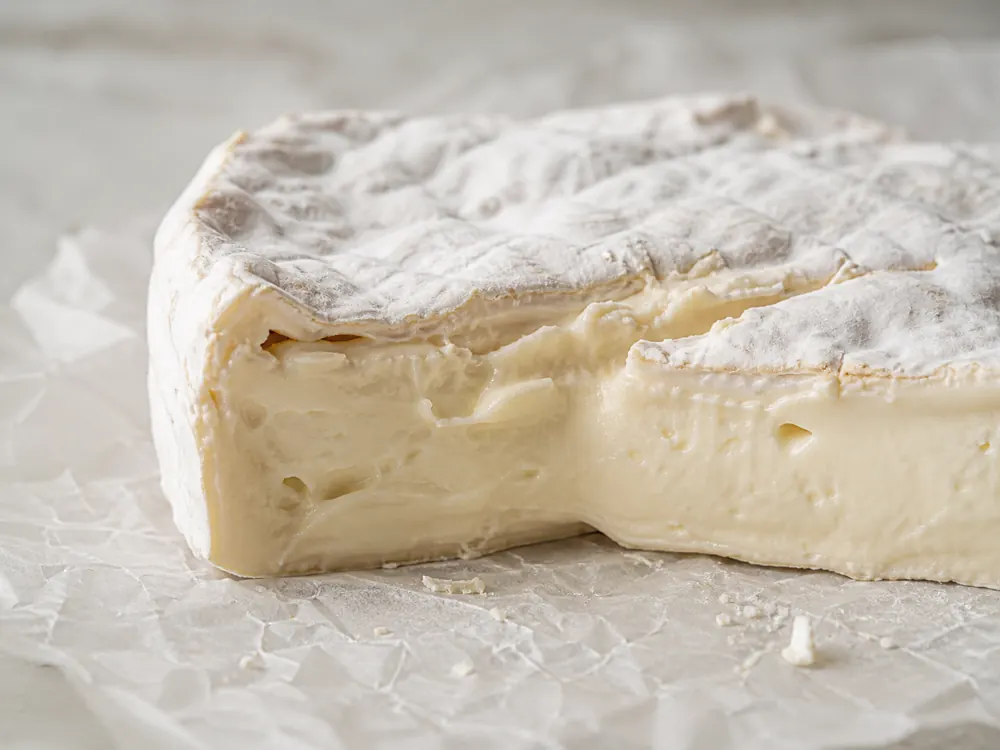
That outside-in ripening separates Amalthée from fresh French dairy cheese and pressed fresh curd. The rind is not decoration.
It changes aroma, texture, and serving temperature.
Amalthée sits between fresh chèvre and Brie-like softness
Think of the texture as a bridge. It has goat-milk brightness, but the bloomy rind brings the creamy spread and mushroomy edge you might expect from Brie or Camembert.
That makes it approachable for people who like soft cheeses but want a goat-milk profile.
It should taste mild before it tastes sharp. Public descriptions use grassy, mild, sweet, goaty, and soft.
If your piece tastes harsh, bitter, or heavily ammoniated, the issue is likely ripeness or storage rather than the cheese's normal character.
Compared with cow-milk Brie, Amalthée should feel brighter and leaner. Compared with Normandy Camembert, it should feel more goat-driven and less mushroom-heavy.
The goat character shows up in the finish rather than in the first taste. Cream and grass arrive first and the tang lands after you swallow, which is why a piece can seem mild and then read clearly as goat.
- Good rind: white, bloomy, and clean-smelling.
- Good paste: softening near the rind with a creamy center as it ripens.
- Good flavor: mild goat tang, grass, cream, and light sweetness.
- Bad sign: ammonia that burns, wet rind slime, or sour spoiled milk.
Serve it with lift, not heavy sweetness
Amalthée is best served simply. Bread, pears, apples, almonds, mild herbs, and a crisp white wine let the goat milk stay clear.
Heavy jam can flatten the grassy flavor and make the rind taste dull.
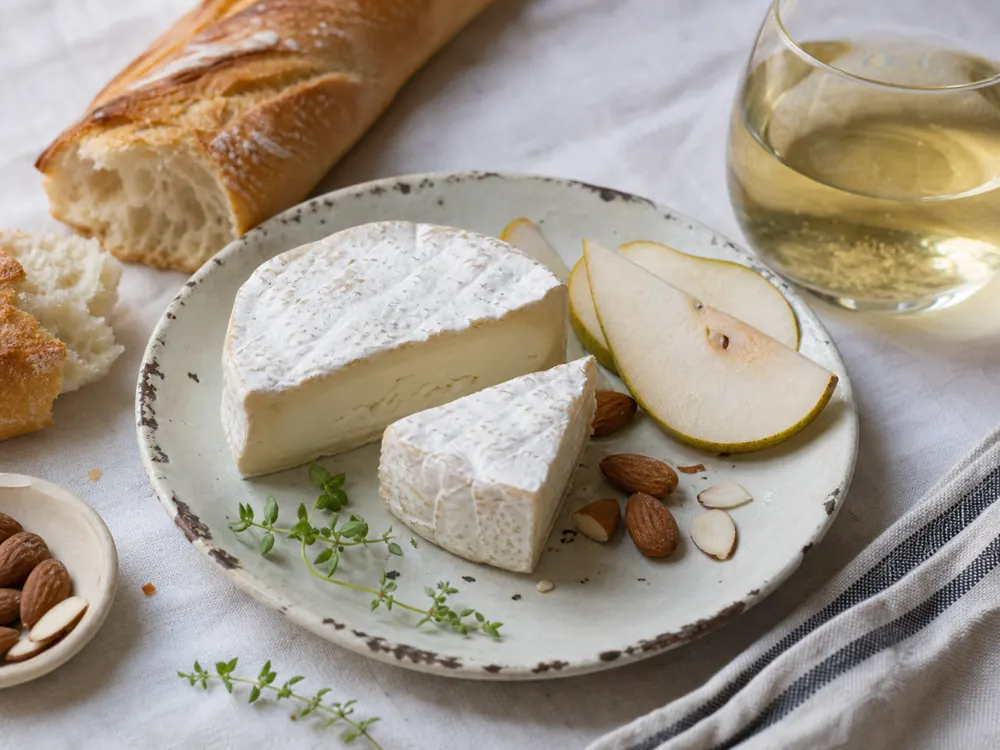
Cheese.com mentions fruity red, dry fruity white, and dry light white wine. The shared idea is lift.
You want enough acid and fruit to refresh the creamy paste without turning the plate into dessert.
| Best board plate | Baguette, pear, almonds, thyme, and a dry white wine. |
| Best ripeness | Soft at the edge with a creamy center, not runny and sharp. |
| Best drink lane | Dry light white, fruity dry white, rosé, or a lighter red. |
| Avoid | Very sweet jam, heavy chutney, and strong blue cheeses on the same bite. |
If you need broader matching logic, acid and herb pairings explain why freshness usually works better than heavy sweetness.
Cut a small round in wedges from the center rather than shaving the top off. Every wedge then carries rind, the softer band under it, and the firmer core in one bite.
Put the cheese out on the plate you intend to serve it from. Moving a softened goat round twice leaves paste smeared on the first plate and a torn rind on the second.
Buy by ripeness, not only by the name
A good piece shows a clean white rind with no wet patches, and the paste behind it should match what you plan to do with the cheese rather than some ideal condition on a chart.
For a board tonight, choose a piece that is already soft near the rind. For later in the week, choose a slightly firmer piece and let it ripen in the fridge.
Ask whether the milk is raw or pasteurized. Public descriptions say raw goat milk, but shop listings can vary.
If raw milk is not right for your guests, choose a pasteurized soft goat cheese instead.
Also ask when you plan to serve it.
A slightly firm piece is useful if dinner is two or three days away. A soft piece is better for the same night, but only if the rind smells clean and the paste has not turned runny at the edge.
If a shop cannot answer basic condition questions, choose a better-known soft goat cheese. Ash-coated Selles-sur-Cher and a ripening Bucheron log give you more documented ways to buy by age.
Storage changes the rind quickly
Soft-ripened goat cheese is sensitive to storage. Keep Amalthée cold in breathable cheese paper or parchment inside a loose container.
Avoid tight plastic pressed against the rind, because trapped moisture can make the surface smell harsh.
Bring only the serving portion out before eating. A small soft cheese warms quickly, and repeated warm-ups can push the rind past its best texture.
For a full wrapping method, follow soft-rind storage habits. The same air and moisture balance matters here, but the smaller format makes mistakes show faster.
Lay the piece rind side down on the paper so the softening paste does not slump into the fold. A round left on its side for a week ends up with one thin edge and one bulging one.
Change the paper as soon as it feels damp. Wet paper against a bloomy rind flattens the white surface and brings the harsh smell days earlier than it would arrive otherwise.
Best substitutes for Amalthée
Substitute by rind and milk before you substitute by name. A bloomy rind and goat milk are the two things that make this cheese eat the way it does, and a swap that drops either one changes the plate.
If you need the soft-ripened goat profile, choose a bloomy or ash-ripened goat cheese. If you only need creaminess, Brie or Camembert can cover texture but not goat flavor.
Fresh chèvre is a useful fallback for salads and tartines, but it will not copy the rind. It will taste brighter, more acidic, and less mushroomy.
If the recipe heats the cheese, choose a substitute with the same moisture goal, not the same name. A soft goat round can warm gently on toast, but it is not meant to stretch.
For baked dishes, use it as a finishing cheese so the rind and paste stay creamy instead of breaking.
- Closest goat direction: a soft-ripened goat cheese with bloomy or ash rind.
- More documented French goat option: Selles-sur-Cher or Sainte-Maure de Touraine.
- Creamy non-goat fallback: Brie, Camembert, or Fromager d'Affinois.
- Fresh fallback: chèvre log when you need tang more than rind complexity.
The salad and cooking swaps are better if you need a non-goat cheese or a cooking-specific replacement.
Use Amalthée itself when the plate needs both goat-milk brightness and soft-ripened cream. That combination is the whole reason the cheese earns its own narrow profile.
Format matters as much as style when you swap. A large Brie wedge ripens far more slowly than a small goat round, so a substitute bought for tonight can still be chalky in the middle.
A fresh chèvre log holds its shape on a warm plate while a soft-ripened round slumps into it. Plan the plating around the cheese you actually came home with rather than the one you meant to buy.
SOURCES & REFERENCES
Amalthée is a French soft-ripened goat cheese from the Charentes-Poitou area. It has a white bloomy rind and a mild grassy-sweet flavor.
No. Fresh goat cheese is usually rindless and tangy. Amalthée is soft-ripened, so the bloomy rind gives it a creamier, Brie-like texture.
Public descriptions list Amalthée as made from raw goat milk. Check the exact label and follow medical guidance for pregnancy or immune-risk diners.
Amalthée usually tastes mild, grassy, lightly sweet, creamy, and gently goaty. Overripe pieces can smell ammoniated, so buy by condition.
Use a soft-ripened goat cheese for the closest match, Selles-sur-Cher or Sainte-Maure for a more documented French goat option, or Brie when you only need soft bloomy texture.