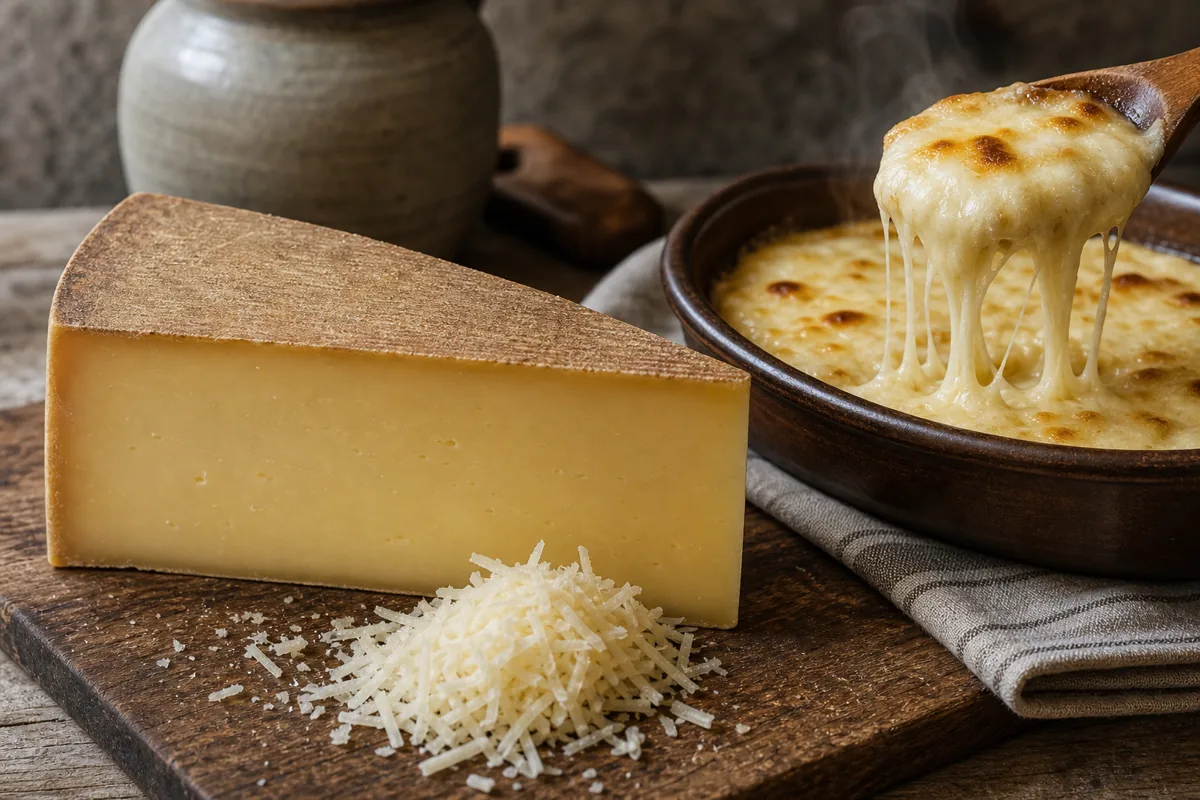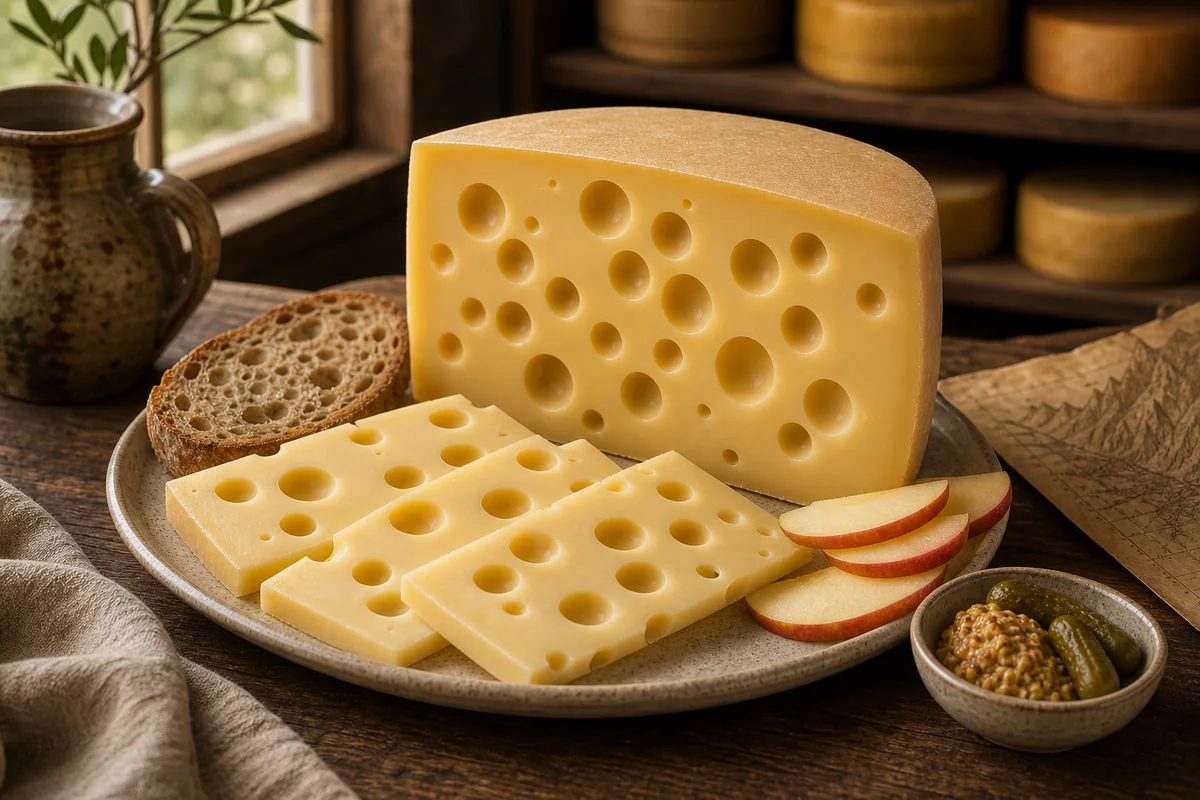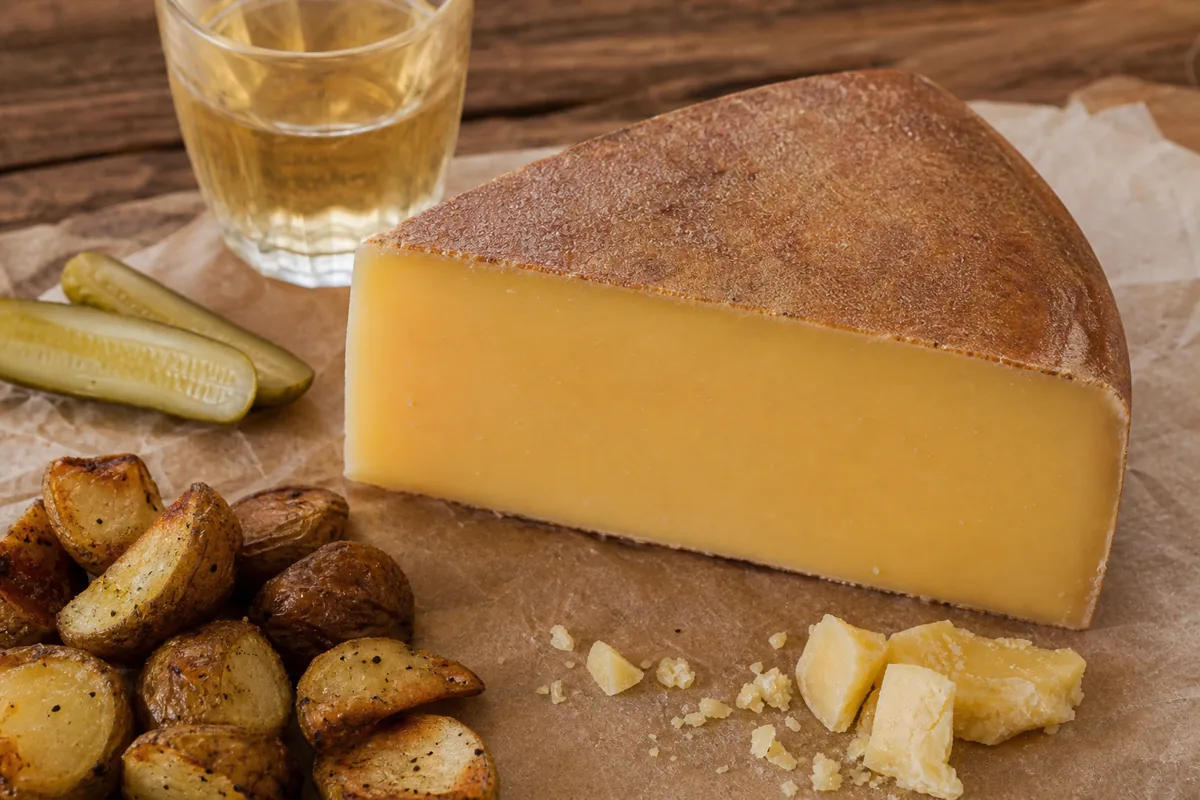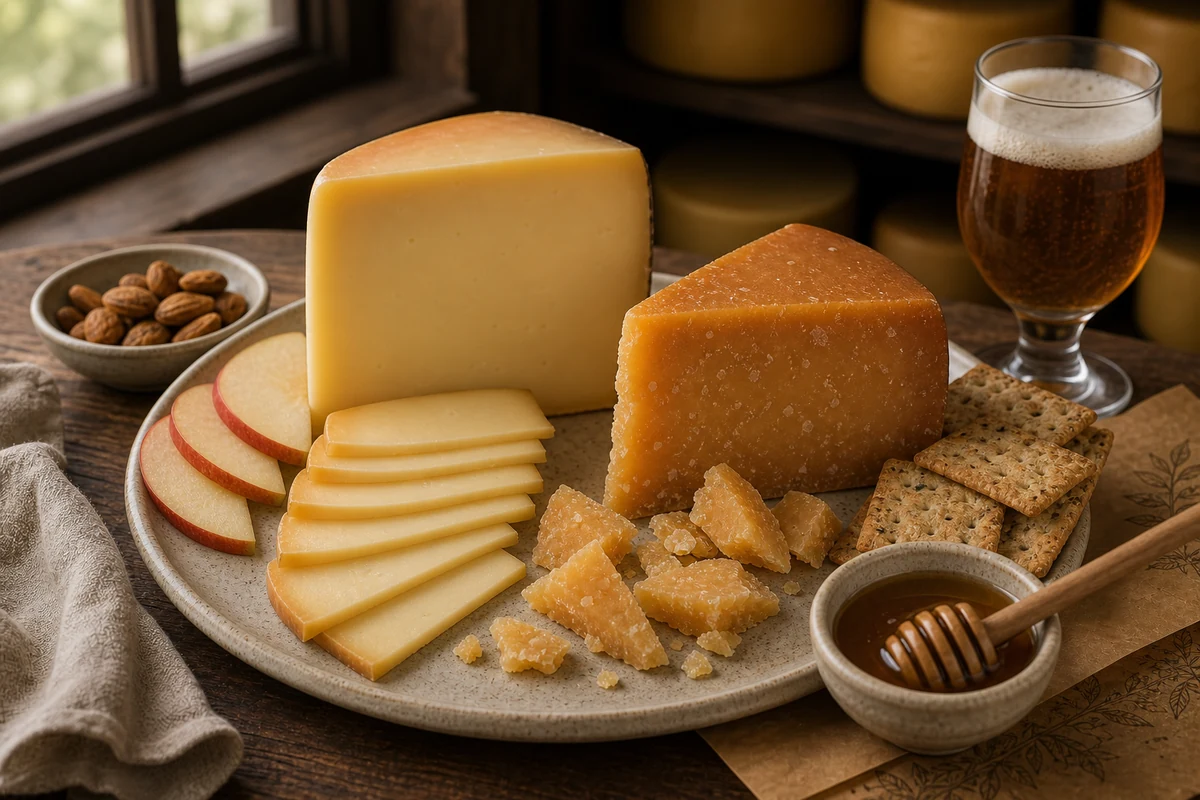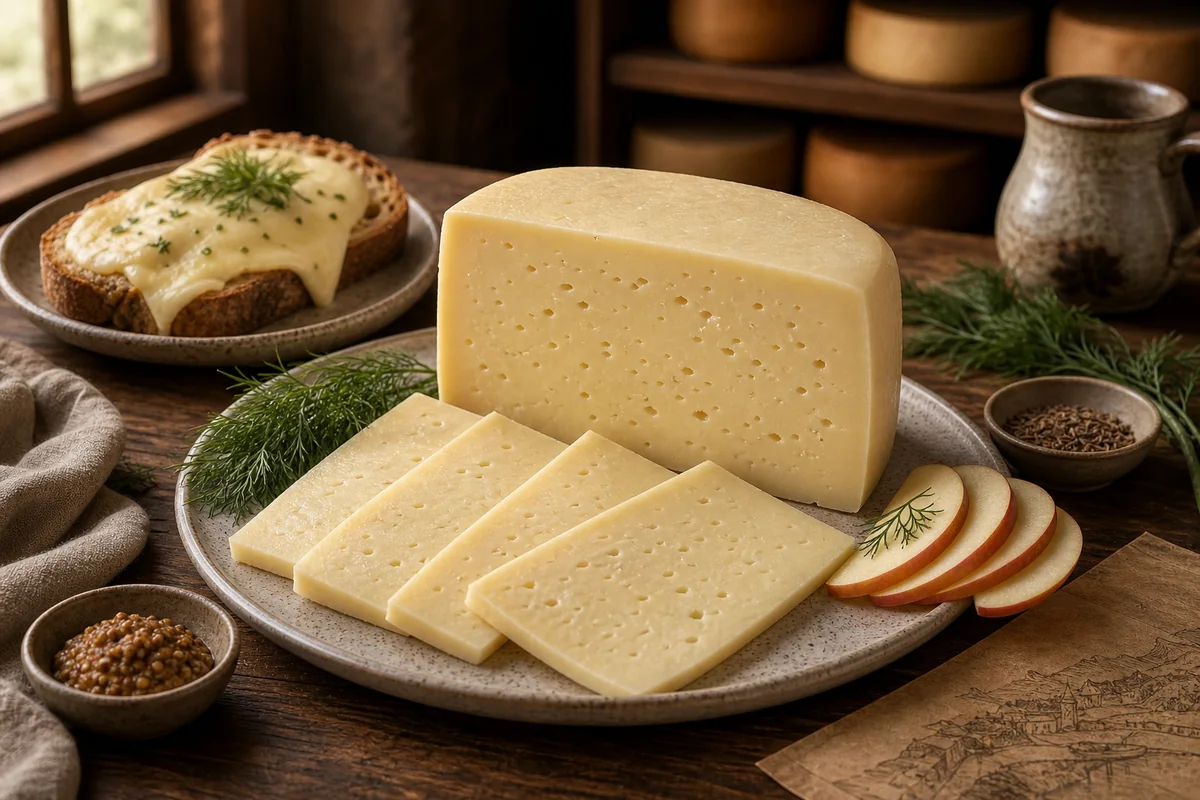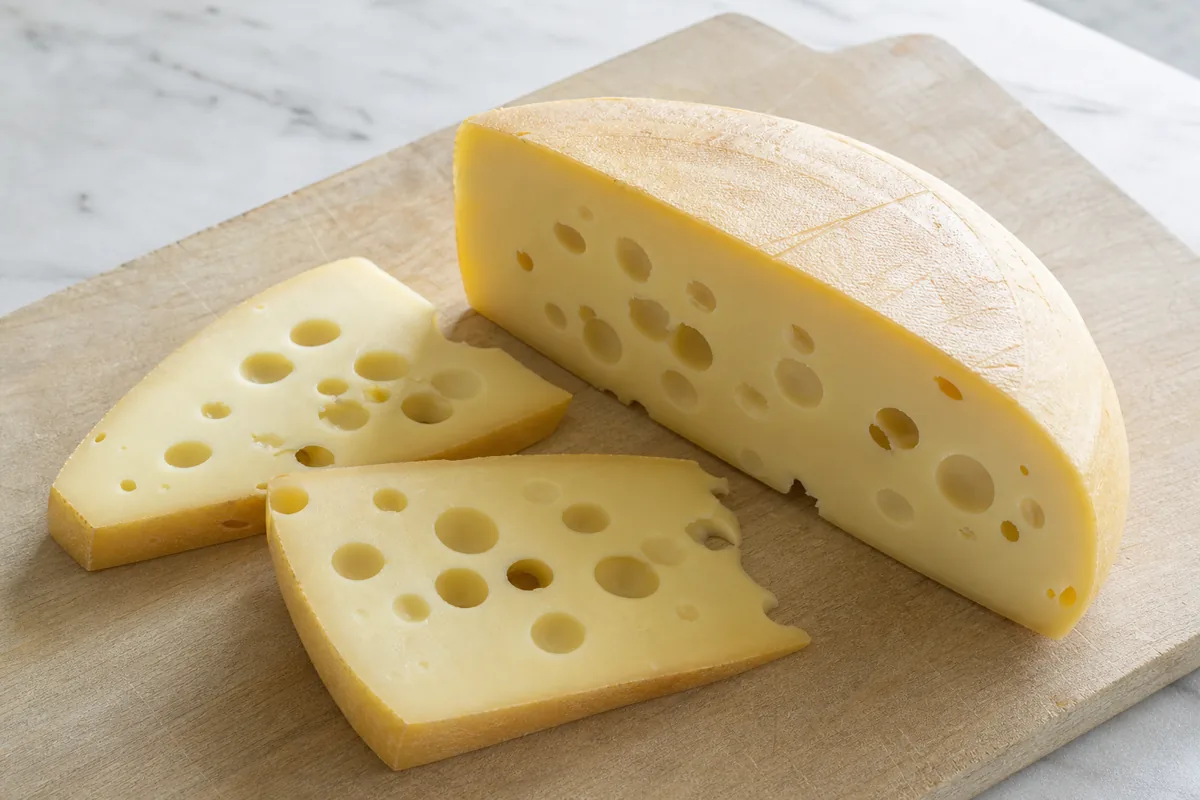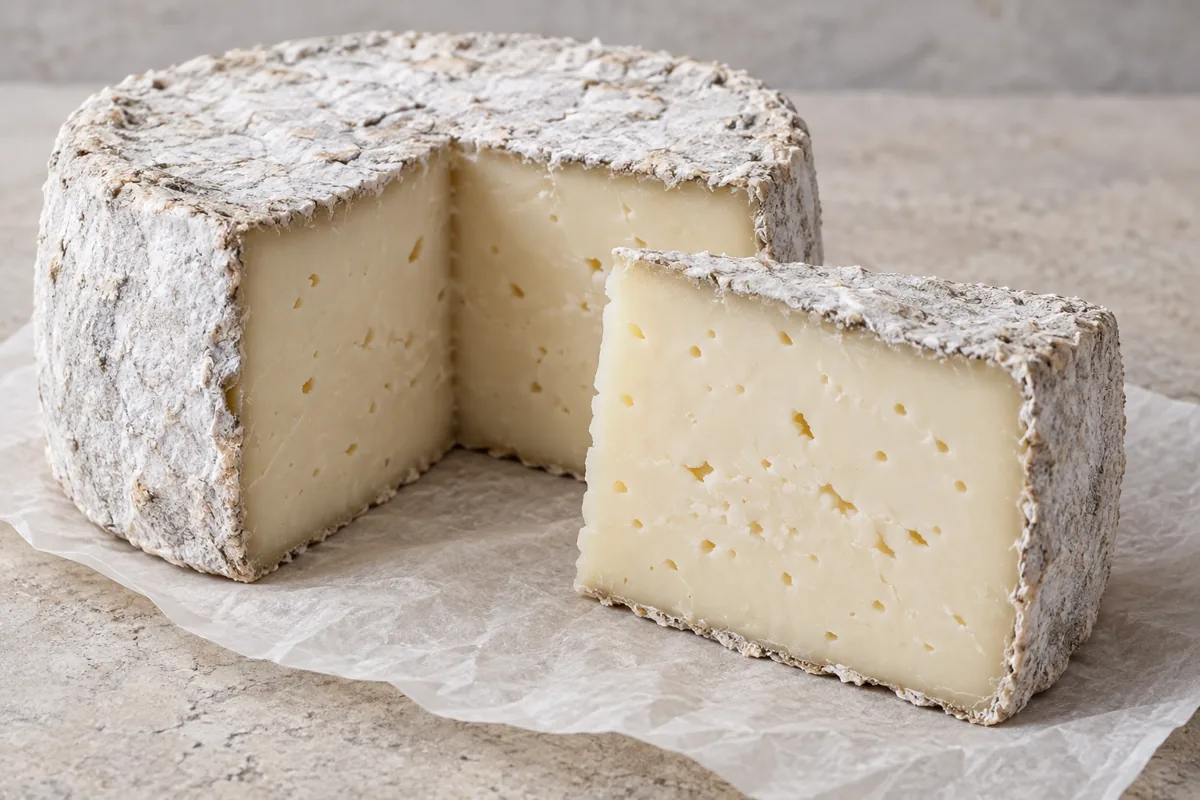
Amish Frolic is Bobolink Dairy & Bakehouse's mild Alpine-style cheese, sold by the New Jersey producer under the shorter name Frolic. Made with grass-fed raw cow's milk, it offers a grassy flavour for a cheese plate and melts well, according to the maker.
The two names refer to this particular Bobolink product; neither identifies every cheese made by Amish farmers.
The images are format and serving illustrations, not photographs of a Bobolink cheese batch.
In This Article
What Bobolink Means by Frolic
Bobolink describes Frolic as a collaboration with three Amish graziers. That identifies the milk-producing partners behind the cheese, rather than establishing that all of its milk comes from Bobolink's own cows.
The distinction matters when a shop describes cheese only as Amish-made or farmstead. Bobolink's name and the product name Frolic provide a closer match than either broad description on its own.
Alpine-style describes the cheese's inspiration, not a claim that it was made in the Alps or follows a protected European specification. Bobolink's listing does not give a precise aging period or a step-by-step manufacturing method for Frolic.
Its listed 8-10 lb wheel is the whole cheesemaking format. The portions sold to a household are much smaller, and the wheel weight cannot tell you how old a wedge is.
How Frolic Tastes and Melts
Bobolink describes Frolic as mild and grassy, with a subtle but complex flavour. That is a more useful expectation for a first purchase than assuming all firm Alpine-style cheeses are intensely sharp or pungent.
The maker recommends fresh fruit and a choice of ale, red wine or white wine. A cold plate with sliced apple or pear is a practical way to follow the fruit suggestion: the fruit supplies a juicy contrast while leaving the cheese's mild flavour easy to taste.
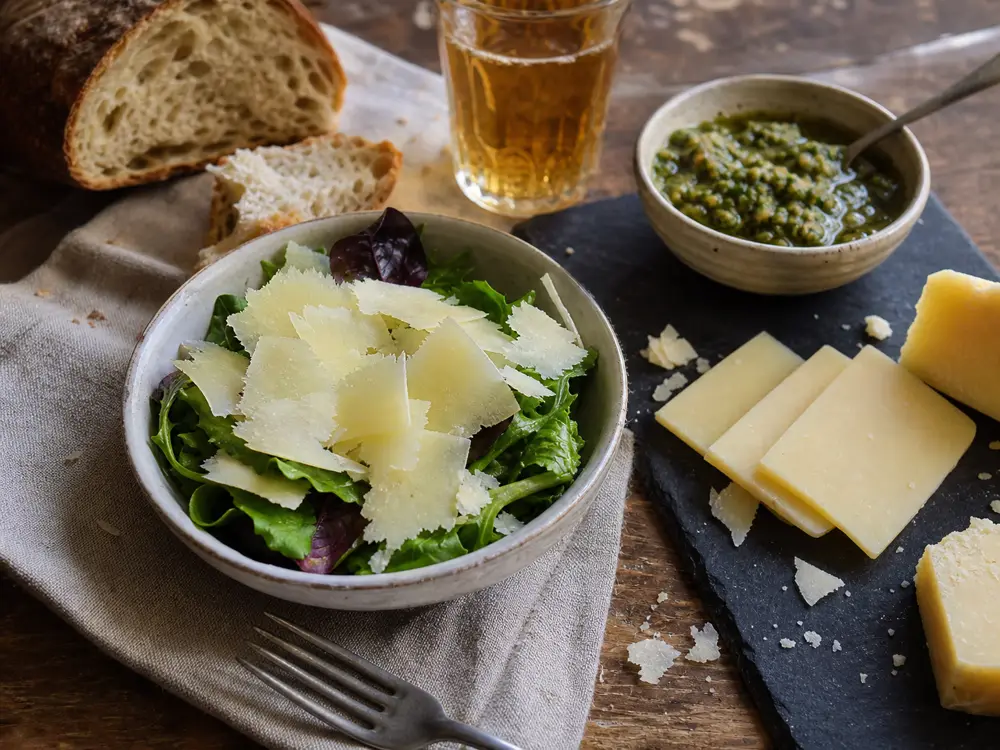
Thin shavings spread that flavour across greens, while slices put a larger bite beside bread. The salad below illustrates those two serving formats; it is a serving suggestion, not a record of a Frolic tasting or recipe test.
For hot food, the maker's explicit melting recommendation supports using Frolic in a toasted sandwich or as a topping on warm bread. Thin slices distribute the cheese across the bread; a thick piece would leave a deeper centre to warm through.
That practical preparation does not establish an exact melting time, a smooth sauce formula or a mozzarella-like stretch. A recipe built around those properties needs more than the description that a cheese melts well.
Alpha Tolman is another American Alpine-style option for slicing and melting, but its maker gives a more specific maturity range: eight to twelve months. Jasper Hill describes butter, fruit and nut notes developing into meatier, onion-like flavours as that cheese matures.
For a meal planned around mild Frolic, an older Alpha Tolman can therefore change the flavour substantially even when it performs the same melted-topping job. Its stated age also belongs to Alpha Tolman, not to an unlabelled Frolic wedge.
Does Frolic Use Raw Milk and Animal Rennet?
Tussock Sedge Farm's Frolic ingredient list names raw milk from grass-fed cows, sea salt, cheese cultures and animal rennet. The listed cheese is therefore unsuitable for a vegetarian diet; grass-fed milk does not change the animal origin of the rennet.
Raw milk and grass-fed describe two other, separate choices: whether the milk was pasteurized and what the cows ate. Neither provides the cheese's calories, sodium or lactose content.
No verified Frolic nutrition panel accompanies the product descriptions used here. Figures for a supermarket Swiss cheese or another Bobolink product would not establish the composition of this one, and claims about raw milk's health benefits are not a substitute for that evidence.
For pregnancy in the US, avoid dairy products made from raw milk, following CDC guidance. Pasteurized hard cheeses are among its safer alternatives; Frolic's firm texture or an ordinary sandwich melt does not override the raw-milk advice.
Alpha Tolman is also made from raw milk, so changing to that culinary alternative would not solve the pregnancy-related milk-treatment question.
How Do You Choose a Portion and Keep Frolic Fresh?
Bobolink sells Frolic by the half pound, while Tussock Sedge lists a 5-6 oz wedge. Those are different amounts of cheese even though both listings name Frolic.
| Listing | Stated portion | Approximate grams |
|---|---|---|
| Bobolink: Frolic by the half pound | 8 oz | 227 g |
| Tussock Sedge: Raw Frolic Cheese | 5-6 oz | 142-170 g |
The gram values are conversions of the advertised weights, not measurements of a delivered wedge. To compare prices, divide each price by its portion weight in the same unit; an identical item price would make the smaller wedge more expensive per ounce.
As a planning example, dividing a half-pound among four people gives 2 oz each; a 5-6 oz wedge divided four ways gives 1.25-1.5 oz each. These are simply equal shares, not a nutritional serving recommendation.
The seller's wrapper and date belong with the cut portion, because neither the original wheel weight nor an Alpine-style description establishes a use-by date. No specific opened shelf life for Frolic is verified here.
Refrigerate the wrapped portion in a covered container at 4 C / 40 F or below. For food needing refrigeration, FDA limits time out of cold storage to two hours, or one hour when the air is above 32 C / 90 F.
A normal-looking rind or cut face cannot show whether that time limit was exceeded. The producer's photograph helps recognize a cheese format; it cannot certify that a particular delivered or opened piece is safe.