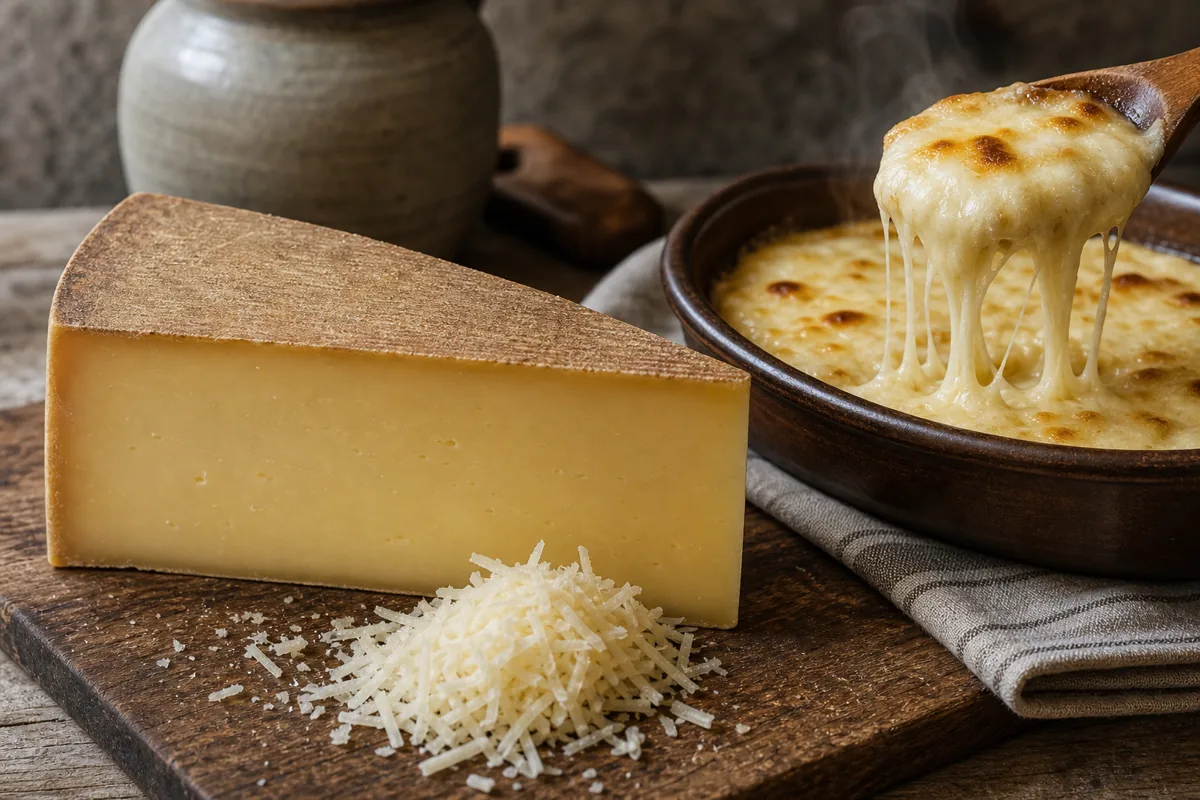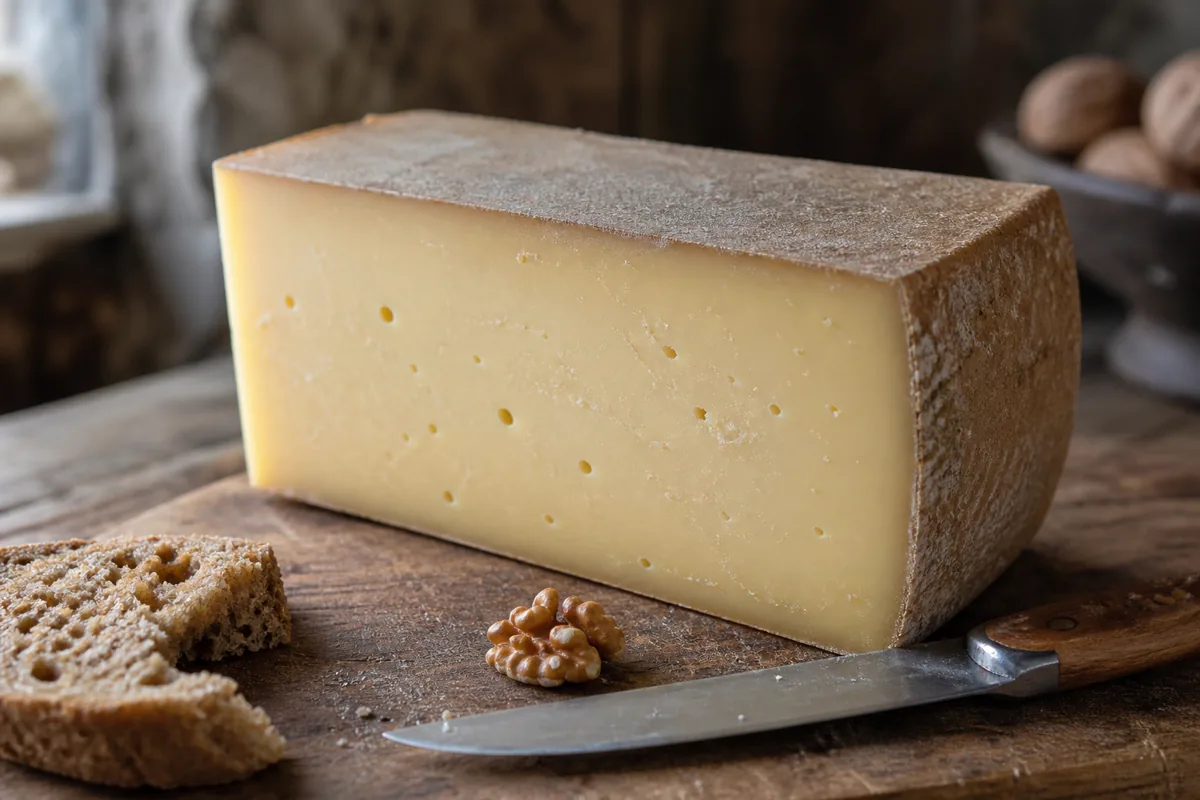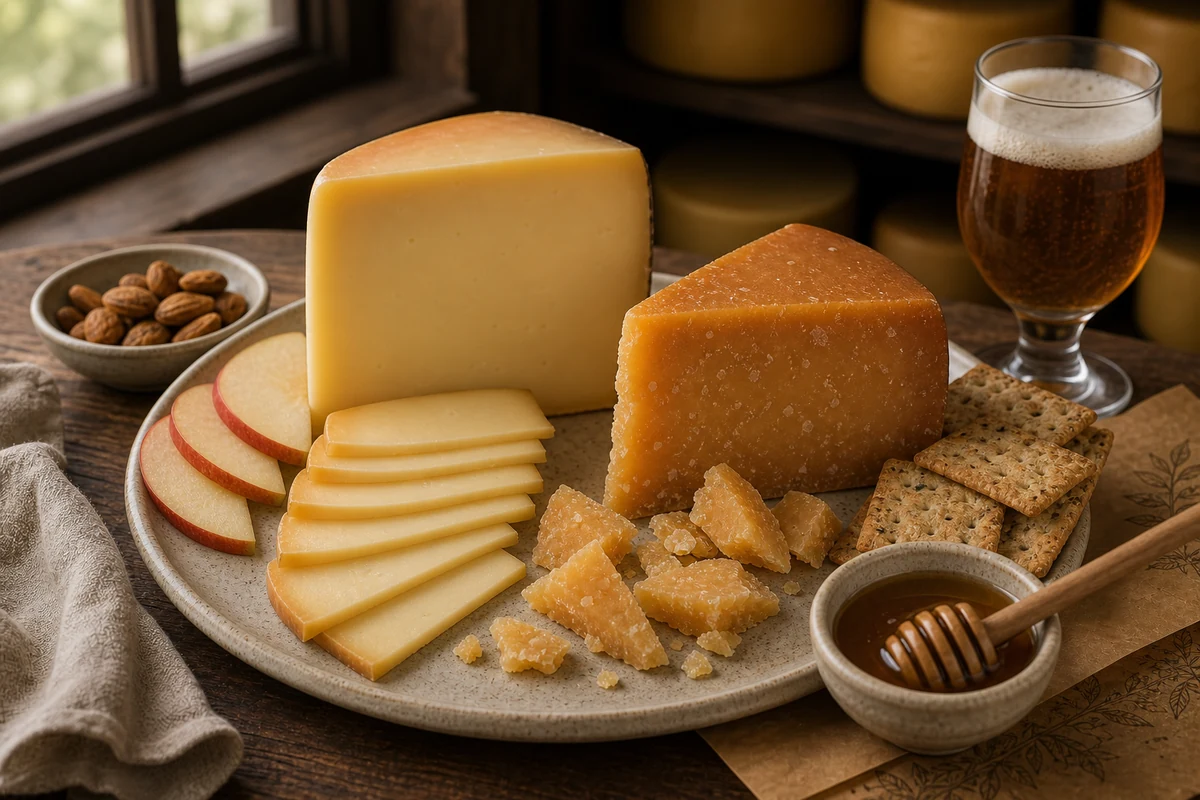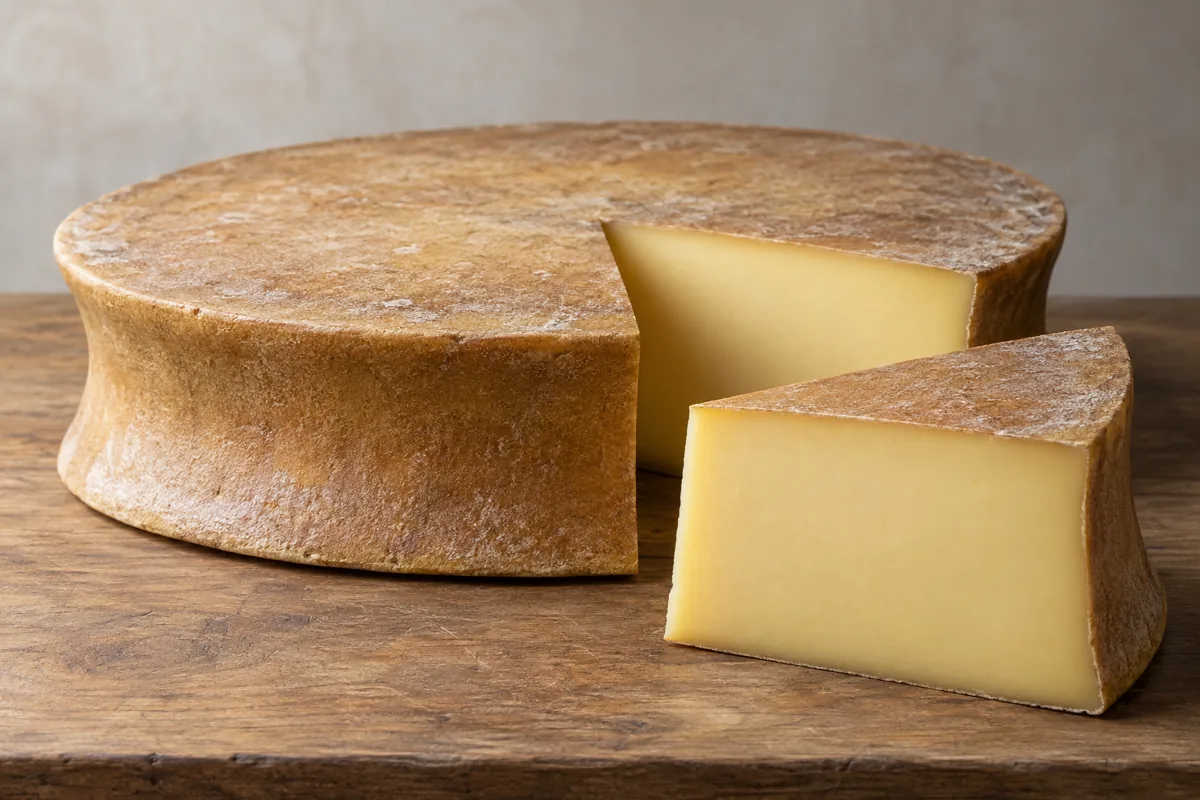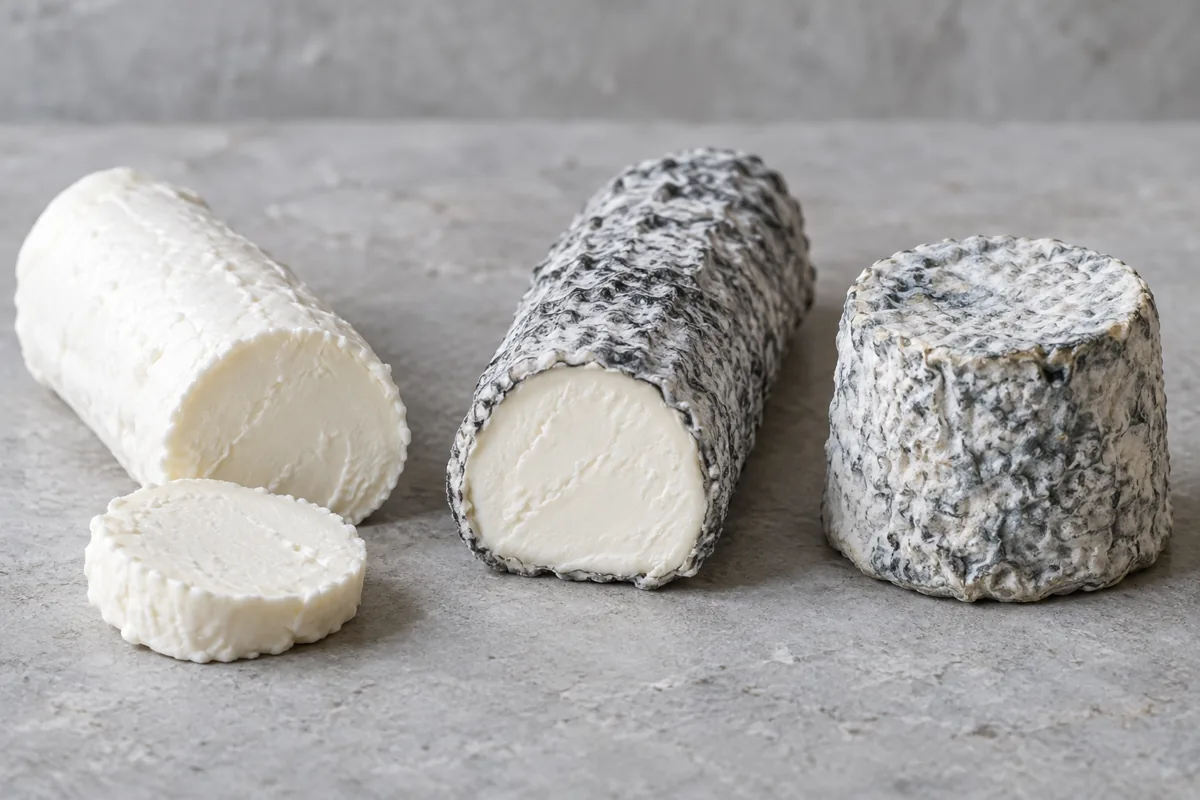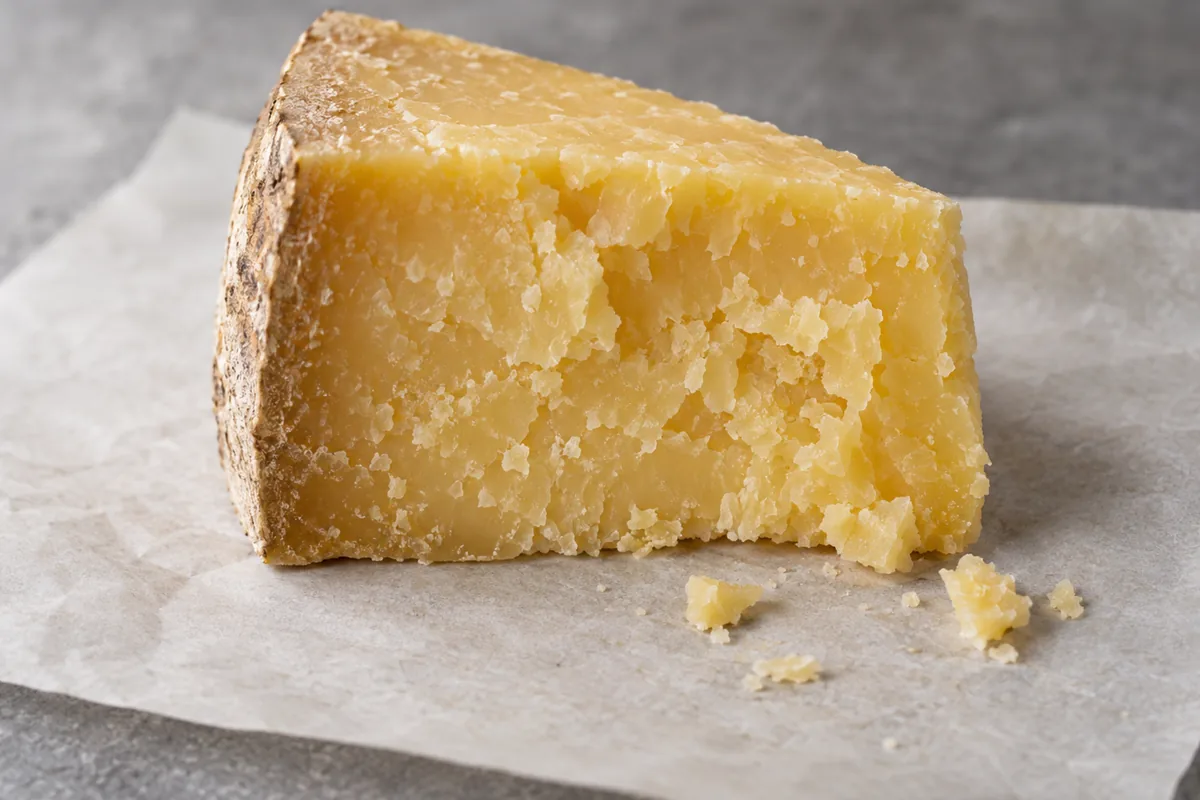
Heidi Aged Cheese is a hard, artisan cheese from Heidi Farm in Exton, Tasmania, made from pasteurised cow's milk and matured for 18 months. It comes in 25 kg wheels with a natural rind and a yellow paste.
Heidi Farm crafts Swiss-style cheeses, namely Gruyere, Tilsit and Raclette, and a Heidi Farm Gruyere has also been reported at 18 months. Those facts point to a longer-aged Gruyere-style wheel, so the months of maturation, more than the word Gruyere on a label, are what identify this cheese.
In This Article
Is Heidi Aged Cheese the Same as Heidi Gruyere?
Possibly, but a label that says only Heidi Gruyere cannot be assumed to be the 18-month cheese.
The Aged Gruyere is a limited release of prize-winning cheese held over for further ageing, and the Heidi Farm Gruyere in Food Wine Travel's report on the Australian Grand Dairy Awards was "aged for 18 months".
The wheel weights do not line up, though: the Gruyere is given at 10, 30 and 35 kg, and the aged cheese at 25 kg.
| Heidi Aged Cheese | 25 kg wheels, per Cheese.com |
| Heidi Gruyere | 10 kg wheel, per Calendar Cheese |
| Heidi Farm Gruyere (distributor listing) | 30 kg wheels, per Palatable Partners |
| Classic Heidi Farm Gruyere | 35 kg wheels, per Heidi Farm's story page |
| Heidi Farm Emmental | 40 kg wheels, per Palatable Partners |
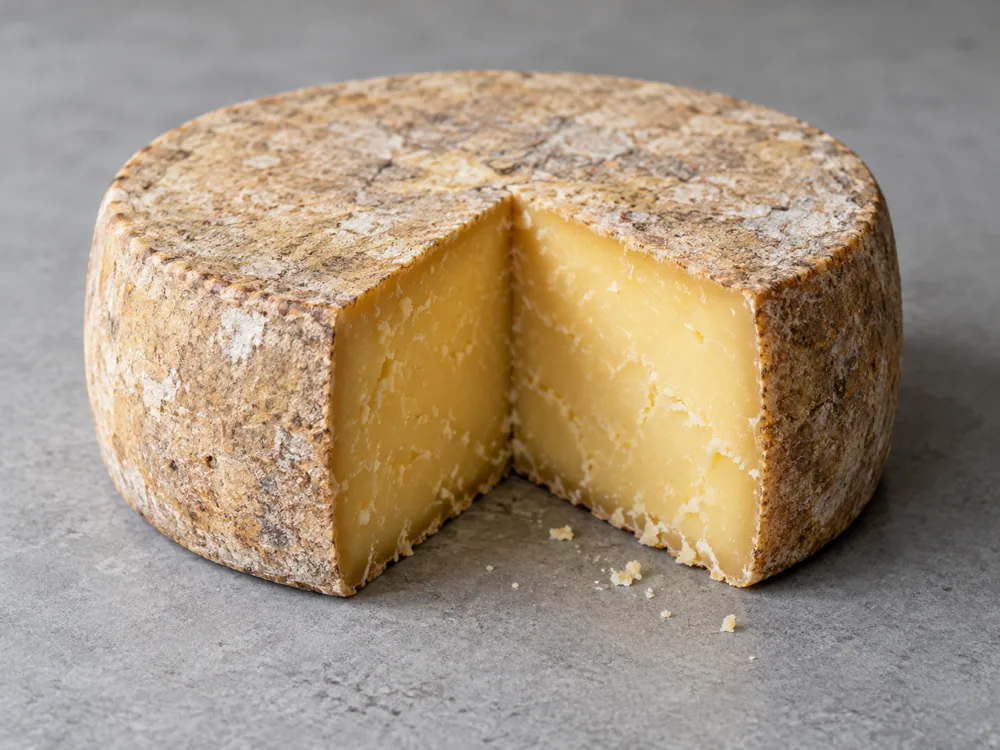
Palatable Partners, a distributor, says its 30 kg Gruyere is made that size so the cheese can reach full maturity, and its 40 kg Emmental so it can ripen fully and let the eyes form.
Heidi Farm itself says its classic 35 kg Gruyere wheels have given way to smaller formats, so a weight on its own does not identify the cheese.
How Long Is Heidi Aged Cheese Aged?
Heidi Aged Cheese is matured for 18 months, while the Heidi Farm Gruyere has been reported at both six and 18 months.
| Cheese | Maturation | Given by |
|---|---|---|
| Heidi Aged Cheese | 18 months | Cheese.com |
| Heidi Farm Gruyere, 2016 grand champion | Six-month maturing process | ABC Rural, February 2016 |
| Heidi Farm Gruyere in the awards report | "Aged for 18 months" | Food Wine Travel |
| Heidi Farm Aged Gruyere | Held over for further ageing | Palatable Partners |
| Heidi Farm Raclette | Best cheeses fully matured for 5 months | Palatable Partners |
The 2016 reports disagree about the Gruyere that won the Grand Champion title. ABC Rural, which quotes the factory's cheesemaker in the maturing room, gives a six-month maturing process, while Food Wine Travel, whose writer tasted a sample that arrived in an awards hamper, gives 18 months.
What Does Heidi Aged Cheese Taste Like?
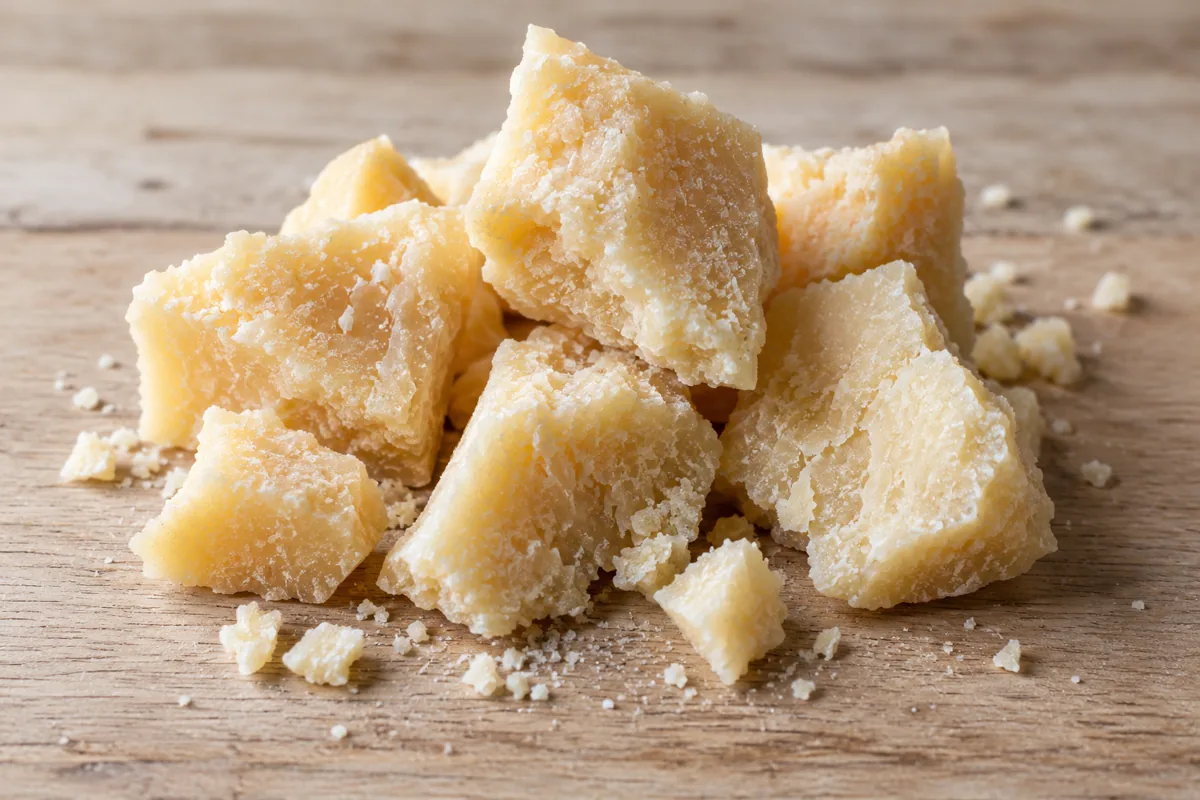
Descriptions of Heidi cheese at 18 months agree on flaky, sweet and nutty. Cheese.com gives the aged cheese a crunchy, nutty, pronounced and sweet flavour and a crystalline, firm, flaky and supple texture, and Food Wine Travel's writer gives the 18-month Gruyere a flaky, pliable texture and sweet, nutty flavours.
Cheese.com puts the strong aroma down to the long maturation and compares the flavour with Reggiano: the cheese "is matured for 18 months to develop the pronounced flavours of a Reggiano along with a flaky texture, traditional crystalline formations and superb intense nuttiness."
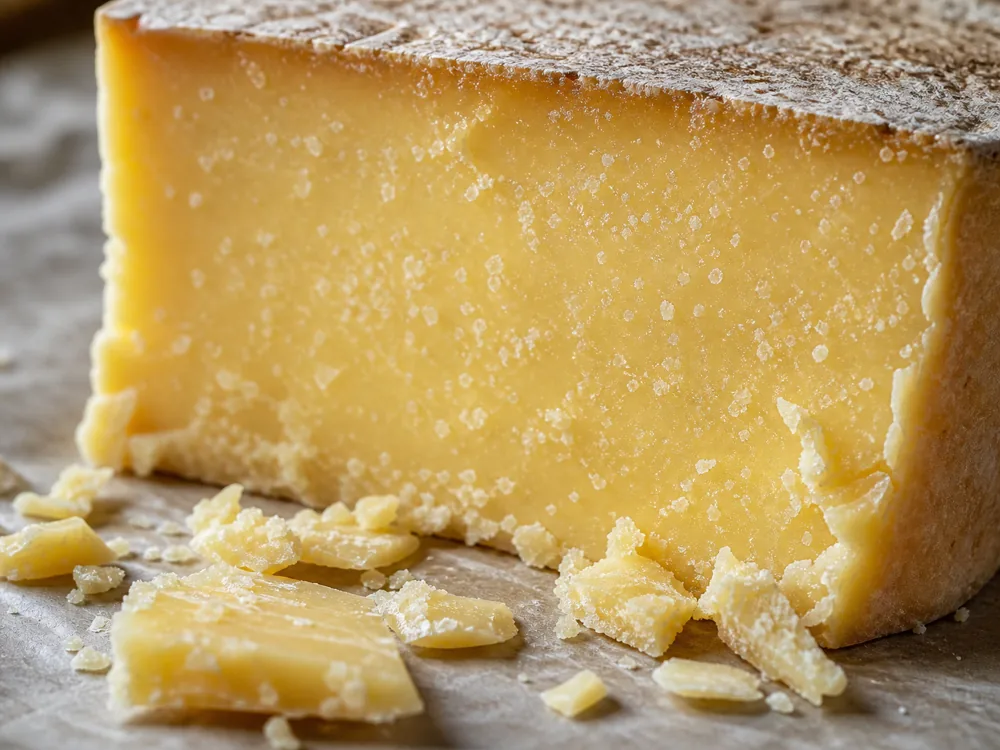
The 10 kg Heidi Gruyere is described differently, with a fine, smooth paste and a firm, elastic texture. So flaky and crystalline goes with the 18-month descriptions, and smooth and elastic with the 10 kg wheel.
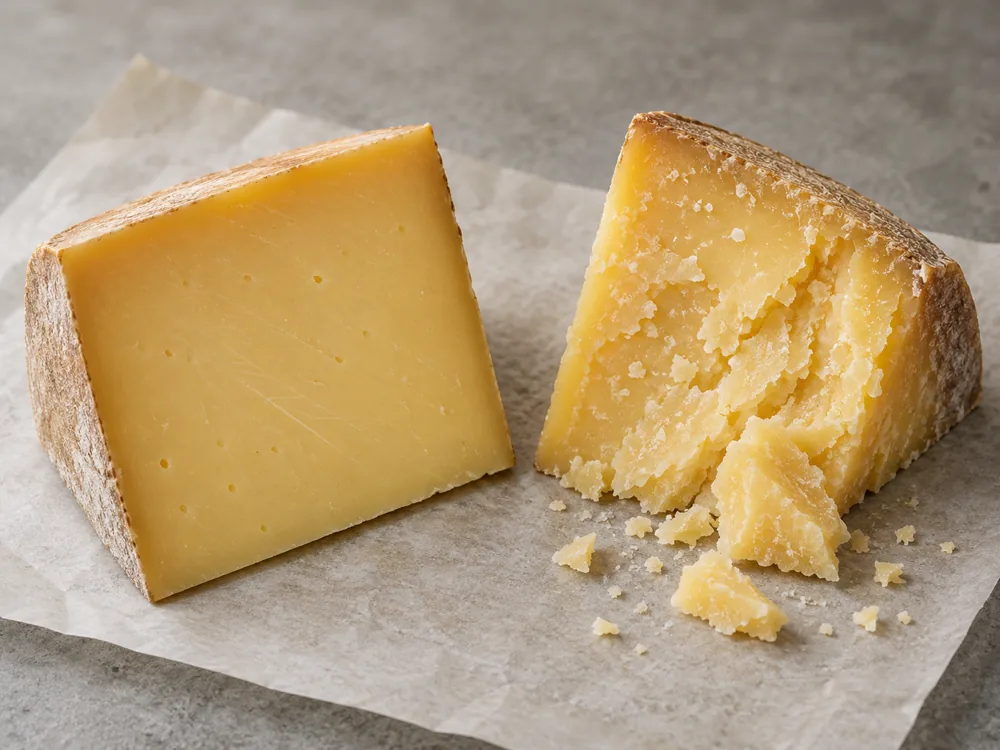
Palatable Partners keeps its two descriptions apart as well: its Gruyere has a "full rich nutty flavour with a hint of sweetness" and a long, lingering finish, while the Aged Gruyere is held "to capture a depth of flavour, richness with a long finish".
Where Is Heidi Farm Cheese Made?
Heidi Farm began at Exton in northern Tasmania, the home given for the cheese, and in 2016 its Gruyere was made for Lion Dairy and Drinks at the factory in Burnie.
Swiss cheesemaker Frank Marchand arrived in Tasmania in 1975 to work for the Lactos Cheese Co. in Burnie, and after leaving he founded Heidi Farm as a small dairy and farm shop at Exton. He and Elizabeth Marchand set up a dairy farm in Tasmania in the 1980s, and he retired in 2002.
At Lactos, Marchand and fellow Swiss cheesemaker Ueli Berger helped develop a Swiss-style cheese now known as St Claire. The master cheese maker making Heidi Farm Gruyere in Burnie in 2016 was also named Ueli Berger.
How Is Heidi Farm Gruyere Made and Matured?
For the Gruyere, cultures and rennet set the curd, which is cut into tiny, rice-sized grains, washed and reheated before it is hooped and pressed.
During maturation the 10 kg wheels are washed and brushed, which encourages Brevibacterium linens on the damp rind. Calendar Cheese describes the result as an orange, pungent, slightly sticky rind whose savoury flavour complements the nuttiness of the cheese inside.
In 2016 the Grand Champion Gruyere was washed by hand every day for the first three weeks and three times a week after that, right up until it was sold. Berger told ABC Rural that "you just can't relax with that kind of cheese otherwise it just doesn't behave."
Berger said the secret of good cheese is good grass-fed milk, and the Burnie area is known for premium grass-fed milk.
After a dry season had left many Tasmanian dairy producers buying in dry feed, Berger said that heavy grain feeding leaves milk proteins unable to hold as much moisture, so the make has to be adjusted or the cheese gets too runny.
The words natural rind do not separate the two cheeses. Cheese.com lists a natural rind for the aged cheese and Palatable Partners calls the Gruyere "natural rinded", while the 10 kg Gruyere's rind is washed and orange.
Is Heidi Aged Cheese Safe During Pregnancy?
The CDC's safer choices fit this 18-month wheel too, since they include hard cheese made with pasteurized milk, such as Swiss, Gruyere and Emmental. The CDC also says pregnant women are 10 times more likely to get a Listeria infection.
The CDC's line turns on the milk, so check the label of the piece in hand for pasteurised milk.
Is Heidi Aged Cheese Vegetarian?
Cheese.com marks Heidi Aged Cheese as vegetarian.
The 10 kg Heidi Gruyere is made with non-animal rennet, but that is the Gruyere's rennet, so if you avoid animal rennet, ask the seller which rennet the aged wheel was made with.
Does Heidi Aged Cheese Melt, and What Goes with It?
The melting advice for Heidi cheese is written for the 10 kg Gruyere: Calendar Cheese ties its smooth, elastic paste to excellent melting properties and calls it perfect for grilling, soufflés and fondue.
The 18-month cheese is described as flaky and crystalline instead, so that advice was written for a different paste from the one in the aged wheel.
Food Wine Travel's writer served the 18-month Gruyere with fresh walnuts and said they highlighted its sweet, nutty flavours.
Where Can You Buy Heidi Aged Cheese?
ABC Rural reported in 2016 that Heidi Farm Gruyere was sold only in Australia and that the maker was struggling to meet local demand.
Palatable Partners calls the Aged Gruyere a "very limited release" in a note dated December 2023.
Because the Gruyere has been reported at both six and 18 months, ask the seller how many months the wheel was matured, since that figure tells you which cheese is on the counter.
Is Heidi Cheese from Canada the Same Cheese?
No. The Canadian Heidi is made by The Farm House Natural Cheeses in the Fraser Valley, British Columbia, as a pasteurised, Alpine-style cheese from Guernsey and Brown Swiss cow's milk.
It ages for a minimum of eight months and an optimum of 12, short of the Tasmanian cheese's 18, and it is made only in summer, when the cows graze on lush pasture.
Its wheels are washed with a whey-based brine early in ageing and later only brushed, and it has a smooth golden paste when ready for sale.
Culture magazine suggests Chardonnay, Beaujolais or Pinot Noir with the Canadian cheese.