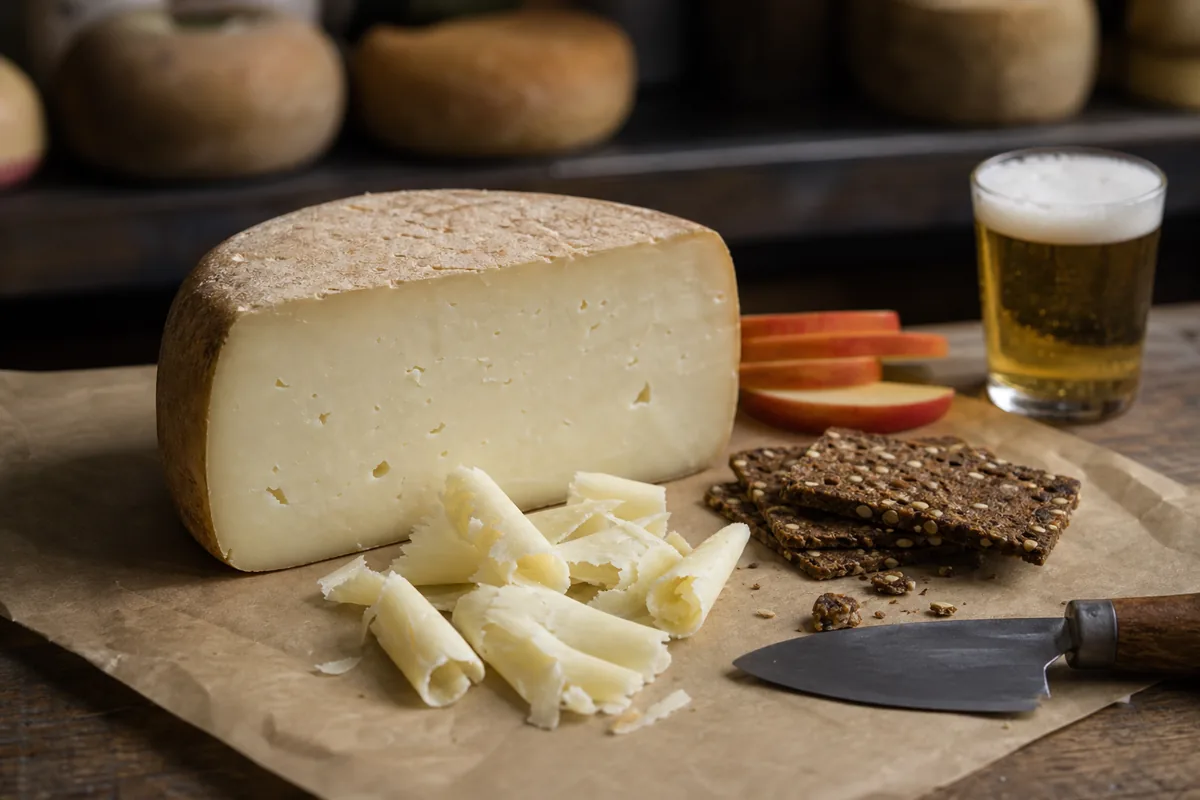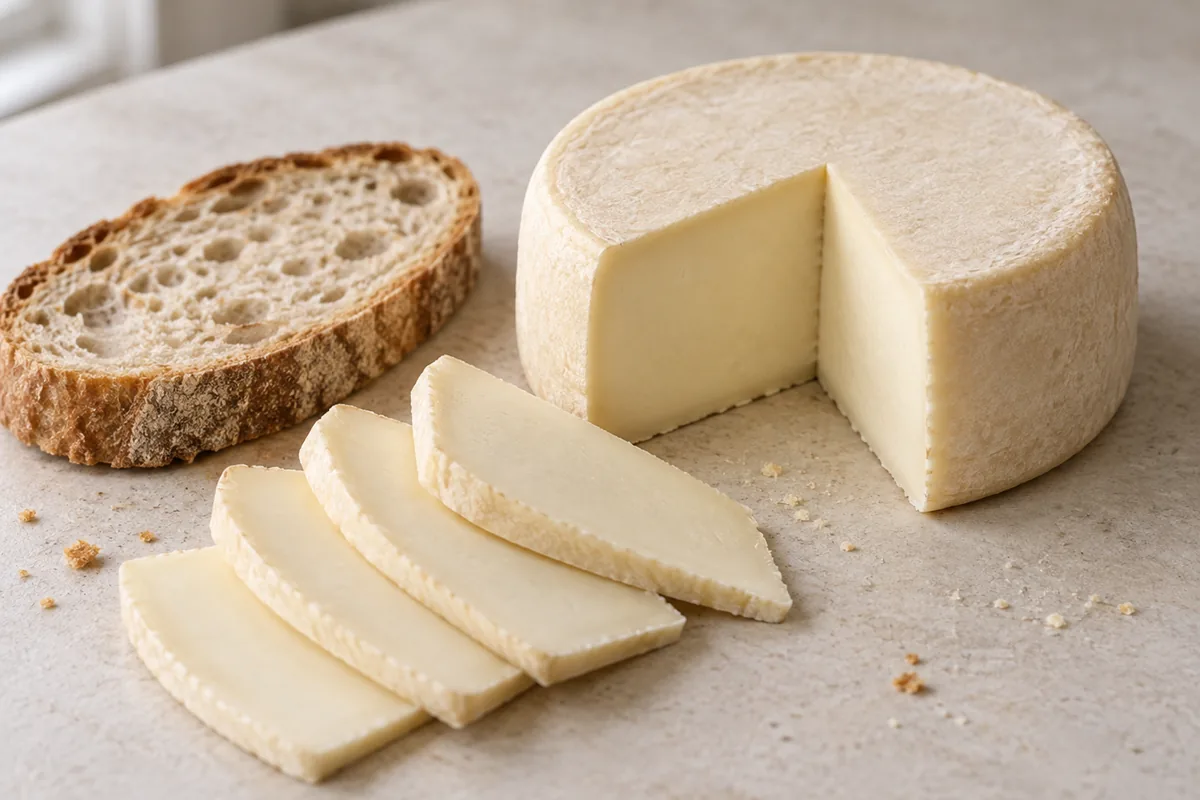
Mild Goat's Cheese is a semi-soft Dutch cheese made from pasteurized goat's milk, which Cheese.com describes as gentle and mild in flavor.
In This Article
What Is Mild Goat's Cheese?
Cheese.com's entry puts it in the Netherlands and gives its type as semi-soft, its color as cream, and its rind as natural. It lists Dutch Cheeseman UK as the producer.
The entry is short, so the ageing time, the fat content and the rennet type have to come from the pack in front of you.
Dutch Cheeseman UK, the producer Cheese.com lists, says on its own product page that the cheese is made from 100% Dutch goat's milk.
What Does Mild Goat's Cheese Taste Like?
Cheese.com lists the flavor as creamy, mellow, and mild and the aroma as mild.
Royal Hollandia, the FrieslandCampina brand that sells a Mild Goat Cheese Wheel, uses almost the same words: a mild and creamy taste.
For someone who usually dislikes goat cheese, mild is a descriptor rather than a measured level, so a small first piece limits the cost of a wrong guess.
Dutch Cheeseman UK's page calls the flavor mild and gentle and recommends the cheese to people who want a softer taste.
None of the three descriptions uses the words Cheese.com gives the other two goat cheeses in this article: gamey and tangy at one end of chèvre's range, and a tangy flavor with a grassy aroma for goat Gouda. The sources agree on a direction, milder than those two, but not on a level a buyer could measure.
How Is Mild Goat's Cheese Different from Chèvre and Goat Gouda?
Cheese.com lists all three as goat's milk cheeses, and the differences it records are in body, flavor, and milk treatment.
| Cheese | Type and texture | Flavor | Milk |
|---|---|---|---|
| Mild Goat's Cheese | Semi-soft, creamy | Creamy, mellow, mild | Pasteurized goat's milk |
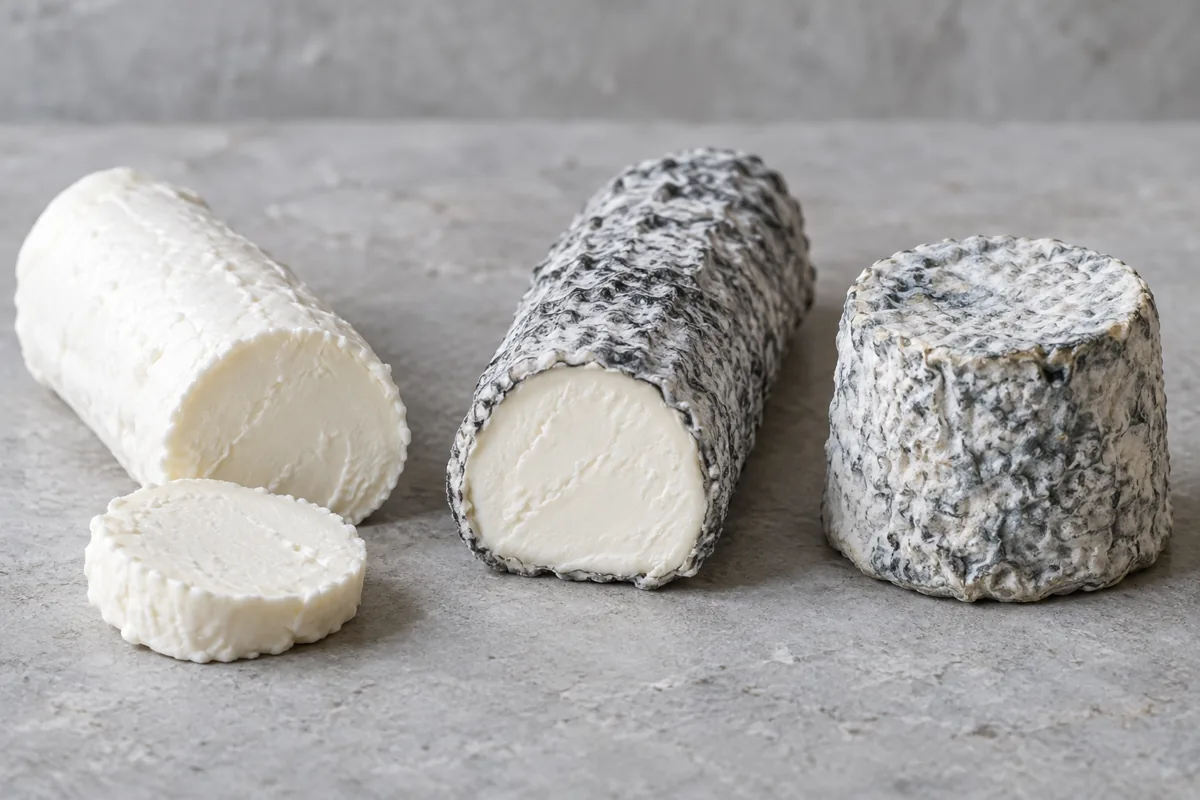
| Chèvre | Fresh and soft, spreadable when fresh, firmer and crumbly as it ages | Ranges from gamey and tangy to mild and creamy | Pasteurized or unpasteurized goat's milk |
| Goat Gouda | Semi-hard, chalky and firm | Tangy, with caramel, nut, and tart apple notes as it matures | Pasteurized goat's milk |
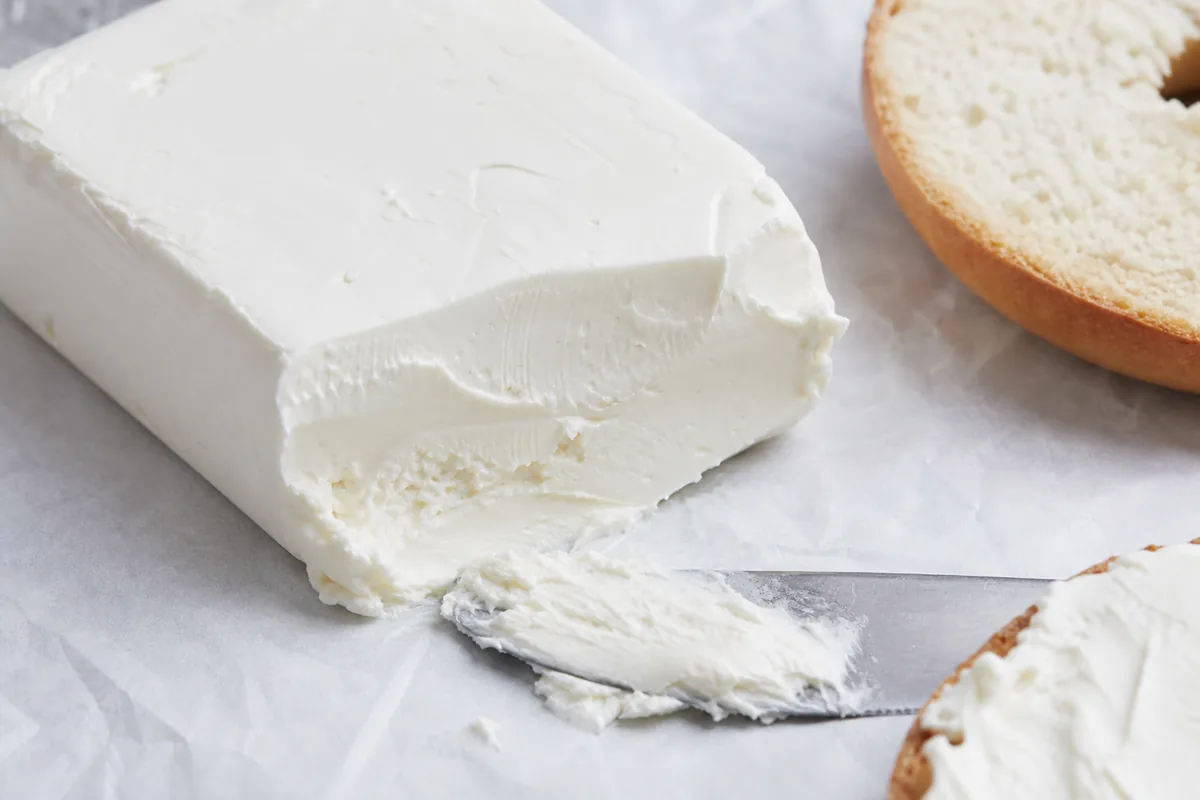
Mildness does not separate Mild Goat's Cheese from chèvre, because Cheese.com's chèvre entry says chèvre itself can be mild and creamy. The dependable difference is body: a fresh chèvre spreads, while this cheese is described as one that slices easily.
Cheese.com explains that chèvre is the French word for goat and covers goat cheeses from fresh and creamy to aged and crumbly, so a comparison only holds once the style is fixed.
Fresh chèvre is often sold as logs or small rounds that may be rolled in herbs or spices, while Cheese.com lists this cheese with a natural rind and Royal Hollandia sells it as a wheel.
Goat Gouda differs in the other direction. Cheese.com files it under semi-hard Dutch cheeses and Mild Goat's Cheese under semi-soft ones, so the two are separate cheeses and not one cheese under two names.
Dutch origin and goat's milk are the two traits the two Cheese.com entries share, and only goat Gouda is filed in the Gouda family.
Does Mild Goat's Cheese Melt, and What Goes With It?
Cheese.com credits the cheese with excellent melting properties and says it pairs wonderfully with bread, and Royal Hollandia's sheet lists melting, slicing, shredding, and cheese board among its serving suggestions.
Together with the easy slicing, those traits point to the simplest use, a slice that softens on toast.
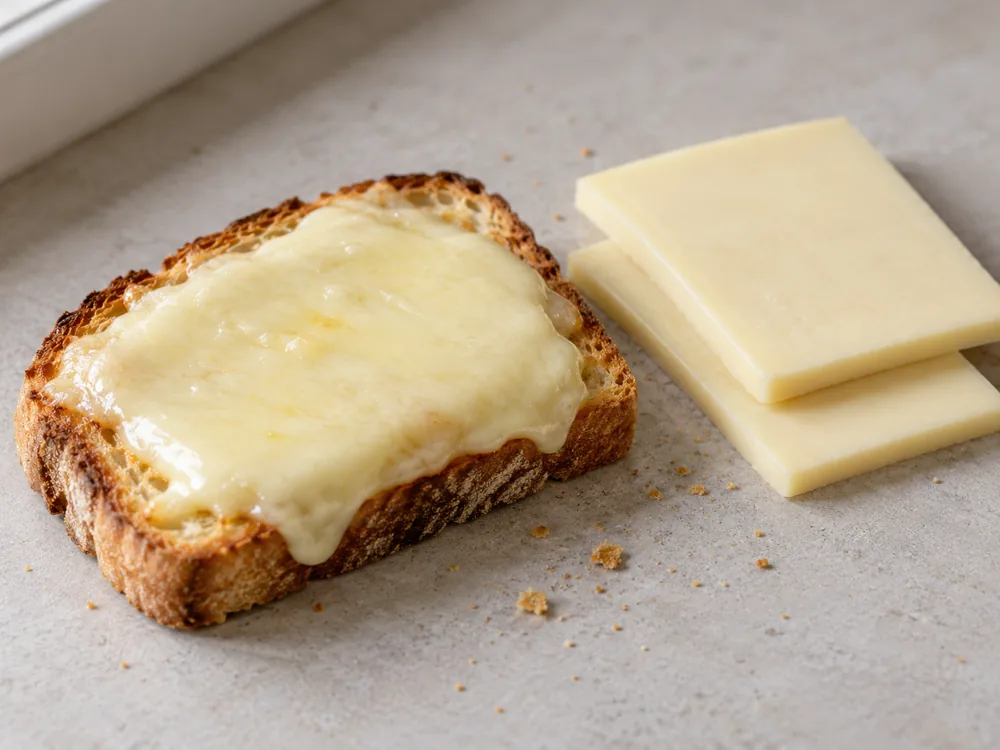
Dutch Cheeseman UK's page recommends slices for sandwiches, cheese boards, and platters, and lists toast, paninis, salads, and sauces among its uses.
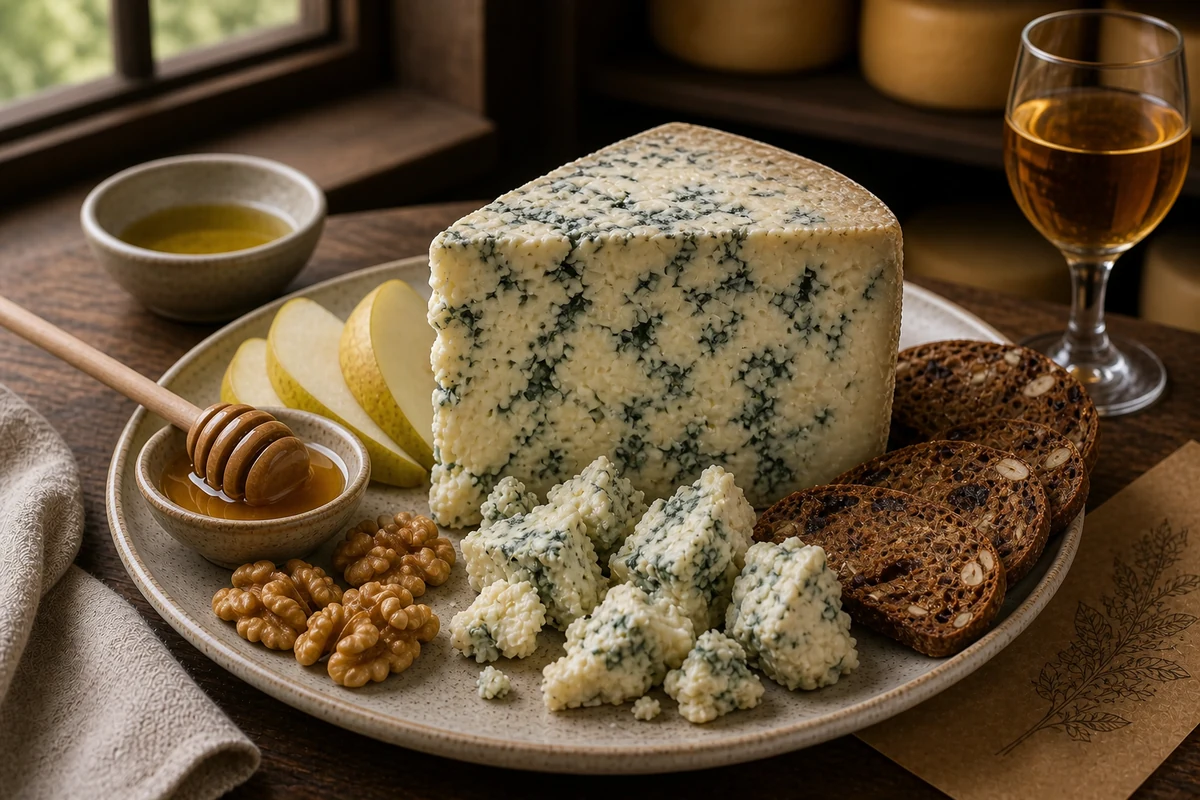
For a platter, Royal Hollandia's product sheet suggests dried apricots, blackberries, Riesling, and Amber Ale with its Mild Goat Cheese Wheel.
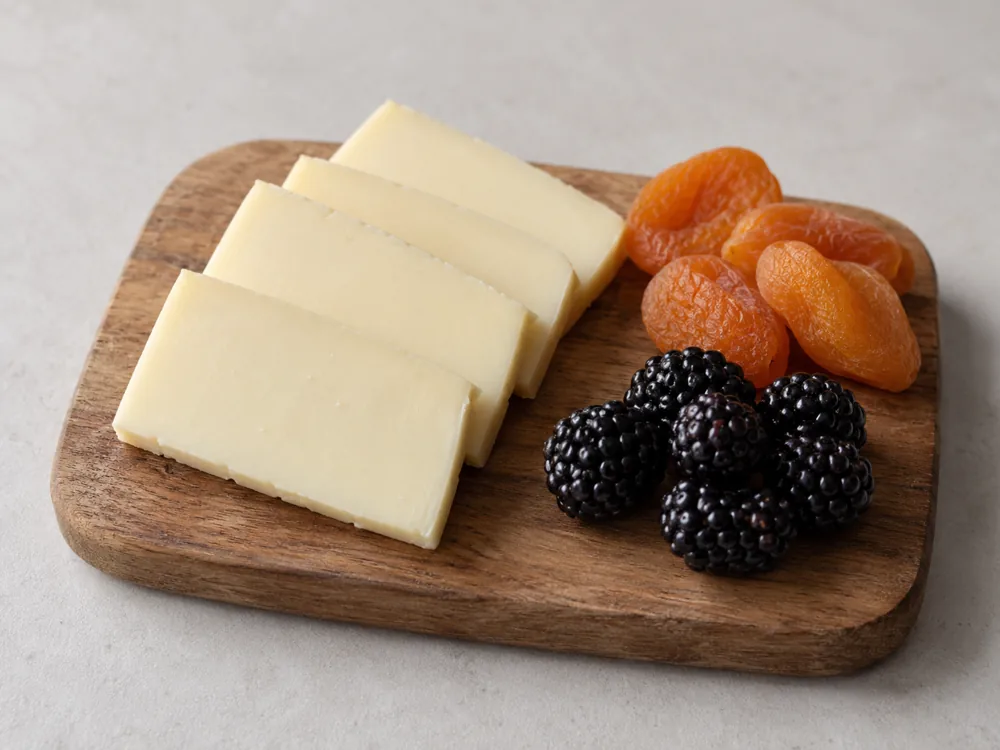
Dutch Cheeseman UK's page adds bread or crackers and white wines such as Chardonnay or Pinot Grigio, which agrees with Royal Hollandia on white wine but not on the Amber Ale.
Cheese.com's goat Gouda entry names Chardonnay, Sauvignon Blanc, and Pinot Noir, but it describes a different cheese, so Sauvignon Blanc and Pinot Noir are not pairings any source gives for Mild Goat's Cheese.
What Sizes Is Mild Goat's Cheese Sold In?
Dutch Cheeseman UK sells the cheese in 250 g, 500 g, and 1 kg sizes and uses one description for all three, so the choice between them is a choice about quantity.
Royal Hollandia's sheet lists a wheel with a net weight of 10 lb, shipping dimensions of 9.84 by 9.84 by 4.25 inches, and 160 servings per container, and marks it ready to eat.
Measured against the 1 oz serving (about 28 g) on that sheet, the 250 g size holds about 9 servings, the 500 g size about 18, and the 1 kg size about 35. The 10 lb wheel weighs about 18 times as much as the 250 g size.
What Should You Check on a Mild Goat's Cheese Label?
Cheese.com's producer and Royal Hollandia are two different companies, and a shared name does not make two packs the same recipe. The ingredient list and milk statement say more than the name does.
Royal Hollandia's sheet lists pasteurized goat's milk, salt, starter culture, and rennet. A vegetarian buyer should ask the brand what that rennet is made from.
Cheese.com does list goat Gouda as suitable for vegetarians, but that line belongs to the goat Gouda entry and does not carry over to this cheese. Dutch Cheeseman UK's product page points buyers to a separate ingredients and allergens page.
Royal Hollandia's sheet lists these figures for a 1 oz serving, and they are one brand's numbers, not a value for every mild goat cheese.
Converted from that 1 oz serving, they work out to roughly 420 calories, 21 g of protein, and 700 mg of sodium per 100 g, the form to compare against a label that prints per 100 g.
On any pack under this name, the ingredient list and milk statement carry the facts the name does not, and a rennet line that does not say what it is made from leaves the vegetarian question open. Nutrition figures belong only to the brand that printed them.
What Does the Hollandse Geitenkaas Name Guarantee?
Hollandse Geitenkaas, which translates as Dutch goat's cheese, is a protected geographical indication: according to Dairy Reporter, the European Commission confirmed it in May 2015, after the Netherlands applied in October 2013.
Dairy Reporter describes the cheese as semi-hard and prepared in a comparable way to Gouda, quotes its taste as soft, mild, and clean, and says the instructions it protects can be traced back to 1946.
| Fact | Hollandse Geitenkaas | Mild Goat's Cheese records |
|---|---|---|
| Milk | Pasteurised cream or whole, semi-skimmed, or skimmed milk from Dutch White goats or Dutch White cross-breeds | Dutch goat's milk, pasteurized per Cheese.com and Royal Hollandia; breed not stated |
| Heat treatment | At least 71.8°C for at least 15 seconds, before rennet and lactic acid are added | Temperature and time not stated |
| Make | Whey removed, cheese moulded, pressed, and soaked in brine | Not described |
| Ripening | At least 25 days: naturally at 10 to 14°C in the Netherlands, or in foil at 4 to 7°C in or outside the Netherlands | No ageing time stated |
| Fat | 50% to 60% | No fat percentage stated |
| Salt | At most 4.1% in dry matter | No salt limit stated |
Ripening is the detail a buyer can least see on a pack, because Dairy Reporter says foil ripening may take place in or outside the Netherlands.
As Dairy Reporter explains, a protected geographical indication needs only one stage of production, processing, or preparation in the area, so the name tells a buyer the recipe's limits, not where the wheel finished ripening.
The application says ripening time and temperature shape the cheese's sensory qualities, and it credits Dutch skill in ripening semi-hard cheese for its quality and flavour. That explains why the rules fix a minimum time and a temperature band.
Cheese.com types Mild Goat's Cheese as semi-soft, while Dairy Reporter describes Hollandse Geitenkaas as semi-hard, so a Hollandse Geitenkaas pack should not be assumed to be the same product.
How Should You Store Mild Goat's Cheese?
Royal Hollandia's handling note for its wheel is to wrap it in parchment paper and store it in a container.
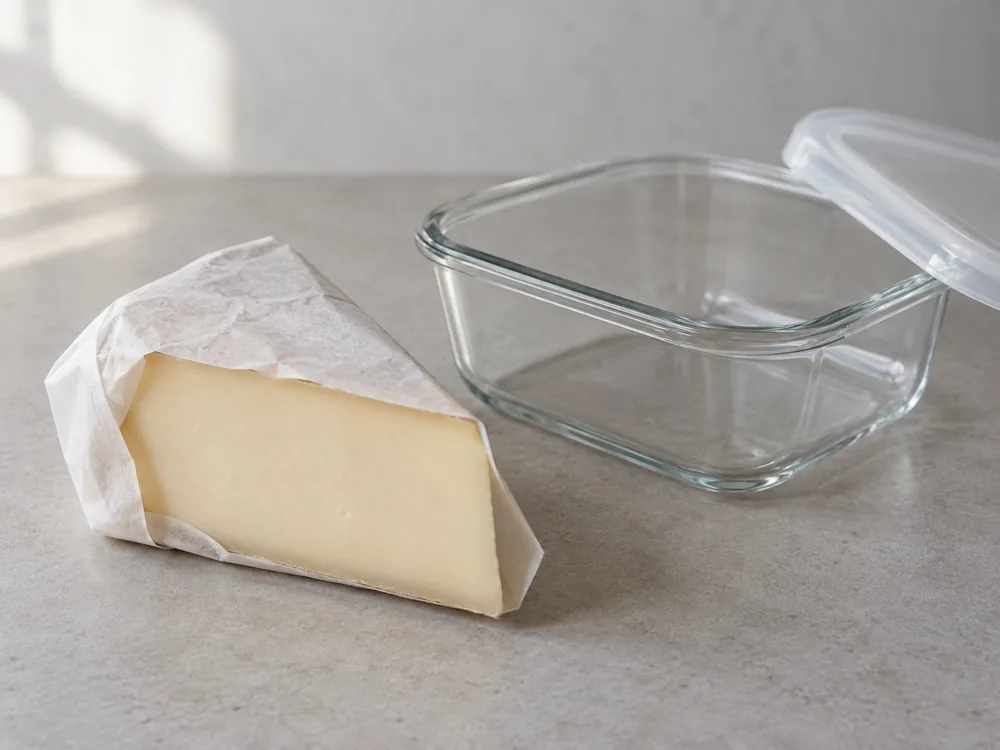
The same sheet lists a storage temperature of 35 to 37.5°F (about 1.7 to 3.1°C) and a shelf life of 198 days, which are trade figures for the wheel rather than a window for a piece you have cut.
For a cut piece, follow the date and instructions on the pack, and keep the home refrigerator at 40°F or below, the CDC's limit.
The sheet's range tops out at 37.5°F, which is 2.5°F below that CDC ceiling, and its 198 days go with that colder range.
Can You Eat Mild Goat's Cheese While Pregnant?
Cheese.com and Royal Hollandia's sheet both give pasteurized goat's milk, so unpasteurized milk is not the open question for the products they describe.
The open question is the rind, so check whether the piece has a white coating. The NHS lists pasteurized goats' cheese without a white coating as safe to eat, but says mould-ripened soft cheeses with a white coating, such as brie, camembert and chèvre, must be thoroughly cooked, whether pasteurized or unpasteurized.
The NHS also lists any cheese that has been cooked until steaming hot, including soft cheese, among the foods that are safe to eat.
An unheated piece of this pasteurized semi-soft goat cheese falls in neither CDC group: soft cheese from unpasteurized milk is riskier, and pasteurized soft cheese heated to an internal temperature of 165°F or until steaming hot is safer. Pregnant women, the CDC says, are 10 times more likely to get a Listeria infection.
What Can You Use Instead of Mild Goat's Cheese?
The right substitute depends on which trait the dish needs: the goat's milk, the slice, or the melt.
| Substitute | What it keeps | What changes |
|---|---|---|
| Young Gouda | Mild, creamy young Gouda that melts | Goat's milk only if the label says so, because Gouda can be made from cow's, goat's, or sheep's milk |
| Goat Gouda | Goat's milk in a Dutch Gouda | Semi-hard, chalky, and tangy instead of creamy and mild |
| Fresh chèvre | Goat's milk, with a flavor range that includes mild and creamy | Soft and spreadable instead of sliceable |
Cheese.com says the Gouda name is not protected and that Gouda is typically made from cow's milk, with sheep's or goat's milk used in some artisan versions, so a pack labeled only Gouda is most likely a cow's milk cheese.
Age changes the match more than the name does, since Cheese.com puts Gouda's ageing anywhere from a few weeks to years.
Cheese.com describes young Gouda as softer, smoother, and suitable for melting, and aged Gouda as hard, with tiny protein crystals and excellent for grating, so the young end suits a mild slice that melts.
Young Gouda is the closest match when the dish needs a mild slice that melts. Chèvre is the closer match when goat's milk matters more than slicing.