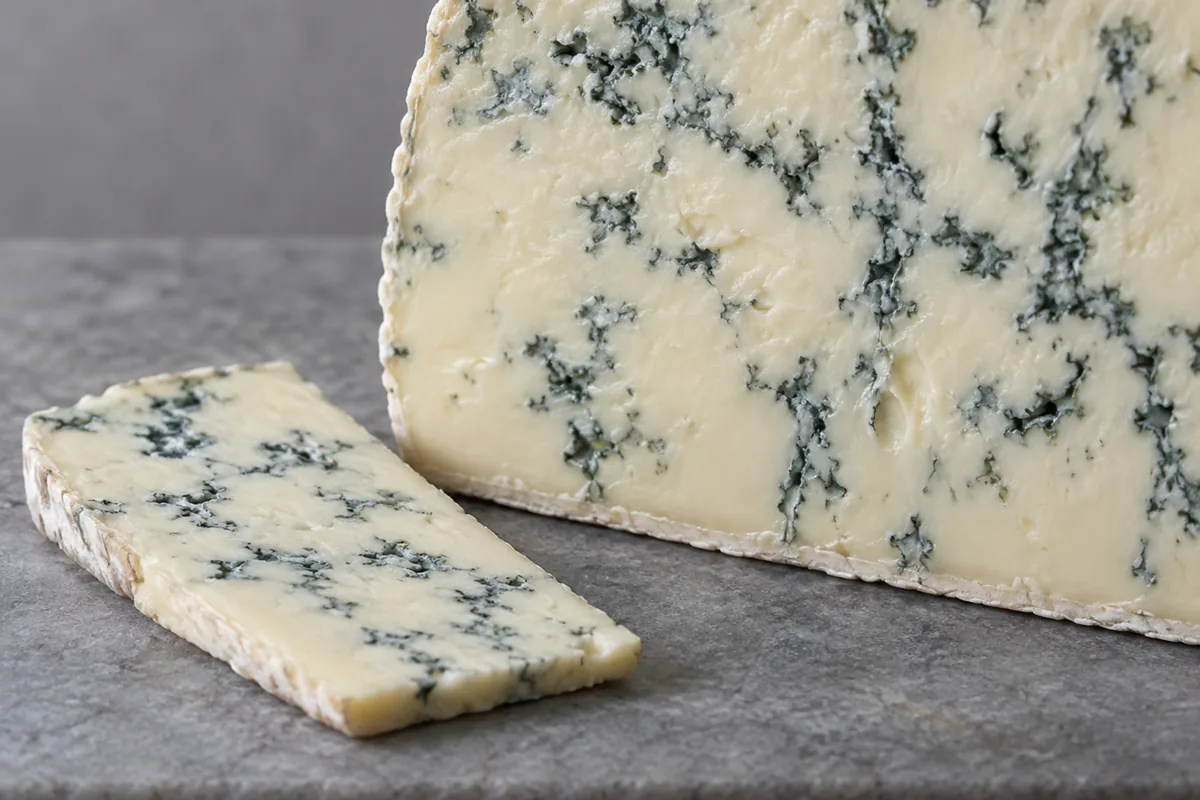
Blue Castello is the name used for Castello's soft, creamy Danish blue cheese, which you will find sold as Creamy Blue on the brand's UK and Australian pages and as Double Crème Blue on its US pages. It is made with pasteurized cow's milk and cream and shaped as a half-moon wedge.
In This Article
Are Blue Castello, Creamy Blue and Double Crème Blue One Cheese?
Yes, by Castello's own account. Its Australian product page says that, because of its non-standard recipe, "Castello Creamy Blue" or "Blue Castello" is sometimes recognised as its own cheese type, and the US page makes the same statement about Double Crème Blue.
Arla Foods bought Tholstrup Cheese in 2006, and that year's annual report already uses Blue Castello as a brand name. It says only this blue mould cheese carried the Castello name until the mid-1990s, and it names the Gjesing dairy as the maker of "primarily Blue Castello".
| Source | Name it uses | What it adds |
|---|---|---|
| Castello Australia | Castello Creamy Blue, or "Blue Castello" | First made in Denmark in 1969 |
| Castello US | Double Crème Blue, or "Blue Castello" | Pasteurized milk; 5.1 oz pack |
| Arla Foods annual report 2006 | Blue Castello | Brand name of the blue mould cheese; Castello dates to the 1960s |
| Cheese.com | Blue Castello, also Castello Blue | Created in the 1960s by Tholstrup Cheese Company |
| Wikipedia | Blue Castello | Calls it a triple cream blue in some markets |
Blue Castello is Danish and made from cow's milk in all of these accounts, but it dates to 1969 by Castello's count and only to the 1960s by Cheese.com's and Arla's.
Its richness is described two ways: as a "double crème" made with milk with high levels of cream in Castello's wording, and as a triple cream in Wikipedia's.
Blue Castello comes in 95 g, 150 g, and 300 g packs, and in a 5.1 oz pack in the US.
Look for the Castello brand with the name Creamy Blue or Double Crème Blue, depending on the market.
What Does Blue Castello Look and Taste Like?
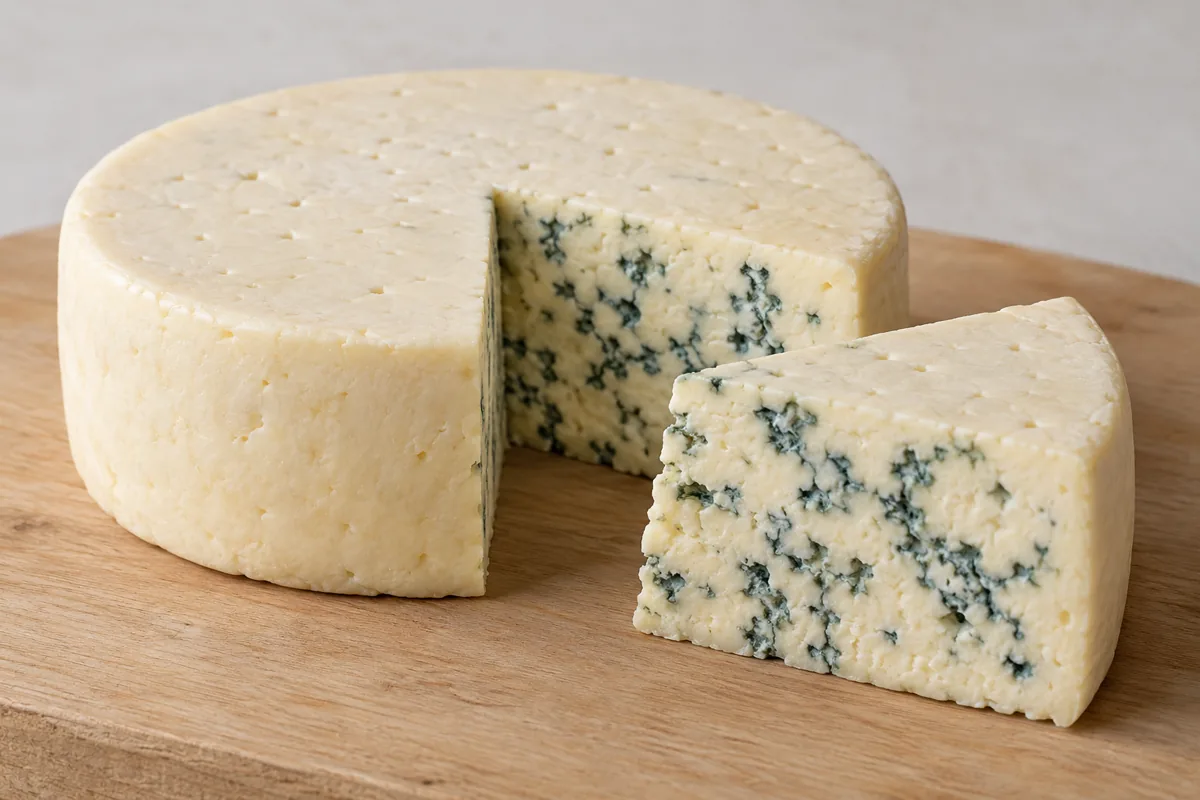
You will recognise it by its ivory body with blue veins that "stretch like gushing rivers", as Castello describes them, and by the half-moon wedge, which Castello says makes the cheese easy to slice while showing the blue-mould marbling.
Expect a soft cheese: "soft, buttery" on the product page and "soft and pliable" on the cheese-type page. The same product page says the added cream gives it a "soft, spreadable texture" and mellows the stronger notes found in blue cheeses.
Castello's product page calls the taste "mild, milky and not too strong, yet brimming with complexity, depth and delicately sharp notes". Its Australian and US pages rate the strength 4 out of 6 and label that level "Bold".
Its cheese-type page says "mild, bordering on tangy", with "tones of toasted hops". Cheese.com lists a buttery flavour and a spicy aroma.
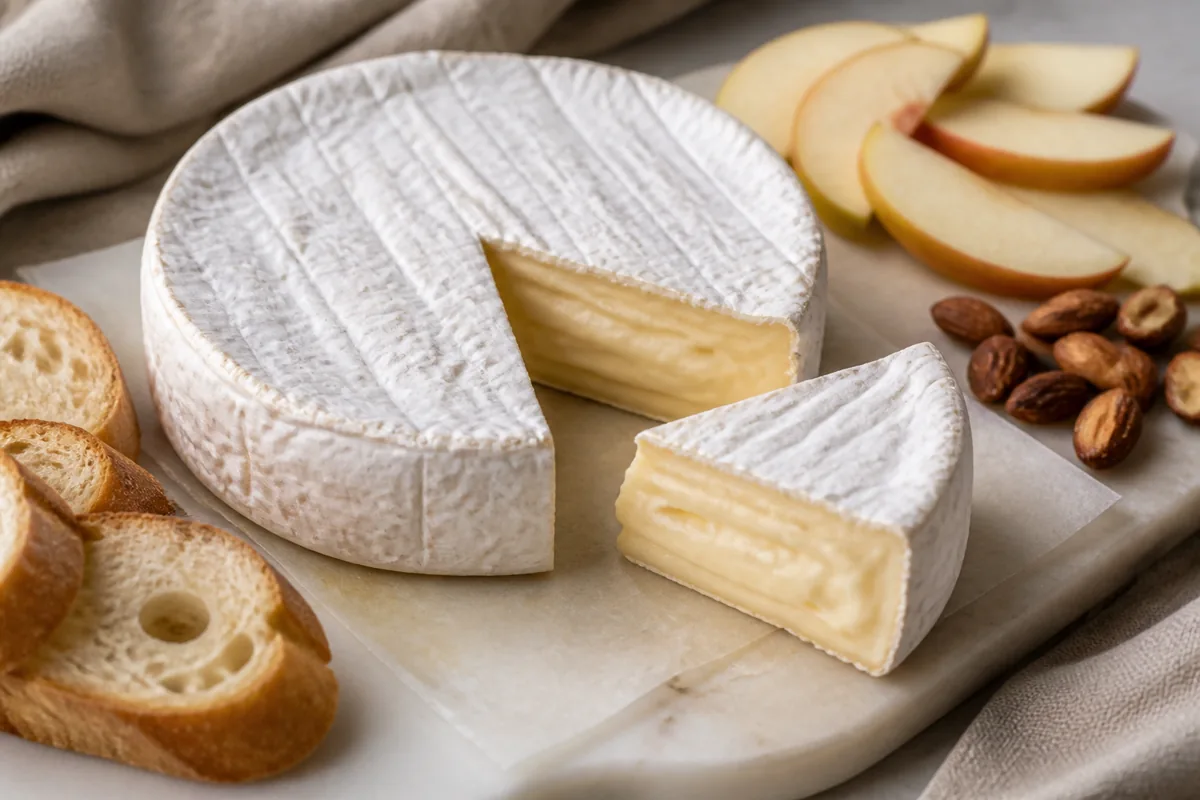
If you know Brie, that is the comparison Castello itself draws: the cheese "was created to marry all the best qualities of brie and traditional blue cheeses". Wikipedia likewise compares its smooth, rich texture to that of Brie.
Castello's Australian and US product pages, Cheese.com, and Wikipedia all list a washed rind.
Do not confuse it with Danablu, a separate cheese that Arla's 2006 report dates to 1927 and describes as made from homogenised milk.
Danablu is one of two Danish cheeses with EU protected designation of origin in Arla's report and "Danish Blue (PGI)" on Castello's cheese-type page, which calls it firm and crumbly.
How Is Blue Castello Made?
Castello says it starts in Denmark with fresh cow's milk and cream and hand-added cultures. Its cheese-type page adds that the pasteurized milk comes from Danish Jersey and red-pied cows at the Gjesing dairy in mid-Jutland.
The milk goes into traditional open vats with cultures and enzymes, and the curd is cut, put in moulds, and salted. The rind is coated with salt, and workers pierce it with steel needles so the mould can develop from the centre.
Each cheese is pierced in a distinctive star pattern, which encourages the blue mould to grow evenly and gives the marbling.
If you check the label, you will find pasteurised milk, cream, salt, lactic acid culture, microbial rennet, blue mould culture, and maturing culture, with milk as the declared allergen.
How Many Calories and How Much Fat Are in Blue Castello?
Per 100 g, Castello gives 431 kcal and 42 g of fat, and saturated fat makes up about two thirds of that fat.
| Nutrient | Per 100 g (Castello) | Per 30 g (our arithmetic) |
|---|---|---|
| Energy | 1779 kJ / 431 kcal | 534 kJ / 129 kcal |
| Fat | 42 g | 12.6 g |
| Saturated fat | 27 g | 8.1 g |
| Carbohydrate (sugars) | under 0.5 g (under 0.5 g) | under 0.15 g |
| Protein | 13 g | 3.9 g |
| Salt | 1.6 g | 0.48 g |
Use the 30 g column to size a portion: it is our multiplication of Castello's per-100 g figures, not a serving size printed on the label.
How Should You Serve Blue Castello?
Serve it at room temperature: Castello says to take it out of the refrigerator at least half an hour before serving.
| Use | How It Works |
|---|---|
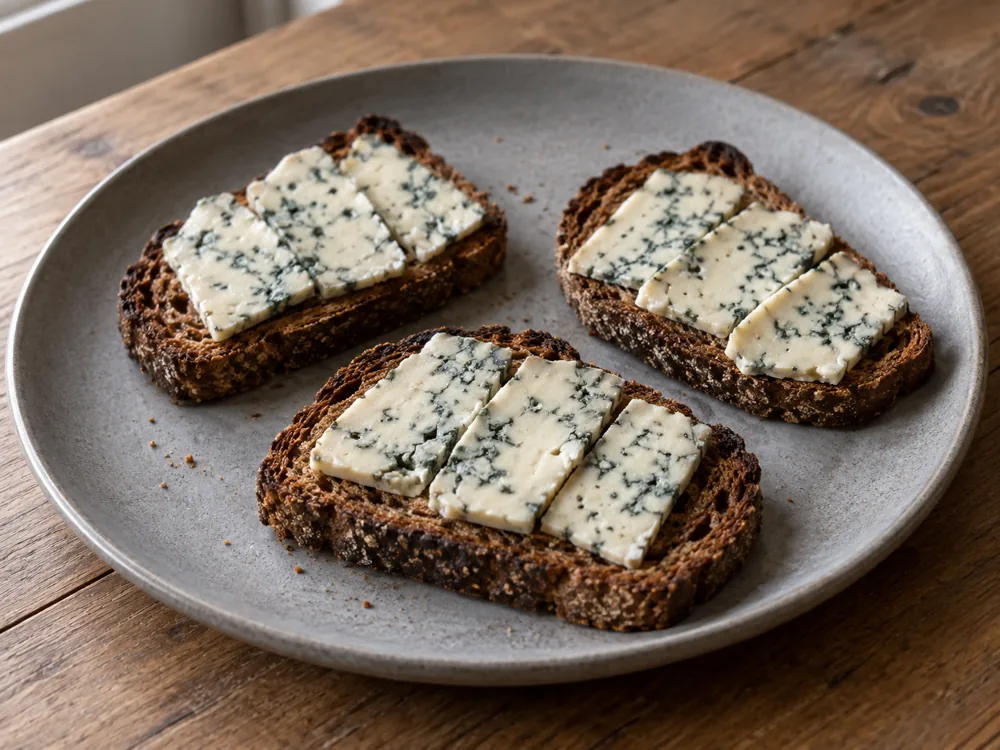
| Bread or crackers | Castello says to slice it and enjoy it on top. |
| Cheese board or dessert | Both are named on Castello's Australian page. |
| Pizza, soup, or salad | Castello says the cheese elevates the flavour of these dishes. |
| Baked potatoes and seared game | Both are suggested on Castello's cheese-type page. |
For cheese on pizza, soup, or salad, take Castello's suggestions as ideas and follow your recipe for the heat and timing.
What Goes Well with Blue Castello?
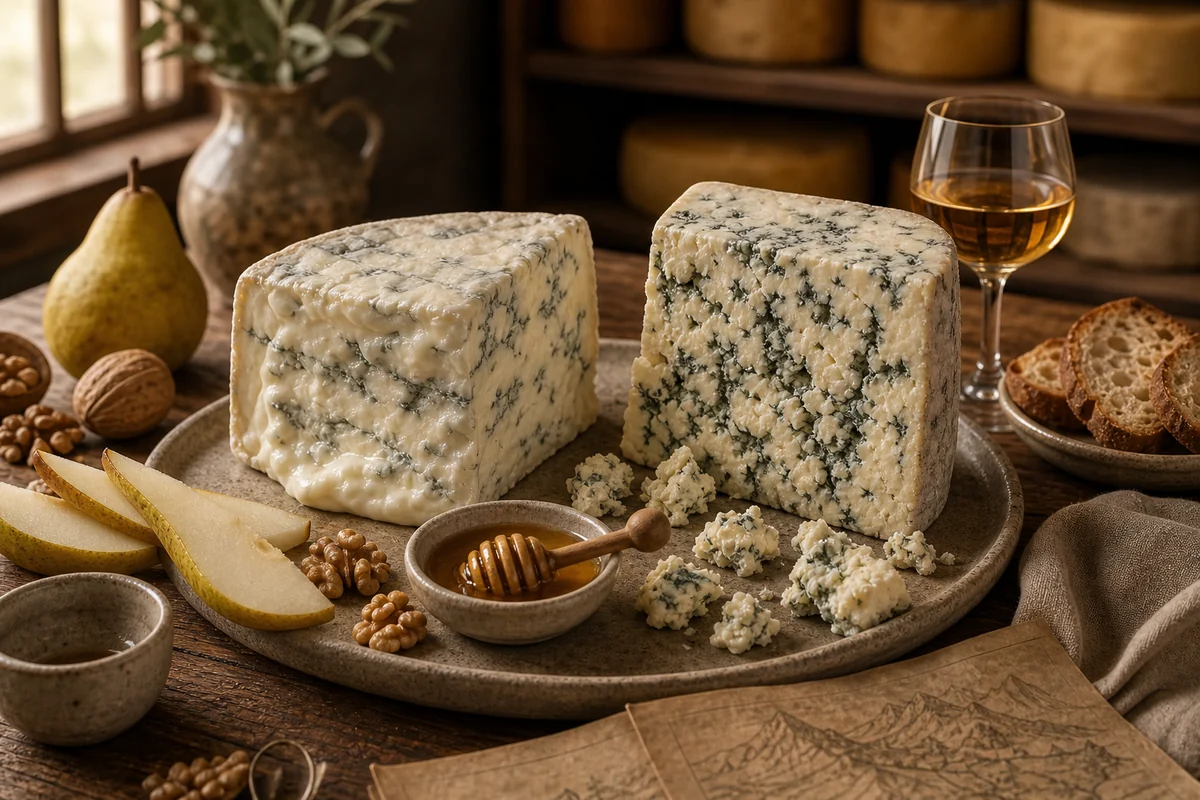
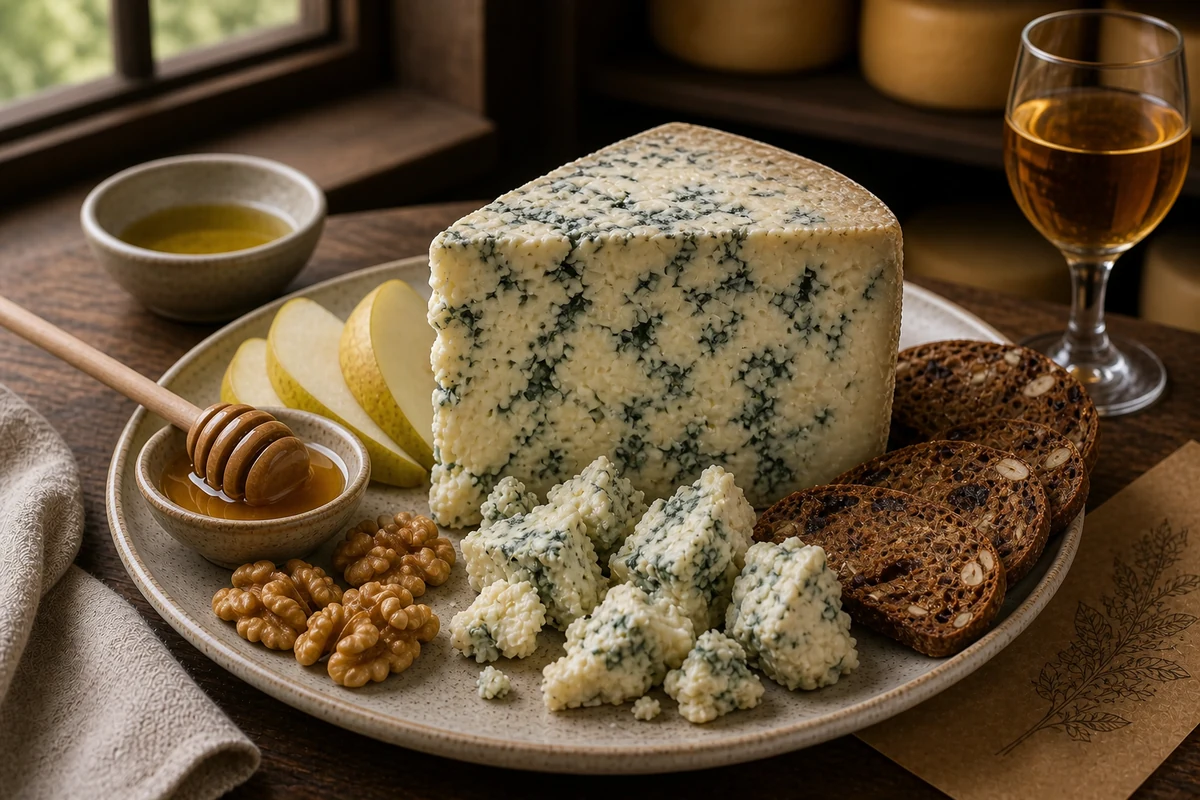
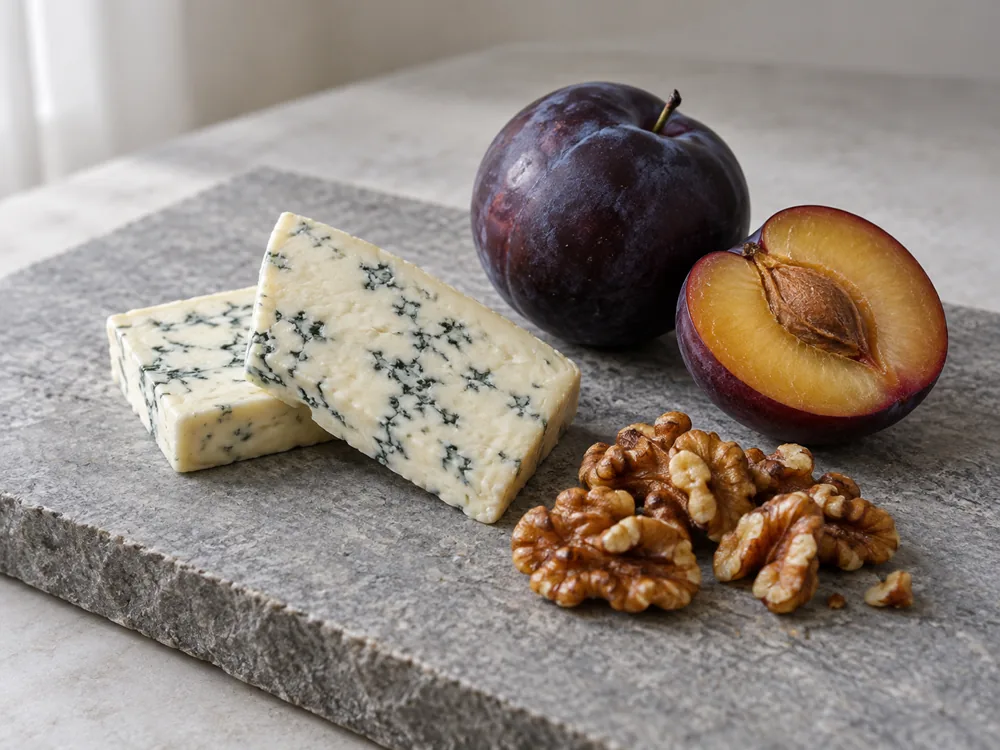
To eat alongside it, Castello names plum, butter-roasted walnuts, fresh pears, and toasted rye bread, and to drink, Pinot Gris, Cabernet Sauvignon, or an IPA.
| Pairing | Type | Why It Works |
|---|---|---|
| Plum | Food | Listed on Castello's product pages. |
| Butter-roasted walnuts | Food | Listed on Castello's product pages. |
| Toasted rye bread | Food | Named on Castello's cheese-type page, with fresh pears and roasted nuts. |
| Pinot Gris | Wine | Listed on Castello's product pages. |
| Cabernet Sauvignon | Wine | Listed on Castello's product pages. |
| IPA | Drink | Listed on Castello's product pages. |
| Fresh pears | Food | Named on Castello's cheese-type page. |
How Long Does Blue Castello Keep, and Can You Freeze It?
Castello's advice for storing the cheese is to keep it in the refrigerator, either in its original packaging or loosely wrapped in wax or baking paper. Once opened, it keeps well for about 5 days if stored properly.
Arla's 2006 report says Blue Castello held more than a third of the Australian blue mould cheese market that year, and that the cheese was frozen in Denmark and shipped frozen.
At home, Castello says you can freeze it, but it becomes crumbly and less creamy, so it suits cooked dishes after thawing. Wrap it tightly in the original packaging and put it in an airtight freezer bag or container, as Castello advises.
Is Blue Castello Safe During Pregnancy?
If you are in the UK, the NHS rule for soft blue cheese applies by our reading: the NHS lists "pasteurised or unpasteurised soft blue-veined cheeses, such as Danish blue, gorgonzola and roquefort" among the foods that "must be thoroughly cooked". It also lists any cheese cooked until steaming hot, including soft or blue cheese, as safe to eat.
In the US, the CDC says pregnant women are 10 times more likely to get a Listeria infection. It lists soft cheese made from unpasteurized (raw) milk, including blue-veined cheese, as riskier, and pasteurized soft cheeses heated to an internal temperature of 165°F or until steaming hot as safer.
If you want Blue Castello while pregnant, cook it until steaming hot. Cooked that way, this pasteurised wedge meets both lines above: the NHS's "cooked until steaming hot" and the CDC's "internal temperature of 165°F or until steaming hot".
Served cold, Blue Castello is described as a pasteurized soft, buttery and spreadable blue cheese, a type the CDC list does not cover, so ask a midwife or doctor.
SOURCES & REFERENCES
What Else Do People Ask About Blue Castello?
According to Castello, yes. Its Australian page says "Castello Creamy Blue" or "Blue Castello" is sometimes recognised as its own cheese type, and its US page says the same about Double Crème Blue.
No. Arla's 2006 report describes danablu as a separate cheese dating to 1927, made from homogenised milk, and gives it EU protected designation of origin, while Castello's cheese-type page labels it Danish Blue (PGI).
Castello calls it mild, milky, and not too strong, with delicately sharp notes. Cheese.com lists a buttery flavour and a spicy aroma.
Yes. The ingredient list begins with pasteurised milk and cream, and milk is the declared allergen.
Castello says about 5 days in the refrigerator if it is stored properly. Freezing makes it crumbly and less creamy, so Castello suggests using it in cooked dishes.
The NHS says soft blue-veined cheeses, pasteurised or unpasteurised, must be thoroughly cooked. Ask your midwife or doctor about your own situation.