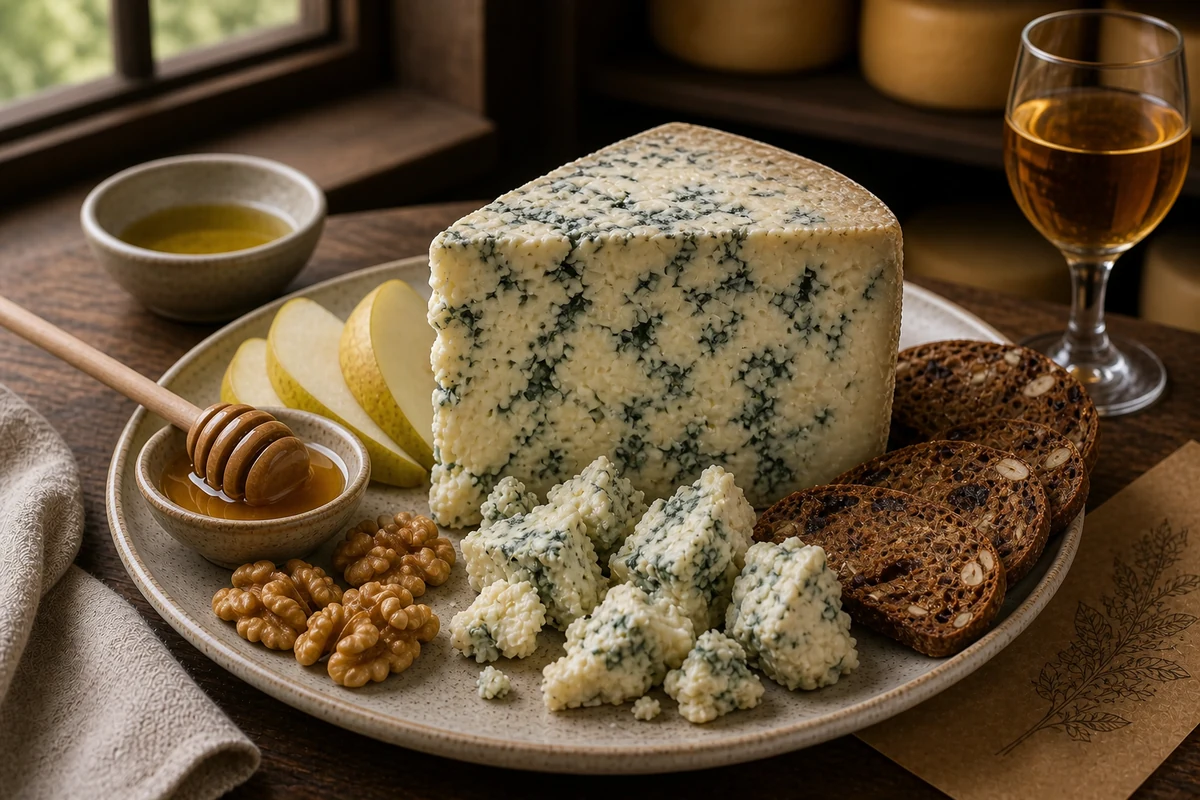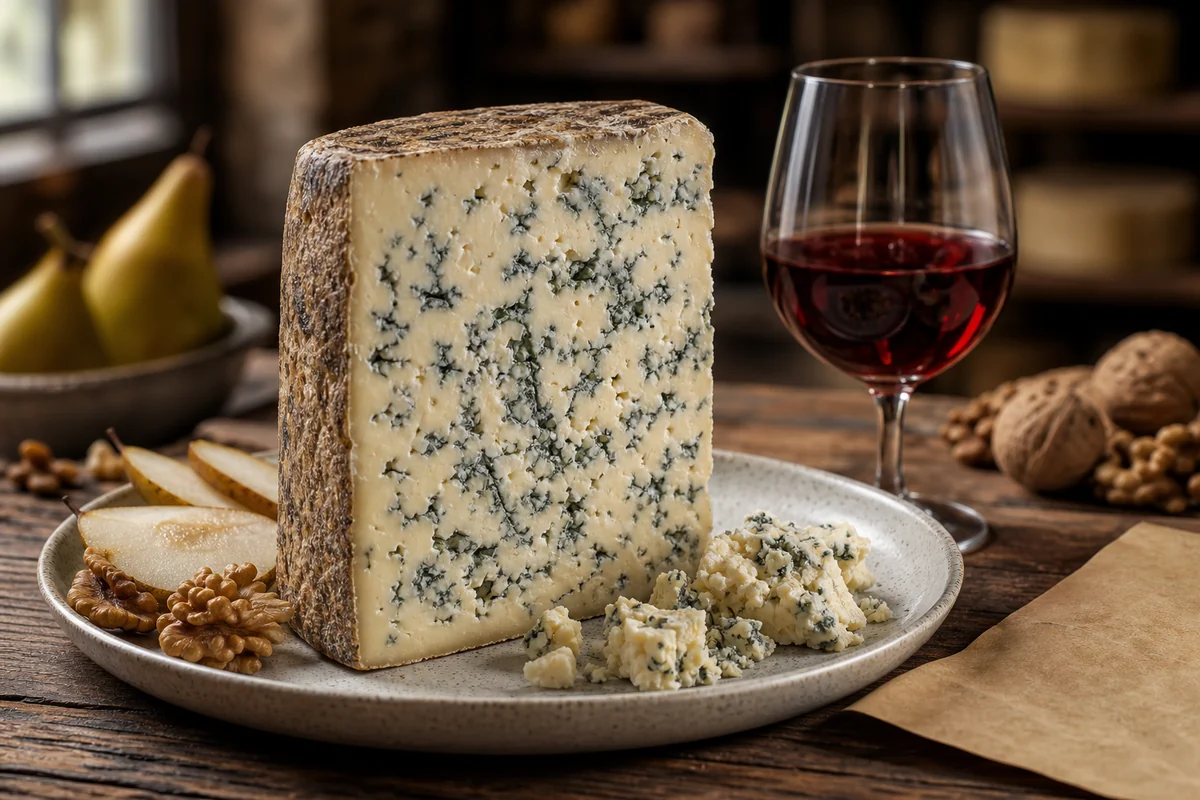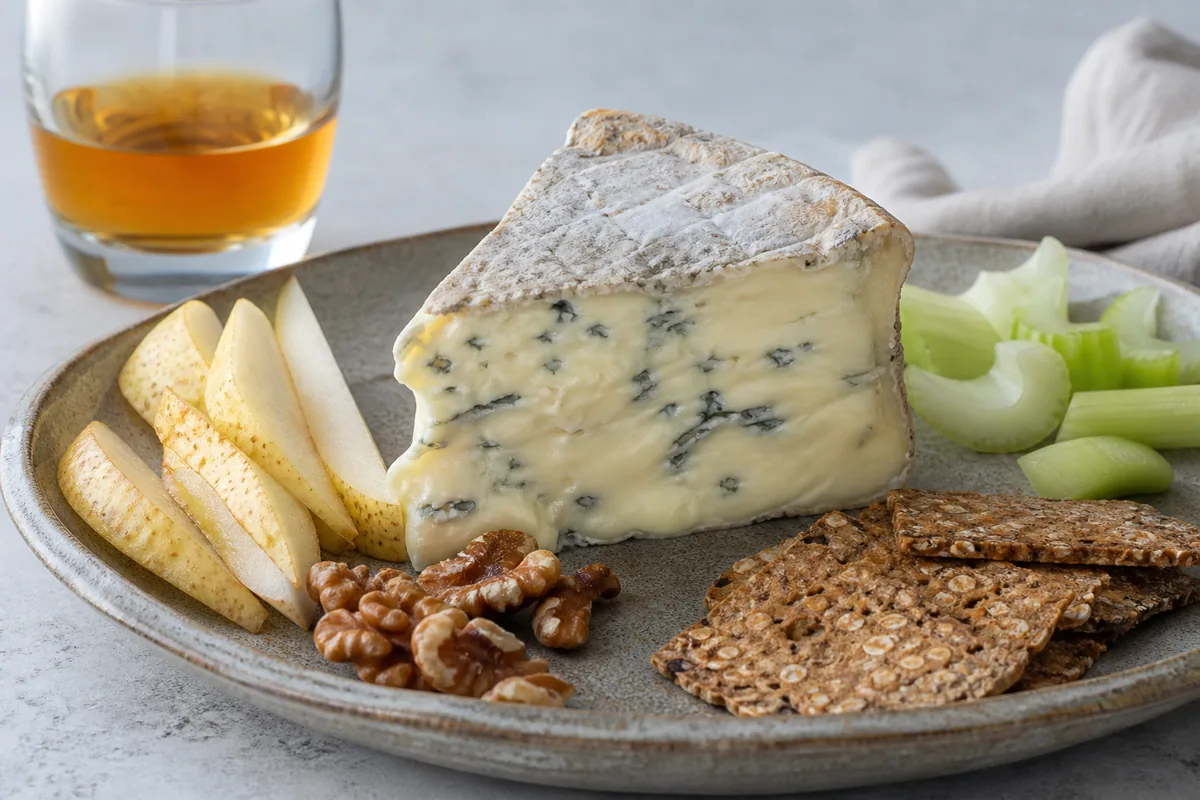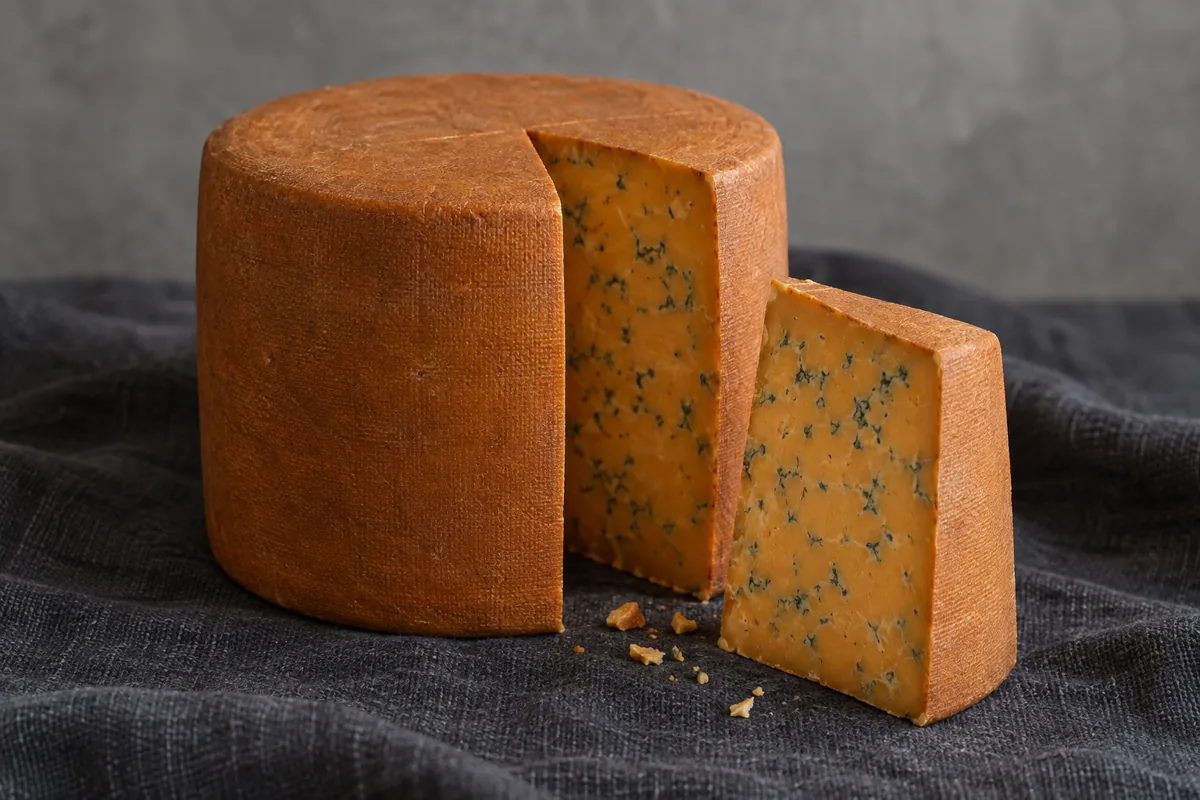
Buxton Blue is an English blue cheese made from pasteurized cow's milk, with an even russet paste and blue veins spread evenly through it. Its protected name limits production to a 30-mile radius of Buxton, Derbyshire.
The official specification calls the flavor mellow and creamy, while a profile of one maker says it tastes much stronger than that maker's Dovedale Blue. Whether anyone still makes it is reported both ways: CooksInfo names a maker in the 2020s, and Cheese.com says it is no longer produced.
In This Article
What Is Buxton Blue?
Buxton Blue is a Protected Designation of Origin on the United Kingdom register, under a specification filed by Dairy Crest's Hartington Creamery.
The specification describes a cheese with an even russet color and evenly dispersed blue veins, and a close-textured, smooth body that becomes softer and smoother as it matures.
Wikipedia places it beside a cheese you may know better, calling it a close relative of Blue Stilton, lightly veined with a deep russet colouring.
If you avoid animal rennet, ask the maker or seller which coagulant it uses. The specification's nutrition panel says the cheese is suitable for vegetarians, and its recipe lists "coagulant" at 0.01 percent.
- Protected name: Buxton Blue, PDO
- Registered: with the EU on 21 June 1996, and on the UK scheme from 31 December 2020
- Milk: pasteurized cow's milk, 98.505 percent whole milk and 1.1 percent whey cream in the recipe
Why Is Buxton Blue Russet?
The recipe in the specification lists annatto at a typical 0.03 percent of the mix, and on the label you will see it declared as colour E160(b) or as annatto.
Cheese.com lists the color as yellow with a pale orange interior, which is paler than the specification's even russet. It also says the taste and appearance are comparable to Shropshire Blue.
Because Cheese.com's shade differs from the specification's, the name and the maker on the label identify the cheese better than color does.
Where Does the Milk for Buxton Blue Come From?
The protected area is a 30-mile radius of Buxton, and the specification says most of the milk comes from Derbyshire cows, particularly within a 15-mile radius of the town.
The specification also allows milk from outside the designated area from time to time, from Shropshire and Cheshire, because EC quotas cut the local milk supply.
| Source | Where the milk comes from |
|---|---|
| UK product specification | Mostly Derbyshire, within 15 miles of Buxton; Shropshire and Cheshire from time to time |
| Wikipedia | Derbyshire, Nottinghamshire or Staffordshire |
The local milk comes from a high limestone area with thin top soil and high rainfall, and in winter the cows eat grass conserved from the same pastures.
The specification says a cheese made by the same process in a different area could not bear the name. A russet blue made outside the area may look similar, but it cannot be sold as Buxton Blue.
Is Anyone Still Making Buxton Blue?
By CooksInfo's November 2022 account, Buxton Blue's sole maker in the 2020s is Mary Button of the Staffordshire Cheese Company in Cheddleton, Staffordshire, while Cheese.com says "Today, the cheese is no longer produced." Before you plan around it, ask a seller whether they have it.
A March 2020 profile by Moorlands Eater says the company's Buxton Blue has "a much stronger taste than the creamy Dovedale".
The Hartington creamery that filed the specification opened in the 1870s and began making Stilton in 1886. Dairy Crest sold it to the Long Clawson Dairy Company, and it closed in 2009.
How Does the Cloth Affect the Buxton Blue Rind?
The specification says the cheese is covered in cloth during maturation, which prevents a coat from developing and produces a clean outside.
It gives maturation conditions of 8 to 14 degrees Celsius and 80 to 90 percent relative humidity, and says the cheese leaves in a refrigerated vehicle at 5 degrees Celsius.
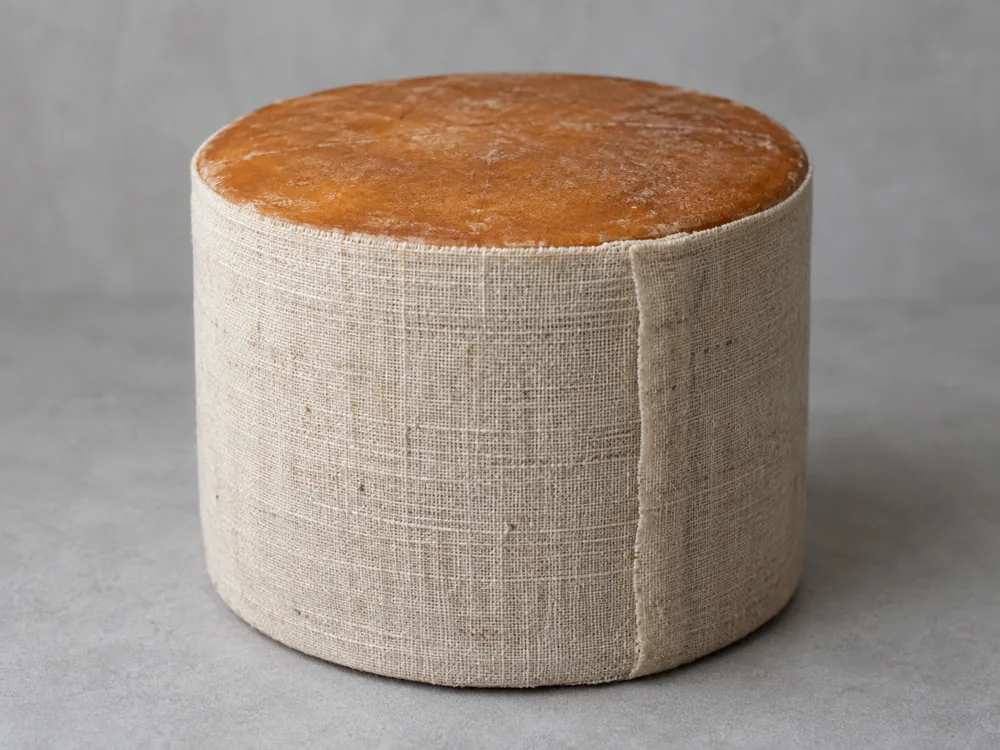
CooksInfo says the rind is edible, and Cheese.com lists a natural rind.
How Big Is a Whole Buxton Blue?
A whole Buxton Blue has an average weight of 8 kilograms, with a range of 7.5 to 8.5 kilograms, in a cylinder about 200 millimeters across and 190 to 220 millimeters high. CooksInfo gives the same shape as about 20 centimeters wide and 19 to 22 centimeters high.
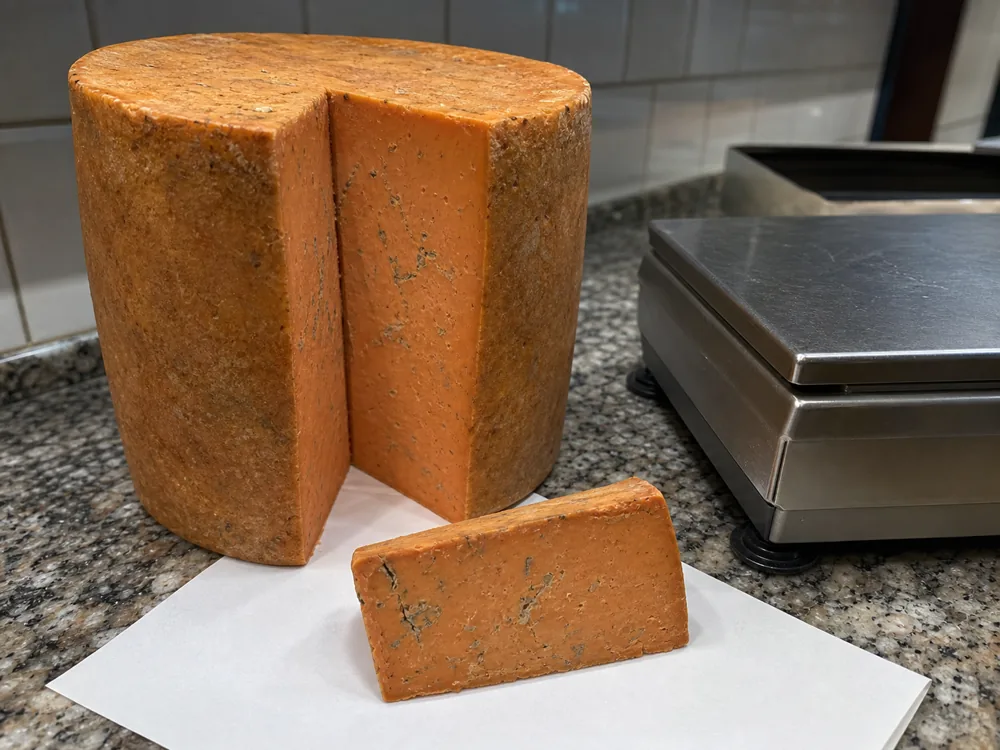
That makes a whole cheese close to as tall as it is wide. If you buy a cut piece rather than a whole cheese, go by the weight printed on its label.
What Does Buxton Blue Taste Like, and How Old Is It at Despatch?
Under the specification, Buxton Blue is normally despatched 4 to 10 weeks after manufacture, and its flavor target is mellow and creamy with the characteristic tang of blue cheese, free from harsh, bitter or fruity flavors.
| Source | Flavor | Texture | Age |
|---|---|---|---|
| UK product specification | Mellow and creamy, blue tang, no harsh, bitter or fruity notes | Close-textured, smooth, softer with age | Normally 4 to 10 weeks from manufacture at despatch |
| CooksInfo | Tangy but mild | Not stated | 5 to 6 weeks after the cheeses leave the molds |
| Moorlands Eater | Much stronger taste than the creamy Dovedale | Not stated | Not stated |
| Cheese.com | A hint of dark chocolate and burnt onions on the finish | Crumbly | Not stated |
The specification adds that cheese may be despatched outside the 4 to 10 week window when its quality is satisfactory.
How Much Fat, Salt and Moisture Is in Buxton Blue?
At despatch, the specification allows moisture of 35 to 48 percent, fat in dry matter of 48 to 60 percent, and salt of 1.1 to 1.8 percent with a target of 1.5.
The same specification lists fat at 31 to 39 percent with a target of 37.5, so its own panel of 35.0 g per 100 g falls inside that range.
Cheese.com and CooksInfo both give 45 percent fat, which sits outside the 48 to 60 percent fat-in-dry-matter range.
Is Buxton Blue Safe in Pregnancy?
The specification says the cheese is made from pasteurised cows' milk. The NHS says pasteurised or unpasteurised soft blue-veined cheeses, such as Danish blue, gorgonzola and roquefort, must be thoroughly cooked.
The CDC lists soft cheese made from unpasteurized (raw) milk, including blue-veined cheese, as riskier, and lists pasteurized soft cheeses heated to an internal temperature of 165 degrees Fahrenheit or until steaming hot as safer. It adds that pregnant women are 10 times more likely to get a Listeria infection.
The specification calls Buxton Blue close-textured and smooth, softening with age, and Cheese.com calls it crumbly.
If you are pregnant, the NHS soft blue-veined line above is the one to follow for Buxton Blue, a blue-veined cheese that softens with age, so it must be thoroughly cooked. Served cold, Buxton Blue is described as a pasteurized close-textured, smooth or crumbly blue-veined cheese, a type the CDC list does not cover, so ask a midwife or doctor and check local advice on cheese during pregnancy.
What Should You Serve with Buxton Blue?
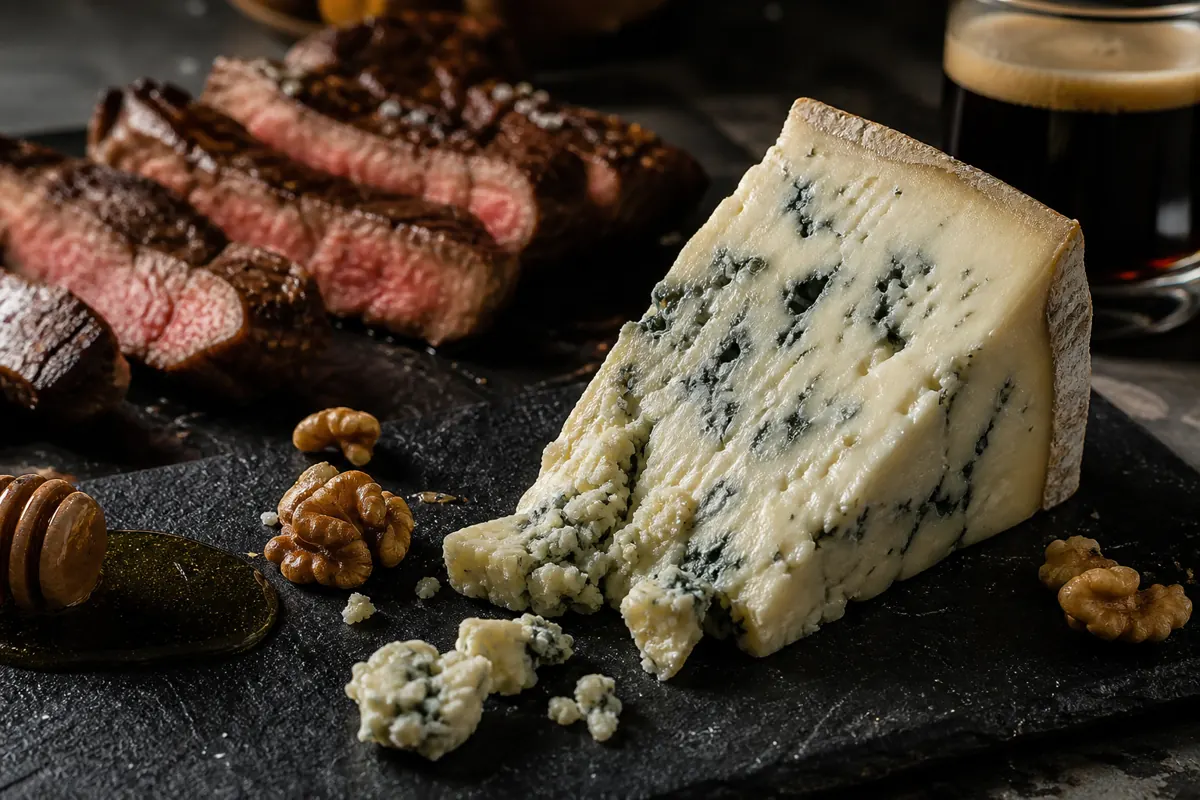
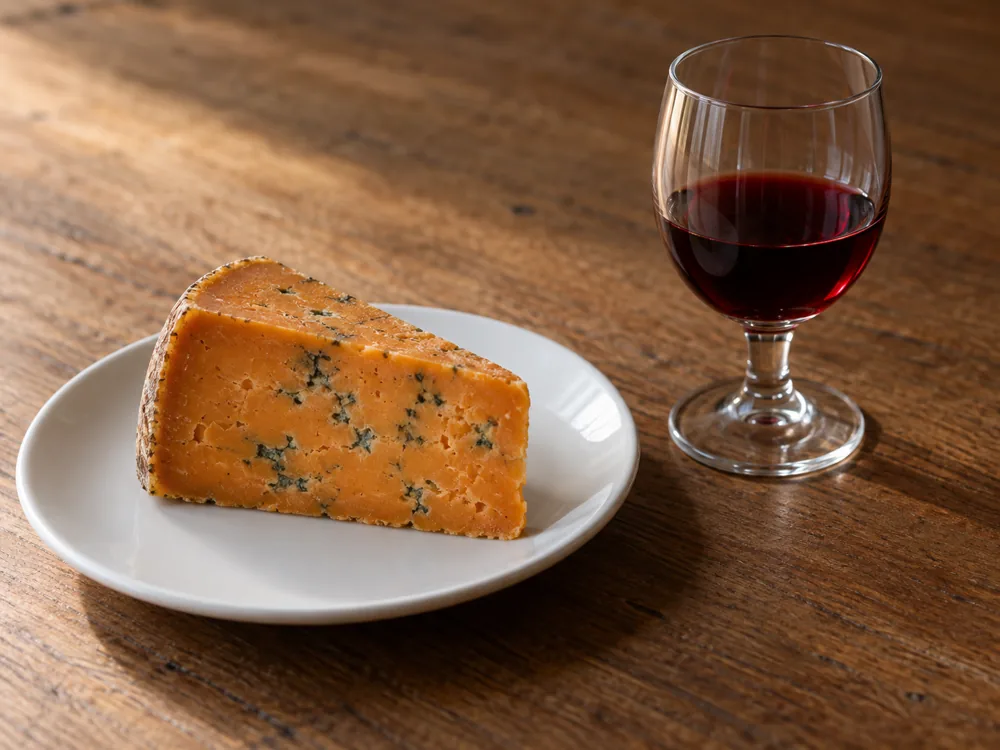
For a drink, Wikipedia says the cheese is complemented by a chilled glass of sweet dessert wine or ruby port.
Where Can You Buy and Store Buxton Blue?
When you buy, look for the words Buxton Blue and the PDO logo, which labels carry, while outer cases show a product description, a best before date and a weight.
The specification gives a shelf life of 8 weeks from the day of despatch. At home, treat that date as the limit.
SOURCES & REFERENCES
No. Wikipedia calls Buxton Blue a close relative of Blue Stilton, and the specification says its process uses different starter cultures, fat, acidity and moisture levels from other blue cheeses.
Its recipe includes annatto at a typical 0.03 percent, and the specification describes an even russet color.
Yes, the specification describes a blue-veined cheese made from pasteurised cows' milk.
The specification says it is normally despatched 4 to 10 weeks after manufacture, and CooksInfo gives 5 to 6 weeks of ageing after molding.
The specification gives an average of 8 kilograms and a range of 7.5 to 8.5 kilograms, in a cylinder about 200 millimeters across.
CooksInfo names the Staffordshire Cheese Company as its sole maker, while Cheese.com says it is no longer produced, so confirm with a seller.