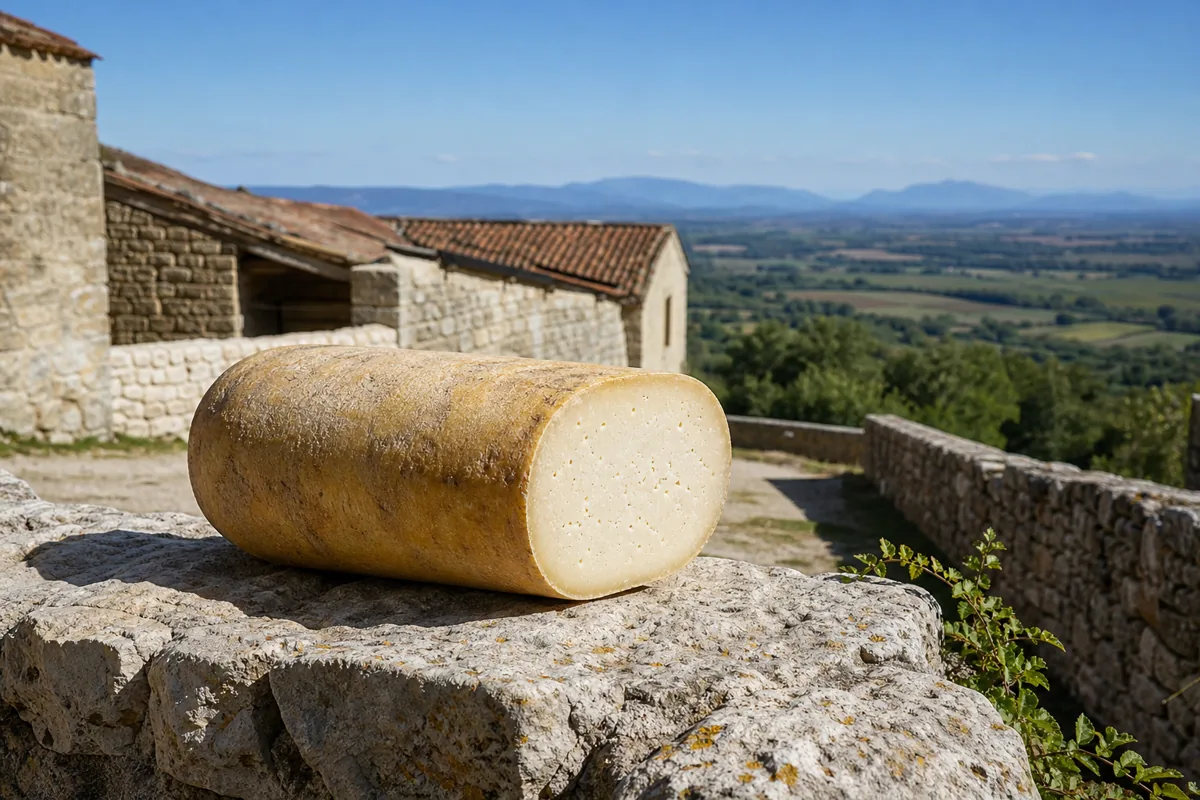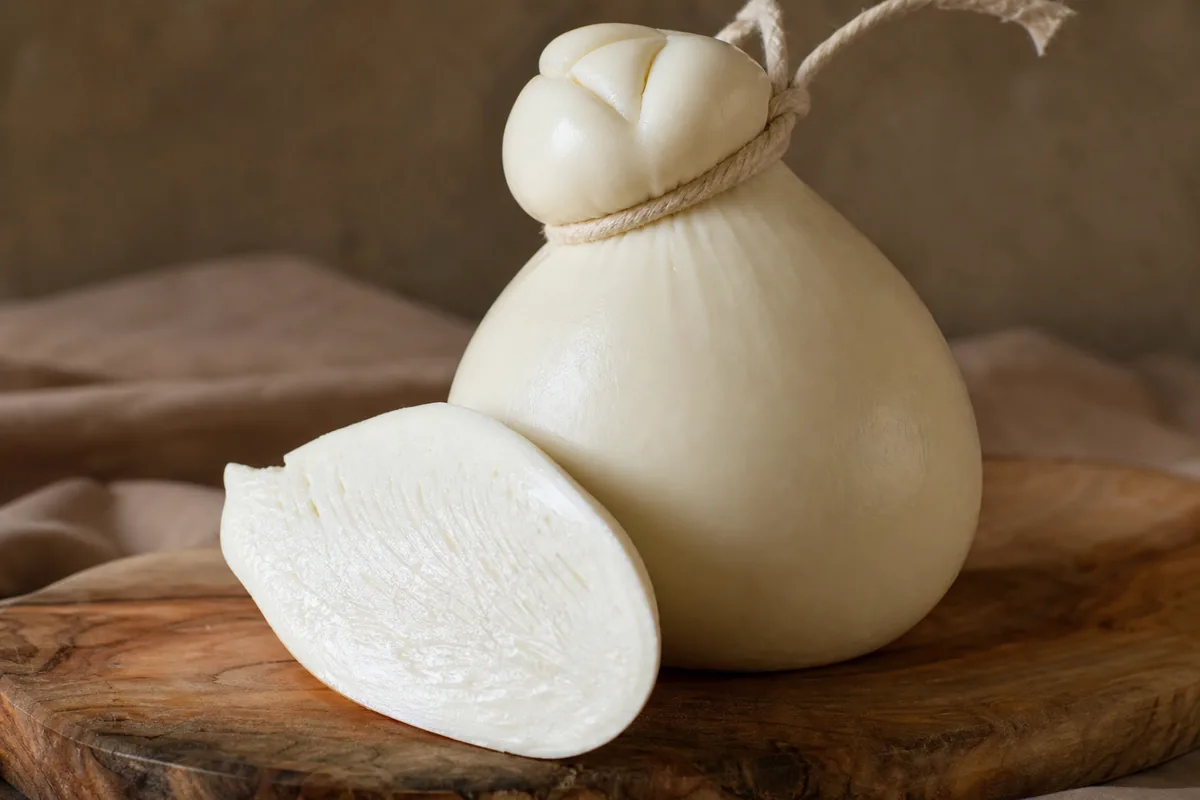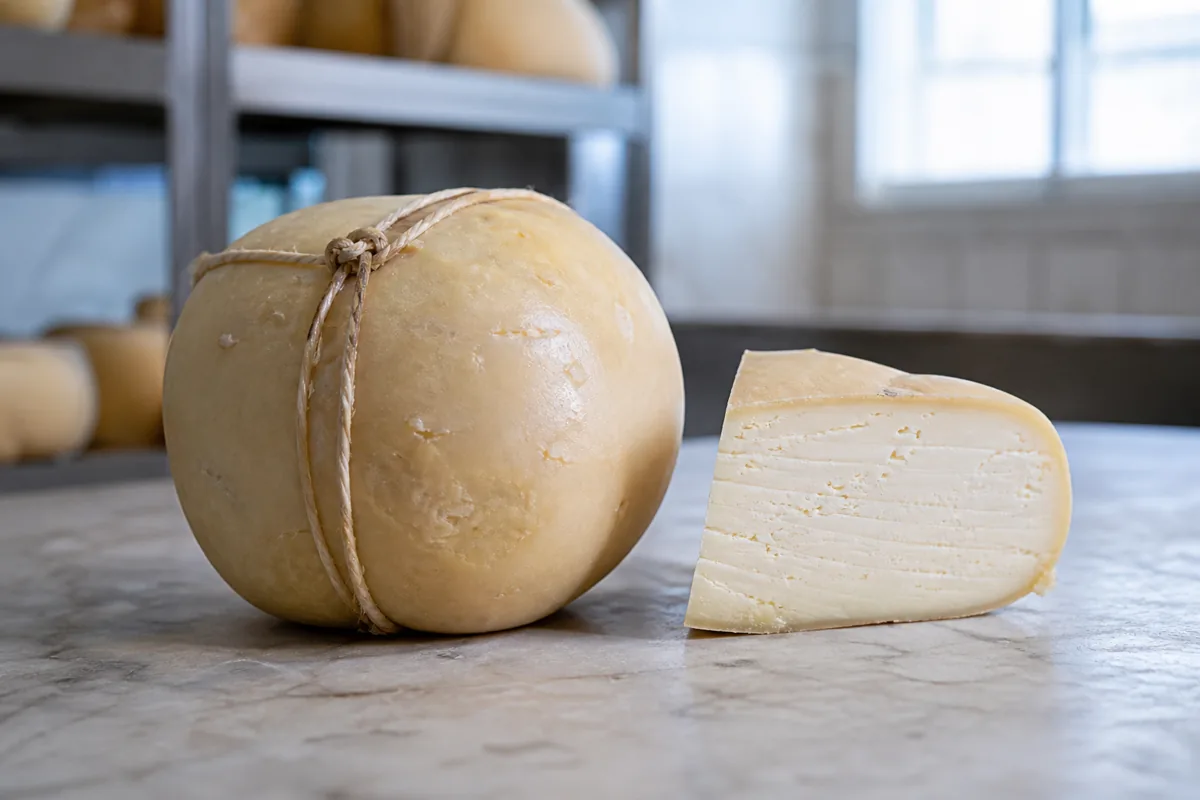
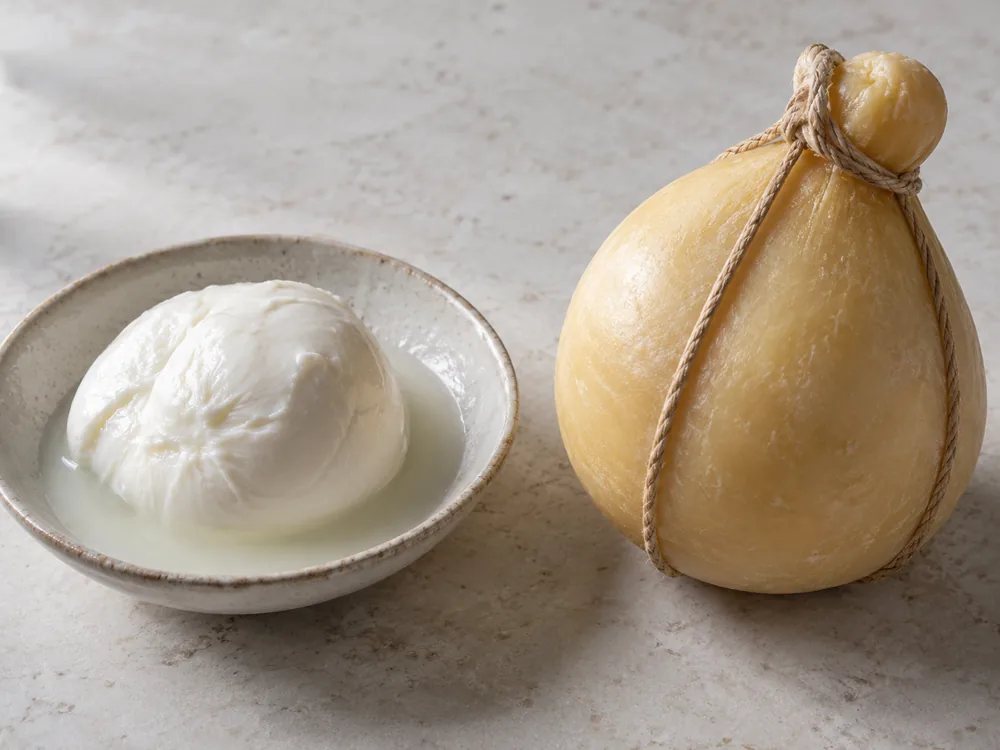
Caciocavallo di Bufala is Quattro Portoni's stretched-curd cheese made from whole, pasteurized water buffalo milk and aged for at least 90 days. The producer sells it as a cord-tied sphere about 20 cm across that weighs about 3.5 kg.
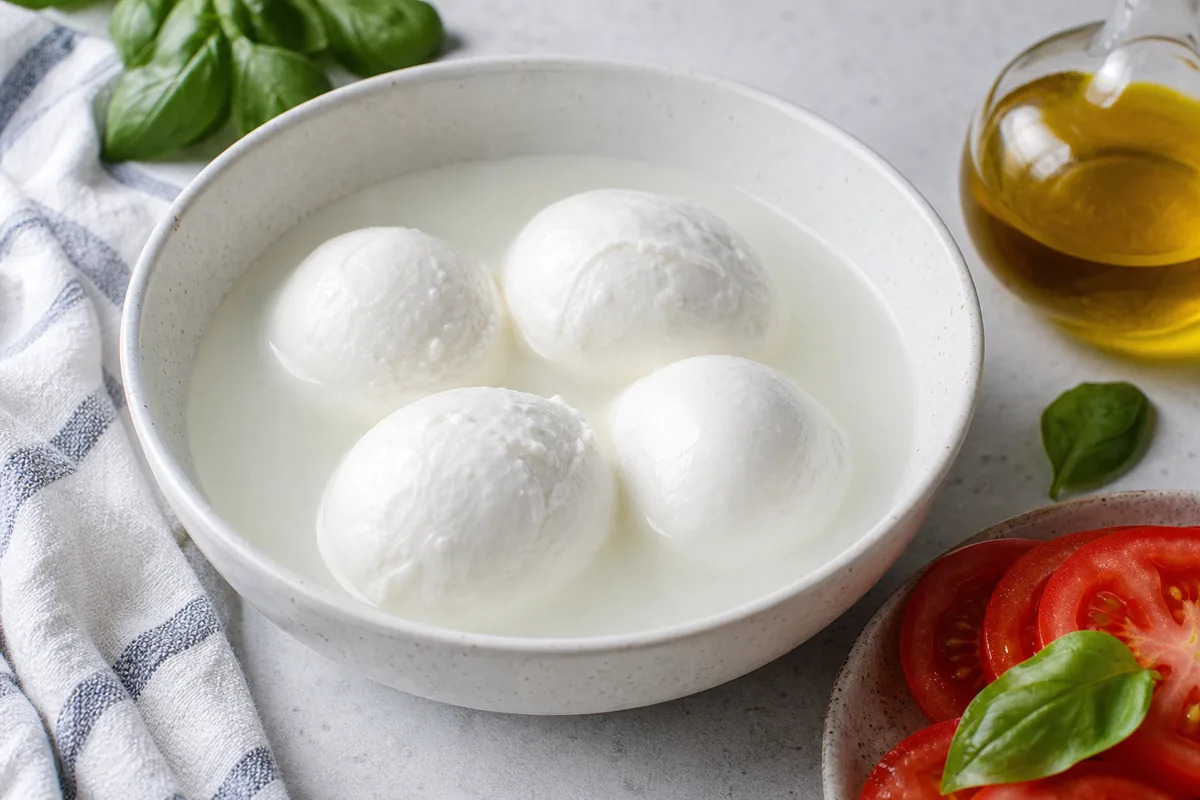
It shares a milk species with fresh buffalo mozzarella and a method with cow's milk caciocavallo, yet it is neither of them.
In This Article
What Is Caciocavallo di Bufala?
Quattro Portoni makes the cheese on its farm and dairy in Cologno al Serio, near Bergamo in Lombardy, Italy.
Forever Cheese's technical data sheet, dated 16 March 2020, files it as a semi hard buffalo's milk cheese.
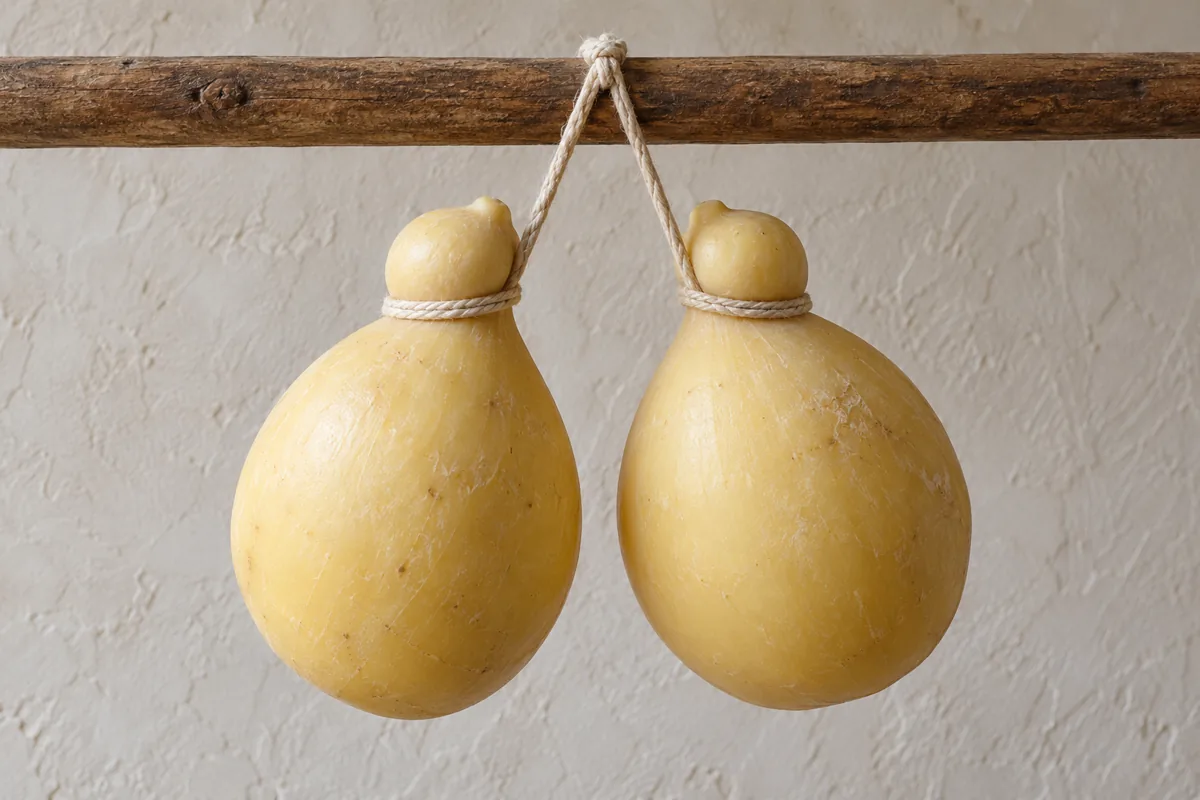
The name caciocavallo means horse cheese. English Wikipedia says it is generally thought to come from two forms tied together with rope and left to mature astride a horizontal stick or branch.
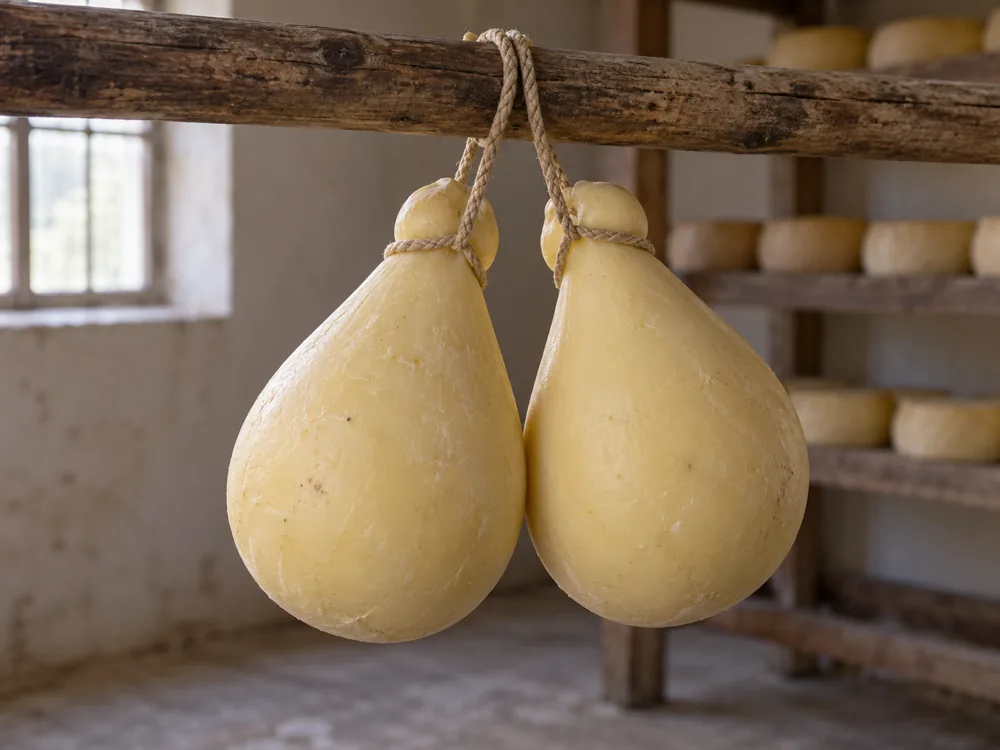
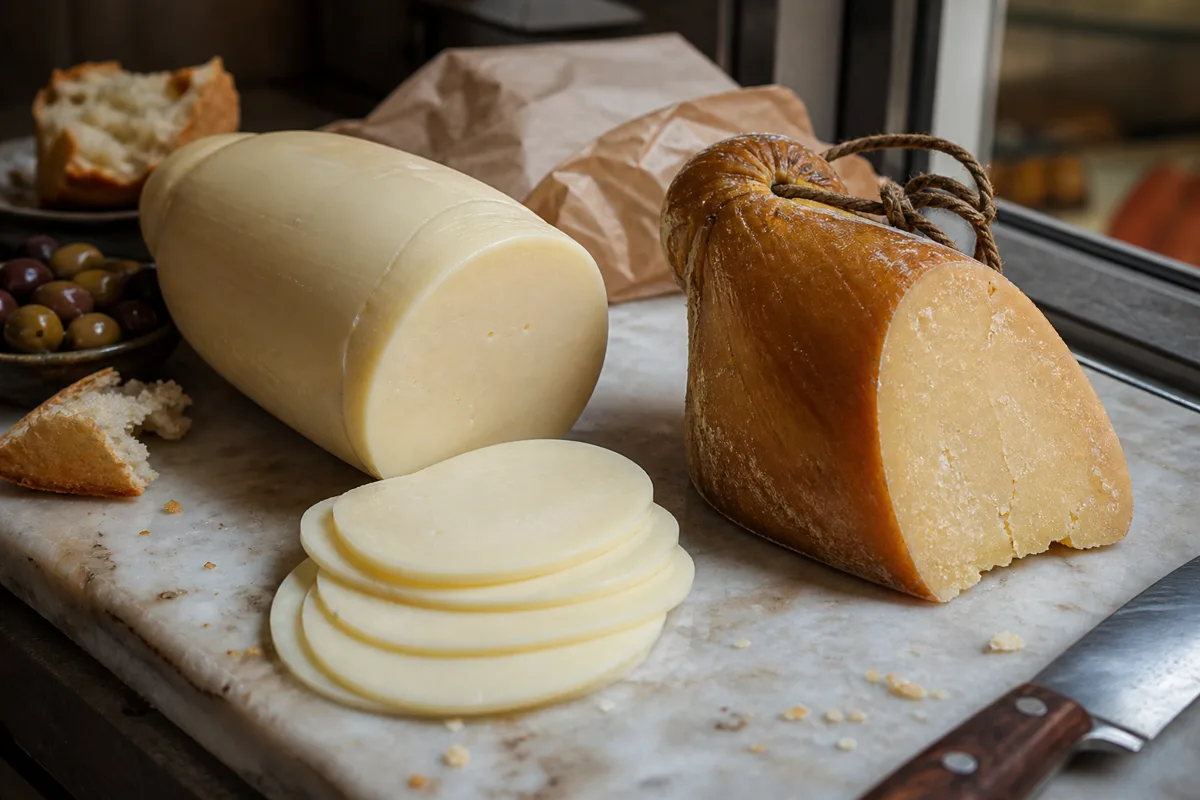
The same article describes a sheep's or cow's milk caciocavallo in a teardrop shape.
Quattro Portoni's buffalo version is a rounded sphere, and its English product page says the irregular spherical shape and the string are what make it recognisable.
Does the Name Caciocavallo Promise a Place or a Milk?
English Wikipedia treats caciocavallo as a family of cheeses rather than one product. Many types exist in Italy, and several are recognised as traditional agri-food products, among them caciocavallo podolico, made only with Podolica cattle milk, and caciocavallo di Castelfranco, from the Miscano Valley.
The protected designation belongs to caciocavallo silano, made with cow's milk in Basilicata, Calabria, Campania, Molise and Apulia and protected since 1993.
On Sicily's side, English Wikipedia says Ragusano DOP, known locally as caciocavallo ragusano, had to drop the word caciocavallo to get DOP status.
Quattro Portoni's cheese sits outside all of that: it is a buffalo milk cheese from Lombardy. In its name, di bufala states the milk, while caciocavallo points to the stretched-curd style and the cord.
Look-alike names abroad promise even less: kashkaval in Bulgaria, kaşkaval in Turkey and kaskavali in Greece resemble the word, yet English Wikipedia says each of these local cheeses is different from caciocavallo silano and from one another.
Why Does Buffalo Milk Matter Here?
English Wikipedia reports that water buffalo milk holds more total solids, crude protein, fat, calcium and phosphorus than cow's milk, with slightly more lactose. It adds that the high level of total solids makes the milk well suited to cheese.
The same page says seasons and genetics may shift the milk's composition.
It also says river-type and swamp-type buffalo give milk with different physical and chemical parameters, and it lists the Mediterranean among the river breeds. A figure for water buffalo milk in general may therefore not describe the river-type milk Quattro Portoni's herd gives.
VisitBergamo describes Quattro Portoni as a farm and dairy that rears Mediterranean buffalo and makes its cheeses only from the milk of its own animals.
The company grows its own fodder on land at the edge of the River Serio Natural Park and manages the milk's processing, the seasoning of the cheeses and their marketing itself, according to the same page.
Because the herd, the fodder and the dairy sit with one company, the producer's statements about the milk describe milk from its own animals and not milk bought from several farms.
How Is Caciocavallo di Bufala Made?
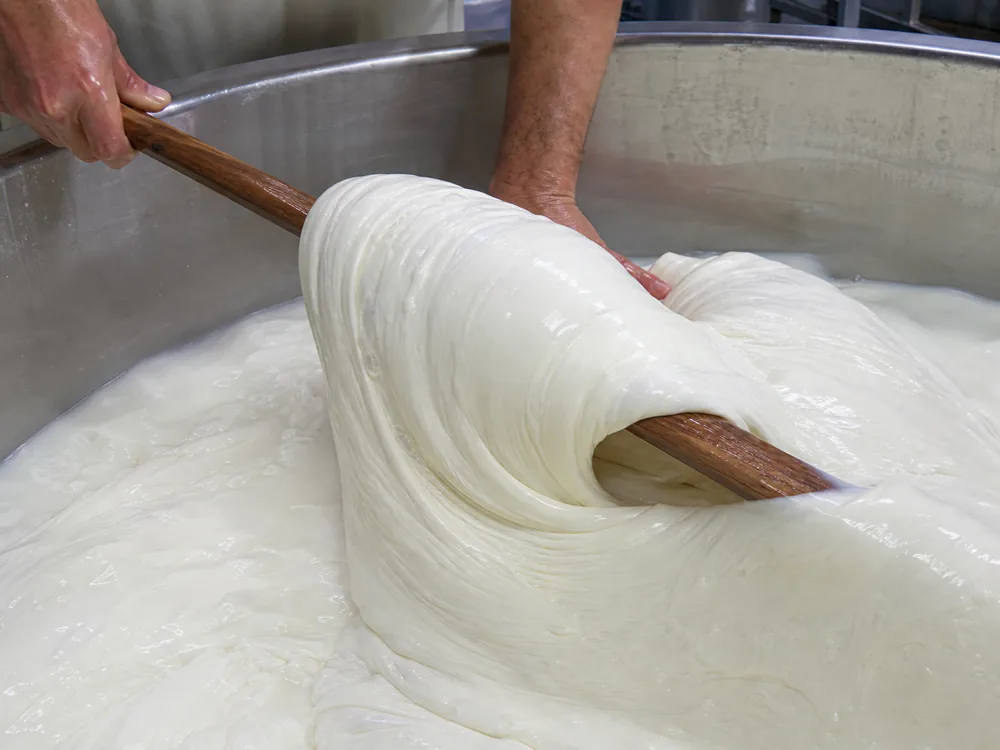
Pasta filata means spun paste. English Wikipedia describes steeping the curd in very hot whey or water, then mixing and kneading it until it turns soft, elastic and stringy.
In that general account, the milk (usually from cows or water buffalo) is warmed and curdled, then left to rest for an hour before the curds are cut small and the whey is drained. The curds then rest for a number of hours before the stretching starts.
The curds steep for some hours in the hot bath, and once they float most of the liquid is removed. The mass is then divided, often by pulling out a thick strand and chopping it, and shaped into individual cheeses.
Quattro Portoni's English product page confirms the stretched-curd method and the cord but publishes no step-by-step recipe. We therefore cannot give vat temperatures, stretching times or brining times.
The only temperature English Wikipedia gives, 95°C, belongs to mozzarella di bufala campana and says nothing about how this cheese is stretched.
The producer's specification names the inputs as whole pasteurized buffalo milk and lamb rennet in paste, and Forever Cheese's ingredient statement adds salt.
Forever Cheese's sheet says only "rennet", so the producer's specification is the one source that names the animal. Anyone who avoids animal rennet should read that line before buying.
Why Does Stretched Curd Turn Elastic?
English Wikipedia's chemistry section starts from the casein proteins in curd, whose charged phosphate groups repel one another. Calcium ions in the casein micelles bridge that repulsion, which lets the micelles form a rigid network.
Stretching in hot water removes a relatively high amount of that calcium. With less calcium bridging them, the micelles repel each other more, become less dense and turn more extensible, so the curd stretches.
The same page says mozzarella has 40% less calcium than cheddar. No source measures the loss in this cheese, and the water buffalo page says buffalo milk starts with more calcium, so that figure cannot be carried over.
After the stretch the paths split. English Wikipedia says mozzarella is essentially finished once the curd is shaped and is ideally eaten within a few days.
Provolone and caciocavallo silano need further processing instead: ageing and, in some cases, brining or smoking.
Quattro Portoni's 90-day minimum puts its cheese on that second path.
What Does Caciocavallo di Bufala Look and Taste Like?
The English product page describes a thin, smooth, waxy, pale yellow rind that sometimes carries white-grey mould, over a smooth and even paste with rare tiny holes.
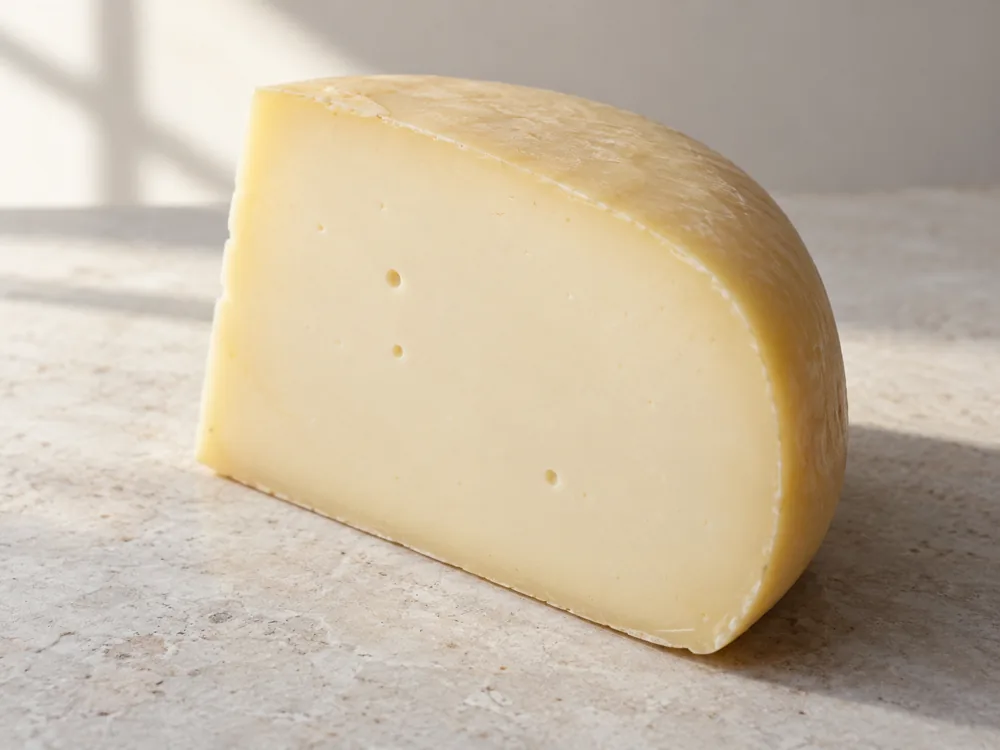
The producer's English page calls the texture soft and says the sweet taste is reminiscent of cooked butter.
Forever Cheese's sheet files the same cheese as semi hard, so soft and semi hard both appear for one product.
English Wikipedia describes the rind of caciocavallo made from sheep's or cow's milk as hard and edible.
The same article says that cheese tastes similar to aged southern Italian provolone, while the producer's description of the buffalo version is sweet and buttery and mentions no sharpness.
How Do You Use Caciocavallo di Bufala?
The soft paste and sweet flavor are the only guides to its use.
Once a cut piece is on the table, the CDC's rule for perishable food applies: no more than 2 hours out of the refrigerator, or 1 hour when the air is above 90°F.
How Should You Buy and Store Caciocavallo di Bufala?
The producer's specification lists a whole sphere of about 3.5 kg, packed one to a case.
How Does Caciocavallo di Bufala Compare with Similar Cheeses?
The cheeses below share the stretched-curd method or the milk, and each source states different details.
| Cheese | Milk | Age | Form | Source |
|---|---|---|---|---|
| Quattro Portoni Caciocavallo di Bufala | Pasteurized buffalo | At least 90 days | Sphere about 20 cm across, tied with cord | Quattro Portoni |
| Caciocavallo | Sheep's or cow's | Not stated | Teardrop, tied in pairs | English Wikipedia |
| Casa Madaio Caciobufala | Pasteurized buffalo | 8 to 12 months in caves | Drum-like | Cheese.com |
| Mozzarella di bufala campana | Buffalo | Fresh, ideally eaten within a few days | Shaped into individual cheeses after stretching | English Wikipedia |
Fresh buffalo mozzarella shares the milk species and the stretching step, which makes the 90-day minimum the clearest dividing line.
The closest cousin by milk is Casa Madaio's Caciobufala. Cheese.com says it is made with pasteurized buffalo milk and calf rennet, lists it as not vegetarian, and gives it 8 to 12 months in caves, far longer than Quattro Portoni's minimum.
Cheese.com calls its production similar to caciocavallo or provolone. It places the cheese in Campania and says it takes a drum-like shape while it matures, where Quattro Portoni's cheese is a cord-tied sphere from Lombardy.
No source ranks substitutes for this cheese, so the choice rests on what you want to keep. Keep the milk and you get Caciobufala at a much older age, and keep the method and you get a sheep's or cow's milk caciocavallo.
Match on milk or on method: Caciobufala keeps the buffalo milk at 8 to 12 months, while caciocavallo made from sheep's or cow's milk keeps the stretched-curd method.
What Are Caciocavallo di Bufala's Nutrition and Safety Facts?
Forever Cheese's data sheet carries a US Nutrition Facts panel for a 1 oz (28 g) serving. Quattro Portoni's own pages publish no panel, so these figures describe the cheese as Forever Cheese lists it.
| Nutrient | Amount | Percent Daily Value |
|---|---|---|
| Calories | 110 | Not listed |
| Total fat | 9 g | 12% |
| Saturated fat | 7 g | 35% |
| Cholesterol | 20 mg | 7% |
| Sodium | 220 mg | 10% |
| Carbohydrate and sugars | 0 g | 0% |
| Protein | 6 g | Not listed |
| Calcium | 90 mg | 8% |
A single serving supplies 35% of the daily value for saturated fat and 10% for sodium.
Scaled to 100 g, the panel works out to roughly 32 g of fat, 21 g of protein and 790 mg of sodium, since fat is 9 g of the 28 g serving and 7 g of that fat is saturated.
We found no lactose-free claim in any of these sources.
Pregnant women are 10 times more likely to get a Listeria infection, the CDC says, and the NHS lists pasteurised semi-hard cheeses and pasteurised soft cheeses as safe to eat. Served cold, Caciocavallo di Bufala is described as a pasteurized soft or semi hard cheese, a type the CDC list does not cover, so ask a midwife or doctor.
SOURCES & REFERENCES
What Else Should You Know About Caciocavallo di Bufala?
Yes. Quattro Portoni lists whole pasteurized buffalo milk, and Forever Cheese's ingredient statement lists pasteurized buffalo's milk, salt and rennet.
The producer's specification gives a minimum of 90 days.
No. Both use stretched curd, but English Wikipedia says mozzarella is ideally eaten within a few days, while this cheese is aged at least 90 days and tied with cord.
Not for anyone who avoids animal rennet. The producer's specification lists lamb rennet in paste.
The producer describes the rind as thin, smooth and waxy, and says it sometimes carries white-grey mould.
English Wikipedia ties the protected status to caciocavallo silano, made with cow's milk in designated southern regions, while this cheese is made with buffalo milk in Lombardy.
It is made with pasteurized milk, and the NHS lists pasteurised semi-hard cheeses and pasteurised soft cheeses as safe to eat. The CDC lists pasteurized soft cheeses heated to an internal temperature of 165°F or until steaming hot as safer, and served cold, a cheese the producer calls soft and Forever Cheese calls semi hard is a type its list does not cover, so ask a midwife or doctor.