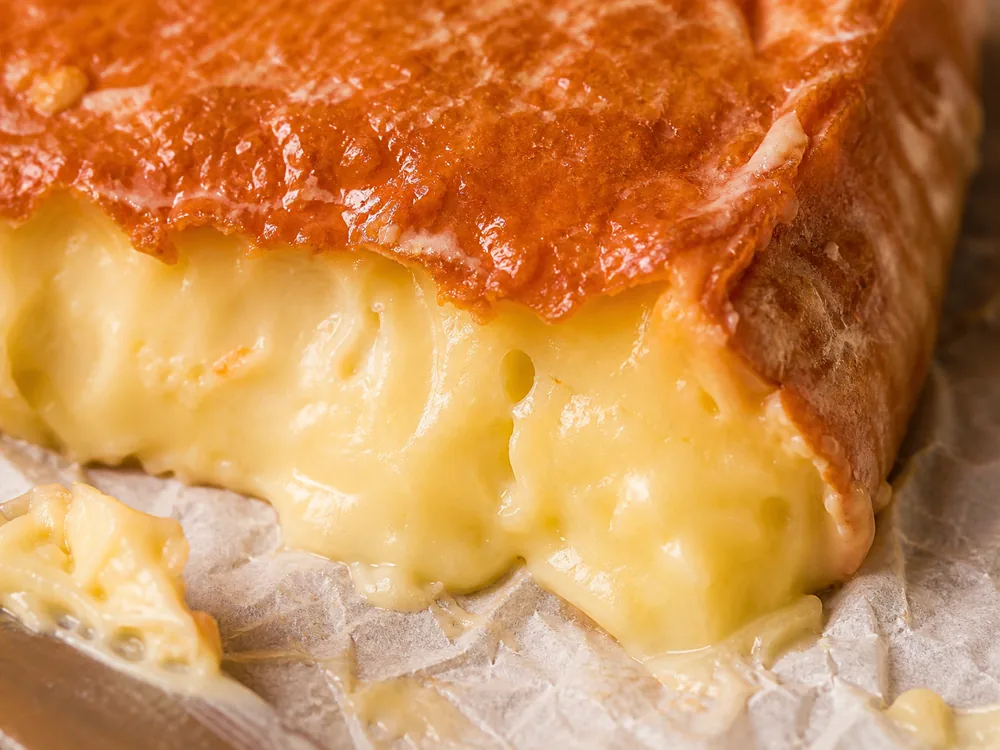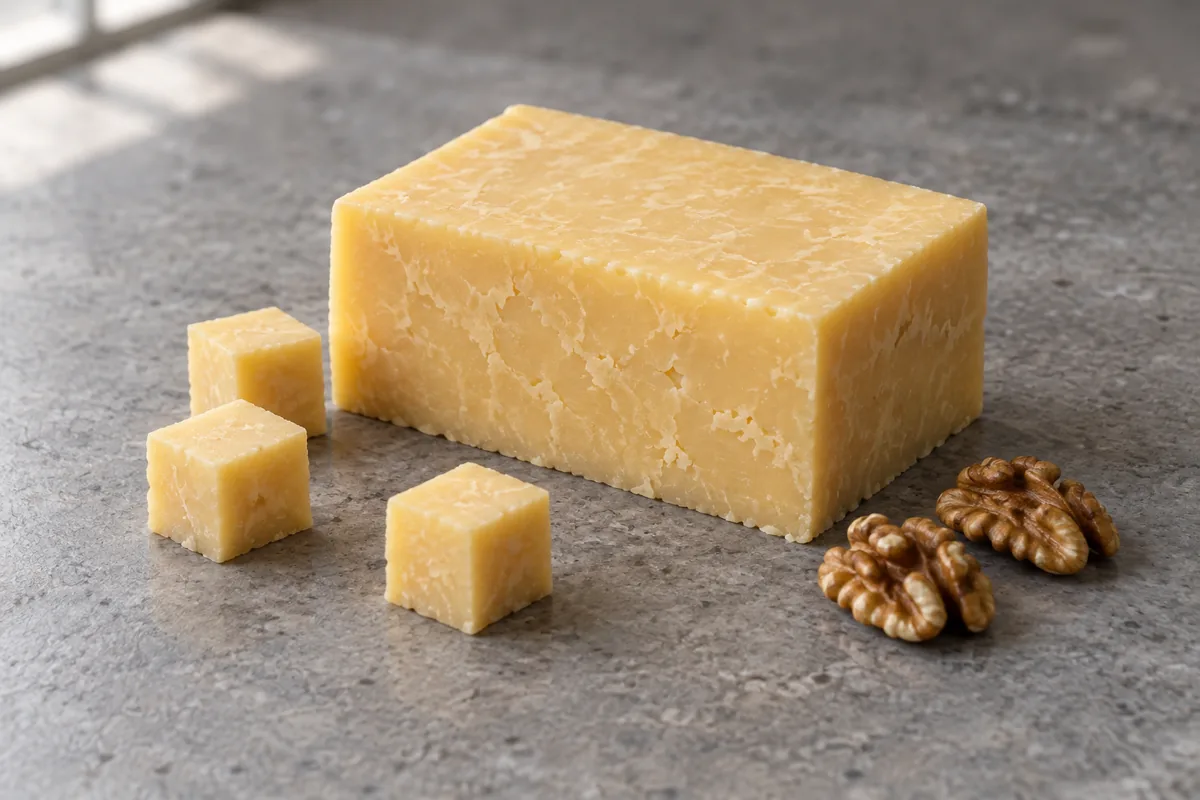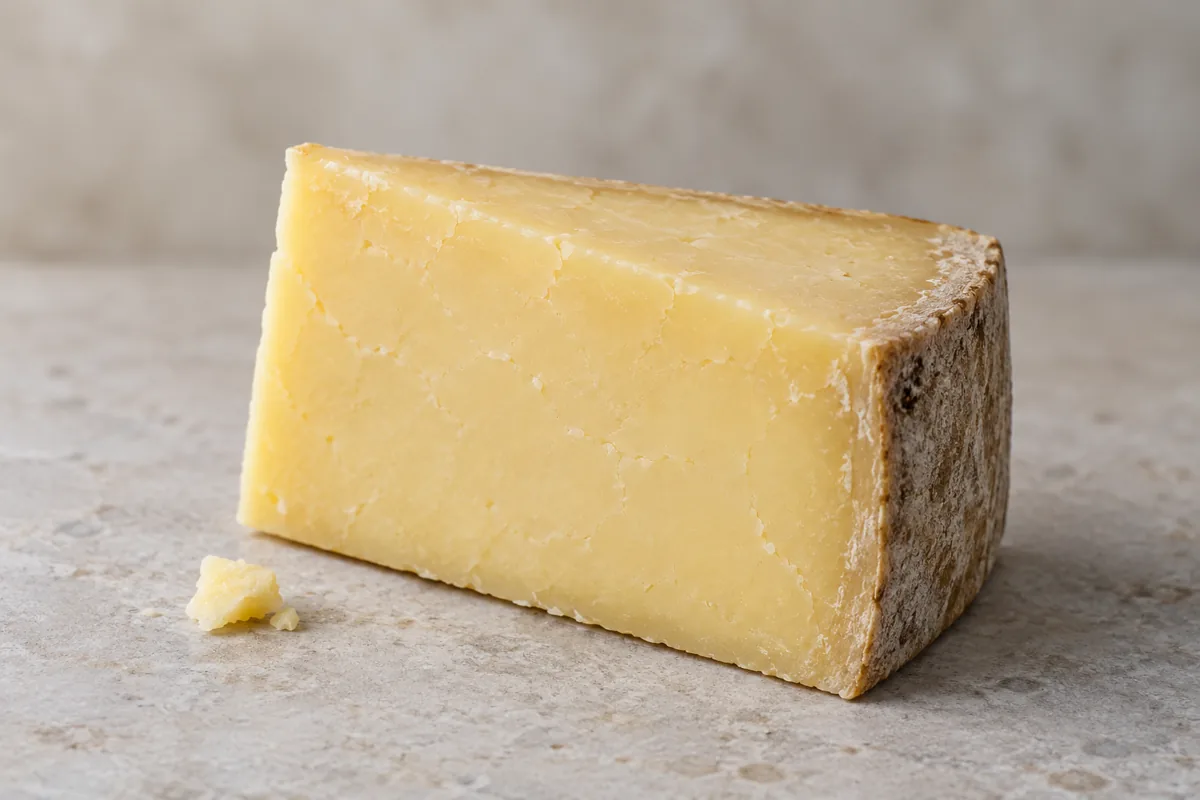
Cacow Belle is a cheddar that Rogue Creamery in Central Point, Oregon, blended with Lillie Belle Farm Artisan Chocolates and spice.
Rogue introduced it in 2013, but the creamery's current cheddar collection does not list it, so ask the creamery whether it is still made before you go looking for it.
In This Article
What Is Cacow Belle?
Cheese Market News described it in May 2013 as a smooth and creamy cheese made with Rogue's handmade cheddar blended with Lillie Belle Farm Artisan Chocolates.
Cheese.com files it in the cheddar family and calls it a semi-soft artisan cheese.
Oregon.com's undated page on Lillie Belle Farms, which mentions a 2009 award, puts the chocolate shop at 211 N. Front Street in Central Point, next to Rogue Creamery.
Rogue Creamery, founded in 1933, is best known for its blue cheeses, and Cacow Belle comes from its separate line of handmade flavored cheddars.
Cheese Market News's 2013 profile lists Cacow Belle among the cheddars made at Rogue's Central Point plant, next to Chocolate Stout, Hopyard, Soba Ale and a raw milk cheddar. The profile files the plant's cheddars as aged and flavored, milled and handmade.
The creamery's current shop lists Oregon Blue and Rogue River Blue among the blues and Chocolate Stout, Hopyard and LaDiDa Lavender among the cheddars.
Who Makes the Chocolate in Cacow Belle?
Lillie Belle Farms is a chocolate shop whose owner, Jeff Shepherd, is a long-time chef who set out to grow organic fruit, according to Oregon.com. He bought a berry farm, could not use all the produce he grew at local farmers markets, and started making truffles.
Shepherd told Oregon.com the shop makes more than 100 types of truffles and that most of them have to be bought in the store, because a lot of them lack the shelf life to ship and are labor intensive to make.
The page lists chocolate-covered bacon, berries, poppy flowers from France and blue cheese from Rogue Creamery next door among his specialties. Dessert Professional magazine named him one of the 10 best chocolatiers in the U.S. for 2009.
Oregon.com says Rogue built the building the shop occupies, and Rogue's own site now gives its cheese shop as 311 North Front Street, a different number from Lillie Belle's 211. The Oregon.com page is undated, so whether the two businesses still sit side by side is unconfirmed.
If you need to know whether the chocolate is dark or milk, or which of Lillie Belle's chocolates goes into the cheddar, ask the creamery.
Where Does the Chocolate Go in a Chocolate Cheese?
Cheese Making Supply Co. counts only 10 chocolate cheeses on its list, and it says it picked one fudge-style cheese to stand for a whole category of them.
At the sweeter end, Westfield Farm's Chocolate Capri Log is a semi-sweet chocolate goat cheese sold in 5-ounce logs. Paoli Cheese's chocolate cheese fudge is described as a bit like fudge and a lot like thick, creamy cheesecake.
The makers of the other cheeses on the list put the chocolate in different places, from beer poured on the curd to cocoa powder rubbed on the rind.
Carr Valley calls the cocoa flavor of its rubbed Cocoa Cardona subtle and the rind brown. Trader Joe's says the chocolate curls in its blended cheddar round out the cheddar's savory sharpness and leave a marbled look.
| Cheese and maker | Where the chocolate goes | What the description says |
|---|---|---|
| Cacow Belle, Rogue Creamery | Blended with the cheddar, with spice | Savory, sweet and spicy, with a note of heat at the finish |
| Chocolate Stout, Rogue Creamery | Chocolate stout beer poured into the vat with the curds | Savory, tangy cheddar notes tempered by sweeter chocolate and coffee flavors |
| Cocoa Cardona, Carr Valley | Cardona aged and rubbed with cocoa powder | Subtle cocoa flavor, brown rind |
| Jack and Grace & I, Cowgirl Creamery | Made like fresh Monterey Jack, rubbed with olive oil and cocoa powder, aged over a year | Firm, pale yellow, sweet and nutty |
| Chocolate Cheddar, Trader Joe's | Dark chocolate blended into English cheddar aged 15 months | Sweet chocolate curls against savory sharpness, marbled look |
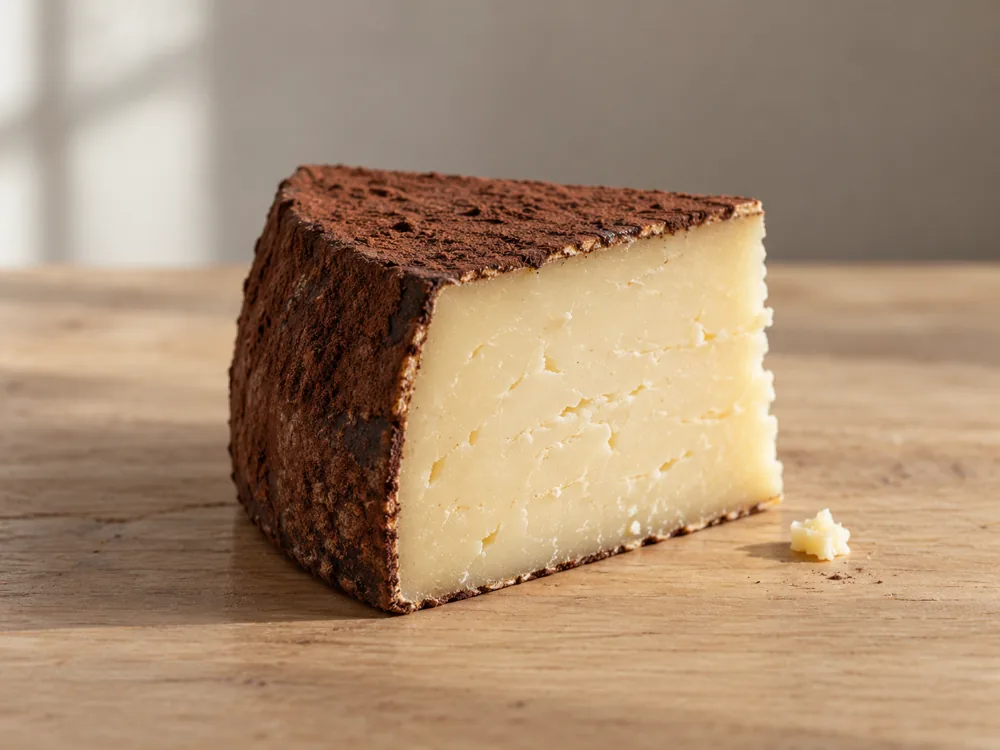
Cheese.com, Cheese Market News and Rogue's own description all call Cacow Belle a blend, and Cheese.com lists a natural rind. Check the package to see where in the cheese the chocolate sits.
Rogue does describe the flavoring step for two other cheddars. Cheese Market News says the whole hop leaves in Freedom Hop Cheddar are de-stemmed by hand, steeped in hot water, mixed into the curds and pressed into blocks.
For Chocolate Stout, Rogue's product page says the beer is poured into the vat with the curds. The description Cheese Making Supply Co. reprints says the beer is poured over the curd and allowed to meld before the curd is hand dipped and pressed into blocks for aging.
What Does Cacow Belle Taste Like?
Cheese.com lists the flavor as savory, spicy and sweet and the aroma as aromatic and spicy.
Francis Plowman, Rogue's director of marketing, gave Cheese Market News a fuller picture: "It tastes like chocolate cinnamon toast and is creamy and sweet with just the right amount of spice."
Cinnamon appears only in the marketing director's comparison to cinnamon toast. Cheese.com and Cheese Making Supply Co. say only "spice," and the Cheese Making Supply Co. text is labelled a description from Rogue's website.
Read the label if you need to know which spices are in it.
What the descriptions do agree on is the order of the flavors, savory first: Cheese.com lists savory before spicy and sweet, Rogue's description as reprinted by Cheese Making Supply Co. says savory, sweet and spicy, and Plowman opens with savory and sweet. That reads as a cheddar first, unlike the fudge and the goat cheese log at the sweet end of the chocolate cheeses above.
Texture is the second point of agreement. Cheese.com says creamy and smooth, Cheese Market News says smooth and creamy and Plowman says creamy, so the semi-soft filing is the only firmness clue.
What Goes With Cacow Belle?
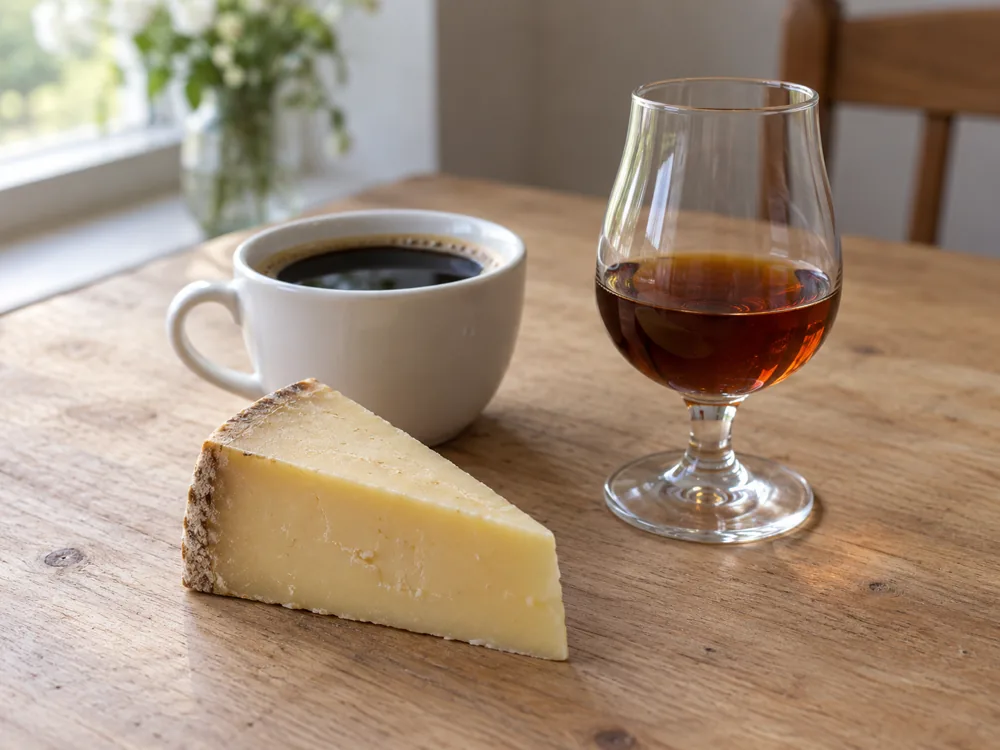
Cheese.com has the only dedicated pairing list, and it mixes one non-alcoholic drink with four wines.
| Pairing | Type | Why It Works |
|---|---|---|
| Freshly brewed coffee | Drink | Listed first by Cheese.com. |
| Vintage tawny port | Wine | Cheese.com specifies a vintage tawny. |
| Barolo or Amarone | Wine | Two red wines on the Cheese.com list. |
| Riesling | Wine | The one white wine on the list. |
For food, Cheese Making Supply Co. reprints Rogue Creamery's own description, which calls the cheddar's flavor "perfect for a rustic apple mini galette or shortbread with honey."
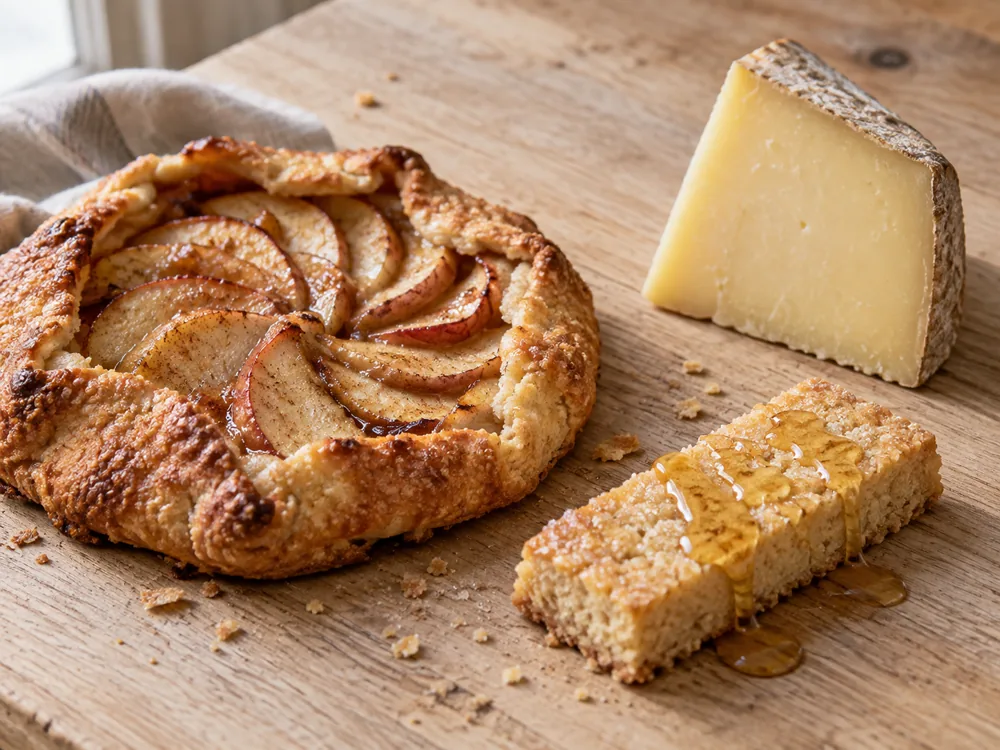
Both foods Rogue names are sweet baked items.
Is Cacow Belle Still Made?
Cheese.com calls it a seasonal offering. Rogue's marketing director told Cheese Market News in 2013 that a planned limited release became an everyday cheese because demand beat expectations.
Plowman said Rogue did not think at first that it would have enough inventory for a big launch. Cheese.com's seasonal wording may come from that first plan, since only Cheese Market News reports the switch to everyday.
On 1 October 2026 the creamery's cheddar collection listed seven cheddars and Cacow Belle was not one of them.
Of the cheddar names Cheese Market News listed for the plant in 2013, only Chocolate Stout and Hopyard still appear on that page, while Soba Ale and the medium, sharp, extra sharp and raw milk cheddars do not. The collection is therefore not the 2013 list.
| Source | What it says | Date |
|---|---|---|
| Cheese Market News | Introduced that year as a limited release that became an everyday cheese | May 2013 |
| Cheese Making Supply Co. | Reprints a Cacow Belle description labelled as taken from Rogue's website | 2015 or later (it cites a 2015 award) |
| Cheese.com | Seasonal offering | Undated |
| Rogue Creamery cheddar collection | Seven cheddars listed, Cacow Belle not among them | Checked 1 October 2026 |
| Rogue Creamery site | No Cacow Belle product page found | Checked 1 October 2026 |
Leaving the list is not the same as being discontinued, so whether Rogue still makes it is unconfirmed.
Without a current product page from Rogue, the package is the place to confirm ingredients, date, and allergens.
- Maker: look for Rogue Creamery and the Cacow Belle name on the package.
- Date: look for a use-by or best-by date on the piece you are given.
- Milk: Cheese.com lists pasteurized milk, so check that the label says it.
- Ingredients: read the label for the chocolate, the spice and any allergens.
Is Cacow Belle Safe in Pregnancy?
Cheese.com lists Cacow Belle as made with pasteurized cow's milk.
The CDC puts hard cheese made with pasteurized milk, such as cheddar, among the safer choices for pregnancy. It says pregnant women are 10 times more likely to get a Listeria infection, so the milk treatment on the label matters.
The NHS says pasteurised or unpasteurised hard cheeses such as cheddar are safe. Cheese.com, however, files Cacow Belle as semi-soft.
The cheese contains cow's milk and, by Rogue's own description, chocolate. Read a current package for soy, nut, and other allergen details.
Take nutrition, fat and lactose figures from the Cacow Belle package itself. Figures for another Rogue cheddar would not apply to a cheese blended with chocolate and spice.
What Can You Buy Instead of Cacow Belle?
The closest current Rogue cheddar with a chocolate note is Chocolate Stout. Rogue's product page says it is made with Certified Organic pasteurized whole cow's milk.
Hopworks Urban Brewery's chocolate stout beer is added to the curds, and the cheese ages for a minimum of 30 days. The page describes it as malty, savory, tangy, and sweet, with brown butter undertones, a pale yellow-white color with subtle marbling, and a moderately firm, sliceable texture.
That chocolate note comes from a beer brewed with cacao nibs, not from Lillie Belle chocolate. Chocolate Stout is a related Rogue cheddar, not a match for Cacow Belle.
Rogue's page adds that Hopworks brews the beer with organic Valrhona chocolate, and it lists the beer's ingredients as water, malt, yeast, barley, cacao nibs and hops.
Both cheeses are described as hand cut and made with rBST-free milk. Cheese.com gives Cacow Belle an age of over 30 days, Rogue gives Chocolate Stout a minimum of 30, and only Chocolate Stout is listed as certified organic by Oregon Tilth.
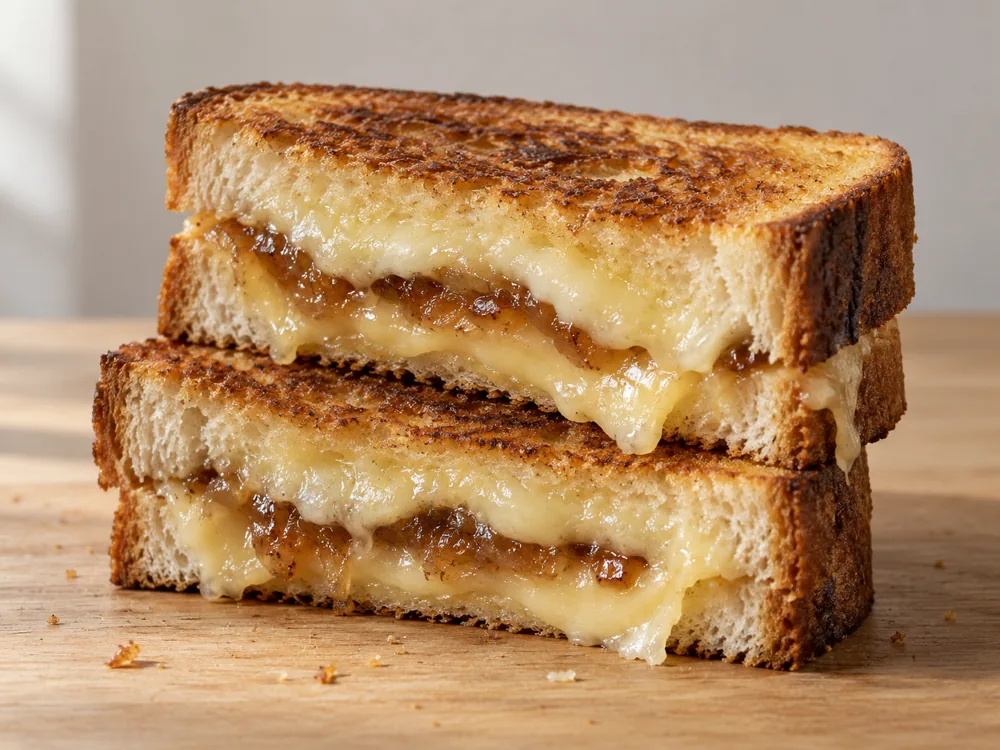
Rogue calls Chocolate Stout a sturdy melting cheese and suggests it in a grilled cheese sandwich with sweet onion jam on thick cut pullman loaf or levain. It also suggests it as a snack with bread and a savory onion or mild pepper jelly.
For drinks, the page names beers, particularly lagers and stouts. It says Chocolate Stout is not as sharp as many cheddars and also suits Chardonnay or Syrah.
Rogue lists the 8 oz piece at $14.00 on 2 October 2026, with a shelf life of 9 months when kept refrigerated at 38 to 40°F.
By method, the nearest match in the table above is Trader Joe's Chocolate Cheddar, which blends dark chocolate into an English cheddar aged 15 months. Ask at Trader Joe's whether it is still stocked.
Chocolate Stout is the one current Rogue cheddar with a chocolate note, and that note comes from beer brewed with Valrhona chocolate and cacao nibs. Rogue calls it moderately firm and sliceable, while the sources describe Cacow Belle as creamy and smooth.
SOURCES & REFERENCES
It is a cheddar that Rogue Creamery in Central Point, Oregon, blended with Lillie Belle Farm Artisan Chocolates and spice. Cheese.com describes it as savory, sweet and spicy with a note of heat at the finish.
Cheese.com and Cheese Market News name Lillie Belle Farm Artisan Chocolates, a Central Point, Oregon, shop run by Jeff Shepherd according to Oregon.com.
That is unconfirmed. Rogue introduced it in 2013 and its current cheddar collection does not list it.
Cheese.com lists freshly brewed coffee, a vintage tawny port, Barolo, Amarone, and Riesling. Rogue Creamery's own description, as reprinted by Cheese Making Supply Co., suggests a rustic apple mini galette or shortbread with honey.
Cheese.com lists it as made with pasteurized cow's milk and as vegetarian. Check the package to confirm both.