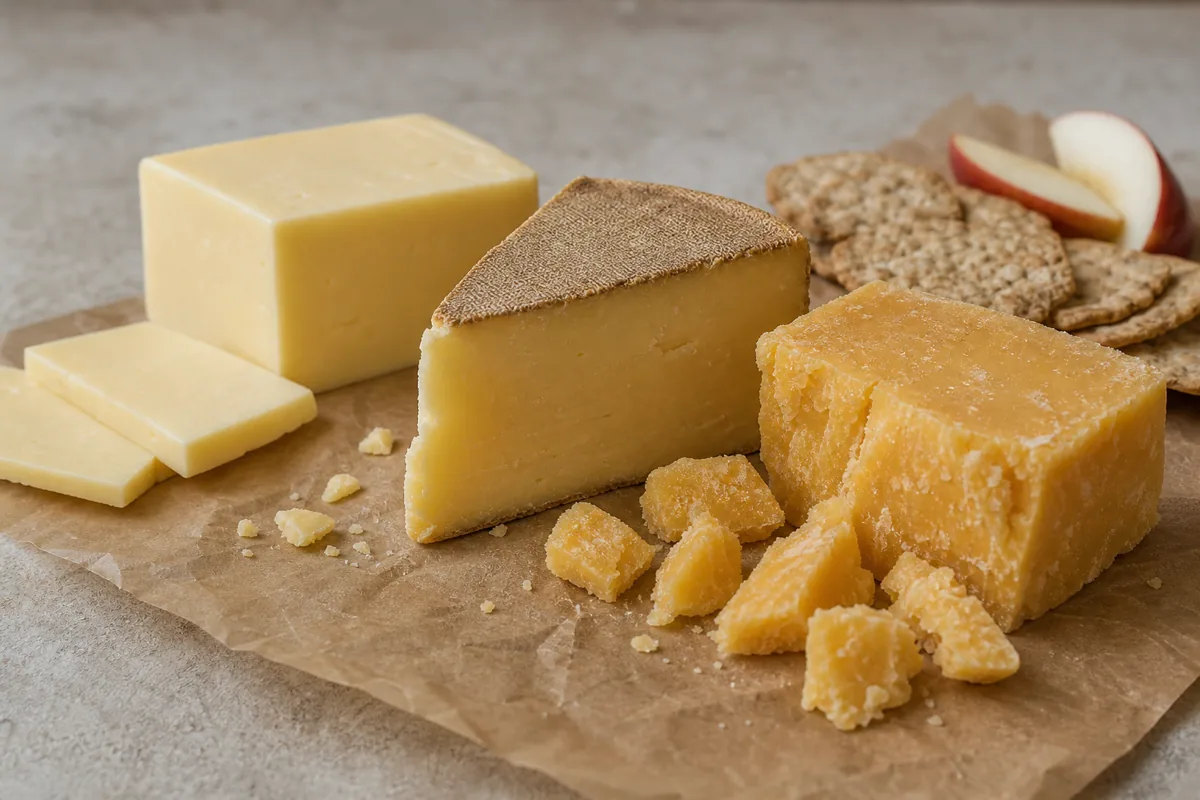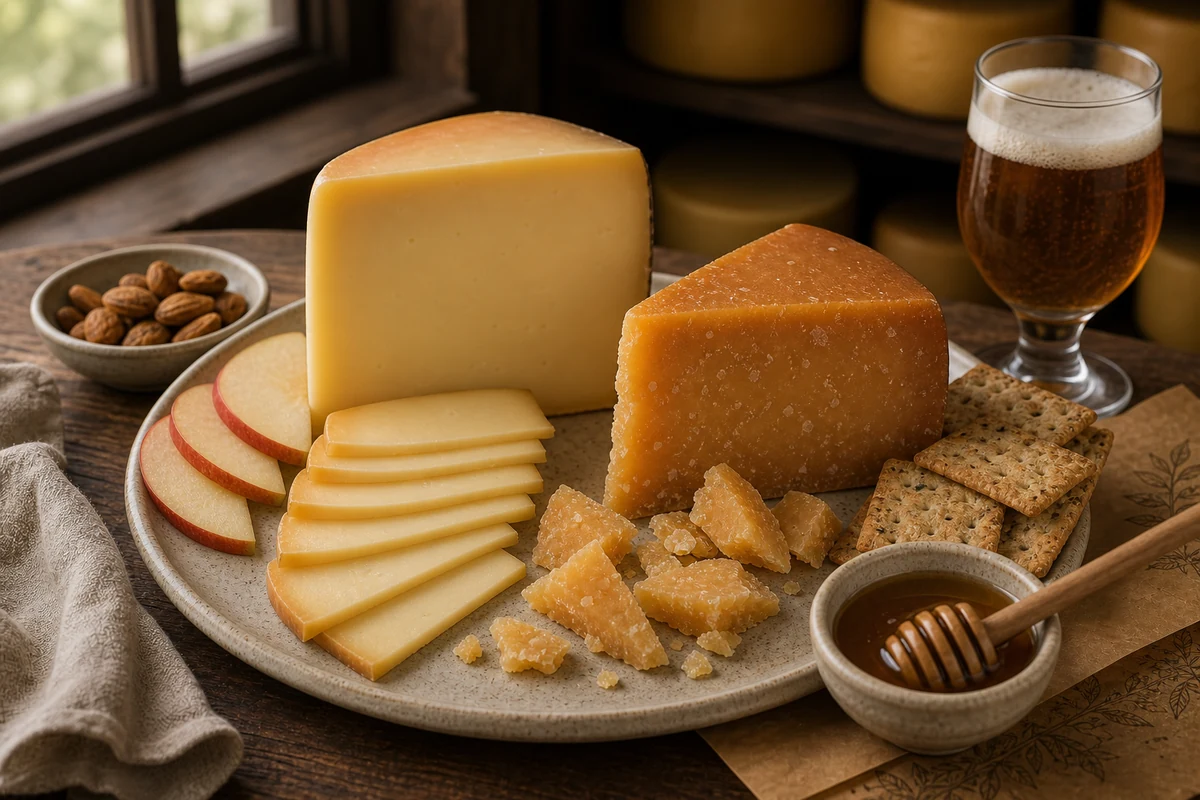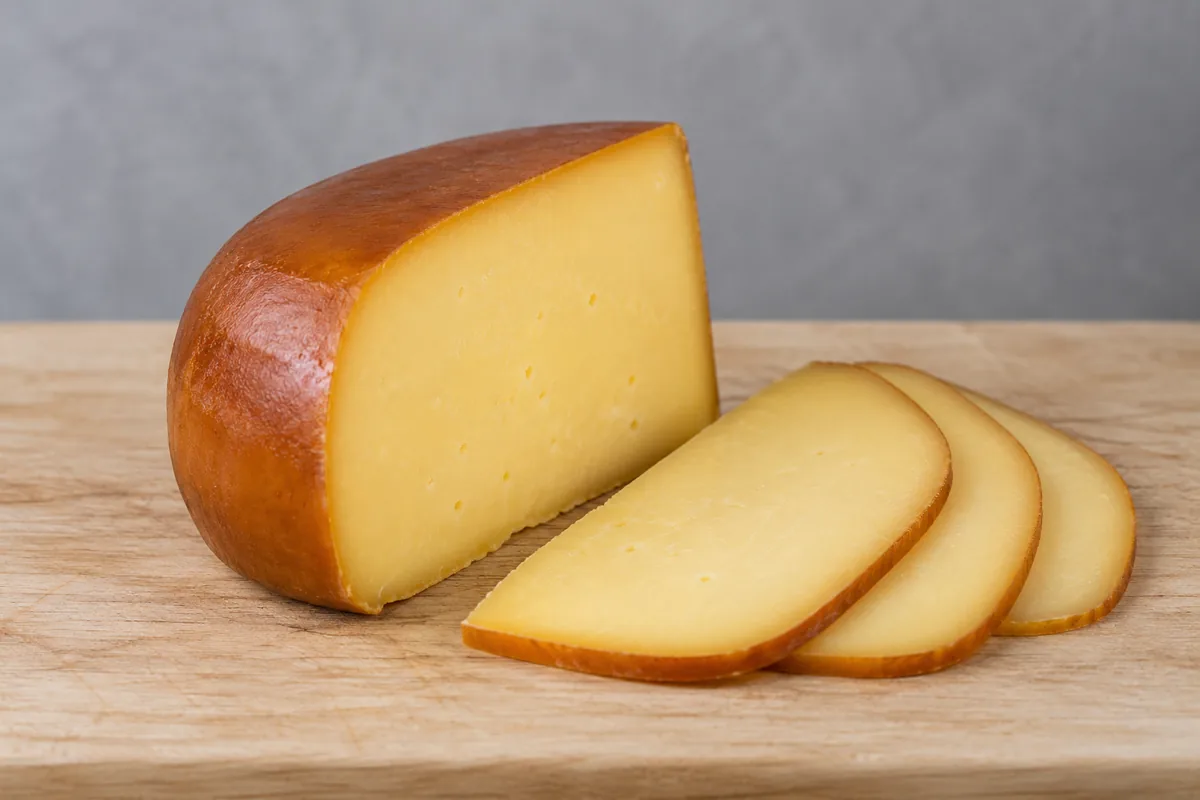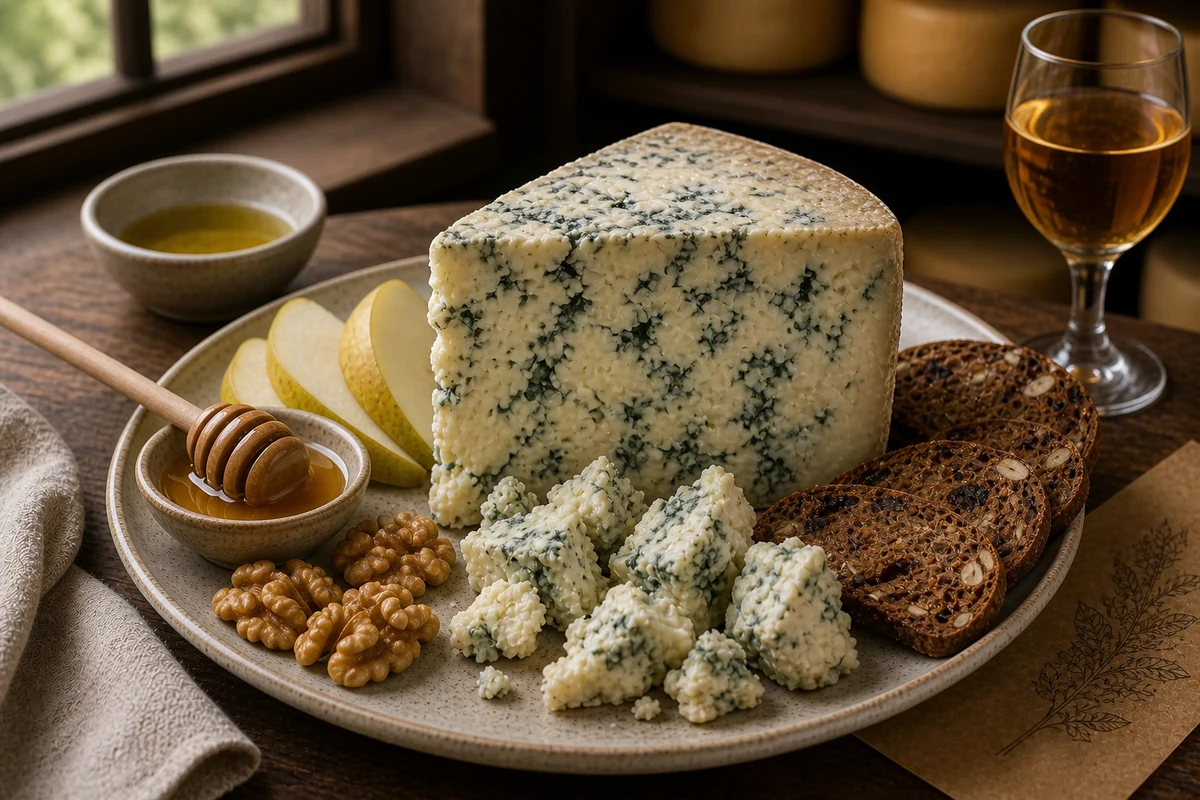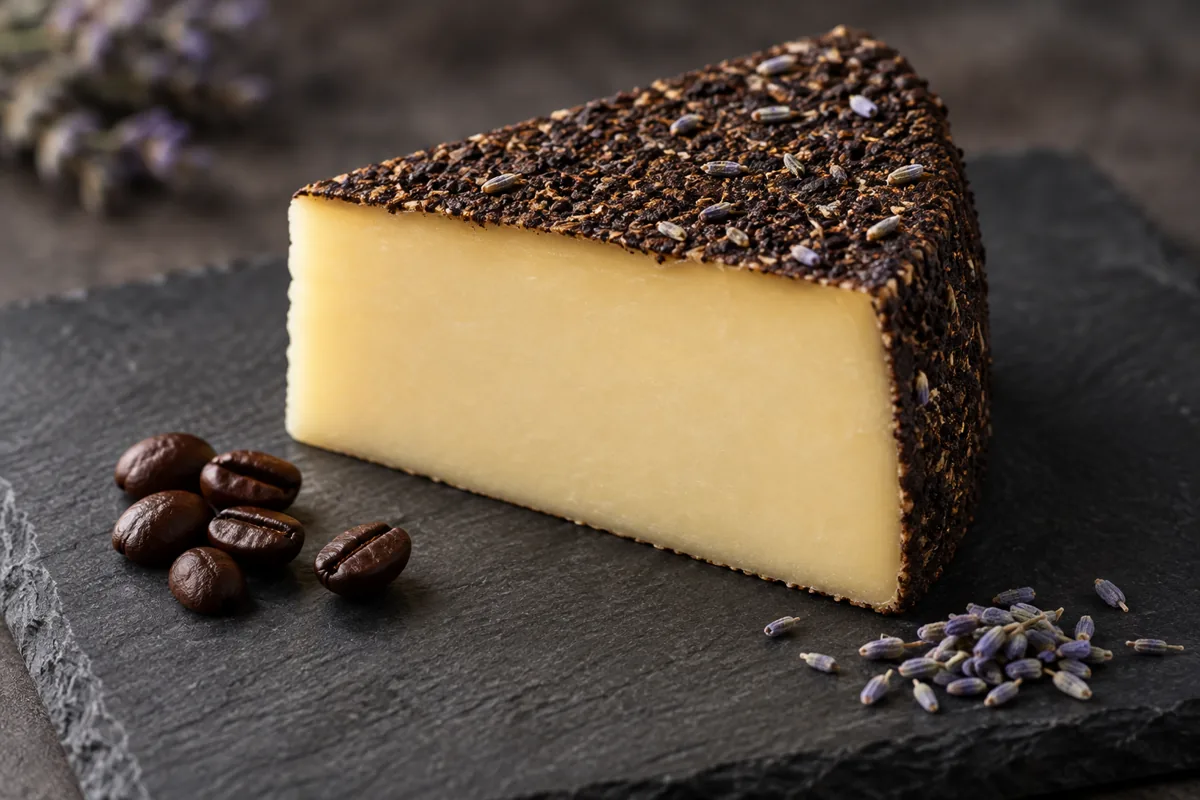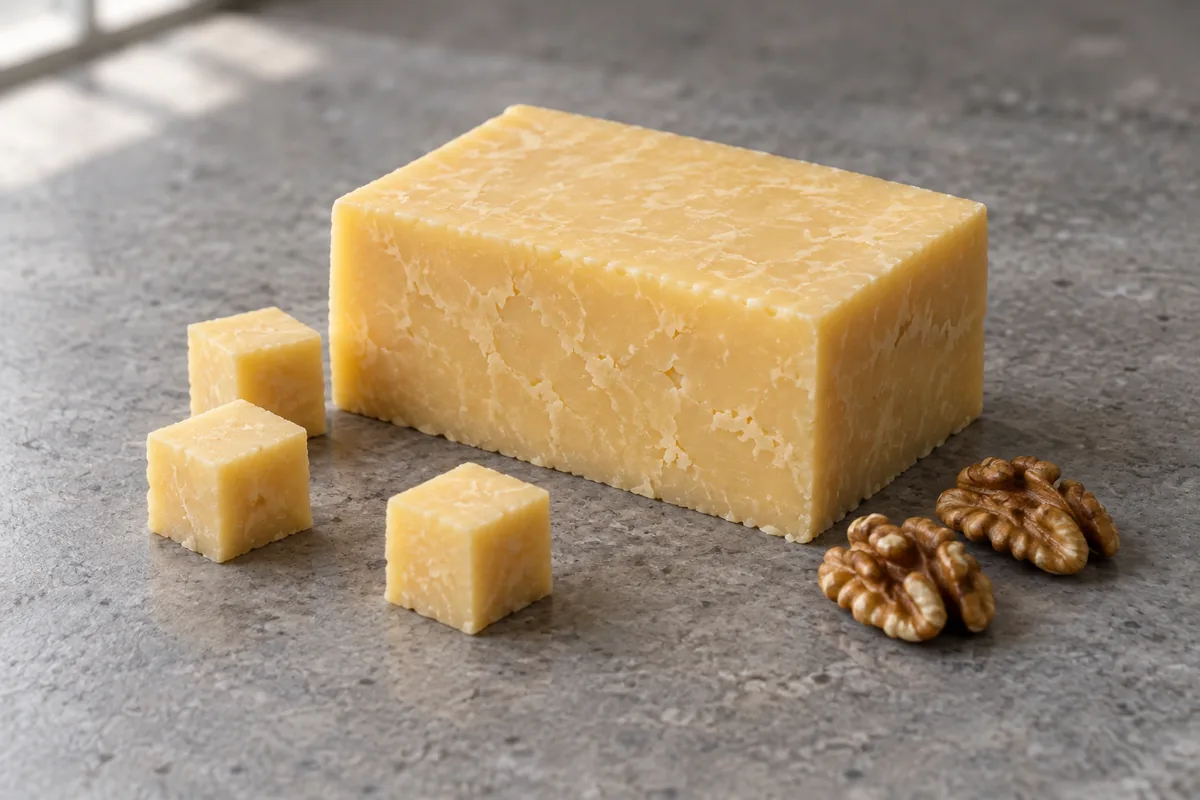
Anniversary Ale Cheddar is Rogue Creamery's limited 80th-anniversary cheddar, made with ale poured over the curd.
It was announced in January 2014, so buy under that exact identity rather than assuming any Rogue beer cheese is the same release.
In This Article
Check the Release Before Hunting for a Wedge
On 29 September 2026, Rogue's product page had Hopyard Cheese under Cheddars but not this one. That dated absence and Cheese.com's possible-discontinuation note make current availability uncertain, without proving there can never be another batch.
The original press release was published on 14 January 2014 and scheduled the 80th Anniversary Cheese debut for the Winter Fancy Food Show in San Francisco on 19 January. Anniversary Ale Cheddar is the directory name for that same release.
Rogue Ales was a separate Oregon company, so the creamery's survival does not settle the beer supply. In November 2025 the brewer closed all its restaurants and operations in Newport and filed for Chapter 7 bankruptcy.
Take care with older anniversary references too: the April 2011 earlier Anniversary Ale, for the creamery's 75th anniversary used ten ingredients including buckwheat and was paired with Rogue Farms Freedom Cheddar, a cow's-milk cheese with hops. The January 2014 cheese belongs to the 80th anniversary instead.
Expect a Young Cheddar With an Ale Character
The Central Point, Oregon cheese is listed as made with pasteurized cow's milk and aged 30 days and suitable for vegetarians. Dense, firm and lightly marbled are the documented texture and appearance, with a distinctive ale flavour in the release.
Creamy, mild and sweet, with a floral, fruity aroma and floral, chocolate and walnut undertones, is the Cheese.com description. The release uses floral and chocolate for the beer, while walnut brown describes its colour, so the wording does not independently establish a walnut taste in the cheese.
| Word | The cheese | The ale |
|---|---|---|
| Walnut | Walnut undertones | Walnut brown, the ale's colour |
| Chocolate | Chocolate undertones | Chocolate notes from cacao nibs |
| Floral | Floral undertones, a floral, fruity aroma | Floral notes from Rogue Farms hops |
| Sweet | Creamy, mild and sweet | A long, mildly sweet finish |
A 30-day cheddar is younger than the University of Tennessee manufacturing guide's typical holding period of at least 2 months. Its age bands are mild at 2–3 months, medium at 4–7, sharp at 8–12 and extra sharp beyond a year.
Nutty and pleasantly acidic cheddar tastes grow with age in that guide's account. The short maturation explains why this release is a different choice from Rogue Chocolate Stout Cheddar's 24-month age.
Beer Enters the Curd Before Pressing
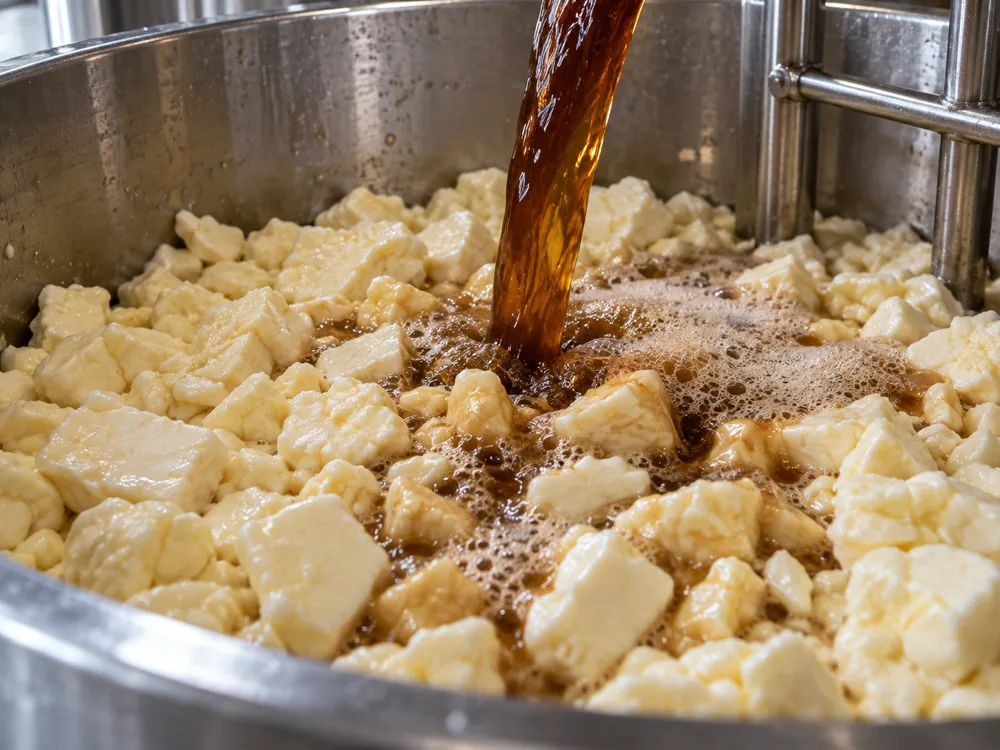
For this release, the beer is poured over the curd before the curd is dipped, pressed into blocks and aged. The full-cream cheddar in the release starts with whole milk and is hand-milled.
The thirteen-ingredient claim has two scopes: the 2014 release assigns 13 ingredients to the ale, whereas Cheese.com places thirteen additions in the whole milk. Keep those accounts separate instead of turning them into a single manufacturing formula.
In the standard cheddar make described by Tennessee Extension, drained curd mats for 2–2.5 hours as lactic acid bacteria reduce pH to 5.20–5.25. Milling makes chips about three-quarters of an inch square and 3 inches long, followed by dry salting, moulding and usually about 18 hours pressing.
A cheese miller normally cuts those chips, and hand-milled means Rogue cut them by hand. Those general manufacturing timings explain the term without claiming they are Rogue's proprietary batch schedule.
The accompanying beer was the limited 8.5% ABV imperial brown 80th Anniversary Ale. For a related method, Chocolate Stout Cheddar has stout poured over the curd and left to meld before the curd is hand-dipped and pressed into blocks.
Choose a Lunch Plate and a Drink
Madeira and Moscato are Cheese.com's suggestions for this cheese, alongside lunch plates. Use the pairings as published leads from their sources.
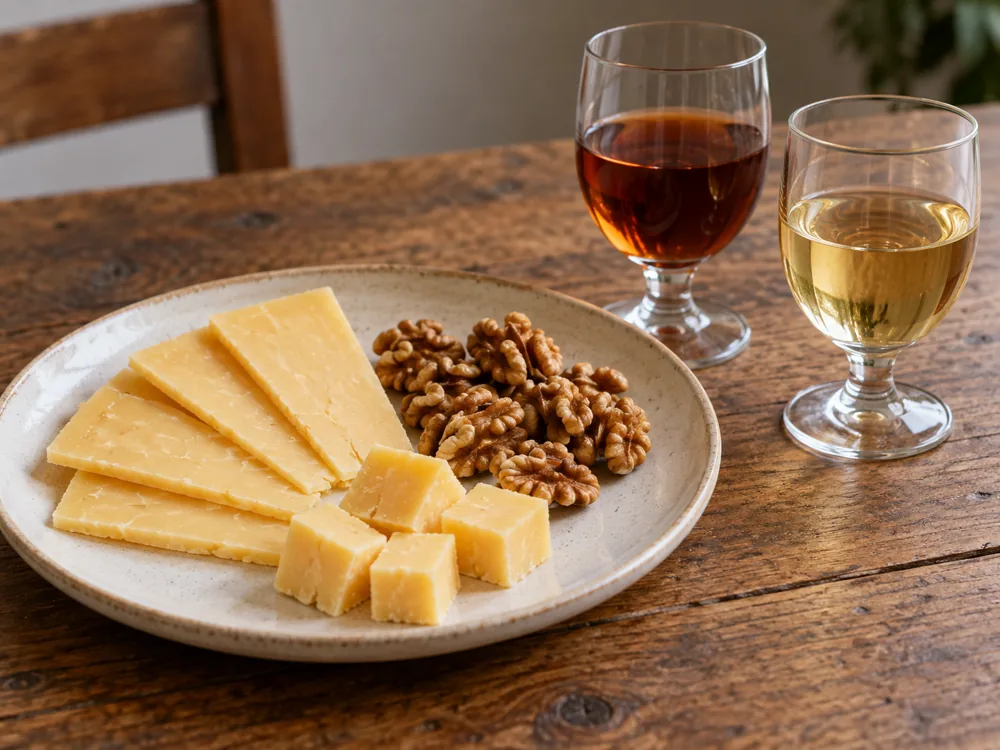
| Pairing | Why It Works |
|---|---|
| Madeira | Suggested for this cheese. |
| Moscato | Suggested for this cheese. |
| Chardonnay | Cheese-encyclopedia.com's pick, best taken as a general cheddar suggestion. |
| Sauvignon Blanc | Cheese-encyclopedia.com's pick, best taken as a general cheddar suggestion. |
| Fresh fruit and artisan bread | Cheese-encyclopedia.com's serving suggestion, best taken as a general cheddar one. |
Chardonnay and Sauvignon Blanc come from Cheese-encyclopedia.com's generic entry, with crackers, fresh fruit, charcuterie and artisan bread. Treat those as general cheddar suggestions rather than cheese-specific tasting notes.
For a beer, the general cheddar and beer pairing guide is a useful starting point. The actual Anniversary Ale's existence does not establish that you can still buy it.
Pick a Sibling for the Job You Need
Hopyard was made with hop petals in the 2013 Culture account, while Chocolate Stout uses stout in its curd. Hopyard was still on the dated September 2026 product list, and Chocolate Stout is closer in method but much older in maturation.
For Chocolate Stout specifically, Culture describes a firm cheese marbled with dark ale, savoury and tangy with chocolate and coffee notes. Lager or stout, lighter Chardonnay or Syrah are its suggested drinks.
By 2014 the collaboration had produced four beer cheeses, including Chocolate Stout, Hopyard and Morimoto Soba Ale. The latter used buckwheat ale in the 2013 account.
If those are unavailable, mild or medium cheddar gives a plain fallback, with mild the nearer age-band choice for a 30-day release. Choose among other cheddar substitutes by the serving job instead of expecting the same beer flavour.
Another distinct Rogue cheese, Cacow Belle, is cheddar with chocolate and spice. Keep its name separate from an ale-treated cheddar when ordering.
The Creamery and the Beer Were Different Businesses
The Central Point factory opened in 1933, and after Tom Vella and Celso Viviani bought it in 1935, much of its cheddar was produced under national-company contracts and shipped overseas for the war effort. Ig Vella took over after Tom died in 1998.
David Gremmels and Cary Bryant bought the creamery in 2002 when Ig said it was near closing. In the 2014 release, Gremmels was president and Bryant CEO, both cheesemakers.
Milk for Rogue's blues and cheddars in that release came from Brown Swiss and Holstein cows. The 2012 Grants Pass dairy-farm purchase gave the creamery its own milk supply for the first time.
The beer began as their request to Rogue Ales brewmaster John Maier for a match to grape-leaf-wrapped Rogue River Blue. They discussed floral, toasted-nut, hop, herbal, cocoa and grain notes, then the creamery made small batches of a new cheddar inspired by the resulting ale.
Bryant left in 2015, and Savencia bought Rogue Creamery in 2018. The Oregon Encyclopedia's 2022 update records it as that French company's subsidiary with Gremmels still president, rather than documenting a new 2026 management check.
Keep Milk Guidance Separate From Alcohol Avoidance
The pasteurised cheddar meets the NHS hard-cheese line: the NHS lists pasteurised or unpasteurised hard cheeses, such as cheddar, gruyère and parmesan, as safe to eat. For the same milk/class reading, the CDC lists hard cheese, when made with pasteurized milk, such as Asiago, Cheddar, Parmesan, or Swiss/Gruyere/Emmental, as safer.
Those are milk-and-cheese-class permissions and measure no alcohol left after ale treatment. During pregnancy, check the actual ingredient list for alcohol and do not treat this beer-treated cheese as established alcohol-free.
Drinking alcohol in pregnancy can cause long-term harm to the baby, and NHS advice identifies avoidance as the safest choice. No residual-alcohol measurement for this cheese is established here.
Keep the Actual Package Date With the Cut
Ask about the lot and how long the seller has held it, especially for a historical limited release. Once opened, follow the pack and the general directions for how to store cheese, without assigning a new shelf life from the anniversary date.