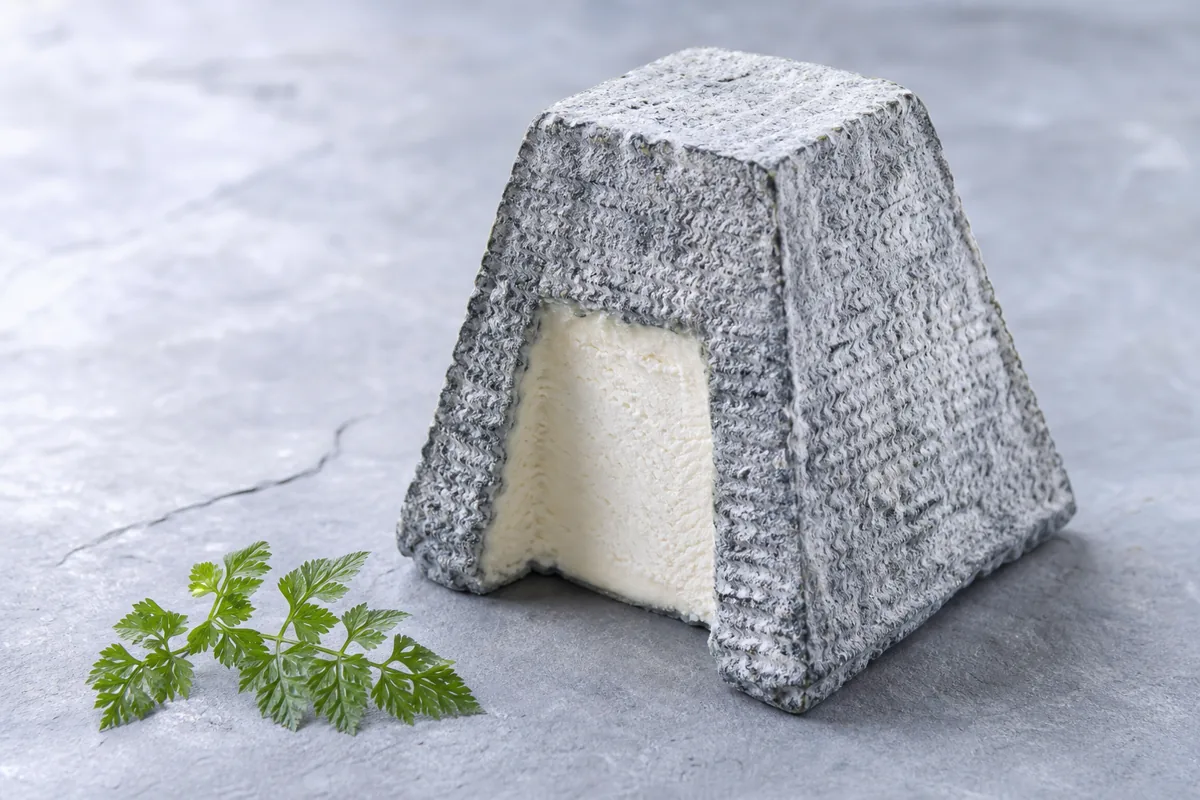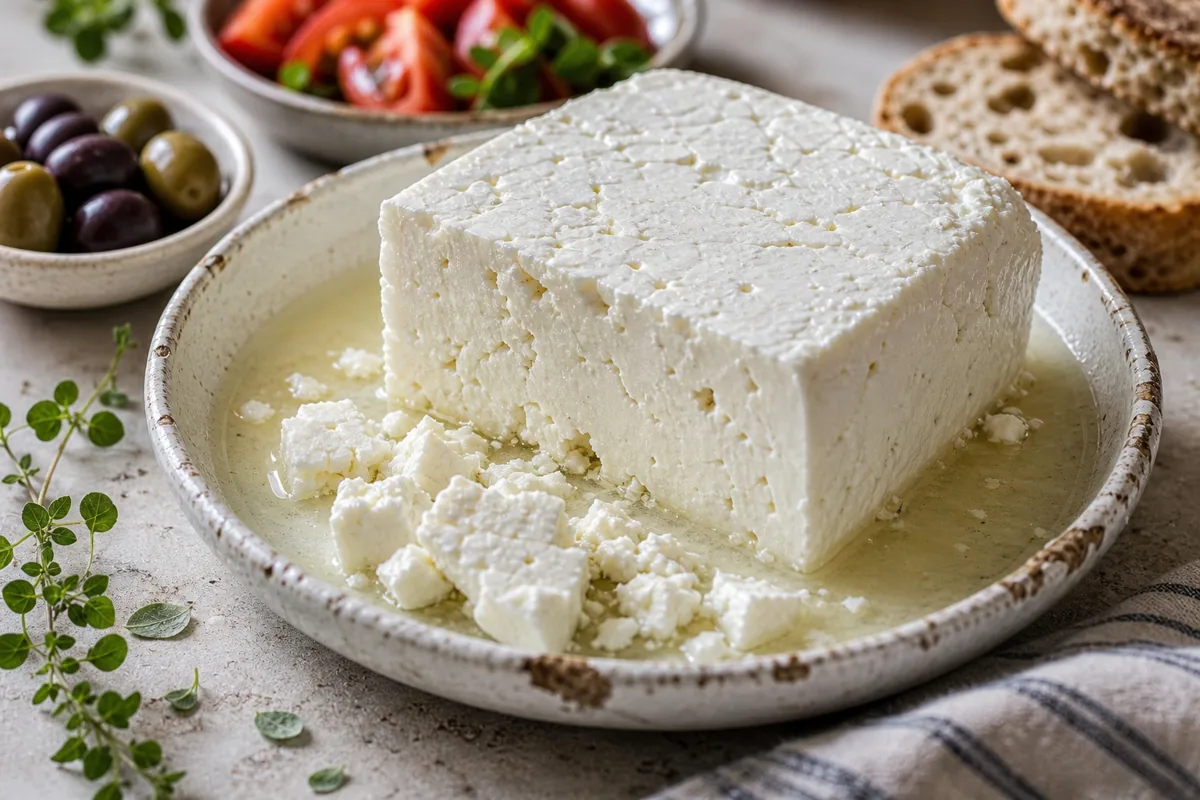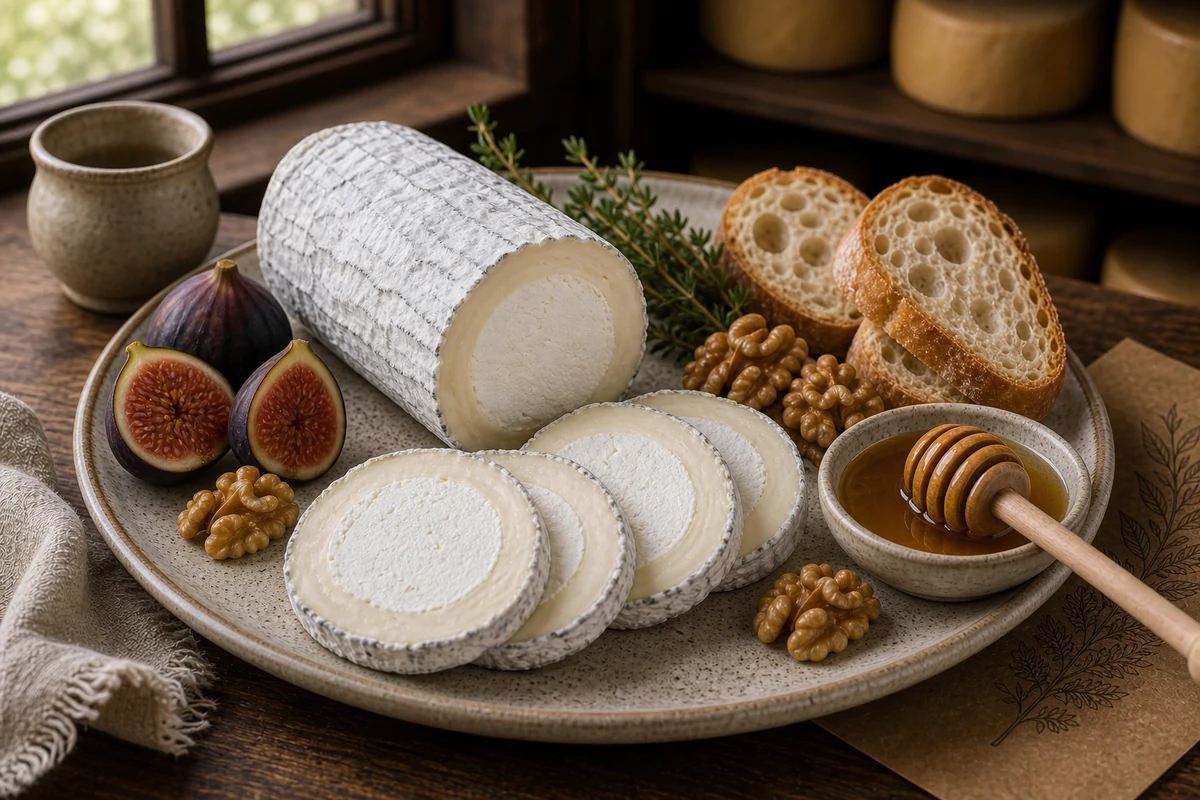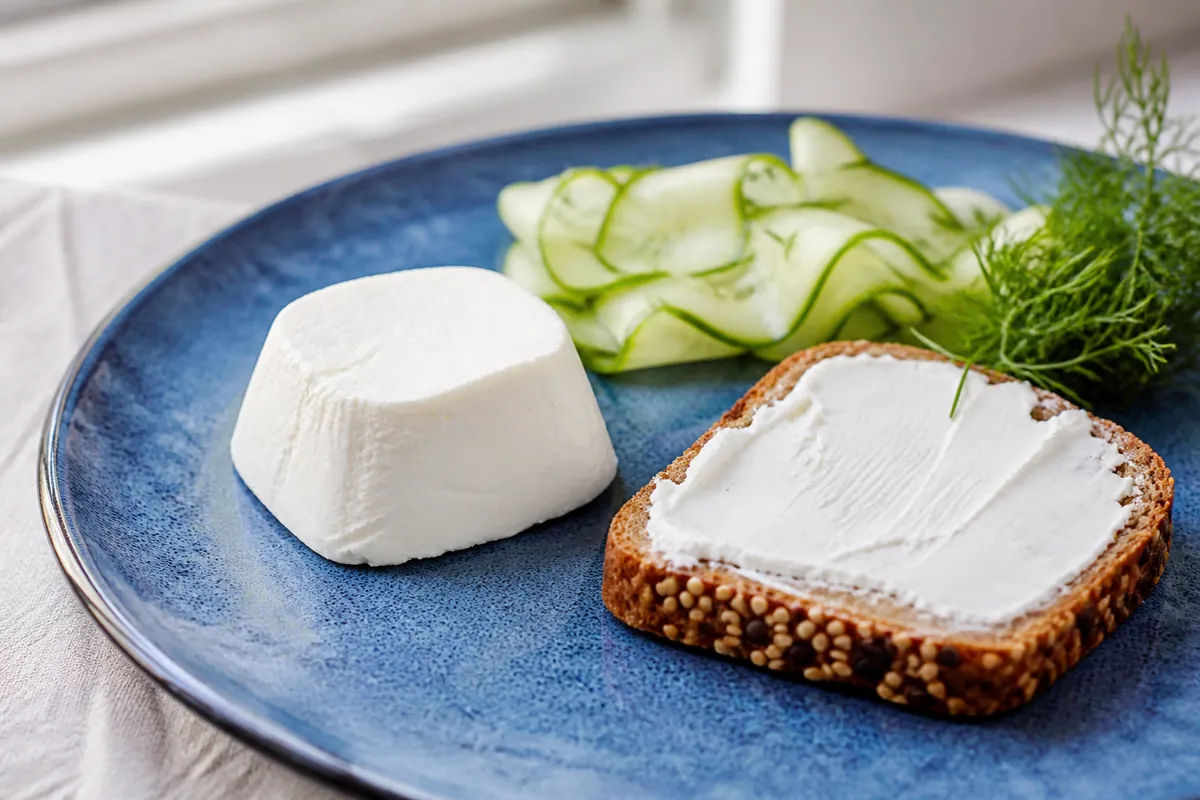
Chavroux is a mild, pasteurized goat cheese brand, and the pyramid in the chilled aisle is its fresh cheese. Savencia, the group that owns it, calls Chavroux the leading brand of fresh goat cheese in France.
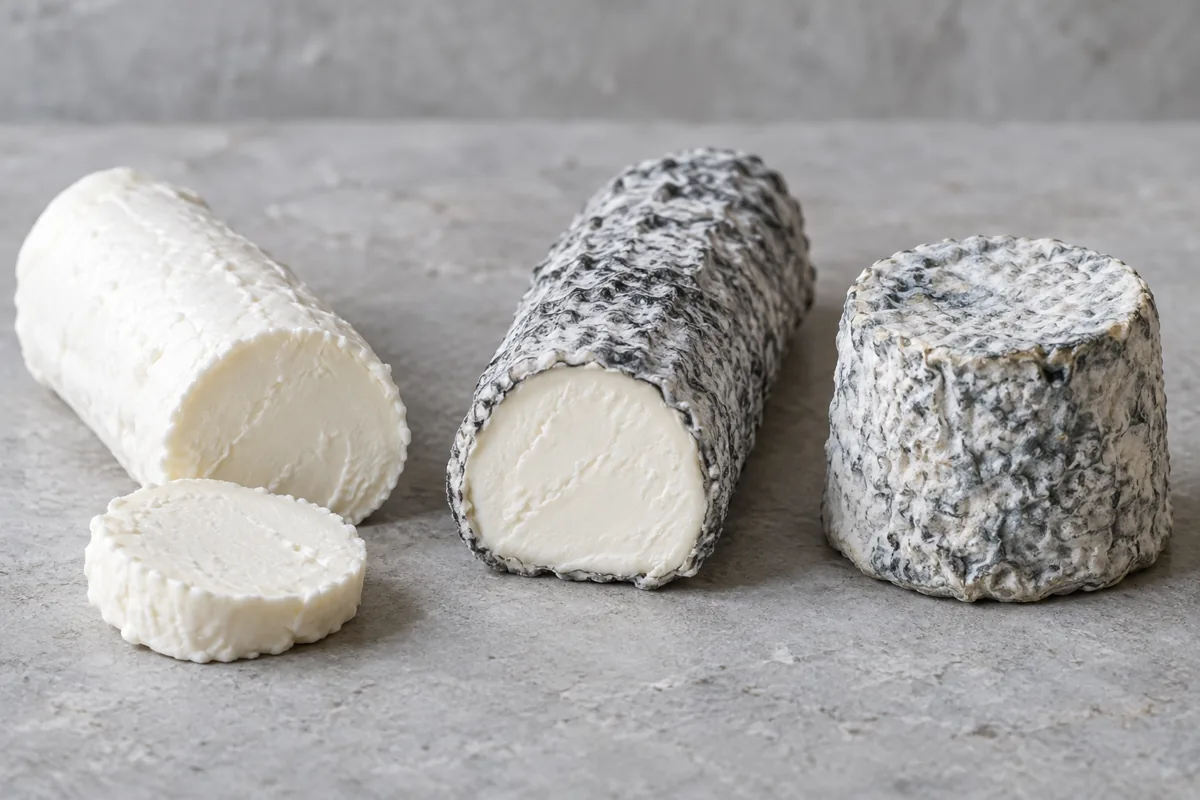
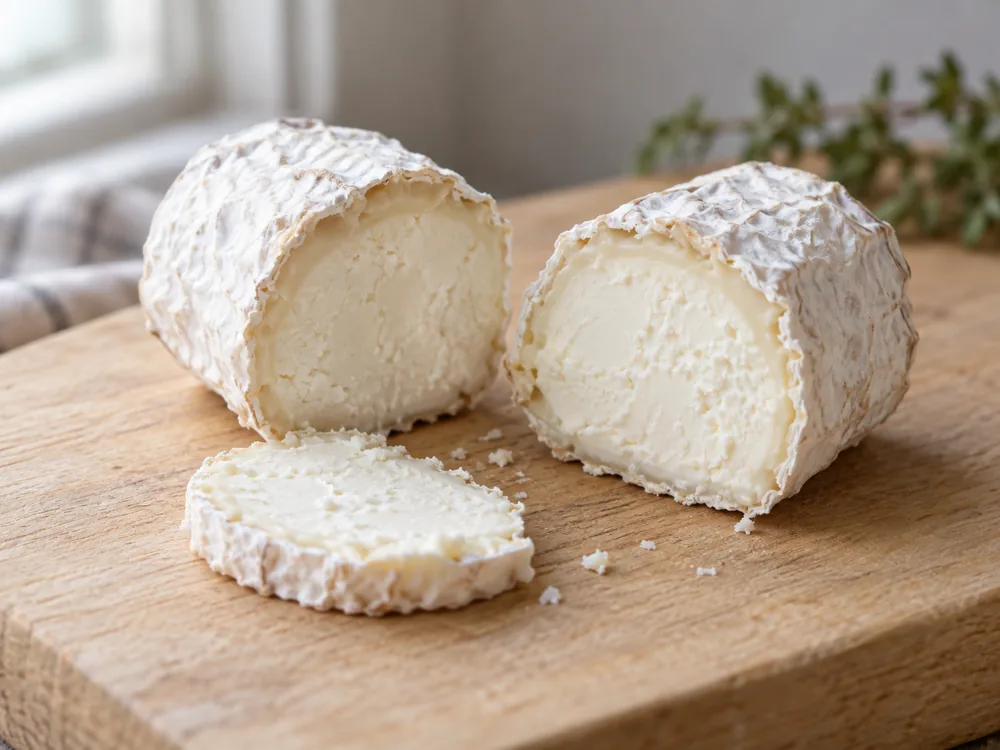
The brand also sells a log with a white rind, so a Chavroux label tells you more than the shape does.
In This Article
What Is Chavroux Cheese?
Chavroux launched in 1985 and is made in Réparsac, France, by Savencia, which the Academy of Cheese calls the second largest cheese group in France. French Wikipedia classes it as a fresh-paste cheese, and Savencia's brand page describes it as a fresh and melting goat cheese.
French Wikipedia adds that it carries no protected designation of origin, only a trademark, so the label on the pot, not an appellation, is what describes the cheese.
Does the Pyramid Shape Mean Chavroux Is Fresh?
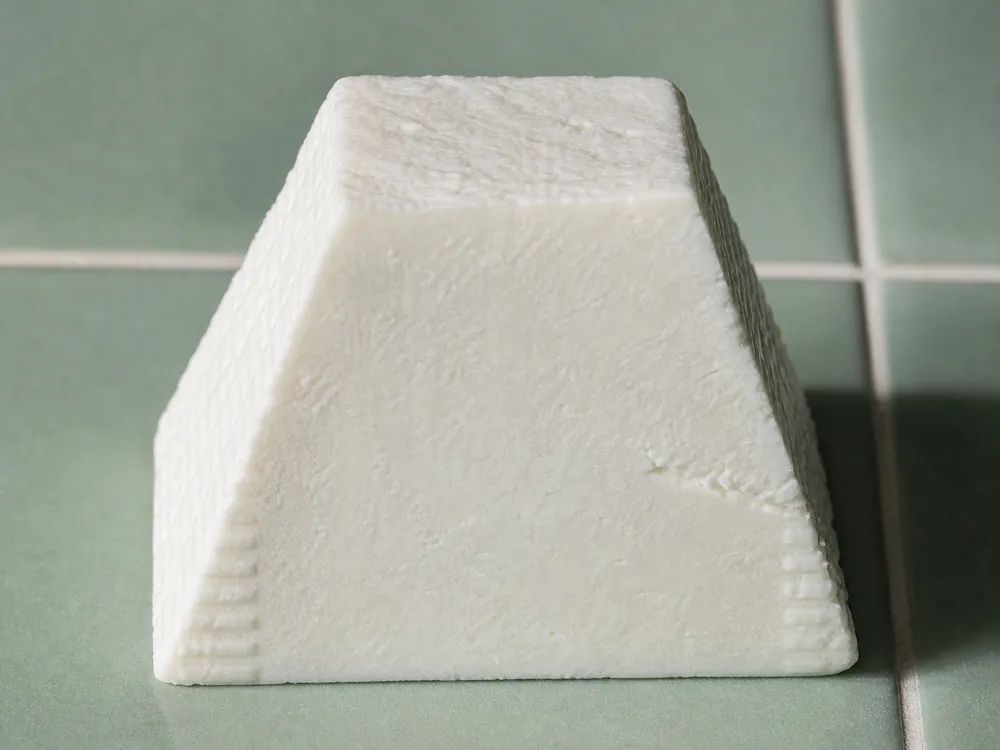
French Wikipedia says Chavroux comes as a pyramid or a bûche, the French word for log, at about 150 g. Savencia's brand page lists pyramid, log, semi-hard, sliced, and mousse products under the name.
Savencia's wording places the pyramid among its fresh cheeses and the log among its soft ones, so the two shapes are different styles under one name.
The cut-off top comes with a story on the same page. Savencia says rumor has it that Napoleon sliced the top off a pyramid of goat cheese because it reminded him of his failed Egyptian campaign, and that the chopped-top style stuck.
Because Savencia frames the story only as a rumor, it explains the shape as brand lore, not as a sign of age or style.
What Is the Chavroux Log Like?
The Academy of Cheese library lists the Chavroux goat's milk log as a soft cheese with a rind of mainly Penicillium candidum and a typical age profile of 80 to 90 days, at 150 g. French Wikipedia gives the same weight for the pyramid, so the weight on the pack cannot tell the two apart, while the rind can.
The Academy says the log develops a darker layer beneath the rind as it matures. It describes a mild flavour and rich, creamy texture with more intense goat notes beneath the white rind, which the fresh pyramid, with no ripening period, does not have.
For drinks, the Academy suggests a dry white wine such as Chablis or a medium red such as Beaujolais.
The Academy lists Saint-Loup, in Charente-Maritime, as the log's origin, while French Wikipedia puts the brand's plant at Réparsac, in Charente. The Academy credits its entry to information the cheesemaker supplied.
How Is Chavroux Made?
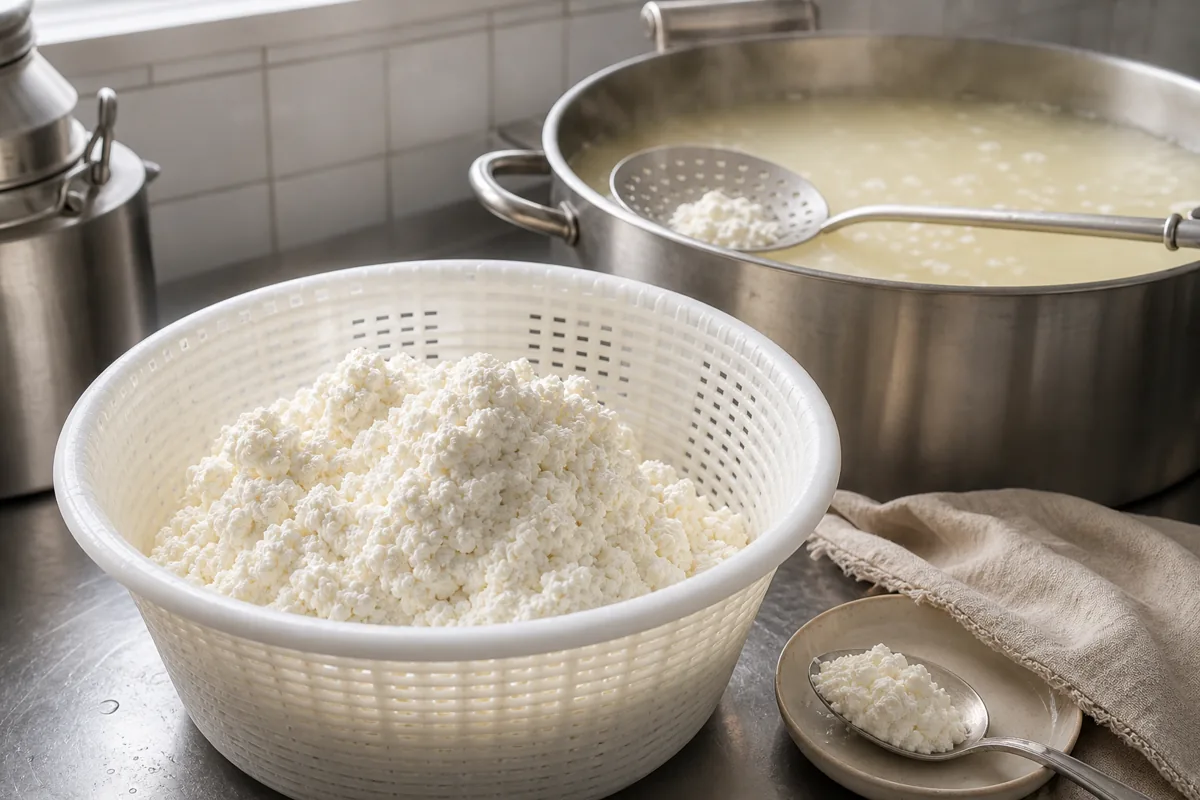
French Wikipedia and the Belgian retailer labels describe how Chavroux is made. French Wikipedia says the milk is a standardized, pasteurized blend of goat milks.
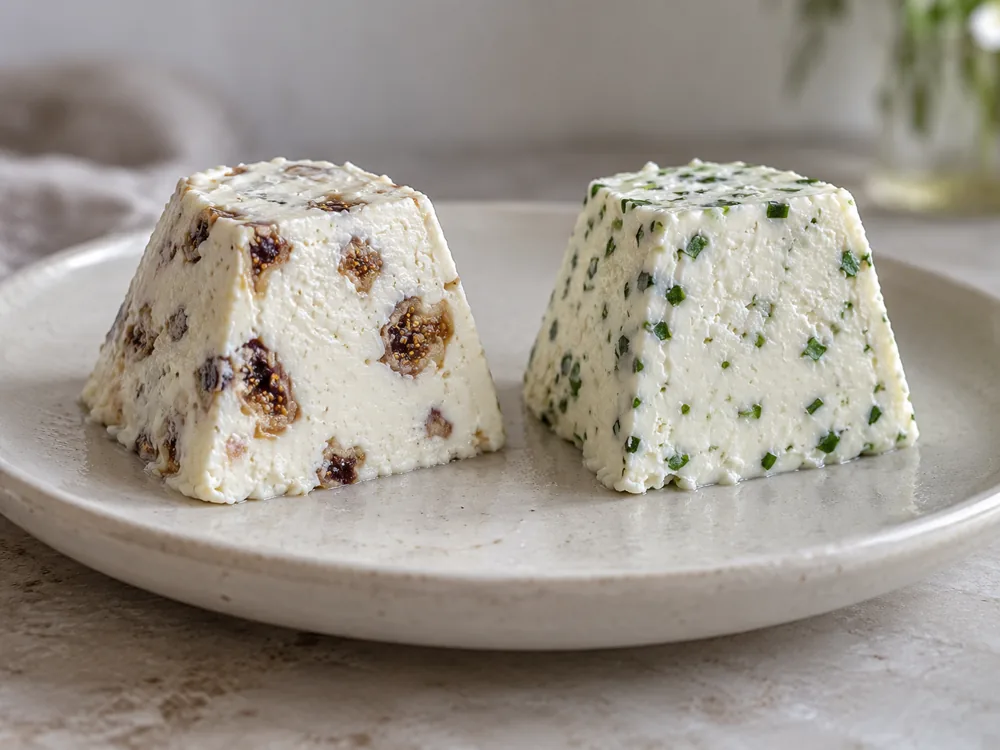
The Belgian listings give three different ingredient lists. The Original has pasteurized goat's milk and cream, salt, and natural goat flavouring, while the fig pyramid lists the same milk and cream with fig at 6%, sugar, rice starch, and salt.
The chive pyramid starts from goat curd, then lists milk and cream, salt, and chives at 0.4%. Only the Original lists natural goat flavouring, so the flavoured pyramids are not simply the Original with one ingredient stirred in.
Each of those Belgian pages calls its pyramid 100% goat's milk and marks it as made from pasteurized milk.
How Does Chavroux Taste?
Savencia's brand page and the Belgian product pages both stress a melting texture and a fresh, mild taste.
The flavoured pyramids change that base by different amounts. The fig page says the sweet, mild taste of its fig pieces lifts the freshness of the goat cheese, and its label shows 7.2 g of sugars per 100 g against 2.6 g on the Original.
That makes fig the sweet one, with nearly three times the sugars of the Original. The chive page says the chives add still more freshness, and at such a small share of the recipe they leave its label close to the Original's, with 2.5 g of sugars.
How Do You Serve Chavroux?
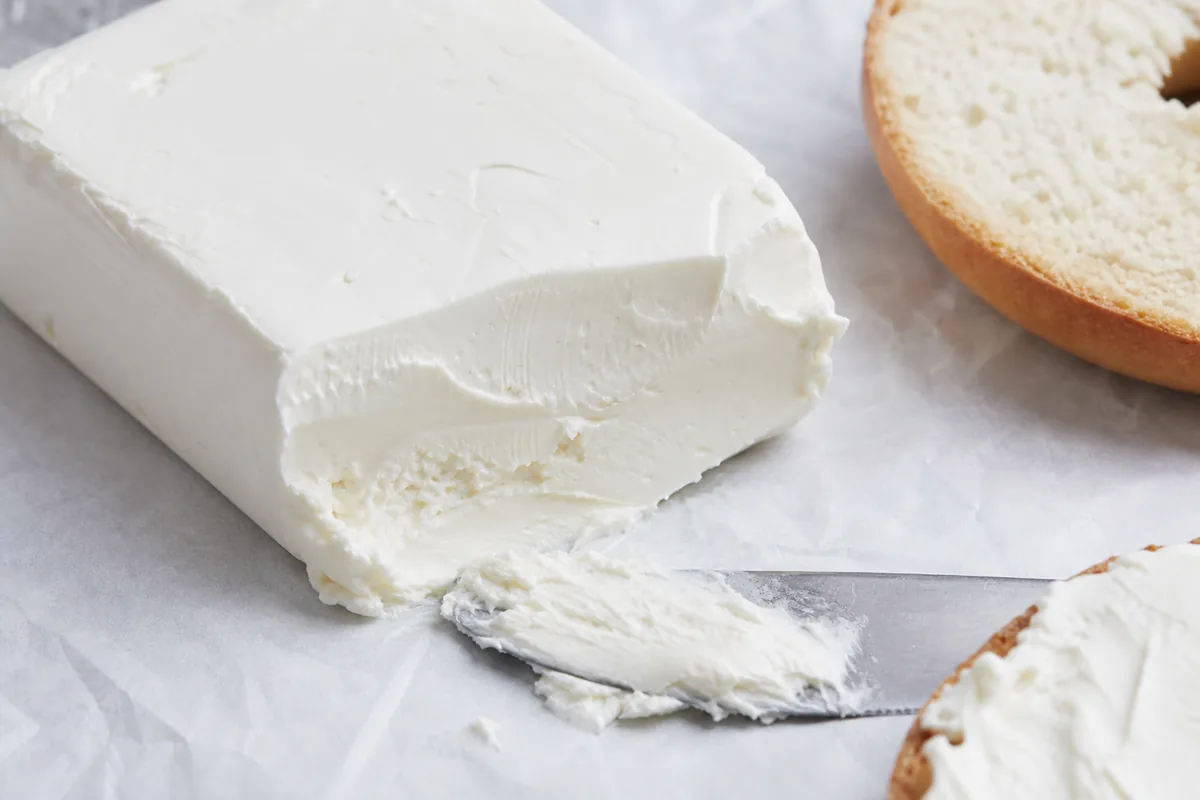
Savencia suggests the pyramid on toast, and the Belgian page for the Original says it spreads easily.
The same page names cheese boards and appetizers, and notes that the pyramid turns out of its pot whole and can carry creative dips. That makes it easy to serve whole on a cheese board.
The recipe list on that page shows what the Belgian site pairs with the pyramid: cucumber in a fresh tart, cherry tomatoes with penne or tagliatelle, and ratatouille in a mini quiche.
Other titles pair it with blueberries sautéed in honey and thyme, salmon in a stuffed pyramid, and pesto on grilled toast. Those are recipe titles, not tasting notes, so they show the uses the site promotes rather than a verdict on which pairing works best.
| Use |
|---|
| Spread on toast (Savencia). |
| Turn out whole onto a cheese board or appetizer plate (Belgian product page). |
| Use as a base for dips (Belgian product page). |
| Stir into soups, gratins, or desserts (Belgian product page). |
| Pair with cucumber, cherry tomatoes, ratatouille, or blueberries and thyme (Belgian recipe titles). |
Can You Cook With Chavroux?
Yes, according to the product pages. The Belgian listing for the Original describes the pyramid as creamy in soups, melting in gratins, and surprising in desserts, and Savencia says the brand suits cooking as well as toast.
The clearest method is a baked macaroni and cheese with broccoli on the same Belgian site. Its sauce is 60 g of butter, 2 tablespoons of flour, and 5 dL of whole milk.
The flour goes into the melted butter, with an optional pressed garlic clove, and colours lightly over moderate heat before the milk is whisked in a little at a time until the sauce is smooth. Three coarsely chopped Chavroux slices then melt and thicken in it for 2 minutes over low heat.
The cook then takes the pan off the heat and folds in a whole 150 g pyramid until the sauce is smooth, so the fresh cheese goes in last. The dish serves four with 350 g of macaroni.
The macaroni is boiled for about two-thirds of the packet time, then goes into a dish with the sauce and blanched broccoli. The recipe explains that the pasta keeps cooking in the oven, so full boiling would leave it overcooked and soft.
A topping of stale bread, almonds, and lemon zest bakes on top for 20 minutes at 180 °C. Some breads colour faster than others, the recipe notes, and it says to cover the dish with foil halfway through if the crumb browns too quickly.
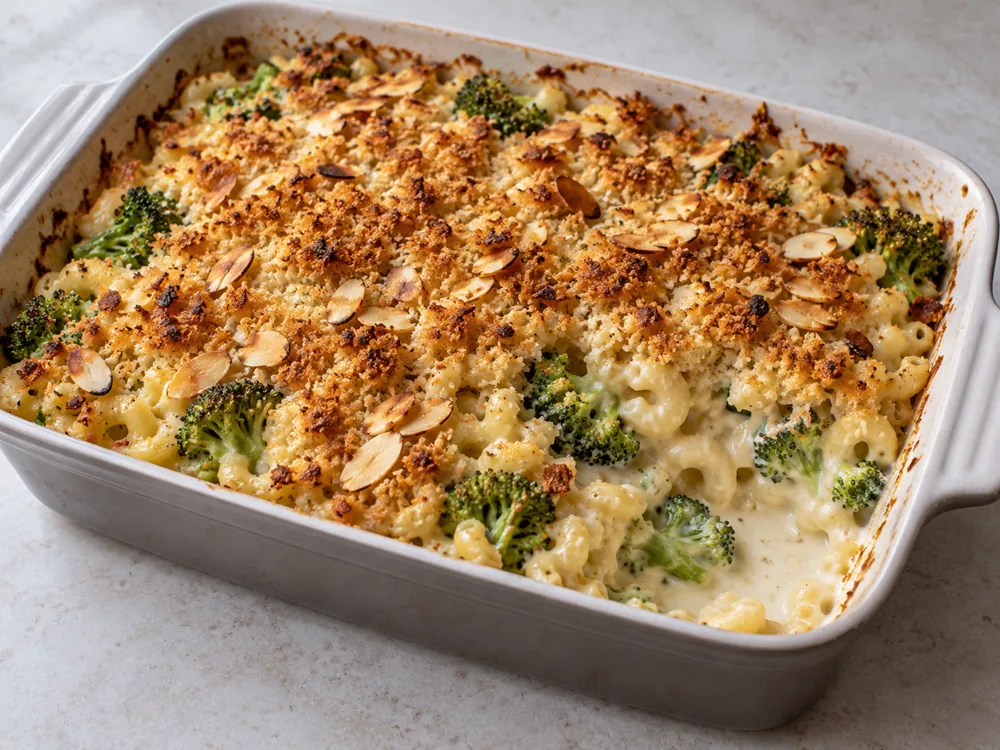
The recipe adds the pyramid off the heat, which avoids boiling it.
Is Chavroux the Same as Chèvre, and What Can Replace It?
Chèvre is the French word for goat, so it names the whole goat cheese family. Chavroux is one brand inside that family.
In the United States, Savencia sells its pyramid-shaped fresh goat cheese as Chavrie, which Savencia says launched in 1989.
Savencia's page names three flavoured Chavrie logs, sundried tomato and garlic, cranberries and candied orange peel, and thyme and lemon, so neither the fig nor the chive pyramid has a named Chavrie counterpart there. Compare the two by reading the label on each.
Which Chavroux Version Should You Choose?
Compare versions on the nutrition table per 100 g, because added ingredients move the numbers. The Original is the plain reference, and fig and chive change both the ingredient list and the label.
| Version | What the label adds | Energy | Fat (saturated) | Protein | Salt |
|---|---|---|---|---|---|
| Original | Natural goat flavouring | 162 kcal | 13 g (9 g) | 8.7 g | 1 g |
| Fig | Fig 6%, sugar, rice starch | 178 kcal | 12 g (6.5 g) | 10 g | 0.63 g |
| Chive | Goat curd, chives 0.4% | 159 kcal | 12.5 g (9 g) | 8.5 g | 1.03 g |
The fig pyramid has the least fat, saturated fat, and salt of the three, yet the most energy at 178 kcal, and its label shows 7.7 g of carbohydrate against 2.6 g on the Original.
The Belgian page lists the Original in three formats: a classic 150 g pot, six 20 g portions, and a 225 g family pack. Six portions add up to 120 g, and a whole 150 g pot of the chive pyramid holds about 1.5 g of salt where the fig pot holds about 0.9 g, so per-100 g figures compare better than per-pot ones.
The Belgian listings for the Original, fig, and chive pyramids say they are made in a workshop that also uses cow's milk. The same listings say the pyramids contain lactose.
Vegetarian buyers get different answers across the range: the Belgian listings mark the Original, fig, and chive pyramids as not vegetarian, while the Academy of Cheese lists the log as made with vegetarian rennet.
Compare versions per 100 g, since the pots and portions differ in weight. Fig has the least fat, saturated fat, and salt of the three but the most sugars, and the Belgian listings mark all three pyramids not vegetarian.
Is Chavroux Safe During Pregnancy?
How safe a Chavroux is in pregnancy depends on the version and on whose advice you follow. Every pyramid label lists pasteurized goat's milk, and the NHS counts pasteurised goats' cheese without a white coating among the safe soft cheeses.
The rinded log falls under a different NHS rule. The NHS says pasteurised or unpasteurised mould-ripened soft cheeses with a white coating, such as brie, camembert, and chèvre, must be thoroughly cooked, which is the description that fits the white-rinded Chavroux log.
The CDC lists any queso fresco-type cheese, including similar fresh, soft cheeses, as riskier when made with pasteurized or unpasteurized (raw) milk, and pasteurized soft cheeses heated to an internal temperature of 165 °F or until steaming hot as safer.
Served cold, the pyramid is described as a pasteurized fresh goat cheese and the log as a pasteurized soft cheese with a white rind, and the CDC lists neither as a safer choice, so ask a midwife or doctor.
It also says pregnant women are 10 times more likely to get a Listeria infection.
How Should You Store Chavroux?
The CDC says to keep a refrigerator at 40°F (4 °C) or below, because bacteria can multiply rapidly in the Danger Zone between 40°F and 140°F.
The CDC also says to refrigerate perishable food, dairy included, within 2 hours, or within 1 hour when it sits above 90°F, so the limit also covers a pyramid turned out onto a cheese board.
Follow the date printed on the pot.
SOURCES & REFERENCES
What Else Do People Ask About Chavroux?
Chavroux is a French fresh goat cheese brand owned by Savencia, sold as a pyramid and as a rinded log.
The Belgian listings for the Original, fig, and chive pyramids give pasteurized milk, and the Academy of Cheese lists pasteurised goats' milk for the log. Check the pack in hand.
The fresh pyramid is a fresh-paste cheese with no ripening period. The Chavroux log in the Academy of Cheese library has a white Penicillium candidum rind.
Yes. A Belgian recipe melts Chavroux slices into a milk sauce for baked macaroni and folds in a fresh pyramid off the heat.
The Belgian listings mark the Original, fig, and chive pyramids as not vegetarian, while the Academy of Cheese lists the log as made with vegetarian rennet.