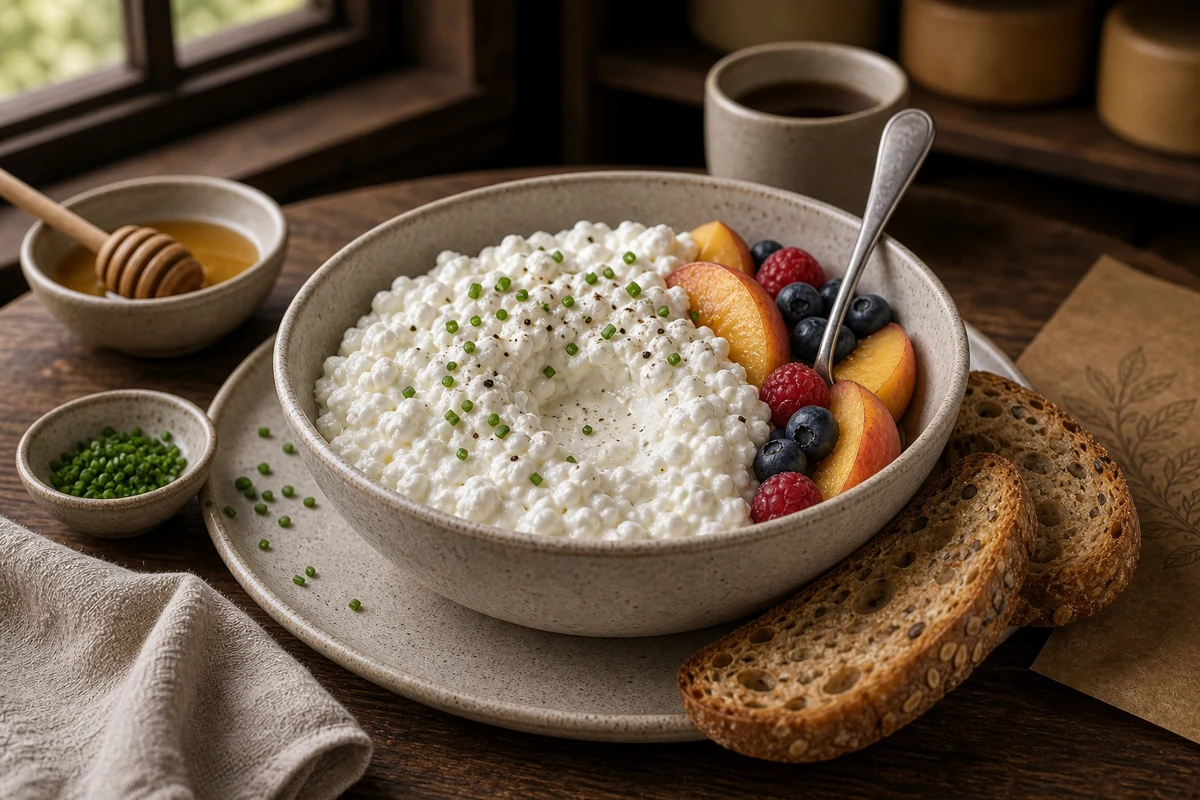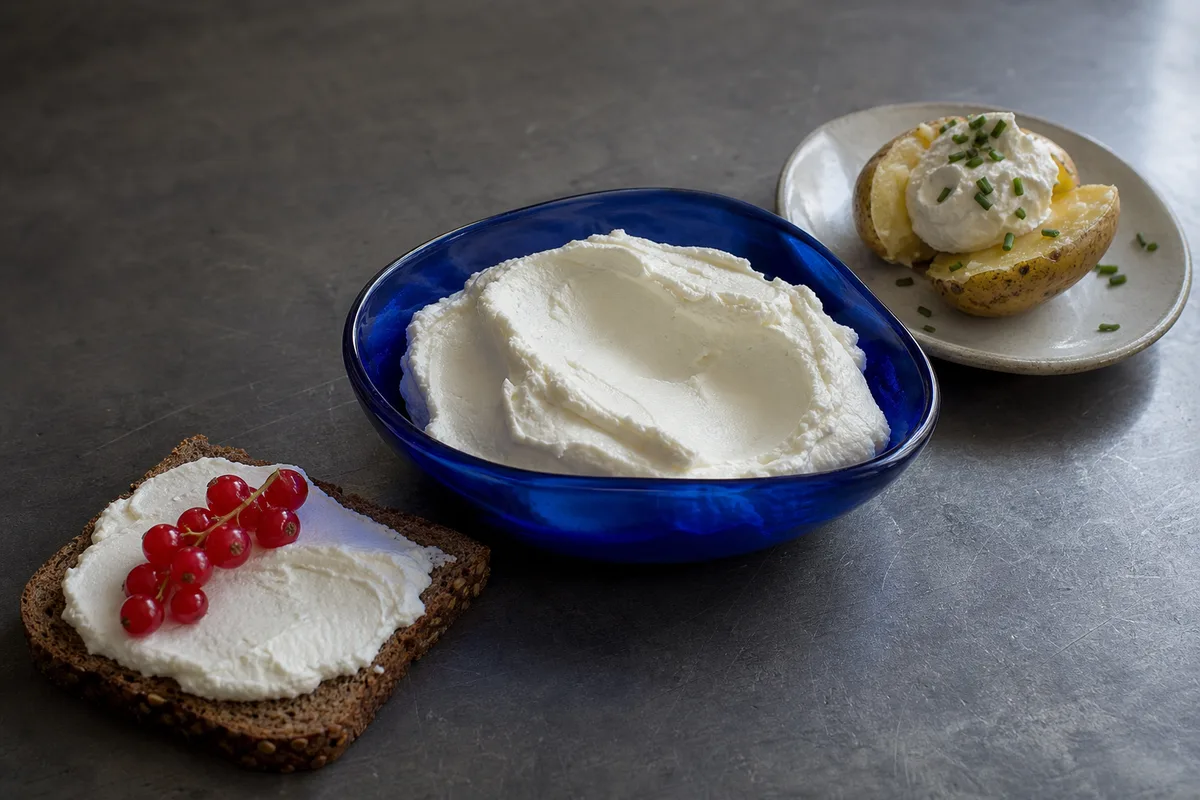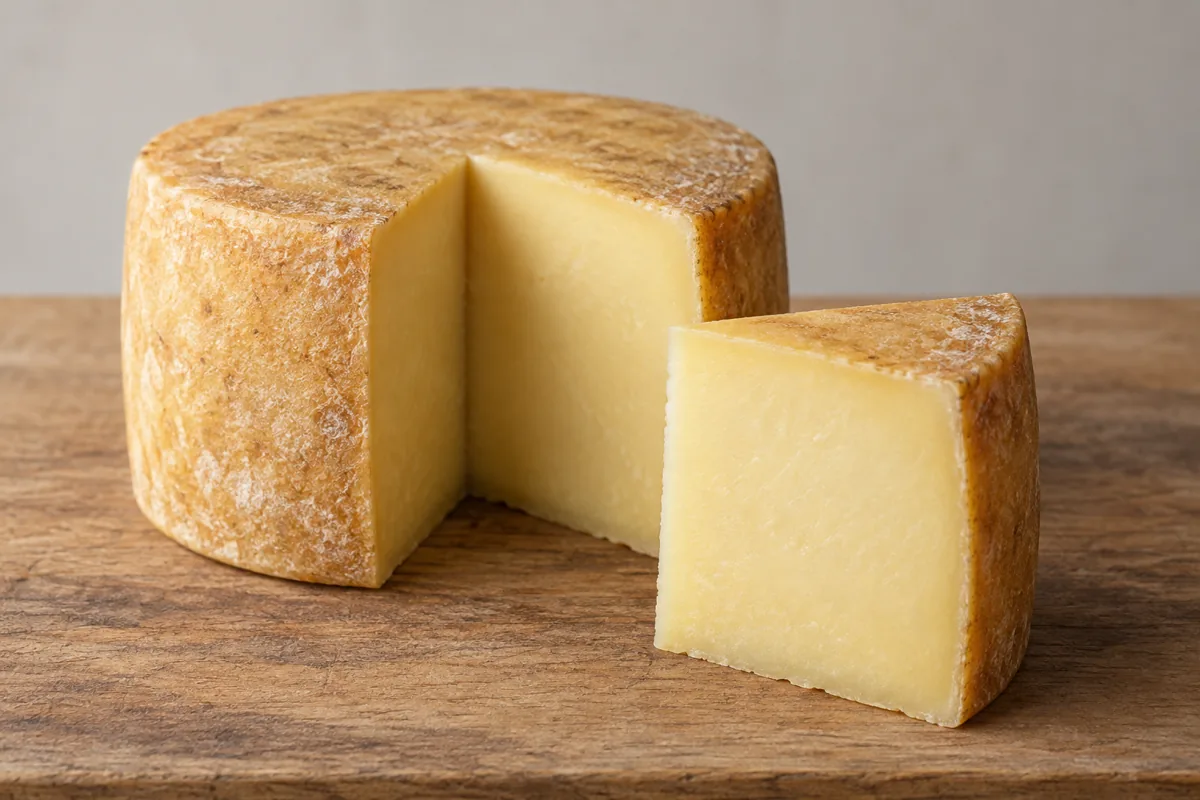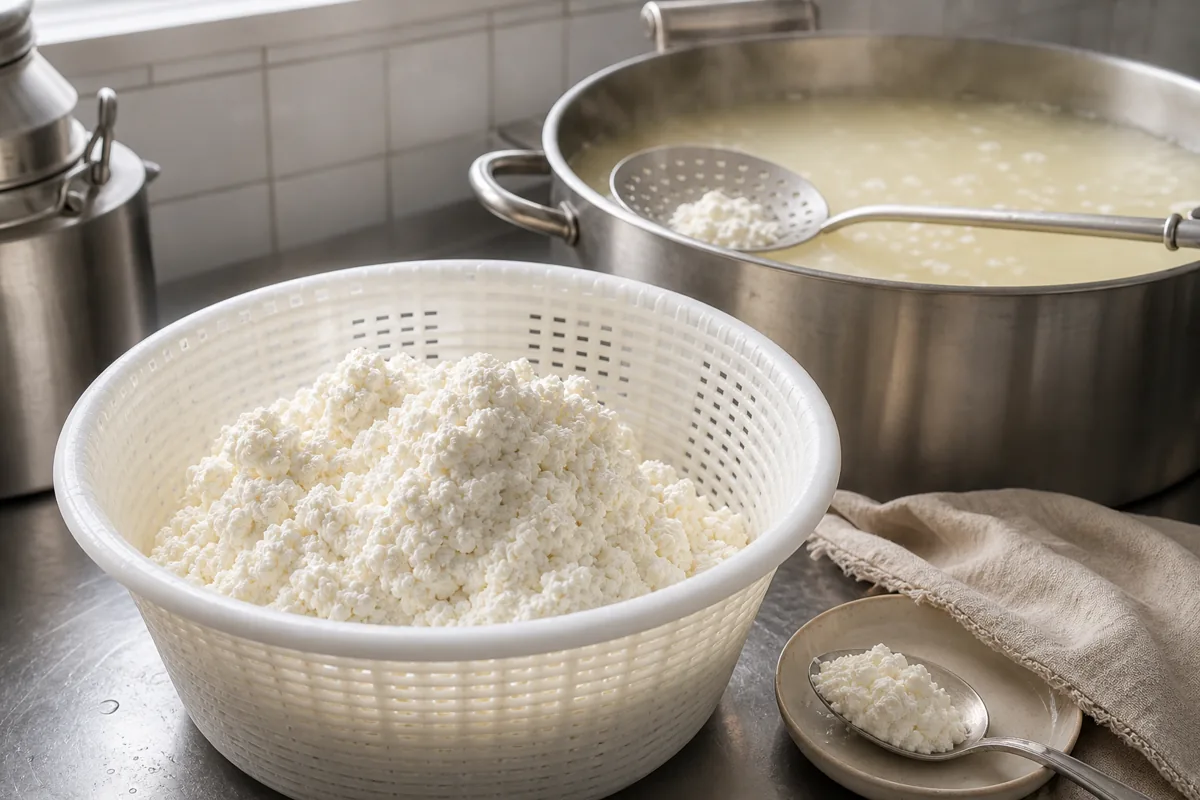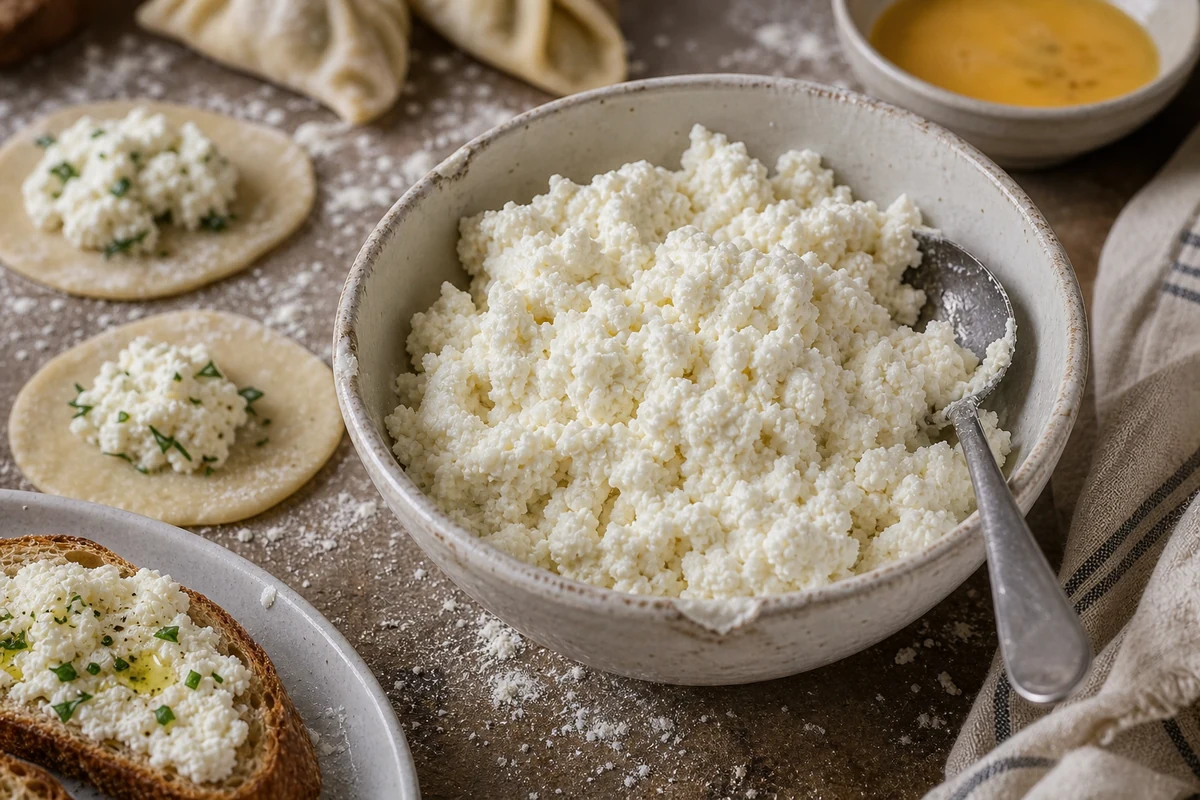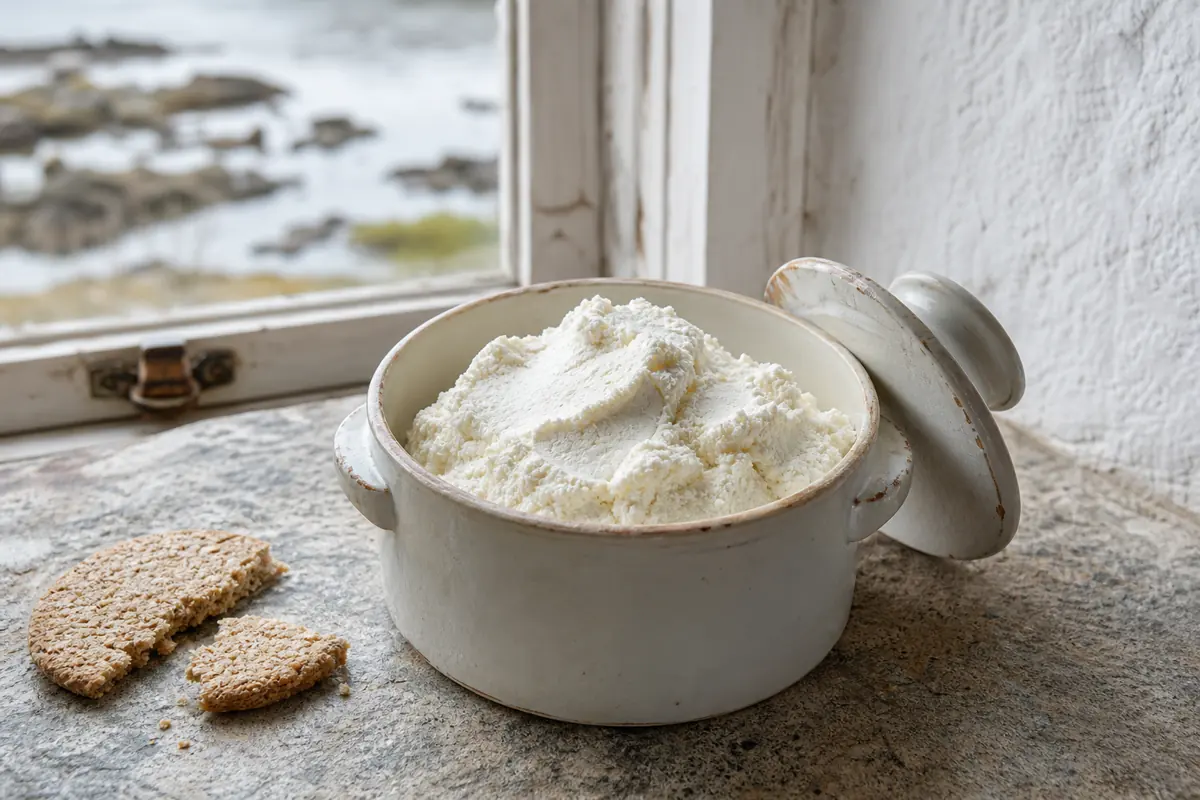
Crowdie is a soft, fresh Scottish cheese made from cow's milk that has soured into a fragile curd and been drained, with no pressing and no ageing.
The tub you pick up may not match the next one, because the name covers more than one product. Highland Fine Cheeses sells a reduced-fat, crumbly Skinny Crowdie, Connage Highland Dairy sells a half-fat curd it describes as mousse-like, and Slow Food UK describes the traditional cheese as rich and creamy with a sharp tang.
In This Article
What Is Crowdie Cheese?
Fromage Homage calls crowdie a crofter's cheese, made from the milk left after cream was skimmed off for butter. Wikipedia places it with crofters and smallholders in the Highlands, the Islands and Orkney, who made it for the household from the family cow.
The word crowdie first named something else. Fromage Homage says it was originally an oatmeal porridge eaten as a staple, which then came to mean any common food, and Wikipedia puts a note at the top of its cheese page for readers who want the porridge, which it files under brose.
Wikipedia gives the Gaelic name for the cheese as gruth, and the black version appears as Gruth Dhu in Fromage Homage and Slow Food UK but as Gruth Dubh in Wikipedia.
Sources date the cheese differently. Slow Food UK and Wikipedia trace it to the Viking era and possibly to the Picts before them, while Fromage Homage places its origin in the Viking occupation, which it dates from about the eighth to the fourteenth century.
Wikipedia says household crowdie-making declined after World War II as crofting traditions faded, although many homes kept making it, and it credits the cheese's survival, perhaps unfairly, to Susannah Stone, who kept making it near Tain.
Wikipedia adds that after she apparently made too much one day in 1962 and offered the surplus to a local grocer, the cheese sold well enough for her and her husband to make it commercially with their other traditional Scottish cheeses, a range that Fromage Homage says includes Caboc.
Highland Fine Cheeses, the Tain dairy that grew from that start, says crowdie is the cheese that began the dairy in the family bathtub and that its draining moved from ladies' stockings and pillowcases to muslin and plastic sacks.
You buy it as curd in a tub rather than as a wheel. Connage lists 160 g, 1 kg and 5 kg tubs, and Highland Fine Cheeses sells a 140 g tub.
How Milk Becomes Crowdie
Highland Fine Cheeses describes crowdie as a lactic curd: the milk acidifies until the calcium precipitates, and what forms is a fragile curd, not unlike yogurt.
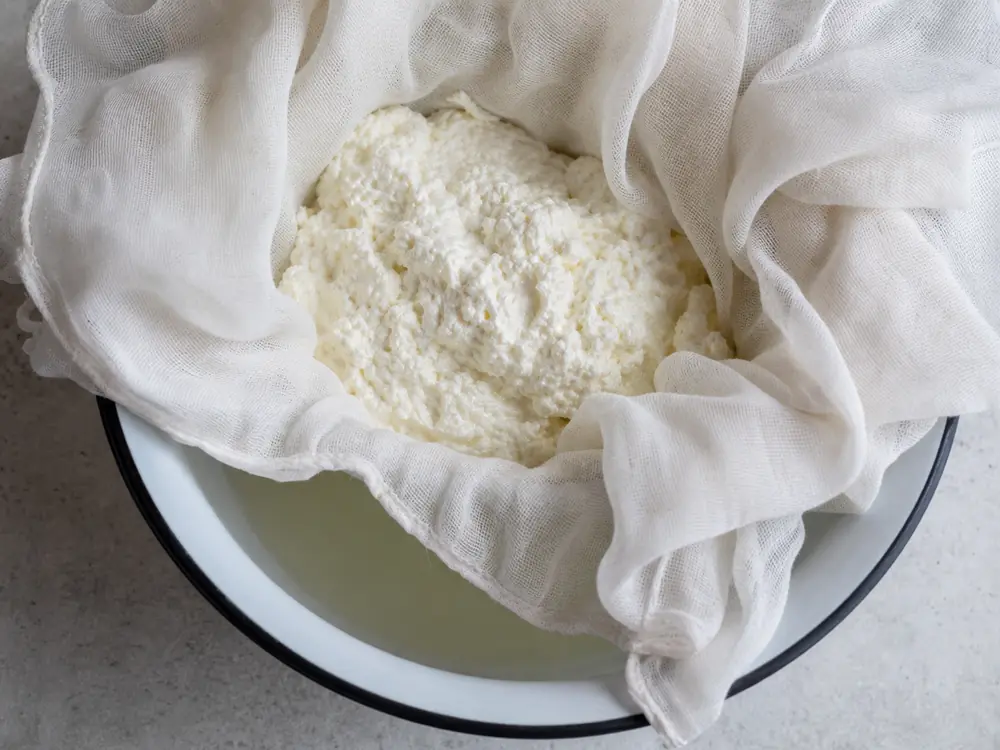
The maker then cuts the curd and scrambles it like eggs, because it struggles to hold a shape. Connage's listing adds that the traditional method of hanging the curd in muslin bags is still followed.
Draining decides how wet the cheese ends up: Highland Fine Cheeses says its Skinny Crowdie curd goes into a mousseline cloth to dry further and is potted once it reaches the right moisture. Wikipedia describes the finished cheese as crumbly with a high moisture content and a short shelf life, and Slow Food UK pairs the same two traits.
Whether rennet is involved depends on who you ask.
| Source | Statement |
|---|---|
| Highland Fine Cheeses | Says crowdie is a lactic curd and no rennet is used, but its general cheesemaking steps on the same page say rennet is stirred in |
| Wikipedia | Lactic cheeses can set without rennet; the page does not say whether crowdie makers used it |
| Slow Food UK | A small amount of rennet was regularly used traditionally; it is not essential today but is sometimes used because it makes a firmer curd |
If you are vegetarian, ask the maker before relying on any tub. Only Highland Fine Cheeses speaks about a named product, and its own page contradicts itself.
Wikipedia's quark page reports the same pattern in a related acid-set cheese: traditional quark can be made without rennet, but modern dairies typically add small quantities of it. An older description of an acid-set cheese as rennet-free therefore does not tell you what a current tub contains.
How Modern Crowdie Differs from the Crofter's Cheese
Wikipedia describes the traditional method as letting raw skimmed milk warm on a windowsill or by the fire until the lactic acid that formed as it soured had thickened it, then heating it gently until curds formed.
The warm curds were hung in muslin to drain and mixed with salt and sometimes a little cream, Wikipedia says, and Slow Food UK likewise describes salting the cheese once it had dripped.
Current makers start from pasteurised milk. Wikipedia explains that pasteurising kills most of the bacteria that once did the souring, so lactic acid is added to begin it, and Slow Food UK describes modern producers as using pasteurised milk and reliable cultures.
Fromage Homage says pasteurised milk does not sour in a pleasant way by itself, which is why the Stones add a starter culture to the milk before cooking the curd.
Wikipedia and Slow Food UK both tie the fresh citrus taste to natural souring, a step that added culture or acid now replaces, yet Highland Fine Cheeses still lists a faint hint of lemon for its cultured Skinny Crowdie.
Slow Food UK separates two kinds of modern crowdie: producers who make a pasteurised version by traditional methods with milk from local traditional breeds, and industrial versions that blend milks into a cheese it says bears no resemblance in taste to the original.
Where the milk comes from is the detail you can check against that distinction. Slow Food UK names Ayrshire and Galloway among the house cows whose milk went into the traditional cheese, and Highland Fine Cheeses says its milk comes from local farms around Tain.
Why Crowdie Varies by Producer
Fat is the first difference. Highland Fine Cheeses makes Skinny Crowdie reduced-fat so the separated cream can go into butter, while Connage sells a half-fat version.
A retailer listing says Connage crowdie has no added cream, which sets it apart from the traditional recipes that sometimes stirred cream back into the curd.
Salt is the second, and the makers split on it. Highland Fine Cheeses states no maturation or salting, while Connage sells salted and unsalted tubs and says the unsalted cheese keeps for less time.
| Example | Texture and flavour | Salt and shelf life |
|---|---|---|
| Highland Fine Cheeses Skinny Crowdie | Light, creamy, soft and crumbly; reduced fat | No maturation or salting; expiry date on the pack |
| Connage Crowdie | Half-fat, soft, creamy and mousse-like; a retailer listing says clean fresh flavour | Salted or unsalted; 21 days from potting |
| Traditional pasteurised crowdie (Slow Food UK) | Soft, crumbly and moist in its simplest form; rich and creamy with a sharp tang | No preservative and a shelf life of 14 days |
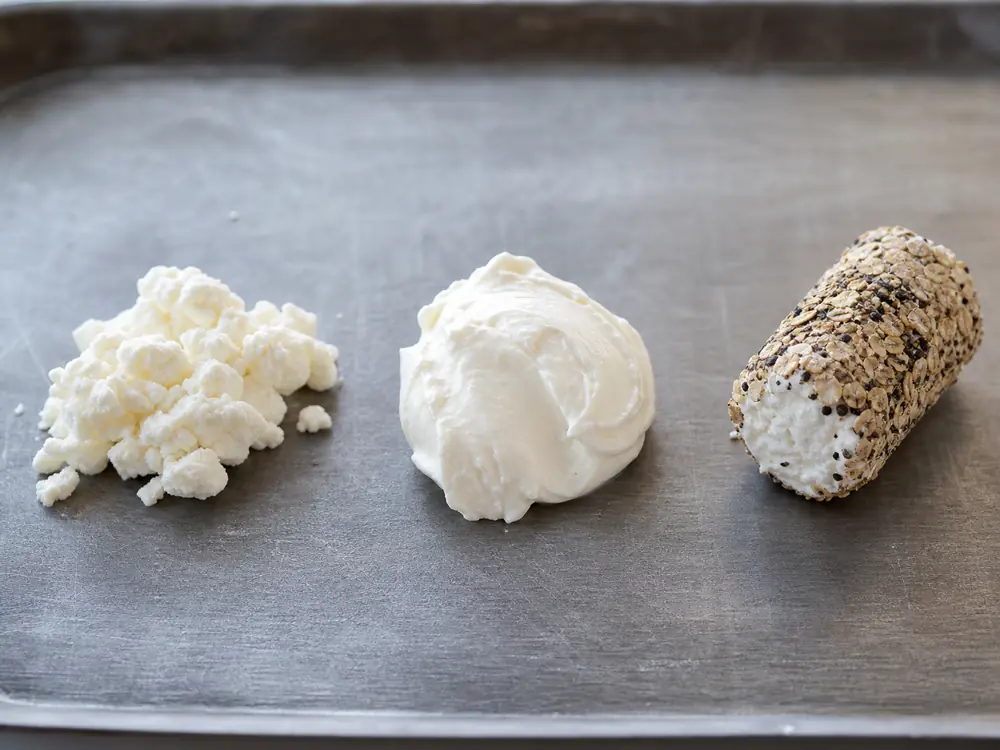
A recipe that says only "crowdie" cannot tell you which of these textures it expects.
What Does Fresh Crowdie Taste Like?
You can expect a fresh flavour, and Wikipedia adds a citrus edge, describing the traditional taste as fresh and slightly citric. A retailer listing for Connage describes a clean fresh flavour.
Highland Fine Cheeses lists a faint hint of lemon for Skinny Crowdie, while Slow Food UK sits at the sharper end, calling crowdie rich and creamy with a sharp tang.
What Is Black Crowdie, and How Does It Differ from Plain?
Black Crowdie, also called Gruth Dhu, is crowdie coated in pinhead oatmeal and crushed black pepper. Wikipedia says it is made by mixing crowdie with double cream before rolling.
Cream is the second difference from a plain tub: Slow Food UK also says double cream is mixed in, and Fromage Homage calls the Highland Fine Cheeses version a pasteurised cow's milk cream cheese.
Highland Fine Cheeses says its Skinny Crowdie has no salting, while the 2017 Fromage Homage article says salt and cream are mashed into the curd the Stones make. Read the label of the one you buy for the salt content.
Fromage Homage compares the texture to truffled chocolate, creamy but slightly flaky, with a fresh, lemony taste set against the pepper.
Slow Food UK says the oatmeal is toasted, while Wikipedia and Fromage Homage describe pinhead oatmeal without mentioning toasting.
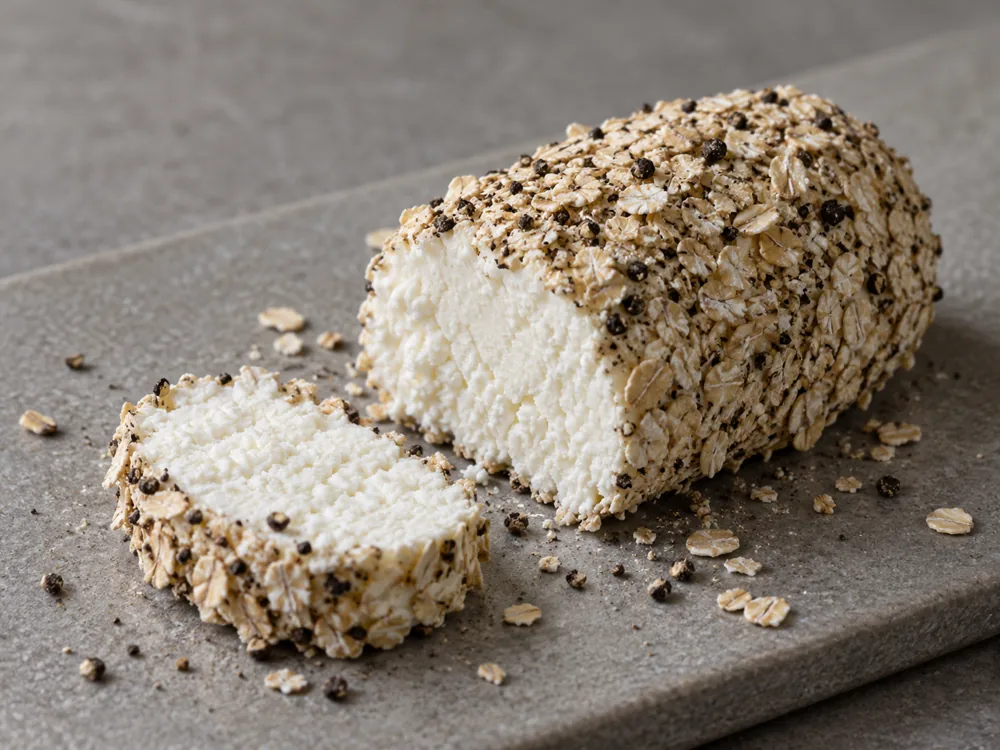
Wikipedia adds that crowdie is traditionally eaten with oatcakes and recommended before a ceilidh, because it is said to ease the effects of drinking whisky.
Which Other Flavoured Crowdies Can You Buy?
Wikipedia and Slow Food UK describe two more variations on the plain curd: Hramsa, crowdie mixed with wild garlic and white and red pepper, and Galic Hramsa, rolled in crumbled flaked hazelnuts and almonds.
Fromage Homage names the same two as a wild garlic version called Hramsa and a version with toasted hazelnuts called Galic, so the sources differ on whether the nut coating includes almonds and whether the nuts are toasted.
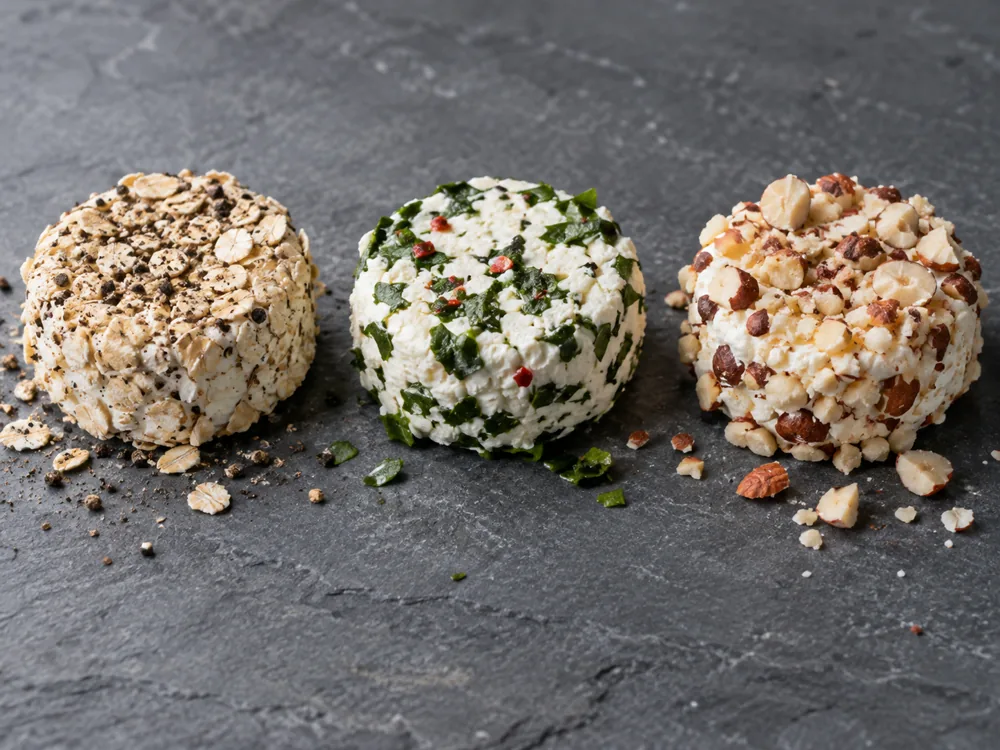
You can also flavour a plain tub yourself. Highland Fine Cheeses calls Skinny Crowdie a cheese to experiment with and suggests fruit, wild garlic leaf and mixed dried herbs.
Where Crowdie Works Best
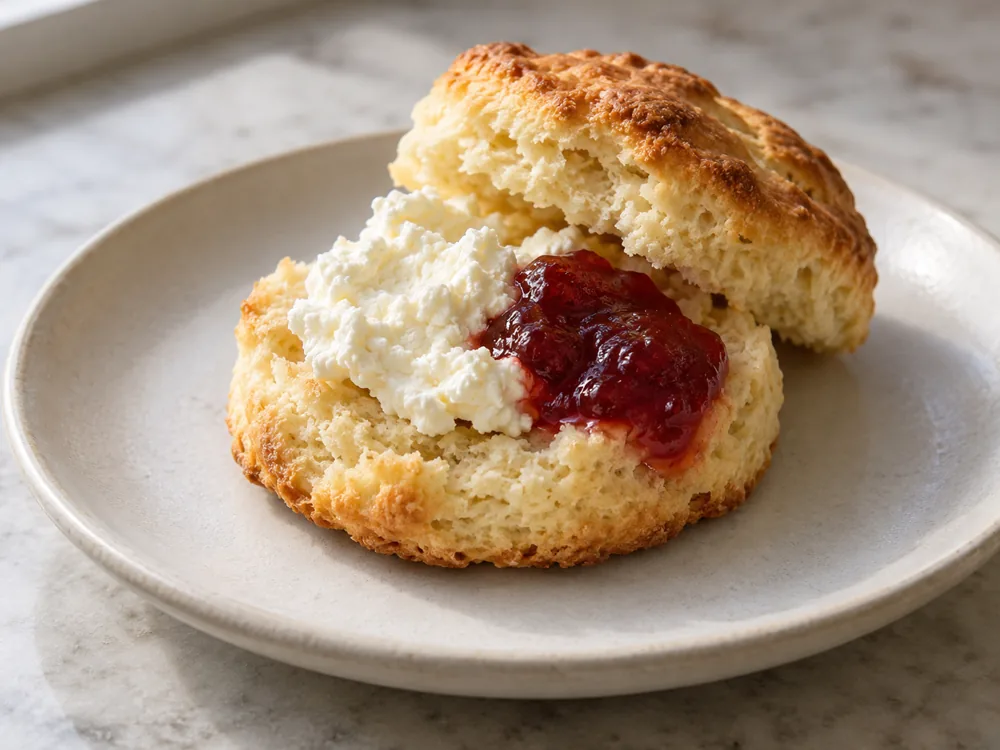
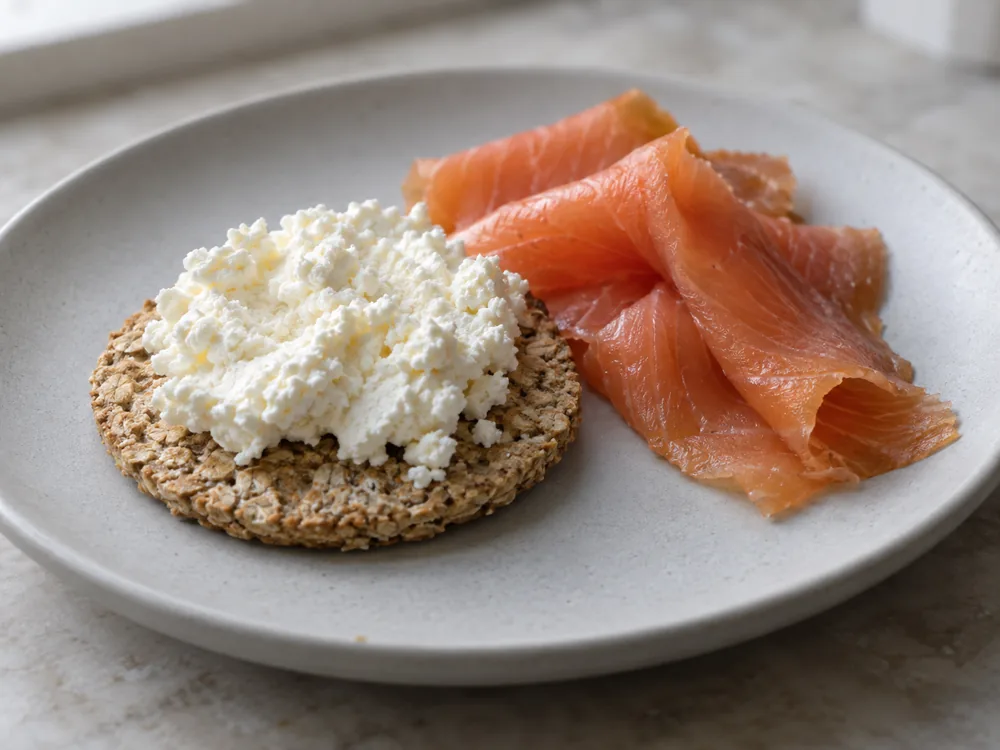
Oatcakes are the traditional partner: Wikipedia and Slow Food UK both name them, and Highland Fine Cheeses adds pancakes and hot scones with jam.
Fish is the savoury match these sources name. Highland Fine Cheeses suggests smoked mackerel for a pâté, a retailer listing for Connage suggests a canapé with smoked salmon, and Slow Food UK names a traditional plate of freshly caught trout, potato scone and crowdie.
| Use |
|---|
| Spoon it onto an oatcake, a pancake or a hot scone with jam (Highland Fine Cheeses). |
| Blend it with smoked mackerel into a pâté (Highland Fine Cheeses). |
| Use it in a sweet or savoury cheesecake (Highland Fine Cheeses and Connage). |
| Top a carrot cake with it (Slow Food UK). |
| Serve it with fruit and honey (Highland Fine Cheeses). |
For a drink, Highland Fine Cheeses suggests a fruity white or a viognier with its Skinny Crowdie.
Slow Food UK calls crowdie suitable for cooking.
How to Buy and Store Crowdie
Buy crowdie little and often, as Slow Food UK advises: it says the cheese has no preservative and a short shelf life of 14 days. Highland Fine Cheeses points the same way, saying crowdie is at its most tasty soon after it is made.
Connage gives 21 days from potting. A retailer listing adds that the dairy makes crowdie in batches and then freezes them to preserve shelf life.
The two figures also count differently: Slow Food UK's 14 days describes the cheese in general, while Connage's 21 days runs from potting, so a tub you buy a week after potting has about two weeks left on Connage's count.
GOV.UK says a use-by date tells you when food is no longer safe to eat, and that the label gives storage directions, including what to do once the pack is open. The date and directions on your own tub therefore outrank the 14 and 21 days quoted for other makers' cheese.
Highland Fine Cheeses says you can buy its Skinny Crowdie and Black Crowdie in supermarkets, farm shops and delicatessens across the UK, and that it delivers online across the UK by next-day Royal Mail tracked service.
At Grow Wild, a retailer that lists Connage crowdie, you may need to ask for it: the shop says it does not always have it in stock and will order it in on request.
What Can Replace Crowdie?
For a stand-in, look to the fresh curd cheeses that sources relate to it. Wikipedia files crowdie in its category of cottage cheese, and its quark page lists cottage cheese, farmer cheese and French fromage blanc as fresh cheeses similar to quark.
- Cottage cheese: The nearest family the sources name, though Wikipedia's quark page describes its grains as chewier and meatier than quark's
- Quark: Wikipedia describes a soft, white, unaged fresh cheese, and says German quark in tubs is slightly drier than sour cream and somewhat crumbly
- Farmer cheese: Wikipedia places a fresh farmer cheese in the same group as quark and cottage cheese
- Ricotta: A looser swap, since Wikipedia sets the quark family apart from Italian ricotta, a whey cheese
None of these comes coated, so swapping one in for Black Crowdie leaves you without the oatmeal and pepper that define it.
Salt is the other gap: Wikipedia says quark usually has no salt added, which resembles Highland Fine Cheeses' unsalted Skinny Crowdie, while traditional crowdie is described as salted.
What Are the Calories in Crowdie, and Is It Safe in Pregnancy?
Highland Fine Cheeses lists Skinny Crowdie at 124 kcal, 4.5 g fat (2.9 g saturated), 3.6 g carbohydrate and 17.5 g protein per 100 g.
The same page lists 1.1 g salt per 100 g, although it says the cheese is not salted, and these figures describe the reduced-fat version only.
Highland Fine Cheeses describes pasteurising its milk, a retailer listing calls Connage crowdie a pasteurised cheese, and Wikipedia says crowdie is now usually made from pasteurised milk.
NHS guidance for pregnancy names pasteurised soft cheeses such as cottage cheese and cream cheese as safe, but it does not mention crowdie.
CDC puts any queso fresco-type cheese, including similar fresh soft cheeses, in its riskier column whatever the milk. It lists cottage cheese and cream cheese made with pasteurized milk as safer, and says pregnant women are 10 times more likely to get a Listeria infection.
CDC also lists refrigerated smoked seafood, except in a cooked dish, as a riskier choice, which bears on the smoked mackerel and salmon pairings above if you are pregnant.
SOURCES & REFERENCES
What Else Do Shoppers Ask About Crowdie?
Close relatives, not the same cheese. Wikipedia files crowdie in its cottage cheese category and its quark page describes cottage cheese grains as chewier than quark, while Highland Fine Cheeses describes crowdie as a lactic curd that is cut, scrambled and drained in cloth.
Traditionally it was. Wikipedia says cream crowdie, or cranachan, is one of the most popular ways of eating the cheese and is traditional at a Burns supper, but it lists the usual recipe as double cream, oats, whisky, honey and raspberries without crowdie, so a modern cranachan may contain none.