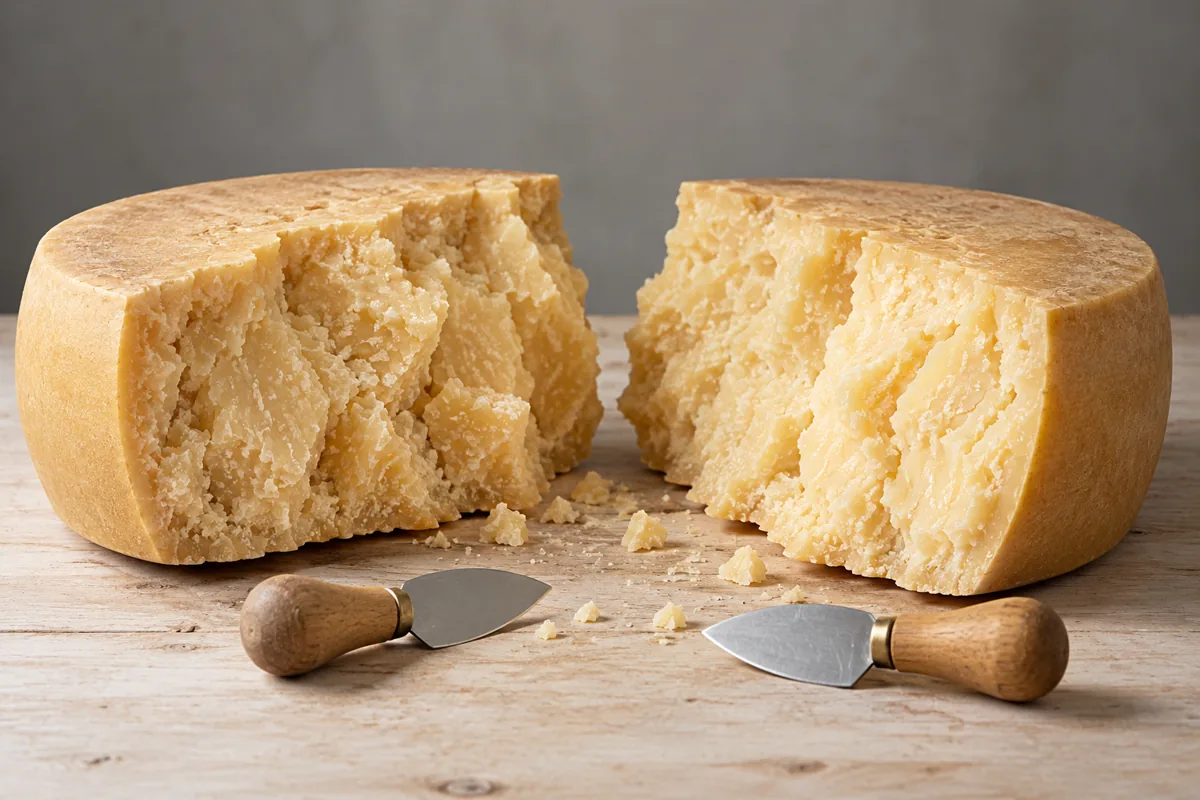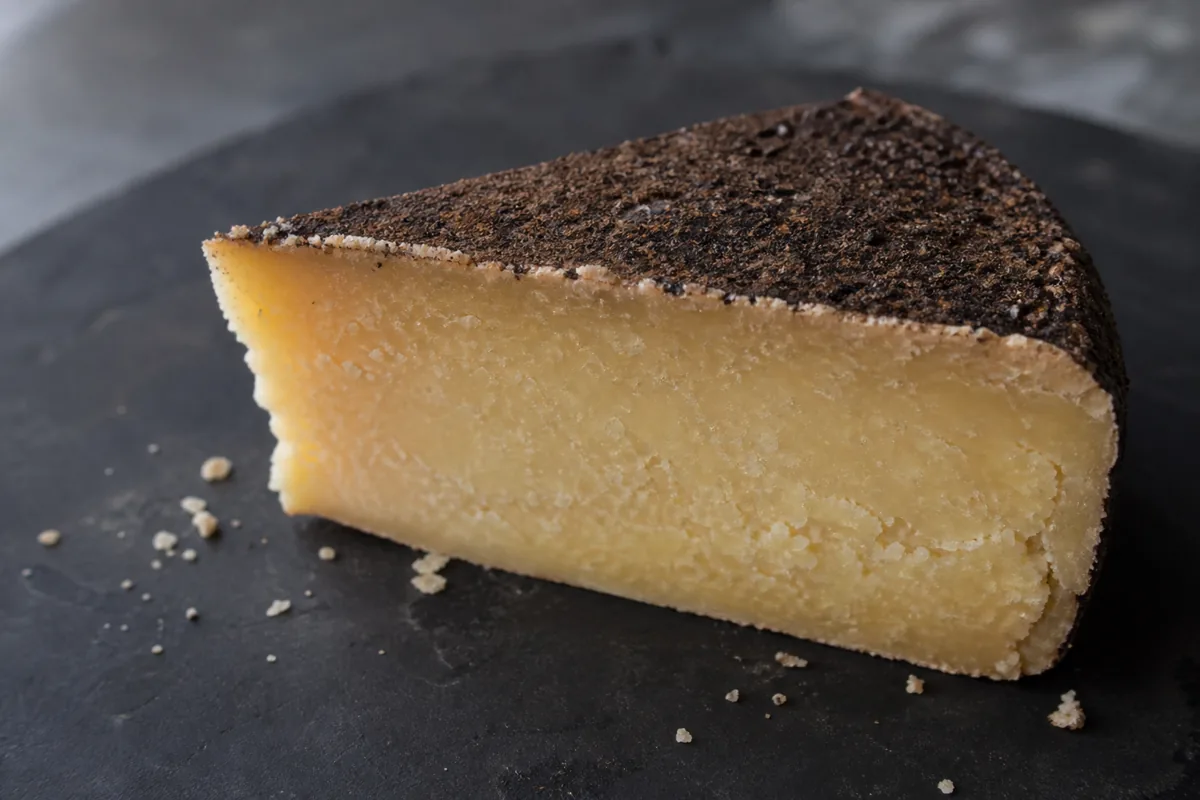
Dry Jack is Monterey Jack aged long enough to grate, then coated in oil, black pepper, and cocoa.
Vella Cheese Company of Sonoma, California, made the best-known version and closed its shop and mail order in 2026.
In This Article
How Dry Jack Differs from the Monterey Jack You Know
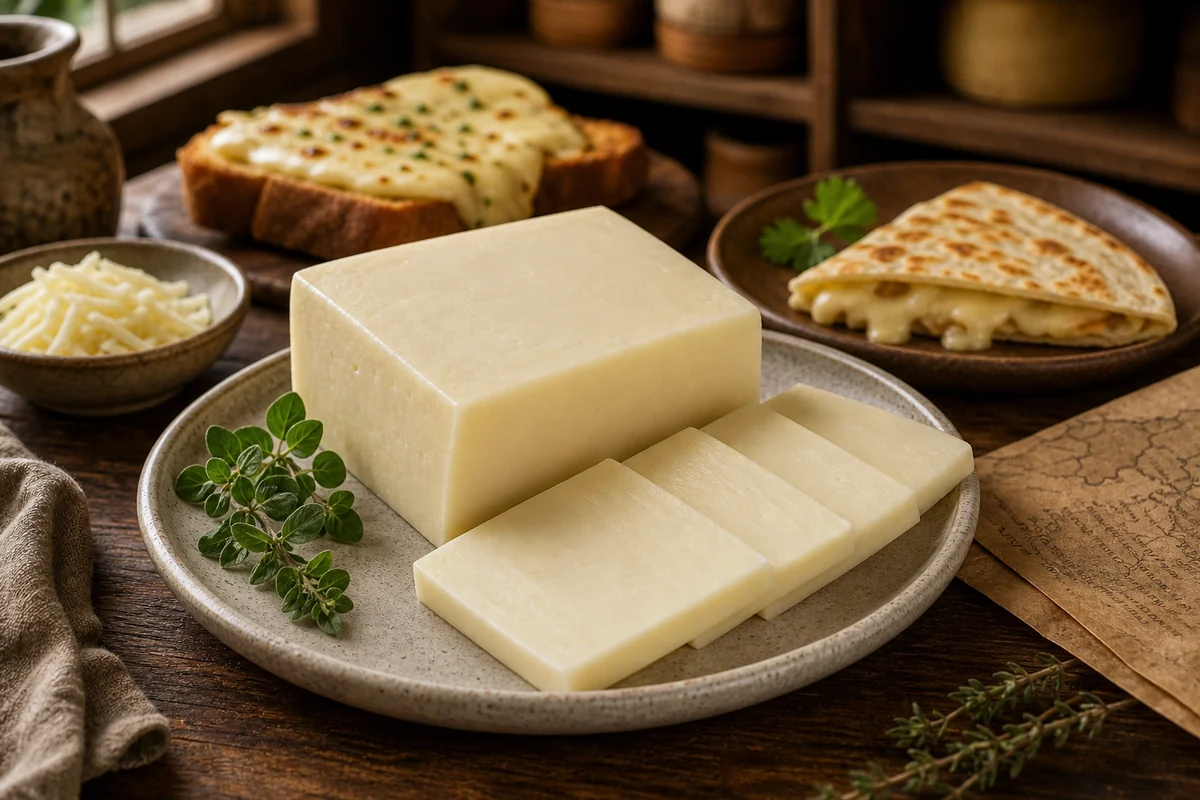
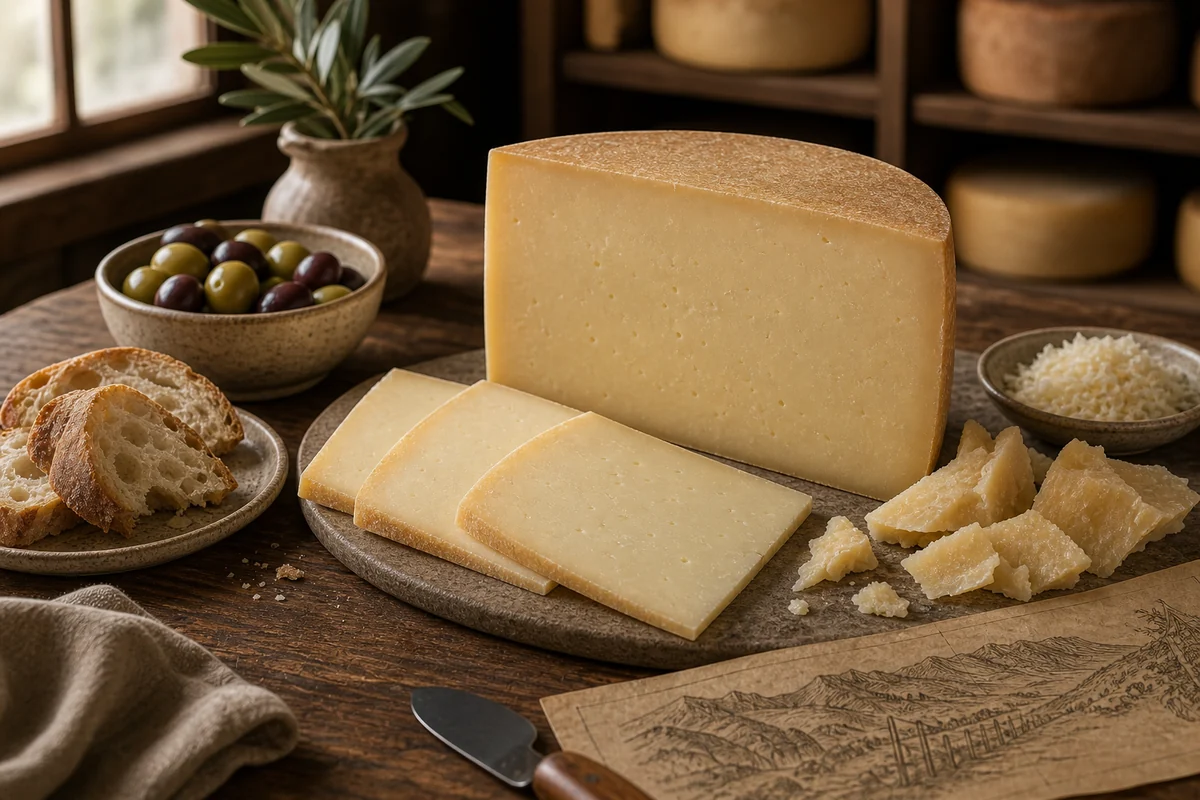
Vella says it makes Dry Jack like fresh Monterey Jack and then ages it for another seven to ten months, which gives a firm, pale yellow cheese with a sweet, nutty flavor.
David Sanford Shields' Ark of Taste write-up puts standard Monterey Jack at 45 days of aging, so the extra months are a long stretch rather than a small step. Vella's oldest grade, Golden Bear, runs to four years.
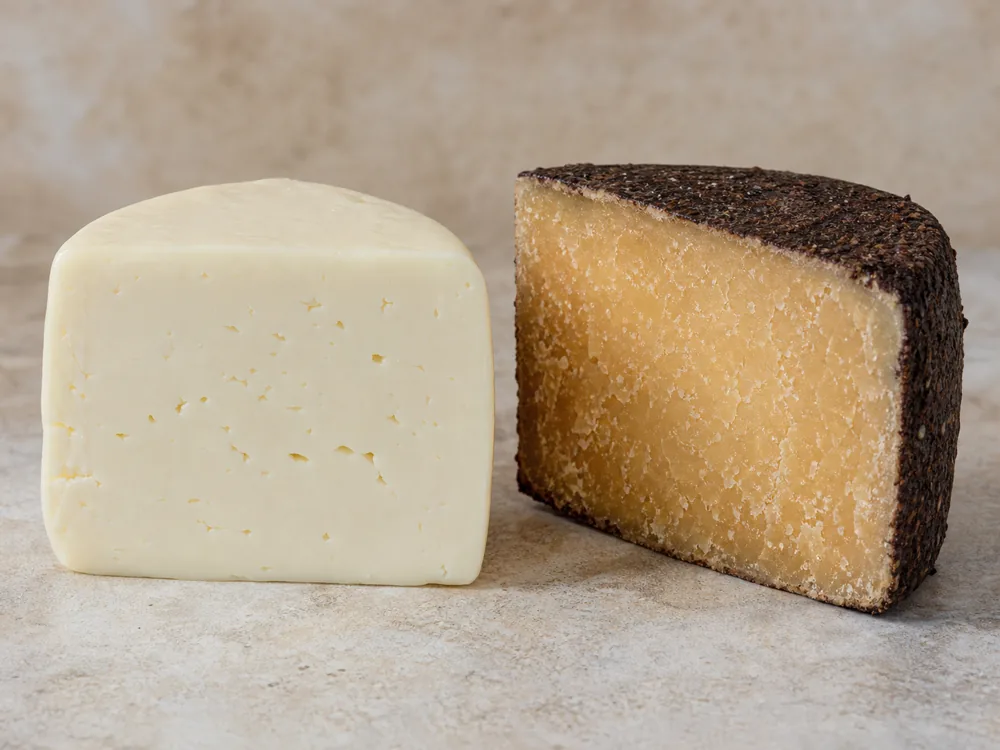
Think USA Dairy describes Vella's fresh, high-moisture Jack as soft and creamy at room temperature, like a fine Brie, which is the starting point the aging changes.
Culture describes the paste of the aged cheese as firm, hardening and growing brittle in older wheels. Cook's Illustrated found that Dry Jack grates well and shatters under a knife, and several of its tasters compared the texture and flavor to Cheddar.
How Dry Jack Is Made
Vella's FAQ says its milk came from Merten's Dairy, whose cows it says are given no growth hormones, and Think USA Dairy describes the dairy as family-owned and a few miles away. Shields' description of Vella's batches adds that the milk came from grass-fed cows, two parts Holstein to one part Guernsey in every batch.
Vella sets the milk with vegetable coagulant instead of animal rennet, and CheeseTrail's listing gives Rumiano's Dry Jack a vegetarian rennet as well. That listing also carries Certified Kosher and Certified Organic marks.
Vella's FAQ says it salts its cheeses at about 1 percent by volume, which it describes as the minimum amount that keeps the quality and flavor.
In the account Shields quotes from a 1985 Las Vegas Review-Journal article, the curd is cooked, drained, washed, and very lightly salted, then scooped into muslin sacks and pressed gently on a hand-operated press to expel whey and shape the wheel.
That account says the hand pressing gives Monterey Jack a creamier texture.
What turns the pressed wheel into Dry Jack happens afterward. Shields quotes a 2004 San Francisco Chronicle article by Janet Fletcher saying Vella's wheels spent several days in brine and then weeks air drying before they were rubbed with the coating.
Dry Jack Grades: What Each Label Means
Vella's product page lists four main Dry Jack grades, and the grade name sets the age. It also listed Oro Secco, aged two to four years from a Mezzo Secco base, and a habanero Dry Jack aged for a year.
| Grade | Age on Vella's product page | Wheel on the product page | What the sources say |
|---|---|---|---|
| Mezzo Secco | 5 to 7 months | About 10 lb | Semi-firm, mild and creamy, slightly tart, with some nuttiness and hay. Its coating is canola oil and black pepper, with no cocoa. |
| Dry Monterey Jack | 7 to 10 months | About 8 lb | The standard wheel: firm, pale yellow, sweet and nutty. |
| Special Select | 1 to 2 years | About 7.5 lb | Firmer than the standard wheel because of the extra aging, a change Vella compares to aged Parmigiano-Reggiano. |
| Golden Bear | 2 to 4 years | About 7 lb | Firmer again than Special Select. |
Vella sold each grade as a quarter wheel, a half wheel, or a whole wheel, and the table gives the whole-wheel weight from the product page.
Sources disagree on the youngest grade: Vella's product page gives Mezzo Secco as 5 to 7 months, its FAQ says 3 to 4 months, and Think USA Dairy lists a minimum of four to seven.
The same FAQ puts standard Dry Jack at 7 to 9 months against 7 to 10 on the product page, and Shields' write-up lists a one-year Mezzo Secco that matches none of Vella's own figures, so treat every age range as approximate.
Shields also says neither Vella nor Rumiano makes dry jalapeño or habanero versions, which contradicts Vella's own listing of a habanero Dry Jack, so the producer's page is the better guide to what Vella sold.
Mezzo Secco exists because of iceboxes. From the 1920s to 1946 most California homes cooled food with a block of ice, and Think USA Dairy says families wanted a firmer fresh Jack that would not turn runny, so Vella made a midway cheese and sold it from May to October.
Vella stopped making it once home refrigerators became common and revived it in 1999, and its product page now calls Mezzo Secco versatile for sandwiches, cheeseboards, snacking, and salads.
Vella's FAQ says Mezzo Secco, with its higher fat content, is the easiest of the dry jacks to slice. It calls Special Select a fine grating or shredding cheese for pasta or salads, and the product page adds that Golden Bear can be eaten alone or grated over Italian dishes.
Mezzo Secco is the youngest and easiest to slice, standard Dry Jack is the everyday wheel, and Special Select and Golden Bear are the firmer, older grades. Vella's own pages disagree on ages, so treat each range as approximate.
What Dry Jack Tastes Like
Sweet and nutty is the common thread. Vella calls the standard wheel sweet and nutty and describes Mezzo Secco as mild and creamy, slightly tart, with a bit of nuttiness and hay.
Shields calls the flavor mellow and nutty, with a decided sweet tinge, deepening with age, and says it is neither sharp like Parmesan or Cheddar nor overly salty. Think USA Dairy describes the standard wheel as rich and nutty, mild yet assertive.
Culture describes Special Select as distinctly sweet and mushroomy, with savory notes of grass or hay and earth.
Rumiano's version gets a saltier description than Vella's lightly salted wheels: CheeseTrail's listing calls it salt-forward, with buttery and earthy notes and a distinctive umami taste.
The Dark Coating: What It Is and Whether You Can Eat It
Vella describes the standard wheel's coating as an edible rind of cocoa, pepper, and canola oil. Mezzo Secco gets canola oil and black pepper only.
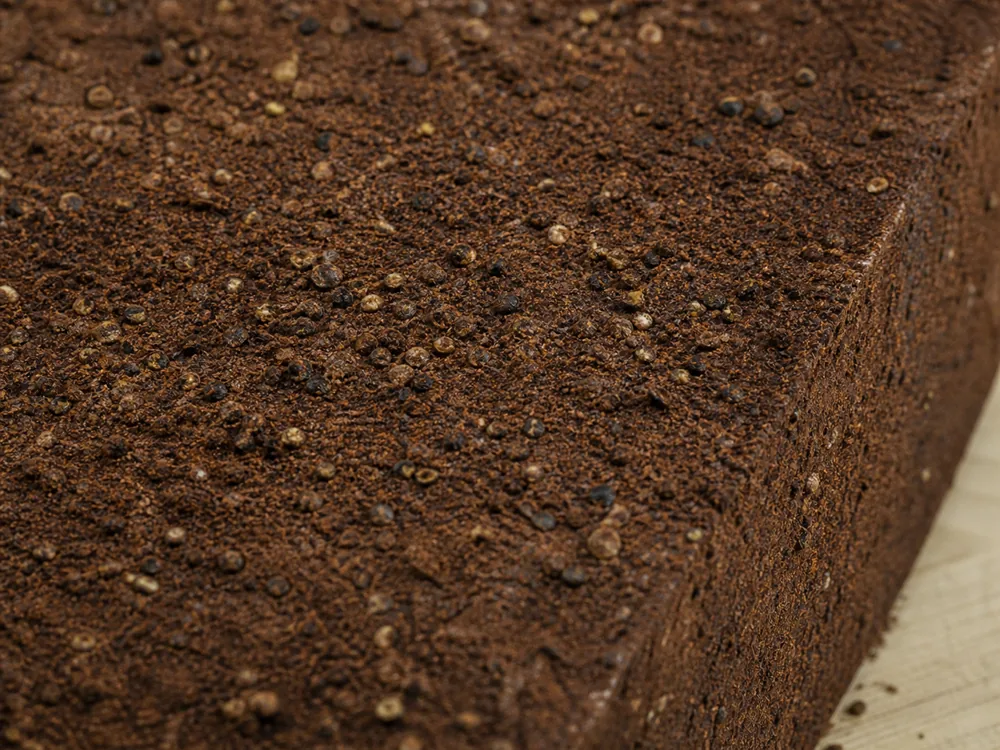
Culture lists the blend as cocoa, vegetable oil, and black pepper, and Shields, quoting the 2004 Chronicle article, names soybean or safflower oil with black pepper and unsweetened cocoa. The oil differs by source and by date, while the cocoa and pepper do not.
The coating also does a job. In the Chronicle account Shields quotes, the oil keeps the wheels from cracking, and Tom Vella added pepper and cocoa to hold the oil in suspension so it would not soak into the cheese.
The Rumiano listings do not describe a coating at all, so whether a Rumiano wedge carries the same cocoa and pepper is unconfirmed.
How to Use Dry Jack in the Kitchen
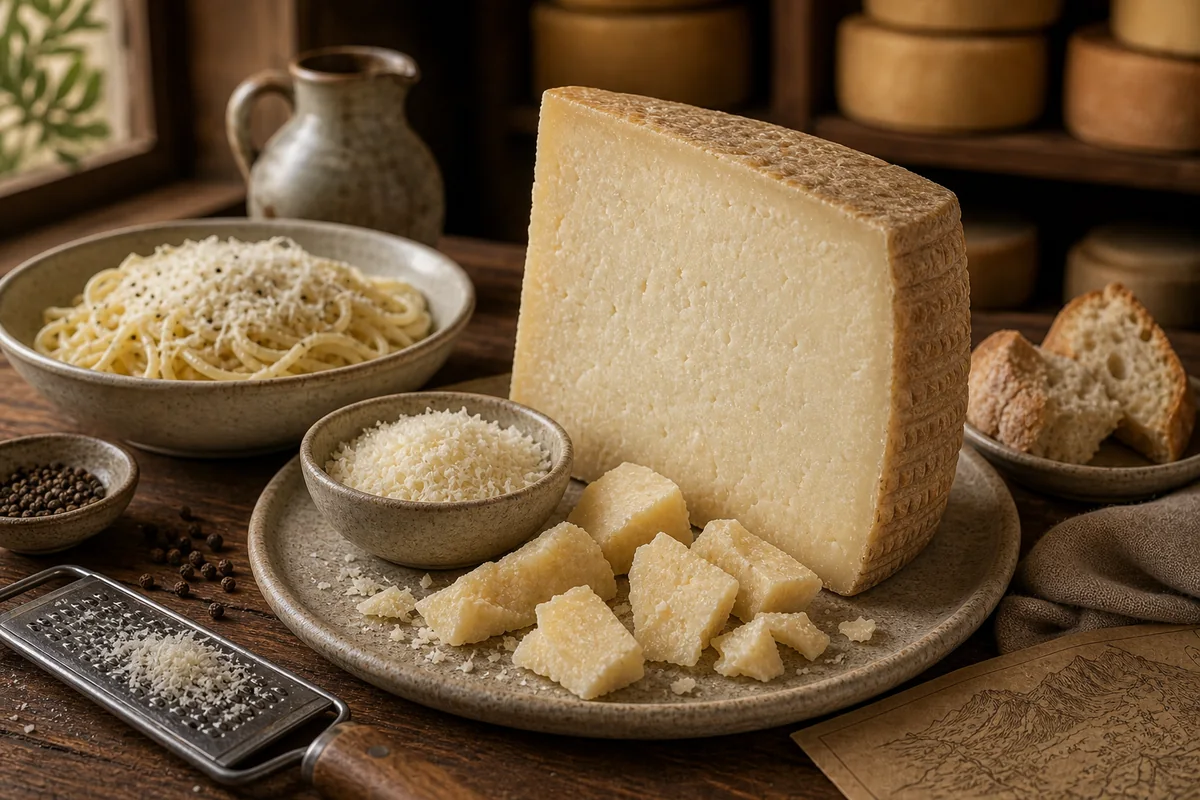
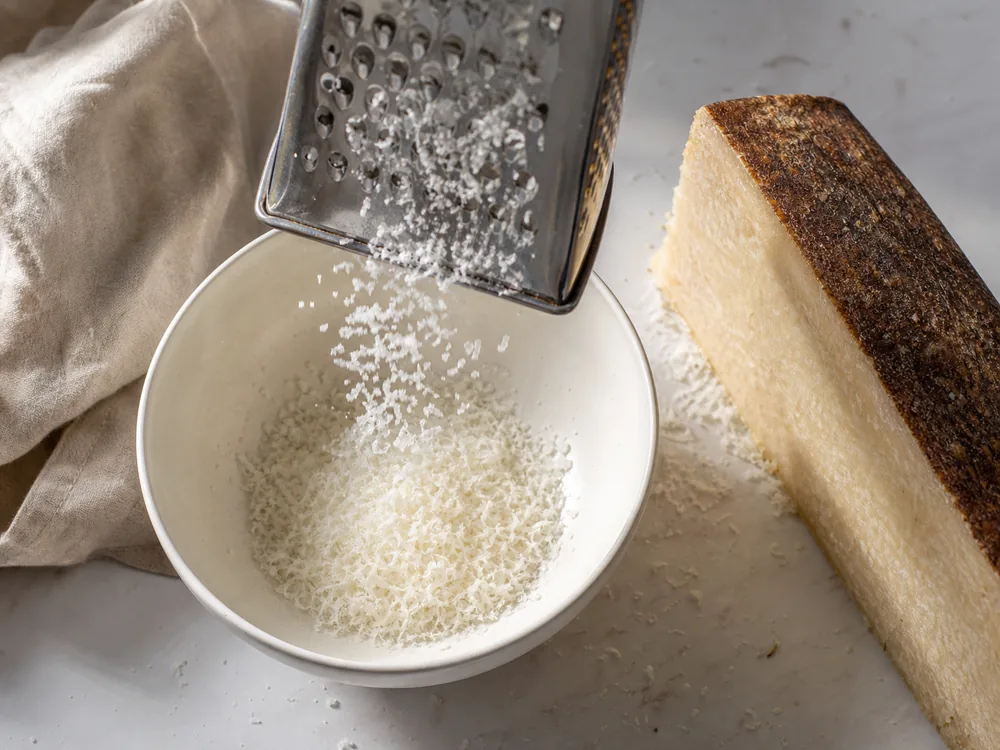
Think USA Dairy and Vella's product page both list grating as a main use, alongside shredding, slicing, and cooking.
| Use | How It Works |
|---|---|
| Grated | Over salads, pasta, soups, and tacos, per Think USA Dairy. |
| Baked and cooked | Over casseroles and into toasted cheese sandwiches, omelets, and soufflés, per Think USA Dairy and Vella's product page. |
| Shaved or sliced | Vella lists slicing, and CheeseTrail's Rumiano listing sells it for grating or shaving. |
Shields adds that West Coast cooks have used it in dishes from béchamel sauce to the core of chili rellenos, well beyond the grating bowl.
Vella's FAQ adds that Dry Jack is excellent on its own or with crackers, bread, and fruit, which suits a cheese board.
| Pairing | Type | Why It Works |
|---|---|---|
| Crackers, bread, and fruit | Food | Vella's FAQ recommends them for eating Dry Jack. |
| Fruit and wine | Wine | Vella says Special Select complements the flavor of fruits and wine. |
| Charcuterie | Food | Vella says Mezzo Secco pairs best with charcuterie. |
| Beer | Beer | Vella names all wines and beers as pairings for Mezzo Secco. |
Dry Jack vs Parmigiano-Reggiano
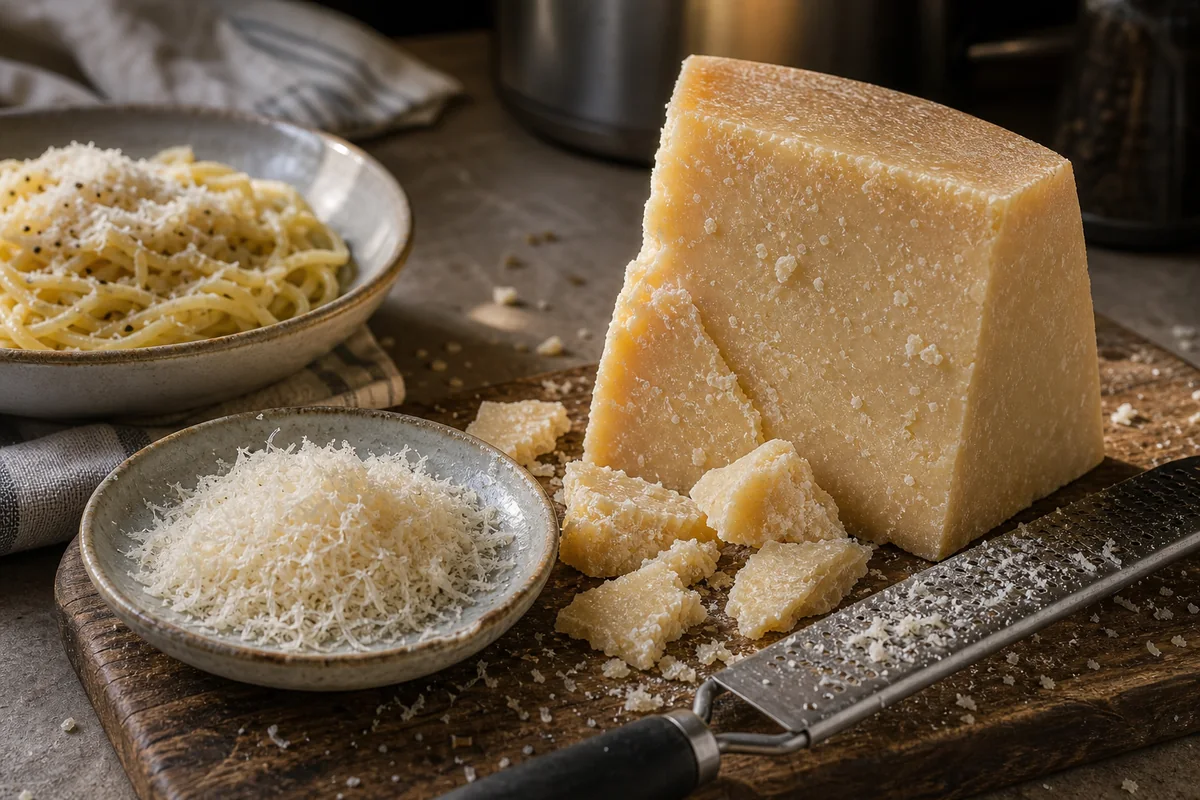
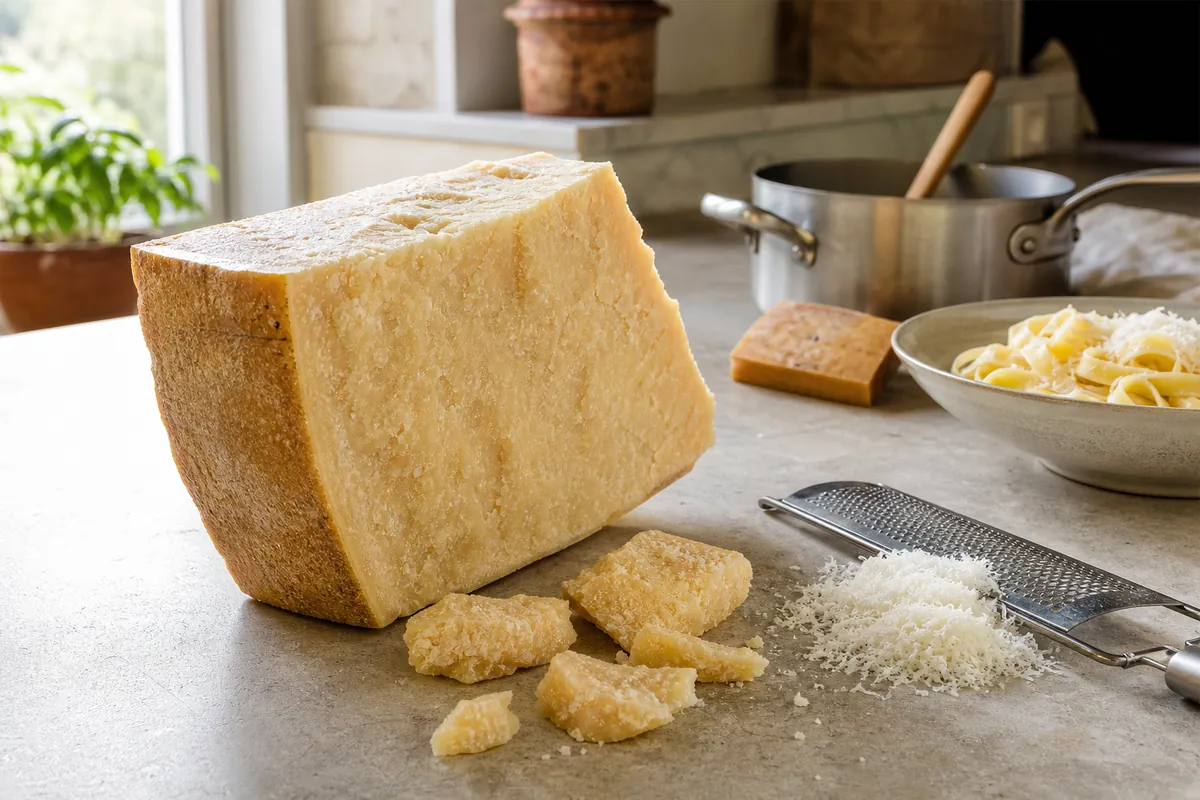
Cook's Illustrated tasters found Dry Jack more creamy, buttery, and rich than Parmigiano-Reggiano, and also more "one-dimensional".
They described Parmigiano-Reggiano as fruitier, nuttier, and stronger, with notes that range from mild to sharp, and called the two completely different cheeses.
Think USA Dairy calls the standard wheel similar to Parmesan in texture and taste, a comparison the Cook's tasters complicate by finding distinct flavor and texture nuances in each.
CheeseTrail's Rumiano listing recalls that Dry Jack was once known as "the poor man's Parmesan" and has since gained what it calls a cult-like following.
Steven Jenkins, author of Cheese Primer, told Cook's Illustrated that all granas are Italian cheeses and that the word means "grain" in Italian, so a California Dry Jack falls outside the grana category even though it grates beautifully.
A recipe built on Parmigiano-Reggiano's fruitier, more complex flavor will taste creamier and, by the tasters' account, more "one-dimensional" with Dry Jack. A dish that only needs a nutty grating cheese suits Dry Jack well.
Where to Buy Dry Jack and How to Store It
Vella announced its closure in August 2026 after 94 years, and the Sonoma Index-Tribune's September 22 report cites post-pandemic economic challenges and dwindling demand for small-batch artisan cheeses as the reasons.
Customer response was large enough that the inventory sold out faster than the owners expected, and a Facebook post the Index-Tribune cites gives September 4 as the last day of cheese sales.
The Index-Tribune quotes a Vella website notice, seen September 21, saying that production has ceased and that the retail store and mail order are permanently closed. The family plans future pop-up events to sell aged cheese still in stock, with dates not yet set.
Shields' 2022 write-up names Rumiano Cheese Company as the other long-running maker and says it offers a 12-month Dry Jack, with the Sonoma Cheese Factory selling a nine-month one. CheeseTrail lists its Dry Monterey Jack as a pasteurized cow's milk cheese aged at least seven months, in a 6-ounce wedge, and shows no retail locations for it.
Neither Shields' write-up nor the CheeseTrail listing shows current stock, so a recipe built around Rumiano's Dry Jack depends on first confirming that a seller has it.
Vella's FAQ advises keeping Dry Jack in pieces of half a pound to a pound, wrapped tightly in plastic and sealed inside an airtight container or zip bag in the refrigerator.
The same FAQ says the date printed on its cheese is the manufacturing date rather than an expiration date, and Think USA Dairy lists a six-month shelf life for vacuum-packed retail cuts of the standard wheel.
Neither source gives a figure for a piece once opened, so how long leftovers keep depends on the seller's advice.
What to Use Instead When You Cannot Find Dry Jack
Vella's grades are no longer on regular sale, so another maker's Dry Jack, such as the Rumiano listings above, is the first place to look.
For grating and cooking, the swap the sources name is Parmesan: Vella's FAQ says many people use Special Select instead of grated Parmesan, which echoes the role Shields says customers gave Dry Jack from the start.
The Cook's tasters found Parmesan stronger and fruitier, so a dish built on Dry Jack's mellow sweetness will lean sharper and more developed when Parmesan stands in.
Is Dry Jack Safe During Pregnancy?
Culture lists Vella's Dry Jack as made with pasteurized milk, Think USA Dairy marks it as not a raw-milk cheese, and CheeseTrail lists Rumiano's as pasteurized.
The CDC puts hard cheese made with pasteurized milk among its safer cheeses during pregnancy, and the NHS says pasteurised or unpasteurised hard cheeses such as cheddar, gruyère and parmesan are safe. Neither names Dry Jack, and Vella describes Mezzo Secco as only semi-firm, so the hard-cheese guidance fits that grade less clearly.
Where Dry Jack Came From
Shields traces Dry Jack to 1915, when San Francisco wholesaler D.F. DiBernardi stored an oversupply of Monterey Jack wheels and neglected them for about a year and a half.
World War I then ended the imports of European grating cheese that Italian and Hispanic communities on the West Coast relied on, and DiBernardi went looking for a dry cheese to sell.
He remembered the stored wheels, which had hardened, deepened in flavor, and turned flaky and granular, and customers took them up as a stand-in for the Parmesan and Grana called for in traditional dishes.
Dozens of makers followed him, but the Great Depression and cheap South American grating cheese thinned them out, and Shields counts eight in the 1960s and two, Vella and Rumiano, by the final decades of the twentieth century.
Shields says Tom Vella organized the Vella Cheese Company in 1931 in a defunct brewery, and the Index-Tribune says a group of dairymen had asked Gaetano "Tom" Vella to open his own fromagerie.
His brother Joe had opened a Sonoma cheese business first, Shields says, but made Monterey Jack rather than Dry Jack, which Tom took up as a devotee.
Shields adds that Tom Vella sought out surviving makers of both David Jacks' and DiBernardi's cheeses to learn their formulas, and that DiBernardi's oil curing of the wheels prompted him to create his own signature coating.
His son Ignazio "Ig" Vella grew the company and won it numerous awards, and the family business passed to Ig's widow, daughter, and two grandchildren before the 2026 closure.