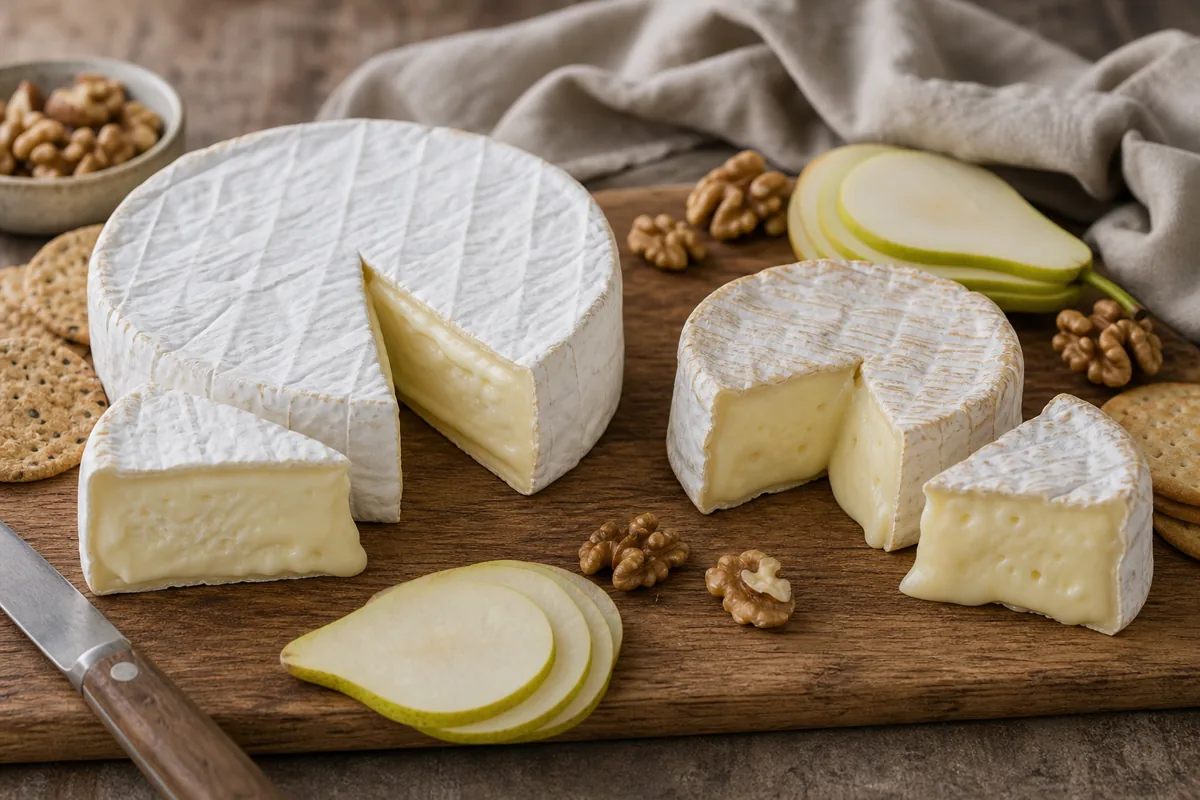
This belongs on the soft-cheese decision shelf because these two French bloomy-rind cheeses look similar but solve different jobs once you buy the whole piece.
A ripe Brie wedge points toward a larger wheel, milder rind, and easier party use. A whole Camembert leans smaller, earthier, and more self-contained.
If you need one soft cheese for mixed eaters, Brie is usually safer. If you want a stronger soft cheese or a round you can bake whole, Camembert usually wins.
In This Article
Brie vs Camembert Side by Side
Both cheeses come from France, both use a white bloomy rind, and both soften from the rind inward as they ripen. The choice changes when you look at wheel format, rind intensity, and protected-origin rules.
Remember it later
Planning to try this recipe soon? Save it for a quick find later!
| Brie | Camembert | |
|---|---|---|
| Origin | Ile-de-France, especially Brie de Meaux and Brie de Melun zones | Normandy, especially Camembert de Normandie |
| Milk | Usually cow milk, often pasteurized in export markets | Cow milk, with classic AOP versions tied to raw milk |
| Format | Large wheel sold by the wedge | Small individual round, often about 250 g |
| Rind | Bloomy, mild, thinner in flavor | Bloomy, earthier, more assertive |
| Texture | Creamier and more flowing | Slightly firmer, with more rind influence |
| Best Uses | Boards, sandwiches, baked in pastry, broad crowd appeal | Baked whole, stronger boards, earthy pairings |
| Price | $6 to $14 per portion | $8 to $18 for a classic round |
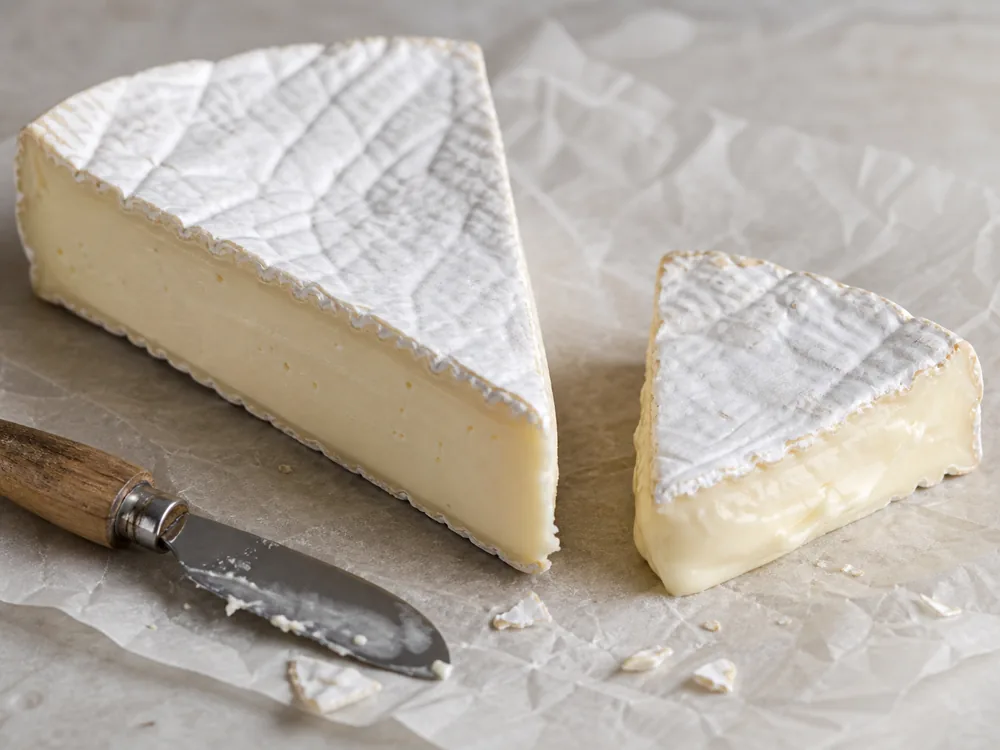
The biggest practical difference is size. Brie usually reaches you as a wedge from a larger wheel, while Camembert usually comes as its own small round.
Do not buy by color alone. Both should look white and soft-rinded. The more useful cue is format: wedge for Brie, small round for Camembert.
Flavor, Rind, and Wheel Size Change the Whole Experience
Brie usually tastes milder, butterier, and creamier. Camembert usually tastes earthier, deeper, and more mushroomy because the smaller wheel gives the rind more influence over each bite.
French AOP traditions frame that split. Brie and Camembert share a country, but they come from different regions, formats, and protected names.
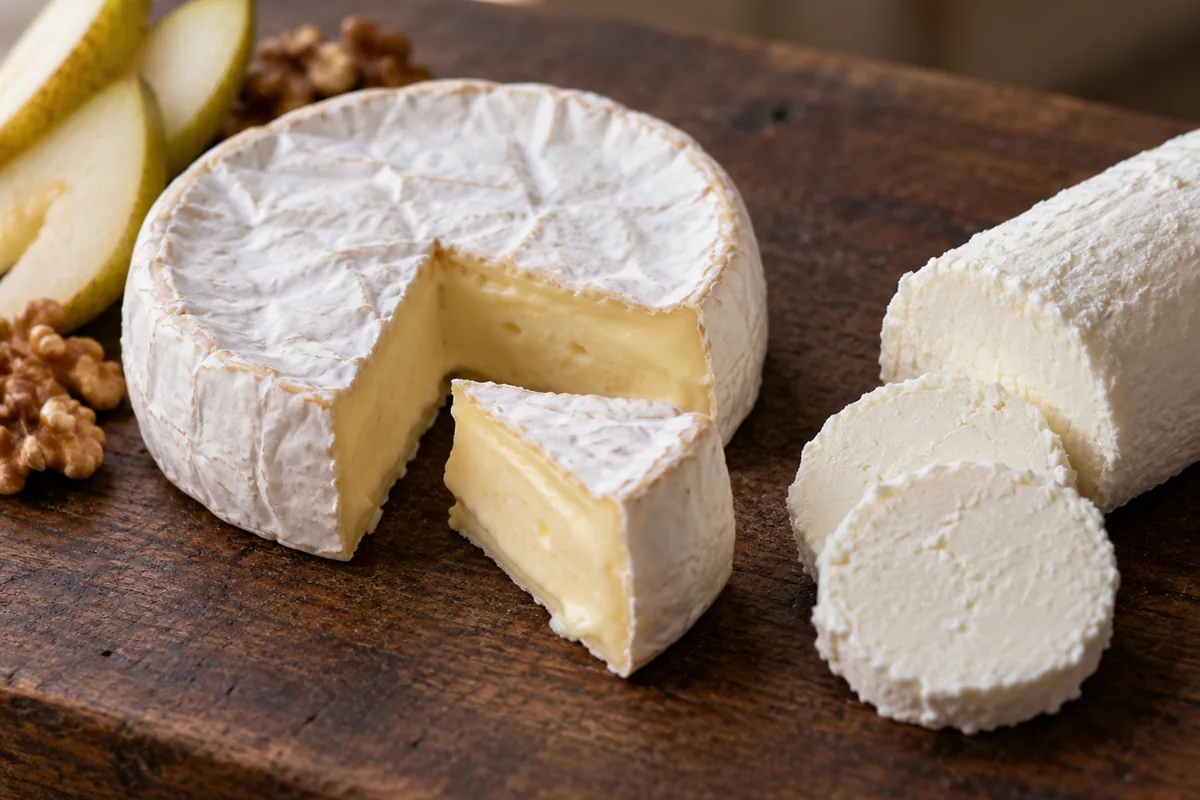
A smaller cousin like Coulommiers cheese helps explain the middle ground between a broad Brie wedge and a compact Camembert round.
- Brie advantage: broader appeal when you need a soft cheese most guests will eat.
- Camembert advantage: stronger earthy character if you want the rind to matter.
- Brie de Meaux and Brie de Melun: the best-known protected Brie names.
- Camembert de Normandie: the protected Camembert name tied to Normandy.
Fat level changes texture too. Classic Brie styles often feel richer and looser, while Camembert usually stays a touch firmer and more compact at the center.
That means the flavor decision is not just mild versus strong. It is also wedge versus round, creamier flow versus firmer center, and gentler rind versus more obvious rind.
The rind-to-paste ratio matters more than many shoppers expect. A small Camembert round puts more rind influence into every bite, which is why it can seem woodsier and more mushroomy even before it is fully ripe.
A Brie wedge from a large wheel often gives you more plain paste in each cut. That usually makes the cheese feel calmer, butterier, and more forgiving for guests who do not love obvious funk.
How Ripeness Changes the Better Buy
Ripeness can flip the answer between these cheeses faster than price can. An underripe Camembert can feel chalky and tight, while an overripe Brie can slump and drift toward ammonia if it sits too long.
If you are buying for tonight, ask what is ready now. If you are buying for a dinner two days away, a slightly firmer piece may actually be the smarter choice.
- Buy Brie slightly firm: when you need it to finish opening at home before a party.
- Buy Camembert ready now: when you plan to bake or serve it the same evening.
- Avoid strong ammonia smell: that usually means the cheese has moved past peak balance.
- Watch the center: a little firmness is fine, but a dry chalk core means the cheese still needs time.
This is also where board planning matters. Brie tolerates a wider ripeness window on mixed platters, while Camembert rewards tighter timing because the whole round can move from ideal to overdone more quickly.
Which One Works Better on Boards, Sandwiches, and in the Oven
This is where the decision becomes easy. Brie works better when the cheese needs to blend into a larger spread, while Camembert works better when the soft cheese itself should act like the event.
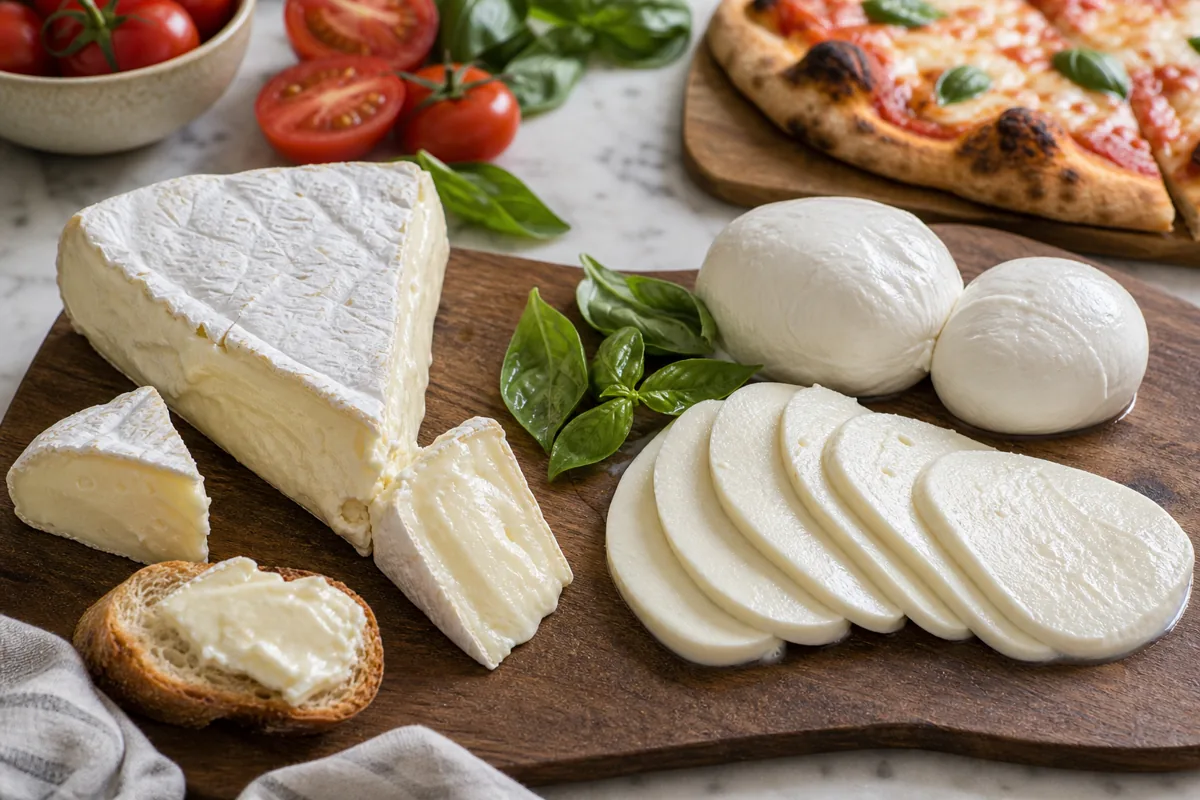
Cheese board picks lean toward Brie for broad party use because it is easier to pair around stronger or saltier cheeses. Balanced board layouts matter too because a Camembert-centered board needs gentler partners.
If the board needs a richer bloomy texture, Fromager d'Affinois pushes the creaminess higher without bringing Camembert's mushroomy punch.
- Mixed cheese board: Brie usually wins.
- Small board for cheese lovers: Camembert often wins.
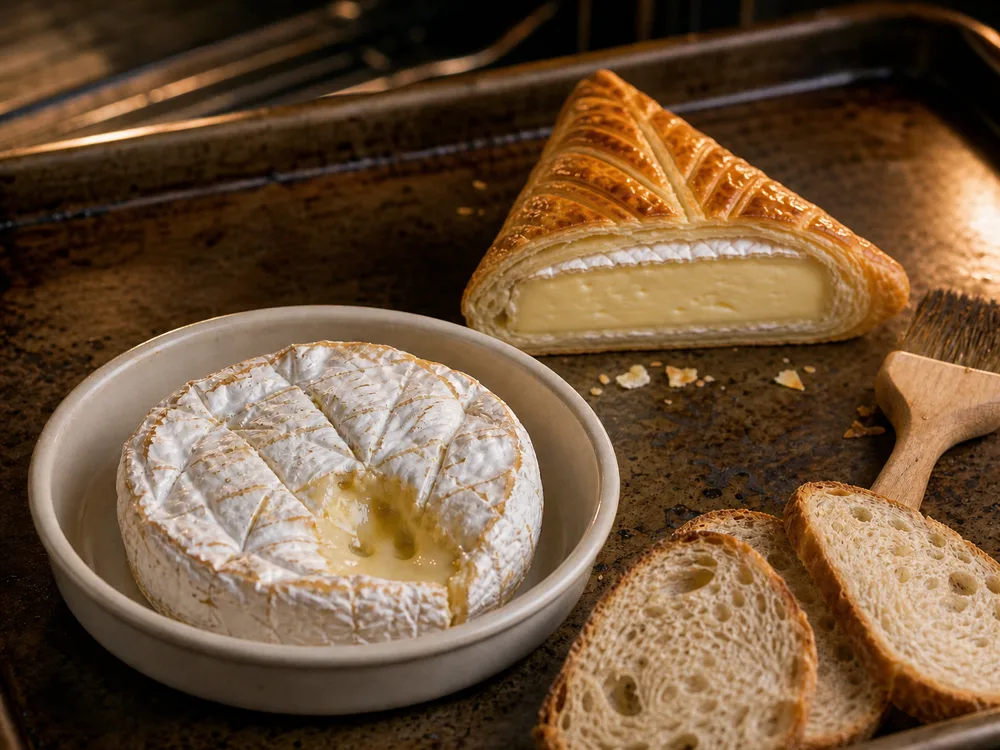
- Baked whole cheese: Camembert is the cleaner choice.
- Sandwiches or pastry bakes: Brie is usually easier to portion.
If you are baking inside pastry, Brie often works better because a wedge slips into the shape more easily. If you want to bake a whole round with herbs and bread, Camembert was built for that job.
There is also a portioning question. Brie lets you trim exactly the amount you need for six guests, ten guests, or one lunch sandwich tomorrow.
Camembert is less flexible that way, but the payoff is convenience. You can drop the entire round onto a small board or into the oven without redesigning the serving plan around a loose wedge.
Serve both cheeses 30 to 45 minutes out of the fridge. Cold Brie tastes muted, and cold Camembert hides the earthy notes you paid for.
Buying Signals at the Counter
Start with the name, not the generic label soft-ripened cheese. Protected names tell you more than the appearance does.
If pregnancy or raw-milk questions matter, pasteurized cheese safety changes the buying decision. Protected raw-milk versions and pasteurized export versions do not carry the same risk rules.
- For Brie: ask which protected style it resembles and how ripe the cut face is.
- For Camembert: ask whether it is a true Normandy-style round or a milder export version.
- Check the paste: it should soften evenly, not slump into ammonia or dry chalk all the way through.
- Check storage date: small Camembert rounds move fast at peak ripeness.
Soft-cheese storage matters more with Brie because a cut wedge loses quality faster than a sealed small round. Camembert still needs care, but its intact format gives it a slight advantage after purchase.
If the shop only offers a generic small bloomy round, ask what milk it uses and where it comes from. That answer often tells you whether you are buying a true Camembert-style cheese or just a soft-ripened lookalike.
The label also changes the value question. A generic supermarket Brie can still be the right answer for sandwiches, lunch boards, and casual gatherings, while a protected Normandy-style Camembert earns its price mostly when you plan to taste it directly and let it lead.
Party Planning, Portioning, and Leftovers
A lot of shoppers are not really choosing between two cheeses. They are choosing between two hosting plans.
Brie works better when you need to scale portions, pre-cut for a larger board, or hold a leftover wedge for sandwiches the next day. Camembert works better when the round itself is the serving unit and you want the soft cheese to feel like its own course.
- Larger gathering: Brie usually wins because wedge service scales more easily.
- Small dinner for two to four: Camembert often wins because one round feels complete.
- Leftover sandwiches: Brie usually wins.
- Single baked starter: Camembert usually wins.
This matters for waste too. A Brie wedge often integrates into the next meal more naturally, while a leftover half of baked Camembert can feel much narrower in use unless you already planned bread, potatoes, or toast for it.
If you host often, Brie usually proves more practical over time. If you host occasionally and want one soft cheese to make a stronger impression, Camembert usually gives the more memorable return.
Price, Availability, and What You Give Up
Brie is usually easier to find and often a little cheaper by serving. Camembert is usually a more specific buy, especially if you want a protected Normandy version.
The cheaper choice is not always the better value. Brie gives easier access and lower risk, but Camembert gives more drama per piece when you actually want a stronger soft cheese.
So the tradeoff is simple. Brie gives convenience, easier slicing, and a friendlier flavor.
Camembert gives a smaller format, more earthy personality, and the better whole-bake experience.
If your real question is which cheese creates less risk, Brie usually wins. If your real question is which cheese gives the more memorable soft-cheese moment, Camembert usually wins.
Brie or Camembert: Which to Choose
These cheeses overlap, but they peak in different situations.
Buy Brie when you need a mild soft cheese that works for many palates, easier portioning, and flexible use on boards or in pastry. Buy Camembert when you want a smaller round with more earthy depth, more rind character, and a format that makes whole baked cheese feel natural instead of improvised.
Brie vs Camembert FAQ
These quick answers help when both cheeses look close enough to swap in the store.
Brie is usually milder, creamier, and sold by the wedge from a larger wheel. Camembert is usually smaller, earthier, and sold as its own round.
Camembert is usually better because the small round format holds together naturally. Brie works better when you are baking a wedge inside pastry.
Camembert is usually stronger because the rind contributes more earthy flavor. Brie is usually the milder and safer board choice for mixed guests.
Yes in many cooked uses, but the result will usually taste milder. The swap is most noticeable when you bake whole or serve the cheese plain.