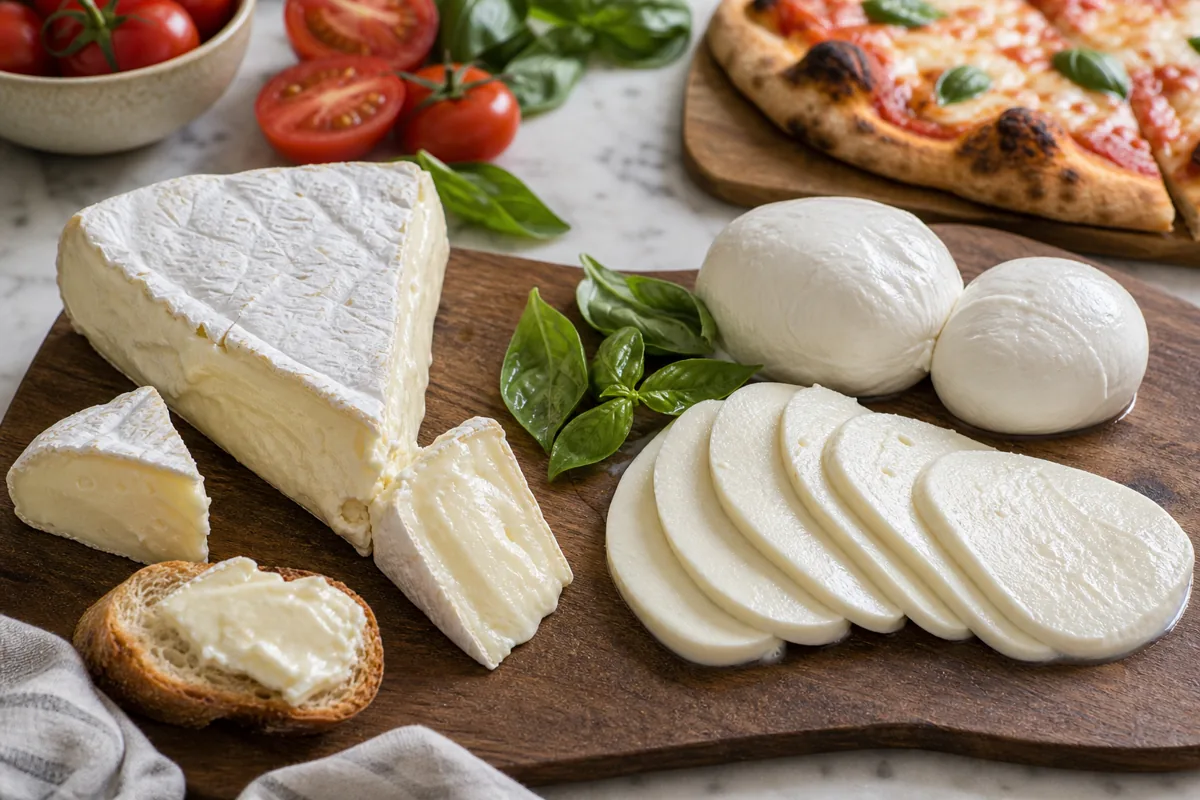
Brie and mozzarella are both soft, mild-tasting cheeses, yet they are made in different ways and behave differently once heat is involved.
Brie is a bloomy-rind cheese that ripens from its white rind inward. Mozzarella is a stretched-curd cheese whose curd is worked in hot water until it turns elastic.
The melt-versus-stretch split decides most kitchen choices, and a second difference, the NHS pregnancy advice, can decide the choice for some readers.
In This Article
What Is the Difference Between Brie and Mozzarella?
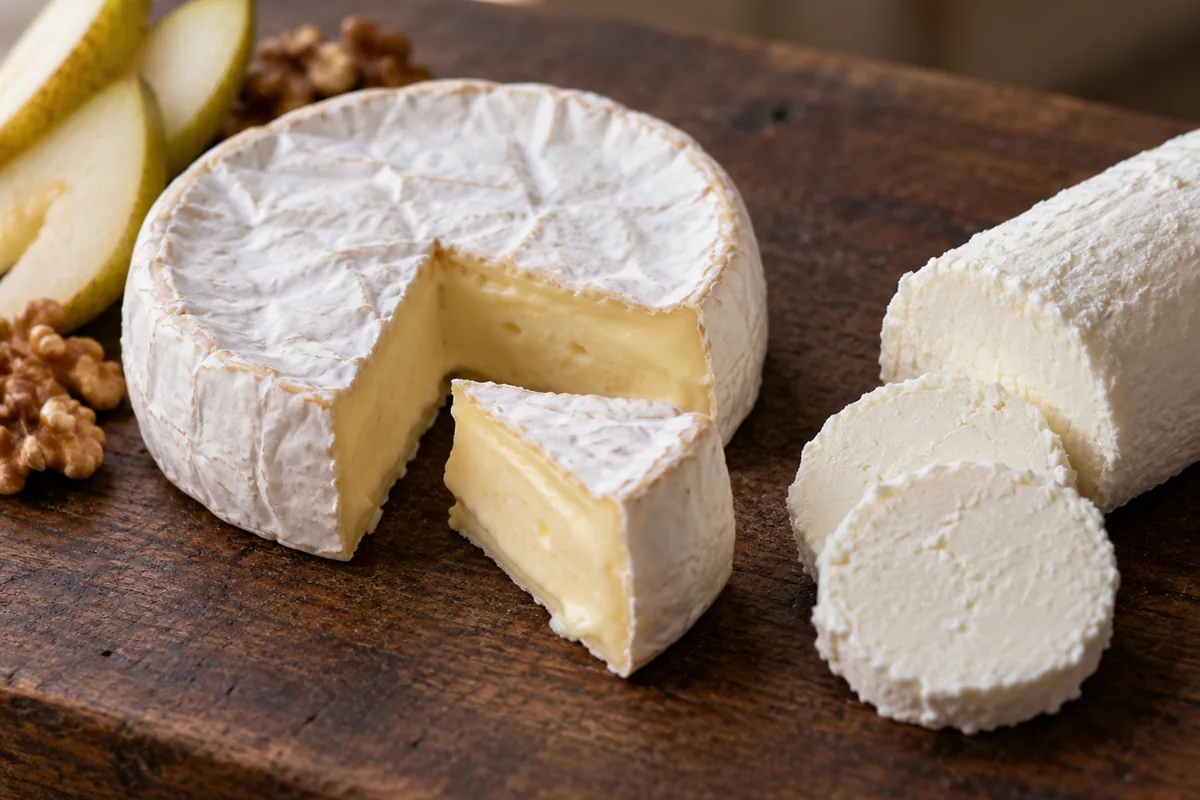
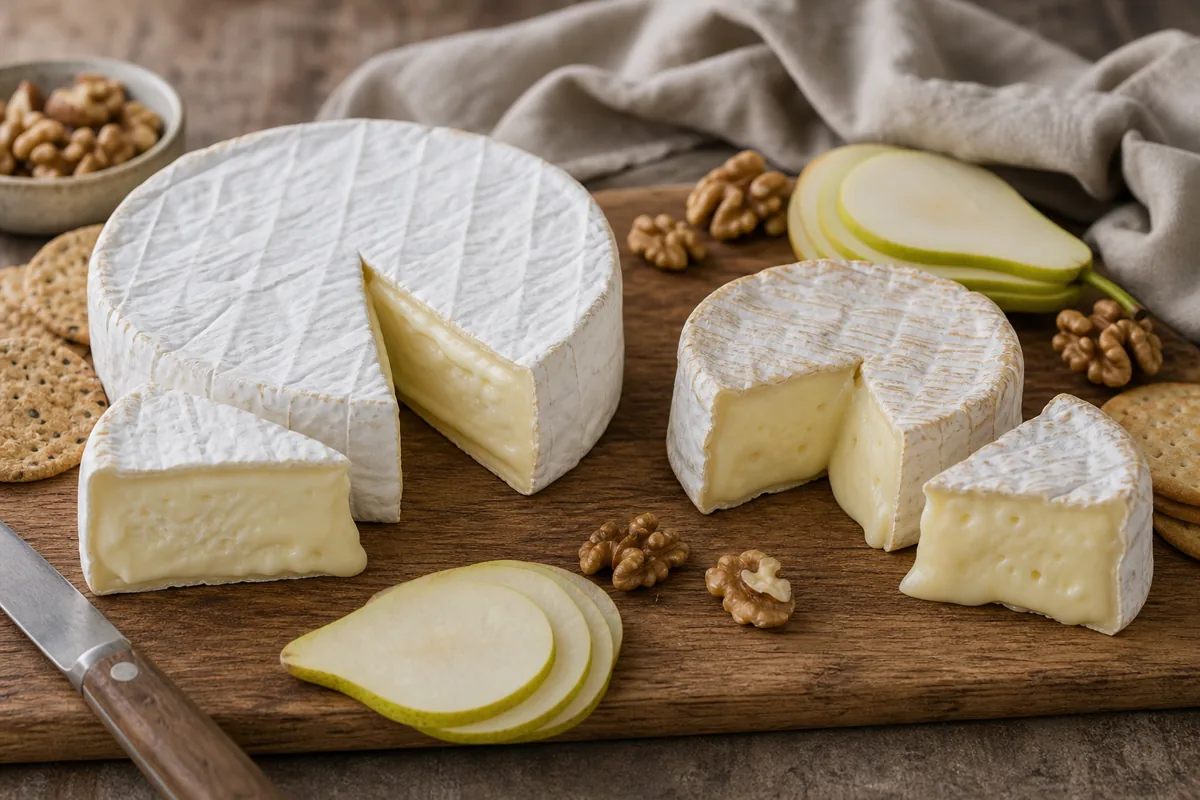
Brie is a soft cow's-milk cheese. According to Wisconsin Cheese, its curd is ladled into moulds without the pressing used for firmer cheeses, and ripening then works from the rind inward.
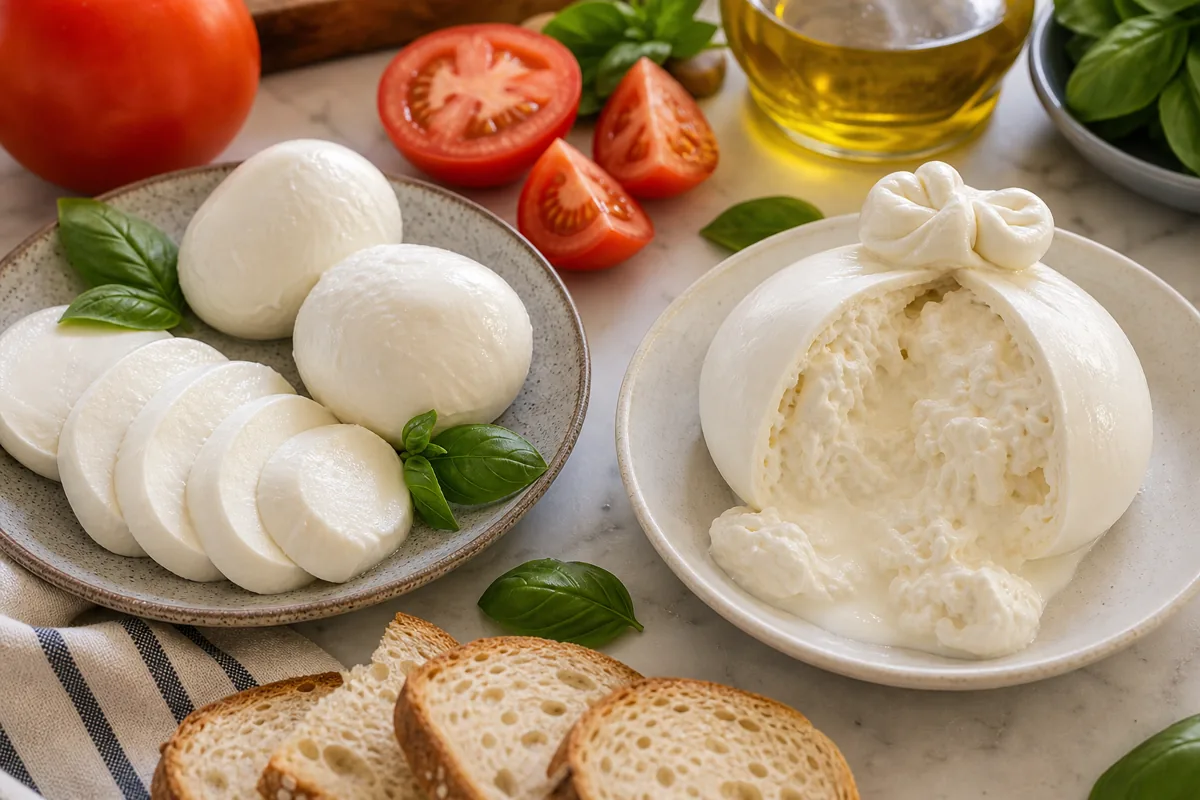
Mozzarella belongs to the pasta filata family. The US federal standard describes the curd being immersed in hot water or heated with steam, then kneaded and stretched until smooth and free of lumps.
The table sets the two side by side, and each cell names the source it rests on.
| Attribute | Brie | Mozzarella |
|---|---|---|
| Milk | Cow's milk. Brie de Meaux AOP must be raw milk (INAO); Wisconsin Cheese makes its Brie with pasteurized milk | Cow's milk or water buffalo milk under US rules, with pasteurized dairy ingredients (21 CFR 133.155) |
| How it is made | Unpressed curd, ripened from the rind inward by white mould (Wisconsin Cheese, Cheese Science Toolkit) | Curd stretched in hot water or steam until smooth (21 CFR 133.155) |
| Texture | Paste supple to slightly runny (INAO); firm outside and slightly bouncy inside when ripe (Wikipedia) | Fibrous and elastic (Food Technology and Biotechnology); fresh mozzarella squeaks when chewed (Wikipedia) |
| Flavor | Cream, butter, hazelnut and sometimes woodland notes (INAO) | Fresh mozzarella has a soft texture and milky flavour (Arla Pro) |
| Under heat | Gooey when warmed; too much heat can separate the fats (Wisconsin Cheese) | Keeps its elasticity while heating and releases some oil (Food Technology and Biotechnology) |
| Named uses | Eaten at room temperature, sometimes baked (Wisconsin Cheese, Wikipedia) | Most pizzas, several pasta dishes and Caprese salad (Wikipedia) |
Protected names fix more on the Brie side. INAO says Brie de Meaux has been an appellation since 1980 and must be made exclusively with raw cow's milk, ripened for at least four weeks in cylindrical moulds 36 to 37 centimetres across.
Mozzarella is defined by its water and fat instead, and the US standard requires pasteurized dairy ingredients. Those limits come up again below, where they separate the fresh style from the low-moisture one.
Does Brie Melt Like Mozzarella?
No. A warmed Brie turns gooey and flows, while mozzarella stays elastic as it heats.
Wisconsin Cheese says Brie becomes gooey when warmed and that gentle heat suits it, because too much heat can make its fats separate.
A review in Food Technology and Biotechnology lists viscoelasticity, fluidity, elasticity and oil release among mozzarella's key properties during heating. The elasticity is what lets a melted layer hold together and pull, which a flowing Brie paste does not do.
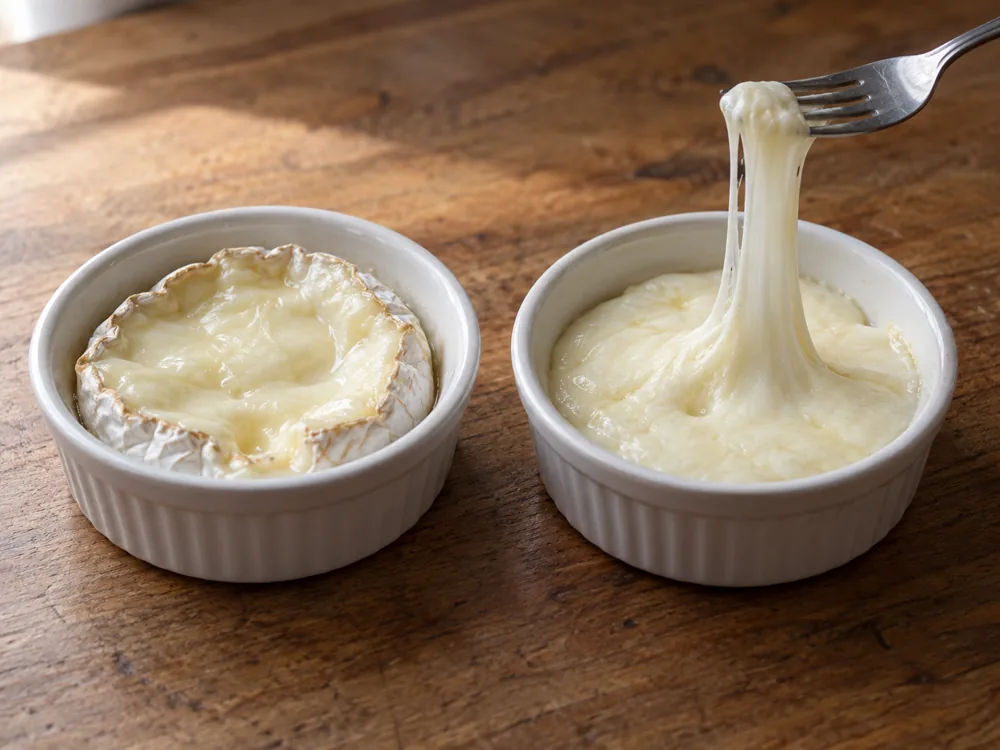
The dishes the sources name show where each melt fits.
| Use | How It Works |
|---|---|
| Pizza | Wikipedia says mozzarella is used for most types of pizza, and it ties the low-moisture style to pizzas in particular. |
| Pasta dishes | Wikipedia lists several pasta dishes among the uses of mozzarella. |
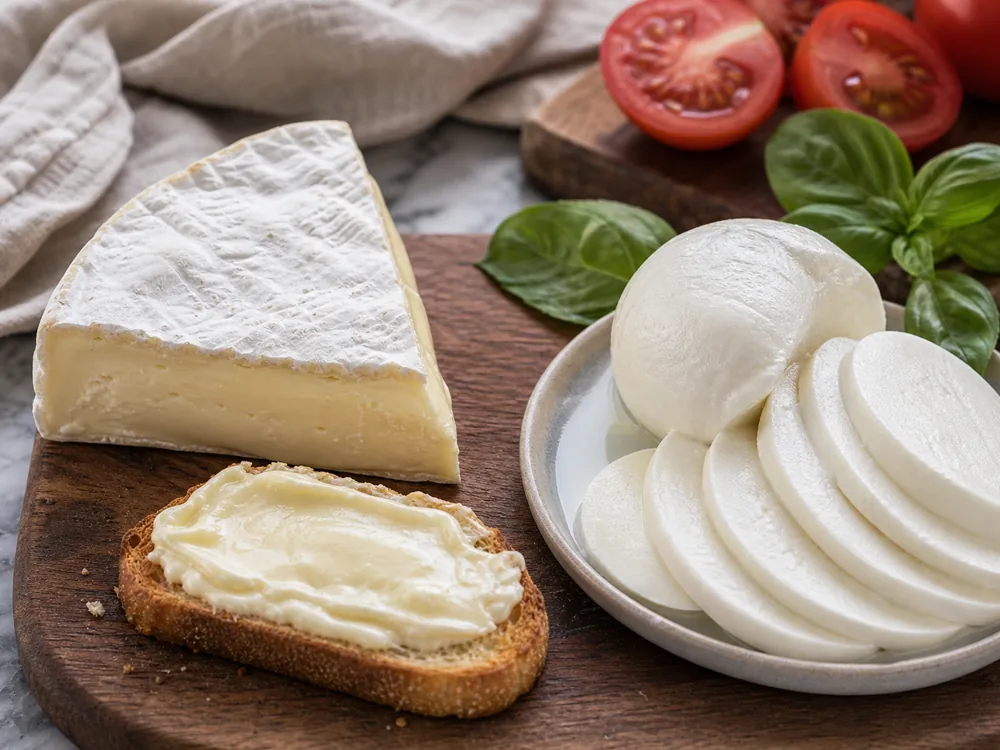
| Caprese salad | Wikipedia names mozzarella served with sliced tomatoes and basil. |
| Baked Brie | Wikipedia says Brie is sometimes served baked, and Wisconsin Cheese says it turns gooey when warmed. |
| Brie at room temperature | Wisconsin Cheese says to take Brie out of the refrigerator 30 to 60 minutes before serving for the best flavour and texture. |
Why Doesn't Brie Stretch Like Mozzarella?
Stretching builds a structure that Brie never gets. The Food Technology and Biotechnology review says stretching lines the casein fibres up in parallel, with water and fat channels between them.
The review puts the stretching water at 60 to 85 °C, with hand stretching at 70 to 80 °C, and says the curd leaves the mixers at 50 to 65 °C.
In Brie the white mould grows near the surface, roughly 1 to 5 mm deep, according to the Cheese Science Toolkit, so softening starts at the rind and moves inward.
The mould raises the pH at the surface while the interior stays acidic. The Toolkit says that pH rise changes how the proteins bond, and that enzymes from the mould break the proteins down, which makes the structure softer.
Calcium adds a third gradient. The Toolkit describes calcium as the glue that holds cheese protein together, and says it dissolves as acid builds and then precipitates as calcium phosphate where the surface pH rises.
Mozzarella depends on calcium and acidity as well. The review gives an optimal stretching pH of 5.2 to 5.5 and reports that cheese with high total calcium melts less readily than cheese with low calcium.
The review also says mozzarella traditionally needs a maturation of 7 to 21 days to reach its best eating and baking qualities, because the protein changes that come with storage influence how it melts, stretches and leaks fat.
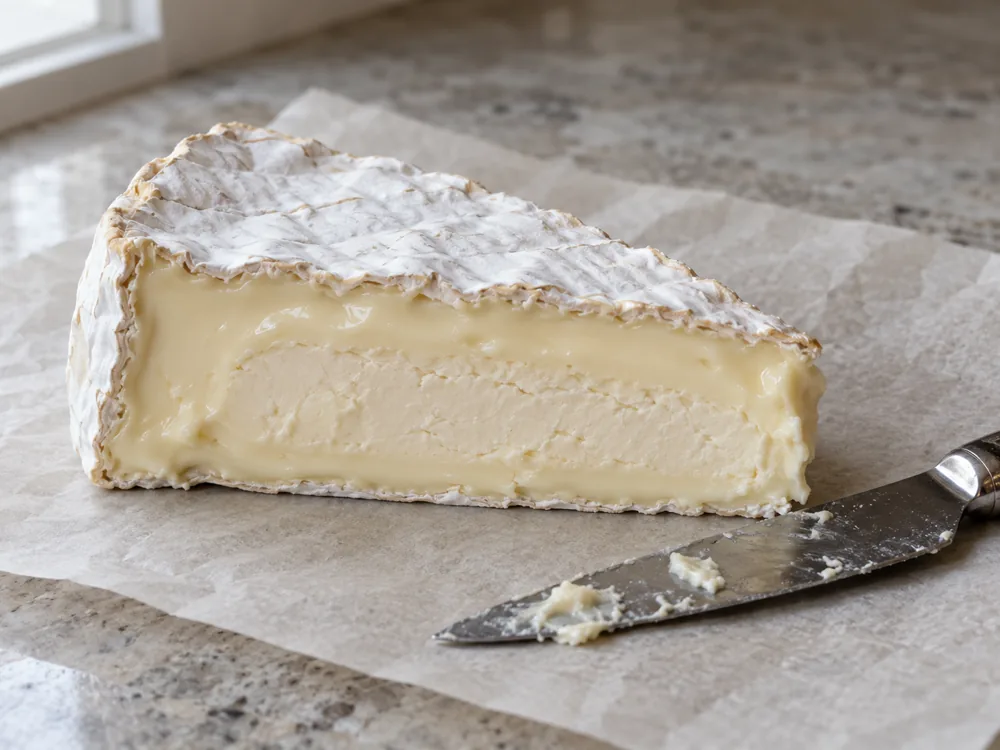
Wikipedia says underripe Brie is stiff to the touch and overripe Brie is creamier and almost runny, so the same wedge changes as it ripens.
Fresh or Low-Moisture Mozzarella: Which One Do You Mean?
The word mozzarella covers two products that the US standards separate by water. 21 CFR 133.155 sets mozzarella at more than 52 and up to 60 percent moisture, and 21 CFR 133.156 sets low-moisture mozzarella at more than 45 and up to 52 percent.
That gap shows up in the oven. Arla Pro says fresh mozzarella can bring a soft texture and milky flavour but may release more water during the bake, while low-moisture mozzarella releases its moisture in a more controlled way.
Arla adds that fresh mozzarella may need draining, tearing or careful portioning before use, and that neither format is automatically right for every menu.
On Arla Pro's account, the lower-water style is the more controlled choice for a bake, and the fresh style fits dishes where its water is part of the eating.
How Do Brie and Mozzarella Taste Different?
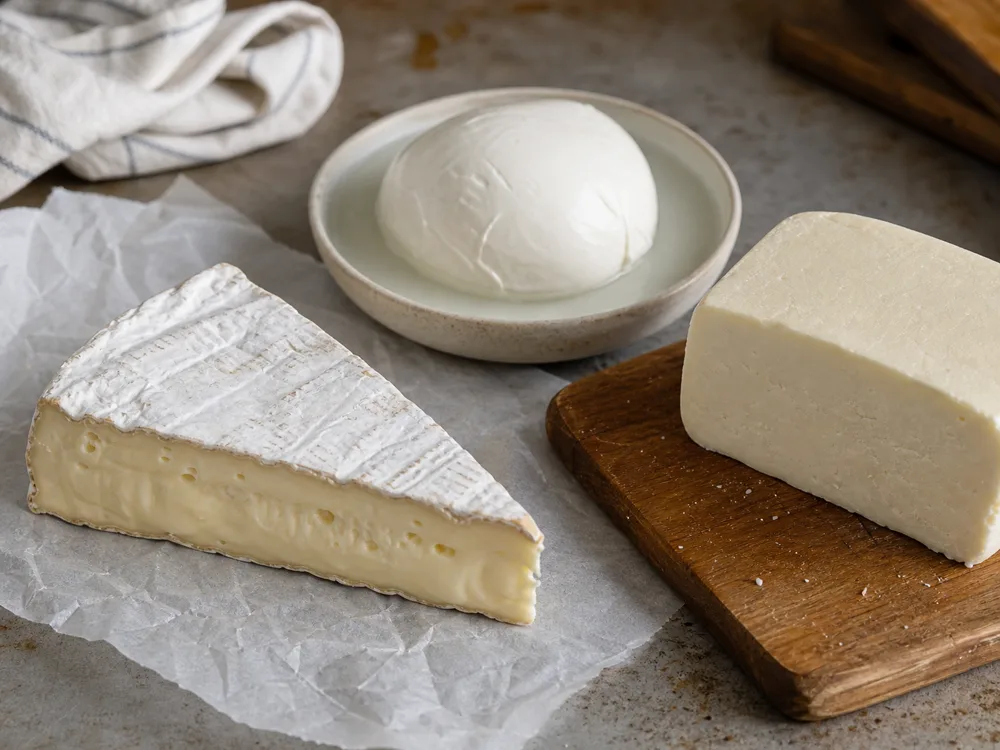
INAO describes Brie de Meaux with aromas of cream, butter, hazelnut and sometimes woodland notes, and a paste that is supple to slightly runny.
Wisconsin Cheese says the white rind is edible and adds a delicate bitterness, similar to walnut skin, that balances the richness of the paste. It also says young Brie tastes mild and milky while a ripened one develops sweeter, deeper flavour.
Wisconsin Cheese describes one to six weeks of ageing for Brie in general, the span in which a mild young wheel turns into a ripened one.
Size and strength vary inside the Brie name. Wikipedia gives Brie de Melun an average weight of 1.5 kg and a diameter of 27 cm, smaller than Brie de Meaux, with a stronger flavour and more pungent smell.
Mozzarella sits at the mild end, and Arla Pro describes fresh mozzarella as soft with a milky flavour.
That makes mozzarella a base that tomato, basil or a sauce can fill, while Brie brings flavour of its own from the paste and the rind.
Can You Put Brie on Pizza?
Possibly, but no source covers Brie on pizza, so this answer is our inference from how each cheese behaves under heat.
Wisconsin Cheese says gentle heat suits Brie and that too much can make its fats separate, so a long, hot pizza bake is where a Brie topping is most likely to go wrong.
The most workable form is Brie as a topping added to a mozzarella layer, with mozzarella supplying the elasticity and Brie the flavour.
The rind can stay on, since Wikipedia and Wisconsin Cheese both call it edible.
The reverse swap fails more clearly. A baked Brie depends on the paste going gooey inside its rind, and mozzarella would give a stretched layer instead of that centre.
What Goes Well With Brie and Mozzarella?
Wisconsin Cheese suggests sparkling wine, pinot noir and chardonnay with Brie. For beer it names a saison for its peppery, fruity notes and a wheat beer for its light body and subtle sweetness.
| Pairing | Type | Why It Works |
|---|---|---|
| Brie | Wine | Sparkling wine, pinot noir or chardonnay, as Wisconsin Cheese suggests. |
| Brie | Drink | A saison for its peppery, fruity notes or a wheat beer for its light body and subtle sweetness, per Wisconsin Cheese. |
| Mozzarella | Food | Sliced tomatoes and basil in a Caprese salad, per Wikipedia. |
Can You Eat Brie and Mozzarella While Pregnant?
The NHS names both cheeses and treats them differently, so the answer depends on which one is on the plate.
Pasteurisation does not change the NHS rule for Brie, because the rule covers pasteurised or unpasteurised mould-ripened soft cheeses with a white coating. It applies equally to a raw-milk Brie de Meaux and to a pasteurised wheel.
For mozzarella the NHS safe list is for pasteurised cheese, and the same page says most dairy products sold in supermarkets are pasteurised, and that the packaging can be checked.
The NHS gives listeria as the reason: it says unpasteurised or soft ripened dairy foods may contain the bacteria, and that listeriosis can cause miscarriage or stillbirth or make a newborn baby very unwell.
For the dishes above, the NHS wording means a baked Brie or a Brie topping qualifies only when it is cooked until steaming hot, and a cold Brie on a board does not.
The CDC lists mozzarella made with pasteurized milk as a safer choice and soft cheese made from unpasteurized (raw) milk, such as brie, as riskier. It lists pasteurized soft cheeses heated to an internal temperature of 165°F or until steaming hot as safer, and eaten cold, a pasteurized Brie is a type its list does not cover, so ask a midwife or doctor.
Is Brie or Mozzarella Healthier?
Per 30 g serving, Brie comes out higher in energy and fat, and mozzarella comes out slightly higher in protein.
| Line | Brie | Mozzarella |
|---|---|---|
| Energy | 100 kcal | about 90 kcal |
| Fat | 8.4 g | about 6.7 g |
| Saturated fat | 5.26 g | about 4.0 g |
| Protein | 5 to 6 g | about 6.7 g |
Brie is listed by Wikipedia for 30 g. The mozzarella cells are scaled down from its per 100 g listing of 300 kcal, 22.4 g of fat, 13.2 g of saturated fat and 22.2 g of protein.
Fat is measured on a different basis in the standards. INAO sets a minimum of 45 g of fat per 100 g of cheese after complete drying for Brie de Meaux, and the US mozzarella standard uses a 45 percent minimum on a solids basis, so neither figure converts directly to a serving.
Two gaps limit the comparison. Wikipedia does not say which mozzarella style its figures describe, and it gives 627 mg of sodium per 100 g for mozzarella with no sodium figure for Brie, so the panel on the pack decides for sodium, fresh versus low-moisture and part-skim.
Portion size also matters. A small piece of Brie and a thick layer of mozzarella can reverse the per-serving comparison above.
What to Look For at the Counter
Brie is bought on ripeness and mozzarella on style, and the cues differ.
- Brie rind: Wisconsin Cheese looks for a clean white rind with a soft bloom.
- Brie feel: Wikipedia says a ripe Brie is firm outside and slightly bouncy inside, stiff when underripe and almost runny when overripe.
- Brie paste: Wisconsin Cheese describes a smooth, creamy paste that softens toward the edges while keeping some structure at the centre.
- Rennet: Wisconsin Cheese says Brie is coagulated with rennet, and the US standard lets mozzarella use clotting enzymes of animal, plant or microbial origin, so a buyer who avoids animal rennet has to check the label of each pack.
- Mozzarella style: the pack should say whether it is fresh or low-moisture, since Arla Pro says the two release water differently in the bake.
Wisconsin Cheese gives one to two weeks for an opened piece of Brie in the refrigerator, wrapped in wax or parchment paper and then loosely in plastic wrap or a container.
For mozzarella, Wikipedia says fresh mozzarella is traditionally served the day after it is made and can be kept in brine for up to a week when sold in vacuum-sealed packs, while low-moisture mozzarella can be kept refrigerated for up to a month. Both sets of times come from an industry source and a reference source and describe quality, not a food-safety limit.
Buy Brie by ripeness: a firm rind with a slightly bouncy centre. Buy mozzarella by style: low-moisture for the oven and fresh where its water is part of the dish.
Brie or Mozzarella: Which Should You Buy?
Buy Brie when the dish needs a soft, gooey centre and the flavour of the rind, such as a baked wheel or a cheese board.
Buy mozzarella when the dish needs elasticity and a milky base, in the low-moisture style for a bake and the fresh style for a salad.
A sandwich can take either, and the choice follows the texture wanted: a soft, rich centre from Brie, or an elastic layer from mozzarella.