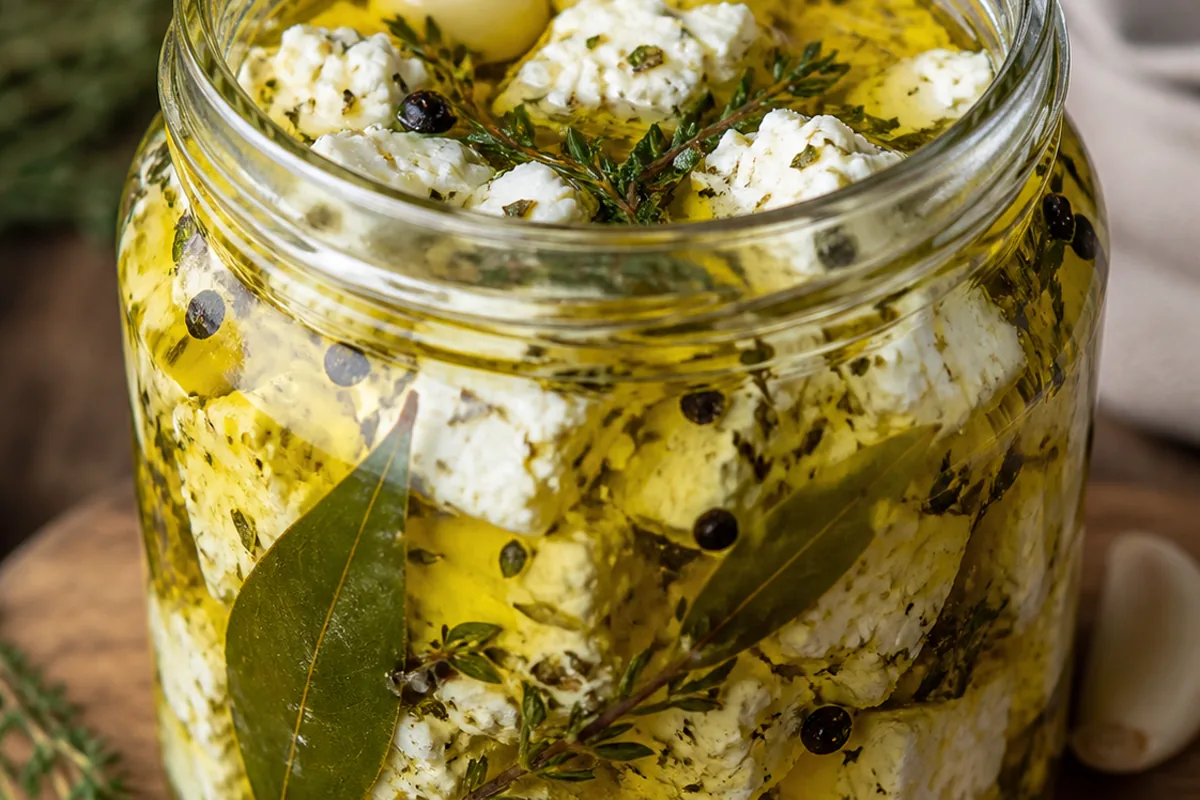
Graceburn is a soft cow's-milk cheese made by Blackwoods Cheese Company in Kent, England, and sold as small pieces of curd in a jar of herb-infused oil. Blackwoods adapted it from the Persian feta that Australian dairies make, and the name feta is not available to it.
Whether the milk is raw or pasteurized depends on whose listing you read, and that one detail bears on whether a jar suits a pregnant reader.
In This Article
Why Isn't Graceburn Called Feta or Persian Feta?
Feta has been a protected designation of origin in the EU since 2002, covering cheese from mainland Greece and Lesbos made from sheep's milk, or sheep's milk with up to 30% goat's milk. The protection still applies in England, Scotland and Wales, so a Kent cow's-milk cheese cannot be sold as feta.
In Australia the cheese was called Persian fetta, and it was renamed because feta is a protected name. Head cheesemaker Dave Holton chose Graceburn after a river that runs through the town where he grew up.
Holton describes Persian fetta as a style an Australian cheesemaker developed after travelling through Iran in the 1970s and falling for the local feta-style cheeses.
The style was hugely popular in Australia but proved impossible to find in the UK, and Holton says the founders reasoned that other Australians would miss the taste as much as they did.
If you are looking for Persian fetta in the UK, the old name is gone from the jar, but The Fine Cheese Co. still describes Graceburn as inspired by Persian fetta.
Who Makes Graceburn, and Where?
Blackwoods Cheese Company makes Graceburn in a converted farm building in Kent, next to the dairy that supplies the milk. Grocery Trader says David Holton founded the company in 2013, and the founders' first experiments were with Persian fetta, the style that became Graceburn.
Four friends started it: Holton, his friend Cameron Rowan, their childhood friend Rory Holwerda, and Tim Jarvis, the only British founder. All four had worked at Neal's Yard Dairy, and Holton said the company took its name from the road he grew up on.
Holton and Rowan had planned a tour of cheesemakers and cheesemongers in France, Spain, the Netherlands and Britain, after which they meant to go back to Australia and make cheese there.
The ten days of work Holton had arranged at Neal's Yard Dairy over the Christmas rush turned into three years, and the tour plans were shelved while the urge to make cheese stayed strong.
The company began on an industrial estate in Brockley, south London. The move to Kent followed a routine in which the team drove down a couple of times a week, loaded 500 litres of milk into a van and carried it 40 miles back.
In the Kent building, the cheesemaking rooms sit 20 yards from the milking sheds, and the milk goes straight into the vats with no storage in between.
The supplying dairy is Bore Place Organic Farm in Kent by Grocery Trader's account and Common Work Organic Farm by The Fine Cheese Co.'s.
The herd crosses Friesians with Holsteins, Swedish Reds and Montbéliardes, and Grocery Trader says the milk is higher in fat and protein than a standard dairy cow's. Holton says the Swedish Reds add butterfat and that Montbéliarde is a French breed traditionally used for comté.
Borough Market lists a bronze at the 2015 British Cheese Awards for Graceburn. Grocery Trader adds Best Cow's Milk Cheese at the 2019 Artisan Cheese Awards and Best Enhanced Cheese with Savoury Additives at the 2021 Virtual Cheese Awards.
How Is Graceburn Made?
Holton told Borough Market that the milk reaches the vats before it has time to cool, so Blackwoods adds starter cultures and needs no heat to begin the process.
Borough Market's writer says the short trip keeps the solids and proteins in the milk in perfect condition, which gives Blackwoods' cheeses their clean, highly defined flavours.
The curd is brined before it reaches the oil: Mons Cheesemongers says it is made, pressed and brined, then cut into cubes and put into jars of oil, while The Fine Cheese Co. says the pieces are broken by hand and sit in brine before moving to the oil.
The jars mature for a week before sale, according to Mons.
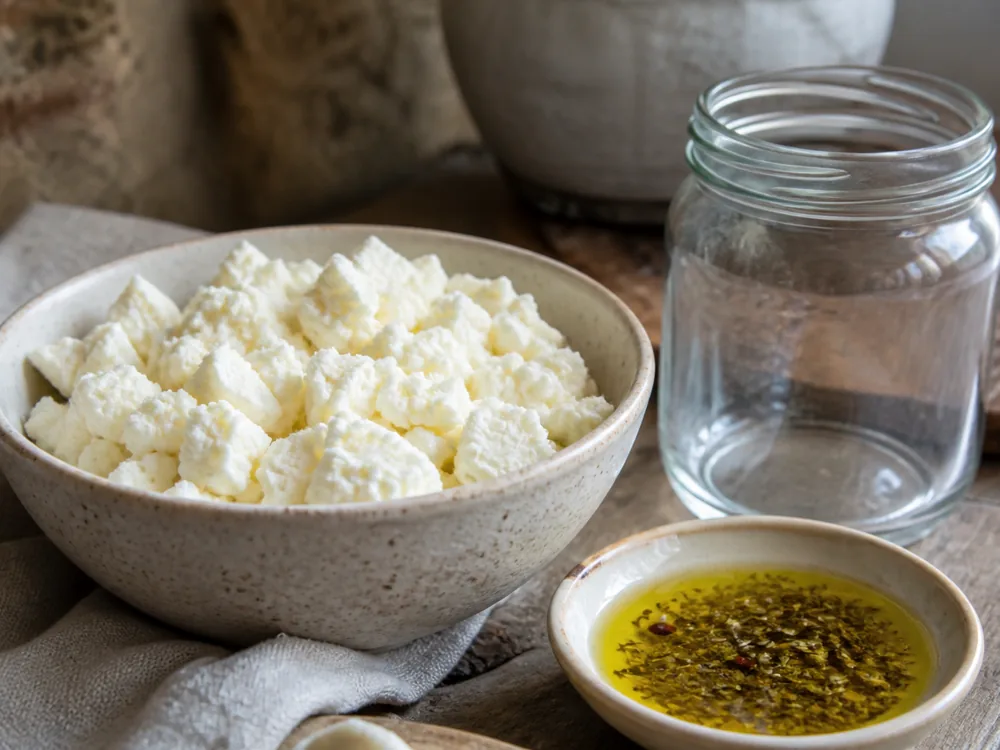
Grocery Trader says the cheese takes on the flavour and the silky texture of the oil it is marinated in, and the oil and its aromatics differ between the four accounts in the table.
| Source | Oil | Aromatics |
|---|---|---|
| Mons Cheesemongers | Rapeseed oil extracted at Duchess Farms, Hertfordshire | Garlic, thyme, black pepper |
| The Fine Cheese Co. | Extra virgin olive oil and rapeseed oil | Thyme, garlic, bay, pepper |
| Grocery Trader, quoting Blackwoods | Cold-pressed rapeseed oil from a local Kent supplier | Garlic, thyme, pepper (original jar) |
| Borough Market, Holton interview | Olive oil | Peppercorns, thyme, garlic |
Garlic, thyme and pepper appear in every listing, while bay appears only in The Fine Cheese Co.'s.
The oil itself is olive oil flavoured with peppercorns, thyme and garlic in Holton's account to Borough Market, extra virgin olive oil alongside rapeseed oil in The Fine Cheese Co.'s listing, and rapeseed alone in Mons's and Grocery Trader's.
Its origin is stated two ways too: Mons says it is extracted in Hertfordshire, while Grocery Trader says it comes from a local Kent supplier. If the kind of oil matters to you, check it on the label of the jar you buy.
Is Graceburn Made with Raw or Pasteurized Milk?
That depends on whose word you take: Blackwoods describes its cheeses as raw cow's milk and Mons Cheesemongers lists raw milk, but The Fine Cheese Co. lists the jar as pasteurised.
Holton told Borough Market that the main change he made when bringing the Australian recipe to Britain was using raw milk, which is illegal in Australia.
| Source | Milk as stated |
|---|---|
| Borough Market, Holton interview | Raw milk, named as the main change from the Australian recipe |
| Grocery Trader, quoting Blackwoods | Raw cow's milk |
| Mons Cheesemongers | Raw cows milk |
| The Fine Cheese Co. | Pasteurised cows' milk |
You cannot settle it by date. Both statements from Blackwoods' side, the Borough Market interview and the Grocery Trader report, date from 2021, while Mons and The Fine Cheese Co. are 2026 listings that still disagree with each other.
For the jar you are buying, only the seller or the jar's own label can answer.
Is Graceburn Vegetarian?
It depends on the seller: Mons Cheesemongers lists animal rennet for Graceburn, while The Fine Cheese Co. marks the jar as vegetarian.
The two sellers split the same way on milk: Mons, which lists raw milk, lists animal rennet, and The Fine Cheese Co., which lists pasteurised milk, calls the jar vegetarian. If you are vegetarian, ask the seller about the jar on offer.
Sellers list Graceburn's milk as raw or pasteurised and its rennet as animal or vegetarian. Only the label on the jar in your hand, or the seller, can settle both.
What Does Graceburn Taste Like?
Mons Cheesemongers calls Graceburn milky and sweet, with a soft, crumbly texture. The Fine Cheese Co. calls it rich and aromatic, with a melt-in-the-mouth texture.
The oil does the seasoning: Holton says some of the peppercorn, thyme and garlic flavour comes through, and Mons calls the aromatics delicate, with the quality of the cheese still showing.
Holton says that, being made from cow's milk, Graceburn is less salty than a traditional feta, with a deeper, more rounded flavour.
The Fine Cheese Co. ties the texture to the same milk, saying the rich, creamy cows' milk makes Graceburn softer and more melt-in-the-mouth than traditional feta. It describes the herd's milk as a balance of butterfat and protein suited to a super-creamy fresh cheese.
How Do You Serve and Cook Graceburn?
Grocery Trader says the texture is similar to feta and recommends Graceburn in salads, as part of canapés and in warm pasta dishes, and it calls the cheese versatile in the kitchen and on a cheeseboard.
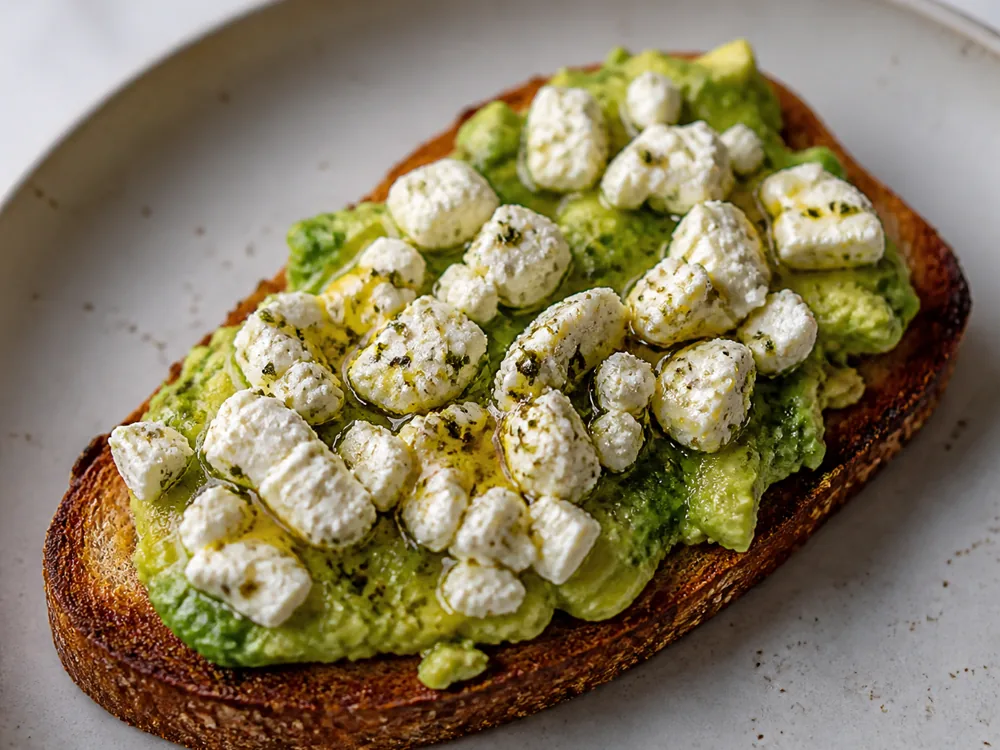
For avocado toast, Paxton & Whitfield's recipe uses two or three cubes of Graceburn for two servings, crumbled over mashed avocado on a layer of plum and habanero jam. You can use the oil from the jar in place of olive oil in the avocado, as the recipe allows.
The recipe describes the dish as creamy avocado, tangy cheese and a hint of sweetness from the jam, and it finishes the toast with flaxseeds.
For a hot dish, Neal's Yard Dairy publishes a baked one from The Cheese Life by Patrick McGuigan and Mathew Carver. It puts 200g of Graceburn, drained from its oil, in large chunks on a stew of peppers, tomatoes and caramelised onions and bakes it at 200°C for 15 to 20 minutes.
The recipe serves four as a starter, chars the peppers over a gas flame and cooks the onions down almost to a purée. It finishes the dish with a dressing of red chilli, garlic, lemon juice and honey that it describes as spicy, sweet and slightly acidic, and serves it with crusty bread.
The cheese comes out soft, fluffy and slightly golden.
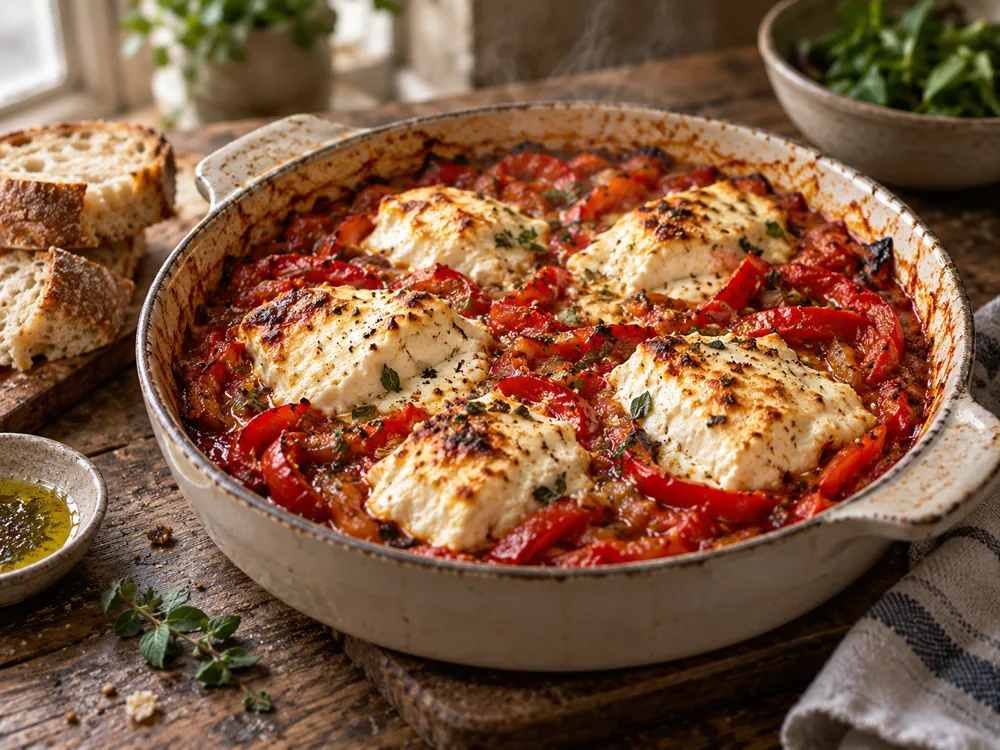
Keep the oil when you drain the cheese: the recipe starts the onions in a tablespoon of oil, preferably from the feta jar, and says the stew makes a great sauce for pasta.
What Can Replace Graceburn?
Sellers measure Graceburn against feta, so feta is the usual stand-in, and the book recipe goes both ways: it lists 200g of feta or Graceburn drained from oil and calls Graceburn a British alternative to feta.
The same recipe says feta holds its shape beautifully when baked, going soft and fluffy rather than fully melting. The softer Graceburn puffs up like marshmallow on top of the stew, so in a baked dish the swap shows in the texture of the top layer.
| Point | Feta | Graceburn |
|---|---|---|
| Form | Large blocks (Wikipedia) | Pieces broken by hand (The Fine Cheese Co.) |
| Curing | Aged in brine (Wikipedia) | Brined as fresh curd, then kept in oil in the jar (Mons Cheesemongers) |
| Time before sale | Three months minimum under the PDO (Wikipedia) | A week in the jar (Mons Cheesemongers) |
If you swap in feta, your dish therefore moves toward a firmer and, by Holton's account, saltier cheese, and feta bought in brine brings none of the garlic, thyme and pepper from the oil.
Grocery Trader reports a 2021 Blackwoods announcement that calls it the first and only UK maker of this marinated, feta-like cheese from raw cow's milk.
Is Graceburn Safe During Pregnancy?
It depends on the jar: sellers list Graceburn's milk as raw or pasteurized, and the NHS and CDC treat those two differently.
The NHS names pasteurised soft cheeses, including cottage cheese, cream cheese, mozzarella and feta, as safe, and says to avoid unpasteurised milk, cream, yoghurt, butter and ice cream.
The CDC puts soft cheese made from unpasteurized milk in its riskier column, along with any queso fresco-type cheese or similar fresh, soft cheese, whether the milk is pasteurized or not. It lists feta made with pasteurized milk as safer and adds that pregnant women are 10 times more likely to get a Listeria infection.
The NHS also says foods made from unpasteurised milk must be thoroughly cooked, and counts any cheese cooked until steaming hot as safe. The CDC lists pasteurized soft cheeses heated to an internal temperature of 165°F or until steaming hot as safer.
Served cold, a pasteurized jar of Graceburn is described as a soft, crumbly cheese, a type the CDC list does not cover, so ask a midwife or doctor.
A raw-milk jar fits the CDC's riskier column, and a midwife or GP can say what the jar's label means for you.
How Many Calories Are in Graceburn?
The Fine Cheese Co. publishes this panel for 100g of Graceburn:
- Energy: 2662 kJ / 645 kcal
- Fat: 47.3g, of which saturates 17g
- Carbohydrate: 4.1g, of which sugars 0.5g
- Protein: 20g
- Salt: 2.7g
Its ingredient list puts cows' milk at 56% of the jar, followed by the oils, garlic, thyme, pepper and bay, so the fat figure includes the oil.
How Do You Store Graceburn?
The Fine Cheese Co. says to keep the jar refrigerated below 8°C and eat it within 7 days of receipt or by the date shown on the cheese, and within 5 days once opened.
The CDC says to keep a refrigerator at 40°F (about 4°C) or below, which meets The Fine Cheese Co.'s limit.
Where Can You Buy Graceburn, and What Does It Cost?
Graceburn is sold through specialist shops. Grocery Trader lists Fortnum & Mason, Selfridges, Neal's Yard Dairy, The Fine Cheese Co. and independent shops, and says Blackwoods also sells it at its Borough Market stall.
As listed in October 2026, a 250g jar cost £10.80 at The Fine Cheese Co., and Paxton & Whitfield's recipe page lists a 250g jar at £11.00. Mons Cheesemongers listed it at £7.95.
The Fine Cheese Co. gives 250g as the pack weight, and its buying guide suggests 70 to 120g of cheese per person, depending on where the cheese falls in the meal. If you are working out portions from a jar, ask the seller whether the 250g includes the oil.
Grocery Trader lists three Blackwoods jars, each described as raw cow's-milk cheese in cold-pressed British rapeseed oil: the Original with garlic, thyme and pepper, Truffle with black truffle, and Chipotle and Lemon with chipotle chilli and lemon zest.
Grocery Trader says the truffle and chipotle varieties earned 1 star at the 2020 Great Taste Awards and that the original was a 2021 Great British Food Awards finalist.
If you pick a flavoured jar, check its label for the milk too: the raw-milk description of the Truffle and Chipotle and Lemon jars comes from Grocery Trader's 2021 report.